5 Kitchen Items for Natural Patio Weed Control
Use five common kitchen items for natural patio weed control, learn which weeds they can actually kill, and finish with joint repairs that slow regrowth.
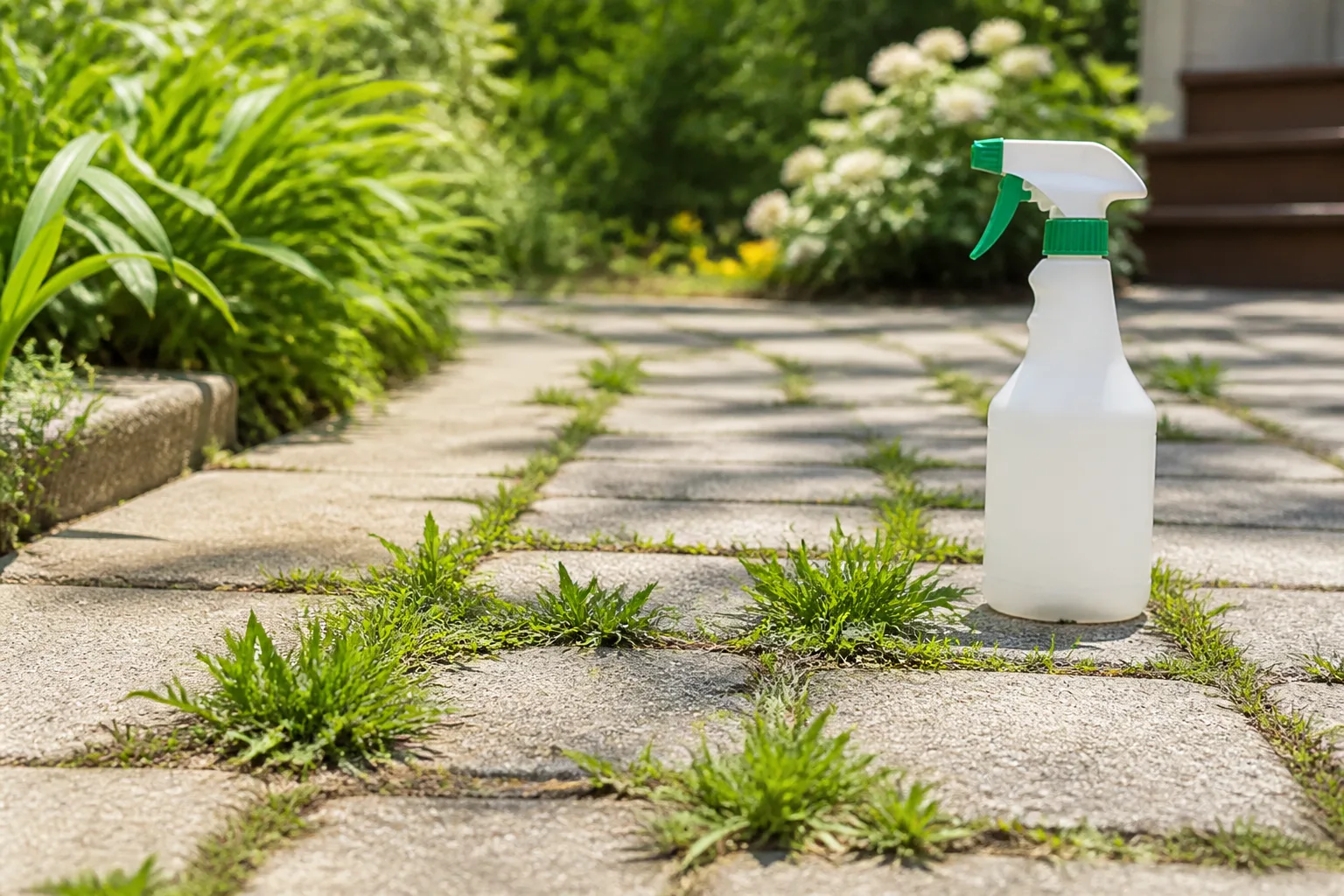
Patio weeds are rarely a chemistry problem first. They are usually a joint problem: dust, leaf fragments, and windblown seeds collect in a narrow gap, hold a little moisture, and give a seedling somewhere to root. A kitchen item can help you remove or scorch what is already growing, but it cannot stop new seed from landing in an open, dirty joint.
The most reliable natural patio weed control is a sequence. Lift what you can, use heat or a contact treatment only on exposed green growth, then clean and refill the joint so the next seed has less room to settle. The five items below are useful in that sequence, but they are not interchangeable—and “natural” does not mean selective, harmless, or permanent.
The short answer: remove first, treat second, seal third
For a few tiny seedlings, reach for a blunt butter knife after rain and lift the plant out with its root. For isolated tender weeds where you do not want to disturb the joint, boiling water is usually the simplest spot treatment. White vinegar and a little lemon juice can burn young exposed foliage, while dish soap is mainly a wetting helper rather than a weed killer.
Here is the quick decision rule:
| What you see | Best first move | Why |
|---|---|---|
| Tiny seedling in loose joint material | Butter knife | Removes the root without adding a liquid to the joint |
| Soft annual weed in an empty crack | Boiling water | Delivers heat directly to exposed tissue |
| Several very young weeds on an isolated hardscape area | White vinegar | Burns foliage it contacts, but does not travel reliably to roots |
| Waxy leaves that repel a spot spray | A tiny amount of dish detergent as a spreader | Helps wet foliage; the detergent itself is not a tested herbicide |
| One or two tiny weeds and leftover lemon juice | Lemon juice as a cautious spot experiment | Citric acid can shrivel foliage, but there is no dependable patio-wide recipe |
If weeds have thick crowns, runners, or taproots, do not start by spraying. Pull or scrape first, then watch for regrowth. The RHS guidance on weeds on hard surfaces makes the same practical distinction: remove deep-rooted weeds with a weeder where possible, and repeat removal when the root cannot come out in one piece.
Why patio weeds are so persistent
Paver joints are small seedbeds. They collect silt from rain, organic debris from nearby beds, and fine material from the paving base. The more often a joint is swept clean or refilled, the less hospitable it becomes; the longer it holds damp debris, the more a weed can establish before you notice it.
The first visible leaf is also a poor guide to the size of the root. A small chickweed-type seedling may slide out easily, while a dandelion, dock, grass, or creeping perennial can already have a storage root or runner below the gap. A treatment that browns the leaves can look successful for a week and still leave enough underground tissue to send up new growth.
Annual seedlings and perennial taproots need different tactics
Annual weeds are the good candidates for early hand removal, hot water, or a carefully directed contact spray. They have not had much time to build reserves, so catching them before flowering and seed set can reduce the next flush.
Perennial weeds need a longer campaign. A knife or spray may remove the top but miss the taproot, crown, or creeping runner. Pulling after rain, repeating removal whenever green growth returns, and repairing the joint usually beats escalating to a stronger homemade mixture.
That is why a “weed killer” test based only on what the leaves look like the next morning is misleading. Contact methods are judged by the regrowth check seven to fourteen days later, not by the first brown patch.
Before you use any kitchen remedy
First confirm that the gap is an appropriate target. Keep liquids away from planting beds, lawn edges, storm drains that discharge directly to waterways, and any low-growing plant you want to keep. Vinegar, lemon juice, hot water, and detergent are all non-selective in practice: they can injure desirable foliage just as easily as a weed.
Check the paving material, too. Acidic liquids can mark or damage some natural stones and cement-based surfaces, so test a hidden spot before using vinegar or lemon juice near light-colored masonry. If the pavers are rocking, do not pry aggressively with a knife; removing too much joint material can make the path uneven and create a trip risk.
Choose a calm, dry window. Wind increases spray drift, rain dilutes a contact treatment, and wet footing makes a kettle more dangerous to carry. Wear closed shoes and gloves, use eye protection for any spray, and pour boiling water slowly from a stable kettle or heatproof container with a clear path to the patio.
1. A butter knife: best for lifting seedlings and roots
An old butter knife is a surprisingly effective crevice tool when the weed is young and the joint material is loose. Its rounded edge can slide beside a seedling, loosen the soil or sand around the root, and lift the whole plant without the sharp point of a kitchen knife catching a finger or gouging a paver.
Use it after rain or after the joint has been lightly dampened. Push the blade down beside the stem, work around the root in a small circle, and lever the plant upward. The goal is not to chop the foliage at the surface; it is to bring out the crown and as much root as the narrow gap allows.
This is the best method when you see only a few weeds and the joint is already soft. It also produces the least collateral damage: no acidic residue, no heat, and no spray drift. The trade-off is that repeated digging can remove joint sand, so brush loose material back into the gap as you go instead of leaving a trench.
Do not use a serrated or pointed kitchen knife while standing over a hard surface. A dedicated weeding knife is safer for a large job, and a long-handled joint brush is kinder to your back. For a mature dandelion or grass clump, loosen the sides, pull steadily from the base, and expect to repeat the job if the root breaks.
2. Boiling water: best for isolated tender weeds
Boiling water kills plant tissue by heat. It is most useful on a small number of tender weeds in an empty crack, where you can pour directly onto the foliage and crown without splashing a nearby plant. Gardeners’ World lists boiling water as a practical option for paths, patios, paving, driveway cracks, and isolated patches, but it also notes that homemade methods often need more than one application.
Bring the water to a full boil and carry only a manageable amount. Pour slowly enough to saturate the weed and the crown, not so fast that the stream runs across the patio toward a planting bed. Water used for cooking vegetables is fine if it contains no oil, sauce, or added salt; do not use salty pasta water around soil or plants.
Hot water is a good first choice for a seedling you caught early. It is a poor promise for a deeply rooted perennial. The top may collapse while the root survives, so inspect the same joint after a week and repeat the heat treatment or remove the regrowth mechanically.
The safety limit is simple: hot water can burn people, pets, and desirable plants. Keep children and animals away until the surface is cool and dry, use a heatproof handle, and never carry a full kettle over a slippery or cluttered patio.
3. White vinegar: a contact treatment for young weeds
White vinegar works, when it works, because its acetic acid damages exposed leaf tissue. Household cooking or cleaning vinegar is commonly around 4–6% acetic acid; that is very different from concentrated horticultural vinegar, which can be 20% or higher and can cause serious skin and eye injury. The UC IPM explanation of vinegar and acetic acid lays out that strength difference clearly.
Use household vinegar only as a directed spot application on a small, isolated weed patch. A dry, warm day gives the leaves time to remain wet, and a narrow stream or small brush is easier to control than a broad spray. The target is green tissue, not the entire patio and not the soil underneath it.
The honest limit is that household vinegar is a contact treatment. It can burn young annual weeds, but it does not act like a systemic herbicide that reliably moves down to a taproot. Oregon State University Extension describes the best results as occurring on recently germinated plants and notes that perennial weeds are harder because the acid is not moved to the root system well, if at all. Read its vinegar weed-control guidance before treating a larger area.
Vinegar is also non-selective. Overspray can damage grass, flowers, herbs, and low groundcovers, and repeated wetting of soil is a poor trade for a few weeds. Do not mix vinegar with bleach or other cleaners, do not increase the concentration by guessing, and do not assume a stronger product is a safer kitchen substitute.
Vinegar versus boiling water at a glance
| Factor | Boiling water | Household white vinegar |
|---|---|---|
| Best target | Tender weeds in empty joints | Very young weeds with exposed leaves |
| Main action | Heat injury | Acetic-acid contact burn |
| Root control | Limited on established perennials | Limited; usually does not reach taproots |
| Main hazard | Burns during carrying and pouring | Eye/skin irritation and plant overspray |
| Repeat need | Common for perennials | Common after regrowth or new germination |
4. Dish soap: a helper, not a weed killer
Dish soap gets included in homemade weed-killer recipes because it can help a liquid spread across a waxy leaf instead of beading up and rolling away. That is a surfactant job, not a root-killing job. A dish detergent may injure a leaf at a high enough concentration, but its cleaning additives were designed for grease and dishes—not for predictable landscape application.
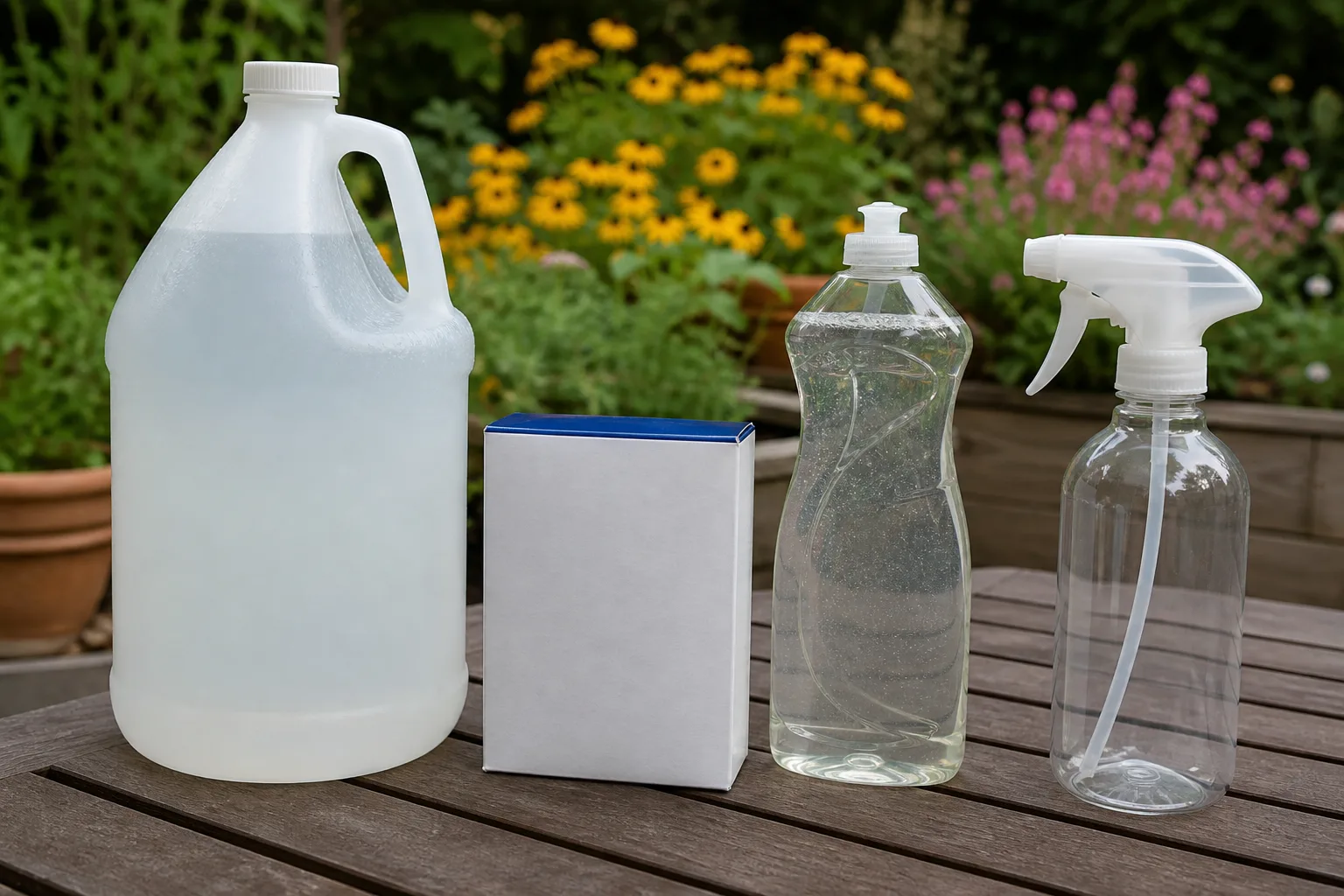
This distinction matters. Penn State Extension warns that dish-cleaning products are detergents with additives, not the same as formulated insecticidal soaps, and that homemade remedies can harm plants, soil properties, and beneficial organisms. The absence of a commercial pesticide label also means there is no standard rate, performance claim, or safety direction for your particular brand.
My practical use for dish soap is narrow: if a tiny, isolated patch has leaves that repel a spot treatment, use only a minimal amount as a spreader in a small batch and keep the liquid on the weed. Do not drench the joint, spray on a hot afternoon beside ornamental plants, or assume more foam means better control. In many patio situations, a careful stream of boiling water or a butter knife is the cleaner choice.
Never combine dish detergent with bleach, ammonia, or an unknown cleaner. Do not pour leftover homemade mixture into a bed, compost bin, or drain. Make only what you will use immediately, label nothing as a guaranteed herbicide, and treat the detergent as the least important ingredient in the whole plan.
5. Lemon juice: a small-area experiment, not a patio cure
Lemon juice contains citric acid, which can dry or shrivel young foliage when it reaches the leaves. It is best thought of as a limited pantry option for one or two tiny weeds in an empty paving crack—not as a practical way to treat an entire patio. Gardeners’ World includes lemon juice among homemade options for paths and paving but cautions that these methods are weaker than commercial weed-control products and may need repeat applications.
If you try it, use strained juice so pulp does not clog a sprayer, apply it directly to the weed on a dry day, and keep it away from every desirable plant. Do not pour it across a whole joint or assume a kitchen measurement creates a tested herbicide. Citric acid can damage non-target foliage, and an acid treatment that leaves the root alive still leaves you with the same weed later.
Do not mix lemon juice with baking soda. The fizz is a neutralization reaction, not extra weed-killing power. Likewise, do not add salt just to make a recipe seem stronger; salt can persist in soil and move with runoff.
What about cinnamon or peppermint oil?
Essential oils are worth researching, but they are not automatically a better fifth kitchen remedy. A 2024 greenhouse study in Plants found cinnamon essential oil caused strong, concentration-dependent injury to two young weed species, but the test used carefully prepared emulsions at 3% and 6%—not a spoonful of cooking cinnamon shaken into water. The authors also note that oil composition varies and that more work is needed before treating the result as a universal field recipe. Read the peer-reviewed cinnamon-oil study as evidence of potential, not permission to improvise around patio plants, pets, or skin.
The patio weed-control sequence that works better than one hack
Kitchen items work best when they are assigned one job in a repeatable order. This sequence follows the principle used in RHS hard-surface weed guidance: remove what you can, weaken what you cannot remove completely, and improve the surface so it offers fewer places for new weeds to establish.
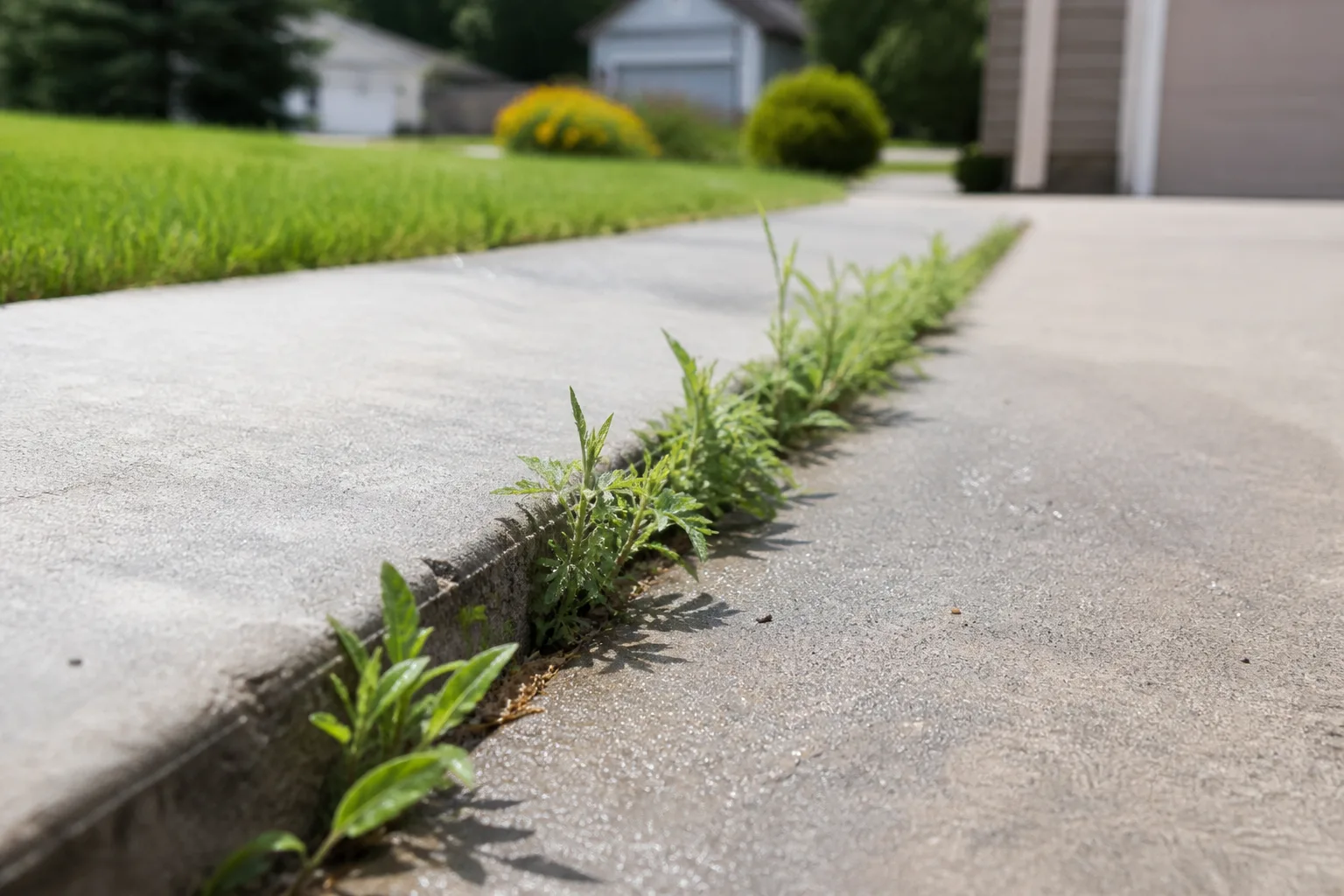
Step 1: Brush and lift the weed from the joint
Sweep loose leaves, dust, and seed-bearing debris off the patio first. Use a joint brush, butter knife, or crevice tool to loosen the weed from the sides and pull the crown upward. Collect the debris rather than blowing it into the adjacent bed, especially if a weed has flowers or mature seed heads.
If a paver starts to rock or the gap opens dramatically, stop digging. Removing the root is not a win if you also remove the material supporting the paver. Put the removed plant in the trash or green-waste stream allowed by your local service; runners and seed heads should not go into a cool home compost pile.
Step 2: Spot-treat green regrowth and wait
Choose only one treatment for the remaining green tissue. Use boiling water when the joint is empty and nearby plants are protected; use a very directed household-vinegar or lemon-juice spot treatment only when you can keep it on the weed. Dish soap, if used at all, is a small spreading aid—not a reason to soak more surface.
Mark the date mentally or on a simple garden note and inspect again after seven to fourteen days. A brown top is not proof of root death. If green shoots return, remove them again while the plant is spending stored energy rebuilding leaves.
Step 3: Clean and refill the joint
Once the weeds and dead debris are out, brush the joint clean and let it dry. For a patio with sound, correctly spaced pavers, sweep in the jointing material recommended for that installation. Polymeric sand can harden when activated with water and reduce the open, dusty surface where seeds settle, but it is not magic; the old joint must be cleaned properly and the product must be installed exactly as directed.
UC IPM describes polymeric sand as paving sand with a polymer additive that hardens like mortar while still allowing some water infiltration, and notes that older joints need cleaning before the material is added. Its weed-management bulletin is useful context for deciding whether a joint repair is more sensible than repeated spot treatments.
Do not pressure-wash a sound joint simply to make it look bright if the blast will remove the material holding the pavers together. If the joint is already empty, wide, or washed out, clean the full area, repair the base if needed, and follow the paving manufacturer’s guidance for jointing sand or mortar.
What not to pour between pavers
Salt is the biggest pantry trap. Sodium chloride can dehydrate weeds, but it also raises salinity in soil, injures nearby roots, and travels with runoff. Penn State Extension calls table salt one of the most problematic homemade weed-control ingredients because sodium contamination persists rather than behaving like a purpose-designed product that breaks down. A patio edge is rarely isolated enough to make routine salting worth the risk.
Bleach is not a patio weed solution. It can damage desirable plants, soil organisms, and paving finishes, and it can release hazardous gas when mixed with other cleaners. Never use bleach as a stronger version of vinegar and never combine the two.
Baking soda is not a harmless upgrade. It can injure small weeds in an isolated crack, but repeated sodium-based applications can harm soil and nearby plants. If the weed is in a place where soil might later support a groundcover, herb, or tree root, remove it mechanically and repair the gap instead.
Concentrated horticultural vinegar is not kitchen vinegar. Products at 20% acetic acid or more can cause serious eye and skin injury and should be used only as a legally labeled pesticide, with the label’s protective equipment and application directions. A pantry recipe is not a safe way to recreate that strength.
A maintenance schedule that prevents reinvasion
The easiest patio to weed is the one you inspect before the plants flower. During your local growing season, walk the paver edges every week or two and lift seedlings while the joint is damp and the roots are short. Cut down flowering weeds before they release seed, and sweep leaf litter away from the joints after storms or heavy mowing.
Use the method that matches the size of the problem: knife for a few seedlings, hot water for isolated tender growth, and a directed contact treatment only where you can protect nearby plants. If you are reaching for vinegar every few days, stop and ask whether the joint needs cleaning or refilling instead.
Also look beyond the pavers. A dripping hose, blocked drain, low spot, or overgrown border can keep the joint damp and continually supply debris. Improving drainage and trimming back vegetation often does more for long-term weed control than adding another ingredient to a spray bottle.
When to re-joint, re-lay, or plant the gap on purpose
Re-joint when the same stretch keeps filling with soil, the sand has washed away, or the pavers move underfoot. If roots are lifting slabs, water pools beside the patio, or the base has failed, a surface treatment is only cosmetic; the bed and drainage need attention before the paving is reset.
You can also choose a living joint where the design and traffic allow it. Low-growing plants such as creeping thyme can work in sunny, well-drained gaps that receive only light foot traffic; they need time to establish and still need trimming. Gardeners’ World notes that creeping thyme can be grown between pavers and helps suppress weeds once it forms a dense mat. It is a design choice, not a universal substitute for grout on a busy walkway.
The RHS similarly suggests intentional low-growing plants in suitable paving gaps, while also recommending repointing where you want a clear, hard surface. Decide first whether you want a sealed walking path or a planted one. Trying to maintain a bare, weed-free joint with repeated acid or salt treatments is usually the most work-intensive option.
Conclusion
The five kitchen items are useful because they solve different parts of the problem. A butter knife removes seedlings, boiling water cooks tender weeds in empty cracks, white vinegar and lemon juice can burn exposed young foliage, and dish soap may help a spot treatment spread—but none reliably prevents a new seed from landing in a dusty joint or guarantees the death of a taproot.
For lasting natural patio weed control, brush and lift first, treat only the regrowth you can isolate, inspect again before seed set, and refill or repair open joints. Keep salt, bleach, improvised strong acids, and broad homemade sprays away from the patio edge. The best “kitchen trick” is knowing when to stop adding ingredients and fix the place where the weed keeps getting started.



