Natural Mouse Repellent That Works All Winter
Pest pros rely on steel wool exclusion plus peppermint and rosemary scents to keep mice out all winter. Learn where to pack wool, what actually works, and when to add traps.
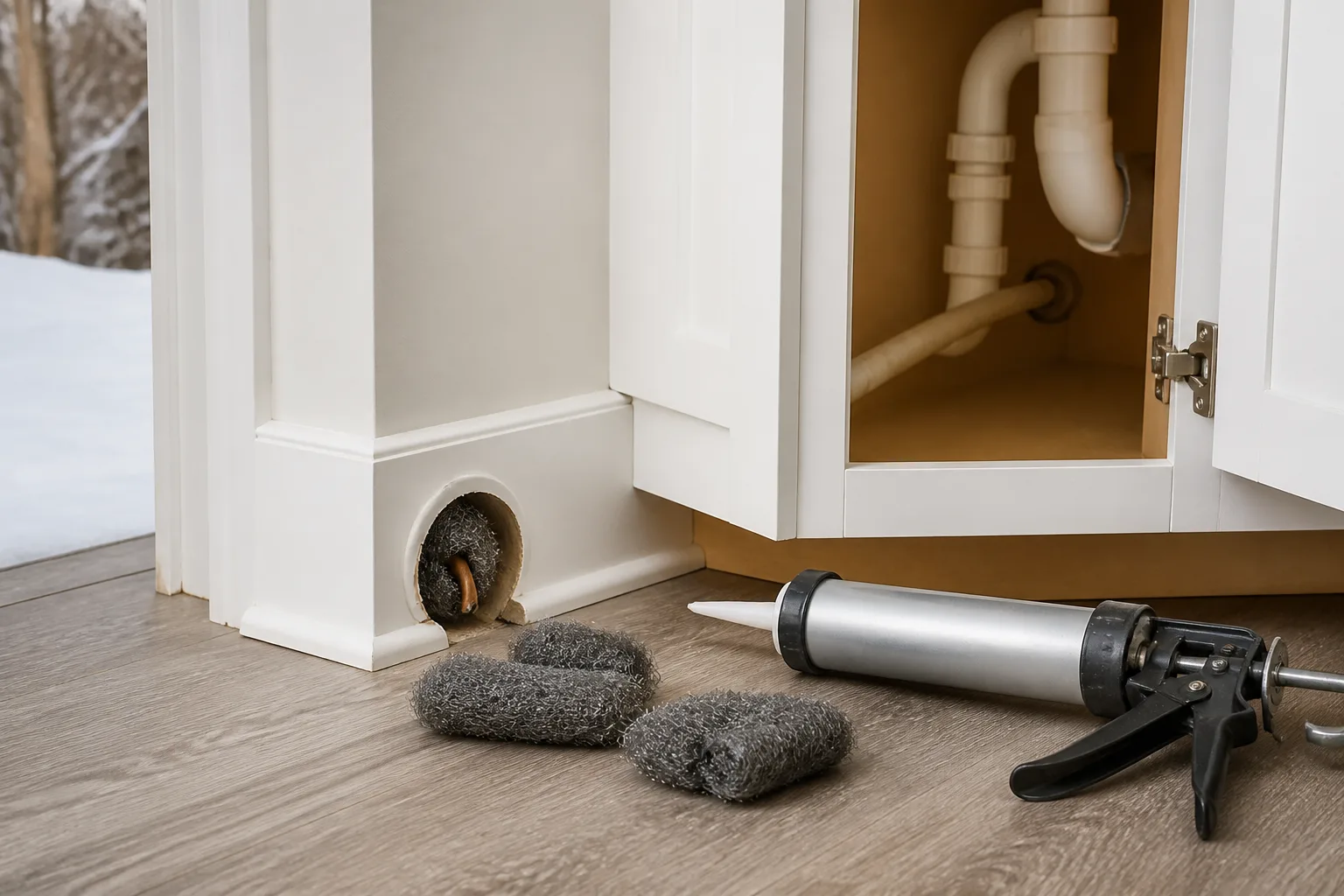
When pest professionals talk about a natural mouse repellent that works through winter, they are usually not describing a bottle on a shelf. They mean steel wool—fine metal fiber packed into gaps mice cannot chew through—combined with sanitation and, optionally, strong scents that make treated routes feel unsafe. That distinction matters because most “natural” products sold online overpromise on peppermint alone while ignoring the quarter-inch holes that let house mice (Mus musculus) move indoors every fall.
The winter plan that actually holds: inspect for active mice first, seal every gap about ¼ inch or wider with tightly packed stainless or copper wool backed by caulk or metal mesh, store food in chew-proof containers, then layer peppermint or rosemary along wall runways if you want extra disturbance. Scent and ultrasonic gadgets can help at the margins; they do not replace a dime-sized hole behind the dishwasher.
Why Pest Pros Prioritize Physical Exclusion Over Scent Sprays
Wildlife biologists and IPM-trained technicians share a blunt consensus: there is little peer-reviewed evidence that any particular scent reliably repels mice long term in occupied homes. What is well documented is that mice need openings, food, and quiet cover—and that exclusion removes the first requirement permanently when done right. The CDC’s rodent-control program ranks the job as sanitize, seal, trap, monitor—not “spray first and hope.”
That does not make peppermint useless. It means peppermint, rosemary, and ultrasonic noise belong in the supplement column after you start closing highways into the wall void. A mouse with a warm nest, a steady crumb supply, and an unsealed pipe chase will tolerate a lot of menthol if the alternative is freezing outside.
What the Research Actually Says About Natural Repellents
University extension publications on house mice consistently emphasize construction-grade materials—hardware cloth, metal flashing, concrete, and metal wool—for gaps under ¾ inch where permanent barriers are impractical (University of Nebraska–Lincoln Extension G1530). Scent-based products appear in popular press and field anecdotes, but controlled home studies showing months of protection are scarce. UC IPM guidance on commensal rodents treats sanitation and exclusion as the foundation; chemical and sensory deterrents are secondary tools that fail when attractants remain (UC IPM Pest Note 74161).
Practical takeaway: treat “natural repellent” as a category that includes physical blockers (steel wool) and volatile irritants (essential oils)—then apply them in the order evidence supports.
Steel Wool Is the Natural Barrier Pros Trust Most
Steel wool is the natural mouse repellent pest pros cite most often because mice cannot gnaw through densely packed fine metal fiber, yet it conforms to irregular gaps around pipes, corners, and warped trim. Unlike poison baits, it does not harm owls, foxes, or neighborhood cats that might eat a sick rodent. Unlike expanding foam alone, it presents a chewing surface rodents abandon quickly—though foam over wool can anchor the plug.
Pros like it for three operational reasons: it is inexpensive, it fits tight spaces a metal plate cannot, and it installs in minutes during a winter walk-through. The failure mode is almost always installation error—loose stuffing, untreated rust in damp crawl spaces, or wool left exposed so mice pull it out like nesting material.
Why Mice Cannot Chew Through Packed Metal Fiber
Rodent incisors grow continuously; mice gnaw to wear teeth down and to open food packaging. Fine stainless or copper wool presents thousands of cutting edges in a space too narrow to get leverage. Mice may try once, then route around the plug—exactly what you want if the surrounding structure is also sealed.
The Illinois Department of Public Health notes that house mice can enter through holes about ¼ inch wide—roughly a dime. UNL’s rodent-proofing guide recommends copper or stainless steel wool wedged tightly into openings under ¾ inch that cannot receive rigid mesh, with coarse steel wool acceptable as a temporary fix that will eventually rust.
Stainless vs. Coarse Steel Wool for Winter Gaps
| Material | Best use | Winter caveat |
|---|---|---|
| Stainless steel wool (#0000–#1 fine) | Pipe chases, interior gaps, damp basements | Won’t rust; worth the upgrade near plumbing |
| Copper wool | Exterior weep holes, garage transitions | Corrosion-resistant; pack firmly |
| Coarse steel wool | Quick interior plug while scheduling permanent repair | Rusts in humidity; treat as short-term |
Buy plain metal wool without soap—soapy pads leave residue and may repel caulk. For gaps wider than a pencil, pair wool with ¼-inch hardware cloth or galvanized flashing rather than stuffing a fist-sized void with fiber alone.
Where to Install Steel Wool Before Winter Sets In
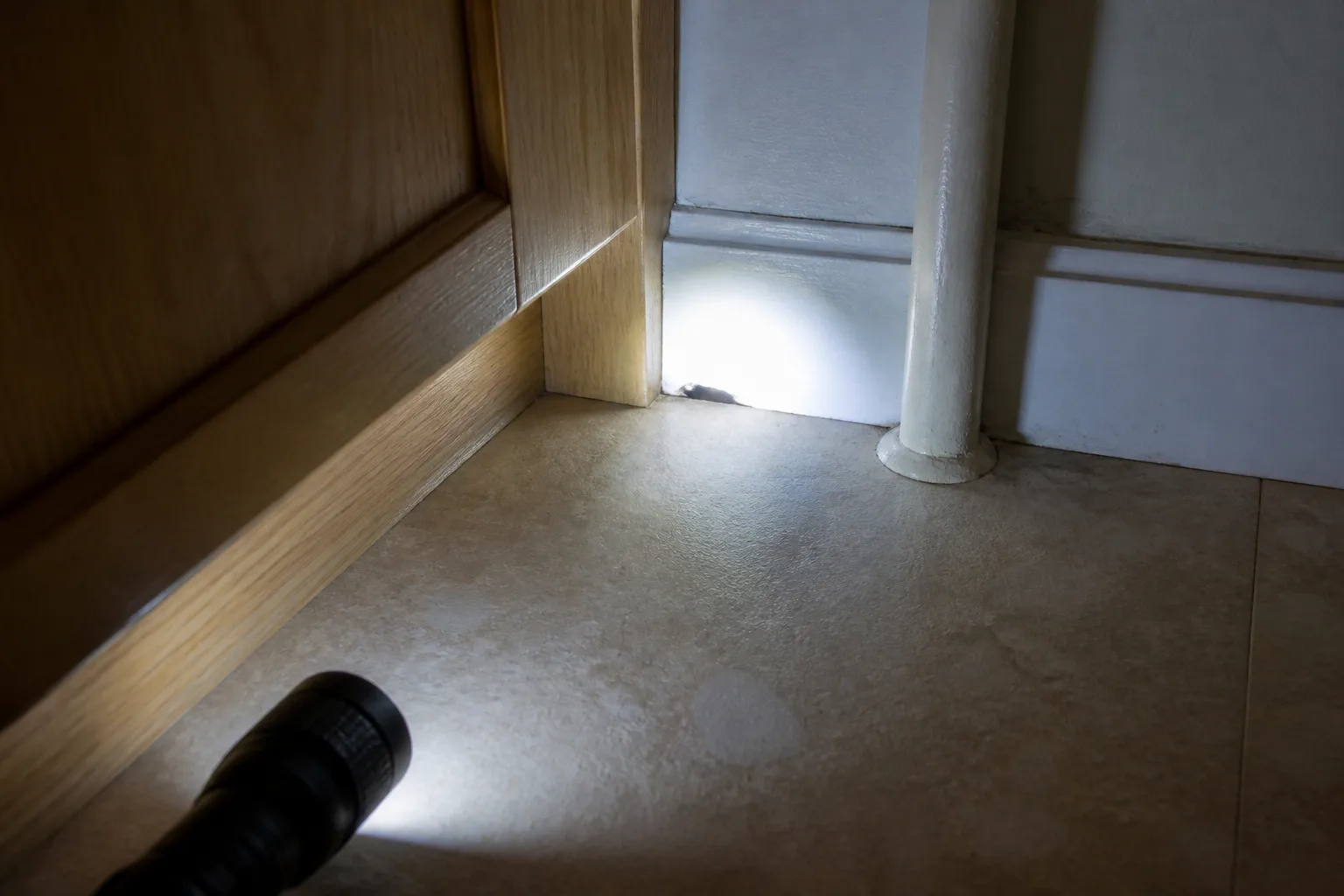
Late fall is the highest-return window: mice are actively seeking heat, but you can still reach exterior penetrations before sustained freezing makes crawl-space work miserable. Walk the perimeter with a flashlight, pencil, and mirror. If the pencil slips into a gap, mark it.
Basements, Crawl Spaces, and Foundation Gaps
Foundation cracks, sill plate irregularities, and crawl-space vents are primary winter entry routes. Pack wool into corner joints where the rim joist meets the foundation, then seal with high-quality sealant or cementitious repair. UNL guidance recommends a weed-free, crushed-rock buffer around perimeters to discourage burrowing—relevant if your foundation has older stone or block with mortar gaps.
Inside crawl spaces, look for disturbed insulation, droppings, or greasy rub marks along joists—signs mice are already using the route. If you find active evidence, set traps along that runway before sealing distant holes that could trap animals inside a wall.
Around Pipes, Vents, and Utility Penetrations
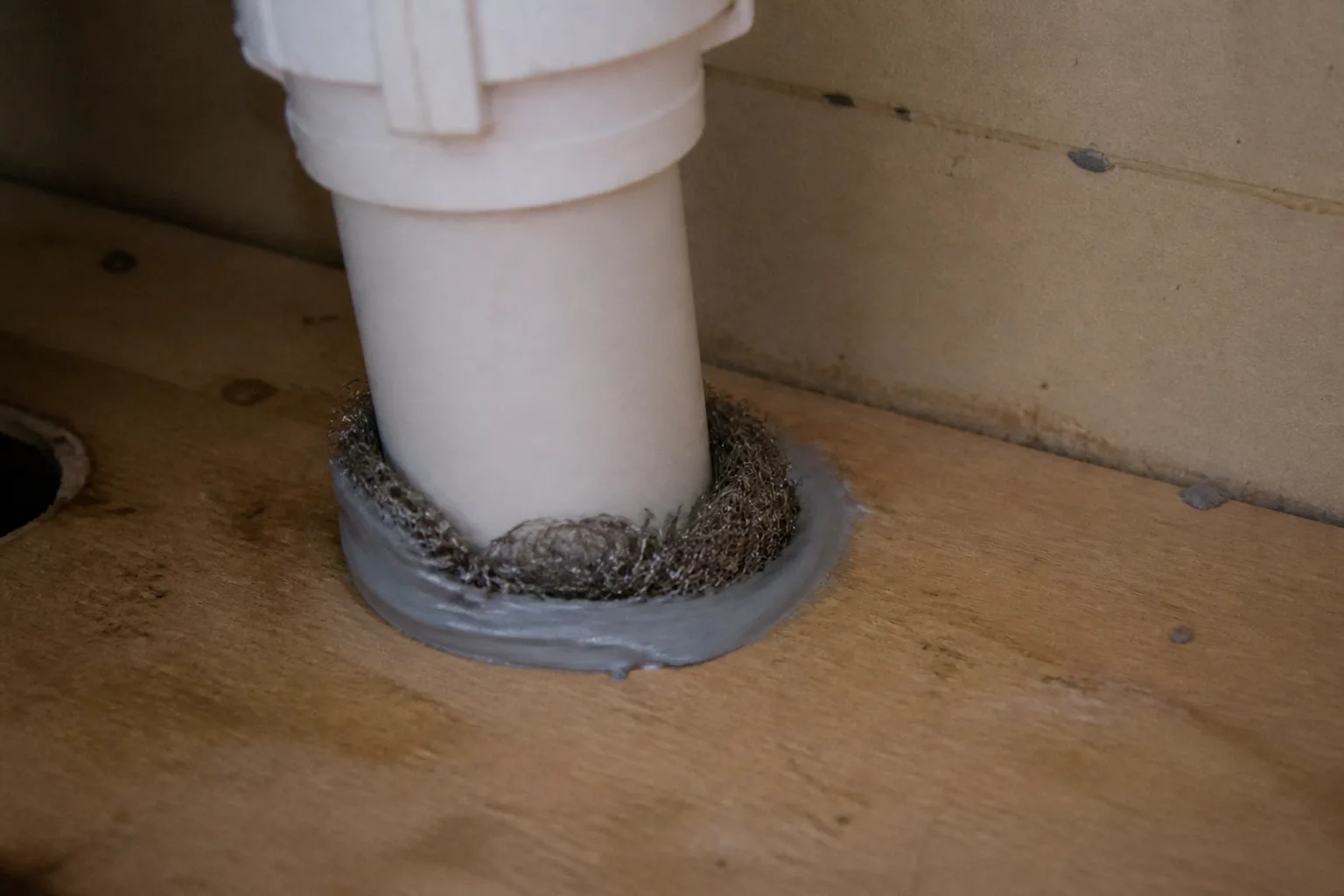
Kitchen and laundry pipe chases are classic mouse elevators: one gap under the sink can connect to wall voids on multiple floors. Pull back escutcheon plates, pack wool around the pipe circumference, and caulk the plate to the wall. For dryer vents, use a code-appropriate flapper cover; do not screen with mesh so fine that lint builds up and creates a fire hazard—UNL’s rodent guide calls out dryer vents specifically.
AC line sets, cable penetrations, and gas lines deserve the same treatment. Mice do not need the full diameter of the hole; they need the irregular edge where sealant cracked away.
Doors, Windows, and Fireplace Openings
Garage-to-house doors often have a threshold gap larger than ¼ inch. A rodent-proof threshold or door sweep beats wool on the floor, but wool plus sealant can close small corner gaps at the jamb. Check fireplace dampers and cleanout doors when the chimney is cold—quiet chimneys attract curious rodents.
Window frames in older homes may have deteriorated glazing or missing backer rod. Steel wool fits small voids; larger rot needs carpentry, not more fiber.
How to Pack and Seal Steel Wool So It Stays Put
Loose wool is a invitation. Technicians report mice pulling steel wool out of holes to use in nests or to reopen a path. The fix is density plus a cap.
Install sequence:
- Confirm no mouse is inside the void you are closing—or trap first if you see fresh droppings nearby. Sealing an active animal inside a wall creates odor and chewing damage.
- Clean the gap of loose debris and grease so caulk adheres.
- Pack wool with a flathead screwdriver or putty knife until you cannot push more in without compressing prior layers. The plug should feel firm, not spongy.
- Apply caulk, sealant, or metal mesh over the wool so it cannot be pulled forward. For exterior holes, use weather-resistant sealant and paint to match.
- Mark the repair on a simple sketch of your foundation so you remember to inspect it next fall.
The Caulk-and-Wool Sandwich Method
Think wool in the middle, sealant on both faces when the gap opens to a visible room. For a pipe penetration under a sink: pack wool in the annular space, smooth silicone or latex sealant around the pipe, then reinstall the escutcheon ring tight to the wall. On exterior gaps, urethane sealant flexes with temperature swings better than brittle fillers.
For larger openings, sandwich ¼-inch hardware cloth cut slightly oversized, screw or staple it to the substrate, then seal edges—wool alone is not a rodent-proof panel across a vent opening.
Scent and Sound Deterrents That Actually Help
Once exclusion is underway, volatile scents and intermittent noise can make remaining runways feel risky—especially in low-traffic zones like attics, utility closets, and seasonal storage rooms. Rodents are neophobic: they avoid new objects and strong odors at first. That novelty fades within days to weeks unless you rotate stimuli, which is why a single cotton ball of peppermint behind the fridge stops working while the gap behind the fridge remains open.
Peppermint and Rosemary Oils as Short-Term Lane Blockers
Peppermint oil (Mentha piperita) and rosemary oil can discourage mice from crossing treated baseboards because high concentrations irritate olfactory systems tuned to detect predators and spoiled food. They do not kill mice and do not close holes. Use them as lane markers along walls where you already see rub marks or droppings.
Application rules:
- Soak cotton balls or reusable felt pads, place them in ventilated mesh containers (not loose where pets can eat them), and tuck them along runways—not on food shelves.
- Refresh every 7–14 days in dry winter air, or when you stop smelling the oil.
- Never apply undiluted oil on surfaces children or pets touch. The ASPCA Animal Poison Control Center notes that concentrated essential oils can cause gastrointestinal upset and more serious signs in cats; keep sachets inaccessible and ventilate treated rooms.
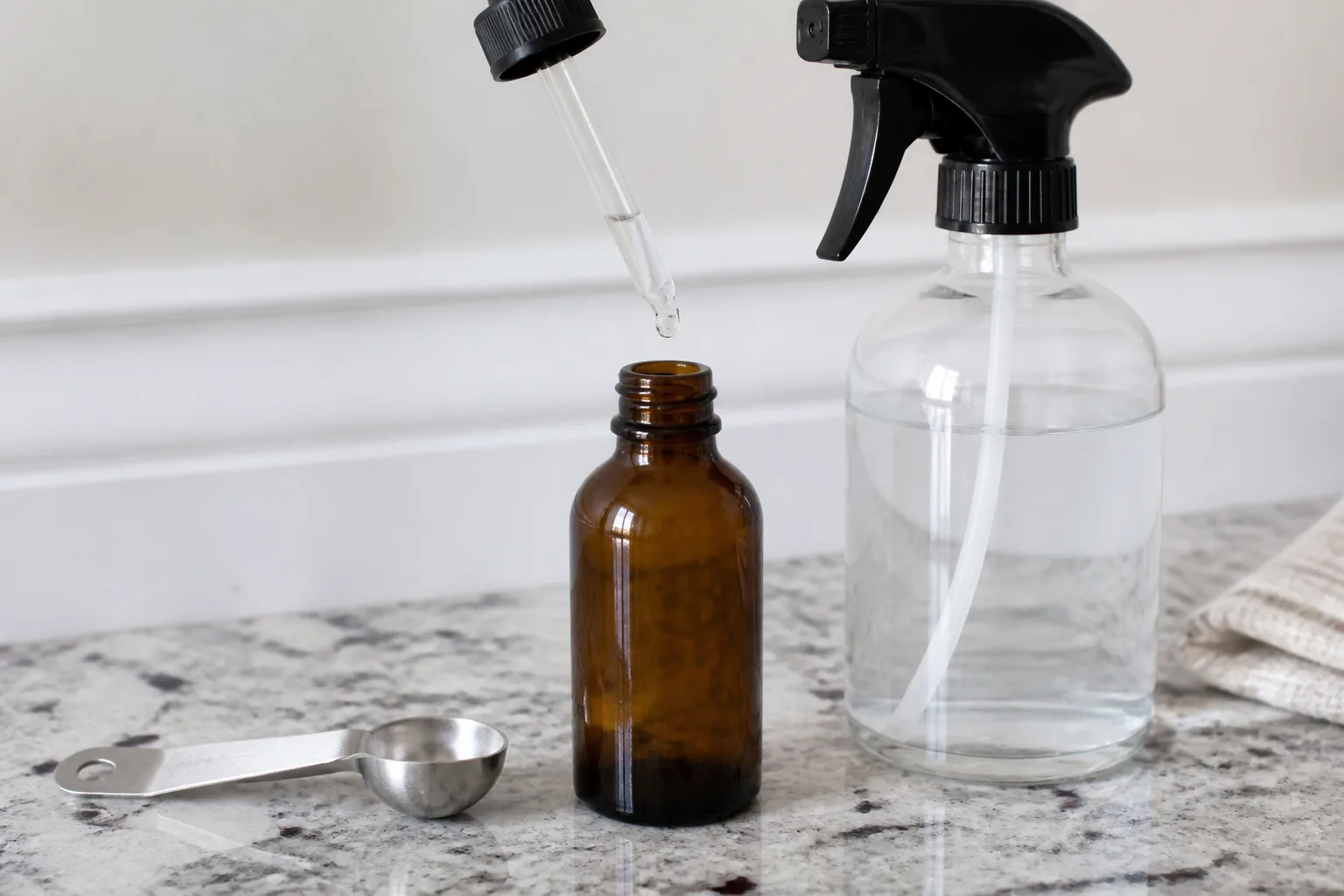
For a spray blend and mixing ratios, see our companion guide on natural ways to repel mice at home—the recipe pairs peppermint with rosemary and citronella along baseboards after sealing begins.
Ultrasonic Devices and Their Real Limitations
Plug-in ultrasonic repellers emit high-frequency sound meant to annoy rodents without bothering humans. Field results are mixed: furniture and wall voids absorb sound, mice habituate quickly, and different species respond differently. Treat ultrasonic units as a possible low-cost experiment in a single closed room—not a whole-house solution and never a substitute for steel wool at the foundation.
If you try one, place it on an interior wall facing the problem zone, clear of soft furnishings that block waves, and combine it with sealing and traps. Expect to reassess after two weeks using droppings, not the device’s marketing claims.
Six Entry Routes Mice Use When Temperatures Drop
Mice do not need a door left open. They need a dime-wide gap and a reason to push through it. When frost arrives, prioritize these six zones on your winter inspection:
- Basements and crawl spaces — rim joists, vent screens, and utility penetrations at the sill plate.
- Attics — gable vents, soffit gaps, and openings where electrical lines enter; quiet insulation makes ideal nesting material.
- Windows, doors, and fireplaces — worn sweeps, warped thresholds, and damper seals that no longer close flush.
- Vents — dryer, kitchen exhaust, and bath fans with missing or torn flappers.
- Pipes and drains — sink tailpieces, floor drains without grates, and laundry standpipe gaps.
- Electrical and water lines — cable TV penetrations, hose bib plates, and gaps around dishwasher drain lines.
Store dry goods in glass or metal with tight lids once entry work begins—cardboard is both food and nesting material. Our pantry mouse guide walks through food-storage specifics if kitchen cabinets are your hot zone.

When Natural Repellents Are Not Enough
Natural does not mean passive. Call a professional or add traps when you see any of the following after two weeks of sealing and cleaning:
- Fresh droppings in multiple rooms after cleanup (signs of mice guide)
- Daytime sightings more than once—often signals overcrowding
- Gnawing on wires or gas lines—a safety issue beyond DIY scent work
- Persistent scratching in several wall zones despite closed exterior gaps (possible interior nest)
- Uncertainty about species—deer mice in some regions carry hantavirus; cleanup PPE differs from house mice alone
Snap traps placed perpendicular to walls on runways, baited with peanut butter, remain the standard low-toxicity catch method when exclusion lags behind population growth (CDC trap-up guidance). Live traps are an option where regulations allow, but released mice must travel far enough not to return.
Closet and bedroom storage zones have their own checklist in our closet mouse guide if wool and caulk are already done but fabric damage continues.
Winter Mouse-Proofing Checklist
Use this sequence once temperatures start dropping—typically late October through early December in cold climates, earlier if you already heard scratching:
Inspect: Walk the interior perimeter at night listening for movement; check the six entry zones with a flashlight; note droppings, rub marks, and chew damage.
Sanitize: Store pet food and birdseed in sealed bins; wipe crumbs under appliances; remove cardboard clutter in garages and basements.
Seal: Pack stainless or copper wool into gaps under ¾ inch; cap with caulk or mesh; repair door sweeps and vent covers; prioritize pipe chases and garage transitions.
Disturb (optional): Refresh peppermint or rosemary sachets along runways; rotate placement weekly; avoid pet-accessible spots.
Trap if needed: Set covered snap traps on active runways; check daily; dispose of carcasses safely.
Monitor: After cleanup, recheck droppings every 72 hours for two weeks. No new pellets means your natural program is working; new pellets mean a missed gap or interior nest.
Conclusion
The natural mouse repellent pest pros trust for winter is not a single scent—it is steel wool packed tight into quarter-inch gaps, backed by sealant and supported by clean food storage. Peppermint, rosemary, and ultrasonic devices can nudge mice away from treated lanes, but they fail the moment a warm wall void and a cereal box remain available. Start with exclusion while fall weather still allows crawl-space access, layer scents only where they make sense, and escalate to traps or professionals when fresh signs keep appearing. Done in that order, you get rodent control that is effective, humane-adjacent, and safe for wildlife—without relying on poison baits that ripple up the food chain.



