Lawn Mower Starts Then Dies: Fix Guide
Engine fires for a few seconds then quits? Diagnose fuel, air, spark, and deck clogs with step-by-step fixes before you replace the mower.
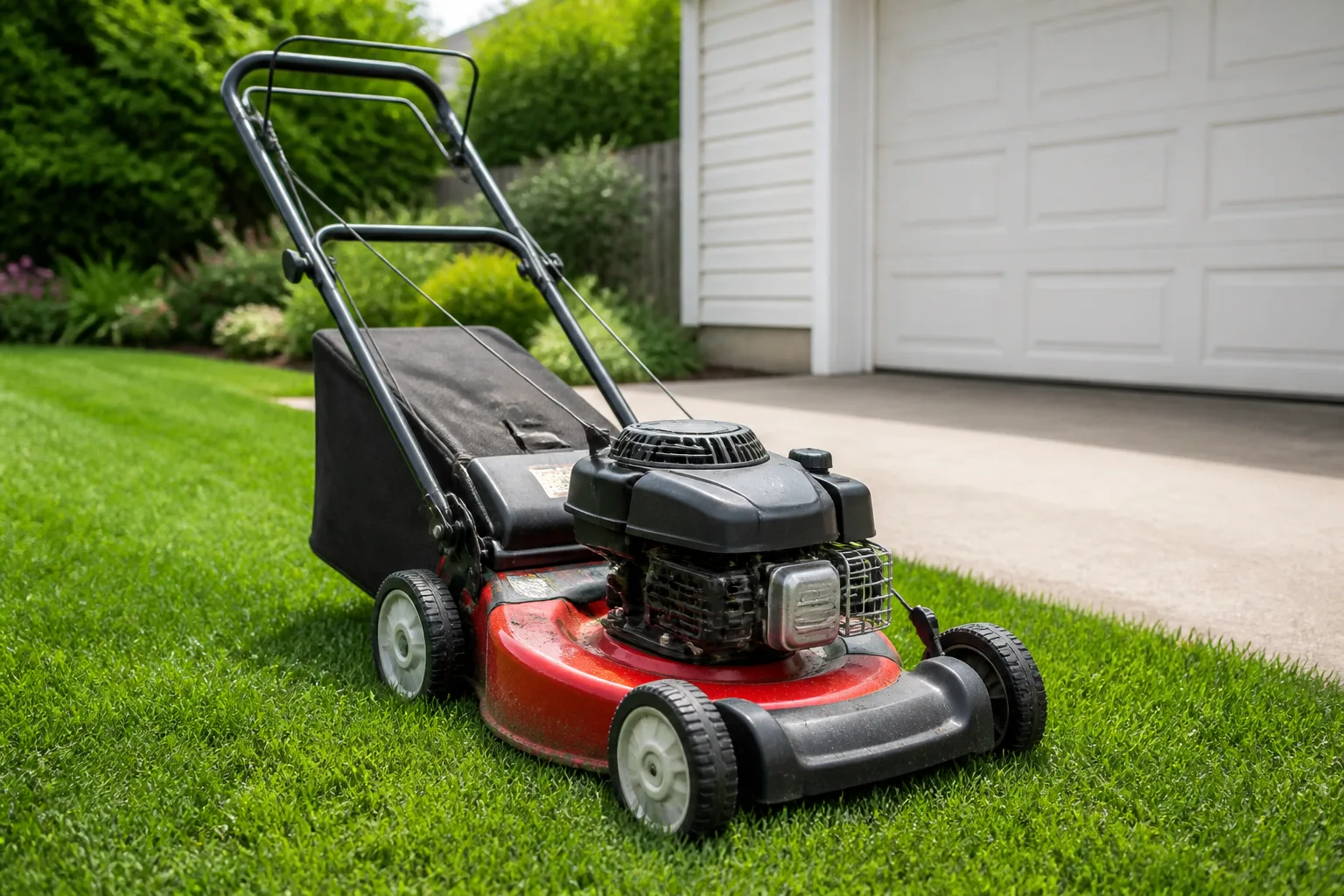
You pull the cord, the engine catches, and for three glorious seconds it sounds like Saturday is saved. Then it sputters and dies—again. A lawn mower that starts then dies is one of the most common small-engine problems homeowners hit, and it is rarely a mystery once you know what to check first. The engine is telling you it got enough fuel and spark to fire, but not enough of either—or not enough air—to keep running.
Why Your Mower Starts Then Dies
Most stalls that happen seconds after startup trace back to the same four systems: fuel delivery, air intake, ignition, and mechanical load under the deck. Stale gasoline and varnished carburetor jets are the top culprits on gas push mowers that sat over winter. A fouled spark plug or saturated air filter runs a close second. Clogged blades or a deck packed with wet clippings add enough drag that a weak engine cannot stay above idle.
Pay attention to how it dies—that symptom narrows the list fast. If the mower only runs with the choke on, the mix is too lean once the choke opens; think carburetor varnish or an air leak. If it surges up and down before quitting, fuel flow is inconsistent—often a clogged inline filter or partially blocked jet. If it dies the moment you engage the blade in thick grass, you may be looking at deck clogs, dull blades, or an engine that is starved because maintenance was skipped all season. Pennsylvania State University Extension includes sharp, properly adjusted mowing equipment in its seasonal lawn program because mechanical drag and poor cuts stress turf—and a bogged-down engine is part of that same equipment story (Penn State Extension).
Safety Before You Open Anything
Small engines store gasoline, hot metal, and a sharp blade in one package. Treat every troubleshooting step like you are about to spin that blade, because accidental starts happen when people skip the basics.
Kill the Spark Every Time
Before you drain fuel, pull an air filter, or tip the deck, disconnect the spark plug boot and tuck the wire where it cannot touch the plug. On electric models, remove the battery or safety key per the manual. Never reach under the deck unless the blade has fully stopped and the power source is disconnected. The U.S. Consumer Product Safety Commission reports thousands of lawn-mower injuries annually; most are preventable with blade guards, stable footing, and no hands near cutting edges (CPSC). Wear gloves when handling fuel and eye protection when spraying carburetor cleaner.
Troubleshoot in This Order
Work from cheap and fast to time-consuming. You will fix most residential mowers before you reach a carburetor rebuild.
Fresh Fuel and the Fuel Cap Vent
Open the tank and smell the gas. Fresh fuel has a sharp petroleum odor. Stale gas smells sour, varnish-like, or noticeably weaker than gas from a can you just bought. Look at color, too—dark or cloudy fuel has oxidized. If the tank sat more than 30 days without stabilizer, assume the fuel is suspect even if it looks fine.
While you are at the tank, check the fuel cap vent. Many caps have a tiny pinhole or check valve that lets air in as fuel is used. When that vent clogs, a vacuum forms and fuel stops flowing after the engine burns what is in the carb bowl—classic starts-then-dies behavior. Loosen the cap slightly and try starting. If the mower keeps running, clean or replace the cap before you chase a carburetor.
A Clogged Air Filter
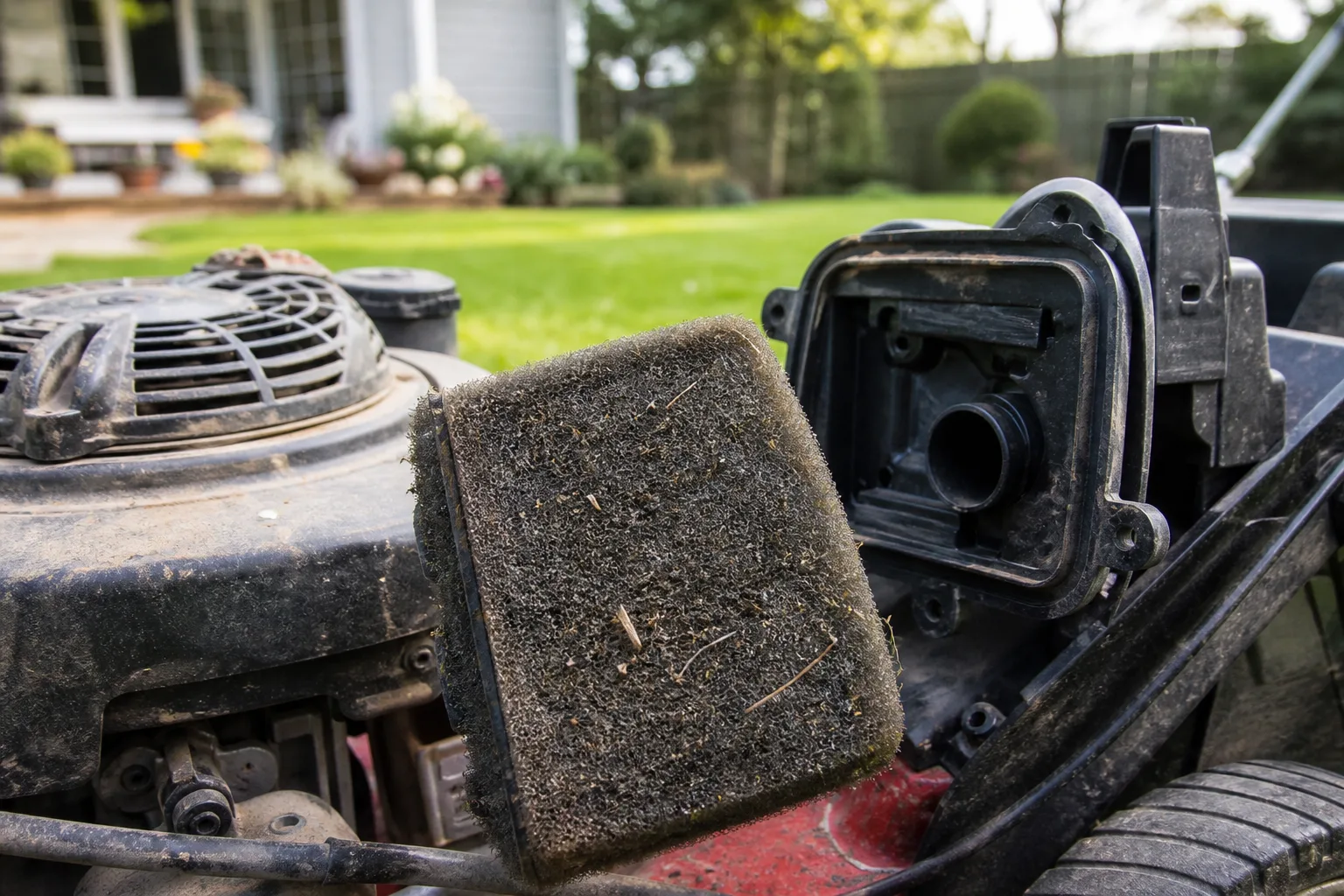
Engines need roughly 14 parts air to 1 part fuel for steady combustion. A plugged air filter chokes that ratio, richens the mix, and kills the engine once the choke opens. Pull the filter and hold it to a light. If you cannot see light through the paper or foam, clean or replace it. Foam filters can be washed with mild soap, dried completely, and lightly oiled if your manual calls for oiled foam. Paper filters get replaced—not blown off with compressed air on a dirty filter that is already saturated.
Quick test: With the spark plug disconnected for safety, remove the filter and note whether the element is gray with dust or dark with oil (oil points to a tilting problem covered later). Reinstall a good filter before mowing; do not run without one just because the engine stayed running during a brief test.
Stale Gas and Varnished Fuel Lines
Ethanol-blended gas absorbs moisture and leaves gummy varnish in the carburetor bowl and jets. That varnish passes enough fuel for a start but blocks steady flow at running RPM. This is why mowers that were “fine last fall” fail on the first warm weekend.
Symptoms of bad fuel include hard starting, stalling after a few seconds, surging, and black wet spark plugs. If you know untreated gas sat in the tank, do not just top off with fresh fuel—you will dilute but not fully solve varnish in the bowl.
How to Drain and Refill Safely
Run the mower until it dies to use what is left, or use a siphon pump or turkey baster dedicated to fuel—never mouth-siphon. Catch old gas in an approved container and take it to a household hazardous-waste site. Replace the inline fuel filter if your model has one; they are inexpensive and often overlooked. Refill with fresh fuel and add stabilizer if the mower may sit more than a month. For the rest of the season, follow the same equipment mindset as year-round lawn equipment maintenance—fuel care belongs on that checklist alongside blades and oil.
Dirty Carburetor and Blocked Jets
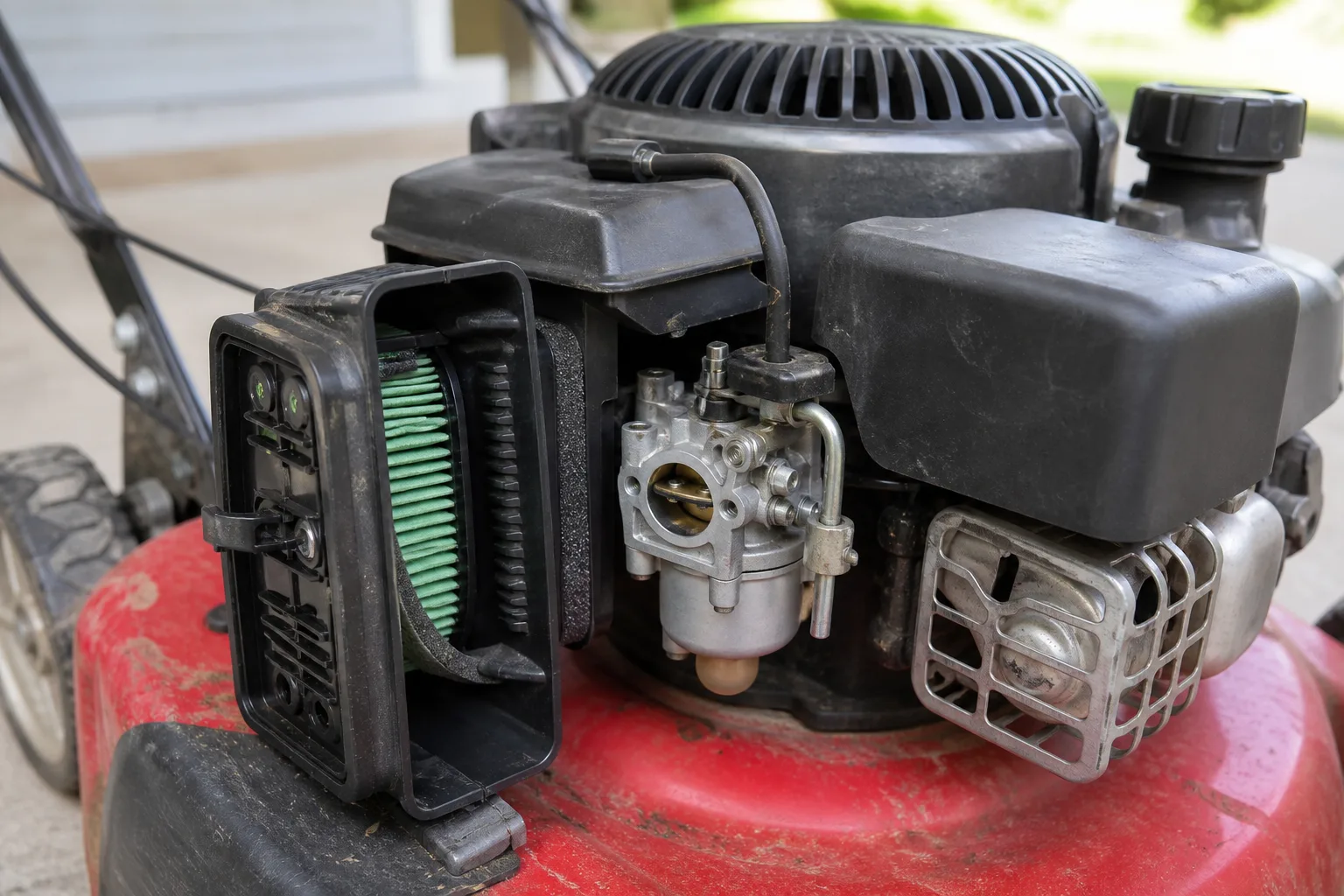
The carburetor meters air and fuel into the cylinder. When jets or the emulsion tube clog, the engine gets a splash of fuel at startup, then starves. Carburetor problems are so common on small engines that they should be on your short list any time fresh fuel and a new filter did not fix the stall.
In-Place Carburetor Cleaning
You can often restore flow without a full teardown:
- Disconnect the spark plug wire.
- Remove the air filter cover and filter to expose the carburetor intake.
- Spray carburetor cleaner into the throat according to label directions—outdoors, with eye protection.
- Wait several minutes so the solvent dissolves varnish.
- Reinstall the filter, reconnect the plug, and attempt start.
If the mower runs longer but still dies, repeat once, then move to deeper cleaning. Avoid random full-throttle sprays while the engine is running unless your cleaner label explicitly allows it; uncontrolled sprays are a fire risk.
Full Carburetor Rebuild or Swap
When in-place cleaning fails, remove the carburetor, disassemble on a clean towel, and soak small metal parts in carb cleaner—not on rubber gaskets or diaphragms unless the product says they are safe. Many homeowners find a new OEM or universal carburetor cheaper and faster than a rebuild kit for older push mowers. If you are not comfortable with small gaskets and spring placement, a small-engine shop carb service is reasonable—especially on riding mowers with multiple linkages.
Worn or Fouled Spark Plugs
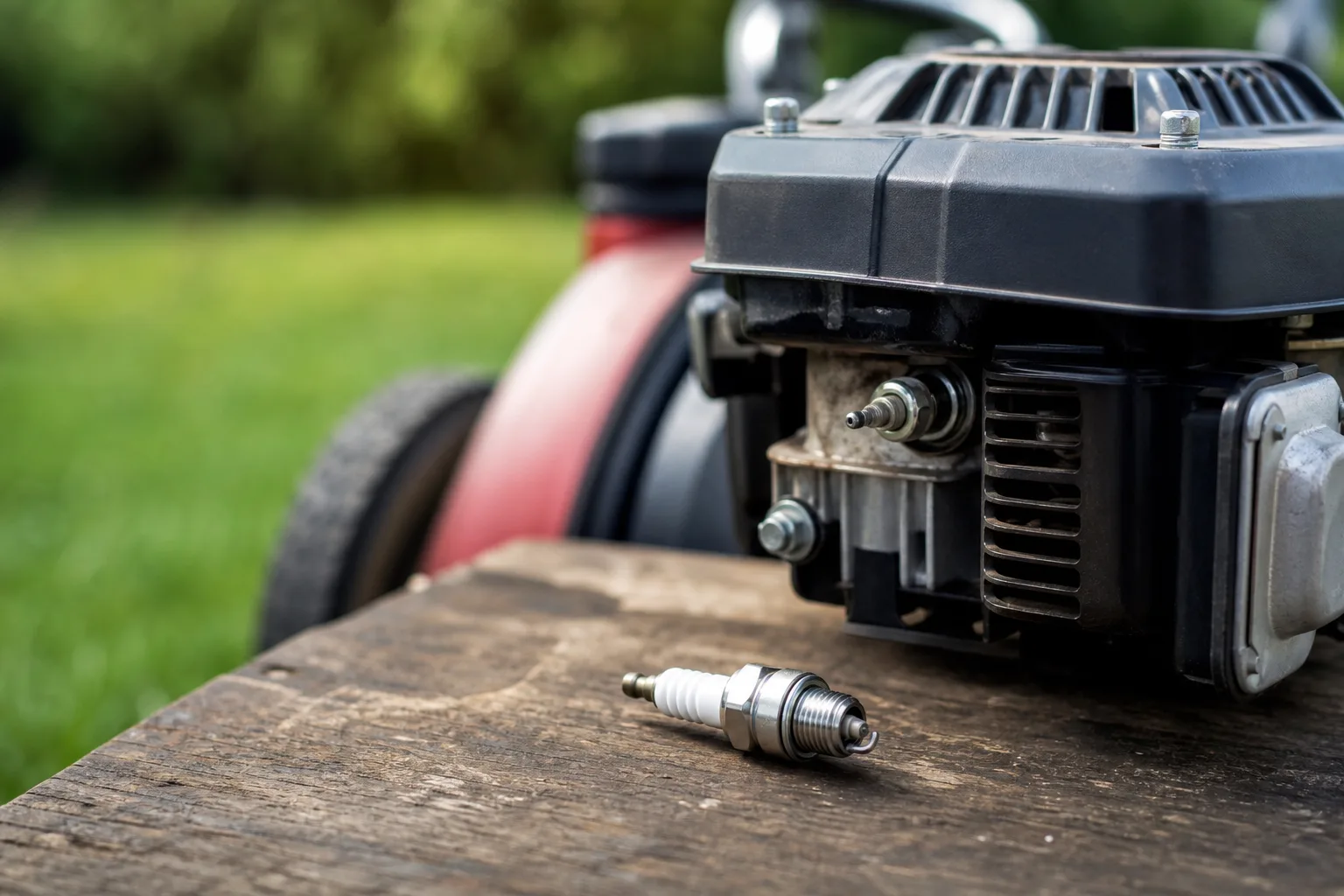
The plug must fire on every revolution once the engine is running. A plug with carbon buildup, oil fouling, or a worn gap may spark enough to start, then fail under load.
When to Clean vs Replace
Inspect the electrode. Light tan or gray deposits sometimes clean with a wire brush and plug cleaner. Heavy black carbon, chipped porcelain, or oil-wet electrodes mean replace the plug—it is a five-dollar part that saves hours. Gap the new plug to your engine spec (often 0.028–0.030 inch on many walk-behind models; confirm in the manual). Install finger-tight plus a quarter turn with a socket—do not overtighten into aluminum heads. Replace plugs once per season on mowers you rely on, or every 100 hours of run time, whichever comes first (Gardening Know How).
Clogged Blades or Deck Grass
Not every stall is fuel-related. Wet grass, tall clippings, or a deck caked with dried mulch can load the engine until RPM drops below idle and the engine quits—especially if the blade is dull. Dull edges tear instead of slice, which increases drag and clumping. Before you assume the carburetor is bad, tilt the mower safely (see next section), scrape the deck, and clear the blade area with a stick—never your hands.
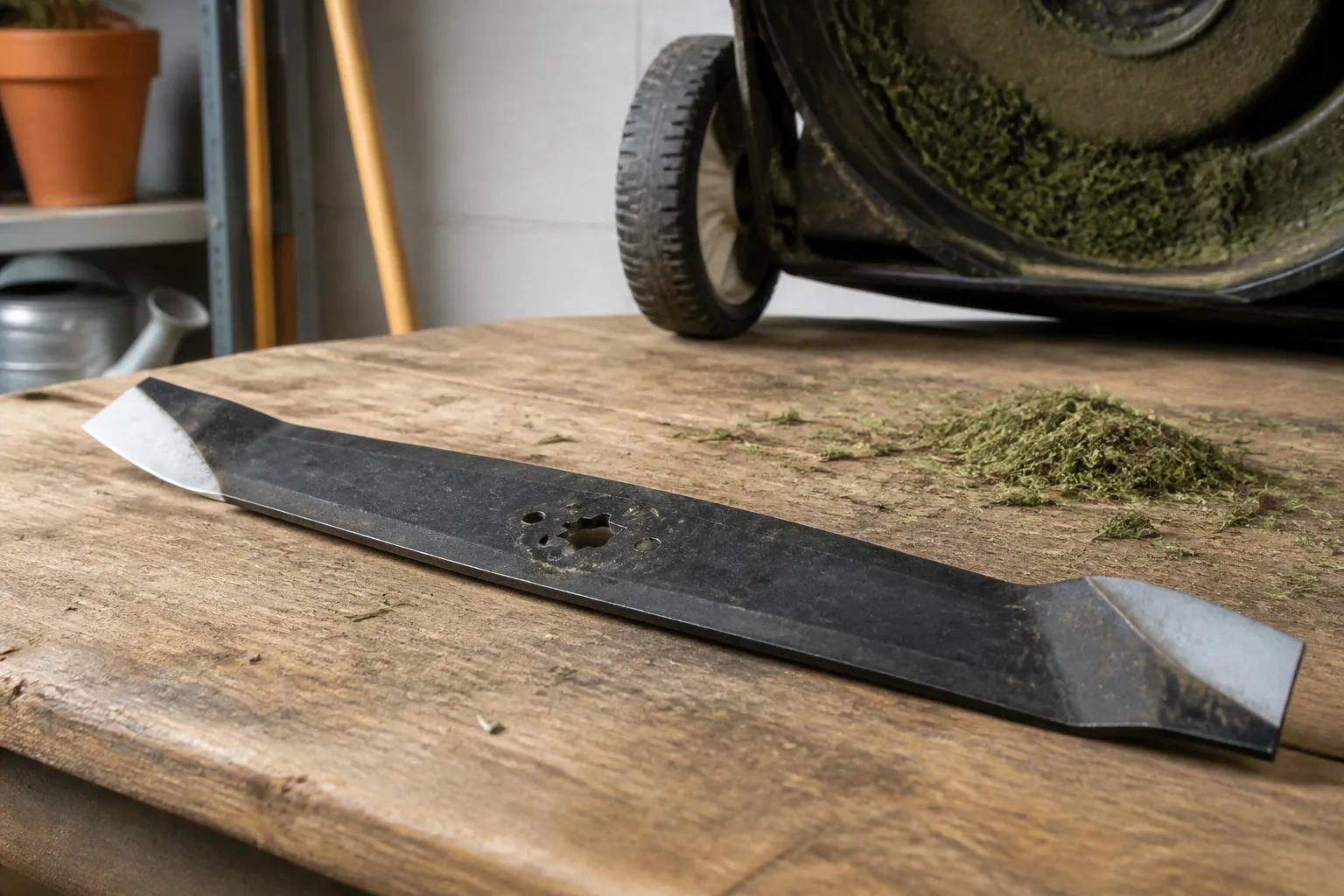
Sharpen or replace blades on a schedule, not when the lawn already looks torn. If tips look frayed or you need second passes, read when to replace lawn mower blades and sharpen or swap before the next cut. Mow dry grass when possible; wet clippings are a leading cause of deck stalls during peak growth months when homeowners mow in August and every week in between.
Oil Saturation From Tilting Wrong
Four-stroke push mowers share a frustrating failure mode: tipping the deck air-filter-side down sends oil into the carburetor and filter, fouling the plug within seconds of start. You see white or blue smoke, a wet plug, and an engine that dies almost immediately.
The safe tilt for most walk-behind models is straight back onto the handle, keeping the carburetor and air filter above the oil sump. Some manuals specify spark-plug-side up when draining oil—follow your brand’s diagram. If oil soaked the filter, replace it. Pull the plug, crank the engine a few times with the plug out to clear oil from the cylinder, then install a dry plug or a new one. Skipping that blow-out step often fouls a fresh plug on the next pull.
Choke, Primer, and Safety Switches
Choke: Leaving the choke on too long floods the engine; opening it too soon on a cold engine kills a lean-running machine. Use choke only to start, then move to run once it warms.
Primer bulb: Cracked bulbs or clogged check valves starve the carb on first fire. Replace bulbs that stay collapsed or will not firm up after several presses.
Bail arm / safety bar: A stretched cable or misadjusted switch cuts ignition when vibration moves the handle. If the mower dies when you release a lever—or only runs while you wiggle the handle—inspect the bail cable and switch before you buy a carburetor.
Fuel shutoff: On models with a valve, confirm it is fully open. Partial shutoff mimics a failing carb.
Battery Mowers That Shut Off After Starting
Cordless mowers that start then die often trace to battery state, not carburetors. A pack that reads partially charged on the charger may sag under blade load. Try a fully charged battery, clean contacts, and check that the safety key and handle switches click firmly. Overgrown grass on a weak battery feels like an engine stall—raise the cut height, slow your pace, or charge before tackling heavy growth. Gas-specific steps above still apply to any gas hybrid or range-extender models you own separately.
When to Call a Pro or Buy New
Call a small-engine shop when you have fresh fuel, clean filter, new plug, and a cleaned or replaced carb and the mower still will not hold idle—especially if compression is suspect (hard pull, no suction at the plug hole) or internal knocking appears. Riding mowers with multiple cylinders, hydrostatic drives, or electronic fuel injection exceed most DIY carb kits.
Replace rather than pour money into repairs when:
- The deck is rusted through or cracked beyond safe welding
- Repeated carb failures return every season despite stabilizer use
- Engine oil is metallic, smoke is constant blue, or the unit is past 8–10 years with major transmission or spindle damage
- Repair quotes exceed 40–50% of a comparable new mower
Residential walk-behind mowers often last 5–8 years with normal maintenance; battery platforms may justify an earlier upgrade if you are tired of fuel storage altogether. Either way, keep blades sharp and decks clean so the next machine is not fighting the same clogs that stalled this one.
Conclusion
A lawn mower that starts then dies is almost always a fuel, air, or spark problem you can diagnose in an afternoon—starting with stale gas, the fuel cap vent, and the air filter before you rebuild a carburetor. Add deck clogs, fouled plugs, and oil from improper tilting to the list, and you cover the failures most ranking pages only name without explaining. Work in order, disconnect the spark plug before hands go near the blade, and fix prevention with stabilizer and seasonal filter and plug swaps. Your lawn—and your Saturday—will thank you on the next pull.