How to Keep Hydrangeas Lush: Watering, Light & Pruning
Keep hydrangeas lush all summer with a low-maintenance routine for watering, light, mulch, soil, and safe deadheading—plus a quick wilting diagnosis.
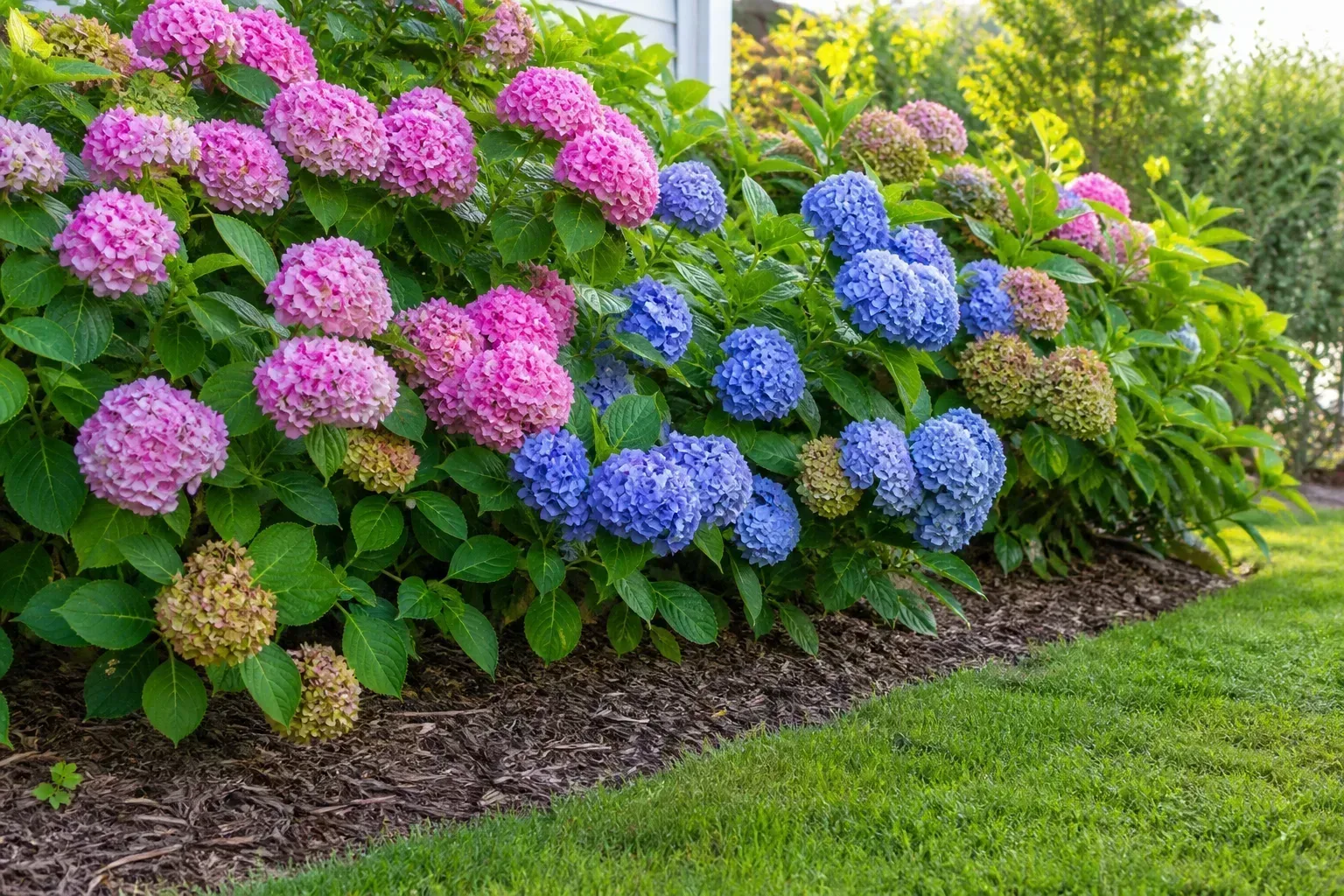
The easiest way to keep hydrangeas lush is to stop treating every wilted afternoon as a signal to grab the hose. Healthy summer hydrangeas need a stable root zone, the right amount of light for their type, and fewer disruptive cuts—not constant intervention. Once those foundations are right, a weekly moisture check, a mulch refresh, and occasional type-safe deadheading can carry most of the season.
The important distinction is between temporary heat droop and a shrub whose roots are actually running out of usable water. A plant that flags during the hottest part of the day but recovers by evening may be managing heat; a plant that stays limp overnight, grows in bone-dry soil, or has crispy leaf edges needs a different response. The routine below helps you decide which problem you have before you add more water or remove more stems.
The Low-Maintenance Answer: Stabilize the Root Zone First
Hydrangeas look lush when their leaves can keep replacing the water they lose through transpiration. That requires moisture in the soil, but it also requires oxygen around the roots. Consistently moist does not mean saturated, and it definitely does not mean a shallow sprinkle every day.
The University of Connecticut’s home-garden guidance gives a useful starting point: about 1 inch of water per week in normal conditions and 2 inches during hot, dry weather, delivered in one or two long soaks rather than daily splashes. Treat those figures as a starting point, not a rigid quota. Sandy soil, full sun, a newly planted shrub, a windy site, or a container can all dry faster; heavy clay, rain, and poor drainage can make the same amount too much.
The Four Levers That Keep Hydrangeas Full
Think of summer care as four linked levers:
- Light: Give the shrub enough sun to flower, but protect types that scorch or wilt in harsh afternoon exposure.
- Water: Check the root zone and water slowly enough for the moisture to reach the active roots.
- Soil and mulch: Improve water-holding capacity while keeping the crown and stems dry enough to avoid rot.
- Pruning: Remove only what your hydrangea can spare. Deadheading is a cosmetic choice for many shrubs, not a weekly health requirement.
If a hydrangea keeps collapsing despite wet soil, the answer is often a light or root problem rather than more irrigation. If it stays upright but produces fewer flowers, too much shade, the wrong pruning date, winter damage, or excess fertilizer may be involved. Fixing the wrong lever is how a manageable problem becomes a stressed plant.
Identify Your Hydrangea Before Changing Its Care
“Hydrangea” covers shrubs with different bloom timing, size, and sun tolerance. A mophead bigleaf hydrangea and a panicle hydrangea may share a planting bed, but they do not share the same pruning calendar. The University of Georgia describes bigleaf hydrangea as a plant for morning sun, afternoon shade, and moist, well-drained soil, while University of Connecticut guidance lists panicle types as more comfortable in full sun to partial shade.
Start with the plant label, the flower shape, and the leaves. Rounded blue or pink mopheads and flat lacecaps are usually bigleaf types; cone-shaped blooms often point to panicle or oakleaf hydrangeas; large rounded white heads on flexible stems often indicate smooth hydrangea. Cultivar names can override broad rules, so if the label is available, keep it with your garden notes.
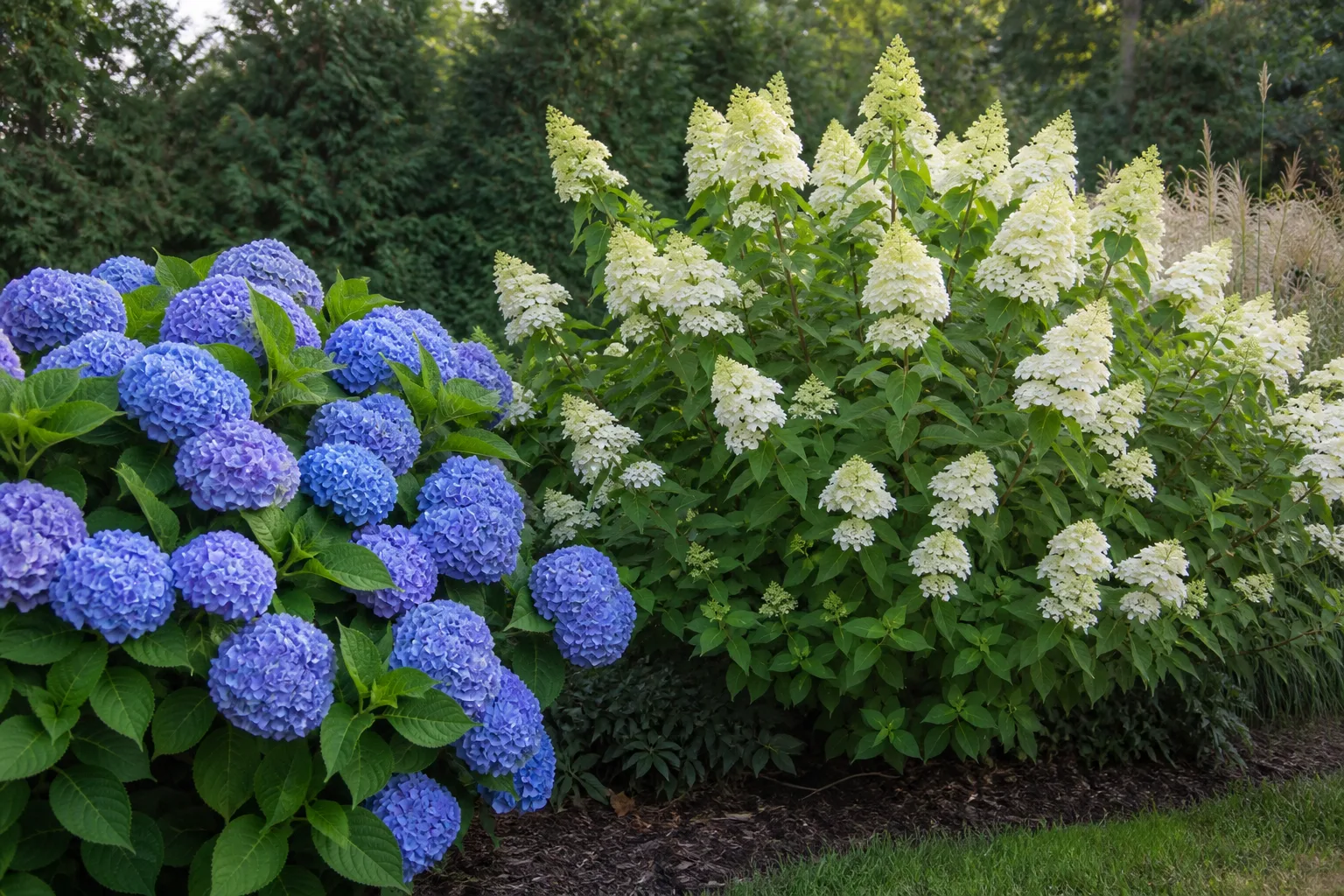
Old-Wood and New-Wood Hydrangeas Need Different Pruning
Old-wood hydrangeas make many of their flower buds on stems that grew the previous season. This group includes most bigleaf mopheads and lacecaps, mountain hydrangeas, and oakleaf hydrangeas. Their stems may look ordinary through winter, but the following year’s flowers can already be waiting near the tips. A hard fall or spring cut can remove the display before the plant has a chance to bloom.
New-wood hydrangeas flower on shoots made during the current growing season. Panicle hydrangeas and smooth hydrangeas belong here. They are more forgiving about late-winter or early-spring structural pruning, but that does not make a summer haircut useful. Removing healthy leaves in August reduces the plant’s ability to store energy just when it is finishing the season.
The University of Connecticut hydrangea guide lays out the difference by variety, including the safer pruning windows. Use that table as your default when the bloom wood is uncertain: make the smallest cut now, then do structural pruning in the correct dormant-season window.
Rebloomers Add Flexibility, Not Permission to Prune Anytime
Some modern bigleaf cultivars can flower on both old and new wood. That second source of buds gives them a better chance of blooming after winter injury, but it does not mean every cut is harmless. Late pruning can still remove the earliest flower flush, and deep cuts can leave the plant spending the rest of summer rebuilding stems instead of maintaining leaves and flowers.
For a rebloomer, deadhead earlier if you want to encourage a second flush, and stop shortening live stems once the shrub is approaching late summer. If you cannot confirm that a plant is a rebloomer, treat it like an old-wood hydrangea and keep the cuts light.
Build a Watering Rhythm That Does Not Need Daily Attention
Daily watering sounds attentive, but it often creates a shallow, unpredictable pattern: the surface is wet while the deeper root zone is dry. A better routine is to check first, then give the soil a slow, thorough soak when it needs one. That reduces the number of decisions and gives the plant a more even supply between waterings.
Check the Root Zone, Then Soak Deeply
Pull the mulch aside in two or three places around the drip line, not just beside the stem. Push a finger or a narrow trowel into the soil several inches. If the soil is cool and damp below the surface, wait—even if the top looks dusty. If it is dry at root depth, water at the base until the moisture has moved beyond the top layer.
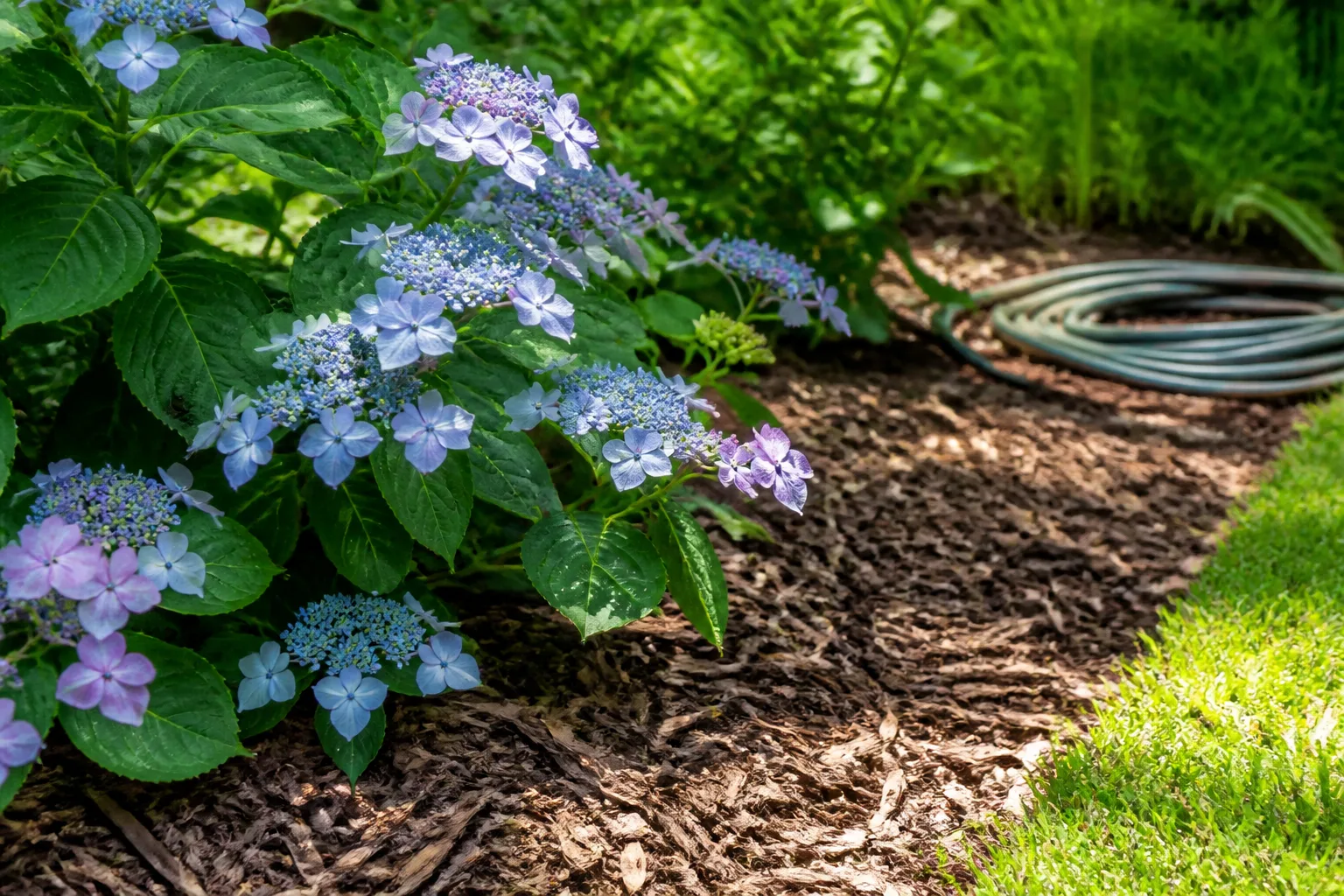
Water in the morning when you can. It gives the shrub time to take up moisture before the heat peaks and lets any splashed foliage dry. A soaker hose or drip line is especially useful because it wets the soil rather than the leaves; the Gardening Know How watering guide also cautions that wet foliage can increase fungal problems.
Do not judge success by the first five minutes after turning on the hose. Dense mulch, compacted soil, and hydrophobic dry soil can make water run sideways or pool. Move the hose to two or three positions around a large shrub, slow the flow, and check again later. The goal is an evenly moist root zone, not a puddle at the crown.
In a prolonged hot spell, use the weekly water target from extension guidance as a way to audit your system. A rain gauge or straight-sided container can show how much irrigation is actually landing in the bed. If your hose runs for an hour but the soil is still dry below the mulch, change the delivery method or the timing instead of simply watering for longer.
Containers and Irrigation Lines Change the Schedule
Potted hydrangeas dry faster because a container has less soil volume and more exposed surface area. Check a container daily during a heat wave, but do not automatically water daily. Water thoroughly until some drains from the bottom, then check the mix again before the next soak. A pot that dries within hours may be root-bound, undersized, placed against heat-reflecting paving, or filled with a mix that drains too quickly.
If you are building a lower-maintenance bed, install drip tubing or a soaker hose before laying down mulch. Run it long enough to moisten the root zone, then adjust the frequency after checking the soil. A timer reduces missed waterings, but it cannot detect rain, a blocked emitter, a leaking connection, or saturated clay. Keep one manual moisture check in the routine.
Avoid letting a sprinkler repeatedly wet the flowers and leaves late in the day. Overhead water is not automatically harmful, but it is a less precise way to reach the roots and can prolong leaf wetness. Water at the soil line, especially when leaf spots are already appearing.
Give Hydrangeas Light That Supports Leaves and Flowers
Light affects both the amount of water a hydrangea loses and how much energy it can put into flowers. A shrub in strong afternoon sun may wilt even when the soil is damp because its leaves are losing water faster than the roots can replace it. A shrub in dense shade may stay green but flower poorly and grow weak, floppy stems.
Morning Sun and Afternoon Shade Is the Reliable Default
For bigleaf and mountain hydrangeas, morning sun with afternoon shade is the reliable starting point, especially in hot climates or beside heat-reflecting walls. North Carolina Extension’s plant toolbox specifically recommends dappled or partial shade and protection from afternoon sun for bigleaf hydrangea. A bright east-facing exposure, filtered light beneath a high canopy, or shade from a structure after midday can reduce the cycle of afternoon collapse.
Do not move a severely wilted shrub in the hottest part of summer just because the leaves are drooping. A large transplant loses roots and can wilt more severely while it re-establishes. Use temporary shade cloth, a patio umbrella positioned safely away from the foliage, or a breathable wind break during an extreme heat event. Plan a permanent move for dormancy or a cool, overcast period, and water the root ball thoroughly before and after the job.
Panicle hydrangeas, many smooth hydrangeas, and oakleaf types generally tolerate more sun than bigleaf cultivars, but “more tolerant” is not the same as “immune to drought.” The RHS shrubby hydrangea guide summarizes the useful middle ground: hydrangeas prefer light shade, yet tolerate more sun when the soil does not become too dry. Match exposure to the plant’s type and your summer climate rather than copying a neighbor’s placement.
Improve the Root Zone With Soil, Compost, and Mulch
Hydrangeas want soil that holds moisture without staying waterlogged. The University of Connecticut recommends fertile, well-drained soil with adequate organic matter for all hydrangeas. That combination is more important than chasing a particular flower color or adding a strongly acidic product without a soil test.
If you are planting a new shrub, work finished compost or other stable organic matter through a broad area rather than creating a small pocket of rich soil in the planting hole. If the shrub is established, avoid digging aggressively through the root zone. A thin compost top-dressing and a surface mulch refresh are safer ways to improve conditions over time.
Keep Moisture Without Creating a Wet Crown
Apply about 2 to 3 inches of organic mulch such as shredded bark, pine straw, leaf mold, or well-finished compost. Extend it across the root zone, but leave a clear gap around the stems and crown. Mulch touching the base keeps bark wet, hides stem damage, and can encourage rot; mulch piled in a thick ring can also repel water when it dries into a crust.
Mulch works by slowing evaporation and moderating soil temperature. It cannot compensate for a root ball that never gets a deep soak, and it cannot rescue soil that drains so poorly that roots lose oxygen. Check the soil under the mulch rather than watering by the color of the mulch surface. The RHS growing guide recommends mulching to improve moisture retention and notes that mature shrubs still benefit from irrigation during hot, dry spells.
If water pools around the shrub for hours, do not respond by adding more compost or thicker mulch. Check for compacted soil, a blocked downspout, a planting hole that acts like a bowl, or a container without an open drainage hole. Yellow leaves, a sour smell, soft stems at the base, and a plant that wilts even though the soil stays wet point toward a root problem. Improve drainage first and seek local extension help if the plant is declining.
Flower color is a separate decision from summer hydration. Bigleaf flower color can shift with soil acidity and aluminum availability, but changing pH will not correct a wilted plant. Test the soil before adding sulfur, lime, or aluminum products, and never use a color amendment as a substitute for drainage and watering decisions.
Deadhead Only When It Earns Its Place
You do not have to remove every faded hydrangea head to keep the shrub lush. Deadheading can make a plant look tidier and may help some reblooming cultivars produce another flush, but it is not a substitute for healthy roots and it does not force new flowers on every type.
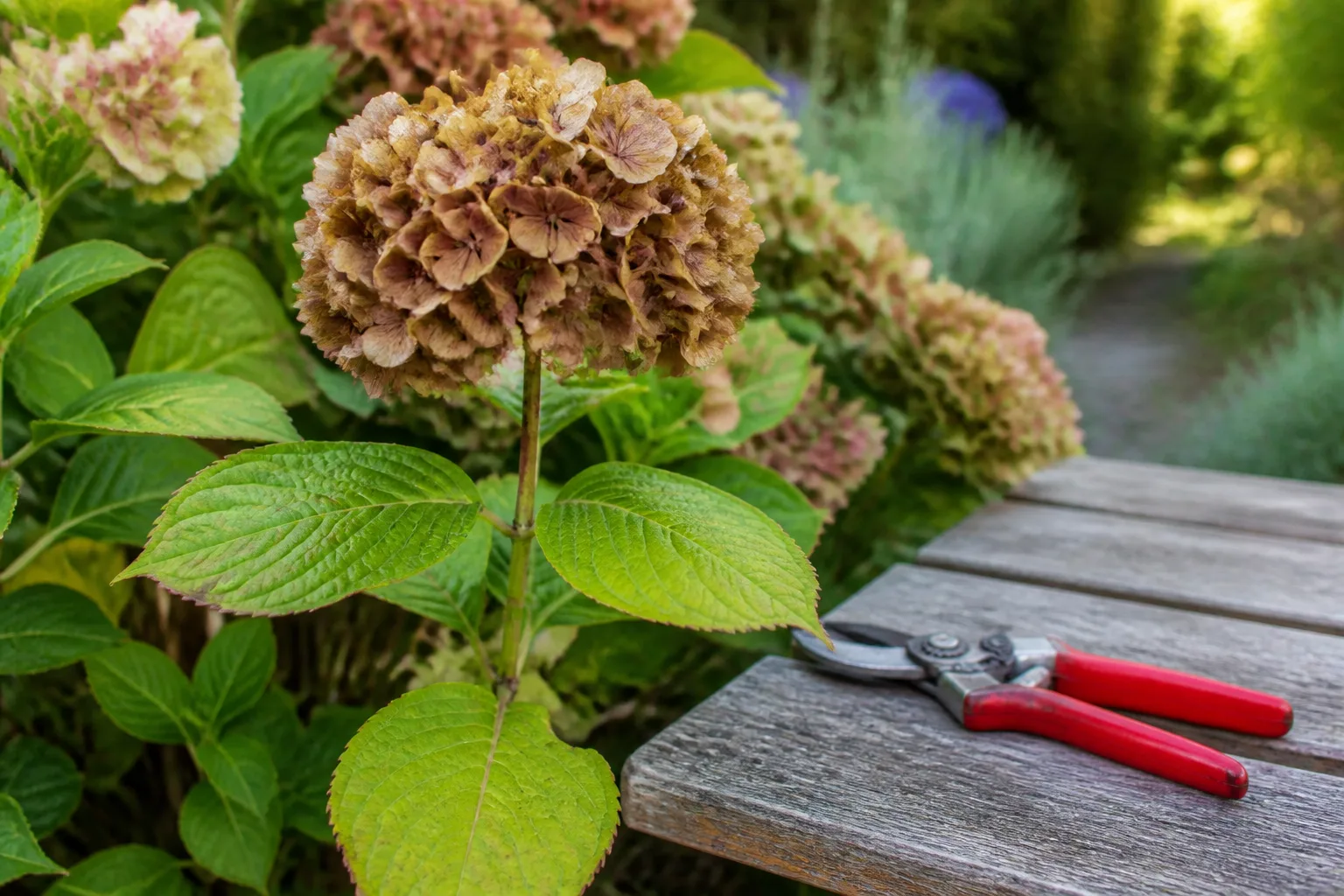
If the papery heads provide winter interest or help protect tender buds, leaving them in place is a sensible low-maintenance choice. If you prefer a cleaner look, make a few deliberate cuts during the safe window instead of repeatedly snipping as each flower changes color. Fewer cuts also reduce the chance of removing a stem that carries next year’s buds.
A Safe Summer Cut by Hydrangea Type
Use this quick rule at the shrub:
| Hydrangea type | Summer deadheading | Structural pruning |
|---|---|---|
| Bigleaf mophead or lacecap | Optional; cut only the spent head above a healthy leaf pair and finish soon after flowering | Avoid fall, winter, and early-spring hard cuts; follow the cultivar’s old-wood guidance |
| Mountain or oakleaf | Optional light cleanup while flowers fade; preserve the stem framework | Prune after flowering, before next season’s buds are established |
| Panicle | Optional for appearance; do not shorten healthy branches now | Save shaping and size control for late winter or early spring |
| Smooth | Optional; remove spent heads without shearing the shrub | Prune in the dormant season because it blooms on new wood |
| Reblooming bigleaf | Deadhead earlier if you want a second flush, but avoid deep late-season cuts | Keep pruning light unless the cultivar’s instructions say otherwise |
The safest cut is just above a healthy pair of leaves, using clean bypass pruners. Do not cut deep into bare stem on an old-wood hydrangea just to make the shrub look even. For a fuller plant, remove one or two weak or damaged stems at the base at the appropriate time rather than repeatedly shortening every branch tip.
The University of Georgia’s bigleaf hydrangea report warns that bigleaf plants form flower buds in late summer and that late-season, fall, and winter pruning can remove potential flowers. That is why “deadhead constantly” is the wrong maintenance goal: identify the bloom wood, make the smallest useful cut, and then stop.
Diagnose a Limp Hydrangea Before Adding More Water
Wilting is a symptom, not a diagnosis. A hydrangea can droop because the soil is dry, because heat temporarily overwhelms water uptake, or because waterlogged roots are no longer functioning well. The first action is to compare the plant’s timing, soil moisture, and leaf texture.
Dry, Wet, Hot, or Diseased?
Use this quick decision tree:
- Dry several inches down, leaves limp or crisp, no overnight recovery: Give a slow deep soak at the base. Recheck the soil later and inspect whether water is penetrating evenly.
- Soil damp, leaves soft but not crisp, yellowing or sour-smelling root zone: Pause irrigation and investigate drainage. More water can worsen root damage.
- Droop appears during peak sun and the plant recovers in the evening, with damp soil: Treat it as heat load first. Add temporary shade or improve the site rather than stacking on extra water.
- Brown, crispy edges with a hot exposed position: Reduce heat and wind stress, then stabilize moisture. Damaged tissue will not turn green again, but new growth can be protected.
- Spots, fuzzy growth, or worsening decline despite reasonable moisture: Keep foliage dry, remove badly affected leaves, improve airflow, and use a local extension diagnostic before applying a pesticide.
The North Carolina Extension bigleaf hydrangea profile is useful for separating bigleaf’s afternoon-sun sensitivity from problems caused by poor placement. The Hydrangea Library wilting guide also emphasizes that both under-watering and overwatering can produce droop, which is why the soil check comes before the hose.
For a recently planted shrub, expect more frequent checks during the first growing season. Transplanting removes fine roots and changes how the plant meets water demand. Keep the root ball evenly moist, shade it from the harshest exposure if needed, and postpone major pruning or relocation until the plant is established.
If the plant has been completely dry long enough for roots to die, watering may not restore every branch. Remove only tissue that is clearly dead after the shrub has had time to rehydrate, and scratch a small section of stem to look for living green tissue before cutting. When several stems die back or the crown softens, get a local diagnosis rather than assuming the plant simply needs more water.
A Simple Summer Routine for a Fuller Shrub
Use a repeatable rhythm instead of a daily rescue cycle:
- Once a week, check below the mulch. Test several points around the root zone and note whether the soil is damp, dry, or staying wet.
- Water deeply when the root zone is dry. Apply water at the base in the morning, using a soaker hose or drip line where possible. Adjust for rain, heat, wind, soil, and container size.
- Scan the site at the hottest time of day. If only the afternoon side collapses while the soil is moist, add shade or reduce reflected heat before adding irrigation.
- Refresh mulch when it has thinned. Keep a few inches clear around stems and make sure the mulch is not crusted or shedding water to the sides.
- Deadhead in one deliberate pass. Follow the bloom-wood rule, cut above healthy leaves, and leave the shrub alone once the safe window has passed.
- Skip rescue fertilizer. A limp plant needs a root-zone diagnosis, not a dose of nitrogen. Feed only when the plant and soil test show a real need, and follow the label.
- Record what worked. Note the hydrangea type, first wilt date, watering amount, rainfall, and whether it recovered overnight. That small record makes next summer much easier.
The goal is not a hydrangea that never droops for an hour in July. The goal is a shrub whose roots stay supplied, whose leaves recover from ordinary heat, and whose flower buds are not sacrificed to unnecessary pruning. If you can move from daily guessing to one informed weekly check, you have already made the plant—and your own routine—more resilient.
Conclusion
Keep hydrangeas lush all summer by matching the shrub to its light, keeping the root zone evenly moist but well drained, using mulch to slow moisture loss, and pruning only according to its bloom wood. Bigleaf and mountain hydrangeas usually benefit from afternoon protection; panicle, smooth, and oakleaf types can take more sun but still need water during hot, dry weather.
When a plant wilts, check the soil below the mulch before watering again. When a flower fades, identify the type before cutting. Those two pauses prevent most of the overwatering, heat stress, and lost-bud mistakes that turn a low-maintenance summer shrub into a daily project.



