How to Care for Succulents: 11 Essential Tips
Keep succulents healthy with a soil-first watering routine, bright light, safe sun acclimation, better pots, and fixes for rot, pests, and stretched growth.
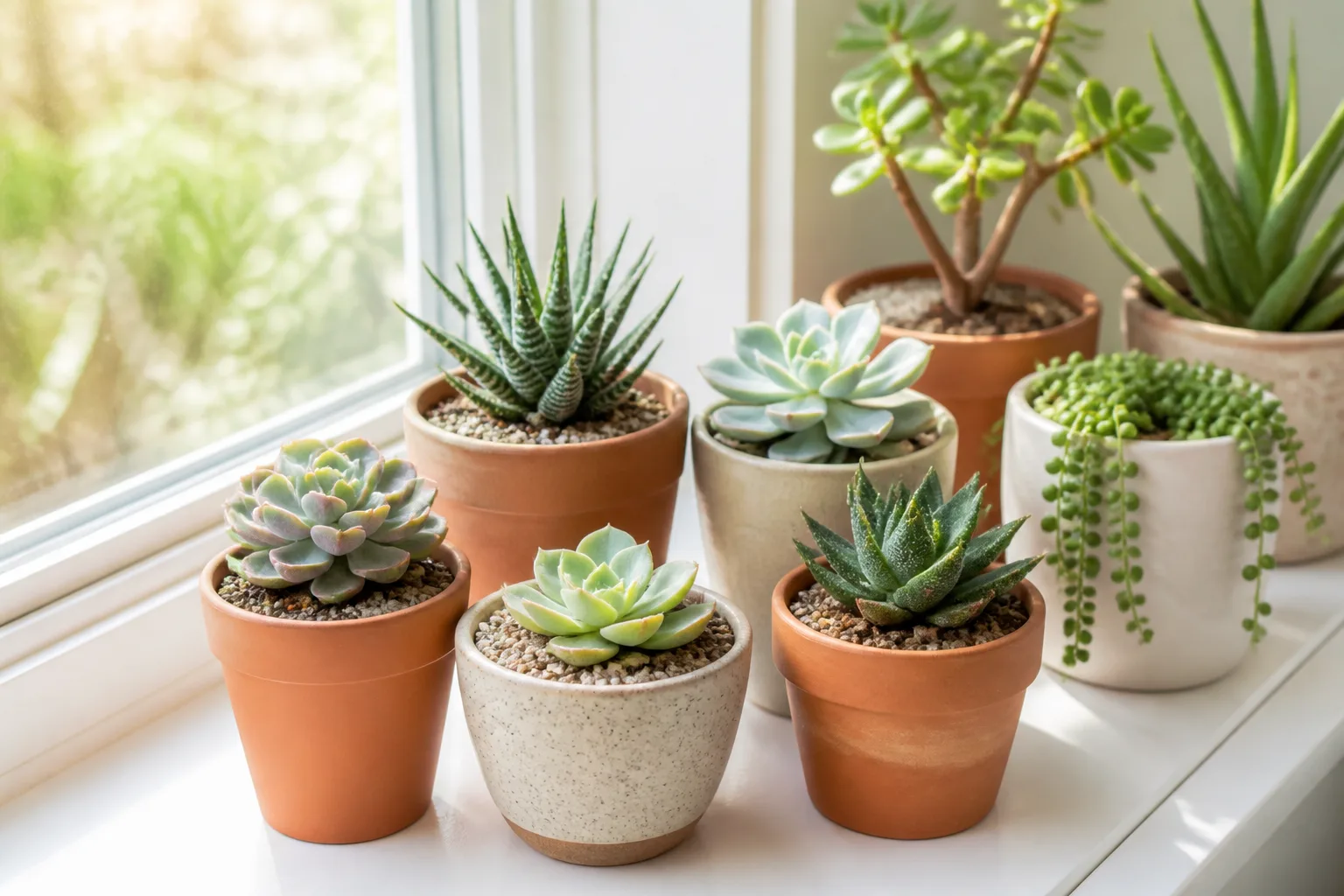
Succulents are easiest when you treat them as water-storing plants, not as small tropical houseplants. Their fleshy leaves, stems, or roots buy them time between drinks, but that same reserve makes permanently damp soil dangerous. The goal is not to keep the pot barely moist; it is to give the roots a thorough drink, then give them enough air and time to dry.
The 11 habits that matter most are simple: identify the plant’s growing style, give it the brightest usable light, acclimate it to stronger sun, water by soil condition, choose an airy mix, use a pot with drainage, avoid unnecessary humidity, feed only during active growth, protect it from cold wet conditions, inspect it routinely, and repot or propagate when the root system calls for it. The details below turn those habits into decisions you can use in a real home.
| Care decision | Reliable starting point |
|---|---|
| Light | Bright light; increase direct sun gradually |
| Water | Soak the root zone, then wait for appropriate dry-down |
| Soil | Airy, gritty, fast-draining container mix |
| Pot | Drainage hole and a size that dries predictably |
| Humidity | Normal indoor air for most desert types |
| Maintenance | Weekly inspection, seasonal adjustments, and prompt action |
Start by identifying your succulent’s growing style
“Succulent” describes a water-storage adaptation, not one uniform care schedule. An echeveria, aloe, jade plant, haworthia, gasteria, and sedum usually want bright light and a pronounced dry period. A Christmas cactus or Rhipsalis is also a succulent, but it comes from a different growing environment and can prefer more regular moisture and filtered light. Cacti themselves are a subgroup of succulents, and even cacti range from desert species to jungle types; UC IPM’s cactus overview is a useful reminder not to treat the whole group as one plant.
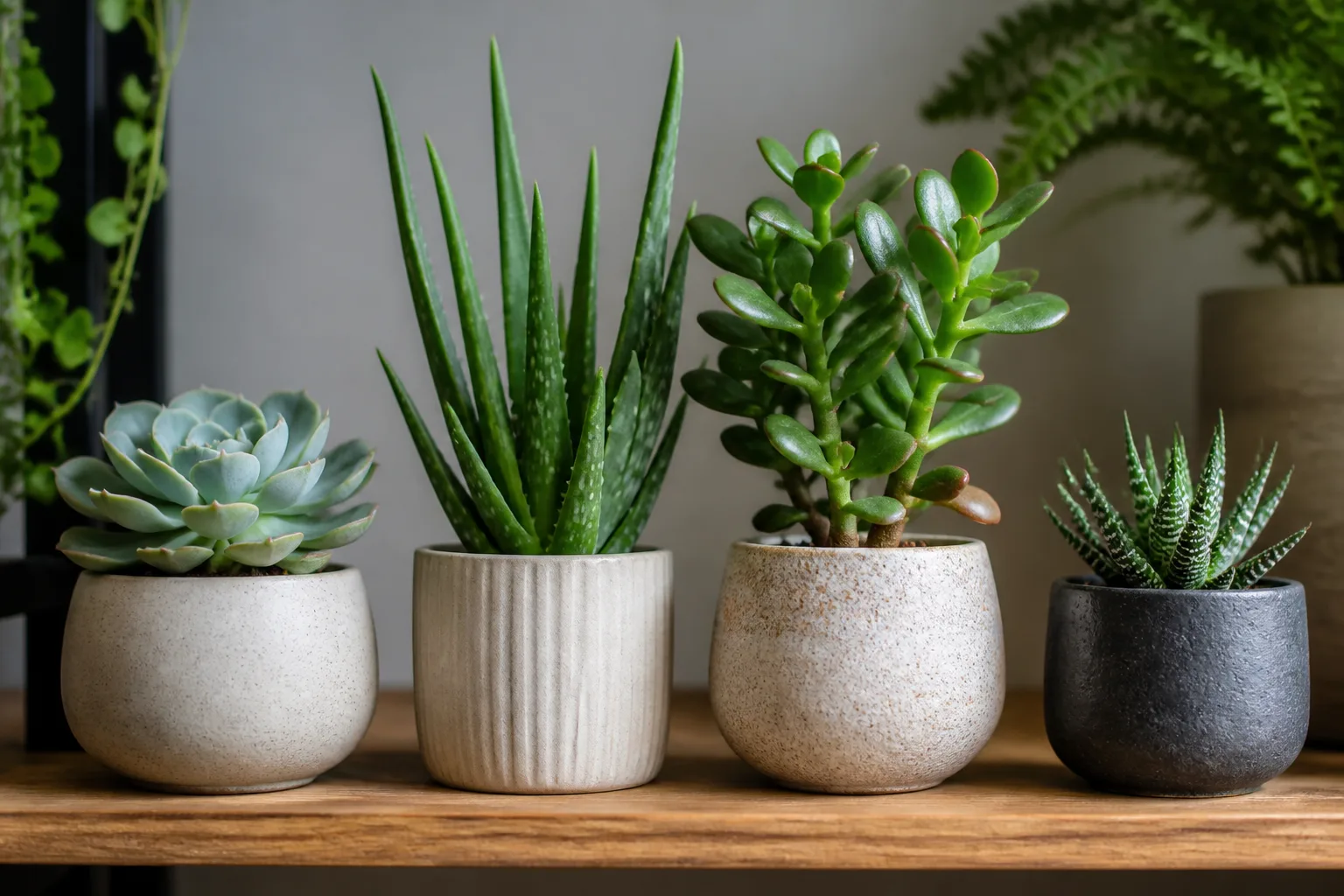
Before changing anything, look at the plant’s shape and the label if you have it. A compact rosette with a powdery coating usually needs stronger light than a thin-leaved, woodland-influenced plant. If the label is missing, start with bright filtered light, a draining mix, and a moisture check rather than guessing from the word “succulent.” A conservative first week protects the plant while you learn how quickly its particular pot dries.
Build the right light before changing the water routine
Light controls how quickly a succulent uses water and whether it can maintain compact growth. Put most fleshy-leaved succulents near the brightest window available, while keeping foliage from pressing against hot glass. East- or south-facing windows often provide useful light, but the best spot depends on the season, window covering, latitude, and whether a building blocks direct sun.
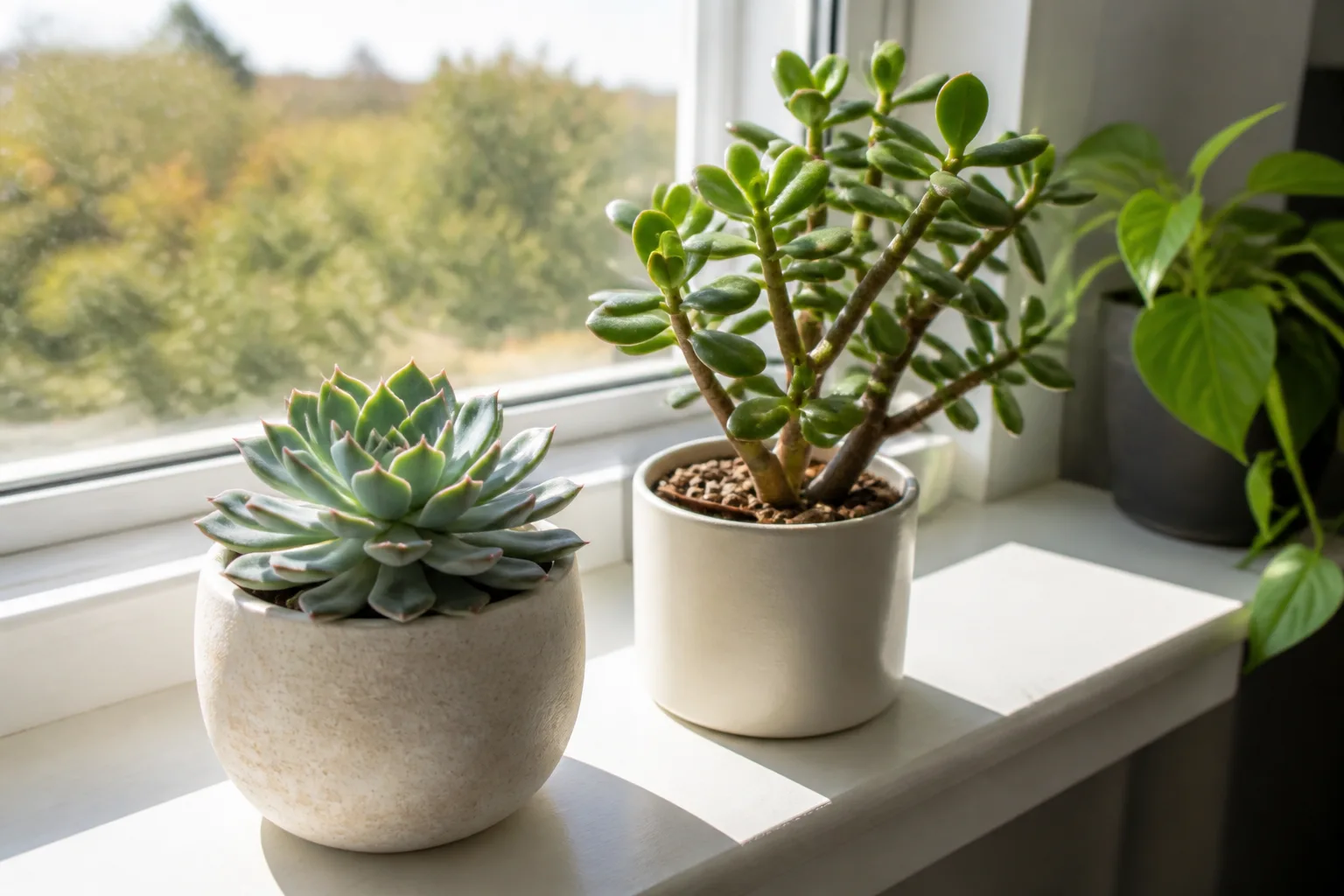
Watch the new growth, not just the color of the older leaves. A plant that leans hard, develops long bare stem sections, or spaces its leaves far apart is stretching for light; moving it farther from the window and watering more will not correct that. A light-starved echeveria may still look alive while its shape becomes permanently loose, so correct the light before trying fertilizer.
When a window is not bright enough, a grow light can help, but it should be positioned above the plant and used consistently rather than switched on randomly. Start with the manufacturer’s distance and schedule, then watch for bleaching, crisp patches, or heat at the leaf surface. More light is useful only when the plant is acclimated and the roots are not staying wet.
Acclimate a new succulent to stronger sun
A greenhouse-grown or recently shipped succulent can burn in a window or patio that feels normal to you. Put it in bright, indirect or filtered light first, then move it closer to direct sun in stages over roughly one to two weeks. Morning sun is usually a gentler first step than a sudden afternoon exposure.
If the plant develops a sharply defined tan, white, or bleached patch on the most exposed side after a move, treat it as possible sunburn rather than a sign that it needs even more light. The damaged tissue will not turn green again, but moving the plant back to filtered light and restarting acclimation can protect new growth. Gardening Know How’s guidance on sunburned cacti also distinguishes sudden exposure from a plant’s normal ability to live in bright conditions.
Water deeply, then wait for dry soil
The most dependable succulent watering method is soak and dry. When the mix has dried to the depth of the root ball, water slowly until some runs from the drainage hole. Let the pot finish draining, then empty the saucer or cachepot. A few tablespoons on a fixed weekly schedule can wet only the surface, leaving the middle of the root ball unevenly dry while keeping the crown or lower stem damp.
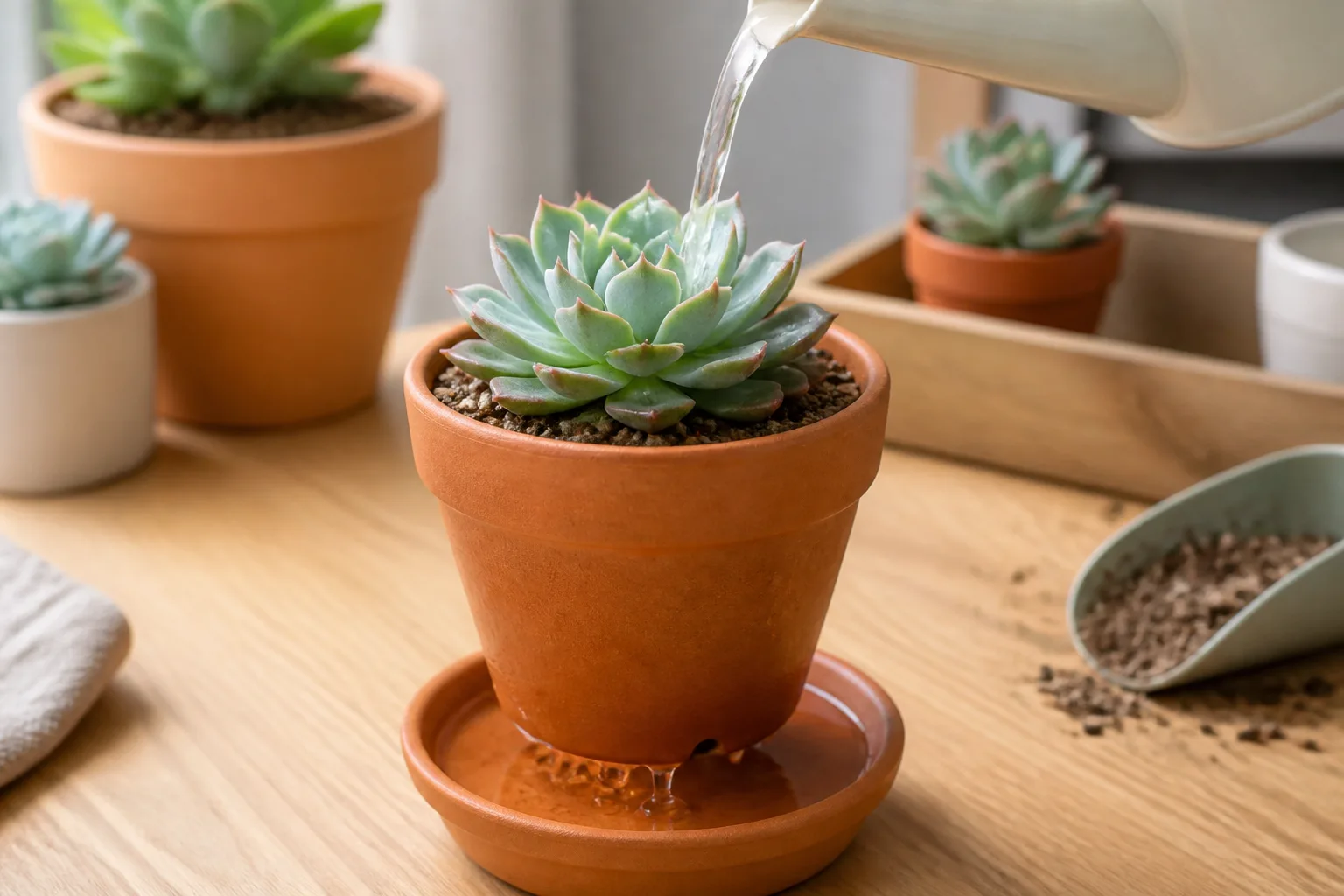
There is no universal “every seven days” answer. A small terracotta pot in bright light may dry in days; a large plastic pot in a dim room may stay wet for weeks. Clemson Extension notes that plant species, growth stage, location, pot material and size, soil characteristics, and weather all change watering needs; its indoor-plant watering guidance is a good reason to check the plant instead of following a calendar.
For a newly planted or recently repotted succulent, be especially careful. If roots were disturbed, the plant may not use water normally, so a heavy drink immediately after potting can leave a damaged root zone wet. The right interval is the one that lets the soil dry appropriately while the plant still shows firm, stable growth—not the interval printed on a care tag.
Use plant and pot clues instead of the calendar
Push a wooden skewer or your finger into the mix as far as practical, inspect the drainage hole, and lift the pot to learn its dry weight. The surface can look dry while the lower half remains damp, particularly in a glazed pot. If a moisture meter is used, take readings in more than one spot and treat the result as a clue; dense roots, coarse particles, and a narrow pot can make a single reading misleading.
Mild wrinkling that improves after a thorough drink often points toward thirst, but wrinkling can also occur when rotted roots can no longer take up water. Soft, translucent, yellowing, or collapsing leaves paired with wet soil are stronger reasons to stop watering and inspect the roots. Gardening Know How’s overwatering guide warns that a waterlogged cactus can look plump and vigorous before the decline becomes obvious, which is why early soil and root checks matter.
Water from the top or bottom according to the pot and the plant, not according to a rule that one method is always superior. Top-watering lets you see that the mix is fully saturated and flushes salts through the hole. Bottom-watering can help a very dry, hydrophobic mix absorb evenly, but remove the pot from the water once the root zone is moistened; do not leave it standing in a reservoir.
Use a gritty mix that drains but still anchors roots
Succulent soil should release excess water quickly while holding enough moisture for roots to take up a drink. A commercial cactus or succulent mix is a reasonable starting point, but inspect it instead of trusting the label. If it feels like fine peat and stays clumped for days, mix in a coarse mineral component such as perlite or pumice. The exact blend depends on pot size, indoor humidity, watering style, and species.
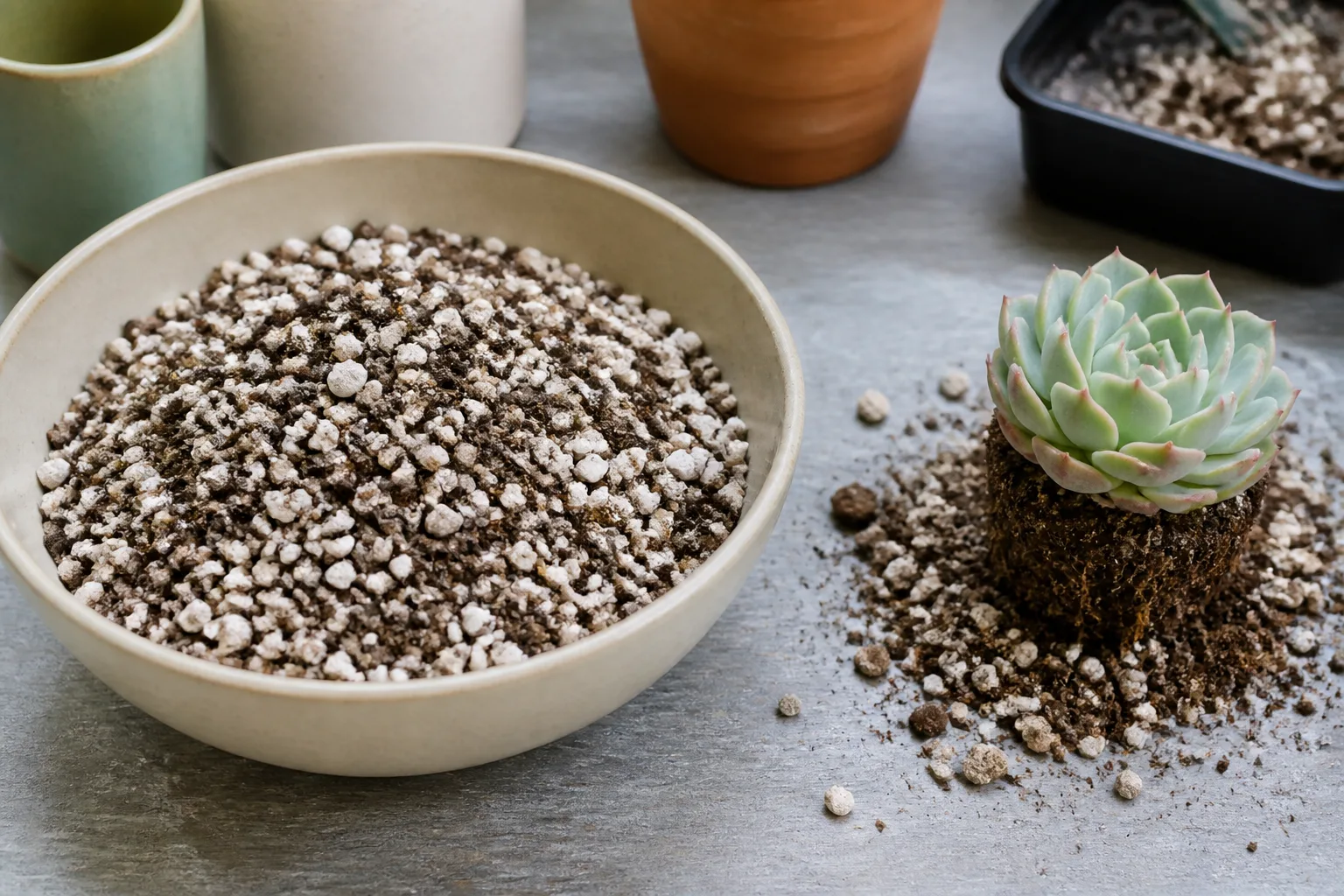
The container medium needs more than drainage. UConn Extension explains that potting media must provide support, air circulation, water storage, and nutrient storage; it also cautions that mineral garden soil can compact in containers. Read UConn’s potting-media guidance before adding garden soil, heavy compost, or a layer of stones that steals root space without fixing a poorly structured mix.
Avoid using coffee grounds, eggshell powder, or random amendments as a substitute for a well-structured medium. Those materials do not create drainage by themselves, and organic additions can keep a small pot wet longer than expected. If the mix is already compacted, repot into a fresh, airy medium instead of trying to correct the entire root zone with a surface sprinkle.
Choose a container that makes mistakes recoverable
The best beginner pot is not necessarily the prettiest one. Choose a container with an open drainage hole, a stable base, and enough room for the current root ball without a large collar of unused wet soil. A decorative pot can still work as a cachepot if the planted nursery pot comes out for watering and drains completely before it goes back inside.
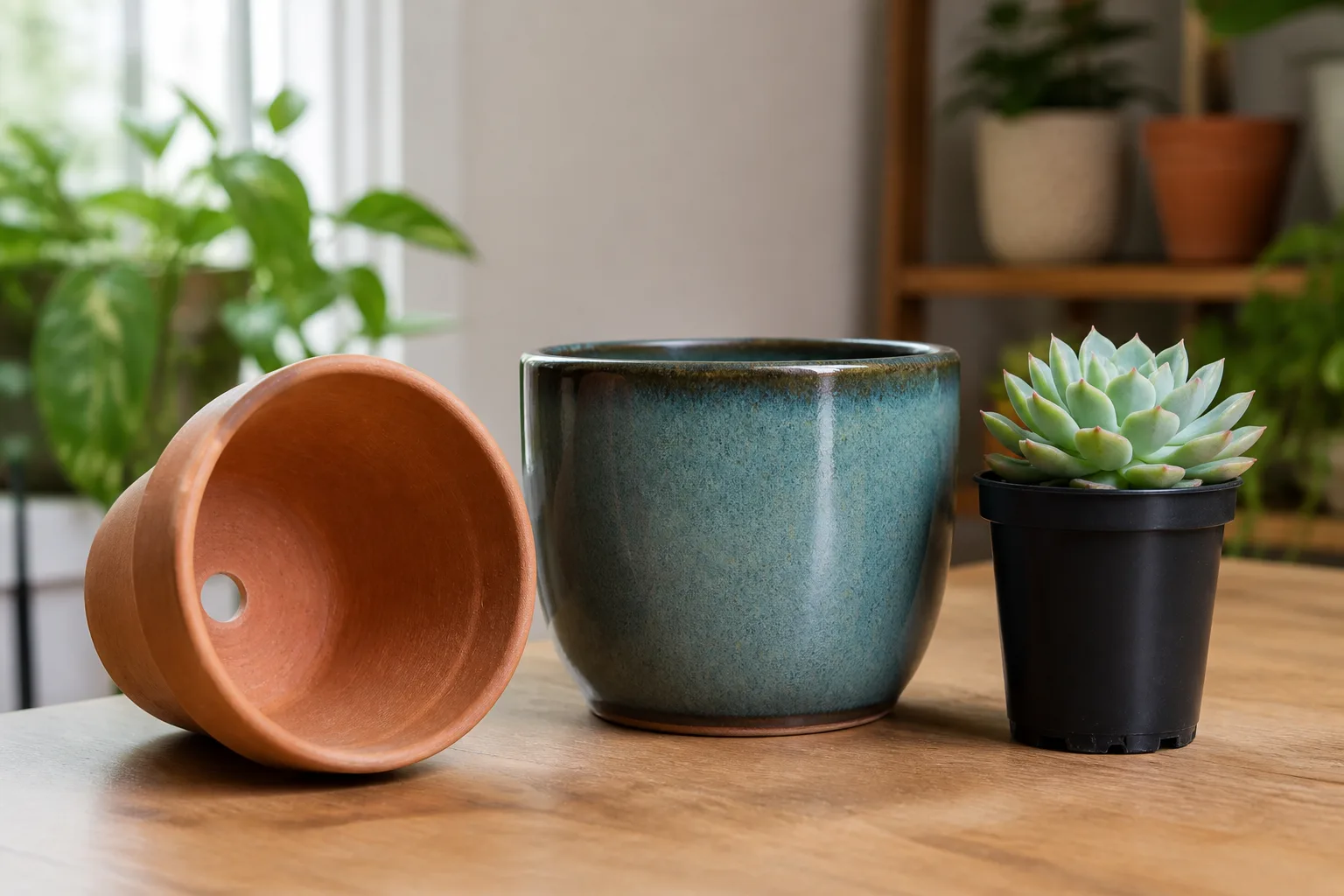
Terracotta can be forgiving because its porous walls allow faster evaporation than glazed ceramic or plastic. That does not make it a cure for overwatering: a dense mix or a cool, dim room can still stay wet. Conversely, a thin plastic pot in a hot window may dry quickly. Clemson Extension’s discussion of clay versus nonporous containers supports treating pot material as one watering variable, not as a replacement for checking the mix.
Keep the crown and lower leaves above the soil line, and do not bury a stem simply to make a leaning plant look straight. If the plant is top-heavy, use a heavier pot or a better-supported root ball. A thin top-dressing of decorative gravel is fine if it does not seal the surface or hide a persistently wet mix.
Keep humidity low for desert types—and recognize exceptions
Most desert succulents do not need a humidifier, mister, or pebble tray. Added surface moisture can linger in leaf joints and around the crown, while a humid room slows evaporation from the pot. Air movement, bright light, and an appropriate dry-down are usually more valuable than trying to raise humidity around a plant that evolved to store water.
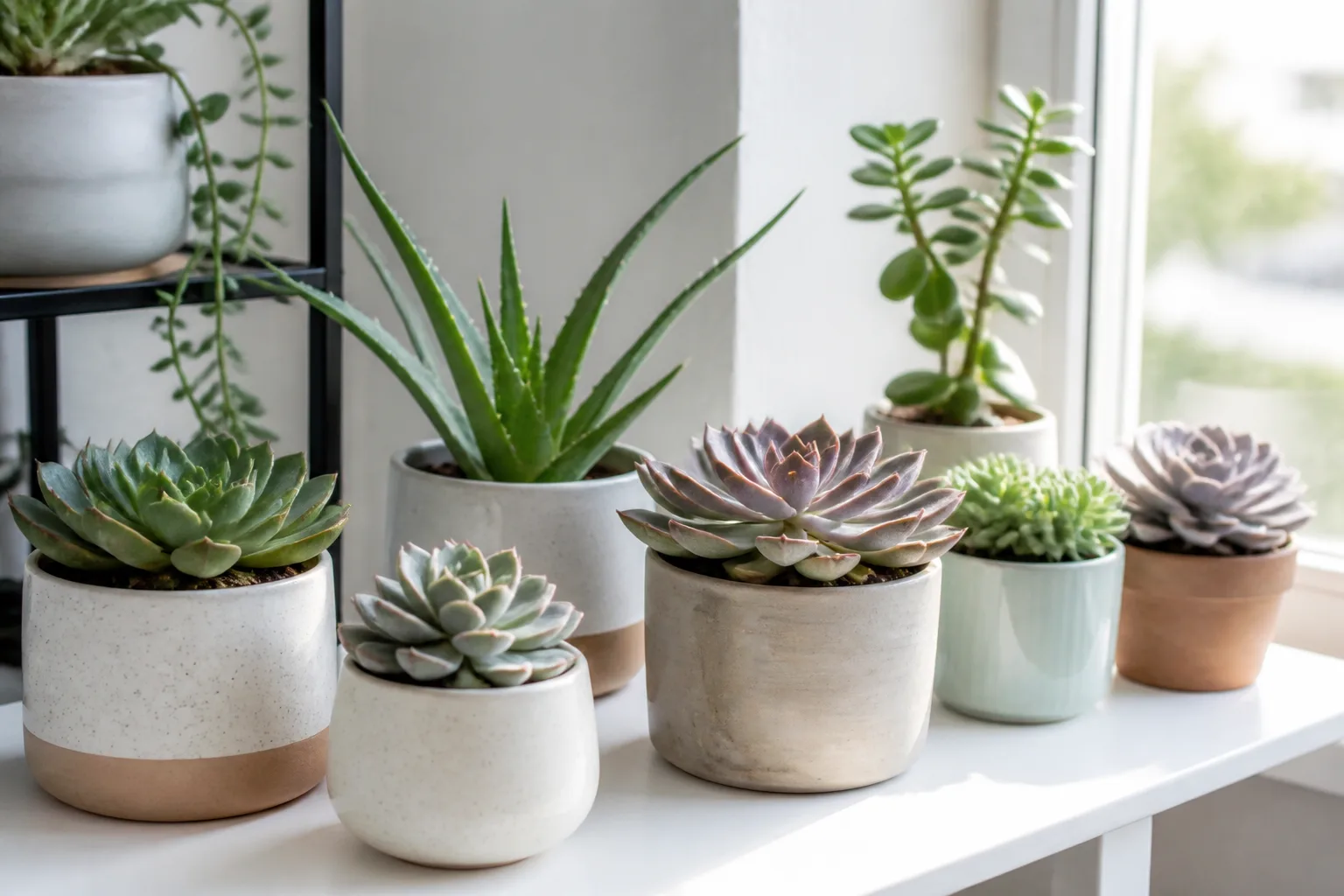
There are exceptions. Christmas cactus and Rhipsalis are jungle cacti with different light and moisture preferences, and some succulent groups come from seasonally humid habitats. A plant that has thin, segmented, trailing growth should not automatically be forced into a desert schedule. Research the genus when the plant behaves unlike an aloe, echeveria, jade, or haworthia; Gardening Know How’s watering discussion specifically notes that jungle cacti differ from desert cacti.
Do not mist as a substitute for watering. Misting wets the surface without reliably wetting the root ball, and it can leave foliage damp in a poorly ventilated room. If a plant truly needs more humidity, measure the room first and address the species, airflow, and watering mix together instead of adding moisture blindly.
Fertilize lightly during active growth
Succulents can grow acceptably without frequent fertilizer, especially when they receive bright light and are potted in a fresh commercial mix. If growth is active and the plant is healthy, use a complete fertilizer diluted more weakly than the label’s general houseplant rate, or choose a product formulated for cactus and succulents. Apply it to already-moist soil, not to a bone-dry root ball.
Skip feeding when the plant is soft, recently repotted, sunburned, pest-ridden, or dormant. Fertilizer cannot repair root rot or compensate for low light; extra nitrogen can produce fast, weak growth that is even harder to support indoors. Salts can accumulate in a small container, so occasional thorough watering with drainage can help move excess salts out—provided the mix and pot drain freely.
Feed by growth, not by a month on the calendar. A warm, bright room may support growth during a season when a cool windowsill does not. If the plant is not producing new leaves or extending healthy stems, first check light, temperature, roots, and moisture before reaching for fertilizer.
Keep temperatures steady and plan seasonal changes
Succulents generally prefer stable household temperatures with a clear separation between a warm growing period and a cooler, slower period. Protect them from cold drafts, frost, hot air blowing directly from a heater, and a wet pot in a cold room. Temperature affects how quickly the mix dries, so a watering routine that worked in summer can cause rot near a winter window.
In fall, reduce watering as light and growth decline rather than cutting every plant to the same schedule. Outdoor containers need special attention because a cold rain can saturate the root zone even when the air temperature seems mild. The RHS guide to hardy cacti and succulents recommends sheltered, sharply drained conditions and notes that container plants can be moved indoors for winter protection.
Seasonal changes should be gradual whenever possible. Move a plant closer to a bright window before the darkest part of winter, and return it to outdoor conditions through filtered light in spring. In a dry heated room, do not respond to faster surface evaporation with automatic daily watering; inspect moisture lower in the pot first.
Rotate, clean, and inspect your plant every week
A weekly inspection takes less time than an emergency rescue. Turn the pot a quarter turn so one side does not grow toward the window, look beneath leaves and around the crown, and check whether the pot feels unexpectedly heavy. Remove dead leaves that are resting on wet soil, wipe dust from smooth foliage gently, and make sure the drainage hole has not become blocked.
Use the same pass to look for white cottony clusters, brown bumps, fine webbing, sticky residue, aphids, or tiny flies. Early detection is especially valuable in a tight collection where leaves touch. Do not diagnose from one yellow leaf alone: check the pattern, the soil, the newest growth, and whether the affected tissue is firm or soft.
Rotation will not reverse a stretched stem, but it can keep new growth more balanced. If the plant is already leaning, improve light first and rotate gradually; turning a severely stretched plant into stronger light all at once can add sunburn to the original low-light problem.
Move potted succulents outdoors with a transition plan
Many potted succulents benefit from a bright, sheltered outdoor period when weather is warm, but “put it outside” is not a complete instruction. Start in bright shade or gentle morning light, protect the pot from heavy rain, and give the plant time to adjust to wind, sun, and larger temperature swings. A balcony can be harsher than a garden because reflected heat and drying wind reach the leaves from several directions.
Keep an eye on the mix after the move. Outdoor light and airflow may shorten the dry-down interval, while rainy weather may lengthen it or keep the pot dangerously wet. Never use outdoor placement to solve a low-light problem by increasing every stress at once; change one major condition, then observe the plant for several days.
Bring containers back before cold, prolonged rain, or a forecast that exceeds the species’ tolerance. Inspect stems, leaf joints, and the pot before re-entry so outdoor pests do not move to the rest of your collection. The RHS notes that hardy outdoor choices depend on a warm, sunny, sheltered position, while cooler areas require winter protection; local climate and species identity matter more than a generic hardiness claim.
Troubleshoot stretched, shriveled, yellow, or soft growth
Start with the root zone, not the most visible leaf. Stretching usually points to insufficient light; dry, wrinkled leaves with a fully dry mix can indicate thirst; yellowing with wet soil may signal overwatering; and a soft base is an urgent rot warning. These clues overlap, so use a small decision sequence: feel the tissue, check the mix depth, lift the pot, and unpot the plant if the evidence remains contradictory.
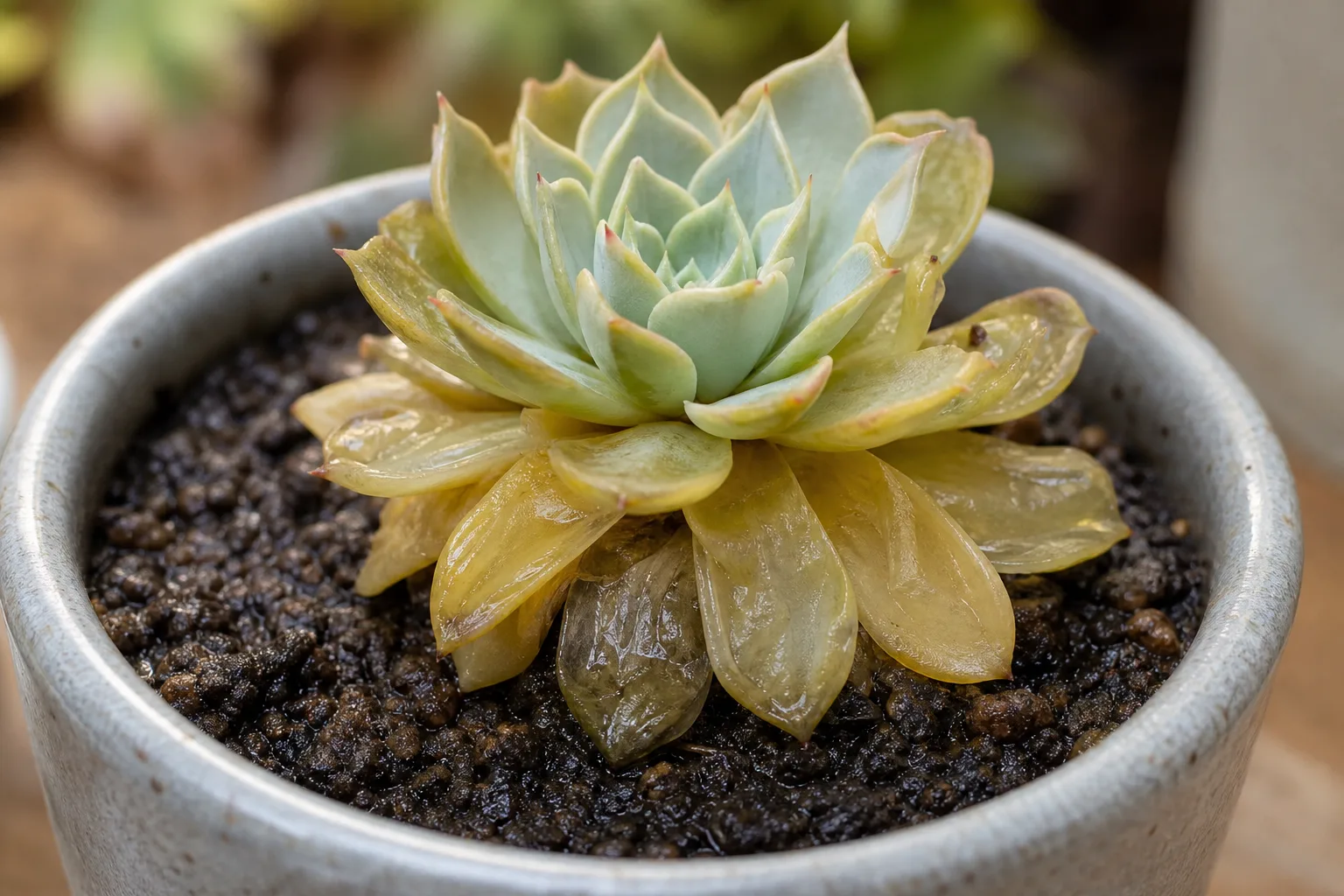
Brown or bleached patches on the window-facing side after a sudden move suggest sunburn or heat stress, while scattered marks, webbing, or sticky residue suggest pests. A few old lower leaves may dry naturally as a stem grows, but rapid leaf drop from the center outward is not a normal care rhythm. Remove only tissue that is clearly dead and correct the condition that caused it.
If your succulent looks thirsty but the soil is still wet, do not water again. Root damage can make a plant wilt or wrinkle while the pot remains saturated. WSU Extension’s overwatering guidance emphasizes checking moisture, improving drainage, and using nonchemical management first; that is a useful model for diagnosing a container plant before applying a product.
If roots are rotting, rescue the healthy tissue
Unpot the succulent when the mix stays wet, the base feels soft, or leaves turn translucent and collapse. Gently remove the mix and inspect the roots. Healthy roots are generally firm; rotten roots are dark, soft, slimy, or easily shed. Cut damaged roots and any soft stem back to clean, firm tissue with a sanitized blade, then discard the contaminated mix rather than returning it to the pot.
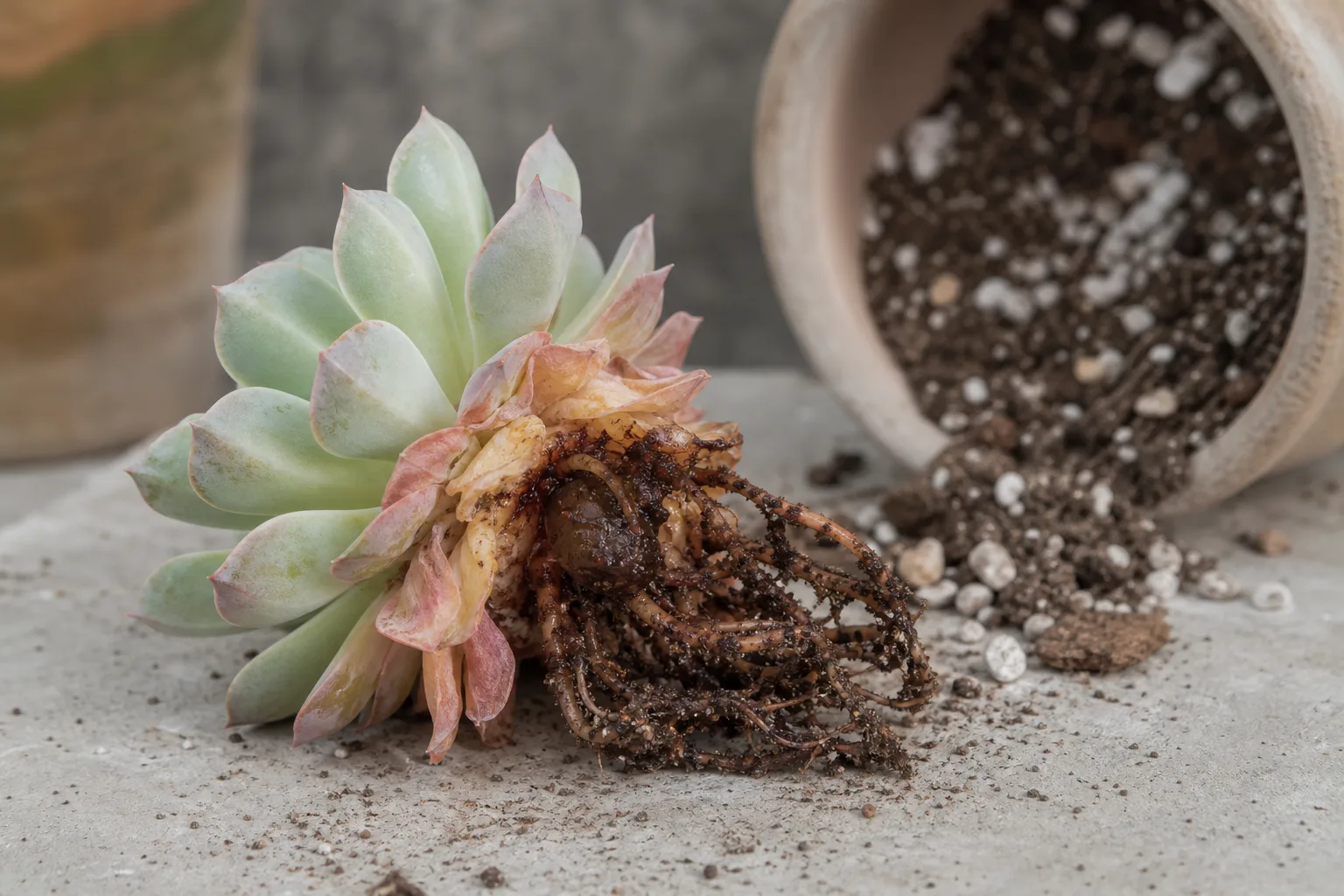
Let the healthy cut surface dry in a warm, airy place out of harsh sun. Repot into a clean container with a fresh, dry, airy mix, and do not immediately repeat the watering pattern that caused the problem. If rot has reached the stem, the best chance may be a clean cutting above the damaged section; a completely soft crown or stem is unlikely to recover. Recovery is a process of producing new roots, not a reason to keep the old wet soil around.
Control pests before they spread
Mealybugs often hide in leaf axils and at the crown, scale can look like fixed bumps, aphids cluster on tender growth, and spider mites may leave fine webbing or bronzing. The first step is isolation. Move the plant away from others, inspect neighboring pots, and repeat the inspection because one cleaning rarely reaches every egg or hiding place.
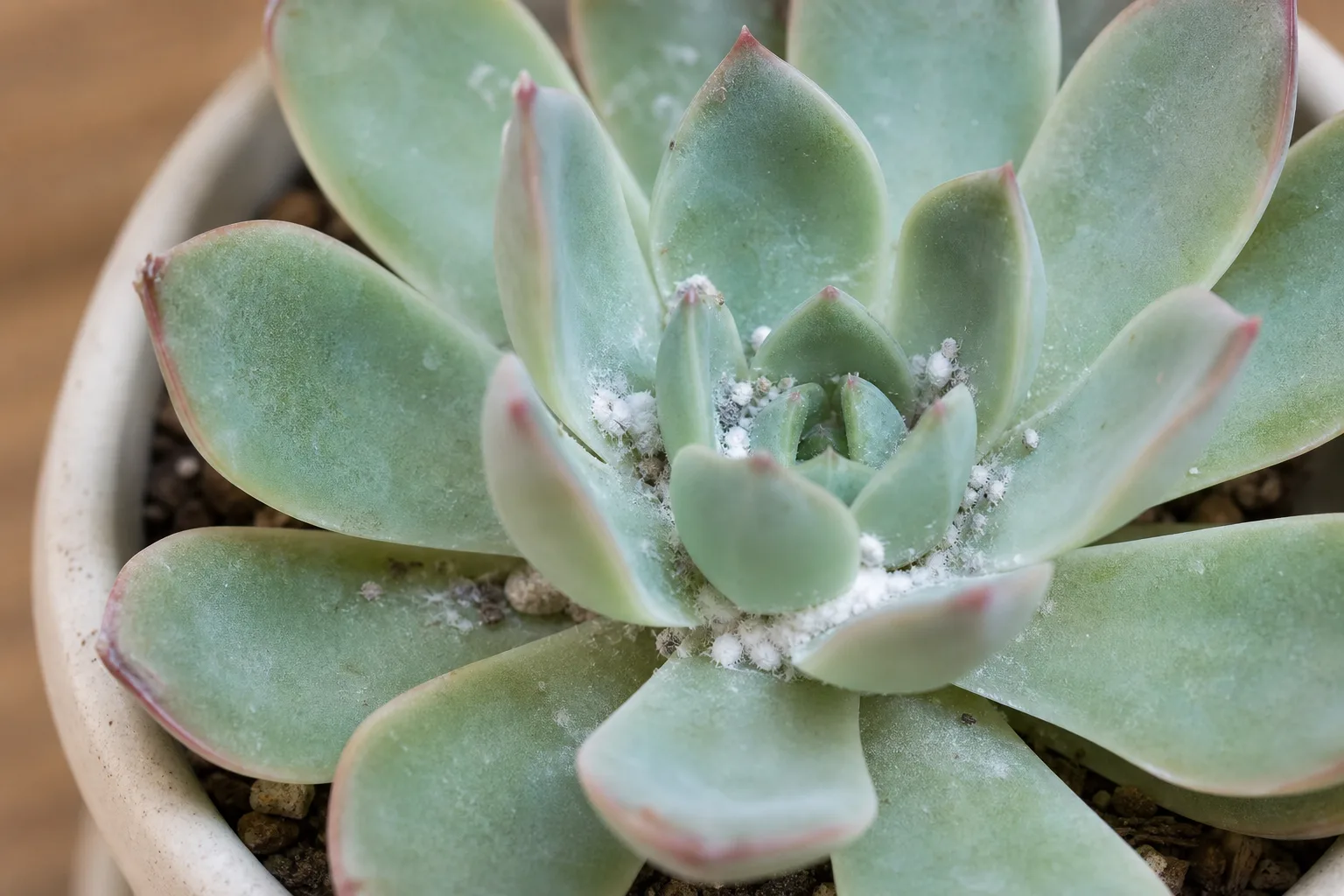
Wipe or wash visible pests when the plant and site allow it, then use only a treatment labeled for the specific plant and pest. Test any contact treatment on a small area first, keep the plant out of intense sun while wet, and follow the product label exactly. Do not pour household cleaners or concentrated oils into the soil; they can damage roots and leaves while leaving the diagnosis unresolved.
The RHS succulent growing guide lists mealybugs, red spider mite, scale, and rots among problems associated with these plants. Good light, airflow, careful watering, and a weekly inspection reduce the chance that a small infestation becomes a collection-wide problem, but they do not make a plant pest-proof.
Repot only when the root zone needs it
Repot when the mix has compacted and stays wet, roots are filling the pot or circling densely, the container is unstable, the drainage hole is blocked, or salts have built up and the medium no longer wets evenly. Repotting a healthy plant just because spring arrived can create unnecessary root disturbance. A slightly snug pot often dries more predictably than a large upgrade.
Choose a pot only modestly larger than the root ball, refresh the mix, and keep the plant at its previous depth. Remove dead roots, but do not tear apart every healthy root to make the plant fit. After repotting, place it in bright filtered light and adjust watering to the disturbed root system; the plant may use less water until new roots establish.
If the old mix has become water-repellent, pre-moisten the new medium evenly before potting. A dry peat-based mix can repel the first watering and create a false impression that the plant is draining. UConn Extension describes this hydrophobic behavior in dry organic media, so wet the mix consistently rather than relying on one rushed drench after the plant is already potted.
Propagate healthy growth instead of discarding it
Propagation is a maintenance option when a plant is healthy, crowded, or irreversibly stretched—not a first response to active rot. Stem cuttings work well for many jade plants and branching succulents, leaf propagation suits some rosette types, and offsets or pups are the sensible choice for aloe, haworthia, gasteria, and other clumping plants. The method depends on the plant’s structure; do not pull leaves from a species that does not reproduce that way.
Use clean, sharp tools and let a fresh cut callus before placing it in a light, airy medium. Keep a cutting in bright indirect light while it roots, protect it from harsh sun and heavy watering, and accept that rooting speed varies with species, season, and conditions. Joy Us Garden’s propagation guide describes stem cuttings, leaves, and pups as separate methods and recommends allowing fleshy cuts to heal before planting.
Do not propagate a piece that is soft, black, foul-smelling, or visibly infested. Cut above the damaged tissue until the remaining section is firm, then decide whether enough healthy plant remains to justify rooting it. A stretched top can become a new plant, but the old bare stem may also produce new shoots once its light and watering problems are corrected.
Create a five-minute succulent care routine
Once a week, check the plant from the top and side, rotate it, look for pests, lift the pot, and feel the soil below the surface. Water only when the root zone has dried appropriately for that plant and container, and always empty the saucer. Once a month, inspect the drainage hole, remove debris, review the light as the sun’s angle changes, and note whether the interval between waterings is lengthening or shortening.
At the start of a season, make one environmental change at a time. Increase light gradually, reduce watering as growth slows, move outdoor pots before cold wet weather, and delay fertilizer when a plant is stressed. This small record of dates, pot weight, and symptoms will teach you more about your home than a generic schedule can.
The best succulent care is not “ignore it.” It is a repeatable rhythm of bright light, a draining root zone, a complete drink, a real dry-down, and quick attention when the plant’s tissue or pot tells you that the rhythm has changed.
Conclusion
To care for succulents well, make the pot and the light do most of the work. Give the plant bright conditions, use a mix and container that can drain, water thoroughly only after the root zone dries, and keep humidity, fertilizer, and seasonal moves proportionate to the species.
When growth looks wrong, pause before adding water or plant food. Check the soil, inspect the roots if necessary, look for pests, and change one condition at a time. That approach protects a healthy succulent from your next well-meant mistake—and gives a struggling one a fair chance to recover.