Cymbidium Orchid Care: Light, Water, Repotting
Cymbidium species and cultivated hybrids
Grow Cymbidium orchids in bright filtered light and airy bark mix. Learn how watering changes by season, when to repot, and why cool nights help many standard hybrids flower.
Cymbidium Orchid Care Guide: Seasonal Watering and Flowering
Start with wateringThe most common care mistake for CymbidiumCymbidium watering guide →Cymbidium care essentials
Light
Water
Keep the bark-based orchid mix lightly moist while Cymbidium is actively growing, but let it dry a little between waterings. Water thoroughly, then let excess drain away; do not leave the pot standing in water. Reduce watering in cool winter conditions, while checking the plant and medium rather than following a fixed calendar.
Soil
Grow Cymbidium in a coarse, bark-based orchid mix that holds some moisture while leaving air around the roots. Do not use ordinary garden soil or dense houseplant potting mix.
Humidity
Temperature
Fertilizer
About Cymbidium
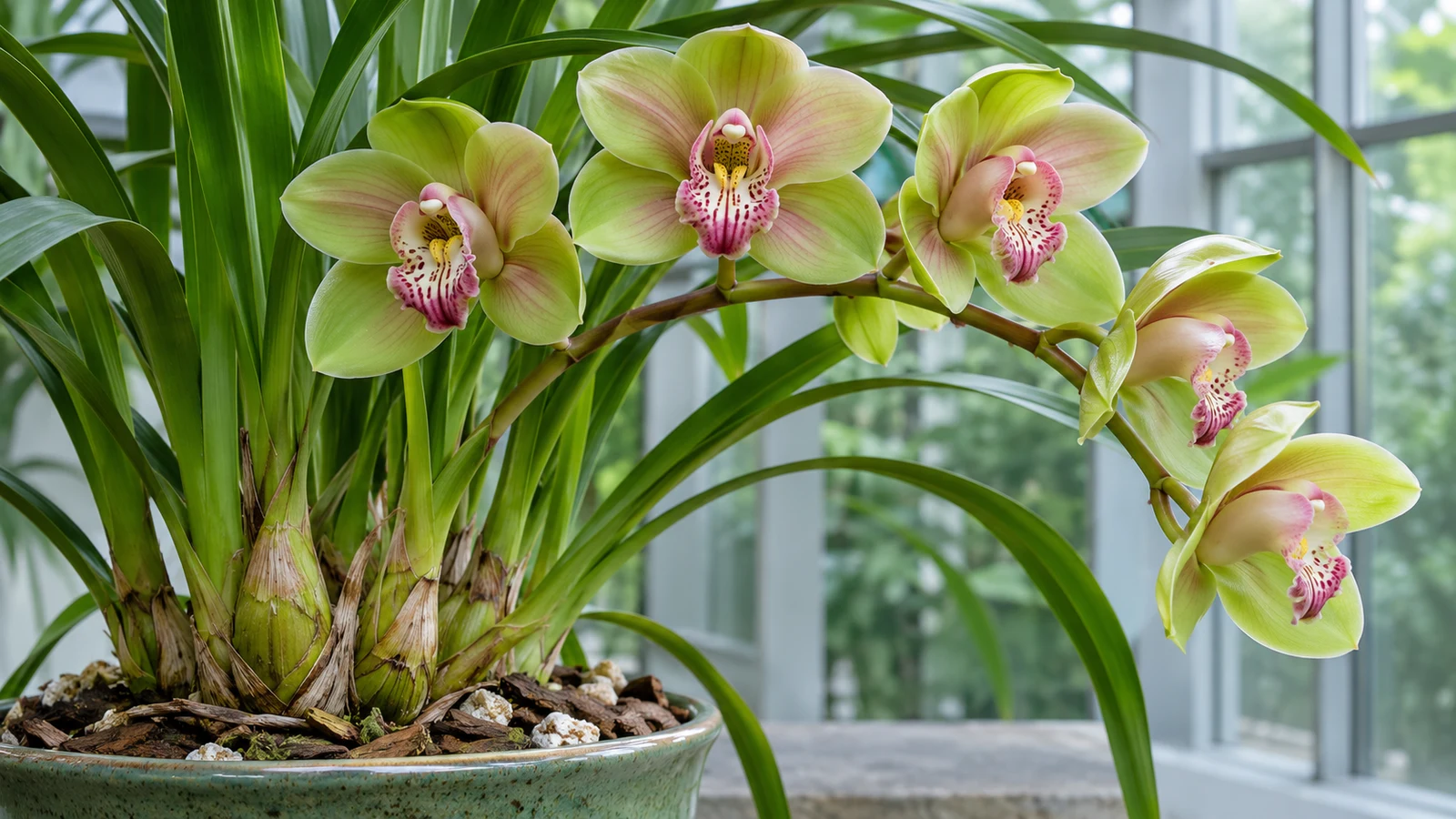
Cymbidium is native to Tropical and subtropical parts of Asia and Australia; range differs among species, typically reaches Standard hybrids commonly reach about 0.9–1.2 m including flower stems; compact miniatures may stay around 0.3–0.6 m, depending on cultivar indoors, with moderate; leafy growth and pseudobulbs develop seasonally, with flowering influenced by light and cool-season temperatures growth. Cymbidium has a evergreen, clump forming sympodial orchid with pseudobulbs; many cultivated types are epiphytic growth habit and part of the Orchidaceae family. It is also known as Cymbidium Orchid and Boat Orchid.
| Detail | Information |
|---|---|
| Also known as | Cymbidium Orchid, Boat Orchid |
| Native region | Tropical and subtropical parts of Asia and Australia; range differs among species |
| Mature size | Standard hybrids commonly reach about 0.9–1.2 m including flower stems; compact miniatures may stay around 0.3–0.6 m, depending on cultivar |
| Growth rate | Moderate; leafy growth and pseudobulbs develop seasonally, with flowering influenced by light and cool-season temperatures |
| Growth habit | Evergreen, Clump Forming Sympodial Orchid With Pseudobulbs; Many Cultivated Types Are Epiphytic |
| Scientific name | Cymbidium species and cultivated hybrids |
| Family | Orchidaceae |
How to care for Cymbidium?
When should you water Cymbidium?
Keep the bark-based orchid mix lightly moist while Cymbidium is actively growing, but let it dry a little between waterings. Water thoroughly, then let excess drain away; do not leave the pot standing in water. Reduce watering in cool winter conditions, while checking the plant and medium rather than following a fixed calendar.
- Check the bark below the surface and lift the pot to judge its weight. Water when the mix is nearly dry but before it remains dry through active growth. Make sure water drains freely from the base. - Keep the bark-based orchid mix lightly moist while Cymbidium is actively growing, but let it dry a little between waterings.
- Drain excess water - Water thoroughly, then let excess drain away; do not leave the pot standing in water.
What soil works best for Cymbidium?
Grow Cymbidium in a coarse, bark-based orchid mix that holds some moisture while leaving air around the roots. Do not use ordinary garden soil or dense houseplant potting mix.
- Use a purpose-made orchid mix based on coarse bark. - Grow Cymbidium in a coarse, bark-based orchid mix that holds some moisture while leaving air around the roots.
- Choose a pot with open drainage and avoid moving a small clump into an oversized container. - Do not use ordinary garden soil or dense houseplant potting mix.
Grower notes for Cymbidium
Give standard Cymbidiums a cool season
Standard, large-flowered Cymbidiums often need a clear drop in night temperature in late summer or autumn to initiate flower spikes. Colorado State University Extension describes a six- to eight-week cool period for standards. Modern miniatures can flower at warmer temperatures, so check the hybrid's growing guidance before assuming every Cymbidium needs the same cold nights.
Choose bright, filtered light
Cymbidiums need stronger light than many indoor orchids, especially in winter, but strong summer sun can scorch leaves. A bright window with filtered midday light or a sheltered outdoor position in light shade is a useful starting point. Dark green leaves may indicate that the plant is receiving too little light.
Use summer outdoors to support flowering
Where the climate allows, move the plant outdoors in mid- to late summer after gradually acclimating it. The RHS recommends a sheltered, lightly shaded position; the seasonal change in day and night temperatures can help standard hybrids form flower buds. Protect tender plants from frost and bring them back indoors before cold conditions threaten them.
Keep roots airy while the mix stays lightly moist
Cymbidiums have pseudobulbs that store water, but they still need regular moisture during active growth. Use bark-based orchid compost, water thoroughly, and allow excess to drain. Do not copy a Phalaenopsis watering interval automatically: Cymbidium pots, climates, and seasons differ.
Repot after the flowers fade
Bark compost deteriorates over time. Repot in spring after flowering, before new growth begins, and choose a pot only modestly larger than the root mass so the medium does not remain wet for too long. The RHS advises dividing a large clump into sections with several healthy pseudobulbs rather than making very small divisions.
Judge flower problems by season and plant type
A healthy leafy plant that does not flower may need brighter light or a cooler late-summer night period, particularly if it is a standard hybrid. Warm-growing miniatures may have different requirements. Check the cultivar's identity and seasonal conditions before changing several care factors at once.
Pet safety
I did not find a Cymbidium-specific toxicity classification in the ASPCA orchid lookup. An empty or missing database result is not proof that the plant is safe. Keep it out of reach of pets, and contact a veterinarian if an animal chews the plant.
The ASPCA orchid lookup returned no Cymbidium-specific entry in the view checked for this profile. Do not infer safety or toxicity from a missing result, or transfer a classification from Phalaenopsis or another orchid genus.
Watering Cymbidium
For Cymbidium, check the bark below the surface and lift the pot to judge its weight. Water when the mix is nearly dry but before it remains dry through active growth. Make sure water drains freely from the base. and water check the mix every few days during warm, active growth and water when it is beginning to dry. In winter, water less often; the RHS suggests weekly or fortnightly watering as a guide, adjusted for temperature, pot size, airflow, and whether rain reaches an outdoor plant. Water regularly and moderately in spring and summer, when new growth is developing. As temperatures cool, reduce frequency while keeping the pseudobulbs and roots in good condition. In rainy climates, shelter outdoor pots if the mix stays wet.
| Detail | Information |
|---|---|
| How often | Check the mix every few days during warm, active growth and water when it is beginning to dry. In winter, water less often; the RHS suggests weekly or fortnightly watering as a guide, adjusted for temperature, pot size, airflow, and whether rain reaches an outdoor plant. |
| How to check | Check the bark below the surface and lift the pot to judge its weight. Water when the mix is nearly dry but before it remains dry through active growth. Make sure water drains freely from the base. |
| Seasonal changes | Water regularly and moderately in spring and summer, when new growth is developing. As temperatures cool, reduce frequency while keeping the pseudobulbs and roots in good condition. In rainy climates, shelter outdoor pots if the mix stays wet. |
Signs of overwatering
- Bark remains wet for an extended period or water collects in the saucer.
- Roots become brown, soft, hollow, or mushy rather than firm.
Soil & potting for Cymbidium
Use a mix of Use a purpose-made orchid mix based on coarse bark., Choose a pot with open drainage and avoid moving a small clump into an oversized container. for Cymbidium. Use a free-draining container and orchid medium. Cymbidiums need regular moisture during active growth, but waterlogged roots and a pot that stays wet can lead to root rot. Repot repot at least every two years as bark-based compost breaks down, or sooner when a vigorous clump becomes very crowded or the medium no longer drains well., ideally in repot in spring after flowering and before new growth starts.
| Detail | Information |
|---|---|
| Recommended mix | Use a purpose-made orchid mix based on coarse bark., Choose a pot with open drainage and avoid moving a small clump into an oversized container. |
| Drainage | Use a free-draining container and orchid medium. Cymbidiums need regular moisture during active growth, but waterlogged roots and a pot that stays wet can lead to root rot. |
| Repotting frequency | Repot at least every two years as bark-based compost breaks down, or sooner when a vigorous clump becomes very crowded or the medium no longer drains well. |
| Best season to repot | Repot in spring after flowering and before new growth starts. |
Signs it needs repotting
- The bark has broken down or stays wet much longer than it used to.
- Pseudobulbs press against the pot edge and the clump is difficult to water.
- Roots are dead or rotting; healthy roots should be firm.