Orchid Flowers Falling Off? Find the Cause and Fix It
Why are orchid flowers falling off? Learn to spot normal aging versus bud drop, check temperature, roots, light, humidity, fertilizer, and pests, and choose a safe fix.
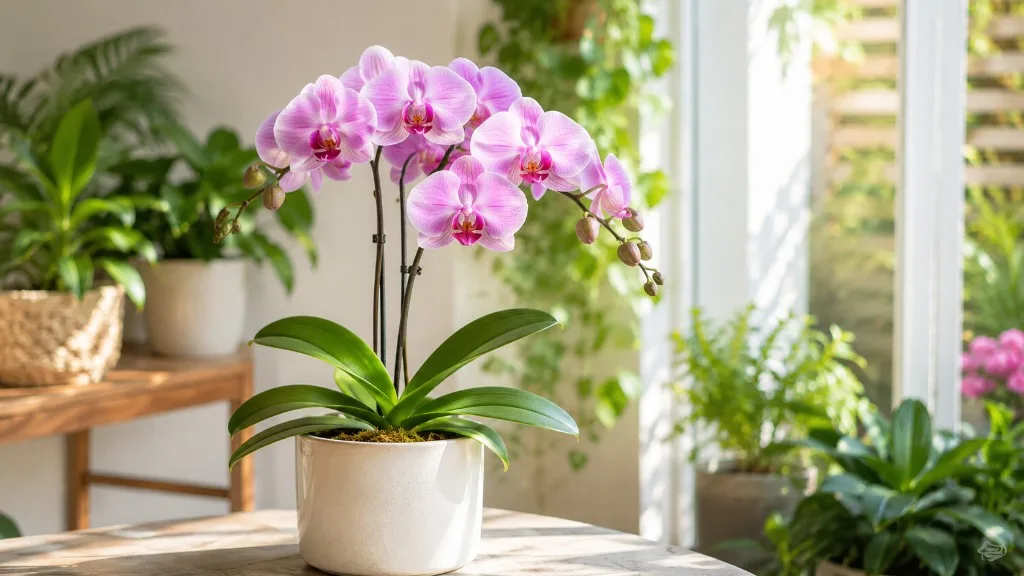
Orchid flowers falling off does not automatically mean the plant is dying. An older open flower may simply be finished, while a cluster of unopened buds that yellows or shrivels points to a different problem—often a recent change in temperature, placement, water balance, or root health.
Start by noting what fell, how quickly it happened, and what changed in the week before it began. That pattern is more useful than immediately adding water or humidity: a dropped flower alone cannot tell you whether the cause is normal aging, a draft, root damage, or a pest.
First separate normal flower aging from bud drop
Open flowers and unopened buds show different patterns
Look at the fallen material and the spike. If the oldest open flowers soften, fade, and drop one at a time while newer flowers remain firm and the leaves and roots look stable, the orchid may be finishing a normal display. Moth orchids can flower for several months, according to the University of Connecticut Extension, but duration varies by hybrid, species, and how long the plant had already been blooming when you brought it home.
Unopened buds are different. A bud that turns yellow, wrinkles, or dries before it opens has aborted; several buds doing this close together deserve a check of recent temperature changes, the plant’s move from store to home, and the roots and potting medium. If open flowers and buds fall together, that still does not identify one cause, but it makes a recent stressor more likely than ordinary flower aging.
What “bud blast” means—and what it does not prove
Growers often call premature loss of unopened orchid buds bud blast. It is a description of what the plant did, not the name of one disease: cold drafts, abrupt temperature changes, shipping or a room change, water stress, and other conditions may all contribute.
Use the term as a prompt to investigate, not as a diagnosis. A bud dropping without spots, sticky residue, webbing, or damage elsewhere is not enough evidence to assume an infection or pest; look for a matching pattern before treating the plant.
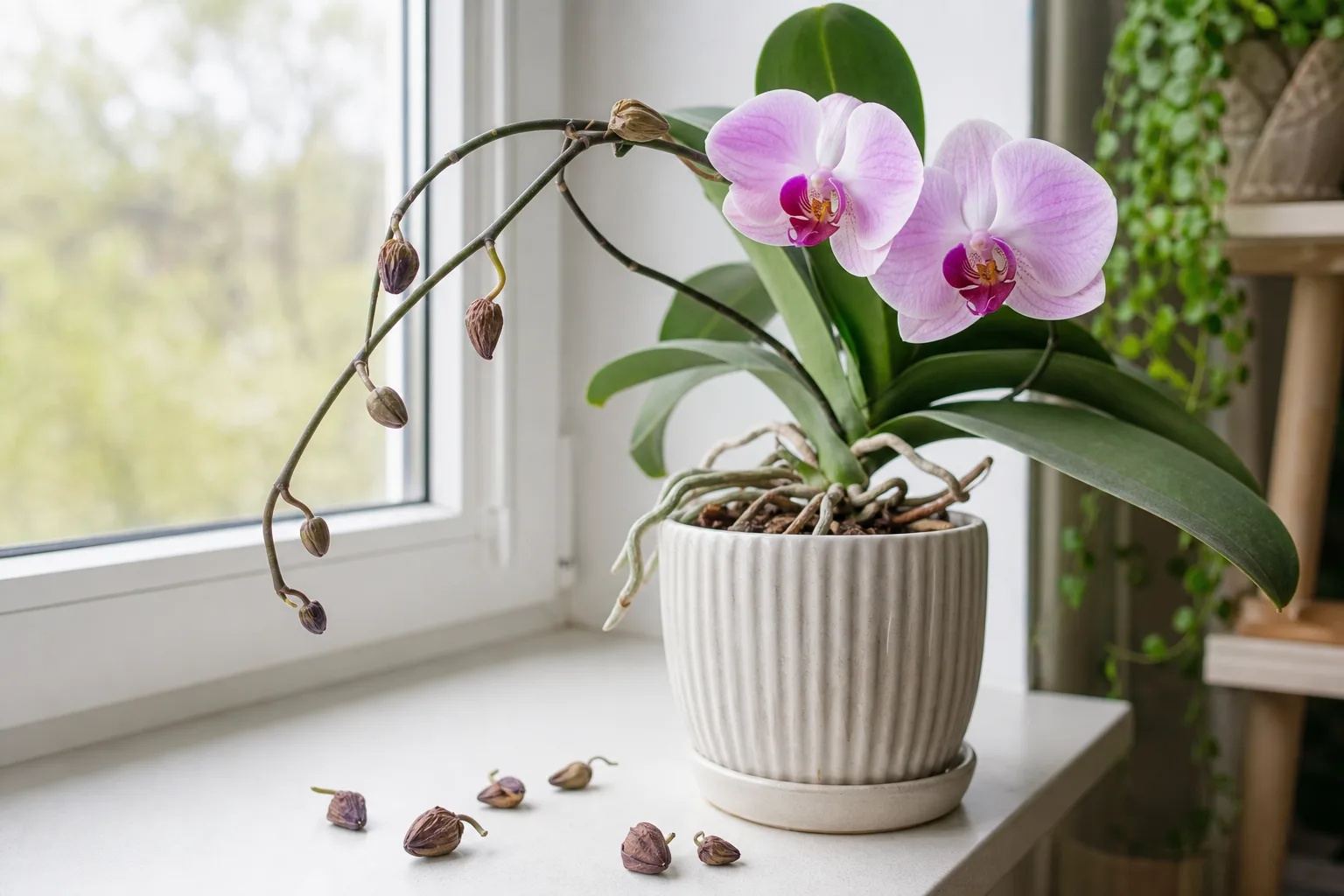
Bud drop is a symptom with several possible causes; this image does not identify which one affected a particular orchid.
1. A normal bloom cycle has ended
An orchid flower is temporary even when the plant is healthy. Flowers on one spike do not all age at the same rate, so the oldest may fall while other blossoms remain open; a gradual, one-by-one decline is usually less concerning than several buds or flowers dropping suddenly.
The clock may also have started before purchase. A Phalaenopsis at a shop could have been in flower for weeks already, and another orchid genus may keep its flowers for a much shorter period. The RHS guide to moth orchids describes Phalaenopsis displays lasting several months, while Epic Gardening’s orchid flower-drop guide also treats spent blooms as a normal part of the growing cycle.
There is no useful way to preserve a flower that has reached the end of its life. Remove fallen petals, keep the usual care routine steady, and judge the plant by its leaves and roots rather than by whether a single blossom remains.
If you want a better estimate next time, note when the first flower opens and when the last one fades. A store tag rarely tells you how long the current spike has been open, and counting from the day you brought it home can make a normal display look unusually short. You can also compare the older and newer flowers on the same spike instead of comparing your orchid with a different species or hybrid.
2. A move, cold draft, or temperature swing triggered early drop
Orchid buds can react to a sharp environmental change before the leaves show obvious damage. A cold trip home, a windowsill beside a drafty window, an air-conditioning stream, or a heater that cycles over the plant can expose buds to conditions that differ from the stable environment where they formed.
The American Orchid Society’s Phalaenopsis culture sheet notes that fluctuating temperatures can cause bud drop when buds are ready to open. The RHS likewise warns that Phalaenopsis buds are sensitive to extreme temperatures and cold drafts; these are practical clues for the common moth orchid, not a universal temperature chart for every orchid genus.
Retrace the plant’s route and placement: Was it carried outdoors in cold weather, placed next to a door, moved from a warm shop to a cool car, or set under a vent? Move it once to a bright, steady location away from direct blasts, and leave it there while you observe the remaining buds. Repeatedly shuttling the orchid between rooms can create the same sort of instability you are trying to remove.
A cool night that helps a healthy Phalaenopsis initiate a future flower spike is not the same as a sudden cold shock during the current display. Do not open a cold window beside a budded plant to force another bloom; keep today’s flowers stable and consider seasonal temperature cues only when the plant is healthy and between flowering cycles.
To check a suspected draft, put a basic room thermometer close to the flower spike for a day rather than relying on the thermostat across the room. The thermostat measures a different spot, and a cold pane, open door, or vent may create a short-lived pocket of hot or cold air exactly where the buds sit. A temperature change that lines up with a sudden drop is useful evidence, but it still needs to be weighed with root and watering conditions.
3. Water stress or damaged roots interrupted the bloom
Flowers rely on a functioning root system to supply water, but both prolonged dryness and roots kept wet for too long can interfere. This is why a wilted flower alone is a poor reason to water: an orchid with rotten roots may look thirsty even while its medium is saturated.
Check the medium before changing the schedule. For a common Phalaenopsis in a clear pot, healthy roots often look plump and green after watering, then turn silvery as they dry; brown, soft, hollow, or collapsing roots are more concerning than a firm root that is simply tan from age. The American Orchid Society recommends thoroughly watering Phalaenopsis and waiting until the plant is nearly dry before watering again, while BBC Gardeners’ World also advises checking root color and allowing water to drain.
Medium matters as much as frequency. Chunky bark dries faster than tightly packed sphagnum moss, and old bark that has broken down may stay wet and airless; the same weekly calendar cannot safely cover both. Lift the inner pot, feel its weight, look at the roots, and make sure excess water can escape instead of collecting in a decorative cachepot.
If the pot is dry and the roots are shriveled, water the medium thoroughly with room-temperature water and drain it; do not leave the pot sitting in runoff. If the mix is wet and roots are mushy, stop adding water and inspect further only if the foliage or roots support that concern. Do not unpot an otherwise healthy orchid just because one old flower fell.
When watering, wet the potting medium rather than the flowers or the leaf crown, and let the container drain before it goes back into a cachepot. The time between waterings changes with pot size, bark grade, moss, temperature, and airflow, so a fixed “once a week” rule can be too frequent in a cool room and too slow in a warm, dry one. For a different orchid genus, use its care needs instead of copying a Phalaenopsis routine.
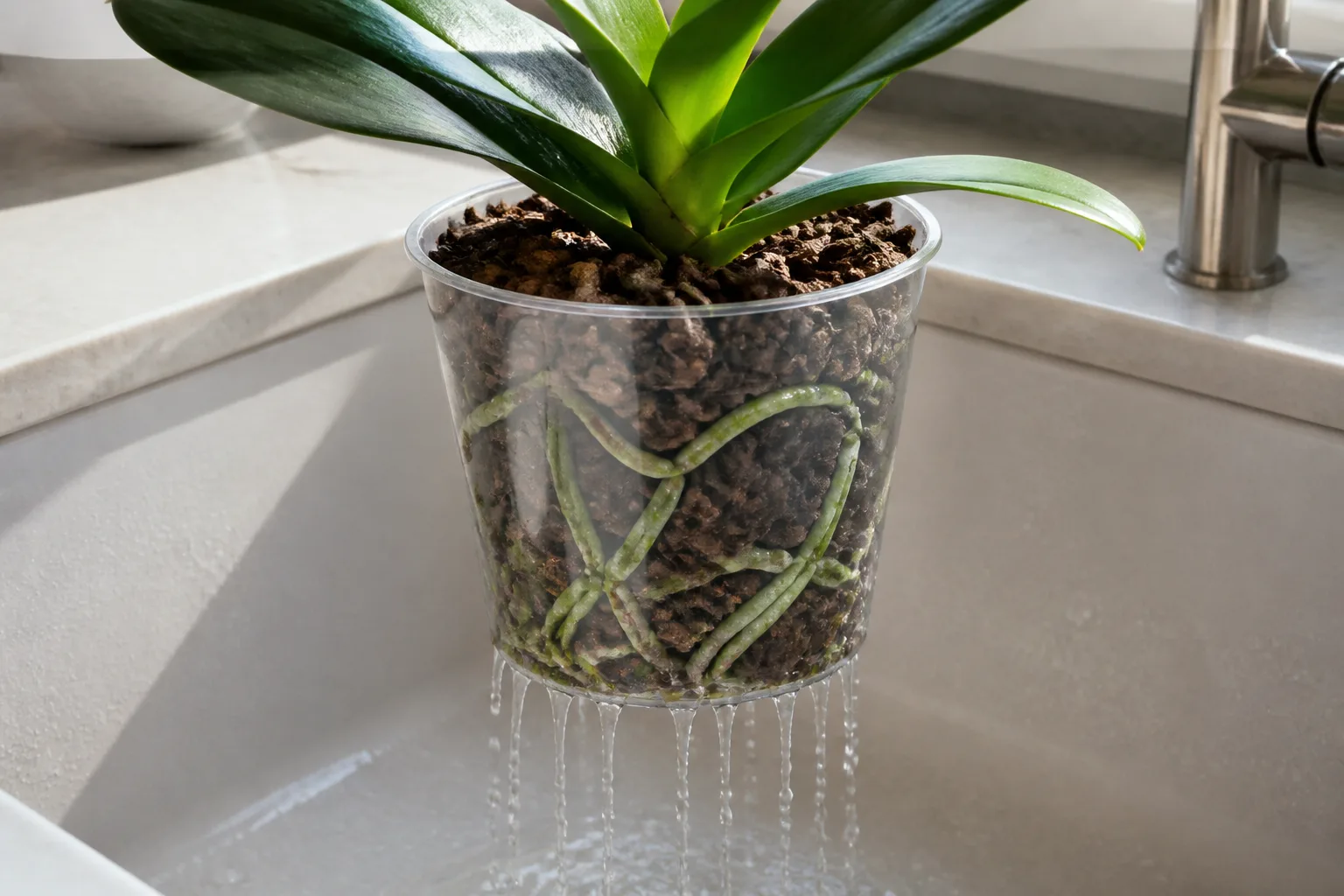
Water the root zone according to the medium’s dry-down, then let the pot drain. A dropped flower by itself does not show whether the orchid is too wet or too dry.
4. Too little light or hot direct sun stressed the plant
Light affects the plant’s ability to maintain growth, but “more sun” is not a safe universal fix. Many common Phalaenopsis do best in bright, filtered light; hot direct sun through glass can heat the flowers and scorch leaves, while a dim corner may leave the orchid too weak to sustain healthy growth.
Look for a combination of clues. Bleached, reddish, or scorched patches on leaves can support a sunburn concern; persistently very dark foliage and stalled growth may point to insufficient light, but leaf color varies by hybrid and light history. Neither sign proves that light caused a particular flower to drop, so consider when the plant last moved and whether the sun suddenly became stronger.
An east-facing window or a lightly filtered brighter window can provide a practical starting point for moth orchids. The University of Connecticut Extension recommends bright indirect light and filtering south- or west-facing sun; the American Orchid Society likewise describes a bright window with little or no direct sun for Phalaenopsis.
Keep the flower spike out of the hot noon beam and do not rotate the orchid repeatedly to chase sun. If it needs a brighter place, shift it gradually over several days and keep the temperature steady so you do not change light, heat, and airflow all at once.
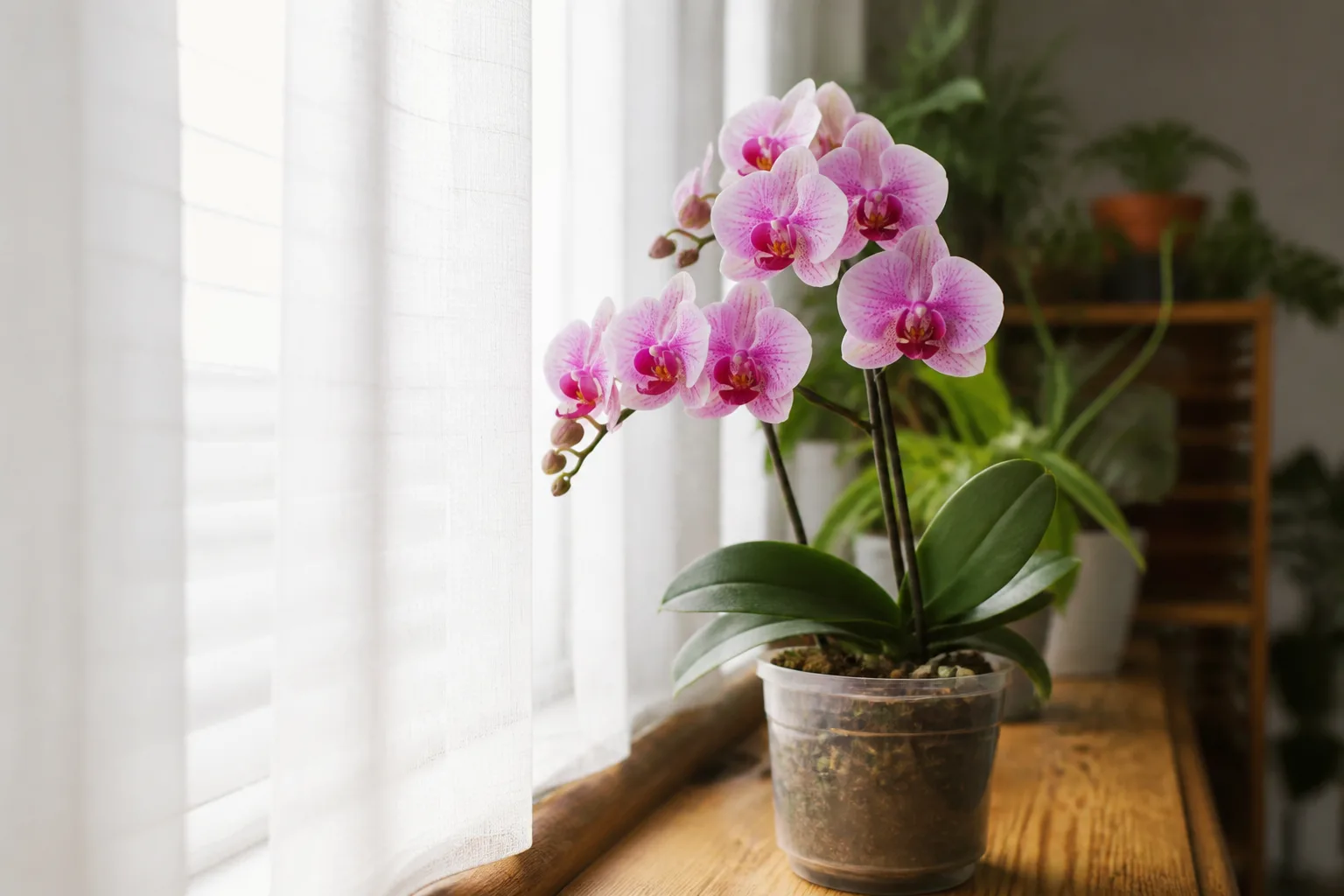
Bright, filtered window light is a steadier setup for many moth orchids than a hot patch of direct sun.
5. Dry air amplified stress
Low indoor humidity can speed water loss, particularly when a plant is already dry, warm, or exposed to moving air. But humidity is easy to over-blame: a flower dropping is not a humidity meter, and raising humidity will not repair rotten roots or restore a flower that has finished.
If you suspect dry air, measure near the plant with a small hygrometer and note the room’s temperature at the same time. The American Orchid Society’s Phalaenopsis culture guidance gives a 50–80% humidity range for that genus and emphasizes air movement; other orchid groups have different preferences, and a houseplant near a heater may experience drier air than a room-level reading suggests.
A small humidifier or a correctly set pebble tray can improve the local environment, but keep the pot above the waterline and allow air to circulate. Do not mist open flowers: the RHS warns that water on orchid petals can leave spots, and wet flowers in cool, stagnant air can also favor fungal spotting. If you use a humidifier, clean it as directed and keep water out of the crown where the leaves meet.
Avoid chasing a number without checking how the plant responds. A hygrometer on the far side of the room may miss a dry heater stream, while a tightly enclosed display case can trap moisture around petals and roots; both situations can produce misleading readings or new problems. Aim for a stable environment with gentle air movement rather than saturating the plant or setting a fan directly on the spike.
6. Repotting or excess fertilizer disrupted the roots
Repotting during a display can disturb roots and may shorten the flowers’ remaining life, especially if the plant is unpotted, divided, or moved into a very different medium without a reason. If the orchid is healthy and the bark still drains, it is usually more sensible to wait until flowering ends; the American Orchid Society describes repotting after flowering as the usual timing, while noting that root condition can make timing flexible.
Do not delay an urgent repot just to save a few flowers. If roots are actively rotting or the medium has collapsed into dense, sour-smelling material that stays wet, protecting the plant’s roots matters more than keeping the current spike. Use an airy orchid medium and a draining pot, preserve sound roots, and avoid making several other changes at the same time.
Heavy feeding is another root stress, not a bloom-preserving trick. Concentrated fertilizer and accumulated soluble salts can injure orchid roots; a white crust on the medium may be a clue, though it can also reflect minerals in water and does not identify the cause by itself. The American Orchid Society recommends light, regular feeding during active growth, and Fine Gardening’s orchid guidance describes periodically flushing excess fertilizer salts from the medium.
If you suspect overfeeding, pause fertilizer while you assess the medium, then flush a freely draining pot with plain water and let it drain completely. Resume only at a diluted, label-directed rate appropriate to the orchid and medium; do not add bloom booster or extra fertilizer in an attempt to keep old flowers attached.
For a plant that is already flowering, consider the trade-off rather than treating the calendar as a hard rule. A healthy plant can often wait until the display ends, when roots are easier to handle and the flowers are no longer at risk of being brushed or snapped; a rotting root system cannot. When repotting is necessary, take a quick photo of the roots first, remove only tissue that is clearly soft or dead, and return the plant to a similar light and temperature so the repot is not combined with a location shock.
7. Pests or flower disease damaged the buds
Inspect the whole plant, not only the fallen petals. Scale and mealybugs can hide along leaves, leaf joints, and the spike; thrips and mites can be difficult to see without a hand lens, and early signs may look like pale scarring, distorted buds, stippling, or sticky residue rather than a clearly visible insect.
The UF/IFAS Extension guide to orchid insect and mite pests explains that developing buds and petals are tender and that orchid pests can damage flowers. Examine the underside of leaves, the base of the spike, and crevices around the crown; a flashlight and white sheet of paper under a gently tapped leaf can help reveal moving specks.
Flower spots are a separate clue from simple drop. UC IPM’s Cymbidium orchid guidance describes Botrytis flower spotting in Cymbidium production as small dark or water-soaked spots favored by cool, moist conditions and moisture condensed on flowers; that guidance is specific to Cymbidiums, but it supports avoiding wet petals and stale air while you identify the problem. Spots alone do not prove Botrytis, because other injuries and diseases can mark petals.
If you find insects or progressive spotting, isolate the orchid from nearby plants, remove fallen flowers and debris, and identify the issue before choosing a treatment. Avoid spraying flowers or applying a fungicide “just in case”; pesticide labels and orchid sensitivity matter, and a misapplied treatment can add another stress to a plant already losing buds.
A five-step check before you change the care routine
Use this order so one symptom does not send you straight to the wrong fix:
- Identify what fell. An old open bloom dropping alone is different from unopened buds collapsing across the spike.
- Reconstruct recent changes. Note purchase, delivery, room moves, a cold night, heater or air-conditioning use, direct sun, watering, and repotting.
- Check the environment. Feel for a vent or draft at spike height; check light and temperature where the plant actually sits.
- Inspect roots and medium. Lift the pot, check its weight and drainage, and look through a clear pot if available. Unpot only if other signs justify it.
- Look for pests or lesions. Inspect the spike, petal undersides, leaf axils, and roots before isolating or treating.
After the check, change the most likely stressor and leave the other parts of the routine stable. Record the date and take a quick photo of the spike; over the next week, you can tell whether the remaining buds are continuing to open or whether a new symptom has appeared.
This order also prevents a common cascade: a flower drops, the grower adds water, then adds fertilizer, moves the pot to a brighter but hotter window, and finally repots it. Each response can introduce a new stress, making the original cause harder to identify. If the orchid’s leaves, roots, and remaining buds look normal, slow observation is often safer than a series of urgent corrections.
| Pattern | First check | Sensible next step |
|---|---|---|
| Older open flowers fall one by one; buds and leaves look firm | Bloom age and how long the plant was flowering before purchase | Keep normal care steady and allow the spike to finish |
| Several unopened buds shrivel after a move or cold trip | Drafts, temperature swings, and abrupt placement changes | Settle the orchid in one bright, stable location |
| Flowers wilt while the medium is very dry or continuously wet | Root condition, pot weight, medium, and drainage | Adjust watering only after confirming the root-zone condition |
| Petals show spots, residue, webbing, or distorted growth | Pests, moisture on flowers, and airflow | Isolate if pests or spreading lesions are present, then identify before treatment |
What to do after flowers or buds fall
If open flowers dropped but the plant looks healthy
Do not overhaul the care routine just because the show is over. Remove loose petals, keep watering according to the roots and medium, and continue giving the orchid the light it needs to support new leaves and roots.
Wait before cutting a green spike if you do not know the orchid’s type. Some Phalaenopsis can branch from a green node, while other orchids flower on a spike that naturally dries after its display; a fully brown, dry spike is different from one that is still green. The plant label or a genus-specific care guide can help you choose, and the RHS Phalaenopsis guide explains one common approach for moth orchids.
If unopened buds drop after a recent move
Stabilize the plant first. Move it away from the cold window, hot vent, or direct sun that matches the timing, then leave it in a consistent bright spot; increasing water or fertilizer will not reverse buds that have already dried.
If the remaining buds are still firm, they may continue opening once conditions settle, but the already shriveled buds will not recover. Keep the plant out of drafts during transport, avoid leaving it in a cold vehicle, and give it time to adjust after bringing it home.
If petals show spots, sticky residue, or webbing
Move the orchid away from nearby plants until you know whether a pest or spreading disease is involved. Check both sides of the leaves and the flower spike under good light, remove fallen material, and keep water off open flowers while the plant dries between waterings.
Do not apply insecticide or fungicide based only on dropped flowers. If you cannot identify the pest or the spots keep appearing, photograph the affected area and ask a local orchid society or extension office to help identify it before treatment.
Help the next orchid spike grow
Once flowering ends, think about recovery rather than an instant repeat display. Keep leaves firm, roots active, and the medium appropriate for the orchid; repot when the mix is decomposed or roots need attention, not simply because flowers fell.
For many Phalaenopsis, enough bright filtered light and a modest seasonal difference between day and night temperatures help prepare a future spike, but temperature cues differ by genus and hybrid. Avoid forcing a cold treatment on an unidentified orchid, and do not increase fertilizer strength to compensate for weak light or unhealthy roots.
Do not assume that every orchid needs a long dry rest after flowering. Phalaenopsis continues growing indoors through much of the year, while other genera may slow down or follow a seasonal cycle; reduce watering only when the plant’s growth habit and medium call for it. Keep a simple record of new leaves, root tips, watering, and spike growth so you can adjust the next season based on the orchid you actually have.
Conclusion
The quickest way to understand orchid flowers falling off is to separate normal aging from premature bud loss. Open flowers fading one at a time usually mean the display is ending; several unopened buds falling together are a reason to review recent moves, temperature, watering, roots, light, humidity, and visible pest or disease signs.
Choose one change that fits the evidence, then give the plant stable conditions. A fallen flower cannot be restored, but a healthy orchid can recover and flower again on its own timetable.