How to Grow and Care for Cymbidium Orchids
Learn how to grow cymbidium orchids with bright light, seasonal watering, cool nights, and a repotting plan that supports strong roots and winter flowers.
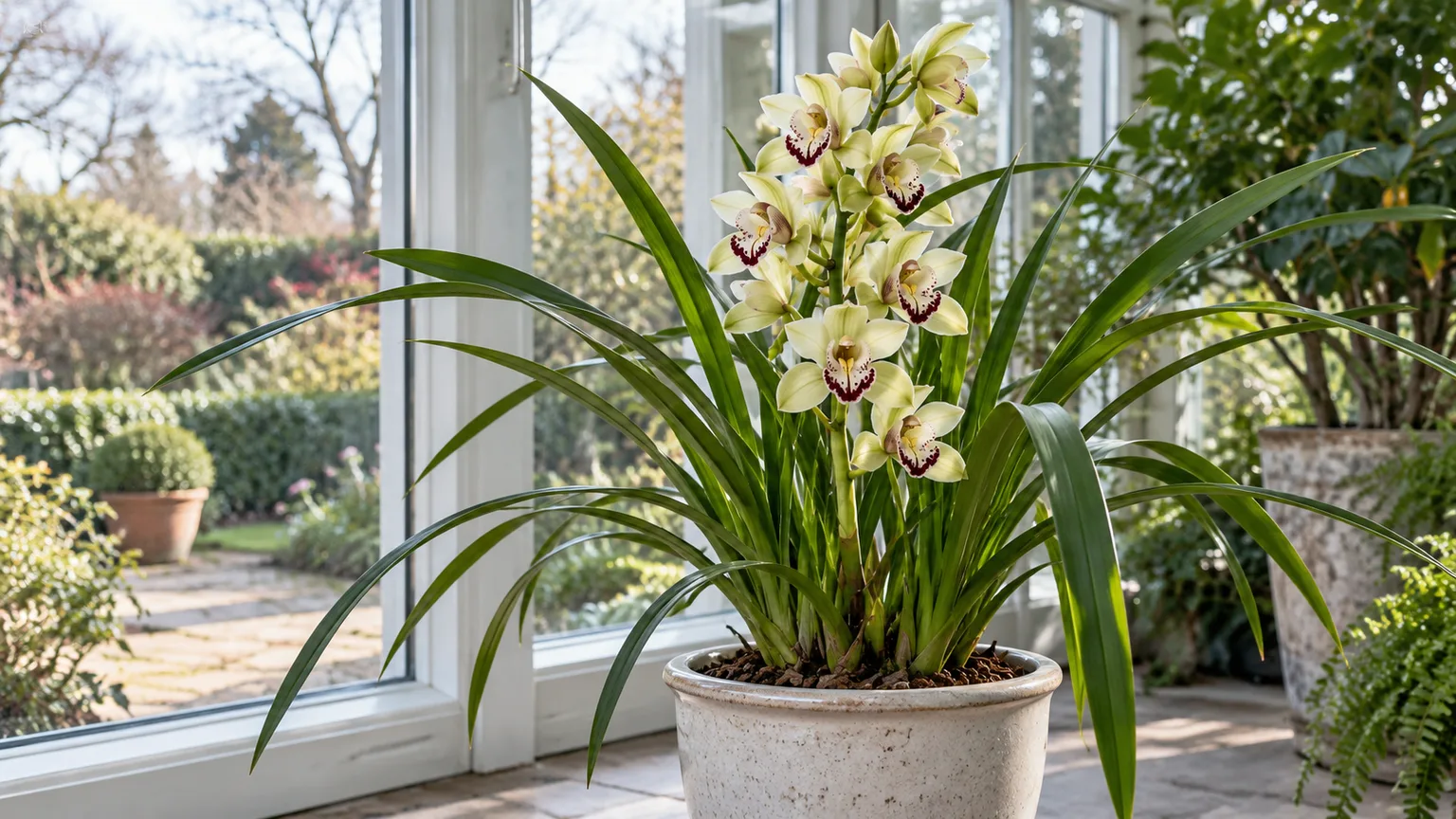
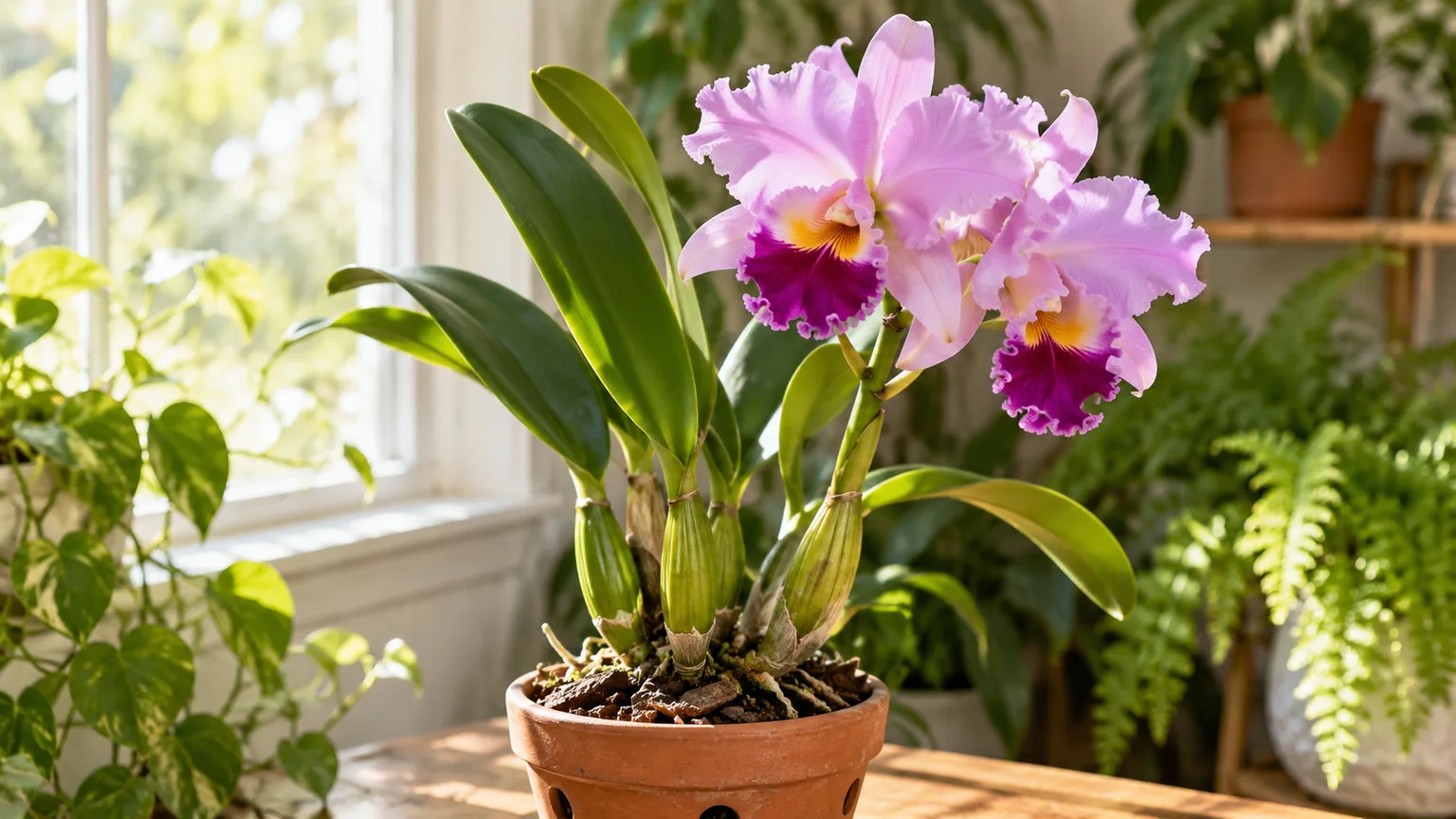
Cymbidium orchids, often called boat orchids, are recognized by their long, strap-shaped leaves and upright stems of waxy flowers. They are among the orchids that can spend part of the year outdoors in mild climates, but they need brighter light and cooler seasonal conditions than many common indoor orchids. Getting those two factors right usually matters more than buying a special pot or adding extra fertilizer.
A cymbidium can grow a full, healthy clump and still refuse to bloom. That often happens when the plant stays warm through late summer and autumn, when many standard hybrids need a clear drop in night temperature to start flower spikes. Think of care as a sequence: provide enough light during active growth, keep the roots moist but aerated, give the plant cool nights in late summer, and protect it from hard frost and waterlogged winter conditions.
Start With the Right Expectations for a Cymbidium
Cymbidium is a large orchid genus with species and hybrids adapted to different climates. The familiar florist and garden-center plants are often standard hybrids with substantial leaves and flower spikes; miniature forms and some species tolerate warmer conditions and may not follow the exact same bloom pattern. If the plant came with a label, keep it. A cultivar name can help explain why one cymbidium flowers in a warmer room while another makes leaves but no spikes.
The swollen structures at the base of the leaves are pseudobulbs. They store water and nutrients and support new growth, so an older bulb that has finished growing may remain useful even when it has no leaves. Fresh shoots generally emerge near the newest pseudobulbs, while flower spikes arise from the base of mature growths. Do not mistake every old, wrinkled bulb for rot or cut away a firm bulb simply because it looks less attractive than new growth.
The American Orchid Society’s Cymbidium culture sheet describes these orchids as semi-terrestrial and emphasizes generous light and seasonal temperature control. The RHS growing guide likewise recommends bright conditions and cooler temperatures than many tender houseplants. That combination explains why a bright, cool porch or sheltered summer patio can outperform a warm, dim living room.
Set the Plant Up for Growth
Choose a spot where the plant can receive bright light and where you can track temperature changes. A sunny east or south-facing window can work indoors if the leaves do not overheat against the glass. Outdoors, a bright position with shelter from the harshest afternoon sun is a safer starting point than an exposed, all-day baking location. Change one condition at a time and watch the leaves for several weeks before moving the plant again.
Give Bright Light Without Midday Burn
Cymbidiums need considerably more light than many people give indoor orchids. In a house, place the pot close to a bright east, south, or west window; if direct summer sun heats the foliage, use a sheer curtain or move it back a little. The American Orchid Society gives greenhouse growers a high-light range of about 3,000 to 6,000 foot-candles, with midday shade in hotter regions. That is a greenhouse benchmark, not a number most home growers need to measure.
Use leaf color as a practical signal. Very dark green, soft leaves often point to too little light, especially if the plant also fails to flower. Gardening Know How also uses leaf color as a rough light indicator, but it is not a diagnosis by itself: pale yellow-green can be normal in bright conditions, while bleached patches or dry tan areas on the sun-facing side suggest scorch. Gardening Know How’s cymbidium growing guide offers this color cue alongside its general care advice. Increase light gradually over one to two weeks when moving a plant outside; abrupt exposure to midday sun can burn leaves that grew in a protected room.
For a summer move, choose dappled shade or morning sun with afternoon protection. The RHS recommends acclimating cymbidiums before moving them outdoors, which helps prevent leaf scorch from stronger sun and a changed environment. Bring the plant in or provide deeper shade during a heat wave if the pot becomes hot and the leaves lose firmness.
Use Cool Nights to Trigger Flower Spikes
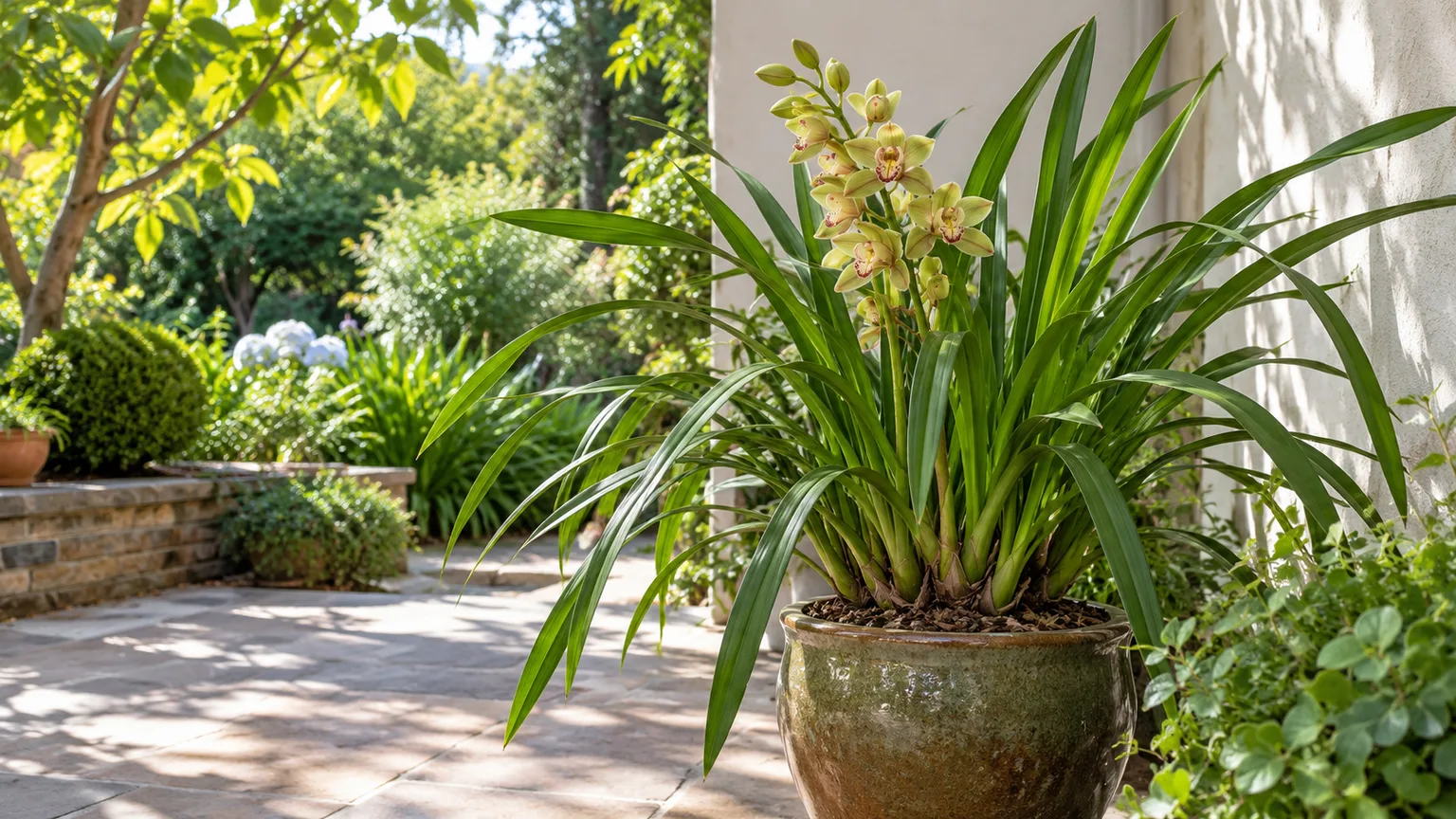
For many standard cymbidium hybrids, cool nights in late summer and autumn are the missing part of the bloom cycle. The American Orchid Society describes a useful flower-induction pattern of nights around 50–57°F (10–14°C) with days near 75°F (24°C), while Yates Australia notes that a marked day-to-night difference, roughly 10°C, supports flowering. Treat those figures as targets, not a universal switch: miniatures and species can differ, and a warm-climate plant may not experience the same seasonal cues.
If nights remain warm, more fertilizer will not compensate. Give the plant a few weeks outside in a protected, bright spot when temperatures are naturally falling, then move it before frost. Where outdoor cooling is not available, use the coolest bright room or enclosed porch you have and avoid placing the plant beside a heater. Do not put it in a refrigerator or expose it to freezing weather to force a spike; sudden cold damages leaves, roots, and developing buds.
Once spikes appear, keep conditions steady. A rapid switch from cool nights to a hot room, a dry root ball, or a sharp change in location can lead to bud drop. Stake a developing spike loosely before the flowers open, placing the support near the clump without pushing it through new roots. Flowers can last several weeks; they generally fade sooner in a hot room than in a cool display area.
Keep Air Moving and Humidity Moderate
Cymbidiums do not need a sealed tropical enclosure. Typical household humidity is often adequate if the plant is watered consistently and the air can circulate. The American Orchid Society recommends about 40–60% humidity during winter, especially while plants are in bud, and stresses airflow to reduce fungal spotting on flowers. If the room is very dry, group plants or use a room humidifier rather than keeping the potting mix saturated to compensate.
Avoid leaving the pot in a saucer of water. After watering, let the container drain fully, and leave space between plants so foliage dries rather than staying damp overnight. Good air movement and dry petals help protect blooms from Botrytis spotting, particularly during cool, humid weather.
Choose a Potting Mix and Container That Drain
Cymbidiums are semi-terrestrial, but they still need oxygen around their roots. A bark-based orchid medium with some moisture-retentive material is a reliable container choice. The mix should hold enough water to keep roots from drying immediately, yet leave air spaces and drain freely. A fine, dense houseplant potting soil can stay wet too long in a large pot; coarse bark alone may dry too quickly in a hot, breezy patio. Adjust the medium to your climate and watering habits rather than chasing one universal recipe.
A commercial medium-textured orchid mix is a practical starting point. Some growers blend bark with a modest amount of sphagnum moss, perlite, or other airy ingredients to slow drying. Do not compress the medium into a solid mass, and do not bury the pseudobulbs deeply. Use a pot with several drainage holes; a heavier clay pot may help stabilize a tall plant, while plastic holds moisture longer and is easier to move. If your home is cool or you tend to water heavily, favor faster drainage over extra water retention.
The best pot is not necessarily tiny. Cymbidiums can tolerate a snug root space, but severe crowding can make watering uneven and leave no room for active growth. Choose a container with room for the next one or two years of new pseudobulbs, not a huge pot that stays wet for weeks. The RHS cautions against overpotting because excess unused medium dries slowly and can encourage root rot.
Water to Keep Roots Evenly Moist, Never Stagnant
Water needs change with growth, temperature, and the mix. During spring and summer, when new leaves and pseudobulbs are forming, water thoroughly whenever the upper part of the medium begins to dry. Let water run through the pot and out the drainage holes, then empty the saucer. In hot or windy weather a cymbidium may need water more frequently; in a cool, humid room it may need much less.
Check the pot rather than relying on a weekly schedule. Feel the mix just below the surface, lift the pot to gauge its weight, and notice how quickly it dries after watering. A fine mix in a plastic pot behaves differently from coarse bark in a clay pot. The American Orchid Society advises keeping the medium evenly moist during active growth, while the RHS recommends allowing it to dry a little before the next watering. In practice, aim for moist and airy, not bone-dry and not saturated.
As new pseudobulbs finish maturing and the weather cools, reduce watering gradually. In winter, water when the mix approaches dryness, but do not allow the entire root ball to become hard and desiccated. Cold roots in continuously wet medium are especially vulnerable to rot. If water quality is poor or mineral deposits crust the pot, use rainwater or filtered water where practical and flush the medium periodically with plain water. The RHS watering guidance specifically recommends rainwater or filtered water in hard-water areas.
Fertilize Lightly and Flush Salts
Feed during active growth, not because a calendar says every plant needs fertilizer every two weeks. A balanced liquid orchid fertilizer at a conservative, label-directed strength is easier for most home growers than combining multiple products. Apply it to already moist roots rather than to a bone-dry pot, and pause or reduce feeding when growth slows in winter. Too much fertilizer does not make a weak plant bloom; it can damage root tips and leave salts in the medium.
The American Orchid Society describes a seasonal program that uses more nitrogen during spring growth, a balanced feed through summer, and a bloom-focused formula once spikes form. This illustrates the principle that fertilizer can follow the plant’s stage, but home growers should follow the label for their specific product rather than copy a concentrated greenhouse recipe. Every few weeks during the growing season, water generously with plain water to carry accumulated salts out of the container. If you see a white crust on the mix or pot rim, flush more thoroughly and reconsider the strength or frequency of feeding.
Follow the Plant Through the Seasons
A seasonal routine is easier to manage than separate, fixed instructions for every month. In a warm climate, the plant may stay outside longer; in a cold climate, it may spend most of the year indoors. Use local nighttime temperatures and the condition of the pseudobulbs to adjust the sequence.
| Season or stage | Main job | What to watch |
|---|---|---|
| Spring, after flowering | Repot if needed; restart regular watering as new growth appears | Fresh roots and shoots are the best time to assess the plant |
| Late spring and summer | Give bright light, airflow, steady moisture, and light feeding | Acclimate gradually before outdoor placement; shade during hot afternoons |
| Late summer and autumn | Preserve bright light and expose the plant to cooler nights | This is when many standard hybrids initiate flower spikes |
| Winter, buds and flowers | Keep the plant bright, cool, and evenly but lightly moist | Protect from frost and avoid abrupt temperature or location changes |
| After the last flower fades | Cut the spent spike and resume active-growth care as growth restarts | Keep firm pseudobulbs; do not divide a small or stressed plant |
When moving a houseplant outdoors, wait until nights are consistently mild enough for the cultivar, and avoid placing it straight into direct sun. When moving it back inside, inspect the leaves and pot for slugs, snails, aphids, or other hitchhikers. A brief check at the end of each season can prevent pests from spreading to other houseplants.
Make Flowering More Likely
To encourage flowers, work through the conditions in order: first confirm the plant receives bright light; next, check that it is mature enough to bloom; then assess its late-summer and autumn night temperatures. Standard cymbidiums usually flower from mature pseudobulbs, not from every new shoot as soon as it appears. A young plant or a recent division may spend a season building roots and leaves before it has enough stored energy to bloom.
A reliable bloom plan is to keep the plant in bright light through the growing season, maintain even moisture while new pseudobulbs develop, and give it a cool-night period as autumn approaches. Do not slash watering to “rest” it while leaves are actively growing. Once spikes form, keep the plant cool but above freezing, water enough to prevent shriveling, and avoid moving it repeatedly between very different temperatures. The RHS suggests keeping developing flower stems below about 59°F (15°C) to reduce bud drop, then displaying open flowers near 70°F (21°C); warmer display temperatures can shorten the show.
Cymbidium flowers often last for six to eight weeks, though cultivar and room conditions affect longevity. Some plants bloom in fall or winter, while others flower later. If your plant is healthy but does not flower in a warm region, realistic options include growing a miniature or warm-tolerant selection, using a cooler outdoor period if safe, or enjoying it as a foliage plant. No fertilizer or pruning trick can guarantee a bloom when the plant never receives the temperature cues its cultivar needs.
Repot After Blooming or When the Mix Breaks Down
Repot in spring after flowering, ideally as new roots or shoots begin, rather than disturbing a plant with developing buds. Many growers repot roughly every two years, but the medium’s condition is a better guide than the date: bark that has softened, collapsed, or stopped draining calls for replacement. Repot sooner if the plant is unstable, the roots are rotting, or the mix stays wet far longer than it used to.
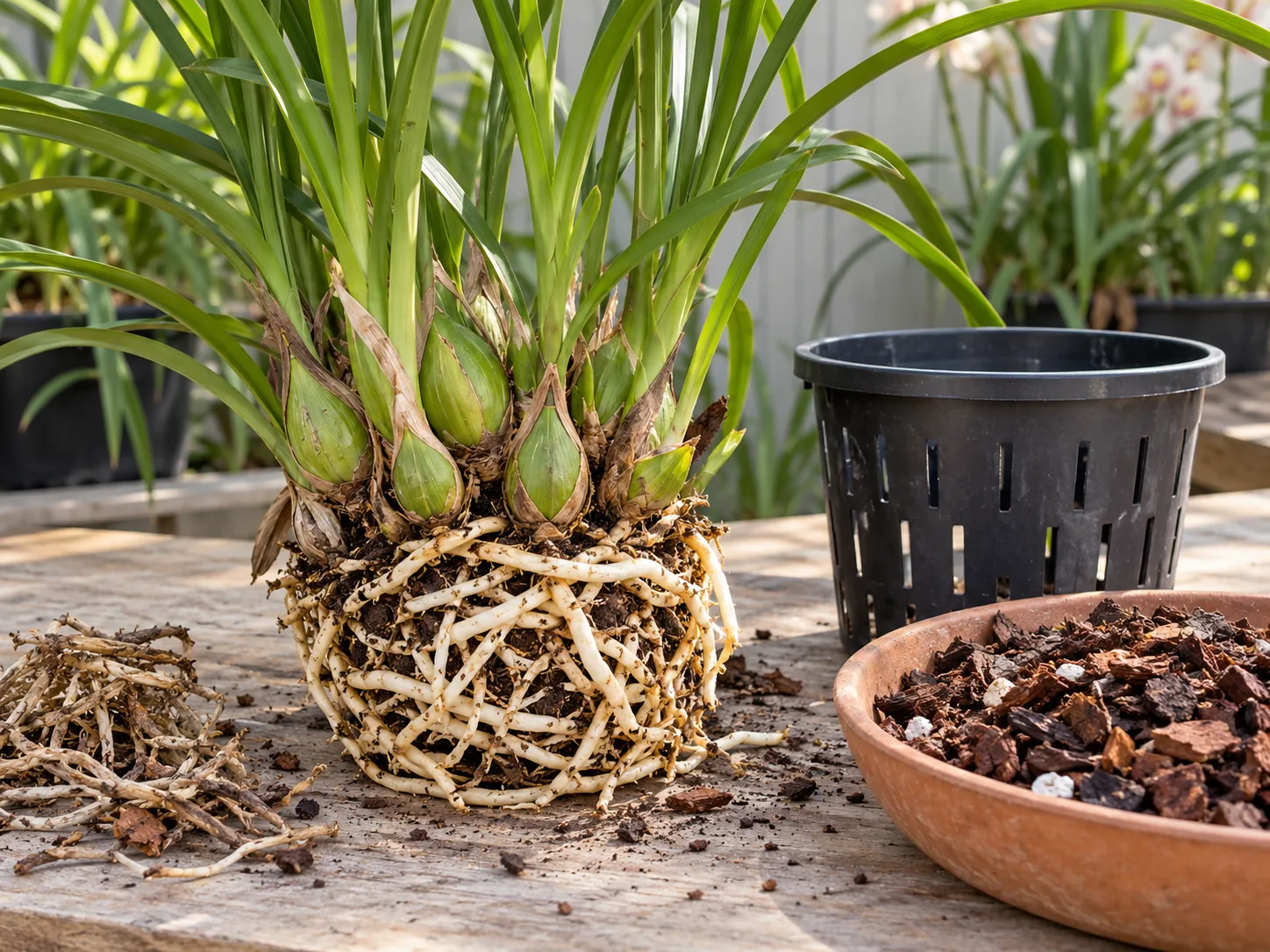
Lift the plant gently and remove old medium without tearing healthy roots. Firm, pale roots are usually worth keeping; hollow, mushy, or badly shriveled roots can be trimmed with a clean tool. Set the plant at its previous depth, with pseudobulbs above the mix, and work fresh medium around the roots so the clump does not wobble. Water to settle the mix and let it drain. After repotting, return the plant to bright shade and avoid harsh sun while disturbed roots recover.
Divide Only Mature Clumps
Division is optional. Do it when the clump is too large for its container, the medium needs replacing, or you want another plant—not simply because one pseudobulb has finished flowering. Separate the clump with a clean knife or saw, aiming to keep several healthy pseudobulbs and at least one active growing point on each piece. The American Orchid Society’s guidance includes at least one new growth and three pseudobulbs; the RHS advises keeping five healthy pseudobulbs per division. That difference reflects how growers manage divisions, so a conservative home rule is to make fewer, larger pieces rather than divide a small plant into weak fragments.
Pot each division into fresh orchid medium with the newest growth positioned toward the open side of the pot, where it can expand. Secure the clump so it cannot rock and break delicate new root tips. Keep it in bright shade during recovery and resume normal watering as new growth becomes clear. A division may need a year or two to rebuild enough strength for flowers, so do not treat a bloom-free first season as failure.
What to Do With Old Pseudobulbs
Leave firm, plump pseudobulbs attached, including older ones without leaves. They can continue to store energy and support new growth. Remove only bulbs that are clearly dead, hollow, mushy, or badly rotted, and use a clean blade to avoid carrying disease between plants. Brown papery leaf bases on older bulbs are not automatically a reason to cut into the bulb itself.
Cymbidiums can be raised from seed, but seed propagation is a specialist project because orchid seeds need carefully controlled germination conditions and may take years to reach flowering size. For a home grower who wants another plant, division of a mature clump is far more practical and preserves the parent cultivar.
Trim Finished Spikes and Maintain the Plant
After all flowers on a spike have faded, cut the spent spike down near its base with clean pruners. A cymbidium flower spike is not a dependable source of a second flush once its blooms are finished; the plant’s next flowering cycle comes from later mature growth. Remove dead leaves at their base, but leave healthy green foliage alone. Cutting green leaves reduces the plant’s ability to replenish pseudobulbs and can delay future flowering.
Wipe dust from leaves with a damp cloth and inspect the leaf undersides and pseudobulb crevices when watering. If the plant is outside, check beneath the pot and around new shoots for slugs and snails. These small habits catch problems early without subjecting the plant to unnecessary treatments.
Diagnose No Blooms, Bud Drop, or Leaf Damage
Change one likely cause at a time. If a cymbidium is not thriving, start with roots and medium; if it grows leaves but not flowers, start with light and seasonal temperature. Adjusting water, fertilizer, temperature, and pot size all at once makes it difficult to tell which correction helped and may add stress.
When a Cymbidium Will Not Flower
A mature plant that grows leaves but no flower spikes is usually missing bright light, cool nights, or both. Check whether it sits far from a window, spends autumn in a heated room, or belongs to a miniature or species type with a different seasonal response. Also consider whether the plant was divided or repotted recently; it may be rebuilding roots rather than preparing flowers. Improve light gradually and offer a safe cool-night period before changing fertilizer.
If spikes form but buds drop, review the weeks after spike initiation. Sudden temperature swings, a dry root ball, very warm indoor air, moving the plant repeatedly, and low humidity can all contribute. Keep the plant cool and stable, avoid letting it dry completely, and do not rotate or relocate it daily. A few buds may fail naturally, but widespread drop is a signal to check the environment before assuming the plant is diseased.
Rot, Leaf Spots, and Pests
Roots that are brown, soft, and hollow point to decay more than normal aging. Remove the plant from standing water, check whether the medium has broken down, trim only dead roots, and repot into fresh airy mix if the root zone remains wet. For future watering, allow the pot to drain completely and wait until the medium begins to dry before watering again. A wrinkled pseudobulb alone does not prove underwatering; damaged roots can also prevent a plant from taking up water, so inspect the roots before simply watering more.
Dry brown tips can follow inconsistent moisture, accumulated fertilizer salts, or unsuitable water quality. Flush the mix with plain water and review the next few watering cycles before cutting off the affected tissue. Yellow or tan patches on the sun-facing leaves suggest excess light or heat; move the plant to filtered light and let it recover. If spots spread quickly, look wet or ringed, or appear on several leaves at once, isolate the plant and avoid dividing it until the cause is clearer.
Aphids, mealybugs, and spider mites can occur indoors; slugs and snails are more likely on outdoor plants. The RHS lists these as pests to watch for on cymbidiums. Inspect new purchases before placing them near other plants, wipe off small pest colonies, and isolate an infested orchid. If you use a pesticide or horticultural soap, choose a product labeled for the pest and plant, follow its directions, and test on a small area first; sensitive flowers can be damaged by treatment.
Grow Cymbidiums Indoors or Outdoors?
Both settings can work, and moving a container between them often gives growers the best of each. Indoors, a miniature cymbidium is easier to accommodate than a large standard hybrid; use the brightest available window and the coolest suitable nighttime location during spike initiation. A warm, dim apartment with no cool-season option can keep a cymbidium alive but may not produce dependable flowers. If blooming is the priority, choose a plant suited to the temperatures you can actually provide.
In a mild, frost-free climate, cymbidiums can grow outside in pots or in a sheltered raised bed with an airy orchid medium and excellent drainage. In colder climates, keep them portable so they can spend summer outside and winter in a cool, bright protected space. Do not use a brief tolerance of light frost as permission to leave the pot out through a freeze. The American Orchid Society advises bringing plants in when temperatures approach 40°F (4°C), a conservative threshold that is safer for most home collections than testing their limits.
Conclusion
Cymbidium orchid care comes down to bright light, airy medium, seasonally adjusted water, and cool nights when the plant is preparing to flower. Keep the roots moist during active growth without leaving them in standing water, feed modestly, and repot after flowering when the medium breaks down or the clump outgrows its container. Preserve healthy pseudobulbs and divide only a mature plant with enough growth to recover.
If the plant grows well but never blooms, check its light and autumn night temperatures before adding fertilizer or cutting foliage. Match the cultivar to your climate, move outdoor plants gradually, and bring them to shelter before frost. A steady seasonal routine gives the orchid time to build strong new growth and the best chance of producing another winter display.