How to Grow and Care for Hass Avocado Trees
Get practical Hass avocado tree care for warm gardens and pots: planting depth, watering cues, feeding, pollination, frost protection, and harvest checks.
A Hass avocado is a long-term fruit tree, not a quick houseplant project. Success depends first on whether your winters are mild enough for an outdoor tree or whether you can move a container tree under cover, then on keeping the root zone moist but airy. A nursery-grown, grafted Hass can eventually produce the familiar dark, pebbled fruit; a seed from a grocery-store avocado is a different genetic plant and may never make comparable fruit.
The best care plan is simple but precise: give the tree direct sun, protect it from frost and wind, plant it high enough to keep the trunk dry, and water according to the soil rather than the calendar. Once established, patience matters more than aggressive pruning or fertilizer. Flowering, fruit set, and harvest all take time, and each can vary with climate and the tree’s condition.
Hass avocado at a glance
| Need | Practical target |
|---|---|
| Botanical name | Persea americana ‘Hass’ |
| Light | Full outdoor sun; brightest available light indoors |
| Soil | Loose, well-drained soil; roots must not sit in water |
| Water | Deep enough to wet the active root zone, then let excess drain |
| Climate | Warm, frost-light conditions; shelter young trees from cold |
| Pollination | Type A flowering; one tree may set fruit, while cross-pollination can help |
| Fruit | Pick mature fruit and allow it to soften off the tree |
Avocado roots are shallow and sensitive to low oxygen. That combination explains why a tree can need frequent irrigation in hot weather and still decline in soggy soil. Before changing the fertilizer or spraying a product, check the planting site, drainage, and recent watering history.
Start with a grafted Hass tree
Choose a labeled, nursery-grown tree with a visible graft union and a healthy, balanced canopy. The scion above the union is the Hass cultivar; the rootstock below it contributes vigor and root traits. Ask the nursery about the rootstock and local suitability when that information is available, especially if you are buying for a container or a region with occasional freezes.
An avocado seed is useful for growing a leafy curiosity, but it does not reproduce the parent cultivar reliably. A seedling from a Hass fruit is not a guaranteed Hass tree, and it often takes much longer to fruit than a grafted nursery tree. If your goal is edible Hass fruit, buy a grafted plant. Remove any shoots that emerge below the graft because they belong to the rootstock and can overtake the desired canopy.
Check the tree before you take it home: leaves should be firm, the trunk should not be girdled by ties, and the root ball should not smell sour or feel waterlogged. Avoid a tree with a buried graft, severe circling roots, or extensive dead tips. A smaller, well-rooted tree is often easier to establish than a tall specimen that has spent too long in a cramped nursery pot.
Match the tree to a warm, sunny, protected site
In a suitable subtropical climate, plant Hass avocado outdoors where it receives full sun for most of the day. Six or more hours of direct sunlight is a useful target for a fruit tree. Bright indirect light may keep an indoor plant alive, but it is not a substitute for the outdoor sun needed to support a large, productive canopy. A wall or building can shelter the tree from cold wind, but leave enough room for the crown and roots to grow.
Cold tolerance is not a single dependable temperature printed on a zone chart. Injury depends on cultivar and rootstock, tree age, how long the cold lasts, wind, soil moisture, and whether the plant was hardened gradually. The UC Statewide IPM Program’s avocado guide notes that varieties differ in their sensitivity to low temperatures; treat a young Hass as vulnerable and protect it before a frost rather than waiting to see whether it recovers. If freezing weather is routine, a movable container is more realistic than planting in the ground.
Avoid low pockets where cold air settles, exposed corners that funnel wind, and ground that stays wet after rain. Give the mature tree space away from foundations, paving, and underground lines. If your property has heavy clay or shallow rock, choose a raised planting mound or a large container instead of digging a deep amended hole that may collect water.
Plant a Hass avocado in the ground
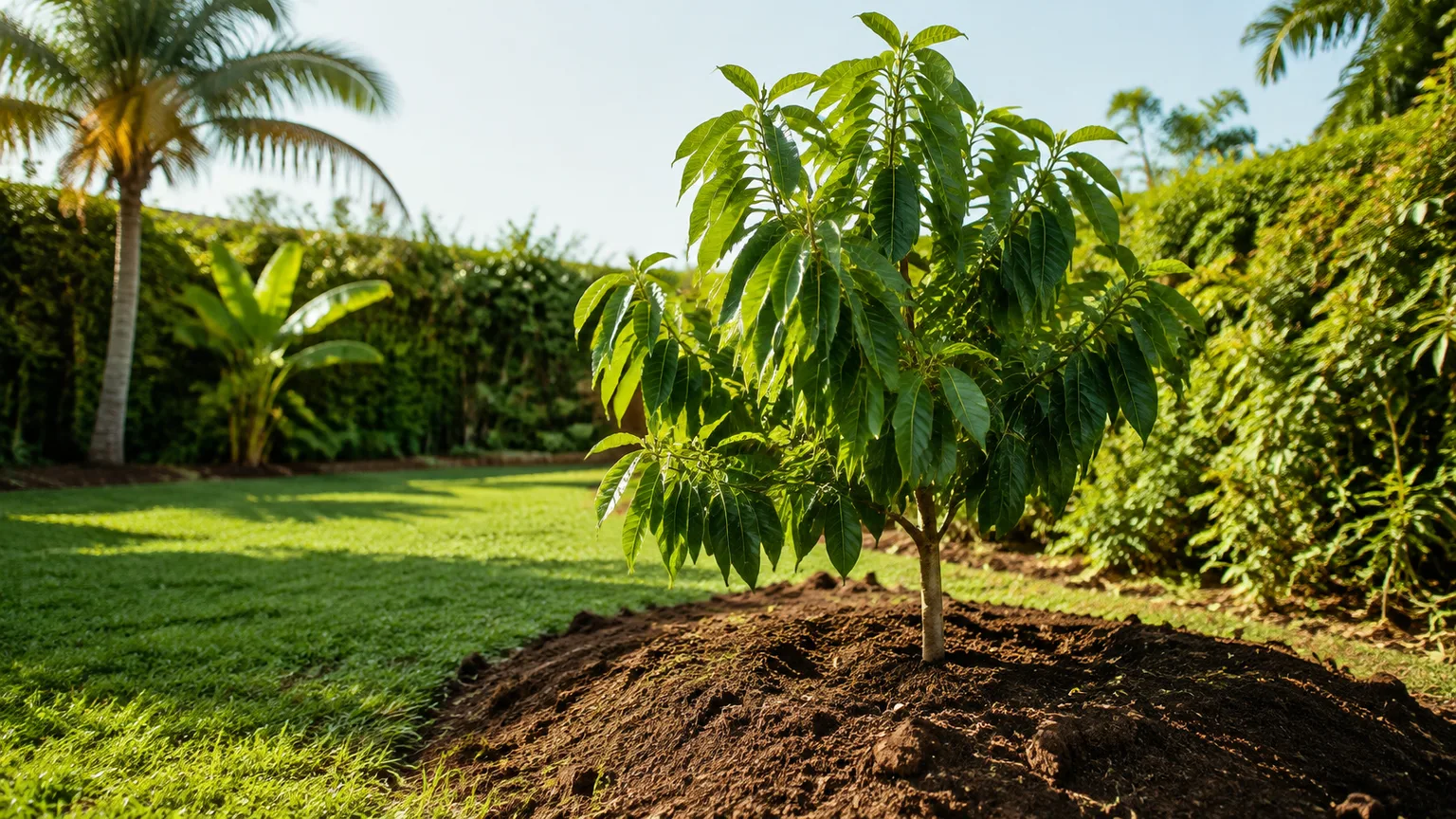
Spring, after the last frost, gives a container-grown tree time to establish before summer heat. Water the nursery pot beforehand, slide the root ball out carefully, and loosen only roots that circle tightly around the outside. Dig a hole about twice as wide as the root ball but no deeper. UC IPM’s avocado planting guidance recommends keeping the root ball slightly above the surrounding grade; a shallow mound is safer than burying the trunk in a low basin.
Set the tree at the same depth it grew in its pot, with the upper roots just covered and the graft union well above soil. Backfill with the native soil you removed rather than filling the hole with a rich, sharply different mix. A pocket of amended material can hold water or discourage roots from expanding into the surrounding ground. Water slowly after planting so soil settles around the roots without washing the trunk into a depression.
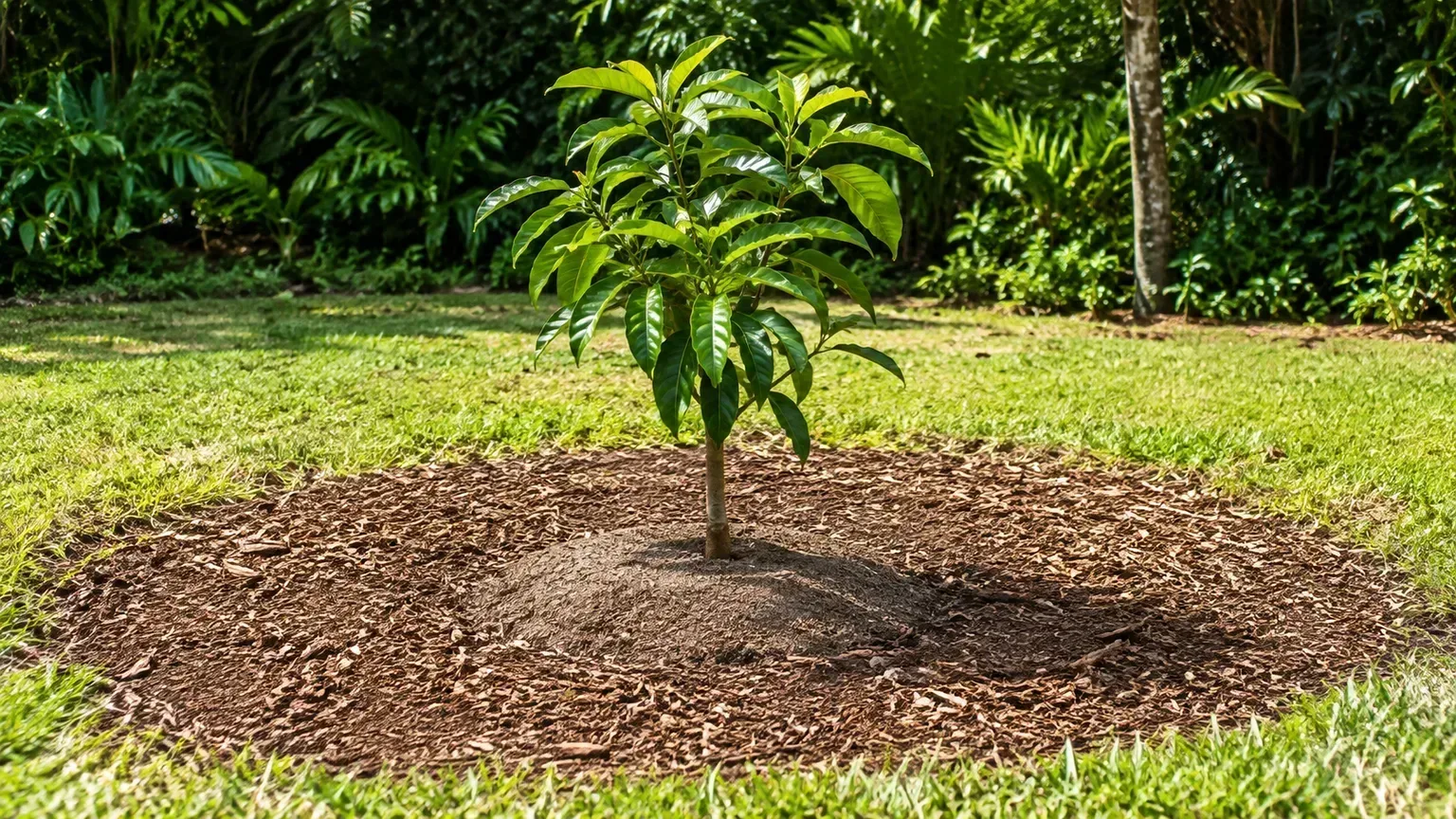
Keep grass and weeds from competing under the canopy. Spread a broad layer of coarse organic mulch over the root area, but leave a clear ring around the trunk; mulch piled against bark keeps it damp and hides damage. Young trunks exposed to intense sun may need temporary protection with a breathable tree guard or a properly diluted white latex paint treatment described in UC IPM’s planting advice. Check ties and guards regularly so they do not constrict growth.
Grow a Hass avocado in a container
A pot makes sense when winter cold would damage an in-ground tree, when you have limited yard space, or when you want to move the plant to a bright sheltered place. It is still a tree with substantial roots, so container growing is a compromise: the plant dries faster, needs routine repotting or root management, and is less likely to carry a heavy crop than a vigorous tree in a suitable landscape.
Use a sturdy container with several unobstructed drainage holes. Choose a pot only a little wider than the root ball at first; an oversized pot leaves a large volume of mix wet around a small root system. Use a coarse, free-draining container mix, not dense garden soil, and raise the pot on feet so runoff can escape. The RHS container-growing guide advises drainage and careful pot sizing; apply those basics especially carefully to an avocado, whose roots are vulnerable to standing water. Its fruit-in-containers guide also stresses that potted fruit needs closer watering and aftercare than fruit growing in open ground.
Move the pot outdoors gradually after frost risk passes, letting the leaves adjust to stronger sun over a week or two. Bring it to a bright, frost-free location before cold nights arrive. Indoors, place it near the brightest available window and add a grow light if the canopy stretches or sheds leaves from lack of light. A warm room can preserve foliage, but indoor conditions do not guarantee flowering or fruit. Do not move it abruptly from a dim room into strong midday sun or from a warm room into freezing air.
Repot when roots circle the pot, water runs straight through, or growth stalls despite good light and sound watering. Move up one pot size during active growth rather than making a huge jump. If the tree is already in its final heavy container, refresh the upper mix and seek locally appropriate guidance before root pruning; aggressive root cutting can set an avocado back.
Water by checking the root zone
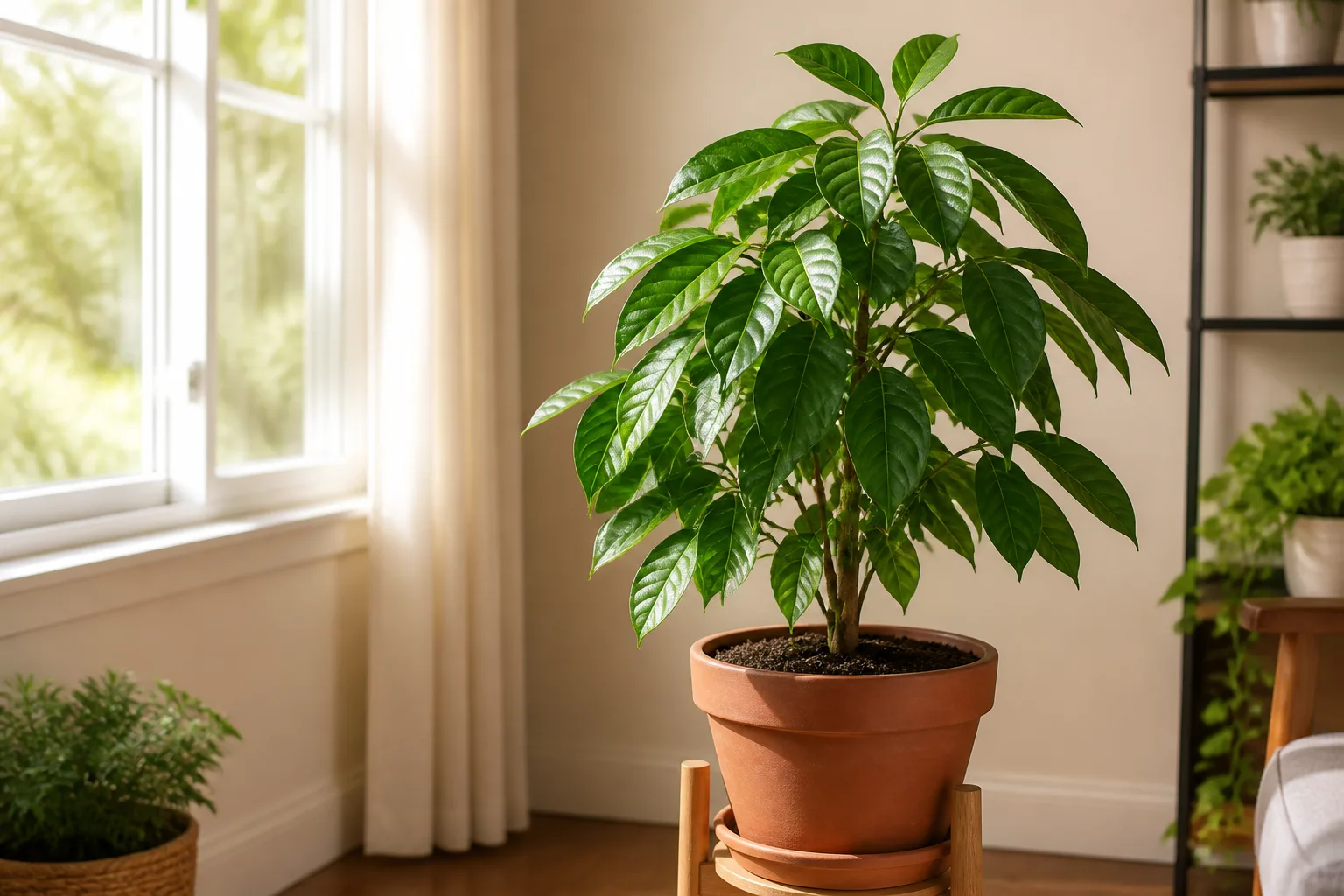
There is no reliable “once a week” rule for every Hass tree. A young tree, a mature tree in sandy soil, a potted plant in afternoon sun, and a tree after several rainy days have different water needs. Check moisture in the upper few inches of soil and just inside the root ball. When that zone is beginning to dry, water slowly and broadly enough to wet the roots; stop if water pools or runs away without soaking in.
For an established landscape tree in a hot California summer, UC IPM gives about two inches of water per week as a reference, with the amount divided according to soil and conditions. That is a regional starting point, not a universal prescription for every yard or container. Rainfall, heat, wind, soil texture, mulch, canopy size, and irrigation efficiency change the amount needed. A moisture check after irrigation tells you more than a calendar reminder.
Newly planted trees need particular attention because their roots still occupy the nursery root ball. Keep that ball from drying while encouraging roots to grow outward; as the tree establishes, move emitters farther from the trunk. Drip irrigation or a slow hose soak can deliver water without repeatedly wetting the trunk. If leaves droop after watering, or the soil smells sour and stays saturated, pause irrigation and fix drainage before adding more water.
Potted trees need more frequent checks during hot or windy weather because their limited mix can dry quickly. Water until a little drains from the holes, then empty any saucer. In cool, low-light months, growth slows and the pot stays wet longer, so reduce watering based on actual drying rather than continuing the summer pattern. Alternating drought and flooding can both cause leaf drop and weak fruit set.
Build the right soil and mulch layer
The essential soil feature is air movement around the roots. A sandy or loamy soil with good drainage is usually easier to manage than compacted clay. UC IPM warns that poorly drained ground and standing water can promote root rots; avoid a site with a hardpan, persistent puddles, or irrigation that saturates the trunk. Soil pH near the mildly acidic range is often suitable, but do not try to correct a suspected nutrient problem by adding lime, sulfur, or micronutrients without a soil test.
Organic mulch helps buffer soil temperature, reduce evaporation, and suppress weeds. Spread it over a wide area because avocado feeder roots extend beyond the trunk, and keep it several inches away from the bark. Replenish as it breaks down instead of piling a thick new layer on top every season. Do not use mulch to disguise a drainage problem: a tree that sits in saturated clay will not be rescued by adding more organic material on the surface.
In a container, use a stable mix that drains freely but does not dry to dust within hours. If the mix has collapsed into a dense mass or pulled away from pot walls, replace or refresh it during active growth. Avoid adding a gravel layer to the bottom as a supposed drainage fix; open holes and a well-structured mix matter more than a coarse layer trapped beneath fine potting medium.
Fertilize conservatively
Nitrogen supports new growth, but more fertilizer is not a shortcut to fruit. Overfeeding can burn sensitive roots, push soft growth that is vulnerable to cold, and mask the actual cause of pale leaves. UC IPM’s cultural guidance says mature avocado trees commonly need nitrogen, while other nutrients are often already adequate; it also notes that container and dwarf plants may require less. Follow a local extension schedule for your climate and the product label for application rates.
For a young tree, use small, measured applications after it has begun establishing rather than adding fertilizer to the planting hole. Keep granules or concentrated liquid away from the trunk and water them in as directed. On established trees, adjust feeding to growth, soil conditions, and—where available—soil or leaf analysis. The CDFA avocado fertilization guidance emphasizes nutrient monitoring and avoiding excess nitrogen; its commercial orchard tables are not a direct dose chart for a patio pot.
Do not treat every yellow leaf with a high-nitrogen feed. Waterlogged roots, drought, salt accumulation, and nutrient shortage can look similar. UC IPM notes that zinc or iron deficiencies can occur, but a diagnosis should come before a foliar treatment. If symptoms are widespread or recurring, test the soil or consult a local extension service rather than stacking fertilizer, Epsom salt, and trace minerals together.
Train and prune for an accessible canopy
Young Hass trees benefit more from early training than from heavy pruning. Remove shoots below the graft, broken branches, and limbs that rub or crowd the center. Keep a strong framework with branches spaced enough for light and air, but do not strip the tree’s leaves; avocado foliage helps shade the trunk and scaffold limbs from sunburn.
If height control is needed, shorten the tallest shoots gradually and encourage useful lateral growth while the tree is young. Repeatedly topping a mature tree can trigger dense, weak regrowth and expose suddenly unshaded bark. UC IPM recommends pruning sparingly and notes that if size reduction is necessary, pruning just before bloom or after fruit set lets the tree adjust its crop. Avoid late-season cuts that stimulate tender growth before cold weather.
Use clean, sharp tools and remove dead or diseased material. Disinfect tools after cutting suspect diseased tissue, and avoid pruning on wet foliage when disease can spread easily. If a large limb must come down or the tree has grown beyond safe reach, hire an arborist familiar with fruit trees rather than making a ladder-side cut near power lines or heavy limbs.
Understand flowers and pollination
Hass is classified as a Type A avocado. Its flowers cycle between receptive female and pollen-producing male phases, while Type B cultivars follow the opposite daily pattern. These labels are useful for understanding pollination, but actual flower timing shifts with temperature and conditions. Epic Gardening’s Hass guide describes the cultivar’s Type A pattern, while UC IPM describes avocados as semi-self-pollinating. A single healthy tree can set fruit; a compatible Type B tree nearby may improve pollen overlap and fruit set, but it is not a prerequisite for every home harvest.
An avocado can produce many flowers and still retain only a small fraction as fruit. Flower drop is common and does not automatically mean the tree is sick. Cold during bloom, very hot weather, drought, waterlogged roots, lack of pollinator activity, or a young tree allocating energy to canopy growth can all reduce set. Avoid trying to “fix” normal flower drop with extra fertilizer or pruning during bloom.
If your tree flowers but never holds fruit, check the basics in order: is it a grafted tree old enough to flower, does it receive strong outdoor sun, are roots healthy, and is the bloom period suitable for the local climate? Then consider whether a Type B cultivar or more pollinator activity would help. A second tree adds space, water, and care needs, so plant one only when climate and room make the potential gain worthwhile.
Set realistic fruiting expectations
A grafted Hass tree can begin bearing in a few years under favorable conditions, but “three to five years” is a rough expectation, not a deadline. The age and size of the nursery tree, rootstock, local winter and summer temperatures, water management, and flower set all affect timing. A stressed tree may spend several seasons rebuilding roots and canopy before it can carry fruit.
Seed-grown trees take longer and are genetically variable. Even if a seedling eventually fruits, the fruit may not resemble Hass in texture, flavor, or skin. Growing from a pit is enjoyable if your aim is a houseplant-like tree or an experiment; buying a grafted plant is the practical choice when you want the cultivar and a better chance of earlier fruit.
Do not judge productivity from the first handful of flowers or one small fruit. Young trees benefit from building structure, and a large early crop can be more stress than the tree can support. If a small tree sets fruit, thinning a heavy cluster can protect branches and leave more energy for roots and canopy. Mature trees may also have uneven crops from year to year, so judge the tree over several seasons rather than one harvest.
Harvest mature fruit and ripen it indoors
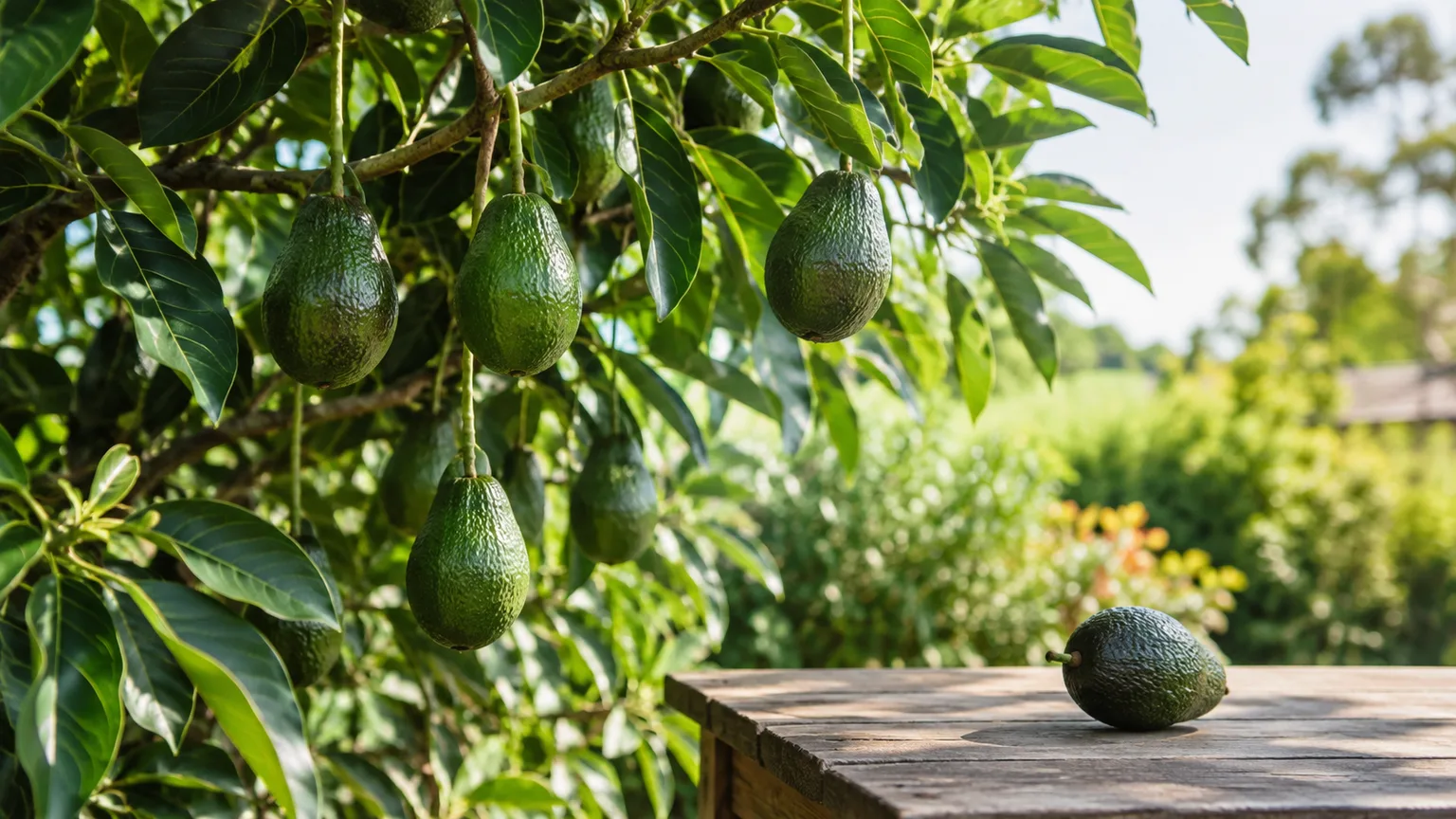
Avocados soften after harvest, not while attached to the tree, so a firm fruit is not necessarily immature. Maturity is the question: a fruit picked too early may shrivel instead of ripen. Hass skin darkens as fruit matures, but color alone is unreliable because lighting, fruit position, and cultivar variation can mislead you.
Use a test pick. Clip one of the larger fruits with a short stem attached and let it sit at room temperature. If it softens evenly over several days without shriveling, the remaining fruit is likely mature enough to harvest. If it shrivels or stays hard far longer than expected, leave the crop on the tree and repeat the test later. UC IPM recommends judging a test fruit and cutting fruit from the stem rather than pulling it, which can damage both fruit and branch.
Harvest what you can use and leave sound fruit on the tree until needed; the crop often holds better on the tree than on a counter. Use clean pruning shears and handle fruit gently to avoid bruising. Once a picked avocado softens to gentle pressure near the stem end, refrigerate it if you are not eating it right away. If the tree carries a large crop, pick in stages rather than stripping every fruit at once.
Diagnose yellow leaves before treating
Yellow foliage is a symptom, not a diagnosis. First note where it appears, whether it affects old or new leaves, and what the soil feels like. A few older leaves yellowing and dropping as new growth appears can be normal. Widespread yellowing after heavy rain, a pot that remains wet for days, or leaf edges turning brown alongside stunted growth points more strongly to root stress than to a fertilizer shortage.
| What you see | Check first | Safer first response |
|---|---|---|
| Yellowing after prolonged wet soil | Drainage, pot holes, soil odor, root health | Pause irrigation and correct drainage |
| Dry, curled, or scorched edges | Root ball moisture, heat, wind, salts | Water deeply if dry; reduce salt buildup |
| Pale new growth or poor vigor | Root condition, pH, nutrient test | Test before feeding or adding micronutrients |
| Yellow stippling with dark specks underneath | Leaf undersides for lace bugs | Confirm pest identity and monitor damage |
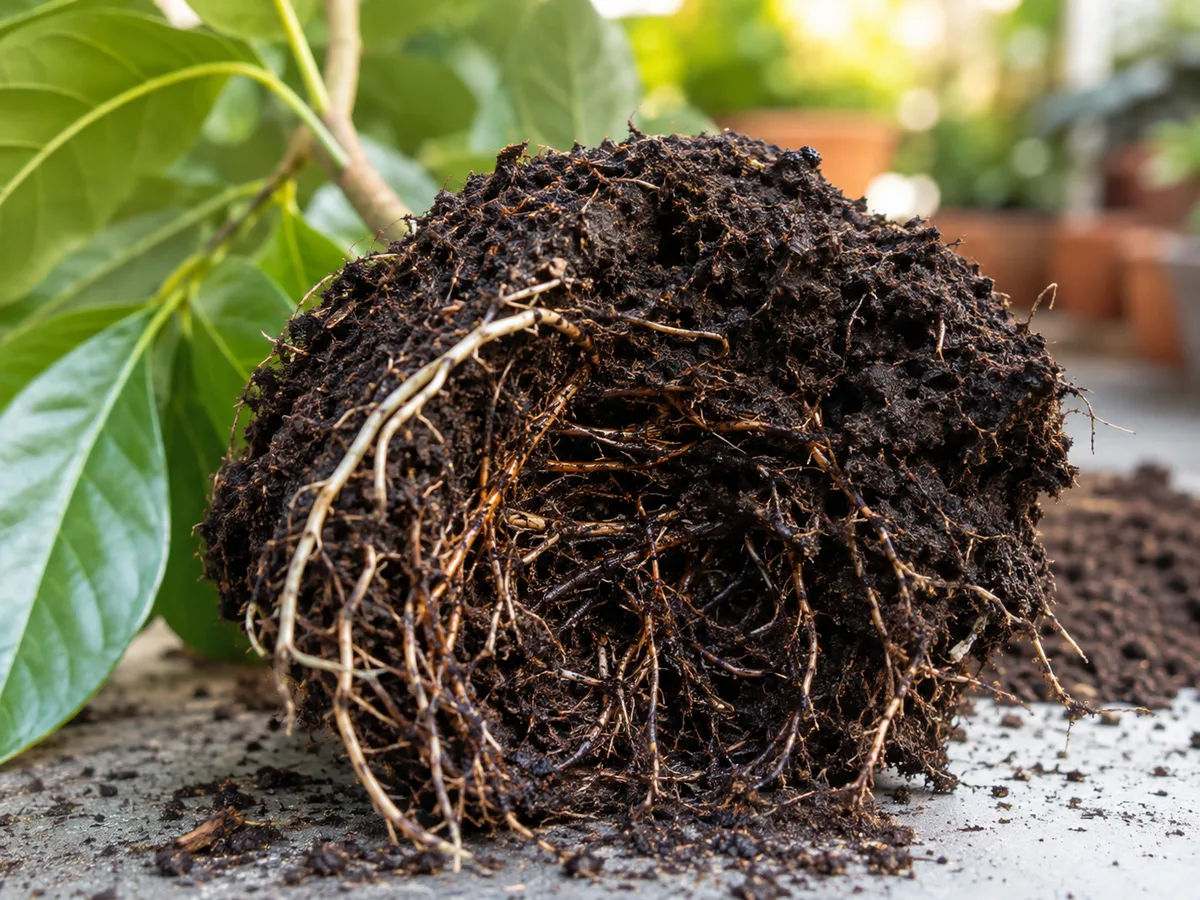
Avocado root rot can cause small or pale leaves, dieback, and a thinning canopy, but fertilizer deficiency can produce overlapping signs. If the soil is persistently saturated, correct the water problem first. A sick tree in poorly drained ground may need professional diagnosis; repeatedly applying fungicide or nutrients without identifying the cause wastes money and can make the soil harder to manage.
Watch for pests and serious diseases
Inspect the underside of leaves and the fruit surface when you water. Lace bugs can leave pale or yellow stippling, with dark residue below the leaves. Mites may cause fine speckling or bronzing; thrips can scar young fruit. A few damaged leaves do not justify an automatic spray. Confirm the pest, check whether the damage is spreading, and use UC IPM’s avocado pest and disease index for region-specific identification and management. If a pesticide is warranted, the label and local rules determine whether and how it may be used.
Phytophthora root rot is a major risk where soil stays wet. Prevention means well-drained ground, careful irrigation, clean planting stock, and keeping the trunk dry. Sunblotch can distort or scar fruit and branches; UC IPM lists it among avocado diseases, so buy reputable nursery stock and seek expert diagnosis if fruit shows persistent unusual streaking. Do not move cuttings from a suspect tree to propagate another one.
Remove fallen, diseased fruit and dead branches, and clean tools between cuts on suspect tissue. These sanitation steps reduce places where pests or pathogens can persist. For a tree with progressive dieback, cankers, or declining roots, photograph the symptoms and contact a cooperative extension office or a qualified arborist; a close inspection is more useful than treating from a single leaf photo.
Follow a seasonal care rhythm
Spring: After frost risk passes, plant or move a container tree outdoors gradually. Check drainage, refresh mulch, inspect new growth, and begin the fertilizer program only if the tree is established and the schedule calls for it. Watch bloom and let normal flower drop happen without disturbing the canopy.
Summer: Check soil more often as heat, wind, and fruit development increase water use. Keep irrigation broad and slow, and make sure water reaches the active root zone without saturating the trunk. Look under leaves for pests and protect young bark from sun exposure if it has become newly exposed after pruning.
Fall and winter: Reduce container watering as growth slows, clear diseased debris, and plan frost protection before temperatures fall. Do not apply a late flush of nitrogen or make severe pruning cuts just before a cold spell. Move potted trees into a bright, frost-free shelter in time; waiting until a freeze warning can leave too little time to protect a large container.
Use the tree’s response to adjust this rhythm. New growth that hardens normally, a firm canopy, and soil that drains between irrigations are better signs than a calendar date. Keep notes on rain, watering, cold snaps, bloom, and test-pick results; even a short record helps explain why one season differs from the next.
Avocado leaves, fruit, seeds, and bark contain persin. The ASPCA reports that ingestion can cause vomiting and diarrhea in dogs and more serious poisoning in more sensitive animals, including birds, horses, and rodents. Keep fallen fruit and leaves away from pets and livestock, and contact a veterinarian promptly if an animal eats any part of the tree.
Conclusion
Growing a Hass avocado tree is most realistic when you can offer warmth, full sun, drainage, and room for a substantial root system—or a container you can shelter when frost threatens. Start with a grafted tree if fruit matters, plant it high enough to protect the trunk, and let soil moisture—not a fixed weekly schedule—guide irrigation. Use modest, evidence-based feeding and prune only to shape, protect, or remove damaged wood.
Flowers and a few years of growth do not guarantee a crop, but they are not the only measure of success. A healthy canopy, roots that breathe, and a test-picked avocado that ripens without shriveling are the signs that your care is moving in the right direction. If the tree declines, diagnose drainage, cold injury, or pests before adding fertilizer or spray.