How to Grow and Care for an Avocado Tree
Learn how to grow an avocado tree with practical guidance on climate, cultivars, drainage, watering, pruning, pollination, fruiting, and frost protection.
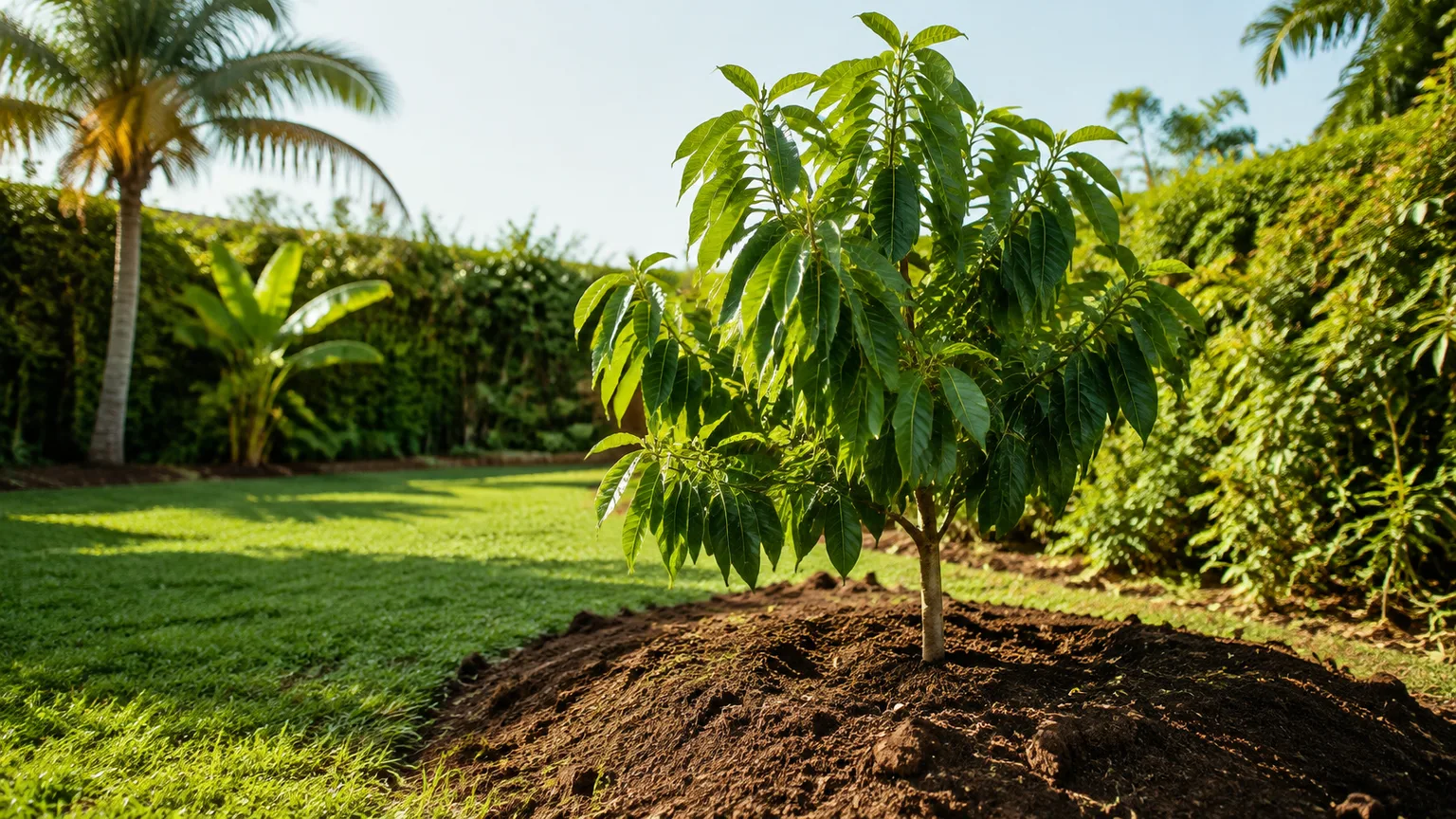
An avocado tree is easy to start and surprisingly demanding to mature. A pit will often sprout in a glass of water, but a tree that grows into a productive, manageable fruit tree needs the right climate, unobstructed light, fast drainage, thoughtful pruning, and enough time for its roots and canopy to establish.
The first decision is not which fertilizer to buy. It is whether your site can provide warmth without flooding, room without damaging structures, and a variety suited to your winter temperatures. The guidance below covers both goals: growing a beautiful avocado as a foliage tree and growing a grafted tree with a realistic chance of producing fruit.
What to know before you plant
Avocado is Persea americana, an evergreen fruit tree in the laurel family. In favorable outdoor conditions it can become a large tree, with mature specimens commonly reaching 30 to 65 feet depending on variety, rootstock, climate, and pruning. Its branches can break in strong wind or under a heavy crop, and its shallow feeder roots are especially unforgiving of flooding.
In the United States, outdoor growing is concentrated in warm parts of Florida, California, Texas, Hawaii, and Puerto Rico. USDA zone labels are only a starting point because a sheltered yard, a cold pocket, a coastal site, and an exposed container can experience very different temperatures. If your garden regularly freezes, treat an avocado as a movable container plant or choose a different fruit tree rather than gambling on a young tree outdoors.
There is also a household consideration: keep leaves, bark, fallen fruit, and the large pit away from animals. The ASPCA’s avocado guidance emphasizes the greatest danger for birds and some livestock, while dogs and cats can still have gastrointestinal trouble after eating plant material. A fence, prompt cleanup, and a planting spot inaccessible to grazing animals are sensible precautions.
Choose a cultivar for your climate and fruit goal
Start with a grafted nursery tree when fruit, variety, and a predictable timeline matter. A grafted tree combines a named fruiting variety with rootstock; it is a clone of the mature variety, unlike a seedling whose fruit, size, and bearing behavior are unpredictable. A healthy grafted tree may begin producing in about three to four years under good conditions, while a seed-grown tree may need five to 13 years and may never crop well in a pot.
| Starting point | Best use | What to expect |
|---|---|---|
| Grafted named tree | Home harvest | Earlier, more predictable fruit; cultivar still has climate limits |
| Nursery seedling | Low-cost outdoor experiment | Variable fruit and size; slower and less predictable |
| Grocery-store pit | Learning project or foliage | Fun to sprout, but not a clone of the parent fruit |
| Grafted dwarf in a large pot | Small yard or cold-edge site | More manageable and movable, but still sun-hungry and root-limited |
Fine Gardening makes the same useful distinction between an attractive seed project and a fruiting tree: commercial trees are grafted because that shortens the wait. Buy from a nursery that identifies the cultivar and graft union, and do not choose a tall tree crammed into a small pot; a root-bound tree can struggle after planting.
Mexican, Guatemalan, and West Indian avocado races
The three broad avocado races help explain why varieties behave differently. Mexican types generally tolerate more cold and often have thinner, smoother-skinned fruit with strongly scented foliage. Guatemalan types tend to have thicker, rougher fruit skins and are less tolerant of frost. West Indian types prefer tropical or nearly frost-free conditions and often produce large, smooth-skinned fruit.
Many named cultivars are hybrids. Hass is a Guatemalan-leaning type valued for its creamy fruit and dark, pebbled skin; Fuerte is a Mexican-Guatemalan hybrid with smooth-skinned fruit; Reed is a later-season Guatemalan type. For a cold-prone site, ask the nursery for a locally proven Mexican or Mexican-hybrid cultivar rather than assuming the variety in the grocery store is the best garden choice.
Type A and Type B flowers: do you need two trees?
Avocado flowers contain both reproductive parts, but those parts function at different times. In simple terms, Type A and Type B cultivars open their female and male phases on different schedules, so a compatible pair can increase the chance that pollen is available when another flower is receptive.
Two trees are helpful, not universally mandatory. UF/IFAS Extension notes that some cultivars set well alone and that wind, bees, wasps, and nearby avocado trees can all contribute to pollination. Before buying a second tree, look around the neighborhood, check the cultivar’s pollination reputation, and improve the basics: full light, steady moisture, and protection from extreme heat, cold, and wind. If you have room and want a larger crop, pairing a Type A with a Type B is a reasonable upgrade.
Pick a site with sun, space, and drainage
Choose the warmest part of the yard that receives full sun, is protected from prevailing wind, and does not stay wet after rain. Eight or more hours of direct light is a useful target for strong growth and fruiting, but shelter matters just as much: a sunny, wind-scoured corner can snap young branches and dry the root zone unevenly.
Allow room for the mature canopy, not just the tree you bring home. UF/IFAS recommends keeping home-landscape avocado trees roughly 23 to 30 feet from buildings and other trees where full-size growth is possible. Keep the trunk away from power lines, roof edges, paving that reflects intense heat, and lawn equipment. A smaller cultivar and regular structural pruning can reduce the footprint, but they do not turn a large-rooted tree into a shrub.
Test drainage before planting
Dig a hole about 12 inches deep and wide, fill it with water, and let it drain. Fill it again and observe how quickly the water disappears. A hole that remains full for many hours indicates a site where roots may lack oxygen; a small amended hole in heavy clay can make the problem worse by acting like a bowl.
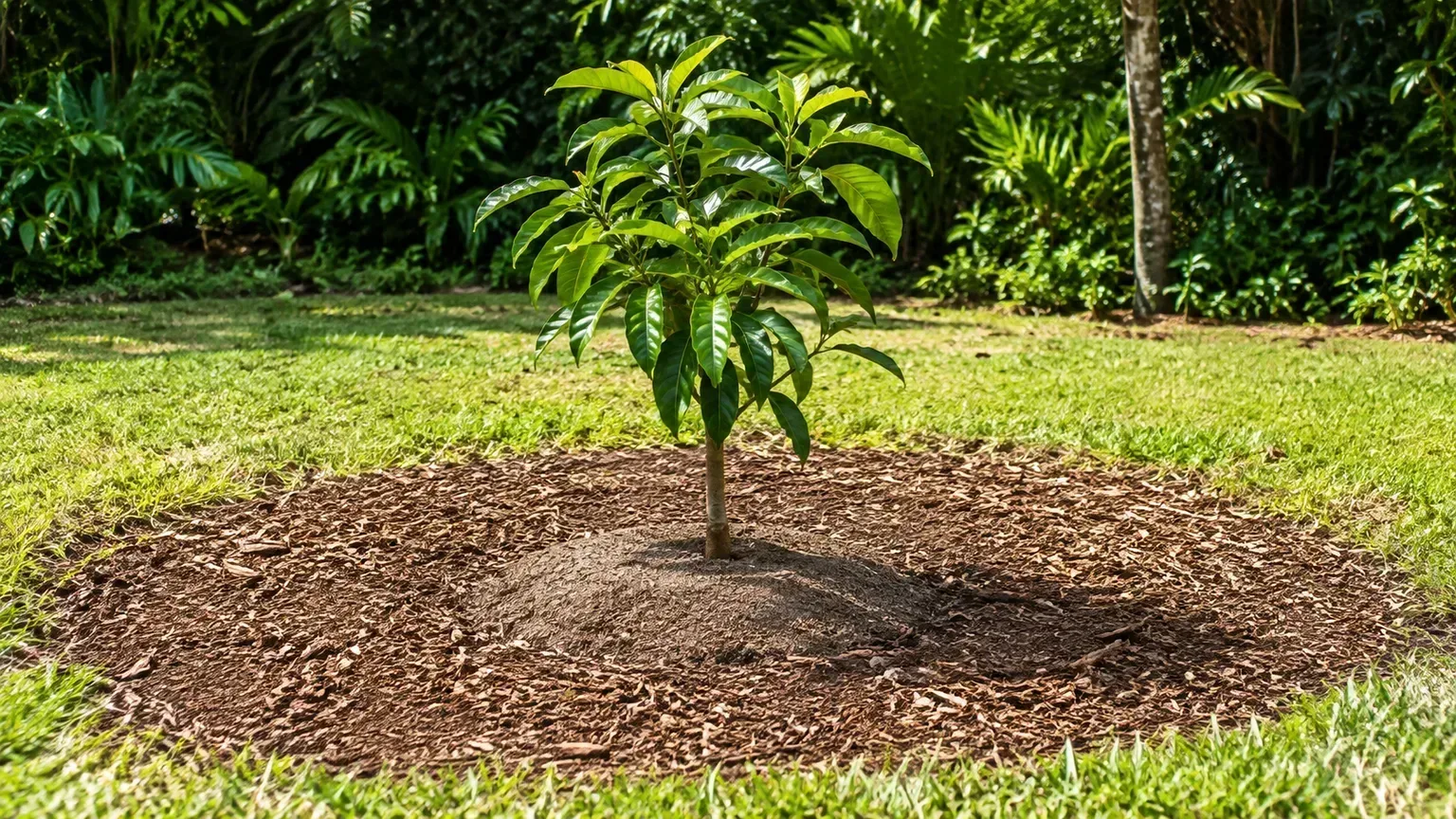
If drainage is slow, move the tree, improve the wider planting area, or build a broad mound of native soil. UF/IFAS recommends mound planting where flooding or a high water table is likely. The goal is not to create a rich pocket around the roots—it is to keep the whole root zone open and above standing water.
Plant a nursery tree without burying it
Plant in spring or during the warmest mild season that leaves the tree time to establish before cold weather. Water the nursery tree regularly before planting, then inspect the trunk for wounds, constrictions, pests, and a damaged graft union.
- Remove grass in a wide ring so turf does not compete with the shallow root system.
- Dig a hole several times wider than the container, but no deeper than the root ball.
- Slide the tree out gently. Do not pull the trunk or tease apart healthy roots aggressively.
- Set the root ball so the top of its original soil is level with or slightly above the surrounding soil. Never bury the trunk or graft union.
- Backfill with the native soil you removed. Skip a pocket of compost or bagged topsoil; a sharp soil boundary can hold water around the roots.
- Water slowly and thoroughly to settle the soil and remove large air gaps.
- Stake only if wind makes the tree unstable. Use a flexible, soft tie, and remove or adjust it before it constricts the trunk.
The first watering is part of planting, not a substitute for drainage. If water sits at the surface, stop adding more and solve the site problem before you add fertilizer or mulch.
Water by root-zone condition, not by calendar
Young avocado trees need regular irrigation while roots expand beyond the nursery container. Water deeply enough to moisten the developing root zone, then allow the surface to begin drying before watering again. The correct interval changes with soil, temperature, rainfall, wind, mulch, and tree size, so a fixed “every Sunday” schedule is less reliable than checking the soil.
For a newly planted tree, water at planting and again whenever the root zone begins to dry; in the first week that may mean checking daily and watering every day or two. During the first couple of months, many sites need one or two deep waterings per week. In a prolonged dry spell, a young tree may need a slow soak twice weekly, while a mature tree may need supplemental water mainly during drought, flowering, and fruit development. This establishment sequence follows the UF/IFAS home-landscape irrigation guidance, but your soil and rainfall should decide the final interval.
Apply water over the root area rather than against the trunk. A drip line, soaker hose, or slow hose trickle is easier to control than a short blast from a sprinkler. Avoid frequent shallow lawn-sprinkler cycles: they keep the surface wet, encourage shallow roots, and can contribute to root disease.
Diagnose dry stress versus wet stress
Wilting does not prove that an avocado needs water. Check soil moisture several inches down, look at recent rainfall, and inspect the leaves and new growth together.
- Likely drought or heat stress: dry soil, limp leaves that recover at night, crispy edges, and a recent hot or windy spell.
- Likely waterlogging or root trouble: wet soil that stays wet, pale or yellowing leaves, weak new growth, dieback, or a tree that wilts even though the ground is damp.
- Likely salt or fertilizer stress: browned margins after feeding, white crust on the soil, and otherwise adequate moisture.
When a wet tree wilts, do not respond with more water. Check drainage, clear blocked emitters, move lawn irrigation away, and look for dark, decayed feeder roots if you can inspect them without destabilizing the tree.
Mulch and protect the shallow roots
Keep a grass-free circle at least 2 to 5 feet wide around the trunk. Spread roughly 2 to 6 inches of bark or wood-chip mulch over the root zone, but leave an open ring 8 to 12 inches from the trunk. Mulch should cover soil like a blanket, never touch the bark like a volcano.
This ring reduces mower and string-trimmer injuries, moderates soil temperature, slows evaporation, and limits competition from turf. Avoid “weed and feed” products around avocado roots; lawn fertilizer and herbicide can reach beyond the grass and cause decline.
Feed lightly, then correct what a test shows
Avocados need nutrients for new growth and fruiting, but more fertilizer is not a shortcut to fruit. Start with a soil test and follow a fertilizer label made for avocado or citrus trees. A light, staged feeding during active growth is safer for a young tree than one large dose dumped beside the trunk.
UF/IFAS describes nitrogen, potassium, magnesium, and micronutrients such as zinc, manganese, and boron in avocado nutrition programs, with iron deficiency more likely in alkaline soil. That does not mean every tree needs a spray or iron drench. Yellow leaves can also reflect poor roots, waterlogging, or a pH problem; test before adding a cocktail of nutrients.
Keep granular fertilizer away from the trunk and water it into the root zone. Stop or reduce feeding as growth slows and before a frost-prone period. If leaf tips burn or salts accumulate on the soil, pause fertilizer, irrigate deeply if drainage is good, and reassess the rate and product.
Prune for a shorter, safer tree
Prune to build a strong, harvestable canopy—not to force a particular shape every month. Remove dead, damaged, crossing, or weakly attached branches first. Young seedlings can be pinched or lightly headed to encourage lateral branching once they are tall enough to support it.
For a mature tree, selective height reduction is safer and more productive than repeatedly shearing the outer canopy. Removing a few high limbs back to their point of origin can preserve light for lower branches and keep fruit within reach. UF/IFAS notes that maintaining a lower tree improves care, harvest, spraying, and storm safety; severe pruning can reduce production for one or more seasons.
Prune after harvest for early-season cultivars, or after the danger of frost has passed for late-season cultivars. Never climb a large avocado tree to prune it. A tree above safe ground-based reach needs a licensed, insured arborist with fruit-tree experience.
Decide whether a container is realistic
A pot is useful when you live near the cold edge of avocado culture, have a small yard, or want to move a young tree while learning its needs. It is not a way to make a full-size avocado permanently tiny. Containers dry faster, heat and chill faster, and leave less room for roots, so they demand closer watering and more frequent root-zone checks.
Choose a grafted dwarf or compact cultivar when fruit is the goal, use a heavy container with generous drainage holes, and move up only when roots fill the current pot. A nursery’s compact avocado guidance illustrates the trade-off: even a semi-dwarf tree may need a very large container to crop well. Use a fast-draining potting mix, never dense garden soil, and keep the graft union above the mix. A container-grown tree can fruit, but indoor fruiting is difficult because window light is usually weaker than outdoor sun and pollination conditions are less favorable.
Move and overwinter a potted tree
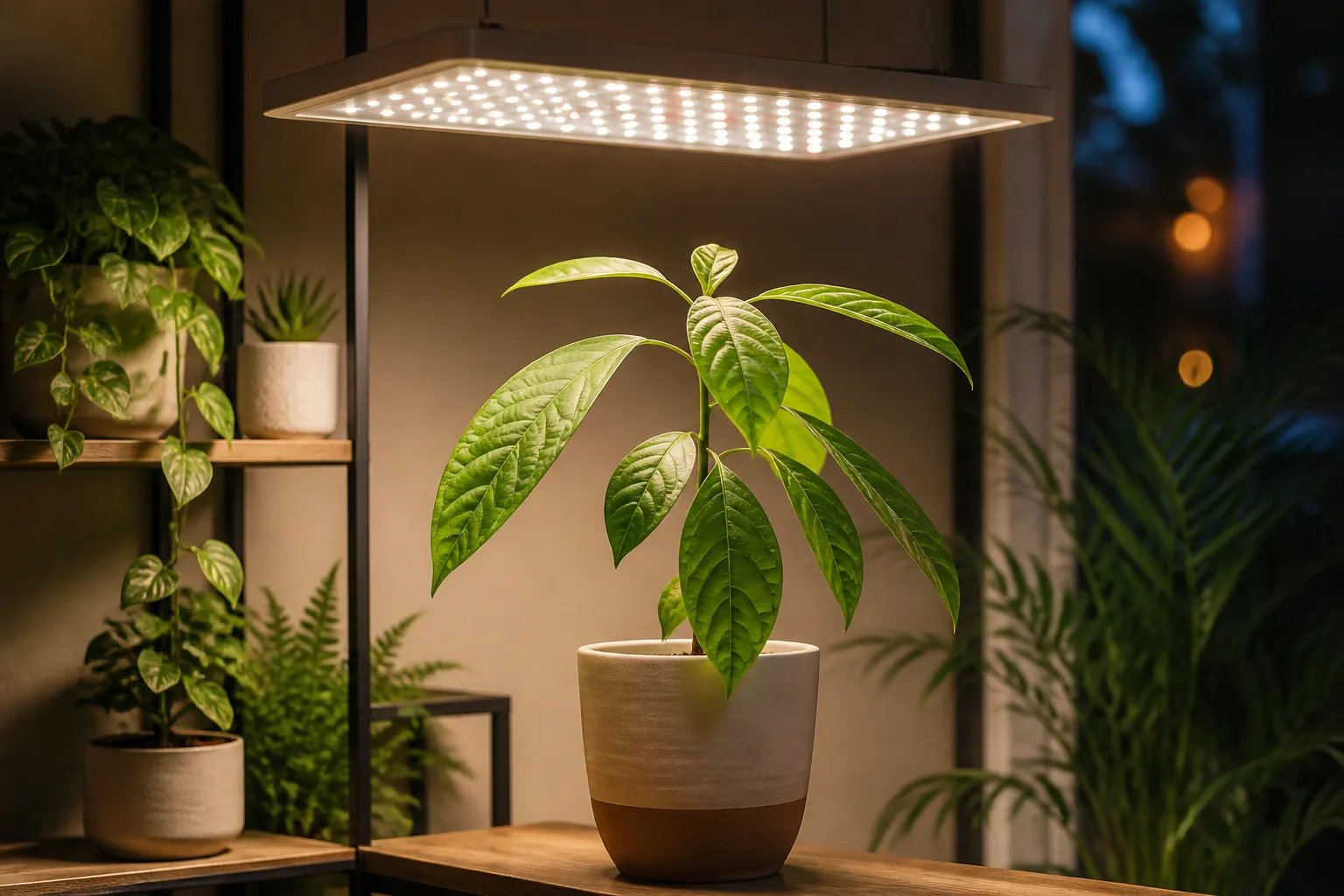
Bring a container indoors or into a bright, protected structure before a freeze, not after leaves have blackened. Acclimate it gradually between outdoor sun and indoor light to reduce scorch and leaf drop. The brightest window you have may still need a grow light for a fruiting dwarf.
While indoors, reduce watering as growth slows but do not let the root ball turn to dust. Keep the pot away from heating vents and cold glass, inspect leaves for mites or scale, and return it outside gradually in spring. If you cannot provide bright light, stable temperatures, and enough space, grow a pit as foliage or choose a smaller houseplant instead of expecting indoor avocados.
Bring a container indoors or into a bright, protected structure before a freeze, not after leaves have blackened. Acclimate it gradually between outdoor sun and indoor light to reduce scorch and leaf drop. The brightest window you have may still need a grow light for a fruiting dwarf.
While indoors, reduce watering as growth slows but do not let the root ball turn to dust. Keep the pot away from heating vents and cold glass, inspect leaves for mites or scale, and return it outside gradually in spring. If you cannot provide bright light, stable temperatures, and enough space, grow a pit as foliage or choose a smaller houseplant instead of expecting indoor avocados.
Grow an avocado from seed
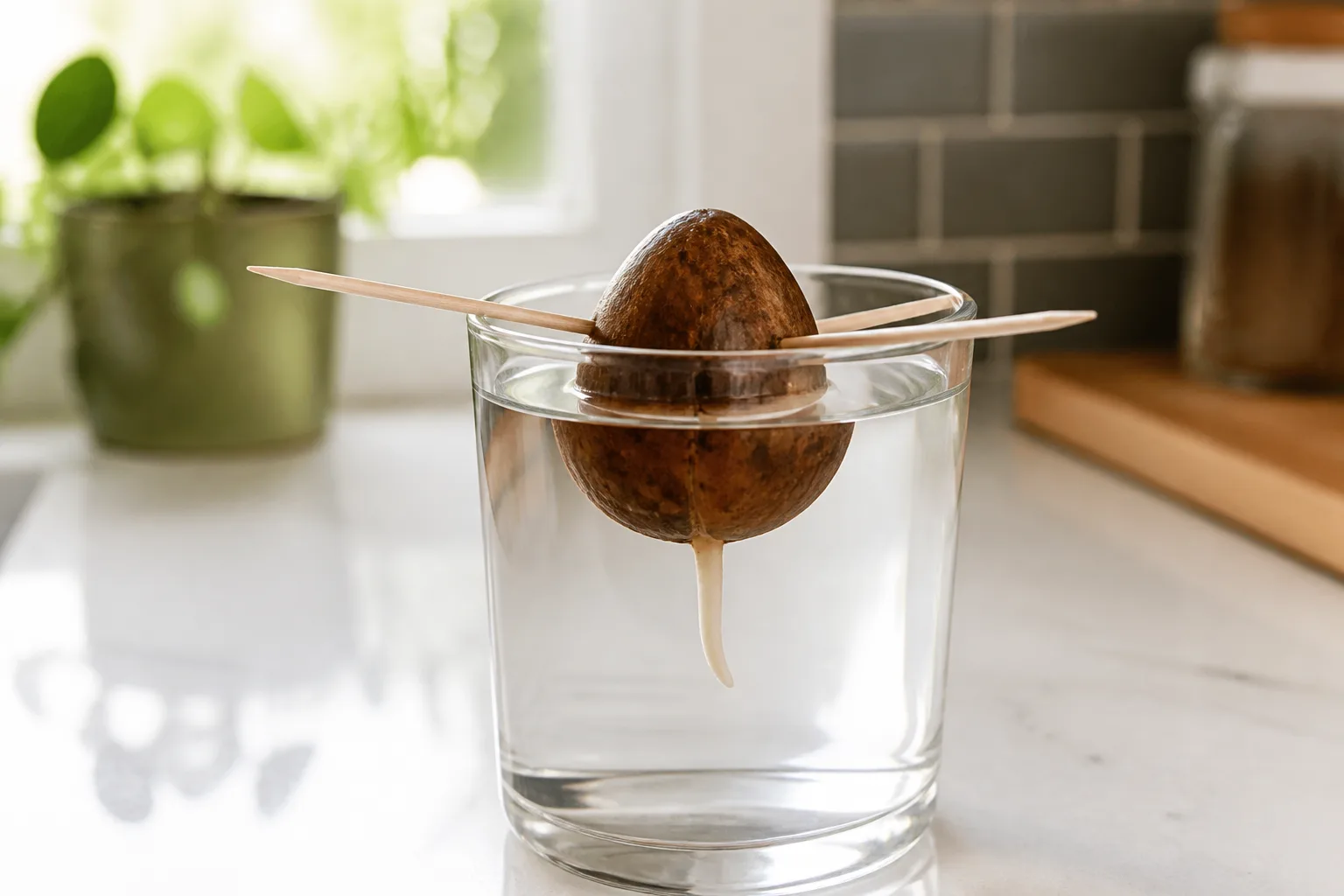
The water-glass method is a good experiment, especially with children, but it is not the fastest route to a known fruit. The seed may not reproduce the parent cultivar, and the eventual tree may become tall and awkward.
- Rinse a fresh pit and identify the broad end, which is the root end.
- Insert three toothpicks around the middle and suspend the pit over a narrow glass.
- Keep the broad end in water and the pointed end above it.
- Place the glass somewhere warm and bright, but not where hot sun cooks the water.
- Replace the water every few days and discard a pit that turns rotten or develops a sour smell.
- Once roots and a shoot develop, pot the seed in a fast-draining mix with the upper half of the pit above the soil.
After potting, shift the seedling toward brighter light gradually. If the stem becomes long and bare, the plant is asking for more light and earlier branching, not more fertilizer. For a fruiting project, buy a grafted tree; for the satisfaction of watching a seed become a plant, the pit is hard to beat.
Know when fruit is ready and ripen it indoors
Avocados do not usually soften on the tree. Harvest timing depends on cultivar, race, local climate, and sometimes a specified maturity date or fruit size. Skin color alone is unreliable: some mature fruits remain green, while Hass darkens as it ripens.
When the fruit has reached the cultivar’s typical mature size and season, pick one of the largest fruits and leave it at room temperature. A mature avocado should soften in several days; UF/IFAS gives a general range of about three to eight days. If it shrivels, stays rubbery, or develops stem-end rot, test another larger fruit later rather than stripping the whole tree.
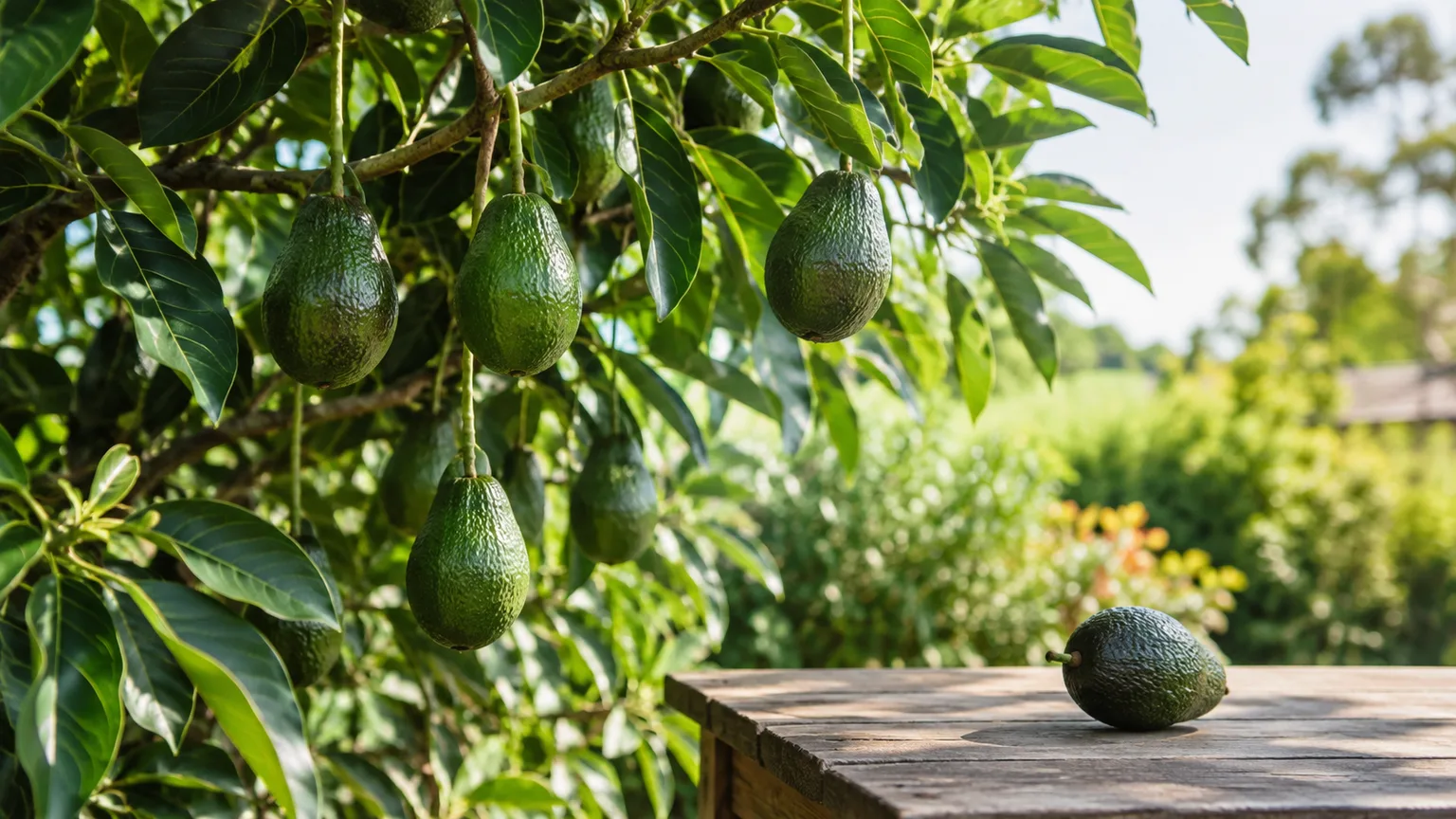
Use clean pruners or a picking pole, leave a short stem piece when practical, and handle fruit gently because bruising accelerates decay. You can harvest in stages and leave mature fruit on the tree for a while, but fruit quality can decline and fruit can eventually drop. Once ripe, refrigerate it to slow further softening.
Solve flowers-without-fruit and other common problems
Flowering proves that the tree is old enough to attempt reproduction; it does not prove that fruit will set. Start by checking whether the tree is a juvenile seedling, whether flowers overlap with pollinators or a compatible tree, and whether drought, flooding, frost, heat, or wind occurred during flowering.
The named horticulture discussion of avocado flower drop usefully frames the issue as timing plus stress, not as a missing magic fertilizer. Improve light and watering consistency, protect flowers from extreme weather where possible, encourage a garden with flowering plants for pollinators, and consider a Type A/Type B pairing if space allows. Do not keep adding nitrogen to a tree that is already producing lush shoots but no fruit.
Normal fruit drop can also look alarming. Avocados set many flowers, and only a small fraction become mature fruit. A sudden, heavy drop paired with wilt, yellow leaves, or dead tips is more concerning than a modest early-summer thinning.
Monitor pests, disease, and root rot
Inspect new leaves, leaf undersides, shoots, fruit, and trunk monthly. Avocado pests can include mites, scales, thrips, lace bugs, loopers, and borers, while diseases include scab, anthracnose, leaf spots, and root rot. UF/IFAS notes that pests do not always justify treatment; identify the pest and confirm that its population is causing meaningful damage before choosing a control.
Avoid spraying a random insecticide or fungicide on edible fruit. Use the current product label and local extension recommendations for your crop, pest, timing, protective equipment, and harvest interval. Good spacing, clean tools, careful harvest, and drainage prevent more problems than a calendar of unnecessary sprays.
Root rot deserves the fastest response because it begins below ground. Phytophthora problems are favored by flooding and poorly drained soil. Warning signs include pale or wilted leaves despite wet soil, little new growth, branch dieback, small fruit, and dark, decayed feeder roots. A tree can decline slowly, so waiting for dramatic collapse wastes the most recoverable time.
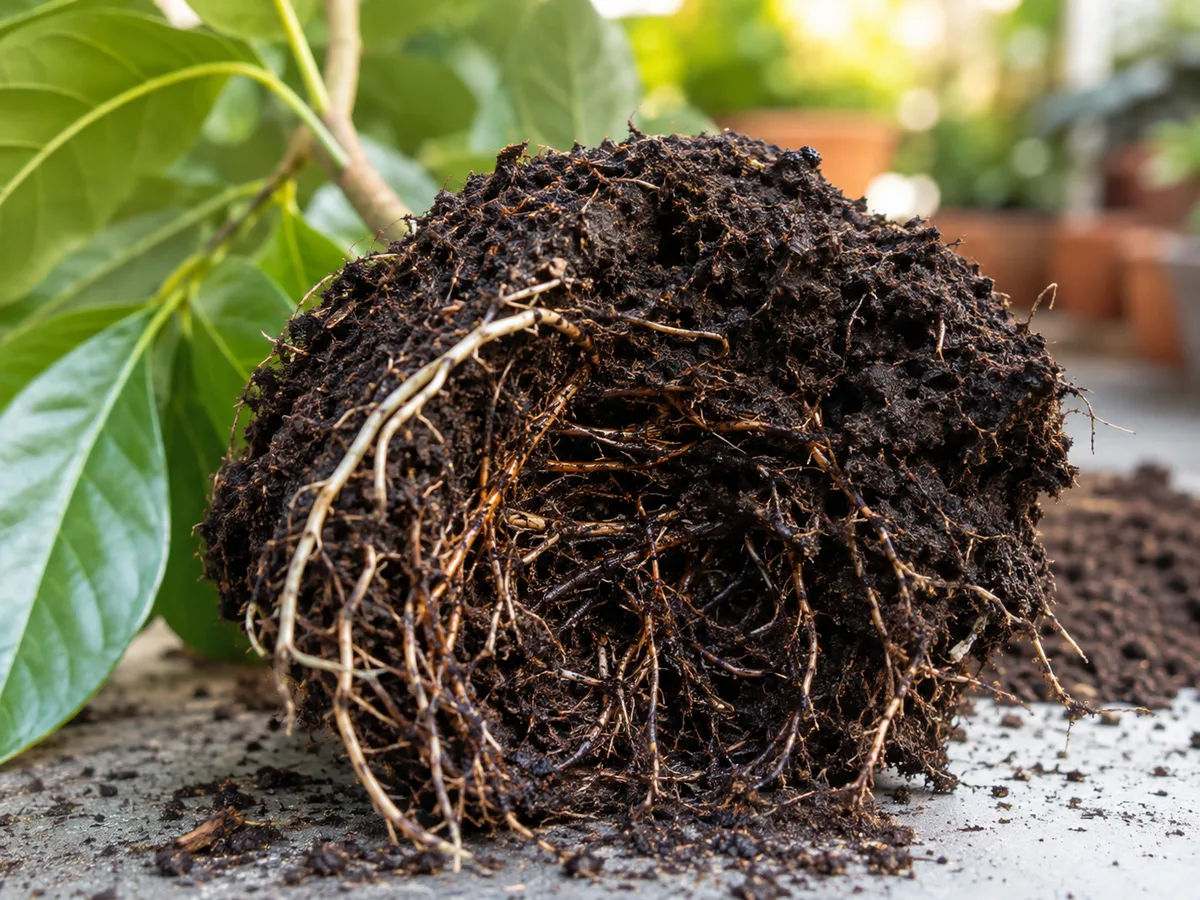
First, stop routine irrigation and correct the source of saturation. Check downspouts, lawn sprinklers, compacted soil, blocked drainage, and mulch piled against the trunk. If the tree is planted in a low spot, relocation or broad mound work may be more realistic than repeated drenches. For disease-specific treatment, ask a local extension office or certified arborist; the right action depends on site, diagnosis, cultivar, and local product rules.
Conclusion
The most reliable avocado care plan is simple in principle: match the cultivar to your climate, give it full sun and room, keep roots supplied with oxygen, water deeply while young, mulch without touching the trunk, and prune before the tree becomes unsafe to manage. A grafted tree is the sensible choice for fruit; a seed-grown tree is a rewarding experiment with an uncertain harvest.
Before you plant, dig the drainage test and check the winter forecast for your site. Those two steps will tell you more about your avocado’s future than a bigger fertilizer bill.