52 Best Backyard Landscaping Ideas for Every Yard
Explore 52 backyard landscaping ideas for small and large yards, with practical tips for patios, privacy, pathways, planting, and planning the work in phases.
A backyard works better when its layout answers a few basic questions: where people sit, how they move around, where rain goes, and what should be easy to maintain. Start there, then choose a style that fits the site.
The ideas below cover small yards, lawns, slopes, patios, planting beds, and different budgets. Treat each as a starting point. Penn State Extension’s garden-design guidance emphasizes scale, unity, repetition, and focal points—principles that help adapt a design to your house and growing conditions.
Start With the Site and the Way You Use It
Before buying pavers or plants, note sun and shade, standing water, common routes, and the views from inside. The RHS recommends measuring and drawing a plan; Better Homes & Gardens also advises checking sun and wind before placing patios and plants.
1. Map the yard before changing it. Draw the house, doors, fences, large trees, paths, and fixed equipment to rough scale. Mark sun and shade at different times, then note where water collects. This can reveal conflicts such as a dining spot in harsh afternoon sun or a bed that blocks the shed.
2. Give each zone one main purpose. Decide whether an area is for play, vegetables, reading, or dining. It can serve more than one role, but naming its main job helps determine the surface, access, shade, and planting.
3. Design from the views you actually use. From the kitchen, back door, and favorite seat, notice what catches your eye. A small tree, birdbath, sculptural pot, or opening in a screen can become a focal point. One strong destination per garden room is easier to read than several competing features.
4. Plan the permanent work in stages. Sketch the full idea, then build one practical zone first. Test a patio footprint with furniture or mark a bed edge with a hose before digging; proportions are easier to change at this stage.
Create Outdoor Rooms That Feel Connected
Treat patios, lawns, and beds as connected rooms. Repeating a surface, color, or plant creates unity; paths and grade changes distinguish each activity.
5. Put a dining nook near the kitchen door. A small table is more useful when carrying food outside is easy. Add a compact paved or gravel surface, shade, and a few framing pots. Leave room to pull out chairs and pass behind them.
6. Make a simple lawn-side sitting pad. Before building another patio, try weatherproof chairs on level lawn or compacted gravel. An outdoor-rated rug can define the spot; this temporary setup also tests whether the location works.
7. Sink a patio only when the grade supports it. A lower seating area can feel sheltered, especially with broad steps. It requires sound retaining and drainage design; have wall height, drainage, and soil pressure assessed before building on a steep or poorly drained site.
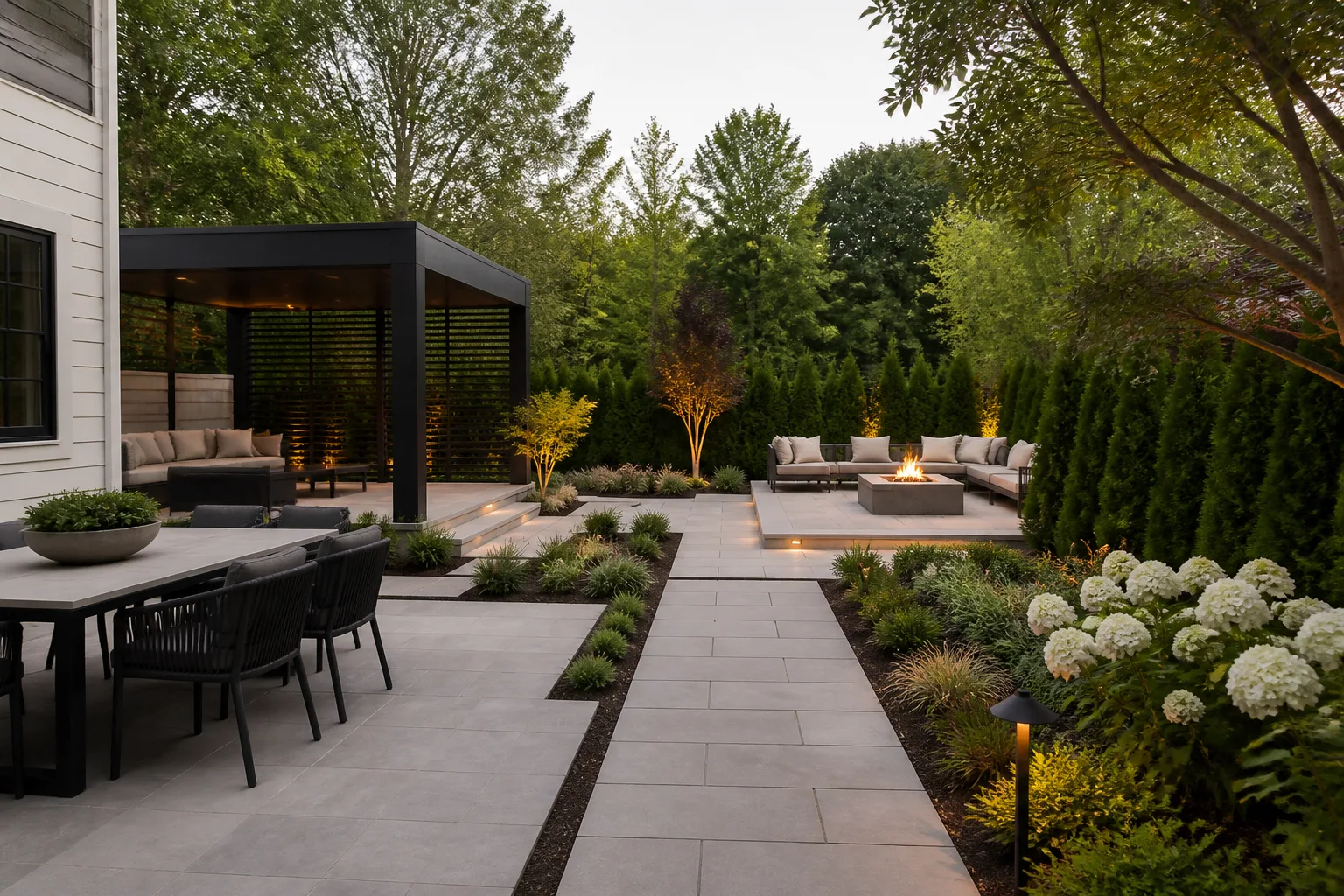
8. Separate dining and lounging with a connecting path. Two smaller destinations can work better than one oversized patio. Put dining near the house and a lounge by a view or mature tree, connecting them with matching paving or gravel.
Create Privacy in Layers
Privacy can come from planting and boundary structure together. First identify what you need to block—windows, a neighboring patio, headlights, or a view—because each calls for different height and density.
9. Use ornamental grasses as a soft seasonal screen. Group tall, clumping grasses beside a dining or seating area to soften a fence. Check mature size and leave maintenance access; add evergreens if you need winter screening.
10. Choose an open fence where views are part of the garden. Pickets, wire panels, or spaced boards mark a boundary without boxing in a small yard. Confirm local height and property-line rules, and use a solid screen only where needed.
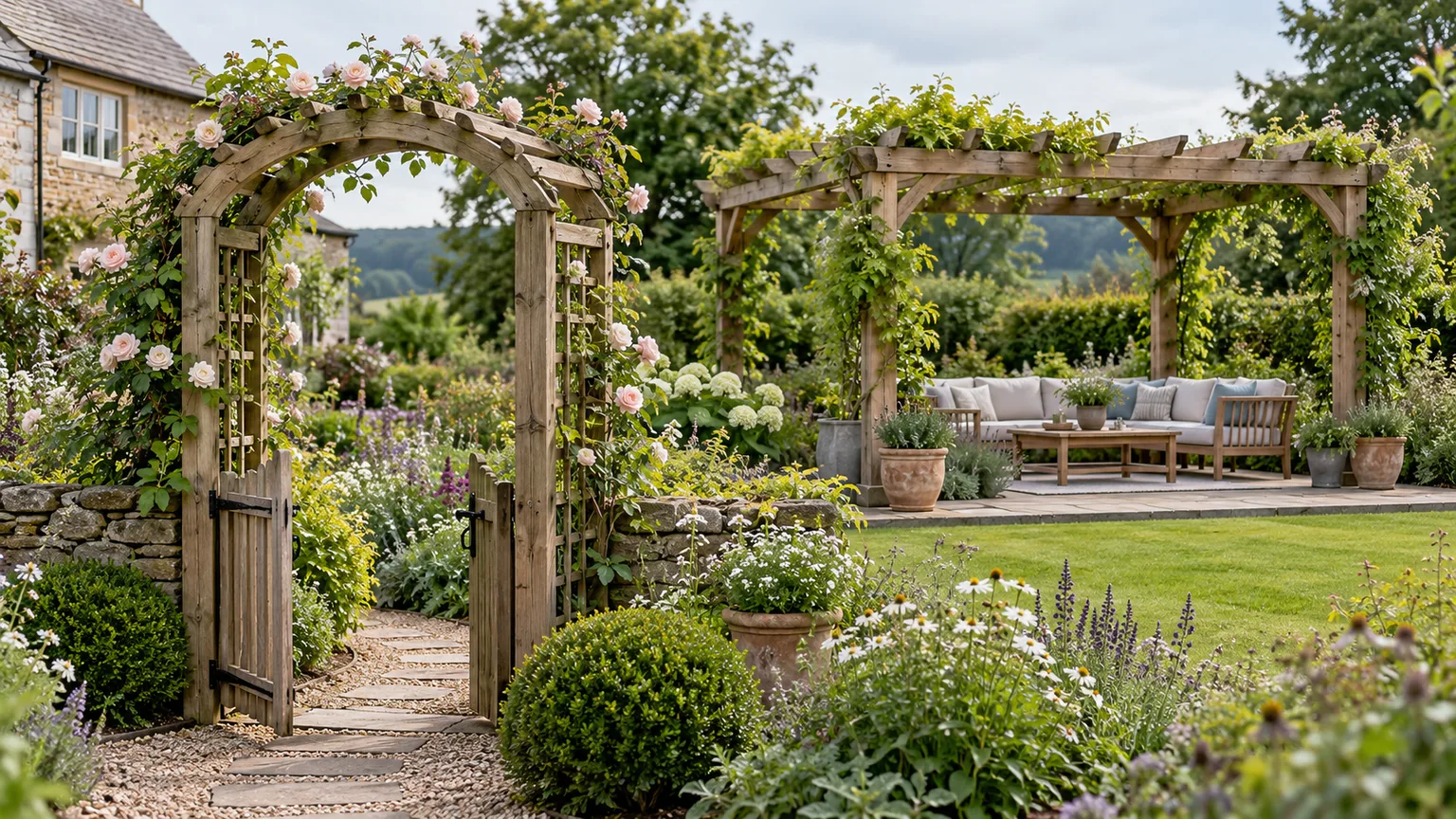
11. Turn a sturdy trellis into a living screen. A trellis adds patio privacy with little ground space. Choose a climate-suited climber and strong support; check that a vigorous vine will not spread invasively or damage the fence.
12. Layer a fence with shrubs and a narrow planting bed. Shrubs soften a plain boundary, while taller plants break up a long hedge. Choose for the site’s sun and soil, and leave enough mature width to protect paths and limit pruning.
Make a Small Backyard Feel More Generous
In a compact yard, clear routes, a restrained material palette, and a few vertical elements often do more than filling every corner with pots.
13. Use upright plants where the footprint is tight. Narrow trees, columnar shrubs, and climbers draw the eye upward without taking much floor space. Check mature width, clearance from roofs and paths, and the site’s light before choosing.
14. Build a bench along an edge. A bench fixed to a fence or retaining wall saves the footprint of several chairs. Place it facing a view or garden feature; a shallow ledge can hold a drink.
15. Give the eye one small destination. A birdbath, specimen shrub, bright planter, or compact water bowl can make a tiny yard feel intentional. Keep its surroundings simple, and consider cleaning and refilling before adding a fountain.
16. Repeat one hardscape material across the space. Use the same brick, stone, or paver for a patio and short path, then let plants provide variation. Too many unrelated materials can make a compact yard feel fragmented.
Give Paths and Patios a Clear Job
Paths should connect destinations and stay comfortable to walk on. Set their width and surface for everyday users and equipment.
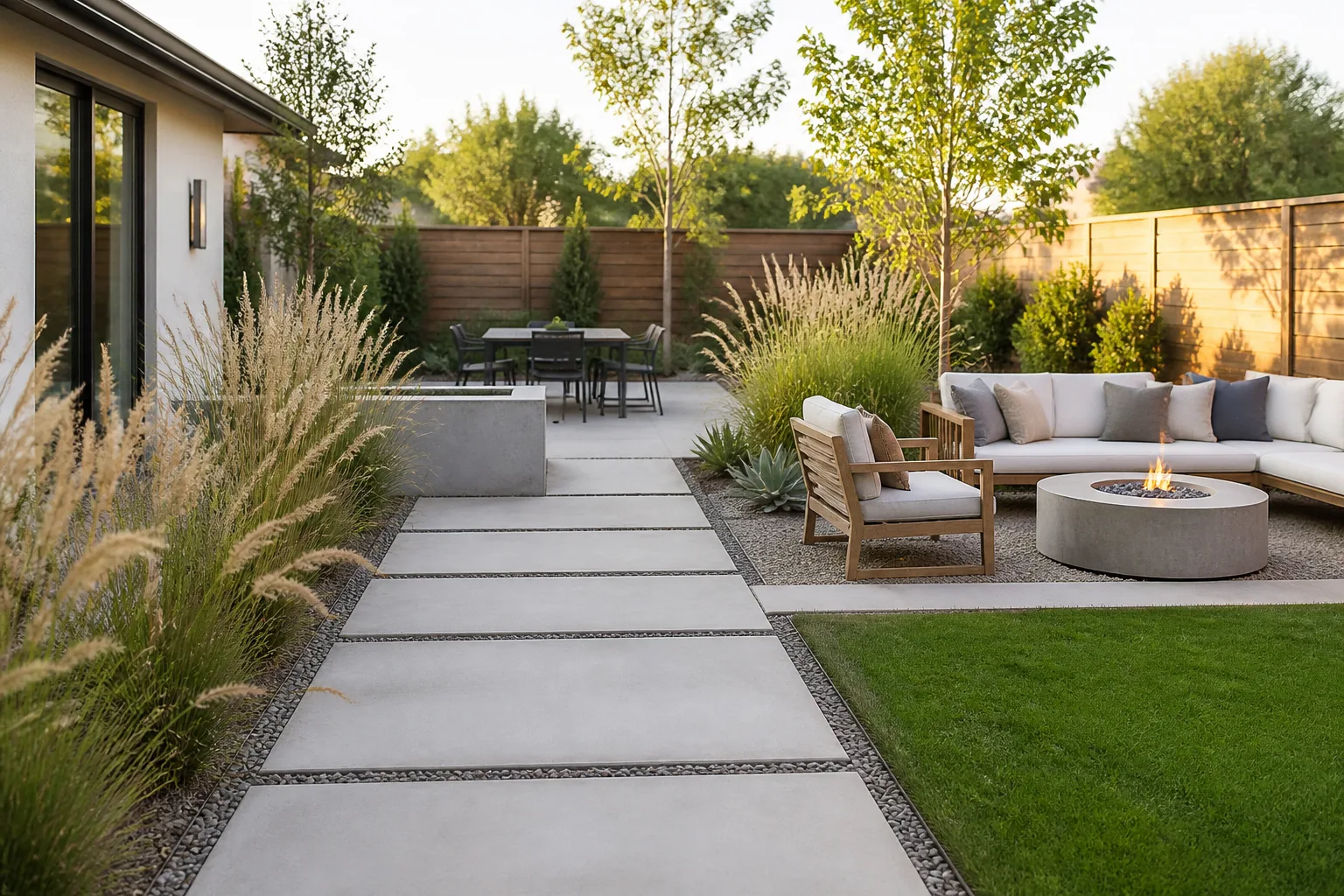
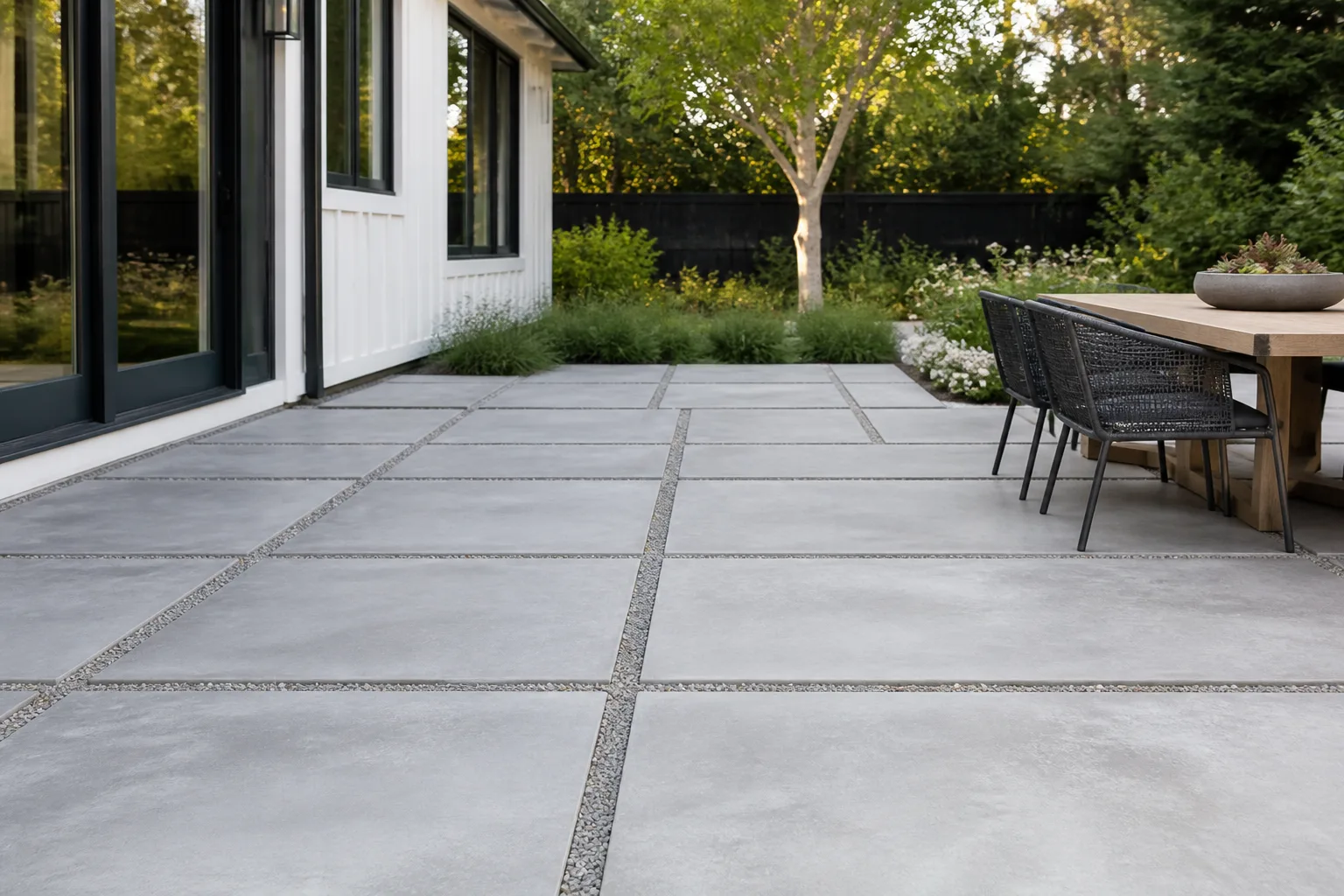
17. Set large pavers in gravel for a lighter patio. Wide slabs with gravel joints create a crisp surface without fully paving the yard. Build a firm, level base to prevent rocking, and contain loose gravel at the edges.
18. Let a path curve toward a destination. A gentle bend can create a transition and reveal part of a garden gradually. Use a broad curve that is easy to edge, and keep the route direct enough that people will not cut across beds.
19. Plant a narrow border along one side of a walkway. Flowers, herbs, or low foliage soften a path. Allow for mature plant width, choose staggered bloom times for longer color, and keep turns visible.
20. Reuse sound brick or stone as a secondary path. Salvaged materials can tie a walkway to an older house and save money. Sort for consistent thickness, reject cracked pieces, and use a stable, well-drained base to avoid trip hazards.
Work With Slopes and Water
Slopes can create useful terraces but change how water and soil move. Understand drainage, wall design, and local rules before holding back soil or redirecting runoff.
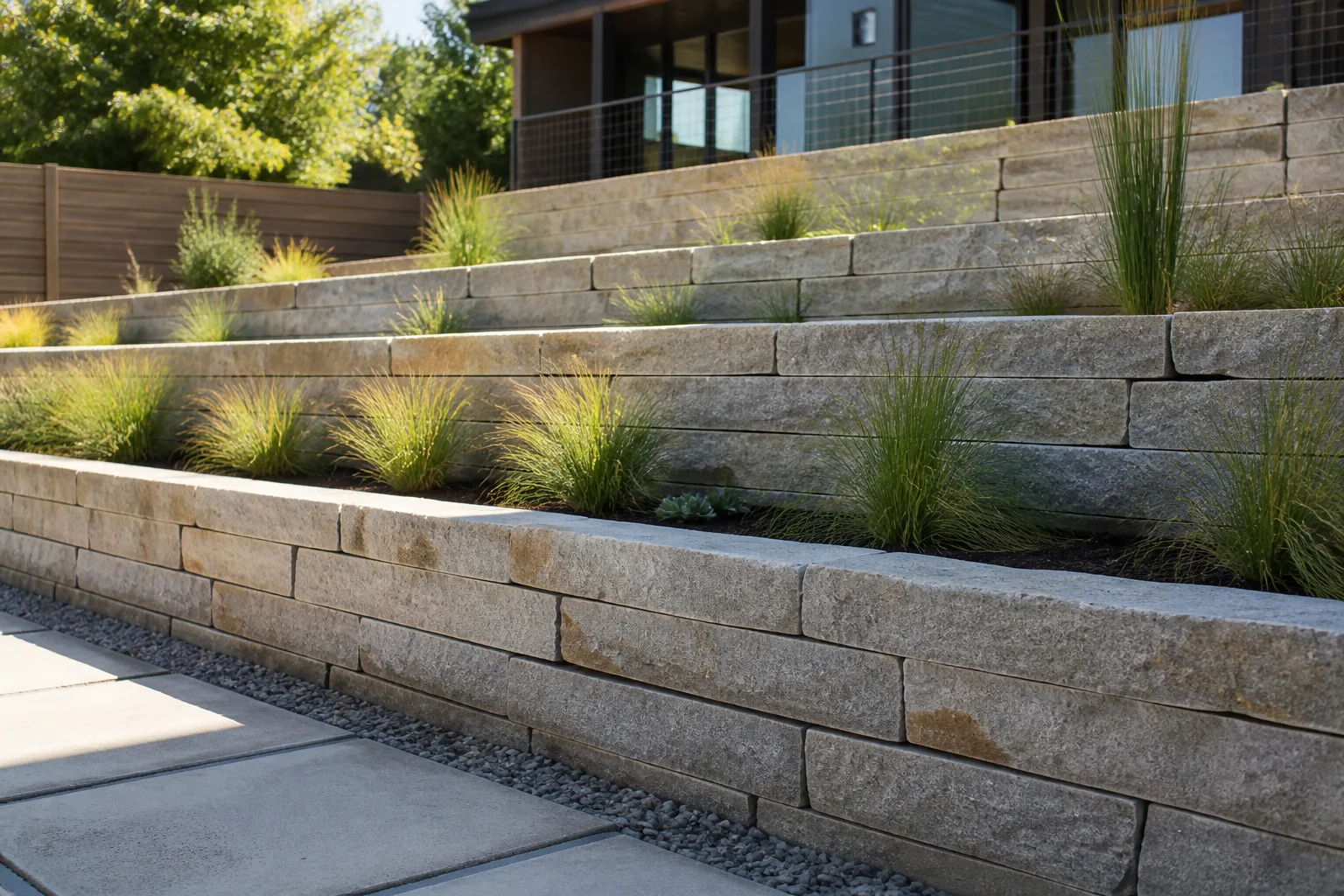
21. Turn a slope into two planted terraces. Lower beds can create level planting areas on a hillside. Walls must suit the slope, soil, and water load; taller or loaded walls may need an engineer. A Gardenista-profiled Austin project used site-specific terraces to manage runoff.
22. Frame outdoor steps with broad landings and planters. Planters or low beds can make stairs feel like a garden entrance. Use stable, consistent steps, keep edges visible, and place pots where they cannot tip or narrow the route.
23. Give runoff a planted place to go. A rain garden or shallow planted swale may suit a natural low spot if soil, slope, and overflow are appropriate. Do not dig beside a foundation or direct water onto a neighbor’s property; ask a local Extension office before sizing or excavating.
Build Planting Beds With Rhythm and Seasonal Interest
A bed looks composed when plants relate in height, shape, and timing. Use a simple palette and repeat forms, textures, or colors rather than collecting one of everything.
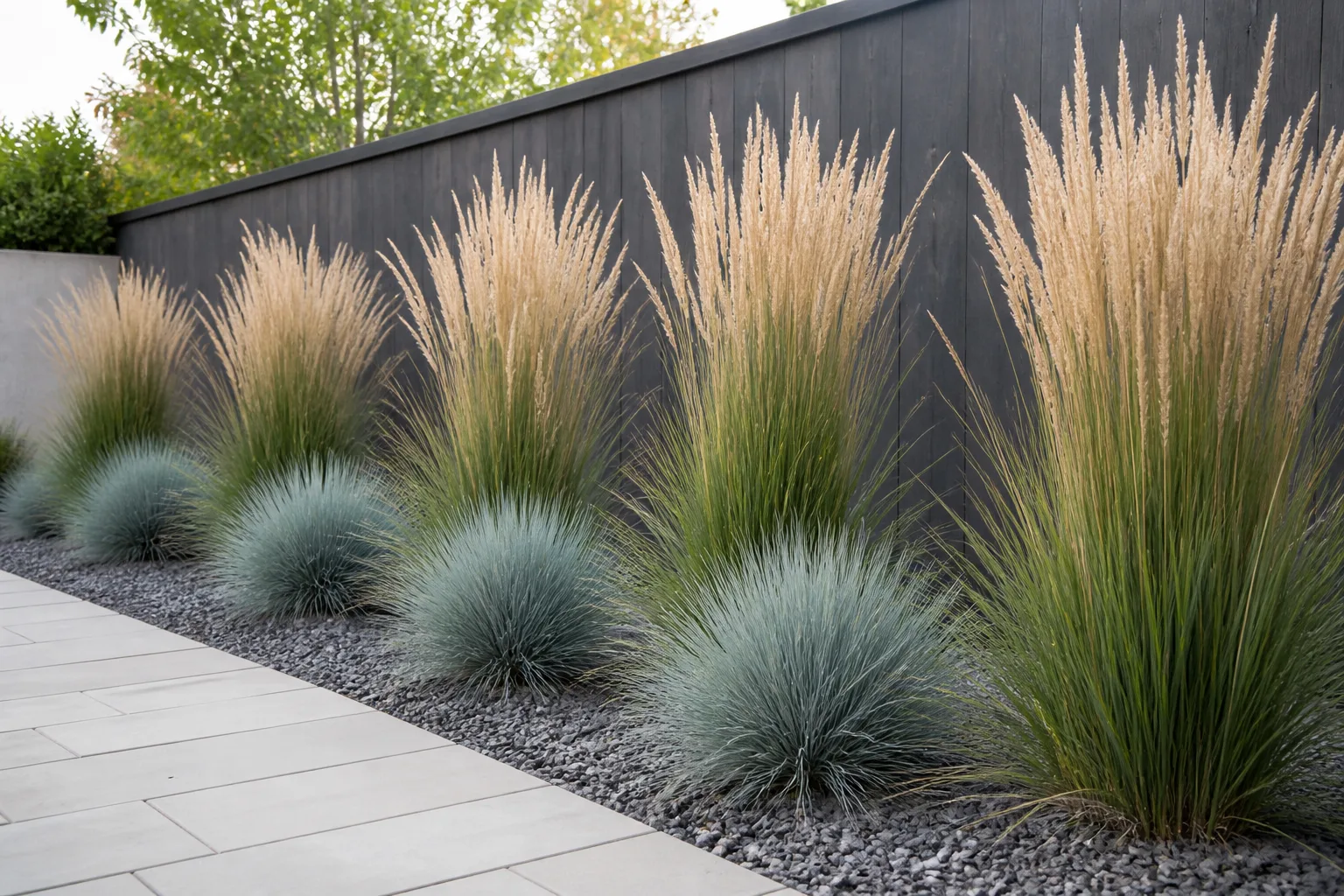
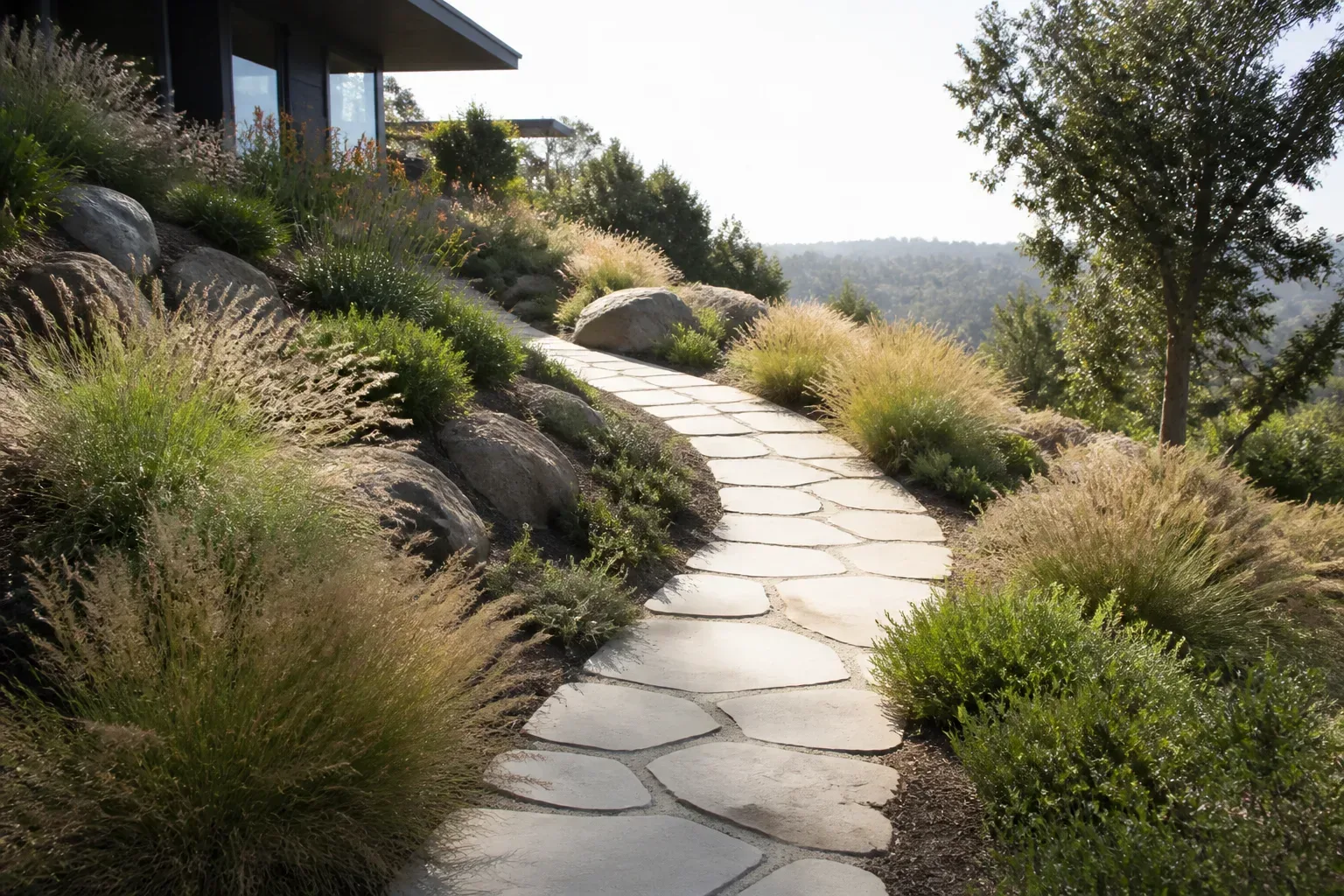
24. Repeat clumps of ornamental grass to create rhythm. Repeated groups can connect a path, patio, and fence. Choose a locally suitable clumping variety, allow for mature spread, and check its seasonal pruning needs.
25. Keep an evergreen backbone and add seasonal color. A few shrubs hold a bed together after flowers fade, while bulbs and perennials add changing color. Place permanent plants first, then fill around them with movable choices.
26. Layer plants from tall at the back to low at the edge. In a one-sided border, use tall shrubs or grasses behind flowers and groundcovers. In an island bed, put taller plants near the center; check mature height and light.
27. Choose foliage for texture as well as flowers. Mix fine grasses with broad leaves, rounded shrubs, or fern-like foliage for interest between blooms. Repeat shapes or colors across the yard for a deliberate look. BBC Gardeners’ World Magazine’s design guide also treats paths, borders, seating, and screens as parts of one plan.
Borrow a Garden Style Without Copying a Whole Look
A recognizable style can guide decisions without requiring a full makeover. Borrow a few elements that suit your house, climate, and maintenance preferences, then repeat them consistently.
28. Add a Mediterranean feel with warm paving and drought-ready plants. Terracotta, brick, gravel, and aromatic herbs can suggest a dry-climate courtyard. Match plants to your actual rainfall and winter temperatures rather than choosing them for appearance alone. In wetter or colder regions, use hardy substitutes and provide drainage; a style label does not override the conditions in your yard.
29. Make a contained cottage border beside a simple lawn or path. Mix flowering perennials, annuals, and a few climbing plants for a relaxed, abundant look. Keep the bed edge clear and repeat some plants so the border feels intentional rather than overgrown. Cottage planting needs editing and seasonal care, so leave access to reach the back of the bed and remove spent growth.
30. Create a quiet corner with stones, a small tree, and a bench. This restrained grouping can make a side yard or shady corner feel contemplative. Choose climate-suited plants and stone, and avoid scattering unrelated ornaments.
31. Build a desert-inspired bed with gravel and sculptural plants. In an arid or hot-summer climate, gravel can complement cacti, succulents, and drought-adapted shrubs. Gravel does not make a thirsty plant drought tolerant, and it can heat the root zone in exposed sites. Choose species that are hardy locally, use gravel where it suits drainage, and retain organic mulch where plants need it.
Make Space for Food and Flowers
Edibles can be part of the landscape rather than hidden in a separate utility patch. A productive bed works best where sunlight, water access, soil, and daily routes make it easy to tend and harvest.
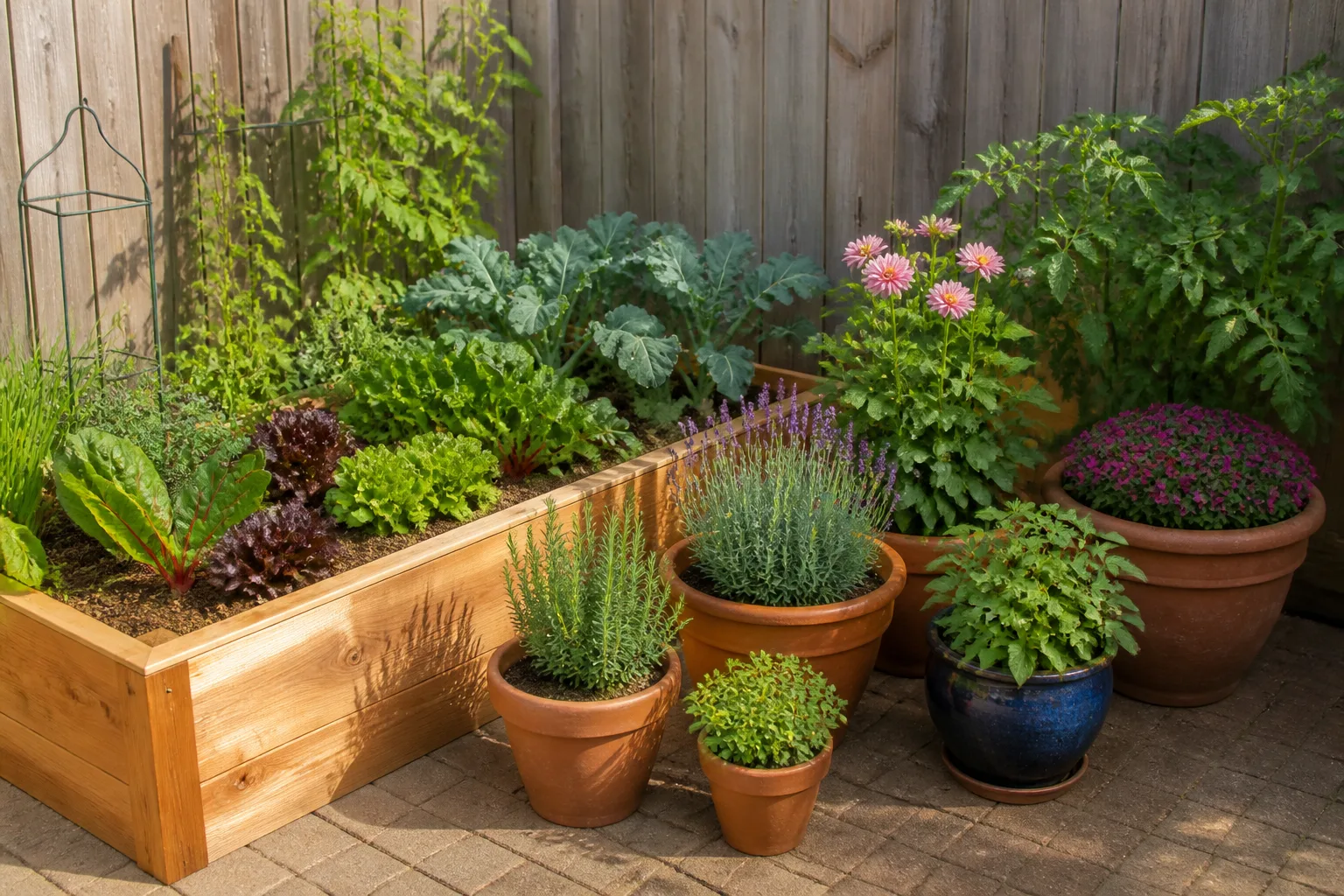
32. Put raised vegetable beds near a convenient path. A raised bed can define a growing area and make planting easier to organize, but it should be placed where it receives the light the chosen crops need. Leave room to reach both sides without stepping on the soil. Keep the bed size manageable enough that watering and harvest do not become a chore.
33. Mix herbs into a sunny border or patio edge. Rosemary where hardy, thyme, chives, and other locally suitable herbs can make a path fragrant and useful. Put frequently harvested plants near the kitchen and group those with similar water needs. Some herbs spread or become woody, so give them enough room and avoid planting them where their mature size will block a walkway.
34. Add flowers among vegetables to bring color and seasonal variety. Flowers can make a productive bed more inviting, and different bloom times extend the visual interest. Choose varieties that suit local growing conditions and avoid crowding vegetables that need airflow or space. A few repeated flower groups look more cohesive than a random mixture squeezed into every open spot.
35. Design a small pollinator bed as a visible garden feature. Use plants native to your ecoregion where possible, then select species for the site’s sun, soil, and moisture. Homegrown National Park’s landscape guidance recommends grouping repeated plants and layering trees, shrubs, flowers, and groundcovers. A clear path edge or sign of intentional maintenance can help a naturalistic planting feel cared for.
Match the Planting to Your Climate
The same plant combination will not work in every yard. Local hardiness, rainfall, soil, wind, and summer heat all matter; use a regional plant list or Extension office when choosing species, especially for a large hedge or a permanent tree.
36. Use regionally native plants for a locally grounded border. Native does not mean carefree or suited to every spot; each plant still has preferences for sun, moisture, and soil. Check the plant’s mature size and whether it is native to your region, then repeat a few species for a legible design. A locally adapted palette can also make the garden feel connected to its surroundings.
37. Turn a shady tree edge into a layered woodland bed. Use shade-tolerant groundcovers and perennials beneath an existing tree, while keeping soil and mulch away from the trunk flare. Work around major roots instead of cutting them to force a bed shape. As the canopy changes, observe the light again and adjust the understory rather than expecting sun-loving flowers to thrive in deep shade.
38. Plant a pool edge with resilient, low-litter species. Grasses and compact perennials can soften paving without dropping constant debris into the water. Check mature spread, root behavior, and the pool’s maintenance needs before planting. Use species suited to the local climate and avoid placing thorny or sprawling plants where wet feet, bare skin, or pool equipment will pass.
Use Lawn Only Where It Earns Its Keep
Grass can be useful for play, pets, or an open view, but maintaining lawn where no one walks may add work without adding much function. Replace only the areas that fit another use, and compare water, upkeep, heat, and drainage before choosing a substitute.
39. Replace a hard-to-mow corner with a gravel garden. Gravel can suit a dry, sunny area or a narrow service strip where turf struggles. Prepare the base and edge so stones do not migrate, and include plants that genuinely tolerate the site. Gravel is not maintenance-free: leaves, weeds, and settling still need attention, and it can be uncomfortable underfoot in a play area.
40. Use low groundcovers between stepping stones. Creeping plants can soften a path and reduce the amount of bare soil, but select a species that tolerates the foot traffic and moisture there. Keep a clear walking surface where people move often. Groundcovers spread at different rates, so start with a modest section and see whether the plant behaves as expected before extending it.
41. Try a clover or mixed lawn only if it suits your use. A mixed planting can add flowers and texture, but it may not meet every household’s expectations for play, appearance, or local lawn rules. Check the seed mix, climate fit, and mowing plan before replacing turf. Keep a durable grass route where children, pets, or wheelbarrows repeatedly cross the yard.
42. Keep a smaller lawn as a deliberate open room. A simple lawn can balance busy borders and provide flexible space for games, pets, or gatherings. Shape it around how you use it, rather than preserving a large rectangle by default. A crisp edge against a bed or patio makes the remaining turf look intentional and can reduce awkward corners that are hard to mow.
Add Flexible Height With Containers
Containers add color and height without requiring a permanent bed. They are especially useful on patios, rental properties, and awkward corners, but pots dry faster than in-ground soil and may need more frequent watering.
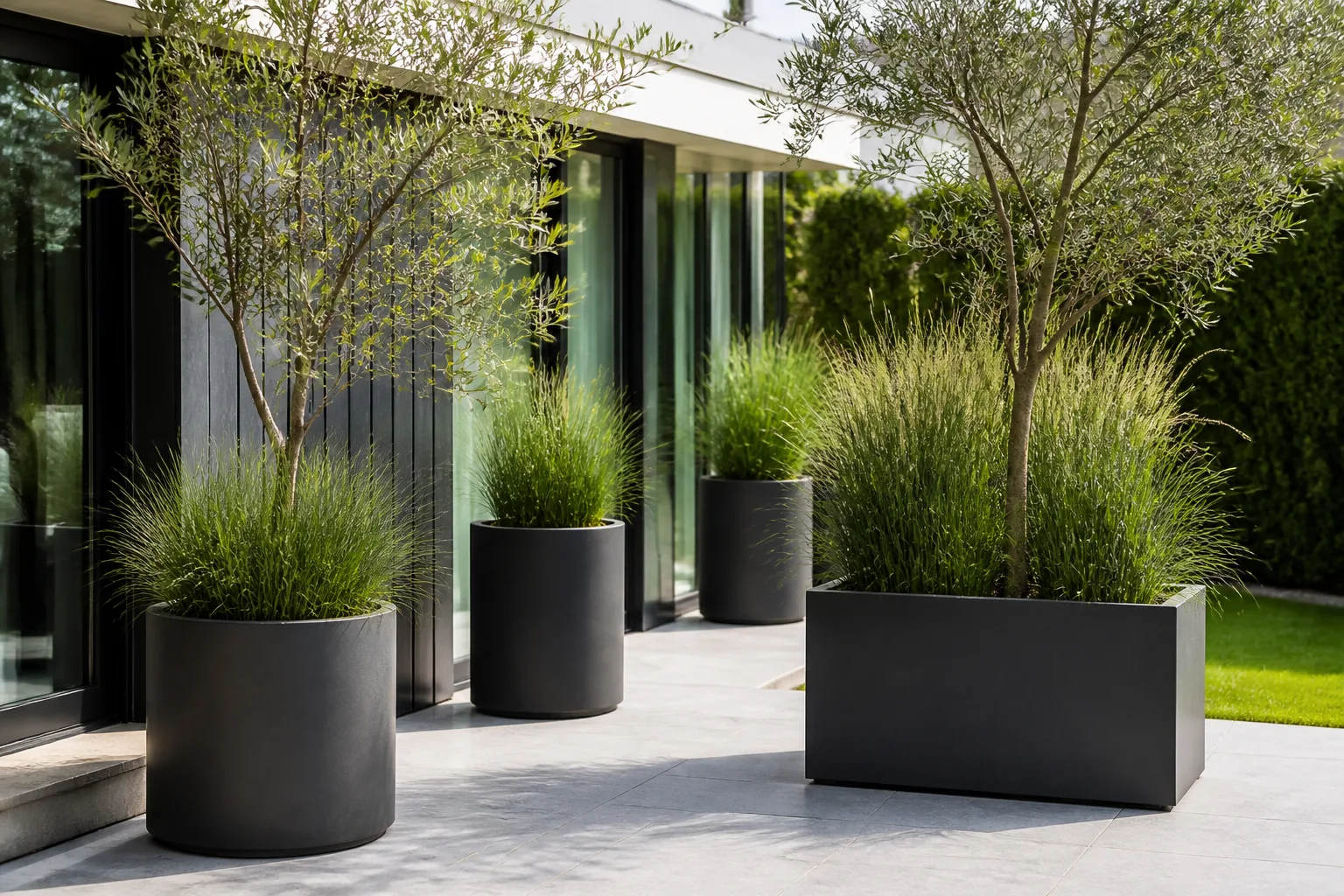
43. Group containers to define a patio edge. Combine a few pots of different heights, but repeat material or color so the group reads as one feature. Place the largest containers first and keep the route to doors and chairs open. Choose pot size for the plant’s mature roots, and make sure the filled containers can be moved or safely left in place.
44. Use large planters as movable garden structure. A pair of substantial planters can frame steps, mark a dining zone, or soften a plain wall. Choose plants that fit the light and wind exposure, and account for the weight of wet soil before putting pots on a deck or balcony. Moveable planters are flexible, but they still need drainage and winter care.
45. Grow vertically on a fence with a secure planter or trellis. Wall-mounted containers can make a small yard greener without using much floor area. Check the fence or wall can carry the load, protect the surface from trapped moisture, and make watering accessible. Use smaller plants with manageable roots rather than forcing large shrubs into shallow pockets.
Invite Wildlife and Make Use of What You Have
Wildlife-friendly design can also be orderly. Keep useful habitat features in places where they will not obstruct daily activity, and use the existing trees, stones, and materials before adding more construction.
46. Place a birdbath where you can see it from indoors. A shallow water source can become a garden focal point and give you a reason to look outside. Set it where birds have nearby cover but where you can clean and refill it easily. Keep it away from a busy doorway, and maintain the water rather than letting the basin become stagnant.
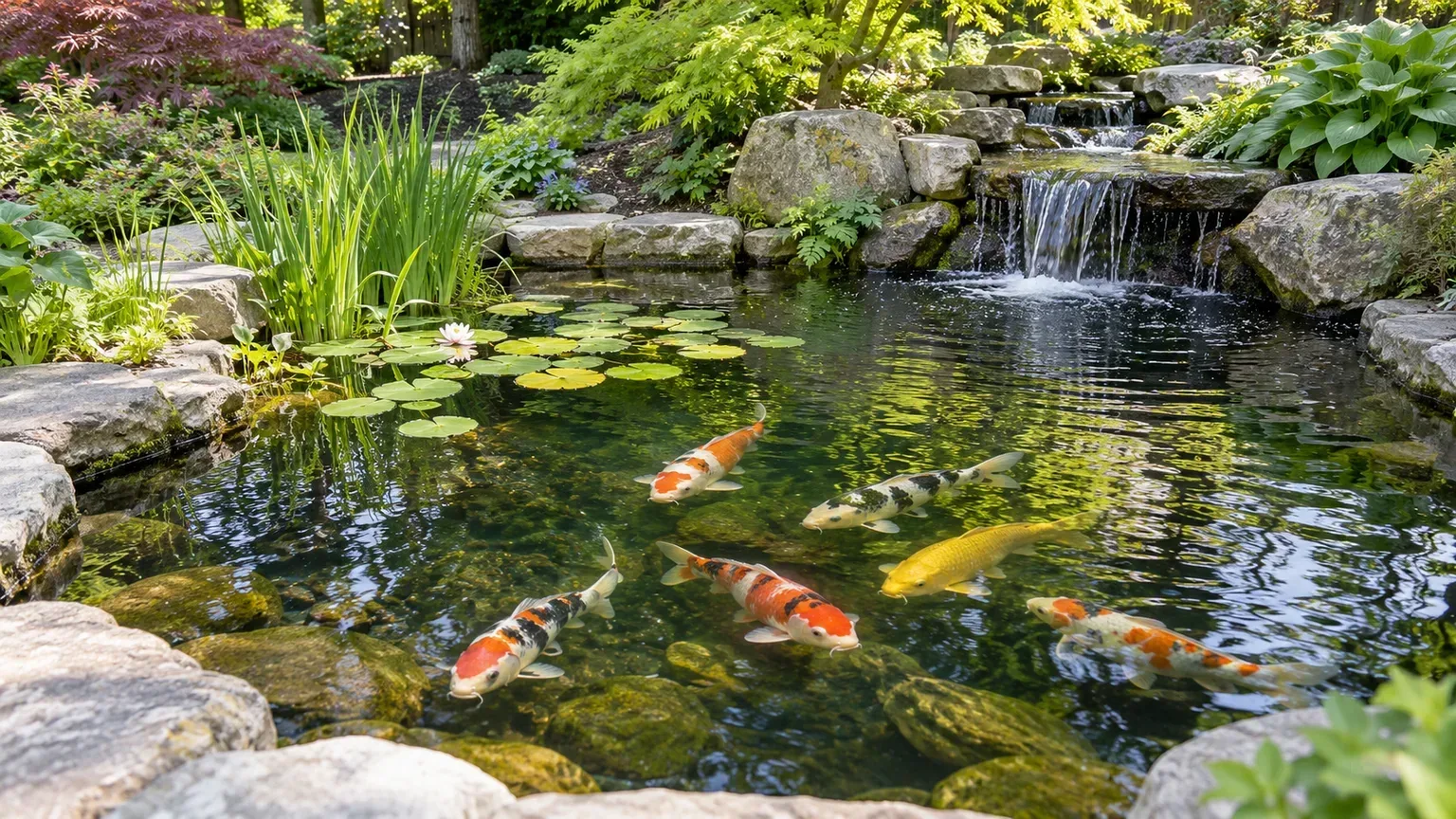
47. Add a small fountain only if you want its upkeep. Moving water can provide sound and a focal point, but pumps, algae, winterization, and top-ups are part of the commitment. Choose a scale that fits the yard and can be serviced without dismantling surrounding beds. A simple birdbath may be the better choice if your main goal is a visible water feature.
48. Reuse sound materials and keep a rain barrel accessible. A salvaged bench, bricks, or a repurposed container can add character while reducing new purchases. A rain barrel belongs near a downspout you can reach, with a stable base and a plan for overflow. Check local guidance for safe installation and winter care; do not let collected water spill against the foundation.
Make the Yard Work After Sunset and in Winter
A garden has more than one season and more than one time of day. Think about where people walk after dark and what will still give the yard shape when flowers are gone.
49. Light the route, not every plant. A few low fixtures along steps or a main path can help people see where they are going without turning the yard into a brightly lit stage. Use outdoor-rated equipment and aim light down to limit glare into windows. Solar lights are easy to add, but their performance depends on exposure and battery condition.
50. Hang weather-rated lights over a dining zone. A pergola or sturdy support can hold string lights above a table and make the area feel like an outdoor room at night. Keep bulbs clear of branches, use products rated for outdoor exposure, and secure cables so they cannot snag or trip anyone. Do not attach weight to a living branch that is not suited to support it.
51. Leave selected seedheads and grasses for winter structure. Ornamental grass plumes, evergreen shrubs, bark, and seed-bearing perennials can keep a bed visually active after frost. Choose plants with forms you like when they are dormant, then cut back only when it suits their growth and local wildlife needs. If snow is common, avoid relying on fragile stems as the only winter focal point.
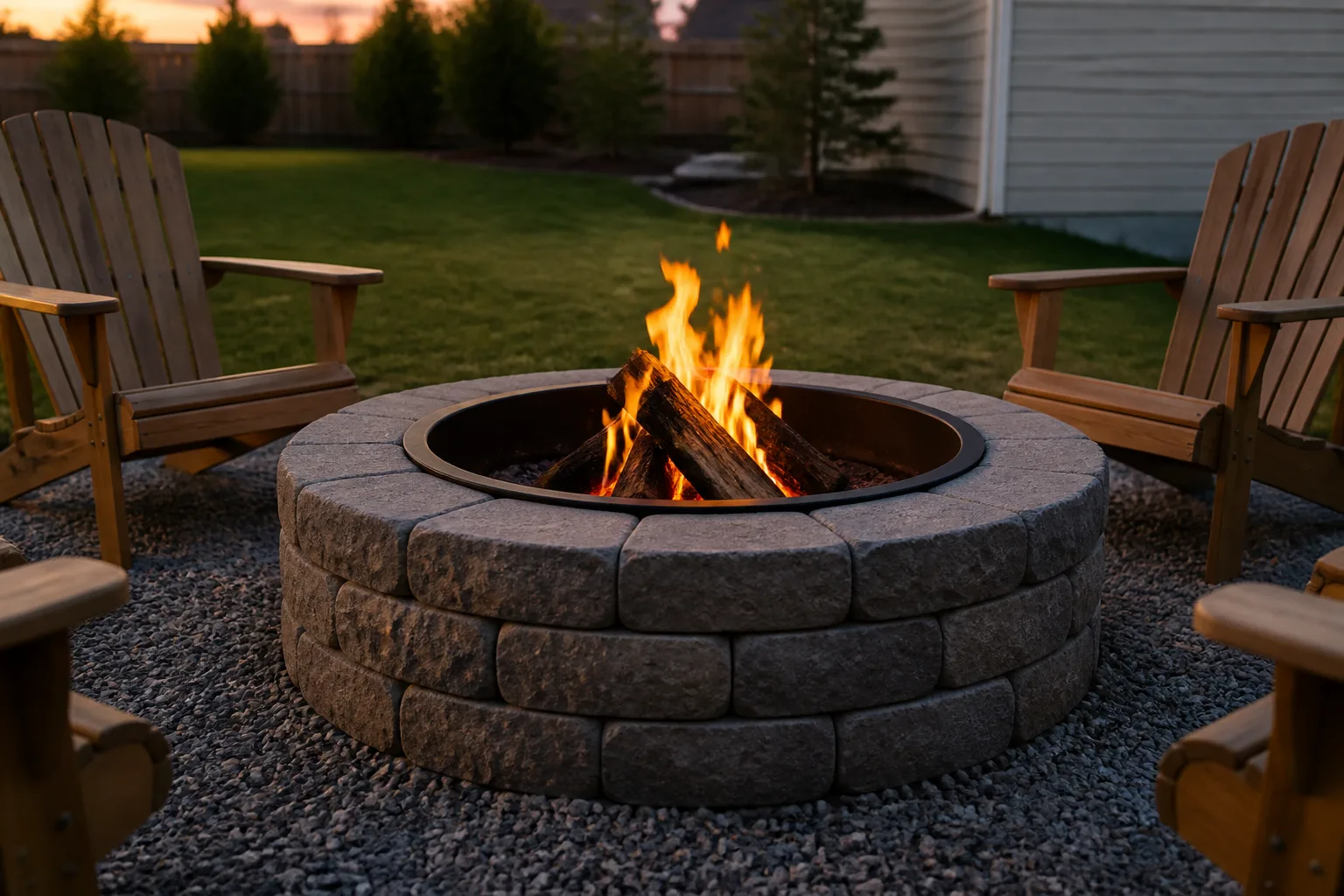
52. Make an outdoor fireplace or fire feature the destination. A fire feature can anchor a seating area, but the layout should give it clear space from buildings, fences, overhanging branches, and furniture. Check local burn restrictions and the manufacturer’s installation instructions before choosing wood, propane, or gas. If those requirements do not fit your yard, use a table, water bowl, or planted focal point instead.
Spend Smarter by Building in Phases
You can make a noticeable change without redesigning the whole property. The most economical order is usually to solve a daily-use problem first, then add plants and decoration once the routes and surfaces work.
Start by editing what is already there: move a bench, divide healthy perennials, reshape one bed edge, or clear a path that has become inconvenient. Next, build a small, high-use zone such as a dining pad or a clear route to the shed. Spend on permanent surfaces only after living with the layout on paper or temporarily marked on the ground.
For a larger project, separate the plan into three budgets: essential grading or access; the main patio, path, or bed; and optional lighting, furniture, or specimen plants. Get local estimates for work that affects drainage, structures, electrical service, or a steep slope. A professional plan can be useful even if you install the planting in stages yourself.
Avoid the Mistakes That Make a Yard Harder to Use
Many landscape regrets come from treating a photograph as a complete plan. The scene rarely shows the site’s soil, the mature size of plants, the drainage beneath paving, or how much pruning and cleaning the design requires.
Before committing, check plant width at maturity, count how many different hardscape materials you are combining, and confirm that the path is wide enough for its real users. Do not pile soil or mulch against tree trunks, route water toward a foundation, or build a retaining wall without understanding the load and drainage. Call 811 or your local utility-marking service before digging.
Also be cautious with fast-growing vines, a large lawn-to-gravel conversion, or a patio that takes all the remaining planting space. Each can be right in some yards and frustrating in others. Test the idea at a small scale, observe it through a season, and then expand if it works.
Conclusion
The strongest backyard landscaping ideas solve a real problem while making the rest of the yard easier to use. Begin with sunlight, water, access, and the activities you want to support; then choose a small group of surfaces and plants that fit those conditions.
Pick one project you can finish well, such as a clearer path, a compact dining area, or a layered bed along the fence. Live with it before adding the next feature. A thoughtful sequence usually creates a more cohesive landscape—and fewer expensive changes—than buying everything for a full makeover at once.