Bamboo Palm Care for Lush Fronds and Healthy Roots
Grow a healthy bamboo palm indoors with clear light, water, soil, humidity and fertilizer tips, plus propagation steps and fixes for frond problems.
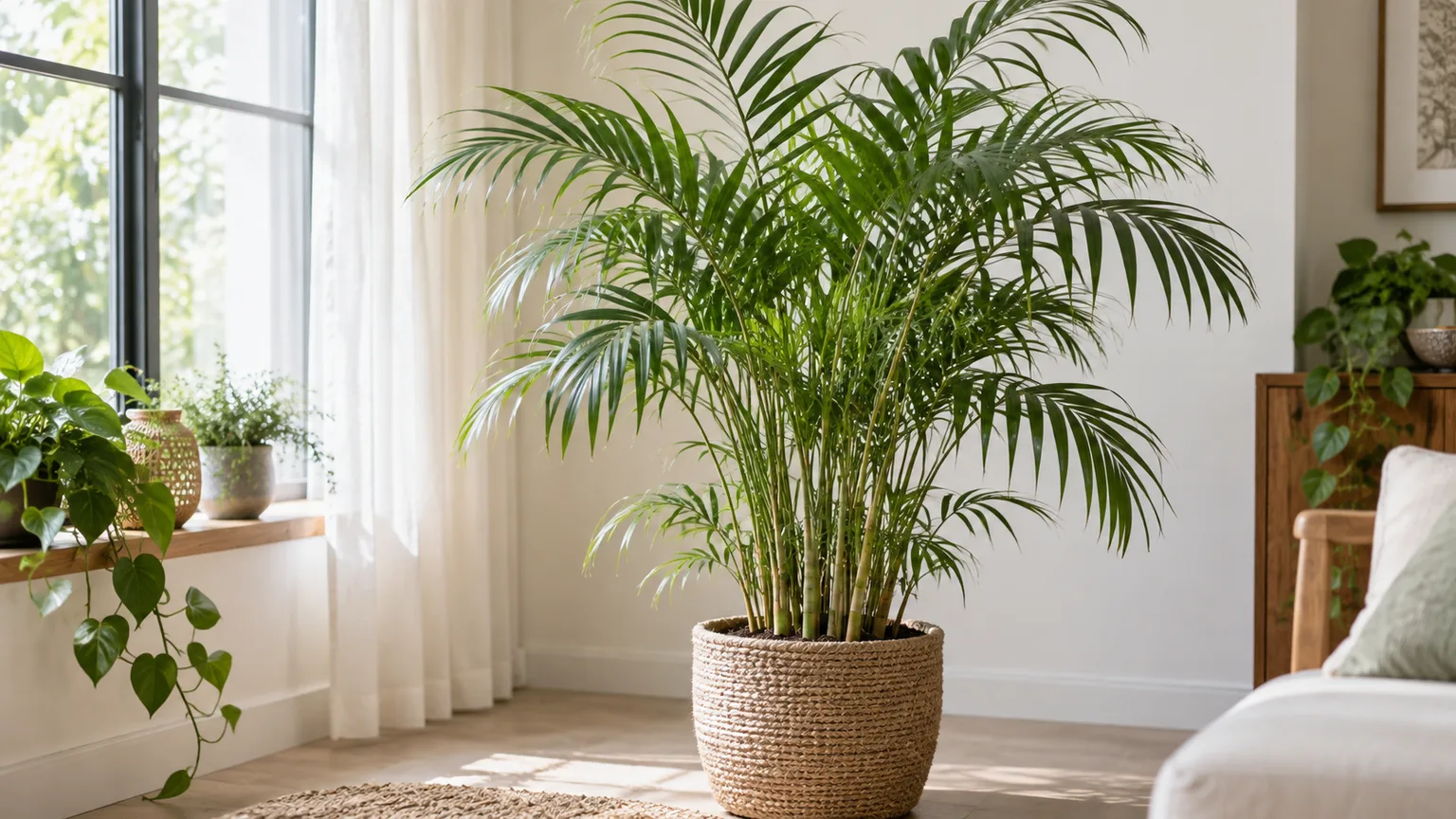
Bamboo palm (Chamaedorea seifrizii) is a clump-forming tropical palm with slender, ringed stems and arching, feather-shaped fronds. Indoors, it rewards steady conditions rather than fussing: give it bright filtered light, a mix that drains but does not dry to dust, and enough time between waterings for air to return to the root zone.
The useful shift is to stop treating care as a weekly checklist. A bamboo palm in a cool room, a small plastic nursery pot, and dim winter light will use water very differently from one near a bright window in a warm, dry room. Check the plant and its mix first; then adjust the routine to what you see.
Know which bamboo palm you have
The bamboo palm is Chamaedorea seifrizii, a member of the palm family, Arecaceae. Its name refers to the narrow, jointed-looking canes, not a close relationship to true bamboo. It grows as a cluster, with several stems rising from a shared root mass, and mature outdoor plants can become a broad screen rather than a single slender trunk. The Missouri Botanical Garden Plant Finder describes it as a clumping understory palm native to Mexico and Central America; the RHS profile lists a mature height around 1.5–2.5 meters and slow maturity.
Do not confuse it with lucky bamboo, which is a dracaena, or with the parlor palm (Chamaedorea elegans), a different species in the same genus. Garden centers sometimes sell several canes in one pot to create an instantly full look, so the plant may look bushy on purchase and then grow more slowly at home. A few aging lower fronds are normal; steady decline across the whole clump is not.
For an indoor plant, use this as a starting point rather than a rigid recipe:
| Care factor | Practical target |
|---|---|
| Light | Bright, indirect or filtered; avoid harsh afternoon sun |
| Water | Water when the top 1–2 inches of mix are dry, then drain fully |
| Soil and pot | Moisture-retentive but airy mix; pot with open drainage holes |
| Temperature | A stable, warm room; protect from cold drafts and frost |
| Feeding | Light, balanced feeding while it is actively growing |
Give it bright, filtered light
Bamboo palm is more forgiving of shade than many tropical houseplants, but “tolerates low light” does not mean “grows best in a dark corner.” In very dim conditions, the plant uses water slowly, makes fewer new fronds, and may lean toward the nearest window. The Missouri Botanical Garden recommends part shade and advises avoiding direct afternoon sun; the RHS lists partial shade for this species.
Place the pot near a bright window where a sheer curtain, porch roof or nearby tree softens the sun. A few feet back from an east- or west-facing window can work, depending on how intense the sun is; a north-facing window may be suitable in a bright room but can be too weak in a shaded one. Judge the light at leaf height instead of relying only on compass direction: a clear, soft-edged shadow for part of the day is a better sign than a room that merely looks bright to your eyes.
Acclimate the palm over a week or two when moving it from a dim shop to a brighter window. Pale, dry patches that appear on the window-facing side point more toward light scorch than a watering problem. If new stems stretch and fronds angle strongly toward the window, move it closer to filtered light or turn the pot a quarter turn every couple of weeks; do not spin it daily, which only makes it continually readjust.
Water by checking the potting mix
Keep the root ball lightly and evenly moist during active growth, but never leave it sitting in water. A bamboo palm has fine roots that need both moisture and oxygen; a waterlogged mix displaces air and encourages root decline. This is why a fixed “once a week” rule can fail in both directions: a small pot in warm light may dry quickly, while a large pot in a cool corner can remain wet far longer.
Check the top inch or two of mix with a finger or a wooden skewer near the edge of the pot. If it feels cool and damp, wait and check again in a day or two; if the surface layer is dry and the pot feels noticeably lighter, it is usually time to water. The BHG watering guide recommends checking the mix rather than relying on a calendar, then watering thoroughly so moisture reaches the roots and excess can escape. For bamboo palm, use that as a practical check, not as an instruction to let the entire root ball become bone-dry.
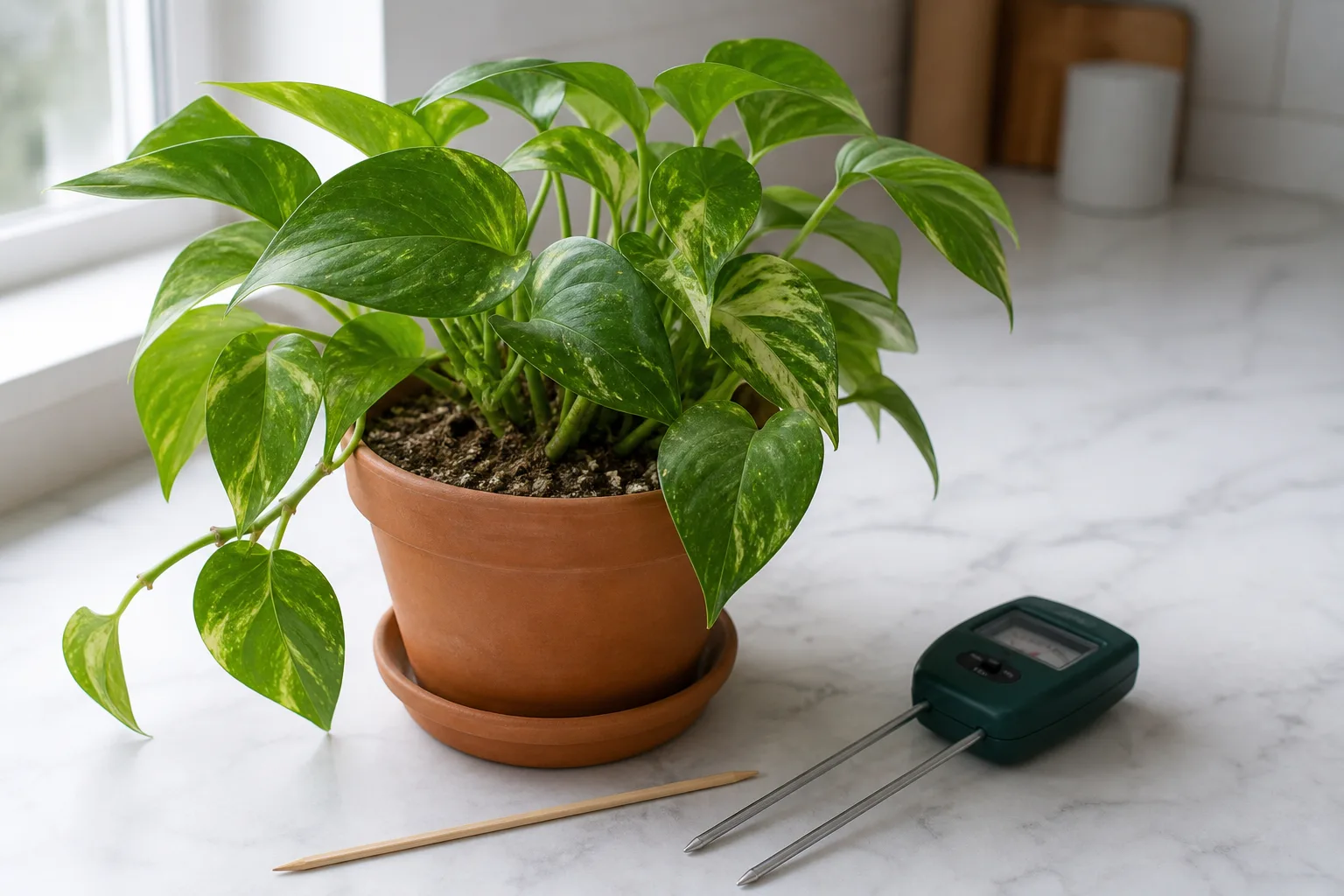
How to water thoroughly
Take the plant to a sink or use a saucer that can be emptied. Pour slowly over the soil surface until water runs freely from the drainage holes, let the pot finish draining, and discard the runoff rather than leaving the base submerged. If the mix has become hydrophobic and water races down the sides without wetting the root ball, water in two or three passes a few minutes apart, then confirm that the center is moist.
Water at the soil line where possible, not into the crown of the plant or the tight spaces between canes. If your tap water is softened or leaves a crust of mineral salts on the mix, switch to rainwater or another suitable low-salt source; otherwise, ordinary room-temperature tap water is generally fine. A white crust, repeated brown tips and a history of heavy feeding can signal accumulated salts, so do not automatically blame chlorine or reach for a humidity spray.
Adjust for slower winter growth
In spring and summer, warmth and longer days usually mean the plant dries faster and is more likely to produce new fronds. In autumn and winter, lower light and slower growth often stretch the time between waterings. Keep checking the soil rather than automatically halving the volume or sticking to the same weekday schedule, especially if the plant sits near a heater or a cold window.
If you travel, do not compensate by leaving the nursery pot in a basin of water. Instead, water normally before you leave, allow it to drain, and move it away from hot sun and heating vents. A bamboo palm in a suitably sized pot can tolerate a brief delay better than roots kept saturated for days.
Choose moist but airy soil and a draining pot
Use a quality indoor potting mix that holds some moisture while releasing extra water easily. A peat-free houseplant mix amended with perlite, pumice or fine bark can add air space if the mix stays dense after watering; you do not need a highly specialized palm blend. The RHS describes bamboo palm as suited to well-drained growing conditions, and the Missouri Botanical Garden likewise emphasizes evenly moist, well-draining soil for outdoor planting.
The pot needs unobstructed drainage holes. Do not add a layer of gravel to the bottom as a substitute for drainage; it takes up root space and does not fix a compacted or waterlogged mix. Set the nursery pot inside a decorative cachepot if you prefer, but lift it out to water and empty the outer vessel before returning it.
Choose a container only modestly wider than the root ball—often about 1–2 inches wider in diameter is enough. Moving a small root mass into a container several times larger leaves a large volume of mix that stays wet after each watering. That oversized “room to grow” can create the exact root stress a palm owner is trying to prevent.
Keep it warm and manage indoor humidity
Bamboo palm prefers the stable warmth of a lived-in room. The 65–80°F range given in the species-specific Healthy Houseplants care guide is a useful comfort zone, not a thermostat target; protect the plant from cold drafts, frosty glass, air-conditioning blasts and prolonged exposure to temperatures below about 50°F. Its outdoor hardiness is a separate question from surviving a brief cool night indoors.
The species comes from warm, humid forest understories, but a healthy, acclimated houseplant does not need a tropical greenhouse. If the room is comfortable for people and the fronds remain supple, extra humidity equipment may not be necessary. In a very dry heated room, a small humidifier near the plants can help; leave space for airflow and keep leaves from staying wet for long periods.
Misting gives only a short-lived change in the air around the leaves, so it is not a substitute for correct root watering or a consistently suitable room. Pebble trays are also easy to overestimate: they can add a little local moisture, but they will not rescue a palm whose pot stays waterlogged or whose root ball repeatedly dries out. If tips continue to crisp, first review water quality, root moisture, direct sun and nearby heat before adding gadgets.
Feed lightly during active growth
Feed only when the palm is actively growing, usually in spring and summer. A balanced liquid houseplant fertilizer used at the label’s conservative rate every four to six weeks is ample for most container plants; if the label gives a range, start at the lower end. The RHS recommends a balanced liquid feed monthly during the growing season, while a species-specific Healthy Houseplants care guide also cautions that overfeeding can contribute to brown margins and salt buildup.
Apply fertilizer to damp mix, not a bone-dry root ball, and pause feeding in winter or whenever the plant is stressed, recently divided or recovering from root damage. More fertilizer will not fix a palm that is yellowing because its roots are short of oxygen or because the room is too dark. If a white crust forms on the soil or pot rim, stop feeding and flush the mix with plain water only if the pot drains freely; otherwise repot into fresh mix rather than keeping roots flooded.
Repot only when the roots need room
Bamboo palms do not need a large pot just because the fronds look tall. Repot when roots circle densely around the root ball, emerge through the drainage holes, or the plant dries unusually fast despite a sensible watering routine. A plant that has slowed down in winter or has one old yellow frond does not automatically need a new container.
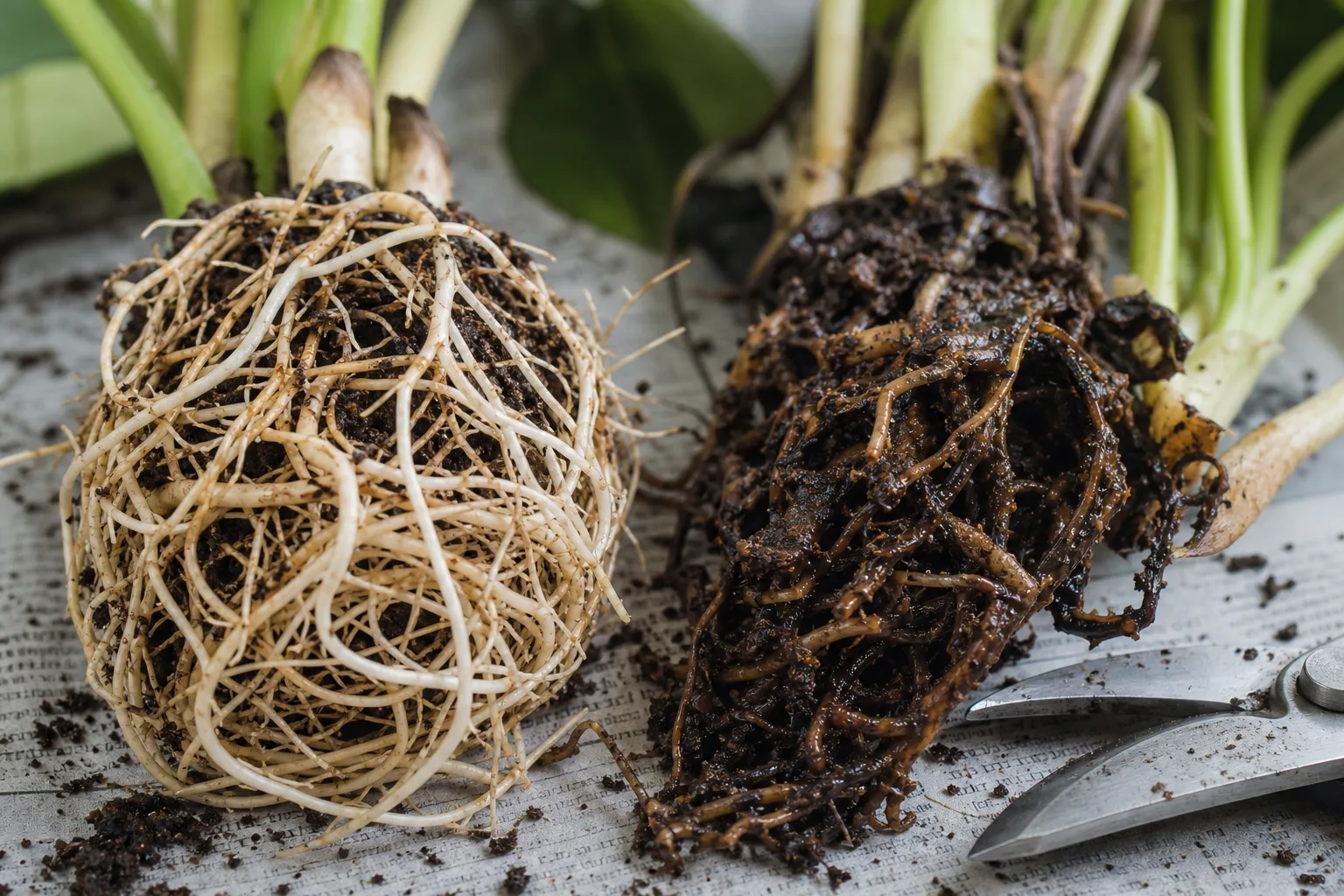
Spring or early summer is the easiest time to repot because the plant can resume growth afterward. Slide the root ball out, loosen only the outermost circling roots, and check for firm, pale roots versus dark, mushy sections. Move up one pot size, set the palm at the same depth as before, fill around it with fresh airy mix, and water once until excess drains.
Expect a short pause while roots settle, especially if the plant was root-bound or has been divided. Keep it in bright indirect light, avoid fertilizer until you see active growth again, and resist repeatedly unpotting it to inspect the roots. A properly drained pot with a snug fit is safer than a dramatic jump to a much larger planter.
Prune sparingly and clean the fronds
Remove fully brown or yellow lower fronds with clean, sharp pruners, cutting the leaf stalk close to its base without nicking nearby canes. Older fronds naturally age out as new ones emerge from the growing points, so a single old leaf does not justify cutting back the whole clump. A leaf that is still mostly green continues to contribute energy; keep it unless it is badly damaged or diseased.
If only the last few millimeters of a leaflet are brown, you can trim the dry edge to follow the leaflet’s natural pointed shape. Do not cut every leaflet into a blunt row, and never chop the cane tops to make the plant branch—palms do not respond like woody shrubs. Wipe dust from the fronds with a damp cloth or rinse them gently, then let foliage dry with good airflow.
Propagate by division; treat seed as a longer project
For a home grower, division is the most practical way to make another bamboo palm. Wait until the parent is healthy and actively growing, then divide during a planned repot rather than disturbing the root ball just to create a spare plant. The trade-off is temporary stress: each piece loses some roots and leaf area, and a small division may take time to establish.
Seed is possible but less predictable indoors. Bamboo palm flowers are small and not especially showy; the Missouri Botanical Garden notes that male and female flowers occur separately, and Toronto Master Gardeners explain that bamboo palm is dioecious, with male and female plants separate. A single indoor plant therefore may flower without producing viable seed; if pollination does occur, seed germination still needs sustained warmth. The RHS recommends sowing at no less than 25°C (77°F), a temperature many ordinary rooms do not maintain in the potting mix.
Divide a clump without leaving weak scraps
Water the parent lightly the day before, then ease the whole root mass from the pot. Identify a natural section with several healthy canes and its own substantial roots; do not pull off a cane that has no roots and expect it to behave like a stem cutting. Use a clean knife to separate the clump with as little tearing as possible, keeping each division large enough to support itself.
Pot each division in a snug container with fresh, well-drained mix, set it at its original depth, and water once to settle the soil. Keep the new plants warm in bright indirect light and evenly—not constantly—moist while they reestablish. A temporary pause or loss of one older frond can happen; repeated wilting in wet mix, a sour smell or mushy roots means the root zone needs attention, not another soaking.
Diagnose yellowing, browning and drooping
Frond symptoms are clues, not diagnoses. Look at how many leaves are affected, whether the change starts at the tips or bases, whether the mix is wet or dry several inches down, and whether the plant sits in direct sun or near a heat source. Change one likely cause at a time so you can tell whether the plant improves.
Yellow leaves or a limp, declining clump
One old lower frond turning yellow while the rest of the plant keeps growing is usually ordinary aging. Several fronds yellowing together, especially when the mix stays wet and the pot feels heavy, point toward poor drainage or overwatering; stop watering until the mix begins to dry, empty the cachepot, and confirm that the holes are open. If roots are dark and soft or the mix smells sour, remove only clearly rotted material and repot into a draining medium.
If the mix is dry and pulls away from the pot, water thoroughly and let it drain. Do not assume a drooping palm always needs a drink: overwatered roots cannot take up water normally, so a plant may wilt while sitting in wet soil. Check the mix before you decide, then check light, temperature and pests if the root-zone moisture looks reasonable.
Brown tips versus sun-scorched patches
Dry brown leaflet tips can follow irregular watering, low indoor humidity, hard or softened water, excess fertilizer salts or root stress; several of these can happen together. If the browning is limited to small tips, correct the underlying routine and trim only the dead tissue for appearance. A waterlogged root ball will not be fixed by misting, and brown tissue will not turn green again.
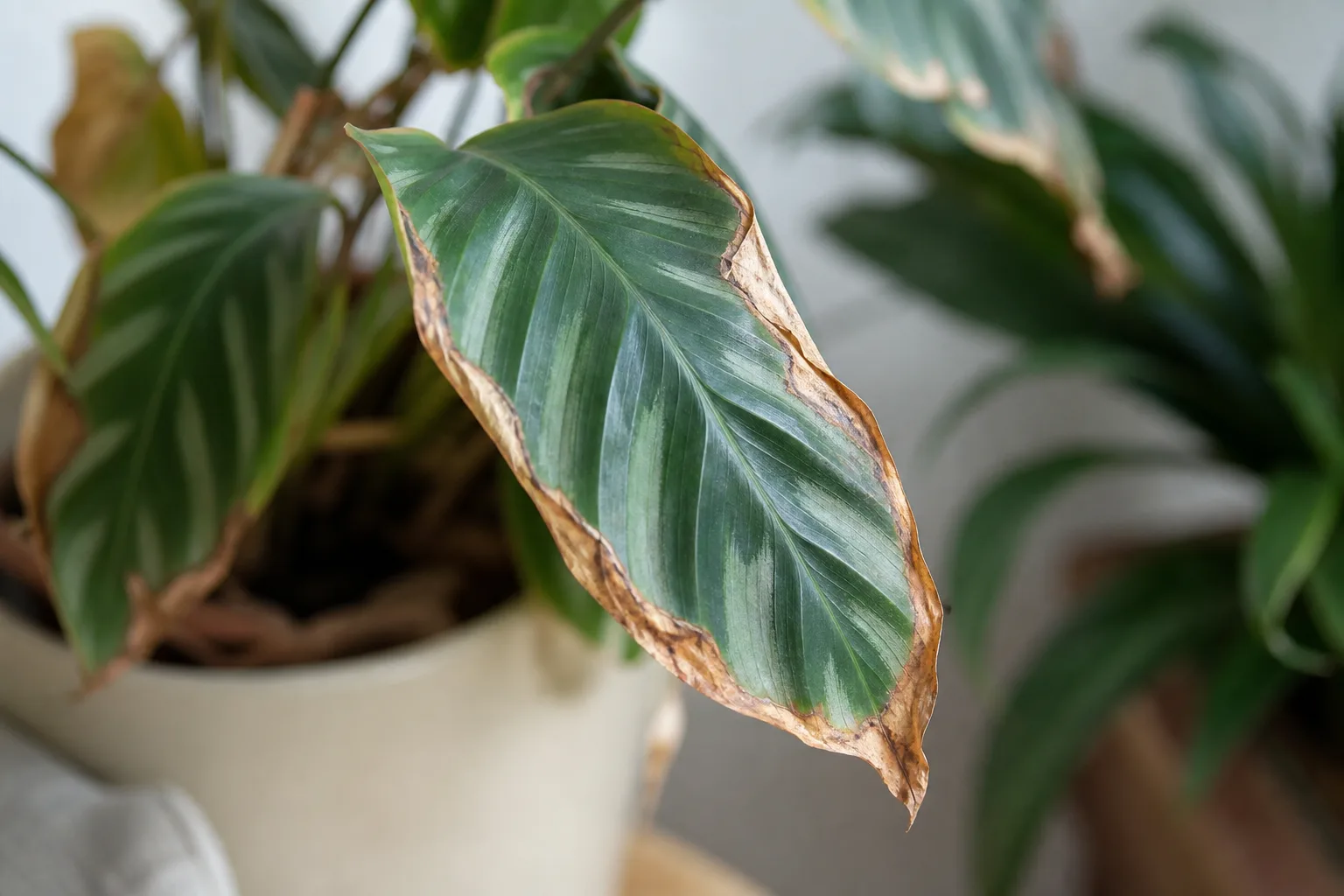
Large bleached or crispy patches on the side facing a sunny window are more consistent with sun scorch. Move the plant to filtered light and give new fronds time to show whether the change worked; already-burned areas will remain marked. Use the symptom photo as a comparison, not a diagnosis—check the pattern, light and soil conditions on your own palm.
Check for spider mites, mealybugs and scale
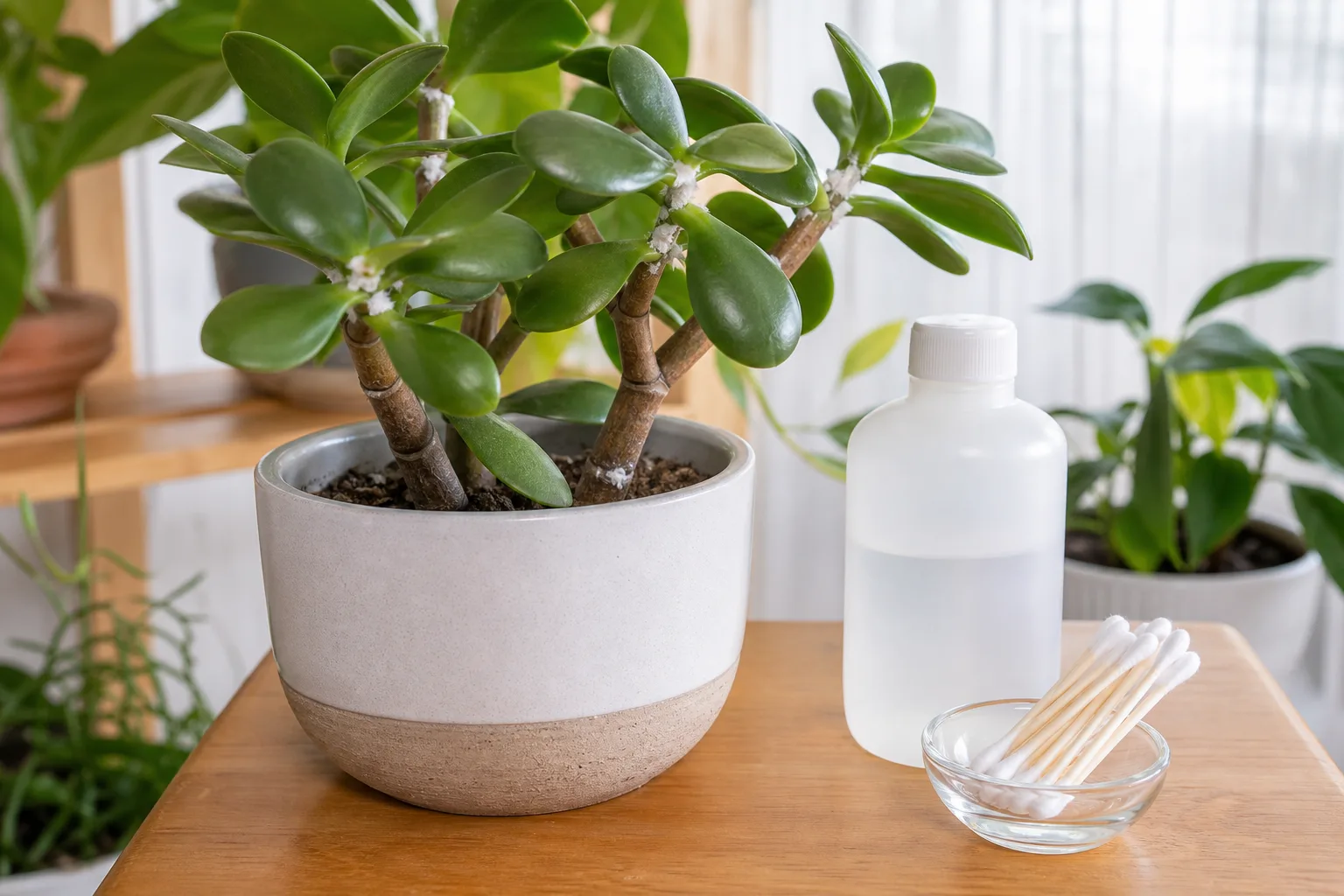
Inspect the undersides of leaflets, the bases of fronds and the joints along the canes every time you wipe or water the plant. Spider mites may leave fine stippling or delicate webbing; mealybugs look like small white cottony clusters, while scale appears as fixed tan or brown bumps. The RHS lists red spider mite, scale and thrips among pests that can affect bamboo palm under glass, and the Missouri Botanical Garden notes that spider mites, scale and mealybugs can trouble indoor specimens.
If you find pests, isolate the palm first so insects do not spread to nearby plants. Rinse or wipe the foliage carefully, including the undersides, and repeat inspection over the following weeks because eggs or hidden insects may survive the first cleanup. If you need a treatment, use a product labeled for the pest and indoor ornamentals, test a small area first, and follow its directions exactly; household dish soap is not a reliable substitute for a labeled insecticidal soap.
Grow it outdoors only in a warm climate
In frost-free tropical and subtropical areas, bamboo palm can grow outdoors in sheltered partial shade, where a clump can become a useful soft screen. The Missouri Botanical Garden lists USDA Zones 10–11 and recommends part shade; the exact exposure, soil and cold pockets in a yard still matter. Protect it from hot afternoon sun and salt spray, and give outdoor plants the same well-drained root zone they need in containers.
If winters bring frost, grow the palm in a container and move it inside before cold nights arrive. A few warm months outside can help it, but introduce it gradually to outdoor light and bring it back before the leaves are exposed to a hard chill. Do not plant it permanently outdoors just because it survives a short cool spell; hardiness refers to repeated seasonal conditions, not a single night.
Conclusion
The simplest reliable bamboo palm routine is bright filtered light, an airy mix, a draining pot and watering guided by soil moisture instead of the calendar. Keep the container only slightly larger than the root ball, feed lightly while the palm is growing, and avoid unnecessary pruning or repotting. When fronds turn yellow, brown or limp, inspect the roots and environment before changing anything; that small pause is often what separates a quick correction from a bigger problem.