Bamboo Palm Care Guide for Chamaedorea seifrizii
Chamaedorea seifrizii
Learn how to care for Chamaedorea seifrizii: filtered light, evenly moist but well-drained soil, slow clumping growth, propagation, and species-specific pet-safety limits.
Bamboo Palm Care Guide for Chamaedorea seifrizii
Start with wateringThe most common care mistake for Bamboo PalmWatering guide →Bamboo Palm care essentials
Light
Medium to bright, filtered or indirect light; partial shade is suitable
Water
Keep the mix lightly and evenly moist during active growth, but never leave the roots standing in water. Check the upper 2–3 cm and water thoroughly when it begins to dry; let excess drain away.
Soil
Use a peat-free, moisture-retentive but freely draining indoor potting mix in a pot with drainage holes. Do not let the root zone stay waterlogged.
Humidity
Medium relative humidity
Temperature
Fertilizer
About Bamboo Palm
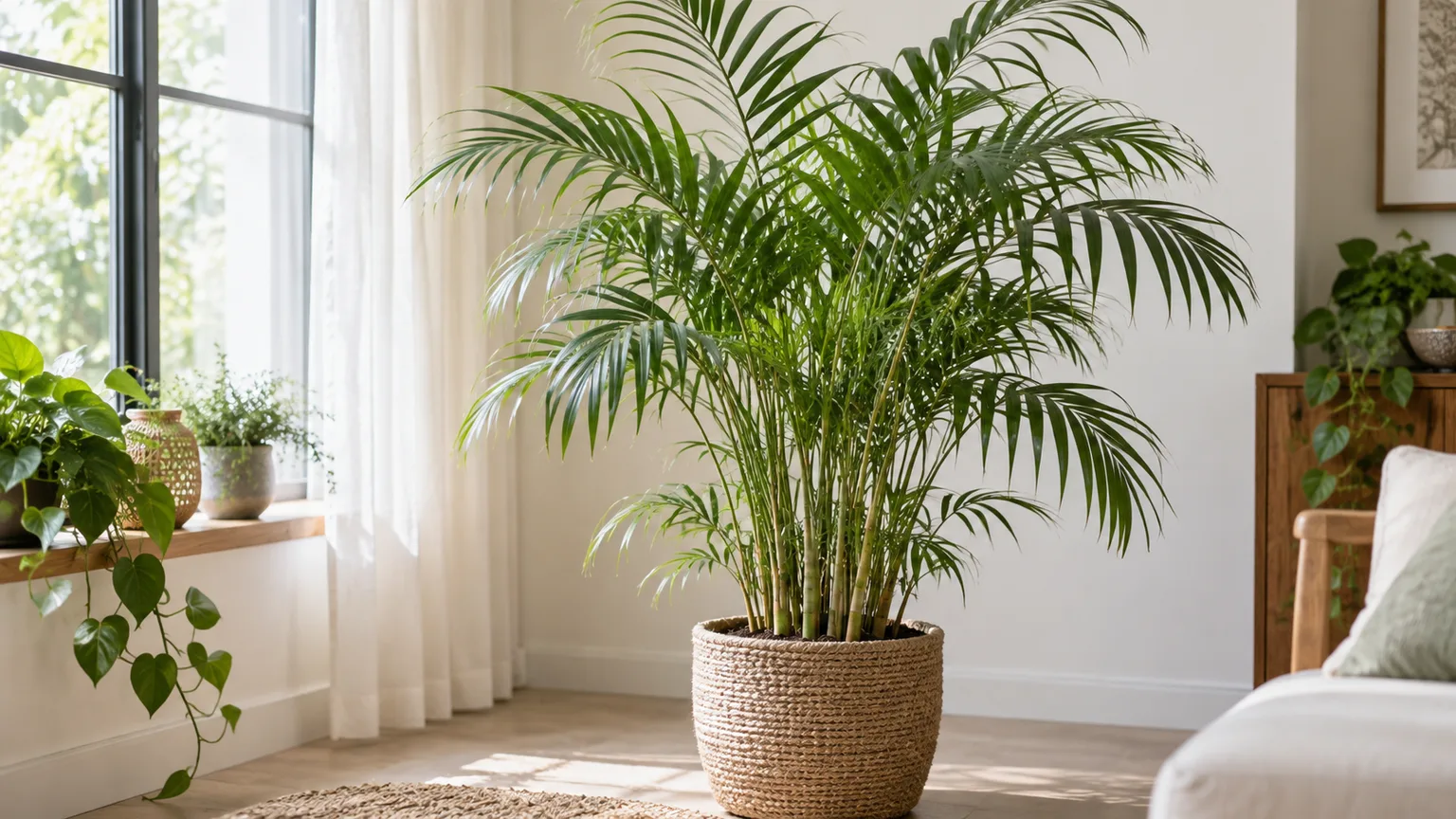
Bamboo Palm is native to Seasonally dry forests from southern Mexico to Honduras, typically reaches About 1.5–2.5 m tall and 1–1.5 m wide; indoor size depends on growing conditions indoors, with slow; the clump expands gradually and may take 10–20 years to mature growth. Bamboo Palm has a clumping evergreen palm with slender, ringed canes and pinnate fronds growth habit and part of the Arecaceae family. It is also known as Reed Palm.
| Detail | Information |
|---|---|
| Also known as | Reed Palm |
| Native region | Seasonally dry forests from southern Mexico to Honduras |
| Mature size | About 1.5–2.5 m tall and 1–1.5 m wide; indoor size depends on growing conditions |
| Growth rate | Slow; the clump expands gradually and may take 10–20 years to mature |
| Growth habit | Clumping Evergreen Palm With Slender, Ringed Canes And Pinnate Fronds |
| Scientific name | Chamaedorea seifrizii |
| Family | Arecaceae |
Bamboo Palm Care Guide for Chamaedorea seifrizii
Bamboo Palm is a clumping tropical palm with slim, ringed canes and arching, divided leaves. For steady indoor growth, give it medium or bright filtered light, keep the potting mix lightly moist while allowing excess water to drain, and let the plant grow at its naturally slow pace. If your plant label only says “Bamboo Palm,” check the botanical name before borrowing pet-safety advice or care instructions for a different palm.
| Need | Practical starting point |
|---|---|
| Light | Medium to bright filtered light; shade it from hot afternoon sun. |
| Water | Check the upper 2–3 cm of mix and water when it begins to dry; empty the saucer. |
| Soil | A moisture-retentive indoor mix in a pot with open drainage holes. |
| Growth | A slow, widening clump; outer canes may lean as it matures. |
| Safety | Pet status for Chamaedorea seifrizii is unresolved in the species-specific sources reviewed. |
Identify Bamboo Palm by its scientific name
This guide uses Bamboo Palm for Chamaedorea seifrizii, also called Reed Palm. It is an evergreen member of the palm family, Arecaceae, native to seasonally dry forests from southern Mexico to Honduras, with clumping, bamboo-like canes; the NC State Extension profile covers its exact identity and growth habit.
Use the Latin name on the nursery label when checking care or pet-safety information rather than relying on “Bamboo Palm” alone.
Expect a spreading clump, not a single trunk
New canes emerge from the base, gradually widening the plant rather than thickening one central trunk. Mature outer stems can angle away from the centre, so allow floor or balcony space around the pot instead of trying to keep every cane upright. The University of Florida IFAS fact sheet also describes the plant as a clump-forming palm suitable for containers and houseplant use.
The RHS profile gives a mature range of about 1.5–2.5 m tall and 1–1.5 m wide, with 10–20 years to reach that size. Treat those figures as a species reference, not a promise that a living-room plant will reach the maximum: pot size, light, and growing conditions change the result. Its slow pace is normal and is not, by itself, evidence that it needs more fertilizer.
Filter light and avoid hot glass
Choose a bright position with filtered light, such as near an east-facing window or a little back from brighter south- or west-facing glass. NC State describes medium light as suitable and says the palm can survive in lower light; survival there usually means slower growth, not the best setting for a full, steadily expanding clump. The NC State light guidance is species-specific, so use it rather than borrowing a Parlor Palm window rule.
In Indian homes, watch the temperature of the glass and the room as much as the compass direction. A curtain, sheer screen, or short move away from the window can soften intense afternoon sun during hot months. If the room is dim, avoid compensating with frequent watering: a plant using less light also dries its pot more slowly.
Water by the mix, not the calendar
Keep the root zone lightly and evenly moist during active growth, but do not let the pot sit in runoff. Feel the upper 2–3 cm of mix; when it has started to dry, water thoroughly until water exits the drainage holes, then empty the saucer. The OLC species guide recommends checking the top few centimetres and keeping the soil moist without standing water, and warns that constantly wet mix can lead to root rot.
There is no useful fixed weekly schedule for every Bamboo Palm. A small nursery pot in a warm, bright room can dry faster than a large ceramic pot in a shaded, air-conditioned room. During hot, dry spells check more often; when monsoon weather keeps a room dim and the mix damp, wait for the surface to begin drying before watering again.
Check the pot as well as the surface
If the mix is still damp below the surface, hold off even if the top looks pale. Lift the pot occasionally to learn its lighter, drier weight, and make sure the drainage holes are not blocked by a cachepot or compacted mix. If the pot stays wet for many days, improve airflow and drainage before adding more water or misting the fronds.
A seasonally dry native habitat does not mean a container should be left bone-dry for long periods. The National Tropical Botanical Garden account describes seasonally dry habitat and landscape drought tolerance. In a pot, use the plant’s actual drying rate instead of turning that habitat fact into a routine of prolonged dryness.
Use a mix that stays moist but drains
Use an indoor potting mix that holds some moisture but does not pack into a dense, airless block. If the mix stays wet too long in your room, blend in perlite or pumice and choose a container with unobstructed drainage holes. The care goal is not a gritty, fast-drying palm mix: C. seifrizii prefers steady moisture, but its roots should not sit in water.
Keep the drainage holes unobstructed. If the plant is in a decorative outer pot, remove the nursery pot for watering or pour out collected water afterward. A slowly drying mix in a low-light room is a cue to water less often, not to increase the amount of light abruptly.
Keep it warm and steady through Indian seasons
A stable indoor position is easier on the palm than repeated moves between a hot balcony, an air-conditioned room, and a cool doorway. Keep it away from direct blasts from air-conditioners, heaters, and open windows. In areas with chilly winter nights, protect the pot from cold exposure rather than treating the plant as a hardy outdoor palm.
Humidity need not become a daily project. Keep the potting mix, rather than the leaves, as the first thing you check. During humid monsoon weather, focus on keeping the mix from remaining saturated; during dry indoor spells, first check whether the root ball is actually dry before reacting to crisp leaf tips.
Place it indoors or in sheltered outdoor shade
Bamboo Palm can be grown in a container indoors, and it can also suit a protected, warm outdoor spot with partial shade, as described in the RHS species profile. On a balcony, avoid the hottest afternoon exposure and shelter the pot from strong winds that can dry or tear fronds. Bring a container into a protected place during cold snaps, especially if the plant is accustomed to indoor warmth.
A shaded location does not have to be dark. If the plant makes no new canes over a long stretch, move it gradually toward brighter filtered light and continue checking the pot before watering. Do not shift it directly from a dim room into several hours of harsh sun; sudden exposure can damage leaves.
Feed only when it is actively growing
Use fertilizer as occasional support, not as a way to force a taller or faster palm. If you feed, choose a balanced indoor-plant or palm fertilizer and follow its label at a conservative rate during active growth; skip feeding when the plant is not producing new growth or when its roots are stressed. The RHS profile describes this as a slow-maturing species, so restrained feeding is more sensible than repeated extra doses.
If growth is slow, check the light level, root-zone moisture, and drainage before adding fertilizer. Yellowing while the mix stays wet calls for a root and watering check, not a stronger feed. For dosage and nutrient detail, use the dedicated fertilizer guide when it is available rather than guessing from another palm’s schedule.
Repot when roots or mix require it
This slow-growing clump does not need a larger pot every year. Repot when roots crowd the container, emerge through drainage holes, or the potting mix has broken down and no longer drains evenly. Move it into a container only modestly wider, with drainage holes, so the new volume of mix does not stay wet around a small root system.
Spring or the start of active growth is a practical time to repot, because the plant can resume growth in warmer, brighter conditions. Keep the root ball intact where possible, water it in, and let excess drain. If the palm is stable and the mix still drains well, leave it in place; frequent root disturbance can set back a plant that naturally grows slowly.
Propagate an established clump by division
Division is the practical home method when a mature Bamboo Palm has several rooted canes. Separate an outer section only when it has its own live roots and more than a single unsupported stem, then pot it into a small container with a well-drained mix. Keep the divided palm in bright, filtered light and evenly moist soil while it settles, without keeping the pot soggy.
The National Tropical Botanical Garden database describes root suckers as a way to propagate Chamaedorea palms. Seed is another route, but for most indoor growers division is easier to assess because the new section can be kept only when it has live roots to support it.
Understand pet-safety limits and fruit handling
Do not label Chamaedorea seifrizii pet-safe on the strength of a shared common name. The ASPCA page called “Bamboo Palm” identifies Chamaedorea elegans, not C. seifrizii, so it cannot establish this species’ status for cats or dogs. The exact pet-safety classification for C. seifrizii remains unverified in the sources reviewed; keep it out of reach of pets that chew plants and ask a veterinarian for species-specific guidance if it is eaten.
The NC State species record notes that the fruit flesh can irritate the skin of sensitive people. This is a human contact warning, not proof of pet toxicity. Avoid handling fallen fruit with bare skin, and do not treat the plant as edible or pet-safe without better species-specific evidence.
Troubleshoot changes in the right order
When fronds look different, check the plant label, light, and pot moisture before making several changes at once. Spreading symptoms or a persistently wet mix deserve closer attention. Constantly wet soil can lead to root rot, so check drainage before adding water or fertilizer.
Yellowing with wet mix
If several fronds yellow while the mix remains damp, stop watering until the upper layer begins to dry and confirm that runoff can escape. Check whether the inner nursery pot is sitting in water inside a decorative cachepot. If yellowing continues after the surface begins to dry, inspect drainage and roots before feeding or repotting.
Brown tips or scorched patches
Brown tips alone do not identify one cause. Check whether the root ball is bone-dry, whether the palm is beside a hot window or air-conditioning vent, and whether the damage is limited to older fronds. A dry-air explanation found in advice for the separate C. elegans Parlor Palm should not automatically be transferred to Bamboo Palm; Gardeners’ World’s guide is specifically about C. elegans.
If one side of the plant has pale, dry patches after strong direct sun, move it back from the glass and let new growth show whether the placement is better. Avoid cutting into green leaf tissue to tidy brown tips; remove a fully dead frond cleanly only when it has dried. The separate Epic Gardening Parlor Palm guide also covers C. elegans, which is useful as a comparison but not a substitute for species-specific care of C. seifrizii.
Give slow growth enough time
The 10–20-year maturity range above and the slow-expanding clump are reasons to judge progress over months, not week to week. Judge the plant by whether its existing fronds remain firm and whether new growth appears over time, not by how quickly it fills a room.
If growth stalls, check whether the room is too dim, the pot remains wet, or the roots are crowded. Correct one condition at a time and give the plant several weeks of stable care before making another change. Do not divide, repot, move, and fertilize it all in the same week unless there is an urgent root problem.
When to use this page vs other Bamboo Palm guides
Use this overview to identify C. seifrizii and set its general growing conditions. A dedicated light guide should help choose a window and interpret too much or too little light; a watering guide should focus on checking dry-down; soil should cover mix and drainage; fertilizer should cover feeding amounts; repotting should cover pot size and timing; propagation should give step-by-step division and seed instructions. Keep those topic questions separate so this page remains a reliable starting point.
Related Bamboo Palm guides
Use this overview when you need the whole picture, then jump to the focused sections on light and placement, watering, potting mix, repotting, or division if you want to revisit one decision.
Conclusion
For Chamaedorea seifrizii, the safest starting routine is simple: confirm the species, give it filtered light, water when the upper mix begins to dry, and let excess drain. It will widen slowly into a cane-like clump, so resist the urge to overwater, overfeed, or repot to make it grow faster. Keep pet-safety claims tied to the exact botanical name; common-name listings do not settle the question for this species.
How to care for Bamboo Palm?
How much light does Bamboo Palm need?
Medium to bright, filtered or indirect light; partial shade is suitable. Low indoor light, with slower and potentially thinner growth. Dappled light and partial shade. low light
- Medium to bright, filtered or indirect light; partial shade is suitable - Medium to bright, filtered or indirect light; partial shade is suitable.
- Low indoor light, with slower and potentially thinner growth - Low indoor light, with slower and potentially thinner growth.
- Dappled light and partial shade - Dappled light and partial shade.
- low light - Low indoor light, with slower and potentially thinner growth.
When should you water Bamboo Palm?
Keep the mix lightly and evenly moist during active growth, but never leave the roots standing in water. Check the upper 2–3 cm and water thoroughly when it begins to dry; let excess drain away.
- Feel the upper 2–3 cm of mix and check that the pot drains freely - Check the upper 2–3 cm and water thoroughly when it begins to dry; let excess drain away.
- water when the surface has started to dry - Check the upper 2–3 cm and water thoroughly when it begins to dry; let excess drain away.
- not while it is still wet - Keep the mix lightly and evenly moist during active growth, but never leave the roots standing in water.
- Drain excess water - Check the upper 2–3 cm and water thoroughly when it begins to dry; let excess drain away.
What soil works best for Bamboo Palm?
Use a peat-free, moisture-retentive but freely draining indoor potting mix in a pot with drainage holes. Do not let the root zone stay waterlogged.
- Peat-free indoor potting mix - Use a peat-free, moisture-retentive but freely draining indoor potting mix in a pot with drainage holes.
- Add perlite or pumice if the mix holds water too long - Do not let the root zone stay waterlogged.
- Use a container with open drainage holes - Use a peat-free, moisture-retentive but freely draining indoor potting mix in a pot with drainage holes.
How to propagate Bamboo Palm?
Divide a healthy clump carefully, keeping roots with each section. Seed is another option; the RHS recommends a sowing temperature of at least 25°C.
- Division of rooted clumps - Divide a healthy clump carefully, keeping roots with each section.
- Seed, with warm germination conditions - Divide a healthy clump carefully, keeping roots with each section.
Grower notes for Bamboo Palm
Check the botanical name
Bamboo Palm here means Chamaedorea seifrizii, also called Reed Palm. Some references also use “Parlor Palm” for this species; this site's separate Parlor Palm guide covers Chamaedorea elegans. Use the botanical name on a plant label when comparing care or pet-safety information.
Give it filtered light
Medium or bright indirect light supports steady indoor growth, while partial shade is also suitable. The species can survive in low light, but low light slows growth and the pot may stay wet longer. Protect the fronds from harsh direct sun.
Keep moisture even, not soggy
This palm prefers slightly moist mix, but overwatering can cause root or stem rot. Check the top few centimetres before watering, then let excess water drain from the pot. Use the plant's drying pace rather than a weekly schedule.
Expect a slow, expanding clump
New cane-like stems grow from the base and the clump widens gradually. Outer stems may lean away from the center as it matures. Allow room for the clump rather than expecting a single-trunk palm or rapid growth.
Propagate by division or seed
NC State Extension lists both division and seed as propagation options. Division is the practical home method when a clump has several rooted stems; the RHS says seed needs warmth of at least 25°C to germinate.
Treat pet safety as unresolved for this species
The ASPCA's Bamboo Palm entry identifies Chamaedorea elegans, not Chamaedorea seifrizii. That listing does not establish the safety of this species. Keep it from being chewed until an exact, species-specific veterinary source confirms its status; contact a veterinarian if a pet eats it.
Is Bamboo Palm safe for pets?
Pet safety is not verified for Chamaedorea seifrizii in the sources reviewed. The ASPCA page named “Bamboo Palm” refers to Chamaedorea elegans, the separate Parlor Palm, so it should not be applied to this species. Keep this palm out of reach of pets that chew plants and contact a veterinarian if ingestion occurs. NC State Extension also notes that the fruit flesh can irritate the skin of sensitive people; that human warning is not a pet-toxicity finding.
Species-specific pet classification remains unresolved. The ASPCA Bamboo Palm listing is for Chamaedorea elegans, not C. seifrizii, and the ASPCA Chamaedorea Palm page returned no matching entry in the reviewed scrape. NC State Extension reports low-severity contact irritation from the fruit flesh in sensitive people, but does not classify this plant for pets. Do not infer pet safety or toxicity from the shared common name.
Watering Bamboo Palm
For Bamboo Palm, feel the upper 2–3 cm of mix and check that the pot drains freely; water when the surface has started to dry, not while it is still wet. and water no fixed calendar. Check more often in warm, brighter conditions and less often in winter or dim rooms, when the pot dries more slowly. Reduce watering as light and growth decrease in winter, while avoiding a prolonged, bone-dry root ball.
| Detail | Information |
|---|---|
| How often | No fixed calendar. Check more often in warm, brighter conditions and less often in winter or dim rooms, when the pot dries more slowly. |
| How to check | Feel the upper 2–3 cm of mix and check that the pot drains freely; water when the surface has started to dry, not while it is still wet. |
| Seasonal changes | Reduce watering as light and growth decrease in winter, while avoiding a prolonged, bone-dry root ball. |
Signs of overwatering
- Mix remains wet for a long time
- Yellowing or declining fronds while the soil is damp
- Soft or rotting stems at the base
Signs of underwatering
- Mix is dry well below the surface
- Fronds lose turgor or develop dry edges
Soil & potting for Bamboo Palm
Use a mix of Peat-free indoor potting mix, Add perlite or pumice if the mix holds water too long, Use a container with open drainage holes for Bamboo Palm. Moisture-retentive, yet well-drained; standing water can lead to root and stem rot. Repot repot only when roots crowd the container or the mix has broken down; this slow-growing palm does not need frequent pot changes., ideally in spring or early active growth.
| Detail | Information |
|---|---|
| Recommended mix | Peat-free indoor potting mix, Add perlite or pumice if the mix holds water too long, Use a container with open drainage holes |
| Drainage | Moisture-retentive, yet well-drained; standing water can lead to root and stem rot. |
| Repotting frequency | Repot only when roots crowd the container or the mix has broken down; this slow-growing palm does not need frequent pot changes. |
| Best season to repot | Spring or early active growth |
Signs it needs repotting
- Roots fill the container or emerge through drainage holes
- The mix has compacted or no longer drains well
Humidity & temperature for Bamboo Palm
Bamboo Palm prefers medium relative humidity, though normal home humidity is usually fine.
| Detail | Information |
|---|---|
| Humidity | Medium relative humidity - normal home humidity is fine. |
Humidity tips
- Keep the palm away from hot or cold drafts and abrupt temperature changes
- It can tolerate ordinary indoor air; address watering and drainage before reacting to isolated brown tips
Fertilizer & pruning for Bamboo Palm
Pruning (optional)
Remove fully brown or dead fronds cleanly at the base. Lower leaves may die as the palm matures; do not cut healthy green fronds to control height.