How to Grow and Care for Lady Palm Indoors (Rhapis)
Learn lady palm care, from light, watering, and soil to repotting and division; diagnose pale new growth, brown tips, and pests before changing its routine.
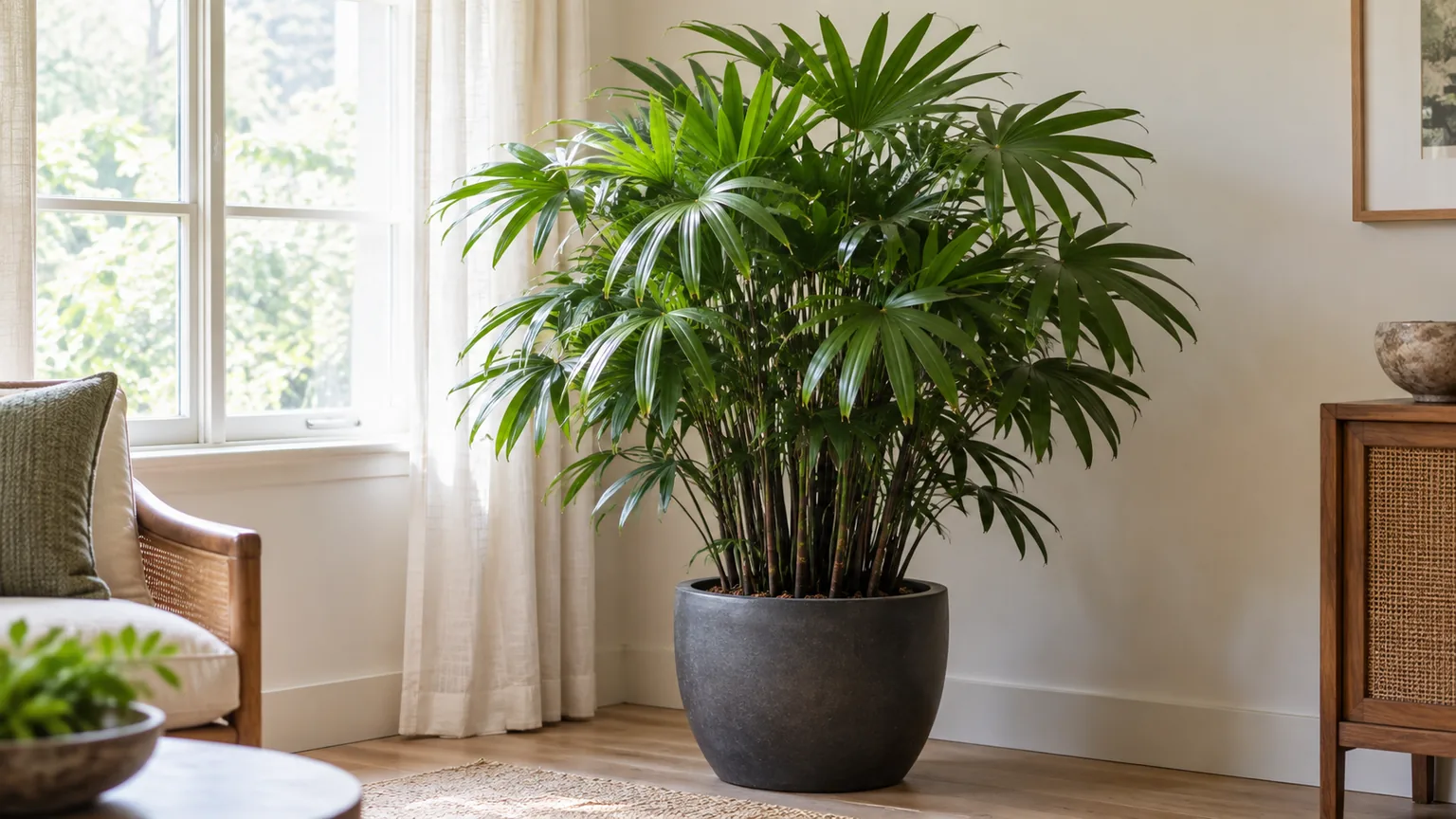
Lady palm (Rhapis excelsa) is a slow-growing, clumping palm with dark, fan-shaped leaves and slender canes wrapped in coarse fibers. It suits homes where a palm needs to tolerate shade and ordinary indoor humidity, but it still depends on a potting mix that lets its roots breathe. The most useful care rule is simple: let the surface of the mix begin to dry before watering, then drain the pot completely.
The plant is sometimes sold as “bamboo palm,” a name also applied to unrelated palms. Check the botanical label before following advice for another species. For Rhapis excelsa, the biggest avoidable problem is often not a lack of fertilizer; it is a root zone that has become dense, waterlogged, or broken down.
| Care factor | Practical starting point |
|---|---|
| Light | Bright, indirect light; it tolerates deeper shade but grows more slowly |
| Water | Check the top 1 to 2 inches of mix; water thoroughly when that layer begins to dry |
| Soil and pot | Loose, moisture-retentive mix in a pot with open drainage holes |
| Temperature | Normal indoor warmth; protect from frost and sustained temperatures below about 50°F |
| Feeding | Modest fertilizer during active growth; pause in winter or when the plant is stressed |
| Repotting | Wait for clear root crowding or degraded mix; avoid a large jump in pot size |
Identify the Lady Palm Before You Choose a Spot
Lady palm is an evergreen member of the palm family, Arecaceae. Its leaves are divided into several broad, folded segments, so each leaf reads as a rounded fan rather than the feather shape of many familiar indoor palms. A mature clump contains multiple upright stems that emerge along underground rhizomes; the brown fibers around the stems are normal, not scale insects. NC State Extension describes the plant as an understory species from China and Vietnam that tolerates deep shade, low humidity, and indoor conditions. (NC State Extension’s plant profile)
The shared nursery name “bamboo palm” can cause confusion. Rhapis excelsa has stout, fan-shaped leaves and rough, fiber-covered canes; the bamboo palm often listed as Chamaedorea seifrizii has narrower, feather-like leaves. If the plant tag only says “bamboo palm,” use the leaf shape and botanical name to confirm what you bought before adapting a care schedule.
This palm grows slowly, especially indoors, and it expands outward through offsets rather than quickly shooting up a single trunk. That habit makes it useful as a floor plant in a bright room or as a long-lived office specimen, but it also means a small nursery plant will not become a full screen in a season. NC State lists it for container growing and notes that plants can spend summer outdoors in shade, provided they come inside before temperatures approach 50°F. (NC State Extension)
Give It Light It Can Use, Not Harsh Sun
Bright, indirect light is the best starting point for steady growth: place the plant near a bright window where the leaves receive daylight without hours of hot, unfiltered afternoon sun. A north- or east-facing window is often easy to manage; in a south- or west-facing room, pull the pot back from the glass or soften the light with a sheer curtain. Lady palm tolerates shade better than many indoor palms, but tolerance is not the same as thriving in a dark corner.
In low light, expect slower leaf production and a less dense clump. If new growth is weak or the plant has not produced a leaf for a long time, first assess how much daylight actually reaches the foliage, whether the potting mix stays wet, and whether the plant has been recently moved. Do not respond by putting a shade-adapted palm in direct midday sun; the sudden change can bleach or scorch leaves. Epic Gardening’s care guidance also recommends bright indirect light and cautions against abrupt exposure to stronger sun. (Epic Gardening’s lady palm guide)
Find a window that balances light and protection
Start a few feet from a bright window, then adjust based on the room and the plant’s response. If a hard rectangle of midday sunlight lands on the leaves, increase the distance or add a curtain. If the plant sits in an interior hallway with no useful daylight, move it closer to a window or use a grow light on a consistent timer rather than expecting “low-light tolerant” to mean light-free.
Rotate the pot occasionally if the window illuminates only one side, but avoid moving the palm every few days. It grows slowly and benefits more from a stable position than from constant attempts to find a perfect spot. If you move a patio plant back indoors in fall, inspect the leaf undersides and stems for pests first and give it time to adjust to lower light before increasing watering or fertilizer.
Water by Checking the Potting Mix
Do not water on a fixed weekly schedule. Room temperature, window exposure, pot size, pot material, and the mix itself all change how quickly a lady palm uses water. Press a finger into the upper inch or two of potting mix; when that layer has started to dry, water slowly across the surface until excess flows through the drainage holes. Let the pot finish draining, then empty the saucer or decorative cachepot so the roots are not left in standing water.
The goal is evenly moist soil with air pockets, not a constantly saturated root ball and not a drought cycle that leaves the whole pot bone dry. In brighter, warmer months, the mix will often dry sooner. In winter, indoor light and growth usually decline, so check less often and allow the upper layer to dry a little farther before watering again. Use the soil, not the calendar, to decide.
If water runs down the sides and out immediately while the center stays dry, the mix may have become hydrophobic or the root mass may have displaced most of the soil. If water sits on the surface or the pot remains heavy and wet for many days, check for blocked drainage, a heavy mix, or a container much larger than the root ball. Those checks are more useful than simply adding water or stretching the interval.
Choose an Airy Mix and a Pot That Drains
Use a quality indoor-palm or general houseplant mix that holds some moisture but does not collapse into a dense, airless mass. If the mix feels heavy after watering, blend in a coarse aerating ingredient such as perlite, pumice, or fine orchid bark. A simple practical starting mix is roughly two parts houseplant potting mix to one part perlite or pumice; adjust if your home is very dry or the pot dries unusually fast. Avoid garden soil in a houseplant container because it can compact and drain poorly indoors.
Choose a stable pot with drainage holes. An outer decorative pot is fine if you can lift the nursery pot out to drain after watering. Do not add a layer of gravel at the bottom as a substitute for drainage; the roots still need an unobstructed route for excess water to leave the container.
Lady palm can remain slightly snug in its pot, which is helpful for a slow-growing plant. A pot that is far wider than the root ball contains a larger volume of mix that can stay wet for too long. If the plant needs repotting, move it into a container only modestly larger and keep the stem bases at their former soil level. UF/IFAS identifies decomposed, poorly aerated potting substrate as a common cause of iron-deficiency symptoms in container-grown lady palms, making mix structure a long-term health issue, not just a convenience. (UF/IFAS Extension’s lady palm profile)
Keep Temperatures Steady and Humidity Sensible
Typical comfortable indoor temperatures suit lady palm. Keep it away from a cold pane in winter, a heat register, or a door that repeatedly exposes it to frigid air. NC State Extension cautions that container-grown plants should be brought inside when temperatures threaten to fall below about 50°F; do not treat the plant’s outdoor hardiness zone as permission to leave a potted specimen out in frost. (NC State Extension)
This is a more forgiving palm in average indoor humidity than many tropical houseplants. If the leaf tips are green and the plant is otherwise growing well, you do not need to chase a particular humidity percentage. In a very dry heated room, a small hygrometer can tell you whether the air is persistently dry; grouping plants or running a room humidifier can help if the palm shows repeated stress. Occasional misting does not keep room humidity elevated, and a pebble tray is not a substitute for fixing watering, drainage, or mineral buildup.
You can move a potted palm outdoors for summer in a sheltered, shaded place. Acclimate it gradually over a week or two, protect it from hot afternoon sun, and check the mix more often because wind and warmth speed drying. Before nights cool toward 50°F, bring it inside, inspect for scale and mealybugs, and clean dust from the leaves. The transition is easier if the plant returns to a bright indoor spot rather than being placed suddenly in a dark corner.
Feed Lightly During Active Growth
Feed only while the plant is actively growing, usually during spring and summer indoors. A balanced houseplant fertilizer at a reduced rate, or a controlled-release product formulated for palms, can replace nutrients that a small container gradually loses. Follow the product label; more frequent or stronger feeding will not make a slow palm grow quickly. UF/IFAS describes controlled-release nutrition for nursery and patio lady palms and emphasizes micronutrients, while noting that interior plants receive substantially reduced rates. (UF/IFAS Extension)
Skip feeding when the plant is newly repotted, drought-stressed, sitting in wet mix, or dealing with a pest outbreak. Fertilizer salts can add stress to damaged roots and leave brown tips or a pale crust on the soil surface. If the mix has been fed regularly and shows salt residue, flush the pot with plain water only when drainage is good, allowing the water to pass fully through and away from the roots.
Do not use a fertilizer bottle as a diagnosis. A yellow leaf can reflect aging, low light, root rot, or a nutrient-uptake problem; adding a stronger dose before checking the pot can compound the issue. Look first at which leaves are changing and whether the root zone drains and breathes.
Recognize the iron-deficiency pattern before treating
Iron deficiency in lady palm has a useful clue: the youngest leaves can emerge pale greenish yellow with diffuse dark-green blotches. UF/IFAS explains that this often reflects poor soil aeration in container plants, especially when potting substrate has decomposed. The plant may have iron in the mix but cannot take it up effectively through stressed roots. In chronic cases, the whole plant can look washed out. (UF/IFAS Extension’s symptom description)
That pattern differs from an older lower frond gradually yellowing while the newest growth remains green, which may be normal aging or a separate water and root issue. Before adding iron, check that water drains freely, feel whether the mix stays wet too long, and inspect the root ball if the substrate is old or compacted. If the medium has broken down, refreshing it with a well-aerated mix is more likely to address the cause than repeatedly dosing chelated iron. For severe, persistent symptoms, avoid improvising with micronutrient concentrates; seek palm-specific guidance and follow product labels.
Repot Only When the Root Ball or Mix Needs It
Repotting is not an annual chore for a slow-growing lady palm. Consider it when roots densely circle the pot, emerge from several drainage holes, push the root ball upward, or when the substrate has broken down and remains wet or drains unevenly. A plant that has not grown much is not automatically root-bound, particularly in low light. If the plant looks healthy and water moves through the mix normally, leave it alone.
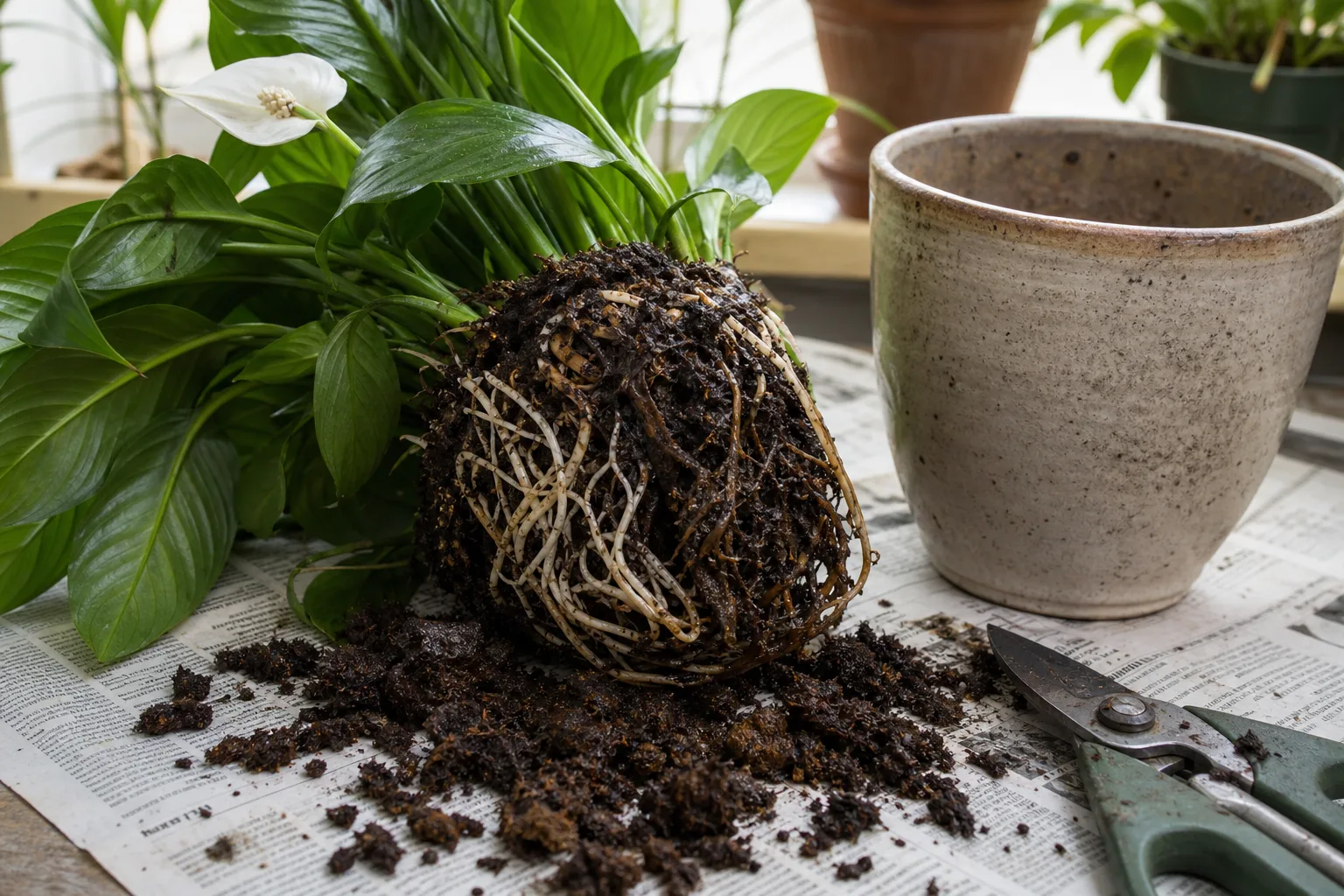
Spring or early summer is a useful time because the plant has warmer conditions and more active growth ahead, but a serious drainage problem should not wait for a calendar date. Select a pot with drainage holes that is only modestly larger. Slide the root ball out gently, loosen only the outer circling roots if needed, and remove loose, decomposed medium without aggressively washing or tearing apart healthy roots. Set the clump at its previous depth and fill around it with fresh, airy mix.
Water once to settle the mix, drain completely, and return the palm to stable indirect light. Avoid fertilizing immediately; resume only after the plant has settled and shows active growth. UF/IFAS recommends removing decomposed substrate when correcting the poor aeration associated with iron deficiency, while practical indoor guidance from Epic Gardening likewise cautions against using an unnecessarily large pot. (UF/IFAS Extension; Epic Gardening)
Divide a Mature Clump Without Making Leaf Cuttings
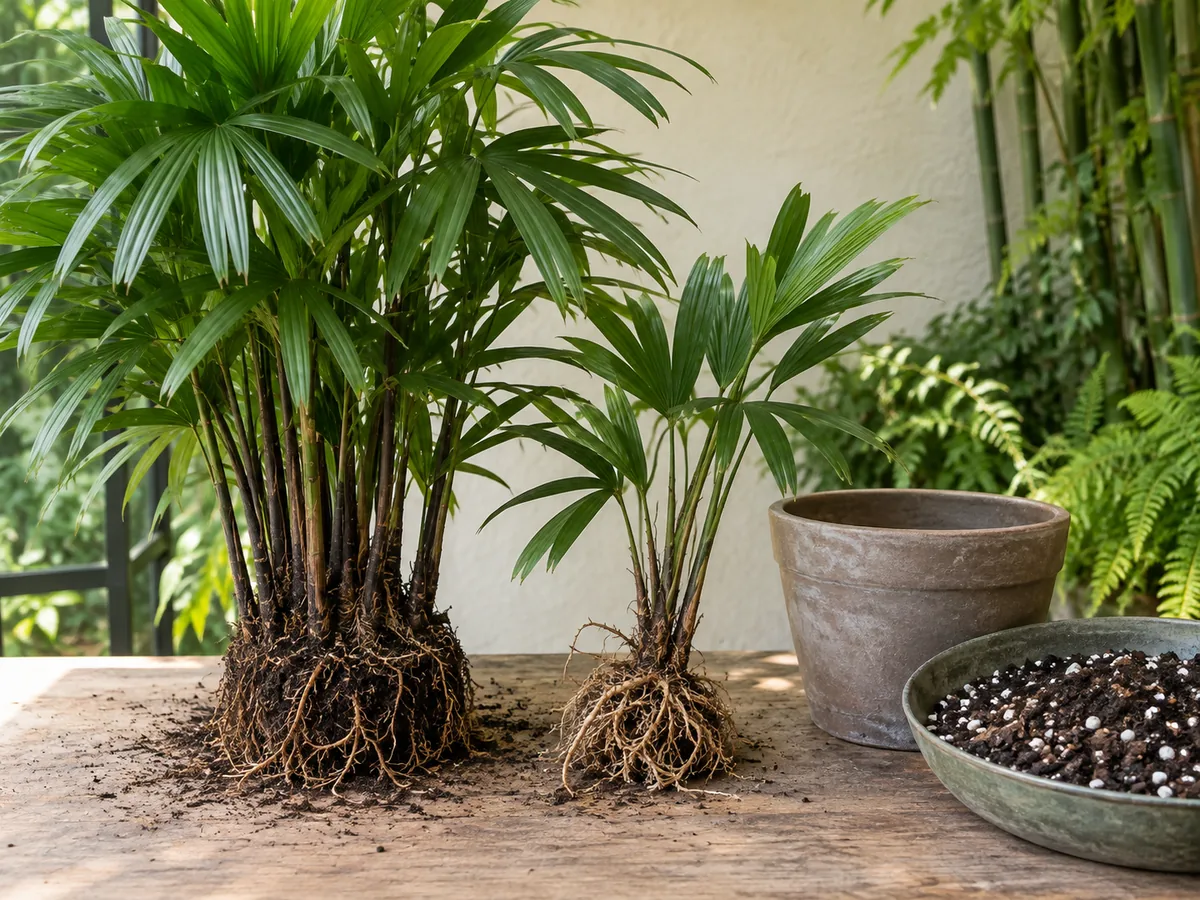
Division is the practical way to propagate a lady palm at home. It spreads along rhizomes and forms offsets; a leaf or a cut cane without its own rooted base will not turn into a new palm. Division can reduce a crowded clump or give you a second plant, but it also removes roots from a slow-growing species, so do it only when the plant is healthy and has a substantial offset to spare. UF/IFAS and NC State Extension both list division as a propagation method; UF/IFAS notes that division is the way to preserve the variegation of variegated forms. (UF/IFAS Extension; NC State Extension)
Choose a warm-season window when the palm is growing. Prepare a small pot with fresh, airy mix and clean, sharp pruners or a knife. Ease the parent plant from its pot and look for a natural separation where an offset has its own roots. Separate at the rhizome connection rather than slicing through random canes. Keep a generous portion of roots and several healthy leaves with each division; a larger rooted piece has better odds of resuming growth than a tiny fragment.
Pot the division at the same depth it was growing before, firm the mix gently, and water until the pot drains. Keep it warm in bright indirect light, with the mix lightly moist but never sitting in water. Do not fertilize until new growth resumes. A divided palm may pause while it rebuilds roots, so judge recovery over months rather than expecting a new leaf the following week. If the offset has no roots of its own, leave it attached and let it develop instead of trying to root a cut stem in water.
Prune Conservatively and Keep Fronds Clean
Lady palm does not need shaping to stay healthy. Remove a frond only when it is fully yellow or brown, badly damaged, or diseased. Use clean pruners and cut the leaf stalk near its base without gouging the cane or cutting into the central emerging spear. A frond with green tissue can still contribute energy, so trimming every brown leaflet tip is cosmetic and removes more foliage than necessary.
Do not cut the whole plant down to “refresh” it. Each cane grows from its own growing point; cutting a healthy cane off at the base will not make it branch back from the cut. Remove dead leaves and spent debris, then wipe dust from the leaf surfaces with a damp soft cloth or rinse gently if the plant can drain and dry in a warm, airy spot. Clean foliage is easier to inspect for pests, and careful pruning avoids turning slow natural growth into a recovery project.
Check for Scale, Mealybugs, and Spider Mites
Inspect the undersides of the fan leaves, the petiole bases, and the fibrous canes when you bring the palm home or move it back inside after summer. Scale can look like small fixed bumps; mealybugs resemble white cottony clusters tucked into crevices; spider mites may leave fine webbing and stippled, dull foliage. UF/IFAS lists mites, mealybugs, and scales among pests that can affect lady palms, especially in interiorscapes. (UF/IFAS Extension)
If you find pests, isolate the plant first. Rinse the foliage and remove visible insects with a damp cloth or cotton swab, taking care not to damage the leaf segments. Recheck the plant every few days because one cleaning may miss insects hidden at the cane bases. If you use an insecticidal soap or horticultural oil, confirm that the product is labeled for indoor plants and the pest you found, test a small area, and follow its directions exactly; homemade detergent mixtures can injure leaves and may not control the infestation.
Keep the palm away from other plants until repeated inspections show no new pests. Avoid treating it with several products at once or applying oils in strong sun. The aim is a targeted, repeatable response based on the pest’s identity, not a routine pesticide schedule.
Diagnose Yellow Leaves and Brown Tips in Order
One yellow or brown leaf does not tell you the cause. Start by noting whether the change affects old or new growth, whether it is spread evenly or appears in patches, and whether the pot is dry, evenly moist, or persistently wet. Then consider recent changes in light, temperature, watering, or fertilizer. This sequence prevents a common mistake: treating a root problem with fertilizer or treating a dry plant by repotting it into a larger pot.
Match the symptom pattern to the first check
| What you see | First checks | A sensible next step |
|---|---|---|
| One or two oldest fronds yellowing gradually | Are the newest leaves healthy? Is the clump otherwise growing? | Wait until the fronds are mostly spent before removing them; older-leaf loss can be normal. |
| Mix stays wet; lower leaves yellow or stems soften | Drainage holes, standing water, dense mix, sour odor | Stop watering until the mix begins to dry; correct drainage and inspect roots if decline continues. |
| Newest leaves are pale yellow-green with dark-green blotches | Age and aeration of the potting mix; how quickly water drains | Refresh old, compacted substrate before adding iron; confirm the diagnosis if symptoms persist. |
| Leaf edges turn brown and crisp | Recent drying, salt crust, fertilizer use, very dry air, or hot sun | Correct the specific condition and avoid cutting healthy leaves; brown tissue will not turn green again. |
| Fine webbing or stippled leaves | Leaf undersides and cane bases | Isolate the plant and identify mites or another pest before choosing a treatment. |
UF/IFAS documents distinct nutrient patterns in lady palm: iron problems often affect the youngest leaves, while potassium symptoms are more likely on older leaves and manganese problems can distort new growth. Those patterns are useful clues, not a substitute for examining the substrate and roots. (UF/IFAS Extension) If yellowing spreads, roots smell foul, or new growth deforms, resolve drainage and pest questions before increasing feed.
Choose a Green or Variegated Lady Palm
The standard green form is the easiest choice for a dependable indoor plant. Variegated selections, including ‘Zuikonishiki,’ have striped foliage and can be slower or more expensive because they are less common. UF/IFAS notes that division is required to retain variegation when propagating a variegated plant from the parent; seedlings do not reliably preserve the same leaf pattern. (UF/IFAS Extension)
Choose a plant with several firm canes, evenly colored leaves, and no sticky residue, webbing, or clusters of bumps. Look at the newest spear as well as the mature leaves. A few old damaged leaf tips can be cosmetic, but pale, blotchy new leaves or mushy bases deserve closer inspection before purchase. For a variegated specimen, inspect for consistent striping and avoid placing it in harsh direct sun to “bring out” the pattern; sun damage will not improve the cultivar.
Set Realistic Expectations for Growth and Flowers
Indoors, lady palm is valued for foliage and structure, not for quick height or a regular bloom show. It may take years for a young plant to form a dense, substantial clump. Gardenia gives an indoor height range of roughly 4 to 6 feet, but that is a broad planning estimate, not a timetable: light, root health, starting size, and years in the home all affect the result. (Gardenia’s lady palm profile) A quiet winter with no new leaf is not automatically a sign of decline if the existing foliage remains healthy.
Mature outdoor clumps can flower, but indoor plants rarely do. If yours produces small flower clusters, treat them as an occasional bonus rather than a care target. Extra fertilizer, more water, or stronger sun will not force a healthy indoor palm to bloom and can damage the plant. Patience and stable conditions are a better measure of success: firm canes, healthy new leaves, and a root ball that drains well.
Is Lady Palm Safe Around Pets?
The ASPCA lists lady palm as non-toxic to cats and dogs. (ASPCA’s lady palm listing) That species-specific identification matters because common names are reused, and a plant labeled only “palm” may be something else. Check the botanical name on the tag, especially if you are comparing it with sago palm, which is a different plant and not covered by this listing.
Non-toxic does not mean a pet should eat the foliage. Chewing any plant can cause mild stomach upset, and a large pot may tip if a curious animal pulls at the leaves. Place the palm where it is stable and discourage nibbling; contact a veterinarian if an animal eats an unknown plant or develops concerning symptoms.
Conclusion
Lady palm care is mainly about protecting the roots and choosing a steady, shaded place. Give Rhapis excelsa bright indirect light when possible, let the upper potting mix begin to dry before watering, and make sure excess water can leave the container. Feed lightly during active growth, and do not repot a healthy, slow-growing plant simply because a calendar says it is time.
When leaves look wrong, diagnose their age and pattern before reaching for fertilizer. Pale, blotchy new growth can point to poor aeration rather than a simple shortage of iron; persistently wet mix calls for a drainage check; brown tips have several possible causes. With that order of operations, a lady palm can remain a durable, low-fuss indoor plant for years.