How to Grow and Care for Sedum
Learn how to choose, plant, water, prune, and propagate sedum, with practical fixes for floppy growth, wet soil, and sparse ground cover.
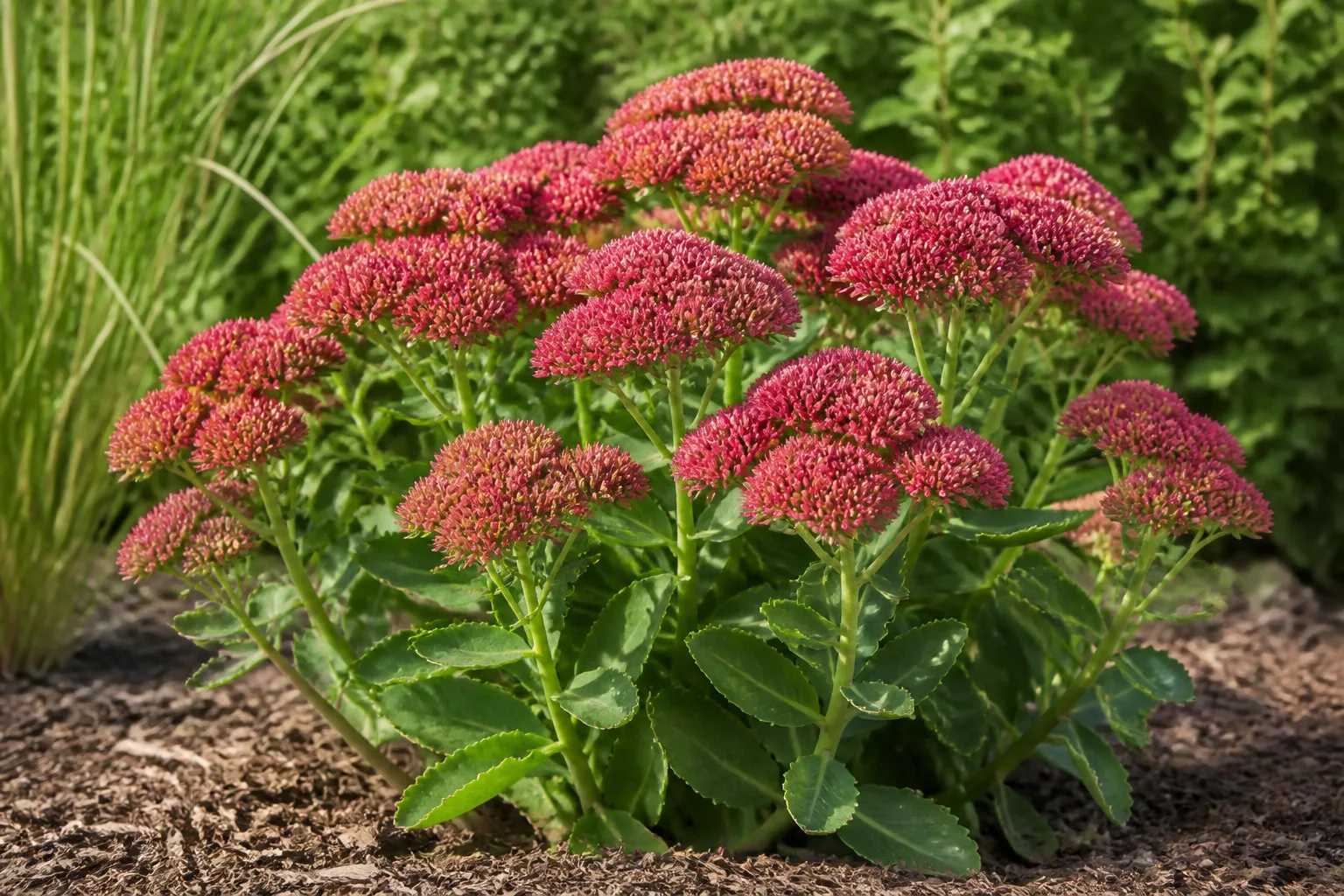
Sedum is easiest to grow when you choose the right kind before you pick a watering schedule. Low stonecrops spread across rocks and dry edges; compact forms make small mounds; taller autumn stonecrops hold their flowers above the border. Most want sun and well-drained soil, but mature size, hardiness, and the amount of water they tolerate vary by species and cultivar.
A reliable starting rule is simple: give sedum enough light, keep water moving through the root zone, and water new plants while they establish. The fleshy leaves help an established plant ride out dry spells. They do not make a newly planted root ball immune to drought, and they cannot protect roots left in saturated soil.
Know What “Sedum” Means Before You Plant
Stonecrop is the common name for many plants in the genus Sedum, a large group of succulent-leaved perennials. NC State Extension describes more than 300 species and notes that many familiar plants have been moved into the related genus Hylotelephium. That is why a tag might list ‘Autumn Joy’ as Sedum spectabile, Hylotelephium spectabile, or a similar combination. For gardening, the name on the label matters less than the exact cultivar and its mature habit, but the botanical name helps you find the right care and hardiness information. NC State Extension’s sedum profile explains this broad naming and growth range.
The label “sedum” does not describe one uniform shape. It can mean a creeping carpet, a tight mound, a tall plant with broad flower heads, or a tender trailing succulent grown indoors. The National Garden Bureau groups garden sedums into upright autumn stonecrops, compact clumps, and spreading ground covers; Garden Design also separates trailing forms such as donkey’s tail from hardy garden types. These categories are a useful first filter, not a substitute for checking the particular plant tag. National Garden Bureau’s sedum growing guide and Garden Design’s sedum overview show how much size and habit can differ within the group.
Choose a Stonecrop by How It Grows
Before buying, picture the plant at its mature size. A four-inch mat can soften a stone edge, but it will not make a tall, leafy focal point; an upright autumn stonecrop may give you late-season flower heads but will not knit together like a carpet. Match height, spread, bloom timing, and winter behavior to the job, then confirm the cultivar’s hardiness range and exposure on its nursery label.
Creeping Sedums for Low, Spreading Coverage
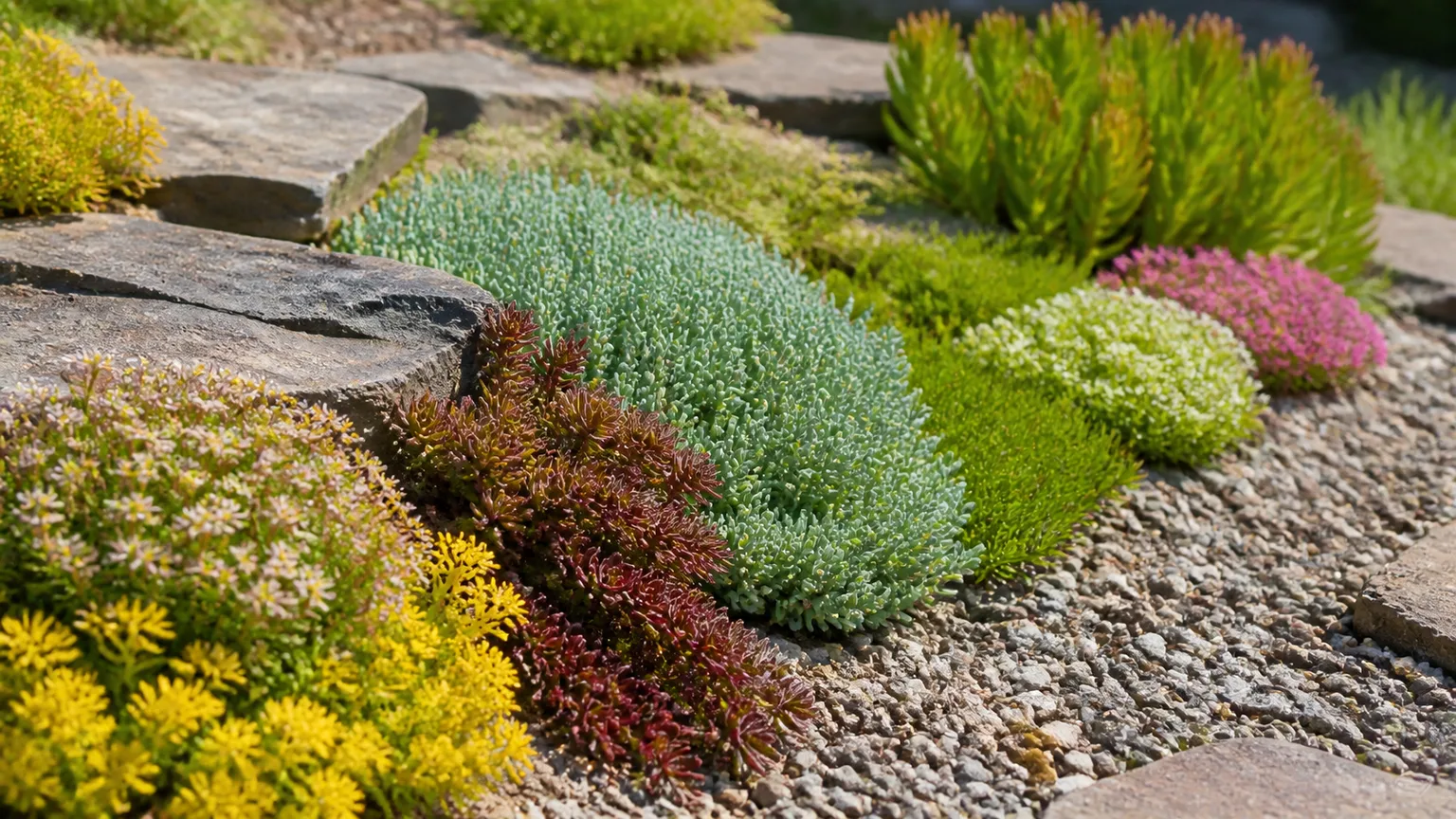
Creeping stonecrops hug the ground and spread sideways, often rooting where stems touch soil. They suit gravel gardens, retaining walls, the edges of paths, shallow containers, and other places where a low carpet is useful. Some remain compact; others travel far enough to crowd slower alpine plants or pass a neat bed edge. Build in room for the stated spread and be prepared to trim or divide a vigorous selection.
Creeping sedum is not a lawn substitute. NC State Extension notes that stonecrops tolerate only light foot traffic, and their brittle stems can be crushed by routine walking. Use stepping stones for the path and let the plants spill around them. If ground cover is your main goal, compare named forms in our sedum ground-cover guide, which focuses on low growers rather than upright border plants.
Compact Clump-Formers for Small Spaces
Compact sedums hold a mound or rosette instead of spreading into a broad mat. They work at the front of a sunny border, in a rock garden, or in a pot where a larger plant would overwhelm the space. Their slower or more contained habit can be an advantage around small, delicate neighbors, but a compact clump is not always a fast way to cover bare soil.
Check whether a plant stays evergreen or dies back in your climate, and whether it blooms in spring, summer, or fall. Leaves may turn bronze, red, or purple in sun or cool weather; that can be normal seasonal color if the foliage stays firm. A pale, stretched plant in deep shade is a different signal: move it toward brighter light gradually or replace it with a shade-tolerant species.
Upright Autumn Stonecrops for Borders
Tall stonecrops form upright clumps topped by flat or domed clusters of small flowers. ‘Autumn Joy’ is a familiar example, with flower heads that open pink and deepen as they age. The botanical name often appears as Hylotelephium spectabile; its NC State Extension profile describes a clumping perennial about one to two feet tall and wide, with full-sun to partial-shade tolerance and a preference for well-drained soil. The NC State profile for showy stonecrop is useful for checking this classic upright form.
Use upright varieties where their height can be seen and their mature width will not press against neighboring plants. A dense cluster of flower heads has weight, so a plant in shade, rich soil, or persistently wet ground may grow soft stems that lean once blooms develop. For a cultivar-specific overview, see our ‘Autumn Joy’ sedum care guide.
Site Sedum Where Sun Meets Fast Drainage
A sunny site is only half the decision. Sedum often fails in a bed that receives good light but stays damp for days after rain. Walk the garden after a storm and note where puddles linger, where roof runoff hits, and where snowmelt collects. If a planting spot stays saturated, choose another location or raise the bed rather than trying to rescue a wet hole with a handful of gravel.
The general pattern across garden stonecrops is full sun and sharply drained soil. The National Garden Bureau notes that many sedums handle poor, rocky ground well and may stretch or flop in continuously moist, nutrient-rich beds. Garden Design lists exposure and hardiness ranges by type rather than assigning one universal number to the whole genus, which is a useful reminder to trust the exact cultivar tag over a genus-wide zone claim.
Light: Flowering and Stem Strength
Most garden sedums flower and hold their shape best in a bright position with several hours of direct sun. Upright autumn stonecrops often tolerate some partial shade, especially in hot climates, but less light can mean fewer flowers and looser stems. Trailing houseplant sedums also need strong light, though indoor glass and summer heat can change how quickly leaves scorch; acclimate them instead of moving a shaded plant into harsh midday sun all at once.
Use the plant’s behavior as a light meter. Long gaps between leaves, stems reaching in one direction, and an open center usually point to insufficient light, although overwatering and excess fertilizer can contribute. Move a container a little closer to a bright window or brighter outdoor position over several days. For a garden clump, improve light by relocating it during a cool season rather than repeatedly cutting it back in a site that remains too shady.
Soil: Drainage Matters More Than Richness
Sedum roots need oxygen as well as water. Gravelly, sandy, or ordinary garden soil that drains after rain is generally a better home than a low pocket of dense clay. Clay is not automatically disqualifying: an elevated mound or raised bed can keep the crown above standing water. What matters is whether excess moisture drains away rather than pooling around the roots.
Do not put a pocket of loose potting mix inside a heavy-clay planting hole and assume the contrast will improve drainage. Water can collect in that amended pocket, leaving the roots wetter than the surrounding soil. If the site regularly holds water, improve a broad area or plant on a raised grade; if you cannot change the site, choose a plant adapted to wetter conditions instead of forcing a dry-site sedum into it.
Plant Sedum in Beds, Slopes, and Rock Gardens
Spring and early fall are practical planting windows in many temperate climates because plants can establish while temperatures are moderate. In regions with very hot summers or early freezes, follow local timing advice and the nursery’s guidance. Set the plant at the same depth it occupied in its pot, loosen circling roots gently, and fill around the root ball without burying its crown or packing the soil into a hard mass.
Space plants according to mature width, not the small nursery pot. Close spacing fills a border sooner but can reduce airflow and increase competition; wider spacing takes longer to look full but makes each plant easier to maintain. A creeping selection can be placed near a controlled edge where it may spread, while an upright form needs room for its final mound and flower stems. Label the planting with the cultivar name before the tag disappears.
Water slowly after planting so the root ball and surrounding soil make contact. For the first several weeks, check the root zone more often than you would for an established clump; the small nursery root ball can dry while nearby native soil still feels damp. Keep weeds from overtaking low sedums as they establish, but avoid piling mulch over the crown or smothering the creeping stems beneath a thick organic layer.
Water Sedum Without Keeping Its Roots Wet
Water newly planted sedum when the root zone begins to dry, then let excess drain away. The goal during establishment is to help new roots reach outward, not to keep the soil constantly moist. Hot weather, wind, shallow soil, and small pots may mean more frequent checks; rainfall, cool weather, and heavy soil mean less. A weekly schedule can be a starting reminder to inspect the plant, but the soil should decide whether water is actually needed.
Once rooted in, many garden sedums need little supplemental irrigation outside long, hot, dry periods. Water deeply at the soil rather than giving frequent surface sprinkles, then wait until the root zone is drying before repeating. Leaves that look plump and firm usually do not need a drink just because the surface looks dry. In contrast, wrinkling leaves and a very dry root zone can indicate drought stress, particularly in a pot or a newly planted specimen.
Overwatering is often harder to spot than underwatering because it can begin below the foliage. Soft or translucent leaves, brown patches, mushy stems, and a collapsing crown point toward excessive moisture or poor drainage; adding more water will worsen the problem. The National Garden Bureau describes stretching and weaker stems among the consequences of excess moisture. If symptoms appear after a rainy stretch, stop irrigating, check drainage, and remove affected material only after you have addressed the wet conditions.
Keep Fertilizer and Mulch Modest
Most garden stonecrops do not need a routine fertilizer program. They are adapted to lean conditions, and heavy feeding can produce fast, soft foliage rather than the compact stems and flowers you want. If a soil test or a genuinely depleted bed shows a need for improvement, make a measured correction across the planting area. Do not add rich compost or high-nitrogen fertilizer by habit to a plant that is already stretching or lodging.
Mulch can reduce weeds and buffer temperature, but the material and placement matter. Keep organic mulch away from the crown, and use only a thin layer that does not bury small, creeping stems. In a rock garden or gritty border, a mineral top-dressing can keep the surface open and make low foliage visible. A damp mulch volcano around an upright clump defeats the drainage the plant needs.
Prune for Shape Without Sacrificing Flowers
Most sedums need little pruning. Remove broken or diseased growth when you see it, and decide whether to leave healthy flower heads for winter structure or cut them down for a tidy bed. Upright stonecrops can look attractive after the petals fade, and their sturdy stems mark the planting through winter. If you leave them, cut the old stems near the ground in early spring before fresh shoots become tall and easy to damage.
If an upright sedum consistently flops, first inspect its light, soil moisture, fertility, spacing, and cultivar size. For some tall clumps, pinching or cutting stems back once in late spring can encourage a more compact plant, but it may delay flowering. NC State Extension specifically notes that pruning showy stonecrop in early spring can help it stay bushy and that summer pruning can postpone its blooms. Do not shear every sedum at the same time: a ground-cover mat and a tall autumn clump have different pruning jobs.
For a seasonal walkthrough focused on the taller form, use our guide to when and how to cut back sedum. The useful distinction is between shaping live stems early enough to affect their growth and clearing dead stems after the season. A late hard cut is not a reliable fix for a plant that flops because the bed is wet or shaded.
Propagate Sedum by Division and Cuttings
Division is the most straightforward way to renew an established clump and make another plant with the same traits. In early spring, lift the clump when new growth is just starting, separate a healthy rooted section with clean tools, and replant it promptly at its original depth. Water it in, then keep an eye on soil moisture while new roots recover. Divide only when the plant is large enough to handle the disturbance; tiny or recently planted sedums need time to establish first.
Stem cuttings work for many upright and creeping types. Take a short, healthy, nonflowering piece, remove leaves from the lower part, and place that bare section into a small pot of gritty, well-drained mix. Keep the mix lightly moist while roots form rather than soaking it, and provide bright light without immediate scorching sun. A gentle tug after a few weeks can tell you whether the cutting has anchored; new growth is another useful sign. NC State Extension lists stem cuttings as a propagation strategy for sedum and showy stonecrop.
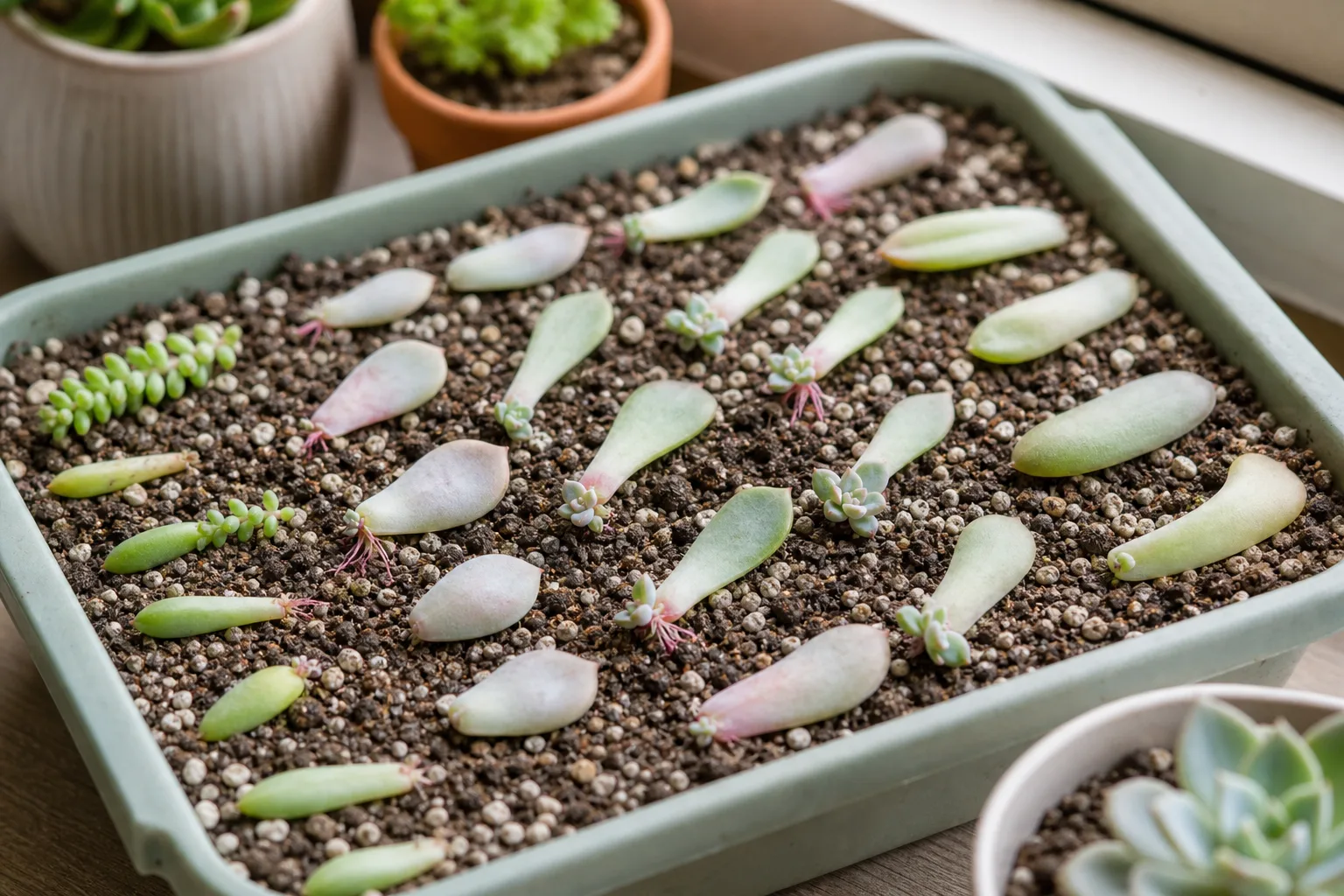
Some sedums can also produce new plants from fallen leaves, but leaf propagation is not equally predictable across all species. Collect a firm, healthy leaf with its base intact, leave it on the surface of a gritty mix, and wait for a tiny plantlet and roots before potting it up. Seed is useful when you want variation or are working with a species that grows true from seed; named hybrids may not reproduce the parent’s leaf color, size, or flowering habit. For broader succulent methods, see our succulent propagation guide.
Grow Stonecrop in a Container
A container is useful when garden soil stays too wet, the planting space is shallow, or you want a mat to spill over a wall or pot rim. Use a pot with an open drainage hole and a mix that drains freely; a commercial succulent mix can be a starting point, with added pumice or perlite if it stays wet too long in your climate. Do not use a decorative cachepot as the permanent home unless you can empty standing water after each watering.
Choose the pot around the plant’s form. A broad, shallow bowl gives creeping sedums room to spread, while a heavier container supports a top-heavy upright clump. An oversized pot can hold excess wet mix around a small root system, so increase the size only as the plant grows. Place the container where the cultivar receives suitable light, and leave space around it for airflow.
Pots dry faster than in-ground beds, especially in sun and wind, but that does not mean daily watering is automatically correct. Check the mix below the surface and water thoroughly when the root zone is drying; let water escape, and never leave the pot standing in a full saucer. In winter, outdoor pots expose roots to colder and more variable conditions than the ground does. Verify the cultivar’s hardiness and provide shelter or insulation when your climate or container material makes the roots vulnerable.
Diagnose Floppy Stems, Rot, and Sparse Growth
Floppy stems are a symptom, not a diagnosis. On an upright stonecrop, weak light, rich soil, excessive water, crowding, heavy flower heads, or a naturally tall cultivar can all contribute. If the plant is healthy but slightly open, use an early-season pinch or support the stems temporarily. If the base is soft and the leaves are waterlogged, do not pinch first; address wet soil and check whether the crown is rotting.
For a collapsing plant, inspect soil and stem firmness. Roots and crown that are dark, mushy, or foul-smelling suggest rot, while a firm plant with dry soil and shriveled leaves may be short of water. Remove damaged material with clean pruners and improve the site before replanting. If the original bed remains saturated, moving the healthy parts to a raised, better-drained location is more effective than adding gravel only under the crown.
Sparse creeping sedum may simply be young. Ground covers need time to root and extend, and they fill faster when weeds are controlled and the plants receive enough light. If an established mat opens in the center, check whether neighboring plants have shaded it, whether repeated foot traffic has broken stems, or whether the center has become too wet. Divide a healthy edge into small rooted pieces and replant them into the gap after correcting the cause; do not cover bare ground with extra fertilizer.
Weak or absent flowers can also follow insufficient sun, recent division, heavy feeding, or pruning at the wrong time. A plant that is still establishing may prioritize roots over a full bloom display. For a mature, healthy clump, compare its light and moisture with the cultivar’s needs and avoid cutting it back after flower buds are forming. Give it a full growing season after relocating before judging its bloom performance.
Handle Pests and Disease Selectively
Sedum is not immune to pests, but routine spraying is rarely the right first step. Slugs and snails may chew tender leaves in damp areas; reduce hiding places, check plants at dusk, and use physical barriers or hand removal where practical. Aphids can cluster on new growth and flower stems. A firm water stream may dislodge small numbers, but avoid blasting fragile stems or spraying open flowers that pollinators are visiting.
Poor drainage can invite crown and stem rot, while crowded, shaded growth holds moisture longer and may develop fungal problems. Space plants for airflow, water at soil level, and remove clearly diseased growth. If a pest keeps returning, identify it before choosing a control; follow the product label and protect pollinators. NC State Extension’s plant profiles list problems such as slugs, snails, aphids, scale, and rot for sedum or showy stonecrop, but the exact risk differs by species and local conditions.
Plan for Winter and Long-Term Growth
Many garden stonecrops are hardy perennials, but “sedum survives winter” is too broad a promise for a genus with species from different climates. Use the hardiness range printed for the cultivar you bought and account for wet winter soil, wind, and whether the roots sit in the ground or a pot. Garden Design lists varieties across a wide range of zones; that range belongs to the different varieties, not every sedum at once. The National Garden Bureau similarly advises checking the individual plant’s cold tolerance.
Leave healthy upright stems standing if you like their winter shape, then clean them up in spring. Low, evergreen forms may remain visible through winter where they are hardy, though freeze-thaw cycles and standing water can damage them. A cold-hardy plant in a bed may be less protected in an exposed container, so move the pot to a sheltered spot or insulate it if needed. Tender trailing species sold as houseplants need a different winter plan from a hardy border stonecrop.
A perennial sedum can live for years if the site suits it. Divide a clump when it becomes crowded or loses vigor, and replant only healthy sections. A vigorous creeping variety may outgrow a small space before it declines; trim its edge or move it to a location where spread is useful. Review the planting every spring so a successful ground cover does not quietly overtake plants you meant to keep.
Conclusion
To grow sedum well, first identify whether you have a creeping mat, compact mound, upright stonecrop, or tender trailing type. Choose a sunny, well-drained site that fits its mature size, water consistently while it establishes, then reduce irrigation once it is rooted in. Keep fertilizer light, prune according to the plant’s form, and use division or cuttings when you want more.
When stonecrop struggles, look at drainage and light before reaching for fertilizer or a spray. Correcting the site usually does more than adding another round of maintenance. The right sedum in the right place earns its low-care reputation; the wrong type in shade or soggy soil will not.