String of Bananas Care: Light, Water and Soil Tips
Learn String of Bananas care with practical light, dry-down, soil, pruning, propagation, winter, troubleshooting, and safety advice for Curio radicans.
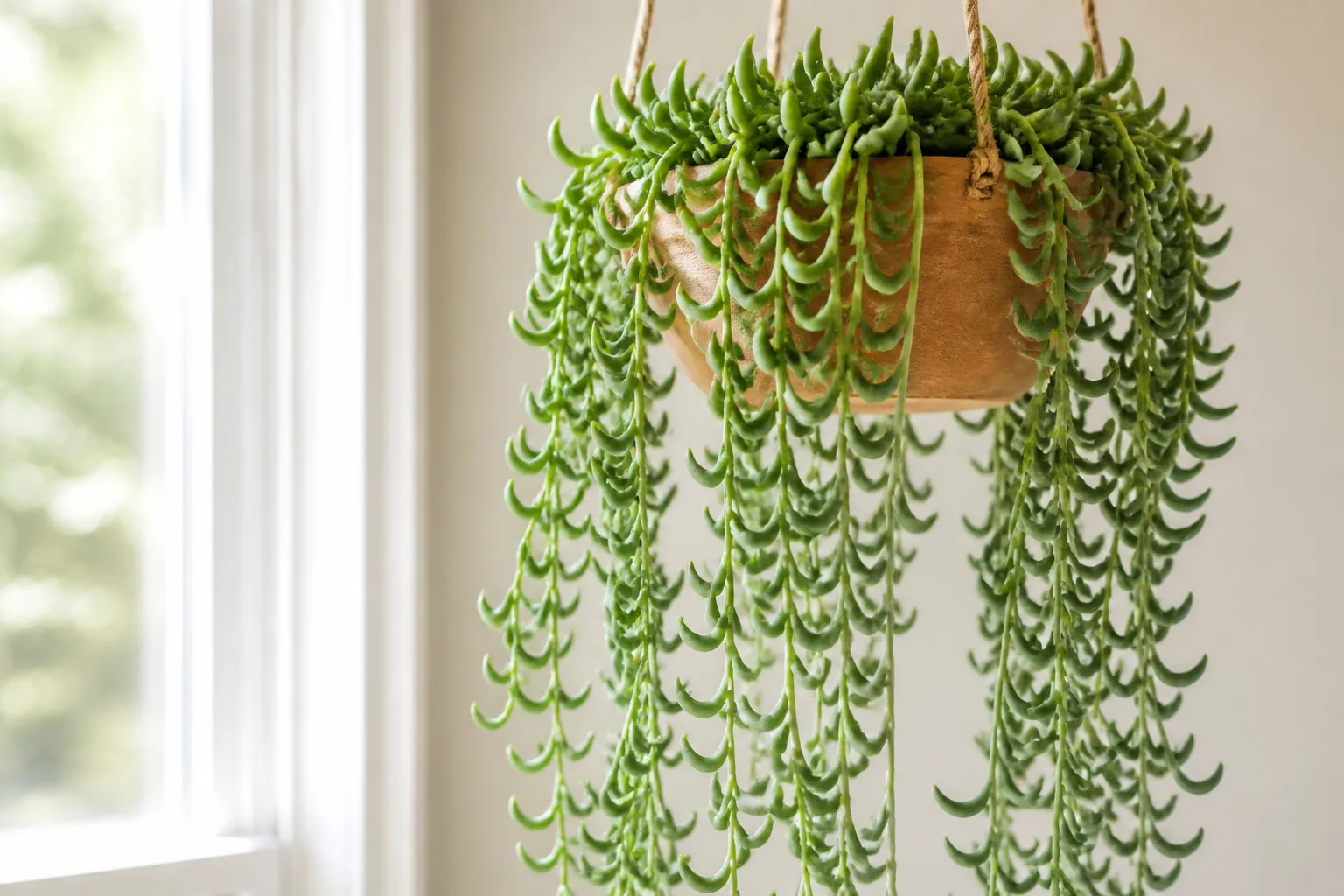
String of bananas is a trailing succulent with curved, fleshy leaves that look like tiny green bananas. Its stems spill attractively from a hanging pot, and it is forgiving of an occasional missed watering; the reliable way to keep it healthy is still bright light, quick-draining soil, and a pot that can empty fully after a deep drink.
The plant is sold under more than one botanical name, and several care shortcuts can cause avoidable trouble. This guide explains how to identify it, tell thirst from root stress, choose a container that dries at a sensible pace, and trim or root strands without turning a small problem into a lost vine.
Identify String of Bananas and Its Botanical Name
The accepted name used by Royal Botanic Gardens, Kew, is Curio radicans. Kew lists Senecio radicans among the species’ synonyms, and North Carolina State Extension uses Curio radicans while recording Senecio radicans as a previously used name. If a nursery tag says “fishhooks senecio,” “string of fishhooks,” or “string of bananas,” the curved banana-shaped leaves help distinguish this plant from string of pearls, whose leaves are round beads. (Kew’s Plants of the World Online, NC State Extension’s plant profile)
It belongs to the daisy family, Asteraceae, and is native to southern Africa. In suitable conditions, it forms trailing or creeping stems that root at nodes; indoors, those flexible strands often reach a few feet long, though length depends on light, age, and how often you prune. The roots are not a reason to give it a deep, oversized pot: the plant’s display habit comes from the stems, while its growing mix still needs to dry between waterings.
Give It Bright Light, but Acclimate It Gradually
Place the plant close to a bright window where it receives abundant indirect light and, if possible, a few hours of gentle morning sun. An east-facing window is often a comfortable starting point; a bright south-facing window may work with some distance or a sheer curtain, while a west-facing window can expose leaves to harsher afternoon rays. North-facing windows vary by hemisphere and season, so judge the actual brightness rather than relying only on the compass direction.
North Carolina State Extension recommends bright indirect light and cautions that string of bananas is not full-sun tolerant. A well-lit window should keep new growth compact, with leaves spaced close together and stems trailing over the rim rather than stretching upright toward the glass. If new leaves become smaller and farther apart or the stems stand up instead of cascading, increase the light gradually; older stretched sections will not shrink, but healthy new growth can fill in after pruning.
More direct light is not automatically better. A plant that has spent weeks indoors can scorch when moved straight into hot outdoor sun, and brown or reddish patches are a cue to check exposure before changing the watering routine. Ohio Tropics recommends transitioning indoor plants outdoors in stages, beginning in shade and increasing sun slowly; over roughly one to two weeks, move it toward the final bright, protected location while watching for bleaching or crisp patches. (Ohio Tropics’ string-of-bananas care guide)
Water by Dry-Down, Not a Calendar
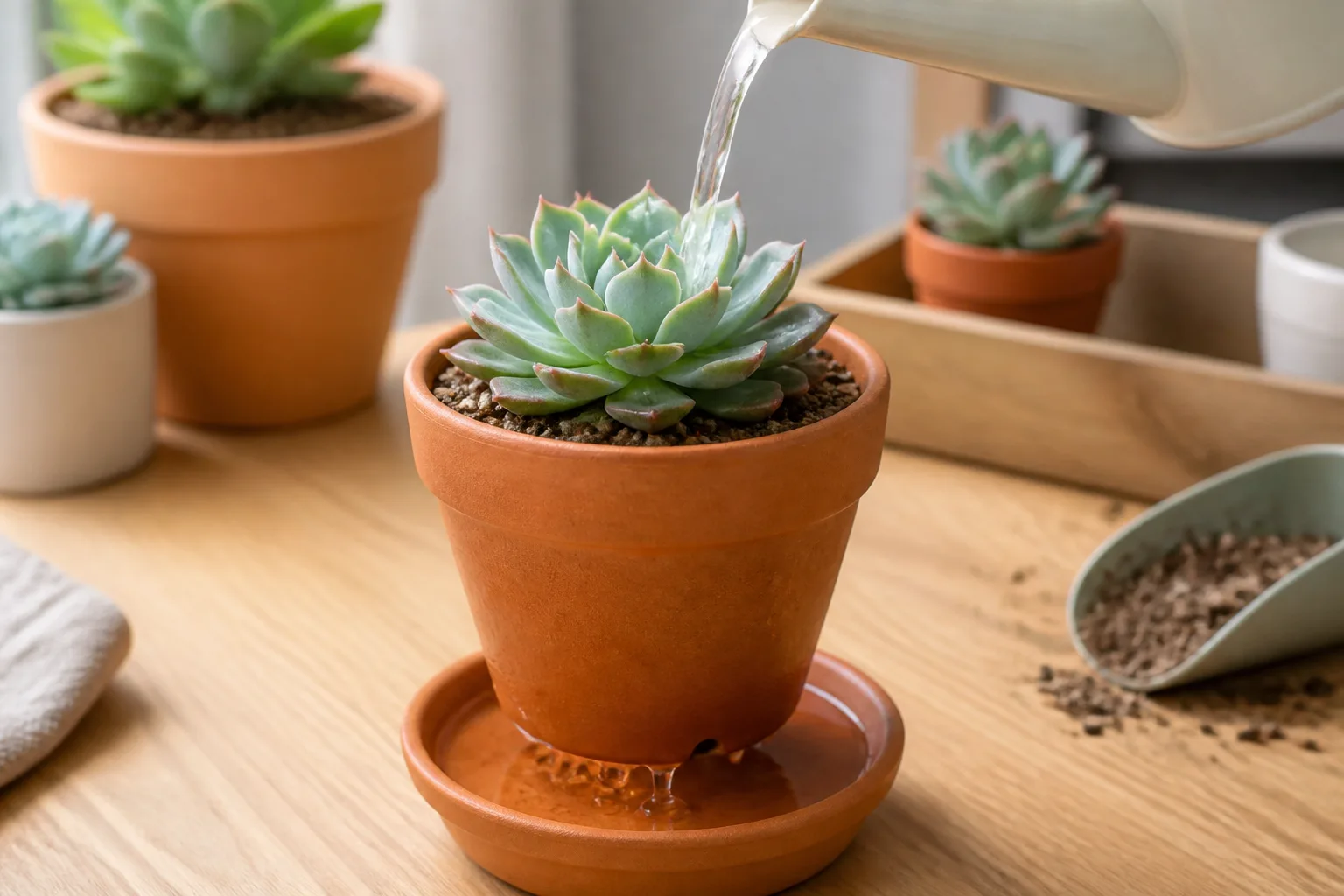
Water when the potting mix has dried through much of the root zone, not because a certain number of days has passed. In a hanging basket, the exposed edges can look dry while the center around the roots is still damp, so checking only the surface can lead to repeated early watering. North Carolina State Extension gives the top half of the soil as a practical dry-down cue, then recommends avoiding excess water.
When the mix is ready, soak it thoroughly until water drains from the bottom, then empty the saucer or outer cachepot. A small measured sip wets only part of the rootball and can leave the center unevenly dry; “watering too much” is usually a problem of frequency or poor drainage, not the amount needed to wet an open, well-draining rootball once. Keep the basket from sitting in runoff after the soak.
Check the Middle of the Pot
Use more than one signal before watering. Push a wooden skewer several inches into the mix near the center and inspect it as you pull it out; if it comes up cool with damp particles clinging to it, wait. Also lift the pot or nursery liner to learn its “just watered” and “drying down” weights, and look at the leaves: firm, plump leaves usually mean the plant still has water stored, while slightly less plump but still firm leaves can accompany a dry mix.
Do not treat a moisture meter or a single leaf as a verdict by itself. A very dry plant and a plant with damaged roots can both look wrinkled, but their soil conditions differ; the first action is to check moisture at root depth and feel the lower stems. A light pot with dry mix and firm-to-softening leaves points toward thirst, while wet mix paired with soft, translucent leaves or a darkening stem base points toward root stress.
Adjust for Season, Room, and Container
The plant usually uses water faster in warm, bright weather and much more slowly in cool, dim winter conditions. Check it weekly at first to learn the pot’s rhythm, but water only when the root-zone check says it is ready; the resulting interval might be a week or two in a bright, warm room and several weeks in winter. Those ranges are observations, not a schedule to follow if the mix remains damp.
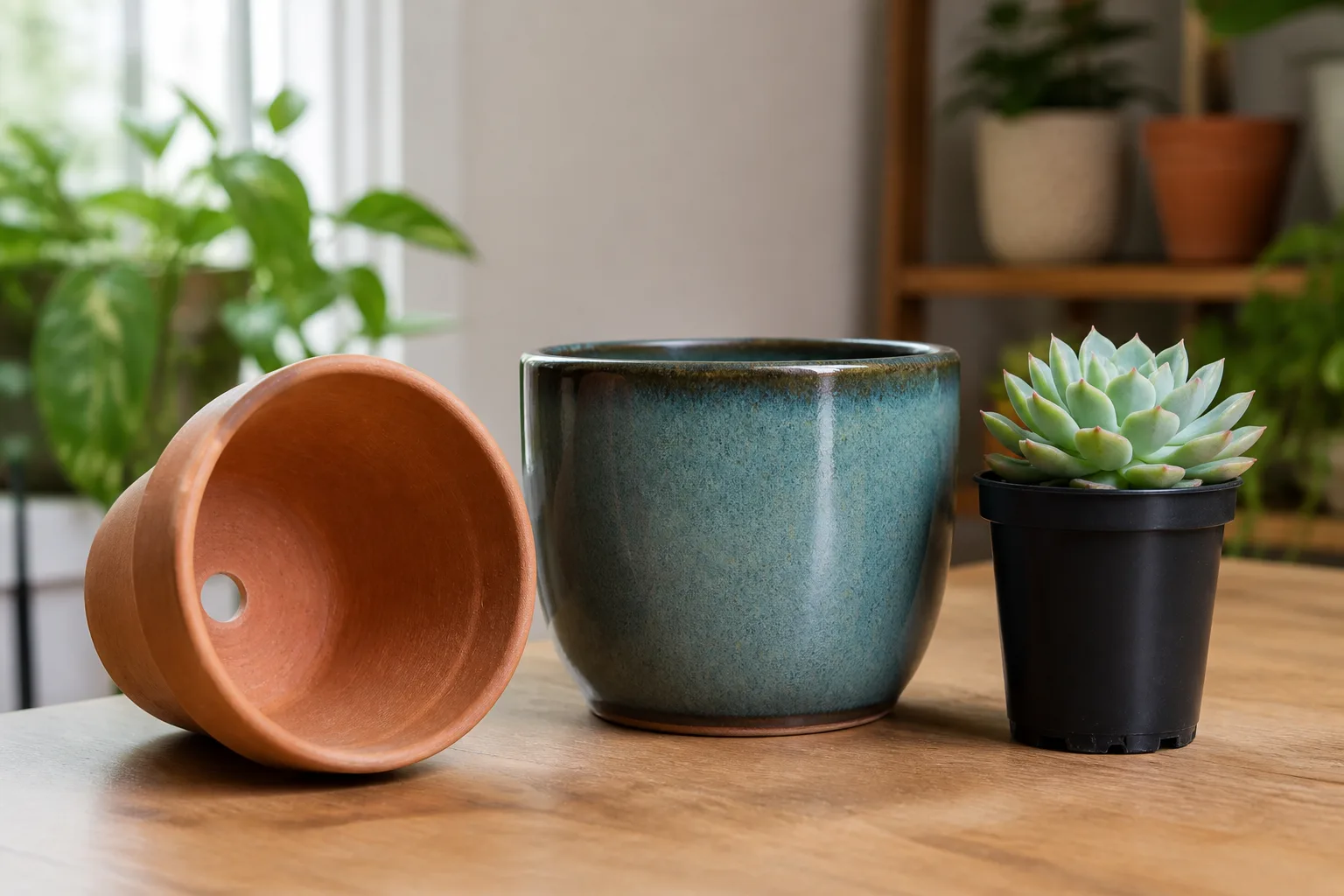
Container material changes the interval. Unglazed terracotta loses moisture through its sides and can dry sooner than plastic or glazed ceramic, while a hanging basket with open sides may lose water faster than a solid cachepot. After moving the plant, changing the mix, or bringing it indoors, reassess from the beginning rather than carrying over the old timing.
Choose Fast-Draining Soil and a Pot With Holes
Use a coarse, airy mix sold for cacti and succulents, or amend a standard succulent blend if it stays wet in your room. A practical starting recipe is equal parts commercial cactus mix and pumice, or a mix of two parts cactus mix with one part perlite and one part pumice. These are starting points, not formulas that work identically in every climate: the result should drain freely, resist compaction, and dry at a pace that matches your light and temperature.
North Carolina State Extension describes a coarse or sandy cactus medium, while Ohio Tropics gives pumice-based mixes as workable options for this species. Avoid dense garden soil and fine sand, which can pack into small pores and slow air movement around roots. If the pot stays heavy for many days after watering, the answer may be coarser mix, a smaller container, more light, or warmer conditions—not a more frequent watering dose. (NC State Extension, Ohio Tropics)
Match the Pot to the Rootball
A drainage hole is essential. Choose a pot only modestly wider than the root mass, with enough depth to hold the plant securely but not a large volume of unused wet mix. Get Busy Gardening similarly advises avoiding a pot that is much larger than the roots, since the extra soil can remain wet long after the plant has used the water it needs. (Get Busy Gardening’s string-of-bananas guide)
For hanging displays, place a removable nursery pot with drainage inside the decorative basket. You can take it down to water, let it drain at a sink, and return it without leaving runoff above the ceiling or furniture. A layer of stones at the bottom of a pot does not replace an open drainage hole; if water cannot leave the container, the roots remain in the same saturated zone regardless of the gravel.
Keep It Warm and Treat Outdoor Growing as Seasonal in Cool Climates
This is a warm-climate succulent, not a frost-hardy perennial for a cold garden. Kew records its native range in South Africa, and North Carolina State Extension places its outdoor hardiness around USDA zones 10a–11b and describes it as frost intolerant. In cooler areas, grow it in a container and bring it indoors before frost; a forecast freeze is too late to begin planning.
If you summer it outdoors, choose a protected position with bright light and morning sun or filtered exposure, then move the pot back gradually if the leaves show sun stress. Shelter the plant from prolonged rain, which can keep its rootball wet even when the foliage looks fine. Before moving it indoors, check for pests and let the pot drain fully; indoors, keep it away from cold glass, heating vents, and air-conditioning drafts.
Ordinary household temperatures are usually suitable. Growth tends to slow as light and warmth decline, so a cooler, dimmer winter setup changes both the watering interval and the need for fertilizer. There is no need to force dormancy with a cold room; steady warmth and strong light are useful if you want continued growth, while a cooler bright spot simply calls for drier soil and patience.
Feed Only When New Growth Is Active
String of bananas does not need heavy feeding to stay healthy. If it is putting on new growth in spring or summer, use a balanced fertilizer labeled for succulents at a diluted rate, following the product label; a light application every month or so during active growth is plenty for many indoor plants. If it grows slowly in a dim room, skip the fertilizer and address the light first.
Do not fertilize dry roots, a plant recovering from rot, or a basket that has just been repotted into fresh mix. Feeding in winter when growth has stalled can leave salts in a pot that is drying slowly and may encourage weak growth when the plant is not able to use the nutrients. Fertilizer supports active growth; it cannot compensate for poor light, compacted mix, or a pot without drainage.
Prune for Shape and Use the Cuttings
Pruning is optional, but it is useful when strands become unwieldy, tangle around one another, or leave the basket looking sparse at the top. Use clean, sharp snips and cut a healthy strand just above a node, the point where a leaf pair joins the stem. A cut may encourage branching near that point, and the removed length can become a propagation cutting.
If only the tips have become long, shorten a few strands at a time instead of taking a large fraction of the plant in one session. That keeps enough leafy growth to support recovery and gives you cuttings that can be tucked back into the same pot. Avoid pulling the basket around by the vines; the stems are flexible but can snap where they join the crown.
Propagate With Stem Nodes
Stem cuttings are the straightforward way to make another plant or fill a thin basket. Choose a firm, healthy strand several inches long, cut it with clean scissors, and remove a few leaves from the lower section so at least one or two nodes can touch the rooting mix. The node, rather than a detached banana-shaped leaf, is the useful part for producing roots and new growth.
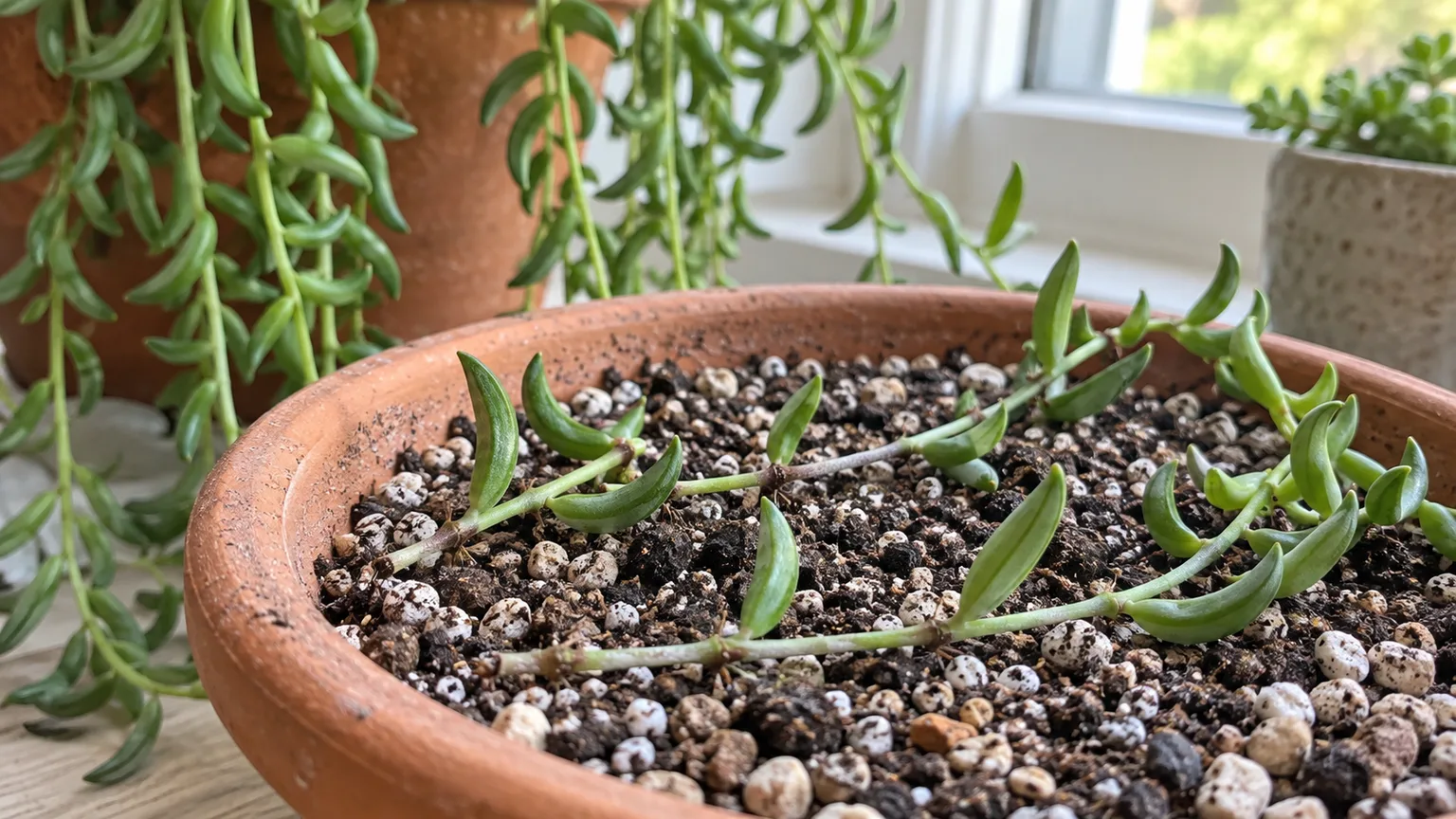
Lay the strand on coarse, lightly damp succulent mix and press the exposed nodes into contact with the surface, or insert the leafless end shallowly so it stays upright. Keep the leaves above the soil; burying the fleshy foliage can invite decay. Place the pot in warm bright indirect light, protect it from harsh midday sun, and keep the mix just lightly moist while roots are forming—not waterlogged.
Check for new growth or a gentle tug that meets resistance rather than unpotting the cutting every few days. Rooting speed varies with warmth, light, and the condition of the cutting, so a calendar promise is less useful than watching for anchoring and new growth. Once it is established, gradually let the mix dry more fully between waterings as you would for the parent plant.
Pin a Strand Down for a Fuller Pot
If a healthy vine is long but the top of the pot looks bare, layering can fill it without taking a separate cutting. Coil or lay a section over the mix and secure it gently so several nodes touch the surface; keep the banana-shaped leaves above the soil and do not bury the vine. Where those nodes root, they can anchor the strand and help thicken the center of the basket.
Leave the strand attached while it roots, then snip it from the parent only if you want a separate plant. This method works best when the parent is actively growing and the surface mix is not kept soggy. If the vine resists lying flat, do not force it around a tight curve; a short cutting is safer than kinking or snapping the stem.
Repot When the Mix or Roots Tell You To
Repotting is not an annual chore for every plant. North Carolina State Extension says to consider repotting each spring, while practical grower guidance from Ohio Tropics recommends not rushing the move and using a pot only one size larger. The difference reflects a real tradeoff: fresh mix can restore drainage, but repeated handling risks tangling or breaking the trailing stems.
Repot when roots crowd the drainage opening, the rootball dries unusually fast despite suitable light, water runs down the sides without wetting the center, or the mix has compacted and stopped draining predictably. If the plant is stable and the mix still works, it can remain in the same pot. Choose spring or early summer when new growth is visible, and move it into a container only slightly larger than the old rootball.
Before lifting the plant, gather the strands loosely so they do not drag across the work surface. Loosen the rootball gently, remove only loose spent mix, and trim roots only if they are clearly dead or mushy; healthy roots do not need aggressive pruning. Set the crown at the same height as before, fill around the roots with dry fresh mix, and return to the usual root-zone check before watering rather than automatically soaking on the day of repotting.
Troubleshoot Leaves and Stems in Context
A single dropped leaf is not enough to diagnose a plant. Look for a pattern—several leaves dropping after a move, repeated wrinkling, a soft stem base, or new growth stretching away from the window—and compare it with the pot’s moisture and temperature. Correct one likely cause at a time so the plant is not moved, repotted, soaked, and fertilized all in the same afternoon.
Read Wrinkled, Mushy, or Falling Leaves Along With the Soil
Wrinkling can mean the stored water in the leaves is low, but the response depends on the mix. If the pot is light and dry through the root zone and the stems remain firm, water deeply and let it drain; the leaves should regain firmness gradually. If the mix is still wet, do not add water to “fix” the wrinkles—soft or translucent leaves, blackening near the soil line, a sour smell, or a pot that stays heavy suggest damaged roots or a mix that is not drying.
With wet mix, stop watering and check the drainage hole and plant base. If decline continues, slide the rootball out and inspect it; remove only clearly rotten, dark, soft roots with clean scissors, then repot into dry, airy mix and wait until the pot dries at an appropriate pace before the next soak. If healthy upper strands remain, take cuttings as a backup rather than trying to rescue a vine that has become soft from tip to base.
Leaves that fall after a move may reflect cold shock, a draft, rough handling, or a rapid change in light rather than a need for more water. A few bare inches near the older base can develop over time; lost leaves will not return to that same section, so improve light and pin or replant healthy strands near the pot surface if you want a fuller appearance. For leggy growth, move the plant to brighter light first, then trim and root the stretched portions once the new location is stable.
Prevent and Check for Common Pests
North Carolina State Extension lists aphids, mealybugs, scale, and spider mites among pests to monitor. Their small leaves and dense nodes create hiding places, so inspect the stem joints, the top of the soil, and the basket rim when watering or pruning, especially after bringing the plant inside from outdoors. (NC State Extension’s pest list)
Isolate a plant with pests before the insects spread to nearby houseplants. Remove badly infested strands and follow the label on any treatment chosen for indoor ornamentals; test a small area first if the product may contact the fleshy leaves. Recheck the hidden nodes over the next several weeks, because a single cleanup does not always catch eggs or insects tucked into the center of a crowded plant.
Take Pet Safety Seriously
North Carolina State Extension marks Curio radicans as having low-severity poisonous characteristics and tags it as poisonous if ingested. That is enough reason to keep it where cats, dogs, and children cannot chew the strands, even though it is often marketed as an easy houseplant. A hanging basket is only protective if the longest vines cannot be reached from nearby furniture or shelves.
Be precise about common-name records: ASPCA’s succulent safety article specifically discusses string of pearls (Senecio rowleyanus), a different plant, and does not provide a species-specific entry for string of bananas in that article. It also cautions that common names can overlap and that “non-toxic” does not mean that eating a plant is harmless. Keep the botanical name with your plant records, and if a pet chews or swallows any part, contact a veterinarian or the ASPCA Animal Poison Control Center for case-specific guidance rather than estimating risk from the common name. (NC State Extension, ASPCA’s succulent safety guidance)
What to Expect From Flowers
Mature plants in favorable light may produce small white flower clusters with a cinnamon-like scent. North Carolina State Extension describes the flowers as tiny, white, and clustered; flowering can be pleasant, but the plant is grown mainly for its trailing leaves and will not necessarily bloom indoors. A healthy, compact plant that never flowers is not a sign that you are doing something wrong.
Do not increase watering or feed heavily just to force blooms. Keep light strong, avoid prolonged winter wetness, and allow the plant to grow at a steady pace; those basics support flowering without trading root health for a flower stalk. When blooms fade, trim the dry stalks if you prefer a tidier basket, taking care not to snag the delicate vines.
Conclusion
String of bananas thrives when the growing setup lets you water thoroughly and then wait for the root zone to dry. Give Curio radicans bright filtered light with gentle sun, use coarse succulent mix in a pot with a drainage hole, and adjust watering to the season, room, and pot instead of repeating a calendar interval.
If the leaves wrinkle, check the mix before watering; if they turn soft while soil stays wet, investigate drainage and roots. Prune or pin healthy strands to shape the plant, use the nodes to propagate, and keep the basket out of reach of pets and children. Those few decisions matter more than frequent feeding or routine repotting.