11 Sedum Ground Cover Varieties to Plant
Compare 11 sedum ground cover varieties by height, spread, color, light, and site fit, then learn how to plant, water, and contain stonecrop.
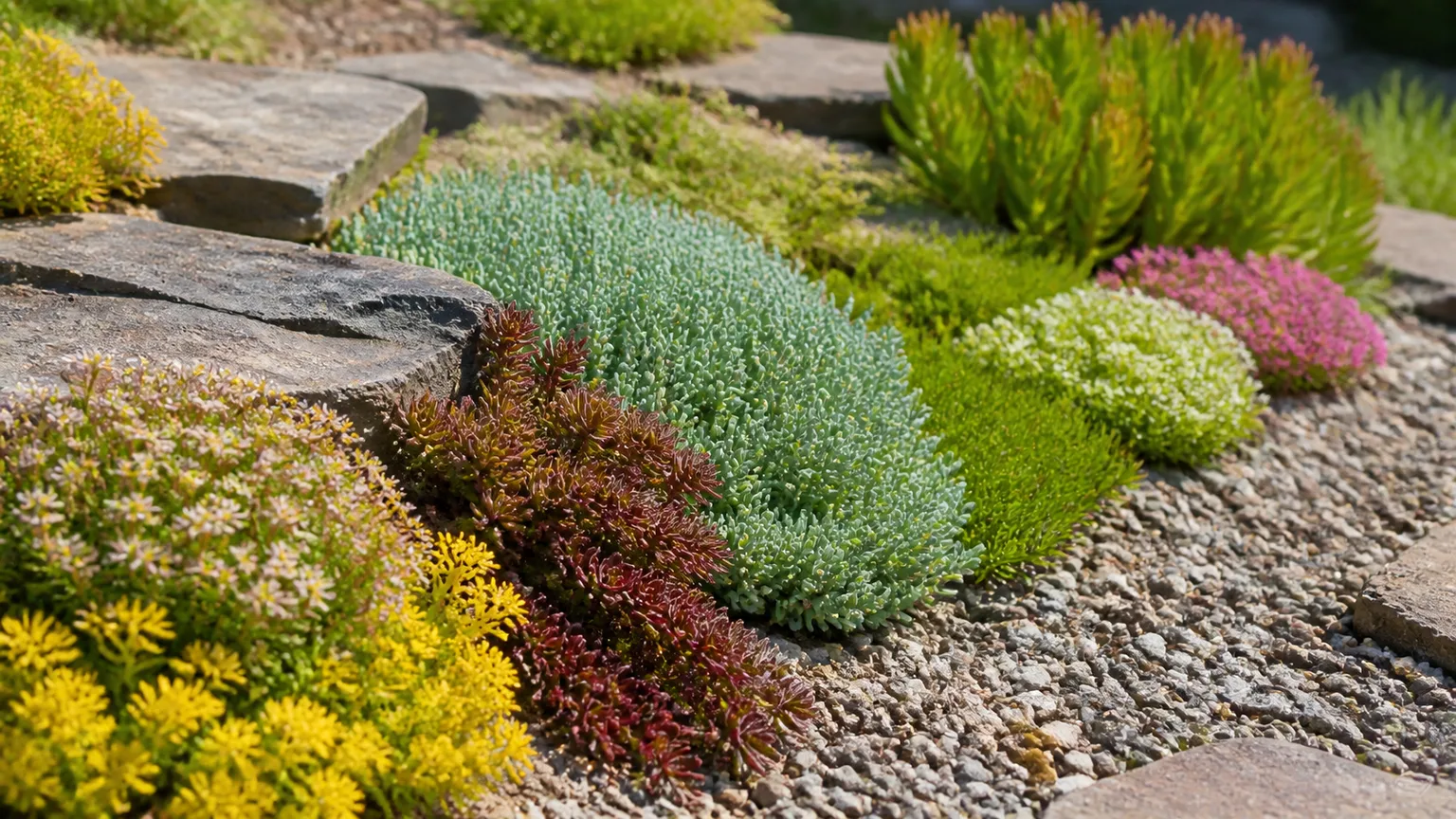
Sedum, also called stonecrop, is a useful ground cover when the site is sunny, dry, and fast-draining. Its fleshy leaves store water, its shallow roots can occupy rocky pockets, and many creeping types spread into a low mat that softens gravel, stone walls, slopes, and bed edges.
The important catch is that sedum is a large group, not one predictable plant. Some varieties stay only a few inches tall and creep outward; others form small mounds; upright types such as ‘Purple Emperor’ are better border plants than ground covers. The 11 choices below are organized around that difference so you can choose for the space you have, not just for flower color.
Sedum is not one growth habit
The National Garden Bureau’s sedum overview separates stonecrops into upright autumn stonecrops, compact clumping sedums, and low, spreading ground-cover sedums. The Royal Horticultural Society’s plant profile likewise describes a broad group of annuals and perennials with succulent stems and leaves and small, star-shaped flowers.
Creeping mats
Creeping sedums are the closest match for a true ground-cover job. They hug the soil, send stems sideways, and fill gaps between rocks or along a dry edge. Their spread is not automatically a problem, but the mature width on the plant tag matters: a variety that is perfect for a wall crevice may be too vigorous for a narrow border beside delicate perennials.
These are also the sedums most often mistaken for a lawn alternative. They can handle an occasional brush from a shoe when planted beside a path, but routine walking breaks their stems and creates bare patches. Use stepping stones for the traffic lane and plant sedum in the spaces around them.
Compact clumps and upright stonecrops
Compact types form a low mound instead of a broad carpet. They work well in rock gardens and at the front of a border, but they may not knit together as quickly as a mat-forming cultivar. Upright stonecrops are even less suitable for ground-cover duty: they provide late-season flowers and strong vertical structure, but they occupy a footprint rather than covering the soil.
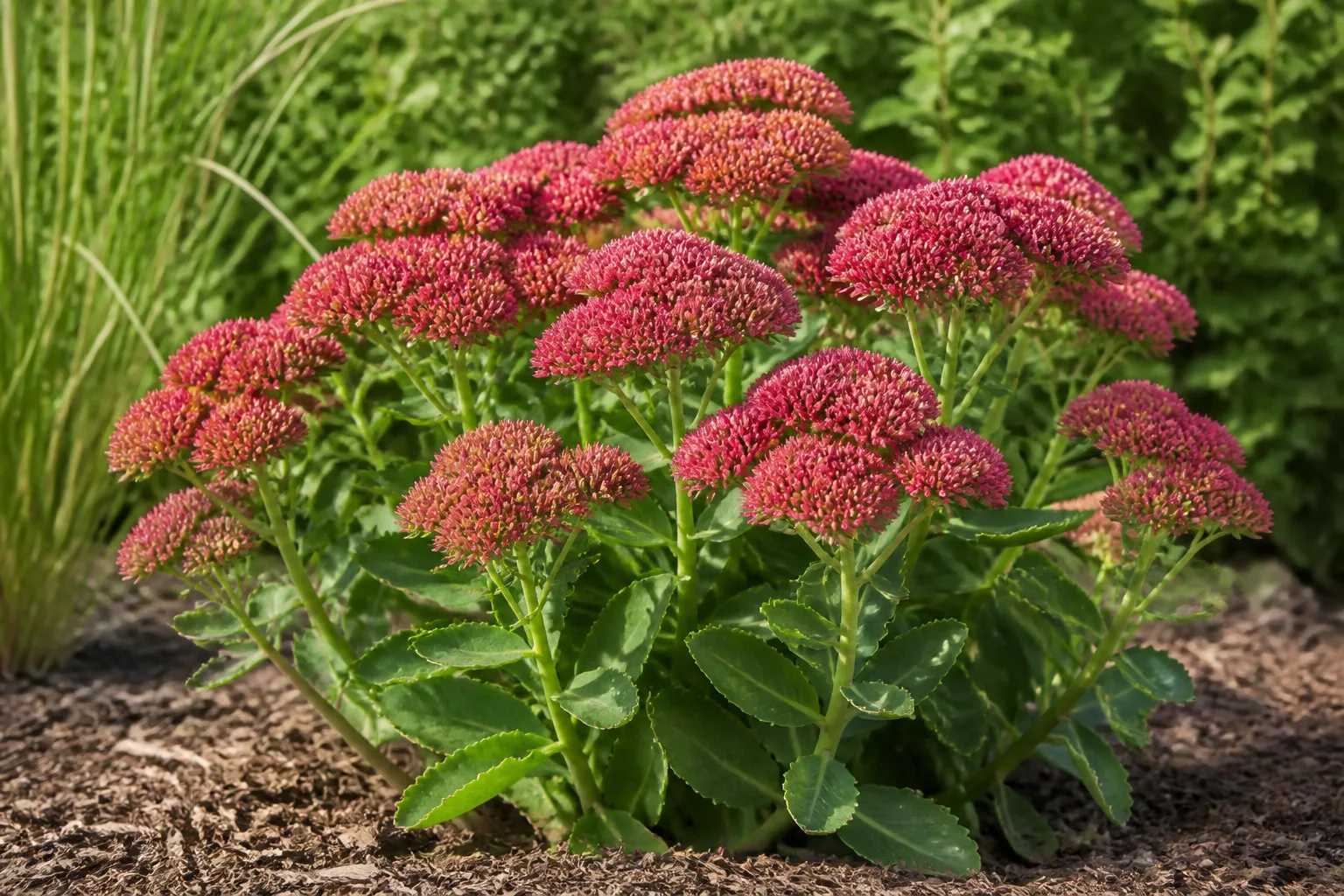
This distinction also explains why two plants sold under “sedum” can need different spacing. Garden Design reports creeping forms at roughly 2 to 6 inches tall and up to 24 inches wide, while taller forms can reach about 2 feet tall and wide. Treat every number below as a selection guide, then confirm the tag for the exact cultivar and your local climate.
11 sedum ground cover varieties, compared by site and spread
1. White sedum (Sedum album)
White sedum is a restrained, fine-textured choice for thin soil, gravel, and rocky embankments. It forms a low mat of green foliage, blooms with small white flowers in summer, and can blush pink or red as temperatures fall or the plant experiences dry stress. That seasonal color is a feature, not a sign that the plant needs immediate rescue, provided the leaves remain firm.
Choose it when you want a quieter green carpet that will not dominate a small rock garden immediately. It is slower than vigorous cultivars, so space plants close enough to eventually meet but leave a little air between rosettes; bare soil in the first season is normal.
2. ‘Murale’ (Sedum album ‘Murale’)
‘Murale’ keeps the same low, creeping role as white sedum but brings bronze foliage and pink flowers to the planting. It is a good transition between gray stone and green plants, especially where a solid gold or red carpet would be too loud.
Use it in a sunny wall pocket, gravel edge, or dry container where you can see the foliage up close. Like other small sedums, it needs more patience than the word “ground cover” suggests: young plants still have to root before they can fill the gap between them.
3. Cascade stonecrop (Sedum divergens)
Cascade stonecrop, also called spreading stonecrop, is a looser, more outward-growing option with green leaves that can take on reddish tones in strong sun. Yellow flowers appear in summer, and the stems can travel farther than the tidy, cushion-like forms.
This is a strong candidate for a slope, the top of a retaining wall, or a place where a little irregularity looks natural. It is a poor choice for a formal strip that must stop at a sharp line unless you are willing to trim or redirect stems. Give it a visible boundary and check the edges during the growing season.
4. Pink Mongolian stonecrop (Hylotelephium ewersii)
Pink Mongolian stonecrop is often sold under the older name Sedum ewersii. Its blue-gray leaves and late-summer pink flowers make it attractive in a rock garden, but its compact habit is closer to a small clump than a fast, soil-hugging carpet.
Choose it for a pocket where flower color and foliage are more important than rapid coverage. It can take full sun and some partial shade, especially in a hot climate, but shade usually means less dense growth and more need to watch for wet soil. Cut back the old stems after they die down if you prefer a tidy winter bed.
5. ‘Blue Spruce’ sedum (Sedum reflexum ‘Blue Spruce’)
‘Blue Spruce’ is named for its blue-green, needle-like leaves, which give a dry bed the texture of a miniature evergreen. It spreads into a dense, low mat and produces yellow flowers in summer. Plant names vary: it may appear as Sedum reflexum, Sedum rupestre, or simply “Blue Spruce sedum” on a nursery label.
This is one of the best all-purpose choices in the list for a sunny rock garden, gravel path edge, or dry slope. It gives you a strong foliage effect before flowering, and the blue color pairs well with purple, pink, and white flowers. Keep it out of rich, wet beds where its stems can stretch and the roots can rot.
6. Japanese stonecrop (Hylotelephium sieboldii)
Japanese stonecrop is another plant commonly filed under the old name Sedum sieboldii. It forms low, arching growth with blue-gray leaves edged in red and produces hot-pink flowers in fall. The red margins become more noticeable when the plant receives enough light and experiences the seasonal cooling that brings out its color.
Use it to brighten a sunny border edge, trough, or rock garden that has excellent drainage. It tolerates some light shade, but a deeply shaded or constantly damp site defeats the reason to plant it. Because it is a compact clumper rather than a relentless runner, it works well where you want clear spacing between accents.
7. ‘Purple Emperor’ (Hylotelephium telephium ‘Purple Emperor’)
‘Purple Emperor’ is the deliberate exception in this list. Its plum-purple foliage and pink flower clusters are valuable in a dry border, but the plant is more upright and mounded than the low stonecrops above. It is not the variety to buy when your main goal is a carpet that hides bare soil.
Choose it as a vertical punctuation mark among creeping sedums, ornamental grasses, or silver-leaved perennials. Its height helps a flat rock garden feel layered, while its dark foliage makes gold, blue, and green ground covers easier to see. If you need true ground cover, use it as the anchor and fill around it with a mat-forming type.
8. ‘Angelina’ stonecrop (Sedum rupestre ‘Angelina’)
‘Angelina’ is a vigorous, gold-green ground cover with narrow leaves that can turn orange or bronze in cool weather. It produces small yellow flowers and spreads quickly enough to cover an open gravel bed, slope, or wall edge. The National Garden Bureau lists it among its ground-cover sedums and describes it as a fast-spreading plant for erosion control and rock gardens.
This is the best pick here when you want color and quick coverage, but its energy is also the main caution. Do not tuck it directly against slow, delicate alpine plants unless you plan to divide or trim it. “Vigorous” is more accurate than a universal “invasive” label: local climate and the neighboring plants decide whether it behaves politely, so check local invasive-plant guidance before using it near natural areas.
9. Chinese sedum ‘Coral Reef’ (Sedum tetractinum ‘Coral Reef’)
‘Coral Reef’ brings warm yellow-green foliage to a low, spreading planting and may show blush or bronze tones as conditions change. Small white to pink flowers are secondary to the foliage effect, which is why it works particularly well in a mass planting against dark stone or green companions.
Use it in a sunny or lightly shaded rock garden, container, or dry bed where the soil drains quickly. It is a useful choice when you want a lower, brighter carpet than ‘Blue Spruce’ or ‘Angelina’. Avoid placing it where irrigation overspray keeps the foliage wet and the soil saturated.
10. Russian stonecrop (Sedum kamtschaticum)
Russian stonecrop is a dependable, low-growing filler with green foliage, yellow flowers, and bronze tones in fall. It is suited to the cracks of stone walls, the front of a rock garden, and sunny spaces where you want a plant to knit together without the taller bulk of an upright sedum.
Choose it for a balanced middle ground: faster and more visible than a very small white sedum, but less color-dominant than a gold cultivar. It can tolerate some partial shade, yet more direct light usually means denser growth and better flowering. Keep the crown slightly above any spot where water collects.
11. Golden Japanese stonecrop ‘Ogon’ (Sedum makinoi ‘Ogon’)
‘Ogon’ is a tiny, mat-forming stonecrop with bright yellow-green leaves. It is especially useful for edging, troughs, containers, and partial-sun rock gardens where a full-sun cultivar would scorch or where you want a small patch of luminous foliage.
The trade-off is its narrower climate range compared with many hardy creeping sedums. Treat the nursery tag as the final authority for winter survival, and do not assume a plant that thrives in a mild coastal garden will overwinter outdoors in a cold, wet site. ‘Ogon’ is a detail plant: give it a clearly defined pocket rather than expecting it to cover a large bank quickly.
How to choose the right sedum for your space
Start with the failure you are trying to prevent. For a narrow rock crevice, pick a compact or slower form such as white sedum, ‘Murale’, or ‘Ogon’. For a broad sunny slope or wall edge, choose a more vigorous mat former such as ‘Angelina’, ‘Blue Spruce’, cascade stonecrop, or Russian stonecrop. For a border that needs height as well as low foliage, combine one upright plant such as ‘Purple Emperor’ with a creeping variety rather than asking the upright plant to cover the ground.
Then measure light and moisture, not just the empty space. Most stonecrops perform best with at least six hours of direct sun, although some tolerate partial shade. The RHS profile for Oregon stonecrop illustrates the core pattern: a compact, mat-forming plant in full sun, well-drained soil, and a drought-tolerant setting. A low spot that stays damp after rain is the wrong site for nearly every choice on this list, regardless of how dry the summer forecast looks.
Finally, confirm the mature spread and hardiness on the label. The Garden Design sedum guide lists varieties across roughly USDA Zones 3 through 11, but that is a range for the group, not a guarantee for one cultivar. A tag’s zone range, exposure notes, and winter behavior are more useful than a generic “hardy sedum” description.
How to plant and care for sedum ground cover
Test drainage before you buy several plants. Dig a hole about 12 inches deep, fill it with water, let it drain, and fill it again; if water remains for hours, raise the bed, use a slope, improve the site’s structure, or choose a different plant. Adding rich compost to a wet hole does not turn it into a dry bed. Sedum prefers lean, gritty, or sandy soil, and the National Garden Bureau’s growing guidance cautions that excess water and fertilizer can produce weak, stretched growth.
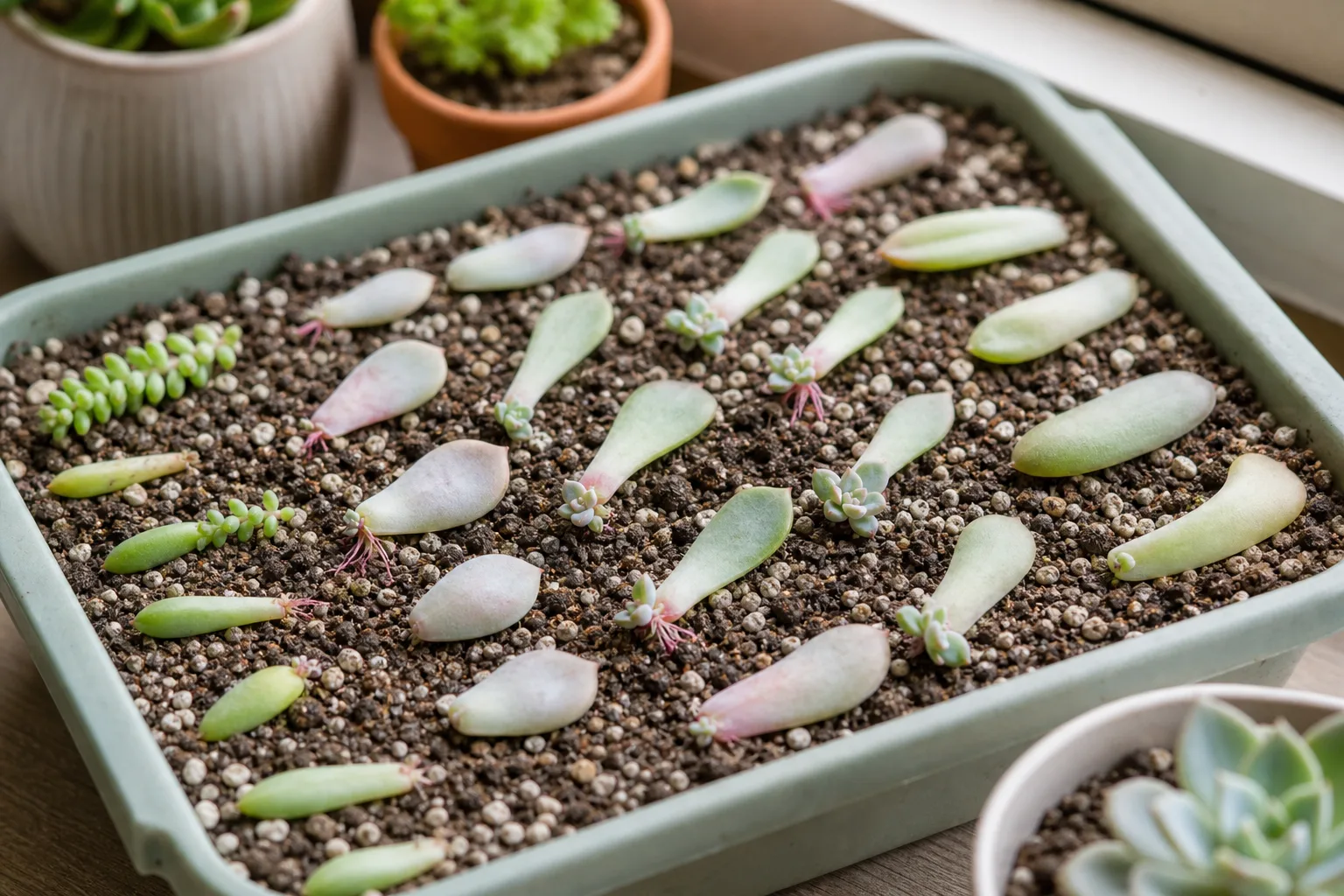
Plant at the same depth as the nursery container, keeping the crown at the soil surface. Space by mature spread: close enough that the plants can eventually meet, but not pressed together at installation. A small gap improves airflow and gives each root ball room to establish. Water thoroughly after planting so the soil settles around the roots.
For the first few weeks, check the soil rather than following a fixed drought schedule. New roots need consistent moisture, but the surface should be allowed to dry between waterings. Once plants are established, water deeply only when the soil has dried and weather has been unusually hot or dry. Gardener’s Path gives the same practical test for established stonecrop: irrigate when the top couple of inches of soil are dry, not simply because the calendar says it is watering day.
Skip routine fertilizer in decent soil. Too much nitrogen encourages soft, leggy growth and reduces the tight, colorful habit that makes sedum useful. Remove dead or damaged material in spring, trim a runner that crosses its boundary, and leave upright flowerheads through winter if they add structure or provide seed for birds. The Annie’s Annuals selection guide recommends occasional trimming and emphasizes that different ground-cover sedums spread at different rates.
Common limits: spread, rot, and foot traffic
Sedum can reduce exposed soil and make it harder for some weeds to find open space, but it does not eliminate weeding. Weed the bed while the plants are young, and avoid piling mulch over the succulent stems. Once a mat has filled in, pull weeds carefully so you do not uproot shallow sedum runners with them.
Brown patches do not always mean a pest. When a fleshy leaf looks swollen, cracked, or tan after a wet spell, overwatering or high humidity may have caused edema. When the crown is soft, the base darkens, and the soil stays wet, suspect rot and correct drainage first. The Garden Design guide describes this swelling-and-bursting pattern as an overwatering problem, while the RHS notes that even drought-tolerant Oregon stonecrop can be susceptible to crown and root rots in unfavorable conditions.
Do not promise yourself a walkable lawn. Sedum is suitable around stepping stones, not as a regular tread surface. If the planting will receive wheelbarrows, children’s play, or repeated shortcut traffic, install a path and let the sedum frame it. This small design decision protects the mat and keeps the ground cover from becoming a patchwork of broken stems.
Conclusion
The best sedum ground cover is the one whose growth habit fits the site. Choose white sedum, ‘Murale’, or ‘Ogon’ for small pockets; ‘Angelina’, ‘Blue Spruce’, cascade stonecrop, Russian stonecrop, or ‘Coral Reef’ for a low carpet; and compact or upright types such as pink Mongolian stonecrop, Japanese stonecrop, or ‘Purple Emperor’ when you want structure rather than rapid coverage.
Give every variety sharp drainage, strong light, measured first-season watering, and enough room to reach its mature spread. Treat vigorous runners as plants to manage, not as automatic invasives, and keep paths separate from the planting. With those decisions made before you dig, stonecrop can cover difficult ground with color and texture while asking for far less water than a conventional lawn.



