Beneficial Insects for Garden Pest Control
Learn which beneficial insects control aphids, thrips, caterpillars, and mites, why bought ladybugs often leave, and how to build a garden that keeps predators.

Yes, more bugs can be part of the answer to a garden pest problem—but the best first move is usually to protect the beneficial insects already nearby, not order a box of live insects. Lady beetles, lacewing larvae, hover fly larvae, tiny parasitoid wasps, predatory mites, ground beetles, and spiders can suppress pests when the garden provides food, shelter, and time for the right predator to find the right prey.
The catch is that “beneficial insect” is not a single treatment. A lady beetle that finds aphids will not solve a root pest, and a flower that feeds adult wasps will not erase a caterpillar outbreak overnight. Use the sequence in this guide—identify the pest, match the natural enemy, improve habitat, and escalate carefully—and biological control becomes a useful layer of integrated pest management rather than a garden superstition.
The Short Answer: Encourage Resident Predators First
For most outdoor vegetable and flower gardens, encourage resident natural enemies before buying them. They are already adapted to the local climate, can move between plants as prey changes, and are less likely to vanish the moment the container opens. A garden with some tolerable aphids, flowering plants, leaf litter, and limited pesticide use is more likely to build a lasting predator population than a tidy bed that receives a mass release and then gets sprayed.
Use this decision rule before spending money:
| What you see | Best first move | Why |
|---|---|---|
| A few aphids, no curling or stunting | Wash sturdy foliage, monitor, and preserve predators | Small colonies can support natural enemies without serious plant injury. |
| Aphids plus ants climbing stems | Check the aphids and reduce ant protection of the colony | Ants may collect honeydew and drive away lady beetles and parasitoids. |
| Thrips, mites, or whiteflies | Confirm the pest on leaf undersides and choose a matched IPM plan | Different pests occupy different places and life stages; one released bug will not cover all of them. |
| Chewed leaves or caterpillar droppings | Hand-pick first, then consider a crop-appropriate biological or microbial control | A predator release is rarely the fastest response to visible chewing damage. |
| A greenhouse or screened enclosure | Consider a reputable, pest-specific biological-control supplier | Containment improves the odds that a purchased natural enemy will stay and encounter prey. |
The goal is suppression, not a sterile garden. A healthy outdoor ecosystem can contain a few pests without allowing them to reach damaging levels. The UC Statewide Integrated Pest Management Program recommends identification and a combination of cultural, mechanical, biological, and selective chemical controls, with pesticides reserved for situations in which nonchemical options are not enough.
How Beneficial Insects Work
Biological control uses living organisms to reduce a pest or the damage it causes. Some helpful insects hunt several prey during their lives; others develop on or inside one host; still others are valuable because the adult stage supplies pollination while the immature stage hunts pests.
Natural enemies also work at different speeds. A lacewing larva can attack an aphid colony as soon as it encounters one, while a parasitoid wasp may leave a visible aphid mummy before the next generation emerges. Habitat changes take longer still, but they can support predators across the season instead of giving you one short-lived intervention.
Predators, Parasitoids, and Pollinators
Predators kill and eat multiple prey. Lady beetles and their larvae, lacewing larvae, minute pirate bugs, predatory mites, assassin bugs, ground beetles, and spiders are in this group. A predator may be broad-feeding or highly selective, so its presence is useful only if the pest it can attack is actually present.
Parasitoids develop on or inside a host and eventually kill it. Many are tiny wasps that cannot sting people. Aphid parasitoids can turn a living aphid into a tan, hardened “mummy,” while egg parasitoids attack moth or butterfly eggs before caterpillars hatch. The UC IPM natural-enemy guide lists parasitoid wasps for aphids, caterpillars, scales, whiteflies, and other pests.
Pollinators are not automatically pest controllers, but they are part of the same garden support system. Hover fly adults visit flowers while their larvae eat aphids; bees and butterflies pollinate crops and flowers. Keeping the categories separate helps you choose a plant for its real job rather than assuming every colorful flower repels every pest.
Identify the Pest Before Choosing a Helper
Correct identification is the step that makes biological control work. “Something is eating my plant” does not tell you whether to look for a lacewing larva, a parasitic wasp, a predatory mite, a row cover, or a treatment aimed at soil-dwelling larvae. The damage pattern, the plant part involved, and the insect’s behavior are more useful than color alone.
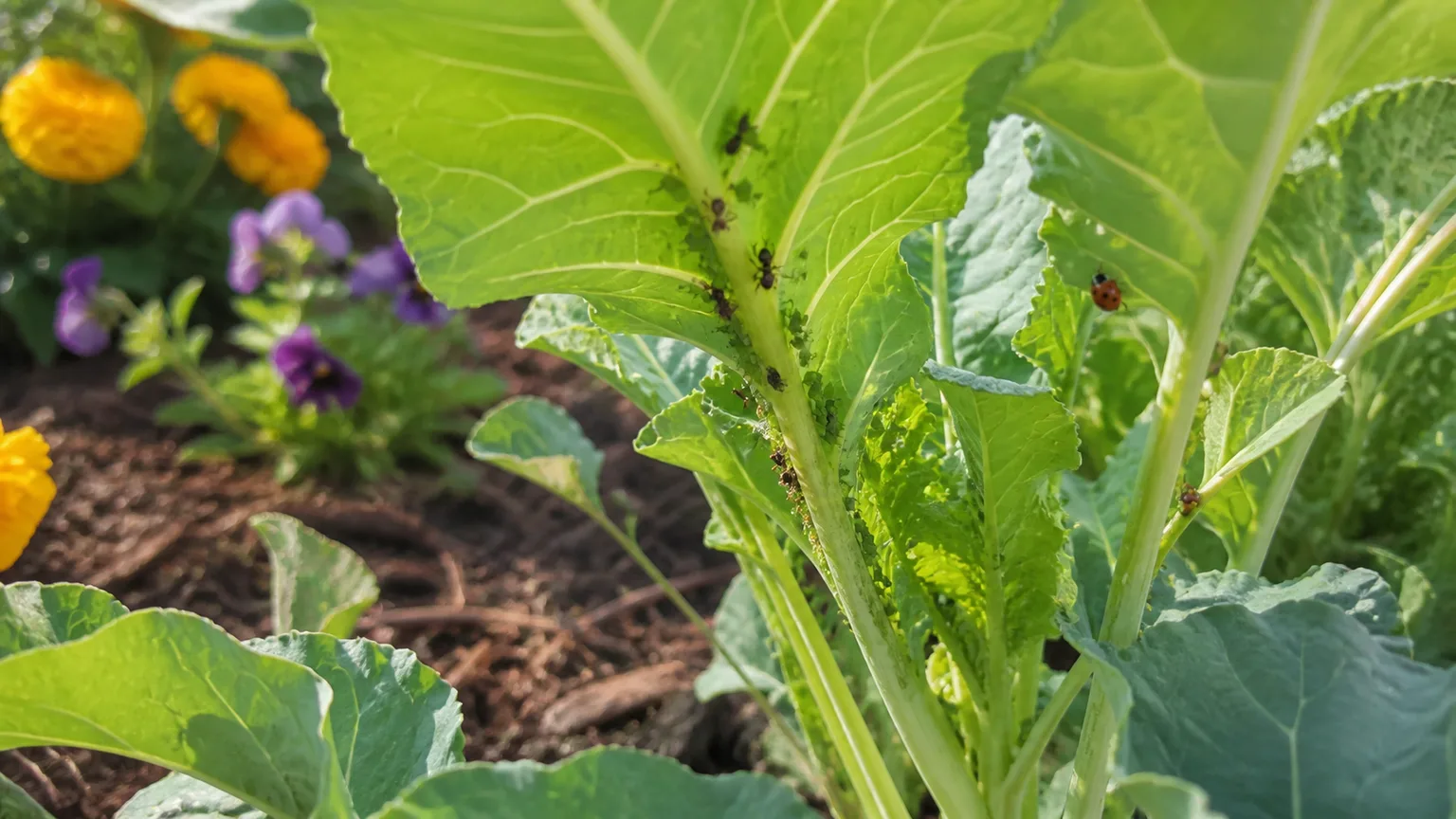
Spend a minute looking before you disturb the plant. Check new growth and the undersides of leaves with a hand lens, tap the foliage over a white sheet, and note whether the insect runs, flies, jumps, sucks, or chews. Photograph the pest and the damage together; a clear close-up is often enough for a local Extension office or Master Gardener program to narrow the identification.
The 30-Second Scouting Check
- Inspect the newest growth. Aphids, thrips, and whiteflies often gather around tender shoots, buds, and leaf undersides. Distorted leaves, sticky honeydew, or black sooty growth are clues, not diagnoses.
- Disturb the plant gently. A white cloud that lifts and resettles suggests whiteflies; a cluster that stays attached may be aphids or scale. Tiny fast-moving insects on flowers or leaf undersides may be thrips.
- Look for the helpers before removing anything. A black-and-orange, alligator-shaped larva may be a lady beetle larva, not a caterpillar. Lacewing eggs sit on slender stalks, and tan aphid mummies can show that parasitoids are already working.
- Match damage to feeding style. Holes and frass point toward chewing insects; stippling or silvery scarring suggests sap-feeders; wilt from a severed stem or root damage calls for a different investigation.
- Estimate the spread. Record whether one shoot, one plant, or the whole bed is affected. That tells you whether hand removal is sensible and gives you a baseline for judging whether predators are reducing pressure.
The N.C. Cooperative Extension garden scouting guide recommends frequent garden visits and emphasizes that larvae of beneficial insects may eat as much as, or more than, adults. Do not identify a bug by the adult you hope it will become; identify the life stage actually on the plant.
Which Beneficial Insects Match Common Garden Pests
Natural enemies are not interchangeable. The following matches are a practical starting point, but local species and crop conditions vary. If a pest is damaging a valuable crop, verify the identification with a regional Extension service before releasing anything or applying a pesticide.
Aphids, Whiteflies, and Other Soft-Bodied Pests
Aphids are the easiest place to see biological control in action. Lady beetle larvae and adults, lacewing larvae, syrphid fly larvae, and aphid parasitoid wasps all attack aphids. Lady beetle larvae look nothing like the round adults, so a gardener who recognizes only the red or orange beetle may accidentally kill the most voracious stage.
For a light aphid colony on a sturdy plant, use a firm stream of water to dislodge insects, then recheck new growth. Avoid excess nitrogen while aphids are active because lush, soft shoots can support faster colonies. If ants are repeatedly climbing stems, investigate the ant–aphid relationship; ants may collect honeydew and interfere with predators.
Whiteflies and scale insects need more patience because eggs, nymphs, and adults can occupy protected surfaces at the same time. Lacewings, lady beetles, minute pirate bugs, and parasitoid wasps may contribute, but a heavy population on leaf undersides can outpace them. Remove badly infested leaves when the plant can spare them, improve airflow, and use only a labeled, least-disruptive control if monitoring shows the damage is increasing.
Thrips and Spider Mites
Thrips are a poor target for a casual “release some good bugs” approach. Their eggs and pupae can be protected in plant tissue or growing media, adults move quickly, and damage may become visible after the insects have already moved on. Minute pirate bugs, predatory mites, lacewings, and some predatory thrips are relevant natural enemies, but the match must fit the species, crop, humidity, and life stage.
The UC IPM thrips guidance notes that research-based evidence for releasing purchased natural enemies in many garden and landscape situations is limited. It also recommends cultural steps such as controlling nearby weeds that host thrips, avoiding excessive nitrogen, and using fine-mesh row covers on young pest-free plants when exclusion is practical.
Spider mites are more likely in hot, dry, dusty conditions and often show as fine stippling or webbing. Predatory mites and specialist predatory lady beetles can help, but an indiscriminate spray can remove those allies and trigger a rebound. Check the leaves with a hand lens before deciding whether you have pest mites or active predatory mites; behavior and population pattern matter.
Caterpillars and Beetle Pests
Caterpillar control is often a timing problem. Parasitic wasps, tachinid flies, predatory bugs, lacewing larvae, birds, and spiders can attack caterpillars or their eggs, but they cannot undo leaves that have already been eaten. Hand-pick large, visible caterpillars, remove egg masses when practical, and consider a crop-appropriate microbial such as Bt only when the label and target caterpillar fit.
Beetle pests are even less uniform. Some predatory ground beetles hunt other insects in the soil and leaf litter, while Japanese beetles, Colorado potato beetles, and Mexican bean beetles feed on plants. A shiny, spotted beetle is not automatically an ally. The Colorado State University Extension lady beetle guide specifically notes that Mexican bean beetles feed on bean foliage and pods even though they resemble beneficial lady beetles.
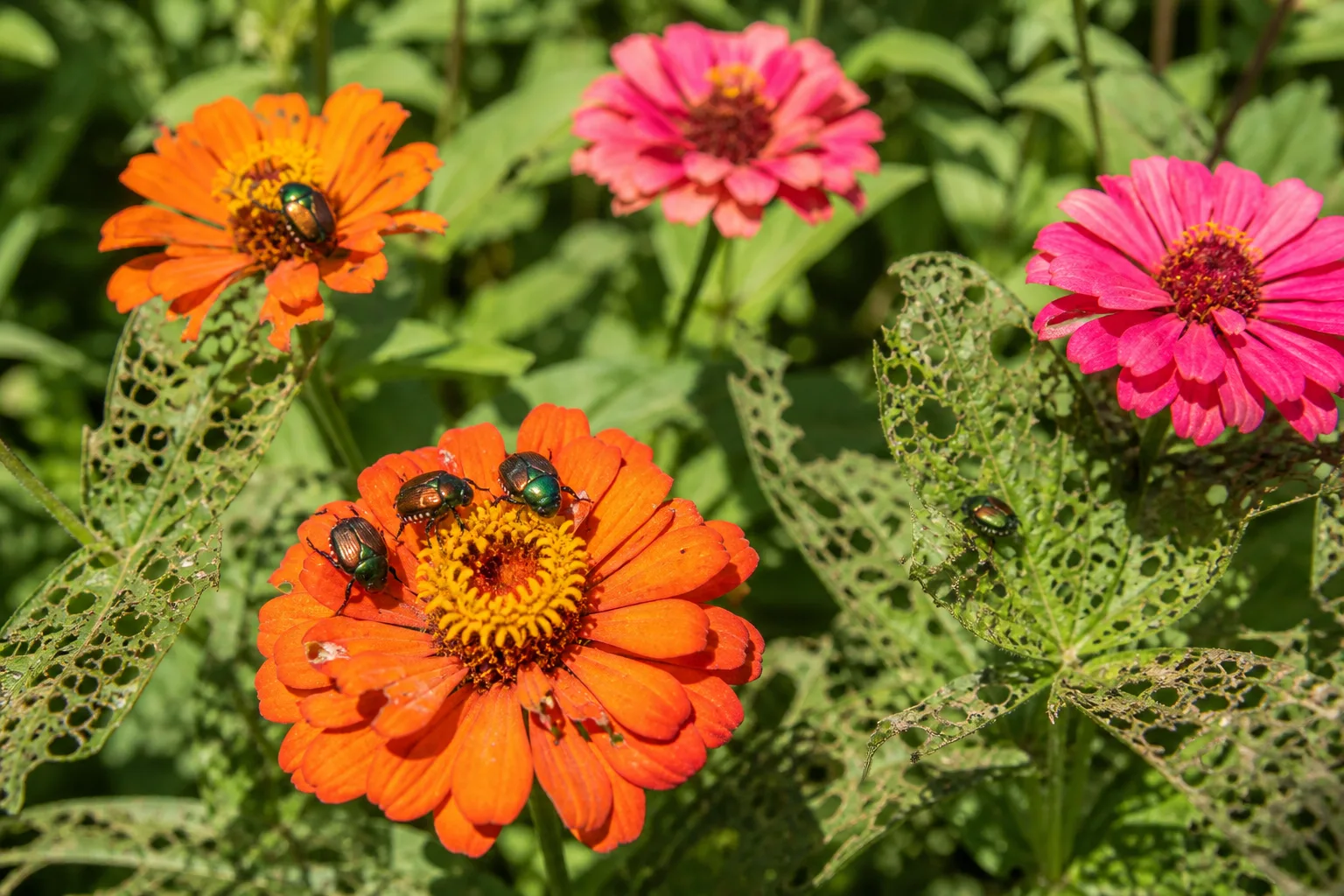
For adult Japanese beetles, a mass release of lady beetles is not a dependable fix. Hand-pick adults into soapy water in the morning when they are sluggish, protect high-value plants with physical barriers where feasible, and deal with grubs only when a confirmed, meaningful lawn or crop problem justifies it. Use beneficial insects as one part of a pest-specific plan, not as a universal antidote to every beetle.
Why Purchased Ladybugs Often Disappoint
The ladybug release is attractive because the insects are familiar, visible, and easy to buy. The problem is that many commercially sold lady beetles are field-collected convergent lady beetles gathered from seasonal aggregations, then shipped while in a dormant or reproductive-diapause state.
The Colorado State Extension account explains that released lady beetles are highly dispersive and often leave the garden, while the University of Georgia Extension discussion reports that about 95 percent may leave within 48 hours under the conditions it describes. The University of Nevada Reno Extension review also summarizes ecological concerns around moving large numbers of wild-caught beetles, including possible parasites, disease transmission, and disruption at collection sites.
That does not mean lady beetles are bad insects. It means a container of adult beetles is not the same thing as an established local population. If there is little prey, the weather is hot, or the beetles are ready to disperse, releasing more of them may simply send your purchase into neighboring yards while the original pest problem remains.
When a Release Can Make Sense
Augmentation can be more defensible in a greenhouse, screened enclosure, or carefully managed crop where the supplier can match the natural enemy to the pest and the insects cannot immediately fly away. It can also be reasonable when a reputable supplier provides a raised, correctly identified species with release instructions, the pest is confirmed, prey is present, and no incompatible pesticide residue remains.
For an outdoor home garden, habitat is usually the better investment. If you still release lady beetles, do it only after reading the supplier’s identification and regional guidance; release in a cool, shaded period near active prey, avoid direct spraying, and understand that short-term feeding is not proof of establishment. Never release an unknown species into a natural area, and do not assume “native” or “organic” on a package guarantees ecological safety.
Build a Garden That Keeps Natural Enemies
Natural enemies stay where the garden meets more than one need. They require prey or alternate food, nectar or pollen for many adult stages, water, shelter, and a pesticide program that does not remove them as soon as they arrive. A flowering border can attract insects, but it cannot compensate for repeated broad-spectrum spraying.
Flowers for Nectar and Pollen
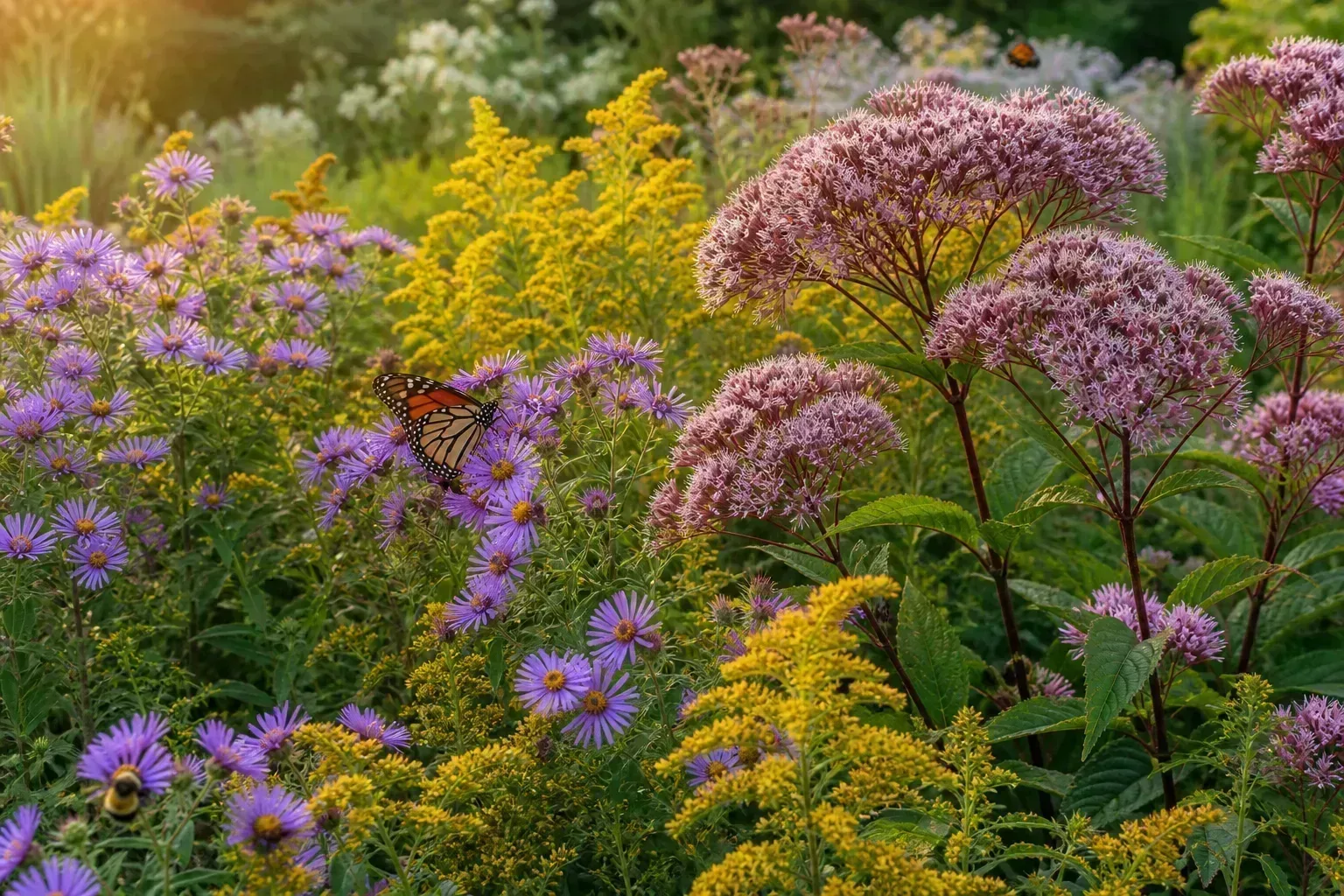
Choose plants that flower in sequence rather than one short burst. Dill, cilantro, parsley, fennel, and sweet alyssum provide accessible flowers for small wasps and flies; yarrow, cosmos, coneflower, sunflower, goldenrod, and other aster-family plants support larger predators and pollinators. Native plants adapted to your region are a strong starting point, especially when they bloom at different times.
The Penn State Extension guide to attracting beneficial insects recommends a diverse mix of annuals, perennials, shrubs, and other plantings with flowers available from early spring through late fall. The UC IPM insectary-plant guidance adds an important limitation: insectary plants need management, may compete for space, can host pests, and do not automatically increase biological control in every garden.
Let a few culinary herbs flower specifically for insects instead of harvesting every stem. Put host plants that attract crop pests at the outer edge or choose alternatives after checking local pest guidance; a plant marketed as a “companion” can still create a reservoir of the same pest you are trying to manage.
Water, Shelter, and an Untidy Edge
Add a shallow saucer with pebbles or sticks so insects can drink without drowning. Refresh it regularly, keep it away from places where it will become stagnant, and never create a deep open-water container beside edible crops. Water helps, but it is only worthwhile if the rest of the garden offers food and cover.
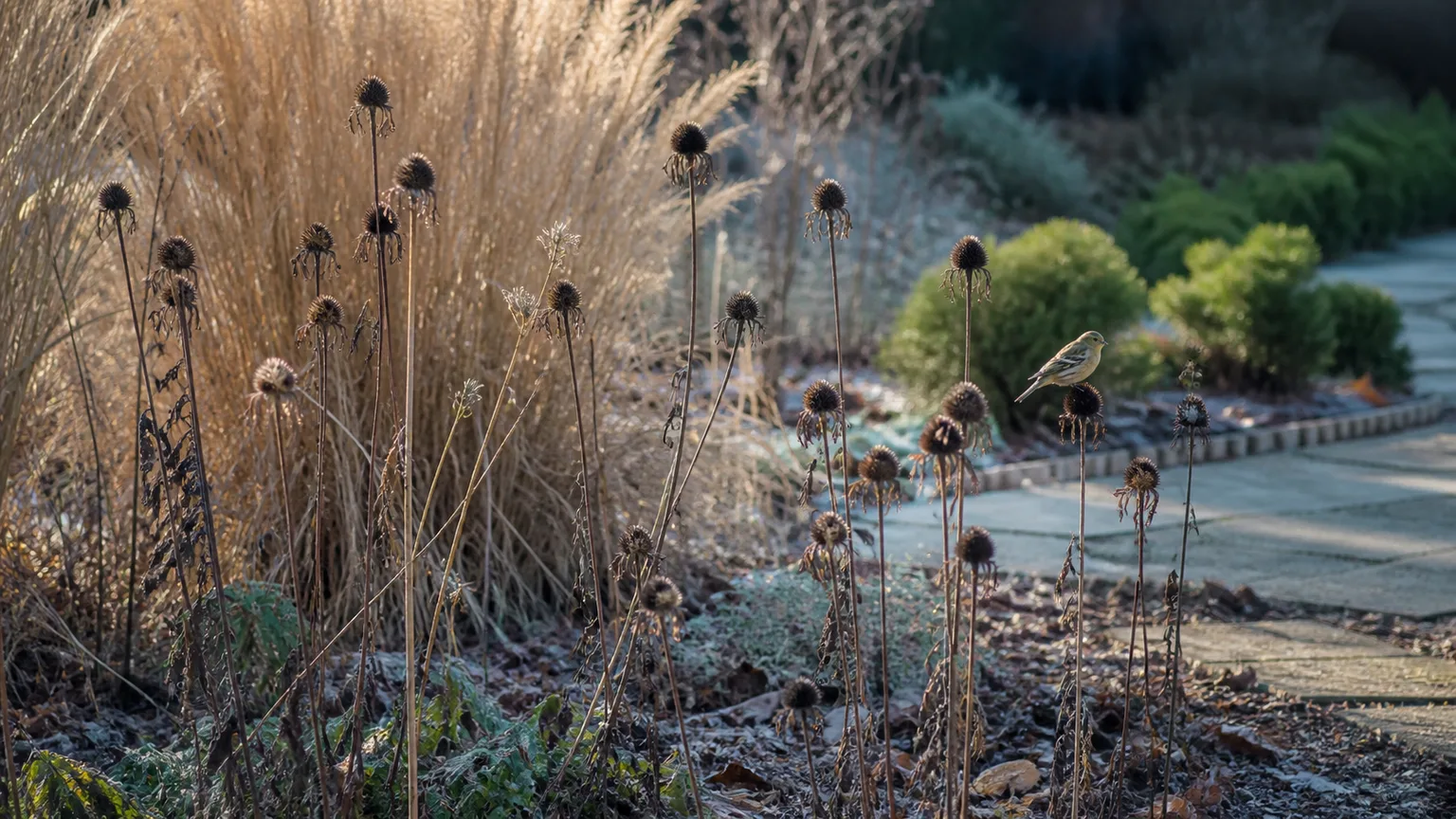
Leave some leaf litter, mulch, standing stems, and a quiet edge over winter. Ground beetles and spiders use cover near the soil, while other insects overwinter in stems, bark, or plant debris. The goal is not to let diseased debris spread through a crop; remove clearly infected material, but do not strip every healthy stem and leaf from the garden in the name of neatness.
Ant management is part of this habitat plan. If ants are protecting aphids, reduce the aphid colony with water or pruning and use a targeted approach for the ants only when they are causing measurable harm. Avoid blanket soil treatments that remove predators, pollinators, and soil organisms along with the colony you meant to control.
A Low-Spray IPM Plan for an Active Outbreak
When damage is already increasing, do not wait for a generic “good bug” to solve it. Use this sequence and pause between steps long enough to see what changed.
- Identify the pest and the life stage. Take a close photo and check whether the insect is on foliage, inside a stem, under a leaf, or in the soil. If you cannot tell, ask a regional Extension service before buying a control.
- Set a practical threshold. Decide what damage you can tolerate and which plants truly need protection. A few aphids on an established ornamental are different from virus-carrying whiteflies on a young crop.
- Start with physical control. Wash aphids from sturdy foliage, hand-pick caterpillars and beetles, prune a heavily infested shoot, use a row cover on a young pest-free crop, or remove a plant that is confirmed to carry a serious disease.
- Conserve the helpers you have. Look for lady beetle larvae, lacewing eggs, aphid mummies, hover fly larvae, spiders, and parasitized caterpillars before you spray. Ants, unnecessary nitrogen, and a completely bare garden can all undermine them.
- Add a matched biological control only when the setting fits. In a greenhouse or enclosure, follow the supplier’s release rate, temperature, humidity, and timing instructions. In an outdoor bed, a habitat improvement and pest-specific exclusion may be more reliable than purchased insects.
- Escalate selectively if damage still exceeds the threshold. “Natural” does not mean harmless to beneficials. Contact soaps and oils can kill insects they wet; Bt is target-specific to susceptible caterpillars; other products vary in residual activity and toxicity. Read the current label, avoid spraying open blooms, do not spray directly over active predators, and observe harvest and re-entry instructions.
- Recheck instead of repeating blindly. Inspect the same plants twice a week during an outbreak and compare fresh damage with old damage. If new growth is clean and predator evidence is increasing, keep the plan stable; if pressure is rising, revisit the identification and timing rather than simply doubling the product or release.
This is the core of IPM: use the least disruptive step that solves the confirmed problem, then preserve the system that will help with the next one. Harvest to Table’s vegetable-pest reference similarly emphasizes quick identification, regular observation, hand removal, and caution that insecticides can harm beneficial insects.
Common Mistakes That Undo Biological Control
Releasing before identifying. A lady beetle cannot solve a caterpillar hidden inside a stem, and a parasitoid chosen for aphids will not control every whitefly or thrips species. The pest’s location and life stage matter as much as its name.
Buying adult ladybugs as a rescue treatment. If there is no prey or the weather is hot, they may leave quickly. If the beetles are dormant and field-collected, they may not reproduce immediately. Use habitat and local populations as the default outdoor strategy.
Spraying the flowers that are meant to feed predators. A broad-spectrum or persistent product can erase the insects you were trying to attract. Even a lower-residual soap or oil can injure a beneficial on contact, so spray only when warranted and target the pest’s hiding places.
Killing larvae because they look unfamiliar. Lady beetle larvae are dark and spiny, lacewing larvae can look fierce, and syrphid larvae can resemble small legless caterpillars. Learn the immature forms before you clean a colony from a leaf.
Planting one flower and expecting year-round control. A single flush of blooms creates a short food window. Plan overlapping flowering periods and leave some shelter after the flowers fade.
Trying to eliminate every pest. Predators need prey, and a garden with zero visible insects is not a realistic or necessary target. Watch plant vigor and fresh damage, not the mere presence of a bug.
When Beneficial Insects Are Not Enough
Biological control is a poor fit when the pest is already causing irreversible injury, the natural enemy cannot reach the damaging stage, or the crop has a narrow tolerance for damage. Virus-vectoring whiteflies and thrips, stem borers, root-feeding larvae, and a rapidly collapsing seedling may need immediate, pest-specific action while habitat work continues for the next cycle.
The same is true for a greenhouse with repeated introductions of pests on plant material. A contained environment can make purchased natural enemies more practical, but it also makes sanitation, quarantine, humidity, crop spacing, and release timing more important. Use the supplier’s species-level instructions and local legal label requirements rather than copying an outdoor release rate.
If the plant is valuable, the pest is unfamiliar, or the damage keeps increasing after two careful monitoring cycles, contact a local Extension office, certified crop adviser, or qualified horticultural professional. A precise diagnosis is usually cheaper than a rotating collection of live insects and sprays that each miss the problem for a different reason.
Conclusion
The most reliable “good bugs” strategy is to make your garden worth staying in. Identify pests early, preserve the predators and parasitoids already present, grow a succession of accessible flowers, provide shallow water and shelter, and use targeted controls only when fresh damage crosses a threshold.
Buy beneficial insects only for a clearly matched, well-managed situation—especially a greenhouse or screened enclosure—and treat mass outdoor ladybug releases with skepticism. More bugs can help, but the real advantage comes from building a garden where the right bugs can find food, reproduce, and return next season.



