Groundcovers and Vines: How to Choose and Grow Them
Choose groundcovers and vines by light, soil, spread, and support. Learn how to prepare beds, cover slopes, train climbers, and keep growth in bounds.
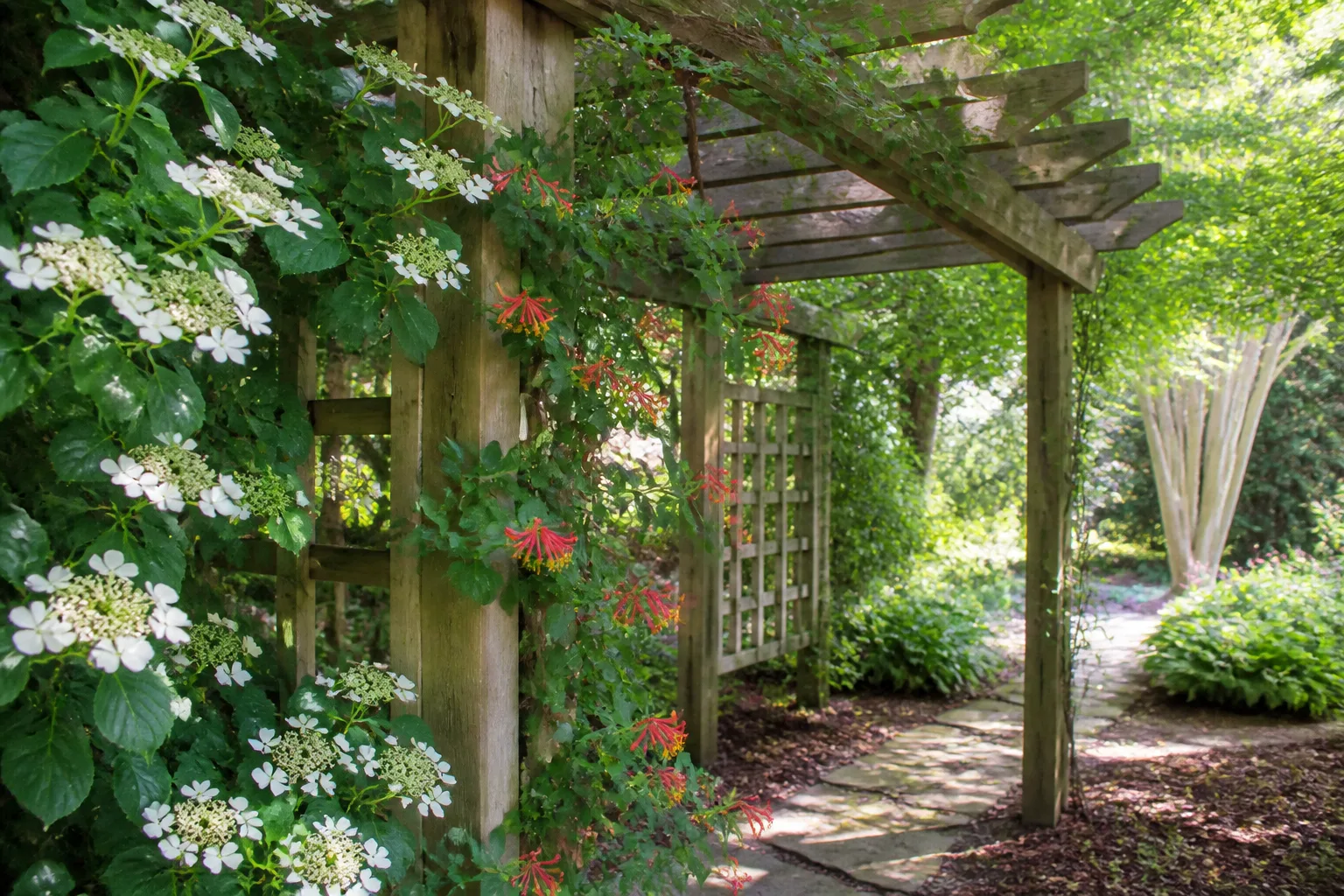
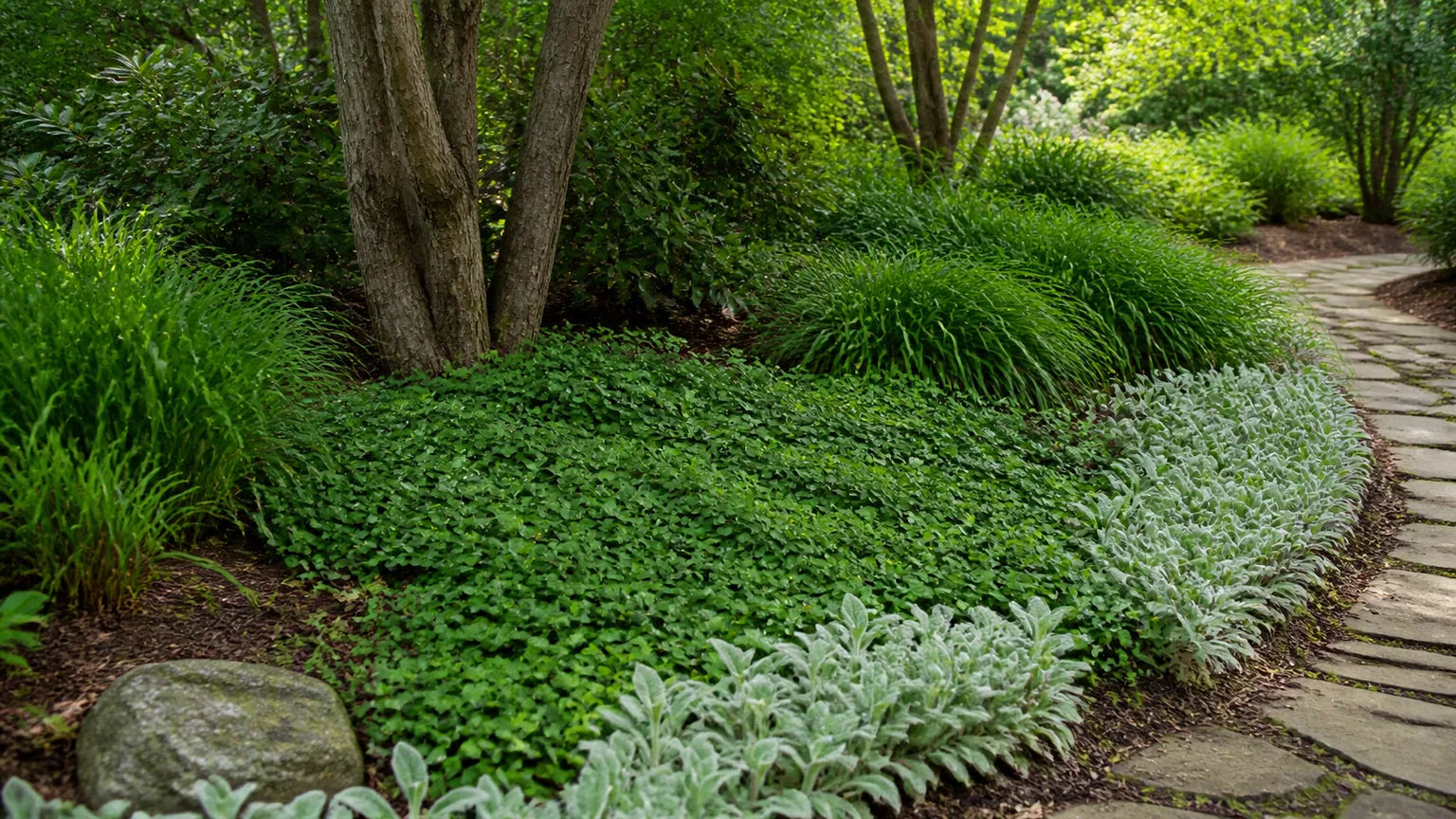
Groundcovers and vines solve different garden problems. A groundcover spreads across soil to soften a bed, shade bare ground, or link taller plants; a vine climbs a support to cover a fence, arbor, or wall. Both can fill space beautifully, but the same vigorous growth that makes them useful can also put them into paths, lawns, shrubs, and neighboring natural areas.
Choose them by the job and the conditions, not by a promise of “fast” or “low-maintenance.” Check how much sun reaches the site, how quickly its soil dries, whether people will walk there, and how far a mature plant can spread. Then plan the edges and supports before the planting gets established.
Groundcovers and vines do different jobs
A groundcover is a low-growing plant or planting that covers soil. It may form a clump, spread on surface runners called stolons, expand by underground rhizomes, or root where trailing stems touch the ground. A vine is a plant with long flexible stems that climbs or trails; in a garden it needs a tree, trellis, arbor, wire, fence, or other structure if you want it to grow upward.
Some plants can do both jobs. A trailing vine might spill over a retaining wall or weave across ground, while a compact shrub can cover soil without behaving like a creeping mat. The useful distinction is the outcome you want: living coverage on the ground, height and screening, flowers over an arbor, or a softer transition between beds and hardscape.
Groundcovers can reduce exposed soil and compete with weeds after they knit together, but they are not instant weed-proof carpet. Colorado State University Extension notes that a dense cover can inhibit weed emergence, while also emphasizing that site, spread rate, traffic, and maintenance affect whether a groundcover succeeds (Colorado State University Extension). During establishment, weeds still need attention and bare gaps still need mulch or other suitable protection.
Start with the site, not the plant label
Before visiting a nursery, write down what the planting needs to accomplish. “Cover the shady strip under the maple” is not specific enough until you know whether the area is dry or damp, whether a path crosses it, and whether the cover may spread into lawn. “Hide the fence” also leaves out its height, orientation, material, and whether there is a structure sturdy enough to carry mature vines.
Walk the site at a few times of day during the growing season. Note where direct sun falls, where reflected heat builds up, where downspouts or slopes concentrate water, and where snow or winter wind hits. A plant sold for “shade” may still fail under a tree if the roots compete for moisture and the soil is dry, while a sun-loving groundcover can scorch beside a hot south-facing wall.
Measure light and moisture
“Full sun” and “shade” are useful starting labels, not complete descriptions. Count direct-sun hours if you can, and distinguish open shade from dappled light beneath deciduous trees or deep shade beside a north-facing wall. The light changes as trees leaf out and as nearby shrubs mature, so consider the conditions the plant will live in for most of the year.
Soil moisture often matters just as much as light. A low spot that stays wet after rain needs a different plant than a dry bank or the ground beneath a mature tree. Check how quickly a small test area drains after watering, and use a soil test before adding lime, fertilizer, or large amounts of organic matter; amendments that solve one soil problem can create another if they do not match the actual soil.
Protect paths and traffic areas
Most groundcovers are not lawn replacements where people regularly play, walk, or roll equipment. They may tolerate an occasional step, but repeated traffic can crush stems, open gaps, and compact the soil. University of Wisconsin–Madison Extension makes the same practical distinction: many covers suit difficult or shady areas but do not handle heavy foot traffic. If a route crosses the planting, set stepping stones or a defined path first and choose plants that can tolerate light incidental contact only along the edges.
Decide whether the plant should stop at a hard edge, spill over it, or cover it. Keeping low growth away from stairs, drains, utility covers, gates, and sightlines makes routine maintenance safer and prevents the garden from turning into a tangle around things that need access. Groundcover beside a path can soften it; groundcover in the path usually creates a maintenance problem.
Pick a growth habit you can maintain
Growth habit predicts both speed and the kind of boundary work a plant will need. A tight clump expands slowly and is easy to keep in a small bed, but it may take longer to cover soil. A mat-former makes a more continuous carpet; runners and rhizomes close gaps faster but can cross the edge; self-seeders may appear beyond the original planting even when the parent plant stays put.
Look at the botanical name and the plant’s mature width, not only the label photo or common name. For a starting shortlist, compare our guide to fast-growing groundcovers with the conditions in your yard. The same common name can refer to different species or cultivars with different vigor, hardiness, and regional status. Ask the grower how the plant spreads, whether its stems root at nodes, and whether it is listed as invasive or discouraged in your state or region.
| What you need | Growth habit to look for | Trade-off to plan for |
|---|---|---|
| A small neat patch | Compact clump or slow mat | Takes longer to close bare soil |
| A broad bed filled efficiently | Predictable runner or rhizome former | Needs an accessible, defined edge |
| A sunny rock garden | Low, drought-adapted mat or succulent | Usually will not tolerate wet soil or shade |
| A shaded bed under trees | Shade-adapted, moisture-matched native or regional species | Dry tree roots can still require establishment watering |
| A fence or arbor covered in flowers | Vine suited to the support and local climate | Needs training and pruning, often for years |
| A wildlife-focused slope | Regionally native plants with varied root and canopy forms | A mixed planting may establish at different speeds |
Do not choose the most aggressive grower simply because a bare area looks urgent. Fast fill can reduce open soil, but it increases the cost of editing the bed later. A more diverse patchwork of compatible groundcovers can be easier to manage than a single spreading monoculture, and it can reduce the chance that one pest or disease damages every plant at once; Penn State Extension rather than covering an entire site with one species.
Groundcovers that fit common garden conditions
There is no universal short list that works from a dry western slope to a humid woodland bed. Use plant examples as starting points, then verify the specific species or cultivar against your local hardiness, soil, moisture, and invasive-plant guidance. Local extension services and native-plant organizations are especially useful when a planting borders woodland, a stream, or other natural habitat.
A groundcover should suit the site after establishment, but “drought tolerant” does not mean it can be planted into dry ground and ignored. New roots need water while they spread into surrounding soil. Likewise, a shade-tolerant plant may need supplemental water beneath trees, where the canopy blocks rain and established roots compete below the surface.
Sunny, dry, and well-drained
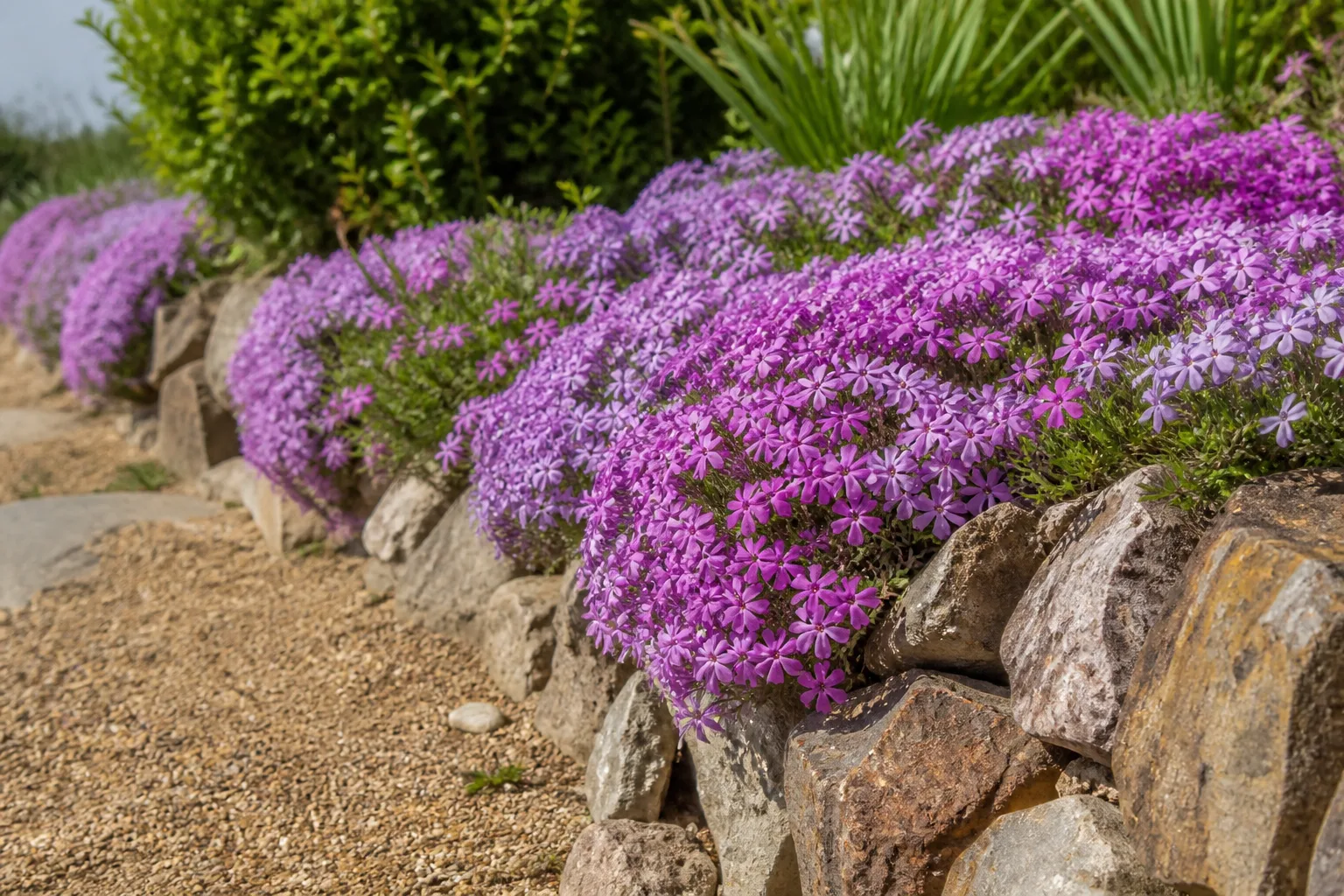
For a hot, sunny bed with leaner soil, look for low plants that prefer good drainage rather than selecting a moisture-loving plant and trying to correct the site with frequent watering. Creeping thyme, creeping phlox, pussytoes, and suitable stonecrops are examples gardeners often consider for sunny edges or rock gardens; each has its own hardiness, soil, and moisture limits. Creeping thyme, for instance, is a poor choice for a spot that stays saturated through winter.
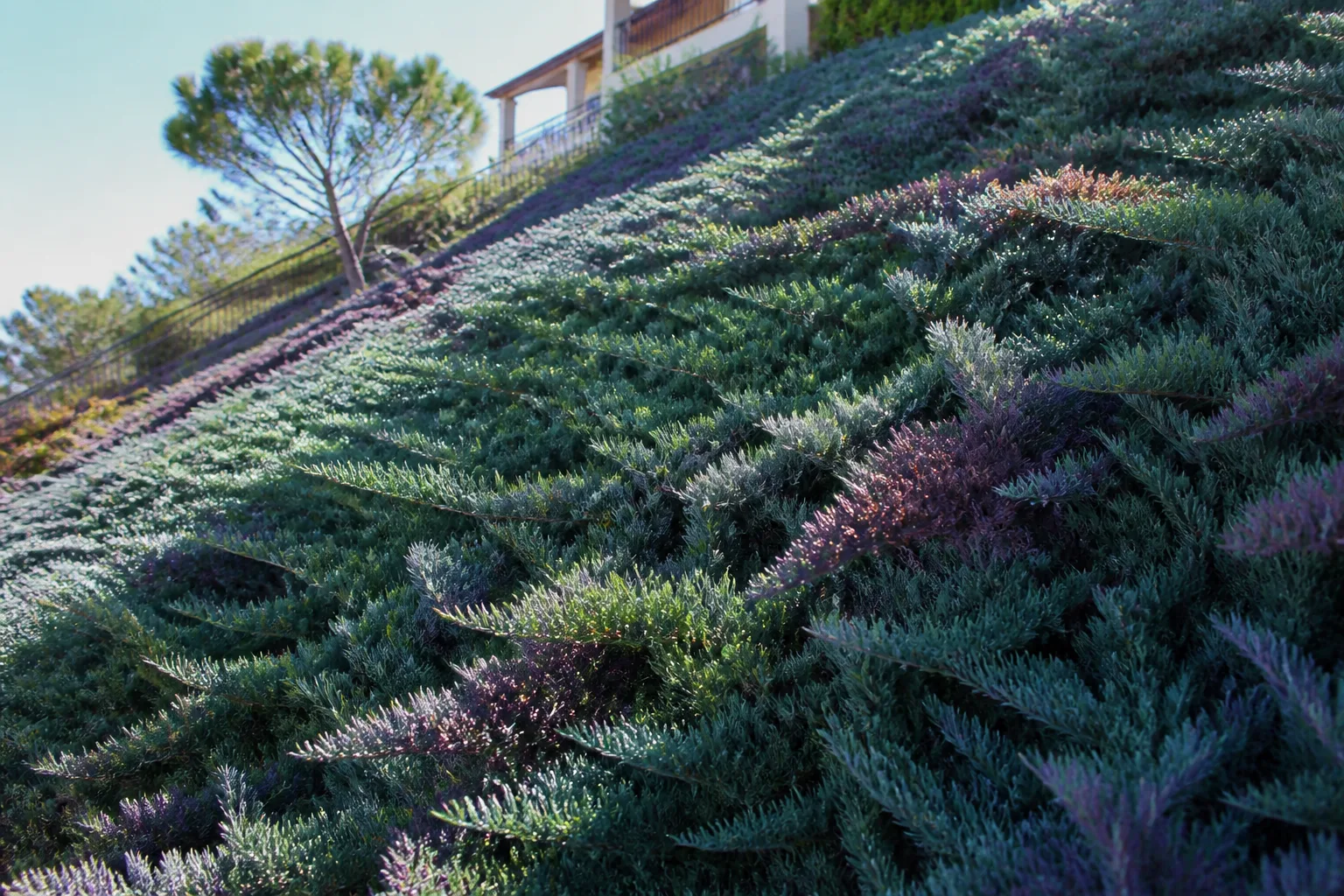
On a large sunny area, spreading woody plants such as locally suitable creeping junipers can cover soil with less frequent dividing, but leave room for their full width. Our guide to creeping juniper as a groundcover explains how cultivar size changes the spacing decision. A one-gallon plant that looks small in spring may eventually occupy several feet. Mark the intended edge and account for nearby windows, paths, and shrubs before buying, especially with a plant that grows outward rather than upward.
Shade and tree-root areas
For shade, first decide whether the soil is moist, average, or dry. Native sedges, wild ginger, foamflower, woodland phlox, or regionally appropriate ferns can work in some shaded gardens, but their needs are not interchangeable: some tolerate dry shade, while others need consistent moisture. Pennsylvania sedge is one example of a native lawn alternative used in parts of the eastern United States; a local extension guide can help determine whether it suits your region.
Plant around established tree roots instead of digging a continuous trench or adding a deep layer of soil over the root zone. Use small plugs, loosen only the surface where practical, and water them with care while they establish. If a large tree already leaves the ground dry, choose plants that tolerate those conditions or plan for supplemental water rather than assuming shade alone guarantees an easy planting.
Before installing familiar spreaders such as English ivy, periwinkle, or wintercreeper, check local invasive-species lists and extension recommendations. Our bugleweed guide shows how even a useful shade groundcover needs a containment plan. Their behavior differs by region and site, and a plant that stays contained in one garden can escape into nearby woods or waterways in another. If a species is discouraged locally, choose a suitable native or non-invasive alternative instead of relying on constant trimming to control it.
Slopes and erosion-prone ground
A planted slope needs plants whose roots can anchor soil and whose growth will eventually cover enough ground to reduce exposed patches. Penn State Extension describes native grasses, sedges, perennials, and spreading shrubs that can work in slope situations; its examples include river oats for firm rooting and creeping phlox for erosion control in well-drained soil. These examples are regional, so use local advice to select plants for the slope’s sun, rainfall, and soil.
Plants do not stabilize an eroding bank overnight. While the roots establish, intense rain can still carry soil downhill; steep or actively failing slopes may require an erosion-control professional or an engineered drainage solution. For a manageable garden slope, clear invasive weeds, avoid leaving bare soil, and consider biodegradable coir or plant-fiber netting to hold soil temporarily until the roots knit together.
Avoid plastic landscape fabric as a shortcut beneath a planted slope. Penn State Extension cautions that synthetic fabric can increase runoff and erosion and become difficult to manage as it is exposed or weeds grow through it. A prepared soil surface, a suitable temporary natural-fiber net when needed, and carefully selected plants are a more practical start.
Use vines where vertical coverage solves a problem
A vine can hide a fence, soften an arbor, bring shade to a pergola, or add privacy where a hedge would take too much ground. Before choosing one, identify the structure and how much weight it can carry. A vigorous perennial vine becomes heavier as it matures, especially when wet or covered with foliage, so a light decorative trellis may not be an adequate long-term support.
For species ideas, start with our lists of heat-tolerant climbers for fences or perennial flowering vines for shade, then verify each plant’s local fit. Think about the view you want in winter as well as summer. Deciduous vines can leave a structure open for sunlight during the cold season; evergreen or semi-evergreen types offer more year-round screening but may need more pruning and can obscure siding or windows. Flowering vines also vary in bloom season, sun needs, mature size, and the way they attach, so check the plant tag and regional growing guide rather than relying on the word “climber.”
Match support to the way the vine climbs
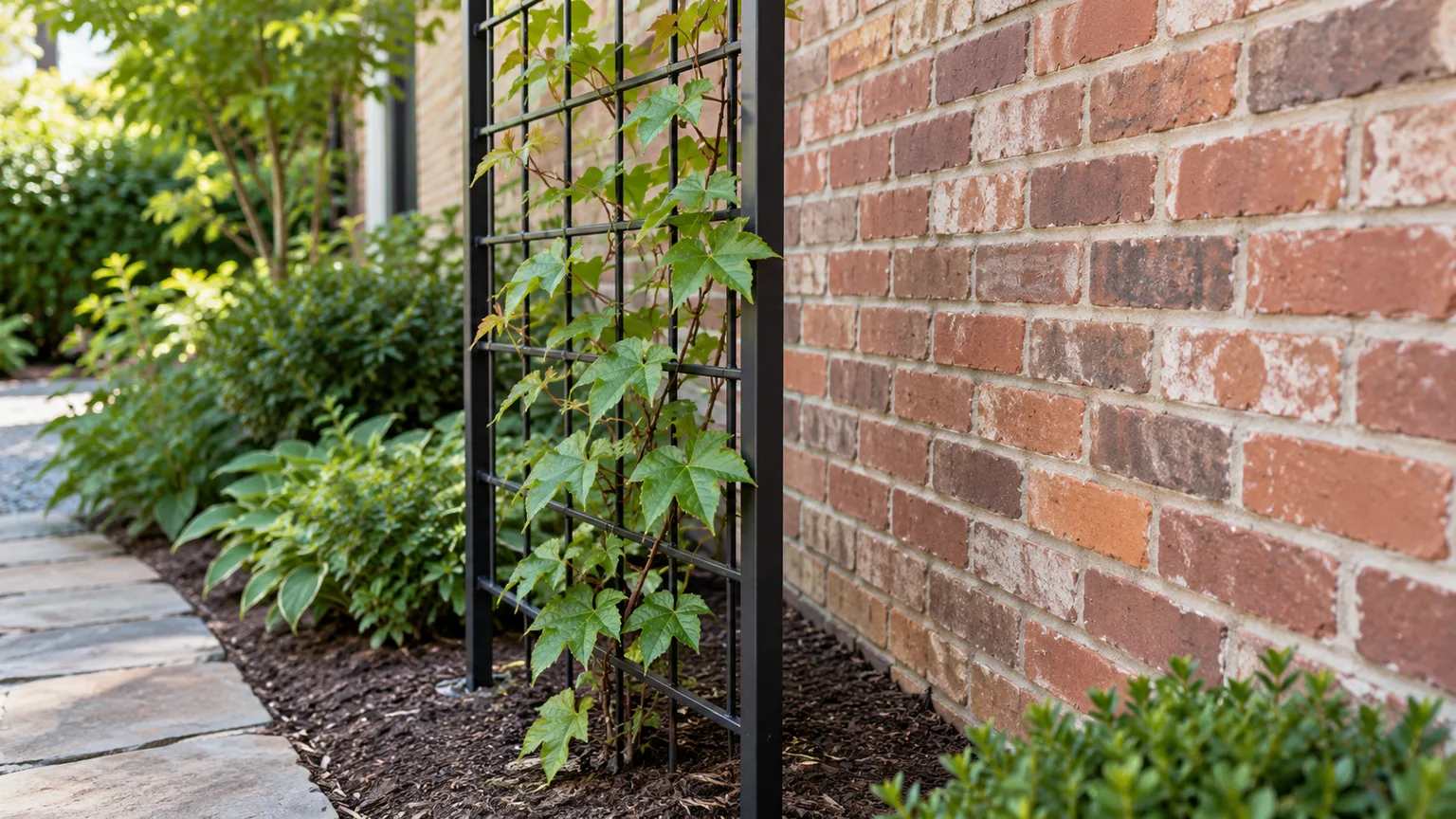
Twining stems wrap around narrow wires, poles, or trellis members. Tendrils need something slender to grasp, while self-clinging vines attach to surfaces with aerial rootlets or adhesive pads. A vine that cannot grip the support will need ties or training; a self-clinger may not need a trellis but can be difficult to remove cleanly from some surfaces.
Set supports before planting, then place the vine close enough to reach them without pressing it against a wall. Leave space for airflow and maintenance behind freestanding trellises, and make sure a fence or arbor is anchored to handle the plant’s mature mass and wind exposure. The Royal Horticultural Society’s Royal Horticultural Society pergola guidance is a useful reminder that a climbing-plant structure should be part of the garden design, not an afterthought once stems have become large.
Avoid allowing an unknown climber to attach directly to fragile siding, painted wood, gutters, window frames, or a roof edge. If the wall needs regular painting or inspection, install an independent trellis with room to work behind it. Even when a plant does not physically penetrate a sound surface, dense growth can hide moisture damage, pests, or repairs that need attention.
Prepare the bed before planting
Good preparation is the part that makes later maintenance smaller. Remove turf and perennial weeds before planting, including as much of their roots and rhizomes as practical. If a patch is full of bindweed, quackgrass, or another persistent weed, suppress it and remove regrowth before adding groundcovers; the new plants will not outcompete a mature weed network immediately.
Test the soil when you are unsure about pH or nutrients, and apply amendments only when the results indicate a need. Raking compost into the whole area may sound helpful, but unnecessary amendments can change drainage or fertility in ways that favor weeds over a low-growing plant adapted to lean soil. Mark utilities and preserve mature tree roots before digging, especially for a broad bed.
Penn State Extension recommends allowing a prepared area to sit briefly when practical so perennial weeds can regrow and be removed before planting. That extra check is especially valuable when you have cleared a bed mechanically and cannot be certain every rooted weed is gone. For slopes, prepare only an area you can stabilize and plant promptly, rather than exposing the full bank to runoff while you work through a long project.
Plant at spacing that fits spread rate
Spacing affects both the upfront cost and the time spent weeding. Close spacing closes the bed sooner but buys more plants; wide spacing costs less at planting but leaves bare soil exposed longer. Use each plant’s expected mature width and growth speed to find a workable interval, then check the label or a regional extension recommendation for that species rather than applying a single distance to every groundcover.
A simple square-grid estimate helps with shopping: divide the bed’s area in square feet by the space allocated to each plant. At 12-inch spacing, each plant gets about one square foot, so a 100-square-foot bed needs roughly 100 plants. At 18-inch spacing, each plant gets about 2.25 square feet, so the same bed needs about 45 plants; a staggered layout, irregular bed, and expected fill speed will shift the final count.
The Royal Horticultural Society groundcover guide provides plant-specific suggested spacing because species differ in how quickly and widely they spread. Fine Gardening also describes close planting for a particular set of fast-growing plants, but that method should not be treated as a universal rule for slower or larger species. If your chosen groundcover is vigorous and the edges are hard to reach, plant farther apart and use temporary mulch while the gaps close.
Set each plant at the same depth it grew in its pot, firm the soil around the root ball, and water thoroughly. Keep mulch between plants to limit bare soil and weed growth without burying crowns or stems. Water often enough to keep the root zone evenly moist during establishment, then taper to the plant’s actual needs; a watering schedule based only on the calendar can keep drought-adapted plants too wet or leave new plugs dry.
Guide and prune vines before they get heavy
Train young stems while they are flexible. Gently direct twining stems onto the support and use loose, soft ties to hold a stem in place if it has not started climbing. Check ties as the vine thickens; a tie left tight around an expanding stem can girdle it and leave a wound.
Pruning is easier when it is tied to the plant’s growth and flowering habit. Remove dead, damaged, crossing, or misplaced stems when appropriate, but do not cut every vine hard at the same time of year. Some climbers flower on old wood and others on new growth; identify the species and its pruning group before making a major cut. If a vine is only covering the lower half of a fence, guide a few long healthy shoots horizontally through the structure to encourage side branches rather than topping the plant without a plan.
Inspect the support at least once each growing season. Tighten loose fixings, check the base for rot or movement, and keep stems away from gutters, roof edges, electrical fixtures, and windows that need to open. A vine can turn a simple repair into a difficult job if it is allowed to weave through a fixture or become entangled with a neighboring shrub.
Keep fast growers out of trouble
A groundcover’s edge is part of its care plan. Use a mowing strip, path, shallow edging, or open soil gap that lets you see where runners are going; inspect it every few weeks during active growth and after rain, when rooted tips are easier to spot. Lift runners that have crossed the boundary and remove any rooted sections rather than simply clipping the visible top.
Do not put an aggressive spreader beside a lawn, stream, woodland edge, or a neighbor’s garden if you cannot reach the boundary. A physical barrier may help contain some rhizomatous plants, but it is not a substitute for choosing a suitable species and monitoring it. Seed-spreaders need a different approach: remove unwanted seedlings promptly and deadhead if the plant is safe to prune and seed production is causing escape.
Native status is local, not a marketing label. A plant native to one state or ecoregion may be non-native elsewhere, and “native to North America” does not automatically mean it belongs in every garden region. Look up the botanical name in your state invasive-plant list and a local extension or native plant source; avoid disposing of rooted runners or seed heads where they can establish in a natural area.
Fix the reasons coverage fails
If a groundcover stays sparse, first check whether the site matches the plant. Too little light, soil that stays wetter or drier than expected, root competition, and an unsuitable hardiness range can all slow a planting. Replacing weak plants with more of the same species will not fix a mismatch; move or replace them with a plant adapted to the actual exposure and soil.
If weeds rise through a new planting, continue hand-weeding and apply mulch in the gaps. Weed suppression improves only after the foliage covers soil, and some persistent weeds can push through a dense mat. Colorado State University Extension advises removing existing weeds before planting and notes that all groundcover beds still require maintenance, even when an established planting needs less work than a lawn.
If groundcovers die in patches, look for a pattern. A low wet pocket can point to poor drainage or crown rot, while a dry crescent beneath a tree may reflect competition for water. Remove dead foliage, check roots and soil moisture, and adjust water or drainage before replanting; a blanket fertilizer application can make some problems worse without addressing the cause.
If a vine is growing but not covering its support, check the climbing habit and light before adding more fertilizer. It may need more light, a different structure, or careful horizontal training to branch. If it is making long bare stems, look for overgrowth, poor pruning timing, or competition at the root zone, then correct one cause at a time so you can see what works.
Build a maintenance rhythm around growth
Groundcovers need the most attention while they establish and when their edges meet other plants. During the first growing season, water newly planted roots as needed, pull weeds while they are small, and replace mulch that has thinned without piling it onto the crowns. Check how quickly the bed is filling; slow fill may be the normal pace of a restrained plant, not evidence that it needs excess fertilizer.
Once the canopy closes, shift from weekly watering and weeding to focused inspection. Remove invasive seedlings before they set seed, thin mats where they cover smaller perennials, and divide or replant crowded clumps when the species and season make that suitable. Keep a few stepping stones or access gaps so you can reach the center of the bed without trampling the plants you are trying to protect.
Vines benefit from a similar seasonal check, but pruning timing depends on flowering and growth habit. Tie in wandering stems early, prune at the correct time for that species, and remove growth that blocks doors, lights, windows, or gutters. At the end of the season, clear fallen leaves from dense evergreen mats if they are smothering foliage, and note any winter damage before replacing plants in spring.
Groundcovers can be an attractive lawn alternative where mowing is awkward, shade is too deep for turf, or a slope benefits from permanent planting. They are a poor match for active play areas, frequently traveled paths, or a bed you cannot reach to weed and edge. Wisconsin Extension stresses both sides of the trade-off: established groundcovers can help reduce erosion and weed pressure, but most do not tolerate heavy foot traffic and need establishment care.
Conclusion
Choose a groundcover for the soil it will cover and a vine for the support it will climb. Start by checking light, moisture, soil, traffic, slope, and the edge of the planting; then select a growth habit and species whose mature size and regional behavior fit those conditions.
Prepare the site before planting, budget for watering and weeding while roots establish, and give every fast spreader a boundary you can inspect. Install vine supports before stems become heavy, and keep training and pruning specific to the plant. With those decisions made early, groundcovers can soften bare ground and vines can add useful height without turning a small design choice into a long containment project.



