Types of Grass: Lawn and Ornamental Guide
Find the right grass for a lawn, border, screen, slope, or shade bed with clear selection rules, care basics, and trade-offs to check before planting.
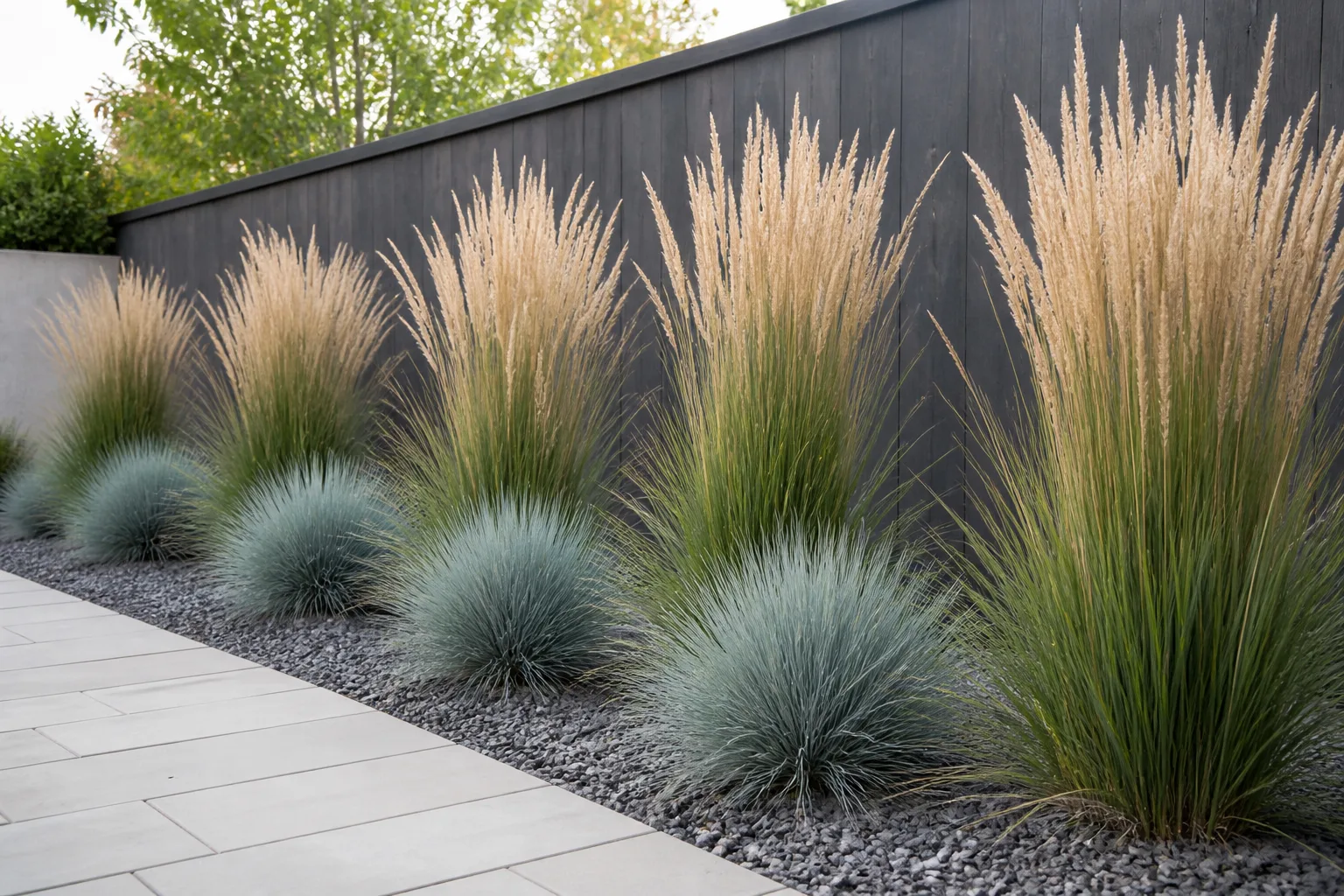
“Grass” can mean a close-mown lawn, a clump of flowering stems in a border, or a grasslike plant used where turf will not grow. Those jobs call for different plants and care. If you want a lawn, begin with the grasses adapted to your region and the amount of sun and traffic the site gets. If you want texture, screening, or year-round structure in a planting bed, choose an ornamental grass by mature size, moisture needs, and whether it stays in a clump or spreads.
The quickest way to avoid an expensive mismatch is to decide the job first, then compare climate, light, soil, water, and maintenance. A grass that thrives in one county or garden can struggle a short distance away, especially where shade, drainage, heat, or winter cold changes. The distinctions below will help you narrow the field before you buy seed, sod, plugs, or nursery plants.
Start with the job, then inspect the site
Turf grass and ornamental grass solve different problems
Turfgrass is grown to create a dense, fairly uniform surface that tolerates mowing and normal foot traffic. Lawn species are selected for traits such as seasonal growth, wear tolerance, shade response, establishment speed, and how well they recover from damage. Penn State Extension describes turfgrasses as narrow-leaved species forming a long-lived ground cover that tolerates traffic and low mowing; only a relatively small group of species can make acceptable turf in a given region. (Penn State Extension)
Ornamental grasses are grown for form, movement, foliage color, flowers, and seed heads. Some are small evergreen mounds for a border, while others rise several feet and become screens or focal points. They are usually not meant to be walked on or mowed; using them as lawn substitutes works only when you choose a low-growing type suited to the amount of traffic and the local climate.
A sedge or rush may look like a grass and may solve a similar landscape problem, but it is not a true grass. The distinction matters less for appearance than for care: a sedge adapted to shade or wet soil may be a better fit than a sun-loving ornamental grass. Mondo grass is another common “grass” by name that is not a true grass, so check the botanical name and plant tag when the site is difficult.
Score sun, water, soil, and traffic
Before selecting a species, observe the site through a normal day and after rain. Count direct sun where the plant will grow, notice where puddles linger, and check whether the soil is compacted or loose. For a lawn, also note how people and pets use the area; the grass that suits an ornamental slope may not tolerate a play path.
University of Georgia Cooperative Extension recommends choosing turf according to temperature and moisture, shade, soil pH and fertility, desired appearance, and maintenance requirements. It also warns against mixing warm-season and cool-season species in one lawn because they have different seasonal growth patterns. Its published performance information is specific to Georgia, a useful reminder that a local extension chart is more reliable than a national “best grass” ranking. (UGA Cooperative Extension)
For ornamental plantings, look beyond height. Check the mature width, whether the plant is evergreen or deciduous, how quickly a clump expands, and whether it drops viable seed. A compact plant that spreads across a path can become more work than a larger, well-behaved clump; an airy grass that reseeds freely may be a poor choice beside natural areas.
Choose between cool-season and warm-season lawn grasses
Cool-season grasses
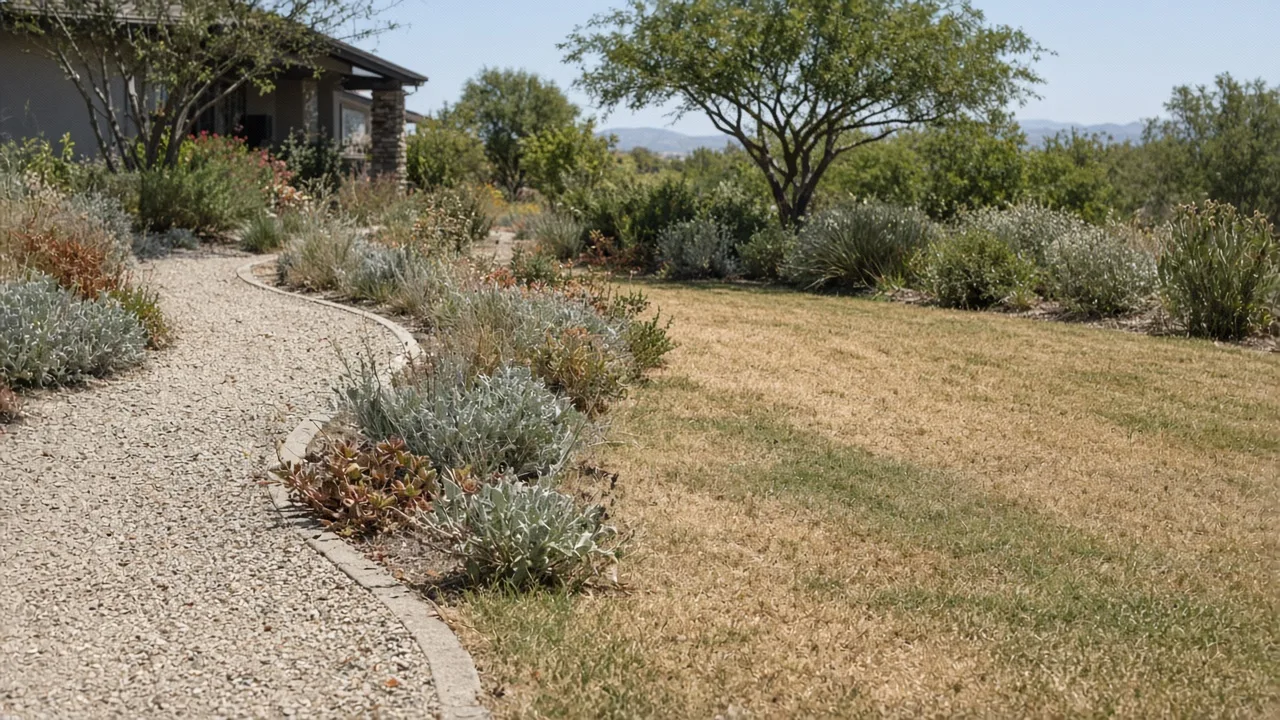
Cool-season grasses grow most actively during the cooler parts of the year, especially spring and fall. In hot summers they may slow, thin, or go dormant, depending on the species, cultivar, water, and local conditions. Common cool-season lawn choices include Kentucky bluegrass, perennial ryegrass, tall fescue, and fine fescues.
Choose this group where winter cold is a major constraint, or where a local recommendation favors cool-season turf. It is not enough to see a seed mix labeled “shade” or “drought tolerant”: species in the bag still need to fit your location, and some mixtures combine grasses with very different textures and rates of growth. For a lawn that turns brown in summer, first check whether it is a cool-season grass entering dormancy or whether the problem is irrigation, soil, disease, or compaction before adding fertilizer or water.
Cool-season turf can be seeded, but the best seeding period depends on the regional climate. University extension seed guides often recommend planting during favorable cool-season establishment windows so seedlings have time to root before temperature extremes. For example, Penn State’s turfgrass resources distinguish species and cultivars for the region rather than treating every cool-season grass as interchangeable. (Penn State Extension turfgrass species and cultivars)
Warm-season grasses
Warm-season grasses grow most vigorously in heat and usually turn tan or brown when cold weather brings dormancy. Examples used for lawns in suitable regions include bermudagrass, zoysiagrass, St. Augustinegrass, centipedegrass, and buffalograss. Their active season, winter color, and spring green-up differ from those of cool-season grasses, so dormant winter color is not automatically a sign that the lawn is dead.
These grasses are not simply “southern grass.” Their performance still depends on local winter lows, humidity, soil, irrigation, shade, and cultivar. Bermudagrass and other spreading turf can recover from gaps but also creep into beds; St. Augustinegrass is usually installed vegetatively rather than from seed; and zoysiagrass can be slower to establish than a fast-spreading alternative. Local guidance should determine which options are appropriate before you commit to sod or a seed blend.
A mixed lawn of the two growth groups can be difficult to manage because one grass may be thriving while the other is dormant or stressed. If a lawn already contains a mixture, identify what is there before overseeding; adding another species can create differences in mowing height, color, seasonal timing, and response to irrigation. UGA’s species guidance explains those differences in the context of Georgia rather than prescribing one species for every warm-climate yard. (UGA Cooperative Extension)
Compare common lawn grasses
Kentucky bluegrass and perennial ryegrass
Kentucky bluegrass is a cool-season turf grass valued in regions where it is adapted. It spreads with underground rhizomes, which can help it fill thin spots, but spread does not make it immune to heat, drought, deep shade, or poor soil. It usually performs best when site conditions match regional recommendations.
Perennial ryegrass establishes quickly and is often used for fast cover or in a seed mixture. “Perennial” describes its life cycle, not a guarantee that it will persist everywhere; local winter, summer heat, disease pressure, and competition from companion species all affect whether it remains in the lawn. If you are repairing an established lawn, match its grass group and intended use rather than selecting ryegrass simply because the package promises quick germination.
Penn State Extension’s explanation of grass growth describes how rhizomes and aboveground stolons produce new shoots at nodes, while bunching grasses expand mainly by producing new shoots at the crown. That difference helps explain why one lawn can knit across bare patches while another needs reseeding after injury. (Penn State Extension)
Tall and fine fescues
Tall fescue is a broad category with substantial cultivar variation. Turf-type cultivars are commonly used for lawns; forage types may have coarser leaves and a different appearance. In some regions, tall fescue is chosen for a blend of sun and partial shade, but it forms a more bunching lawn than a strongly creeping grass, so worn or dead areas may need overseeding.
Fine fescues are a group of finer-leaved grasses that can suit lower-input, cooler sites and some shaded lawns where local recommendations support them. The trade-off is that fine texture does not automatically mean strong wear tolerance; a quiet side yard and a heavily used play lawn have different needs. Do not assume that a generic “shade mix” will thrive under dense tree cover, where root competition and low light may limit any grass.
Read the seed label rather than relying on brand names or a large “premium” claim. Check which species and cultivars are included, whether the mix is intended for your region, and whether it suits sun, traffic, and seeding method. Use regional extension guidance to compare named cultivars; a species’ reputation is only a starting point.
Bermudagrass, zoysia, St. Augustine, and buffalograss
Bermudagrass spreads vigorously by runners and underground stems in warm conditions, which makes it useful for active lawns in suitable climates but harder to keep out of flower beds and narrow borders. Its strong growth is also a maintenance trade-off: it may need regular mowing during the growing season, and shade can be a limiting factor. Avoid planting it where you want a tidy, non-spreading edge unless you can maintain a physical or regularly trimmed boundary.
Zoysiagrass forms dense turf and spreads, but different cultivars vary in leaf texture, winter tolerance, and shade response. St. Augustinegrass can make dense warm-season turf in adapted areas, yet it is not the right choice for every high-traffic yard. Buffalograss is a regional species, not a universal drought-proof replacement: a plant native to one part of a continent may be poorly adapted to another’s humidity, rainfall, soils, or disease pressures.
No lawn grass is maintenance-free. Before replacing an existing lawn, compare the water available, the amount of shade, the surface use, and whether you can tolerate seasonal dormancy. A local extension service can help identify both a suitable species and a suitable cultivar, and a soil test can show whether a pH or nutrient issue needs attention before seeding.
Select ornamental grasses by site and scale
Sun, drought, and open slopes
Many ornamental grasses flower and hold a compact form best in sun and well-drained soil, but drought tolerance varies by species and is strongest after a plant is established. A newly planted ornamental still needs regular watering while its roots grow into surrounding soil. A plant suited to a dry slope may rot in a low, wet bed, while a moisture-loving grass can look stressed if planted in gravelly, hot soil.
For a sunny border, start with the height and width you can accommodate, then decide whether you want a fine texture, an upright screen, or a soft mound. Switchgrass (Panicum virgatum) and little bluestem (Schizachyrium scoparium) are examples of North American ornamental grasses used for structure and seasonal color, but “native” should be checked against your own region, not inferred from the country name. Local native-plant lists can help you find a species with the right ecological and site fit.
Grasses can help cover slopes or soften a boundary, as N.C. Cooperative Extension notes, but a single ornamental clump does not stabilize every slope. For erosion-prone ground, choose a plant with a growth habit and root system suited to the slope and local rainfall, and plan enough coverage to protect exposed soil. Do not put tall grasses where their mature foliage will block a path, sight line, window, or driveway.
Shade and moist ground
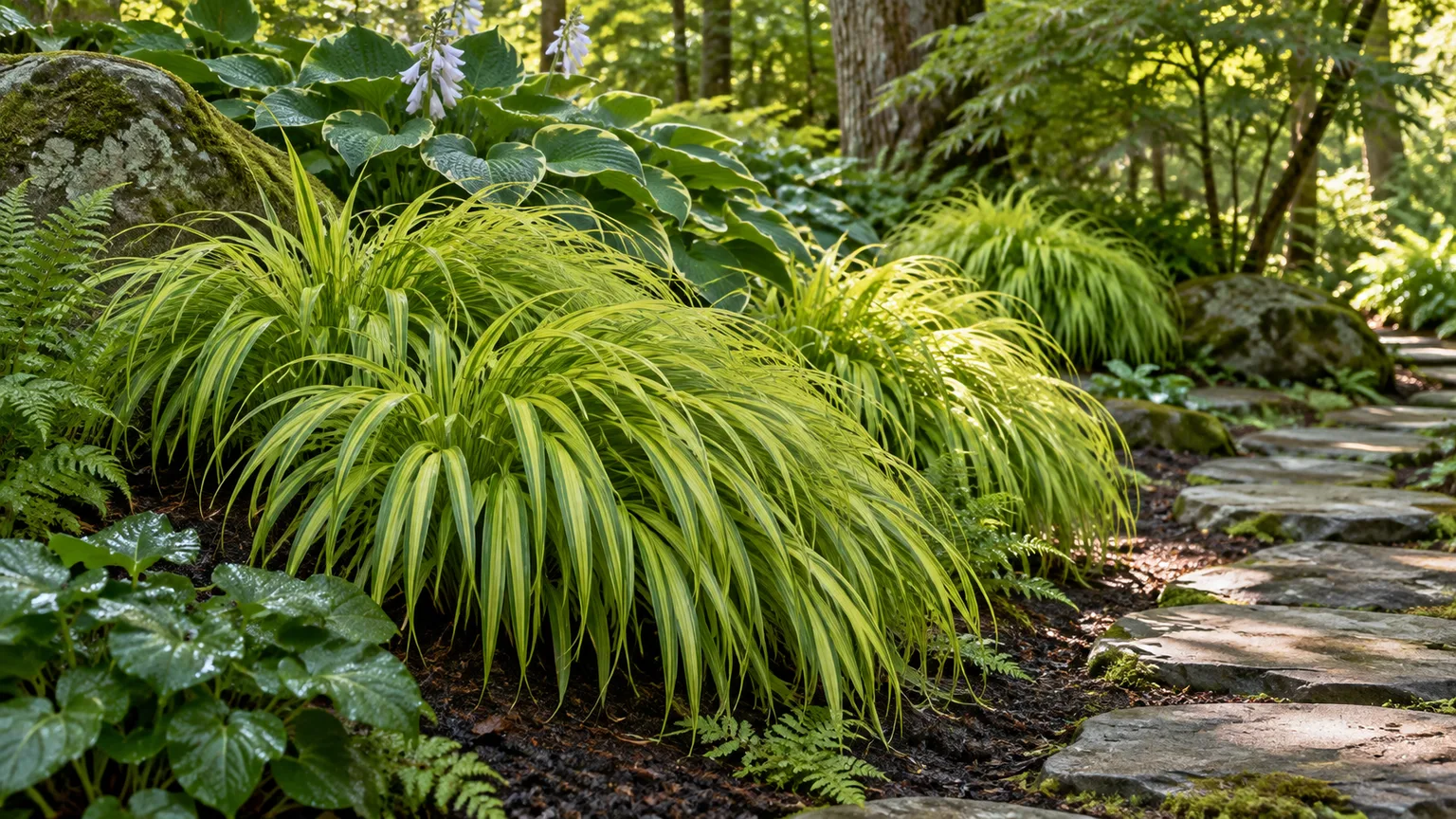
Deep shade is a poor setting for many ornamental grasses, but partial shade opens more choices. Japanese forest grass (Hakonechloa macra) has arching foliage that can brighten a shaded bed; northern sea oats (Chasmanthium latifolium) offers distinctive seed heads; and tufted hairgrass (Deschampsia cespitosa) can suit cooler, consistently moist sites. These are examples to investigate, not a promise that each will tolerate every region or soil.
Better Homes & Gardens’ horticulture guide to shade grasses highlights these different moisture needs: Japanese forest grass suits shade, tufted hairgrass tolerates consistently moist ground, while blue fescue and blue oat grass need well-drained to dry conditions. It also points out that sedges may be more comfortable in shaded woodland settings than a true sun-loving grass. (Better Homes & Gardens)
If the ground stays wet after rain, diagnose drainage before planting. Use a moisture-tolerant species suited to your climate, or improve the site with a raised planting area if practical; adding grit or fertilizer to a persistently waterlogged bed will not fix the underlying problem. In dry shade beneath trees, remember that tree roots compete for water, so a grass that tolerates shade may still need establishment irrigation.
Borders, screens, containers, and meadow-style planting
For a border, low mounds such as blue fescue can make a neat edge, while medium grasses can repeat through a bed to create rhythm. A tall upright grass can screen a fence or divide two garden zones, but always check mature dimensions and whether stems remain upright after rain or snow. A plant tag that lists height without width does not tell you how much space to reserve.
Containers are useful for testing a grass’s scale or containing a plant that spreads, but pots dry and freeze faster than garden soil. Choose a container with drainage holes, use a potting mix suitable for outdoor containers, and water based on weather and root-zone moisture rather than a fixed weekly calendar. For winter survival, choose a plant and pot that tolerate the container’s colder root conditions in your climate.
A meadow-style planting can mix grasses with flowering perennials, but the grasses still need room and a management plan. Repeat a small number of species rather than buying one of everything, and avoid selecting only by flower-head color: foliage, winter structure, mature width, and self-seeding behavior will determine whether the planting stays legible over time. Fine Gardening’s ornamental-grass collection emphasizes choosing varieties for climate and soil and planning for their seasonal interest, rather than treating ornamental grasses as one interchangeable group. (Fine Gardening)
Plant and care for ornamental grasses
First-season establishment, water, and feeding
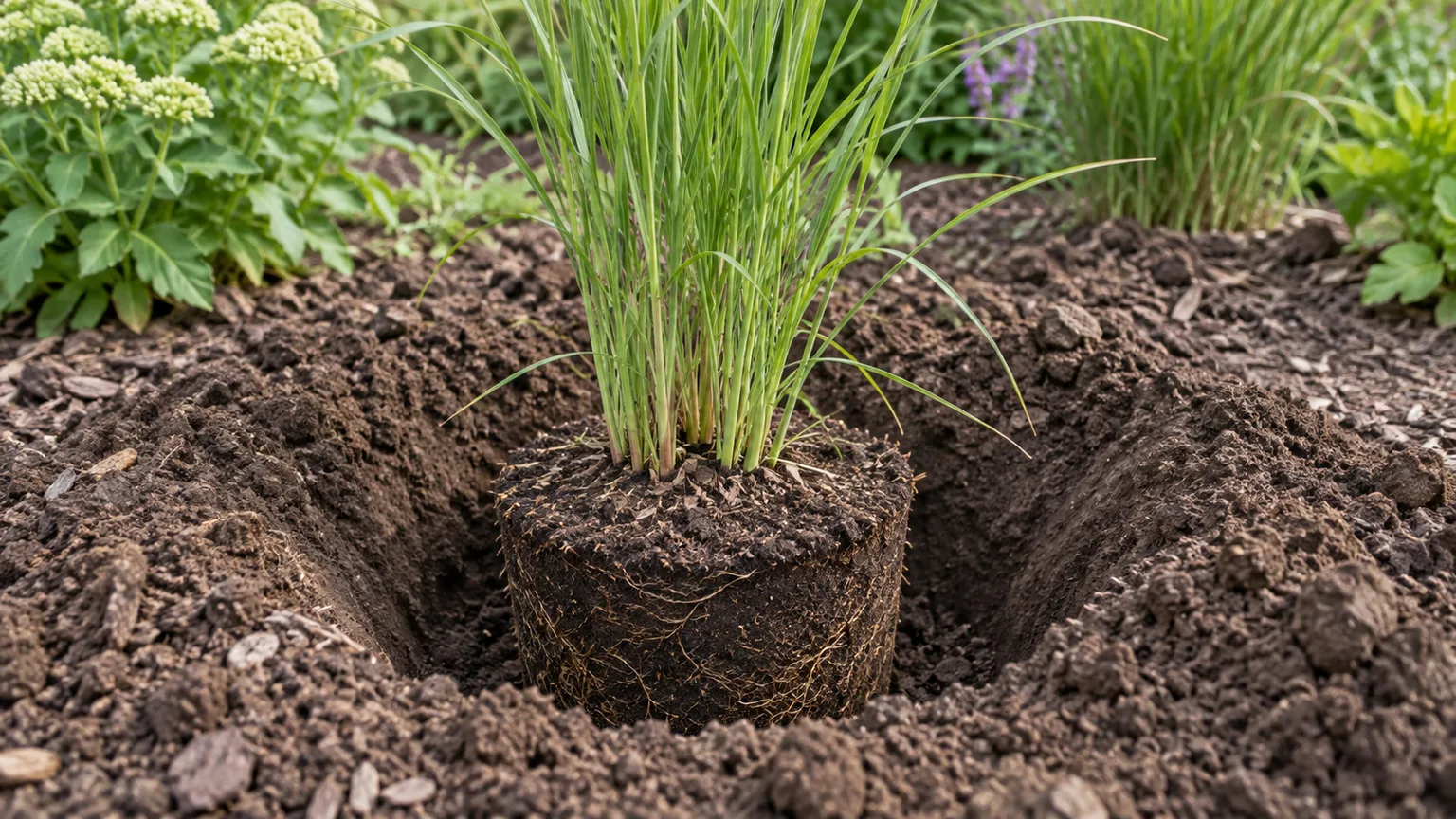
Plant at the season recommended for that species and region, with enough time for roots to establish before heat or freezing weather. Dig a hole about as deep as the root ball and wider than the pot, loosen circling roots if needed, and set the crown at soil level; planting too deep can trap moisture around the crown. Water thoroughly after planting and keep the root zone evenly moist during establishment without leaving it saturated.
Once an ornamental grass is established, its watering needs depend on the species, soil, rainfall, and heat. A drought-adapted clump may need little supplemental water in a normal season, while a moisture-loving grass in a hot summer can require more. Check the soil several inches down before watering; if it is still moist, wait, and if it is dry and the plant is newly planted, water deeply enough to reach the root zone.
Most ornamental grasses need little fertilizer in reasonably fertile soil. Too much nitrogen can push soft, floppy growth and may increase maintenance, so do not feed simply because a plant is not as tall as a catalog photo. If growth is pale or weak, first check light, drainage, planting depth, root competition, and whether the plant is adapted to the site; use soil-test results and local guidance before applying fertilizer.
Seasonal pruning, division, and spread control
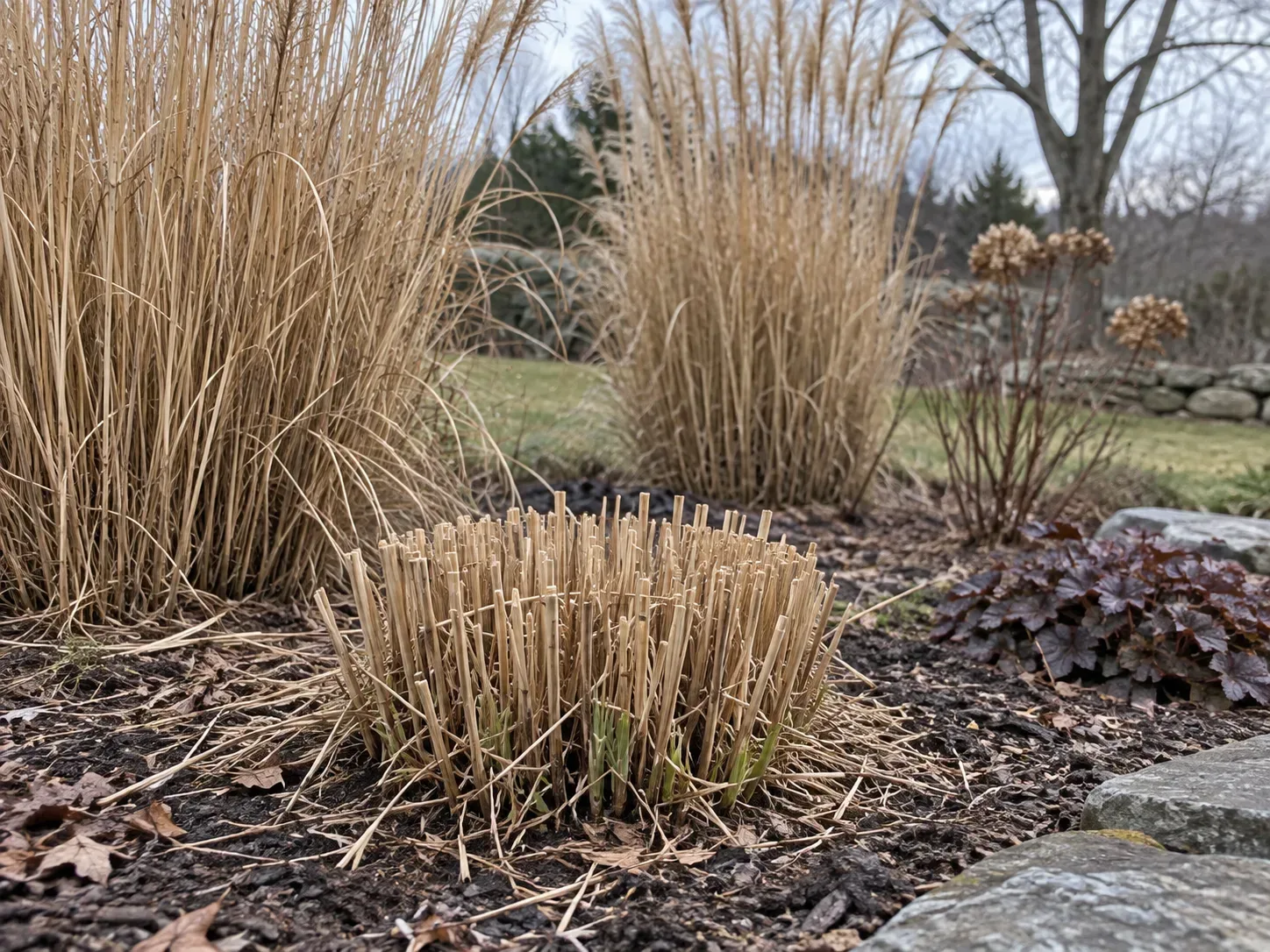
Deciduous ornamental grasses often look attractive through winter and provide structure after flowering, so there is no need to cut every clump down in fall. Leave standing foliage if you like its winter form, then cut it back before fresh shoots are damaged or hidden by old stems. The Royal Horticultural Society recommends early- to mid-spring for many deciduous grasses and explains that timing varies: some late-starting types need old stems for protection, while evergreen grasses usually need only dead material removed. (Royal Horticultural Society)
Use sharp shears or loppers, tie a large clump before cutting to keep stems together, and wear gloves and eye protection when working with stiff, sharp-edged leaves such as pampas grass. Do not shear every evergreen sedge or grass down to the ground; remove brown or loose foliage by hand unless the plant’s care instructions say otherwise. New green shoots at the base are a sign to keep the cut high enough to avoid damaging them.
Divide a clump when its center dies out, flowering declines, or the plant has outgrown its space—not automatically every year. Dig and split actively growing clumps at the season recommended for that type, keeping vigorous outer sections and discarding dead centers. Smaller divisions establish faster, so water them consistently while they recover; a large clump may require a sharp spade or saw and extra help rather than pulling it apart by hand.
Finally, manage spread before it becomes a removal project. A running grass can escape its bed through rhizomes or stolons, while a clumping plant may spread by seed; research both habits before purchase, deadhead when reseeding is undesirable, and check your local invasive-species resources for regional warnings. Avoid assuming a cultivar advertised as sterile or noninvasive cannot produce seedlings in your climate.
Conclusion
The best grass is the one that fits the site and the job. For a lawn, choose first between a locally adapted cool-season and warm-season turf, then narrow by sun, water, traffic, and the level of mowing and repair you can manage. For ornamental grasses, select by mature width, light, drainage, winter behavior, and whether you want a clump, a ground cover, or a screen.
Before buying, read the species and cultivar names, verify local recommendations, and picture the plant at its full size rather than its nursery-pot size. When a site is too shady, too wet, or too heavily used for the grass you had in mind, choose a better-adapted grasslike plant or redesign the area; matching plant to place is usually easier than trying to force a grass to perform outside its strengths.



