How to Grow and Care for Dendrobium Orchids
Dendrobium orchid care made practical: identify the type, choose the right light and pot, water by the season, and solve common leaf and root problems.
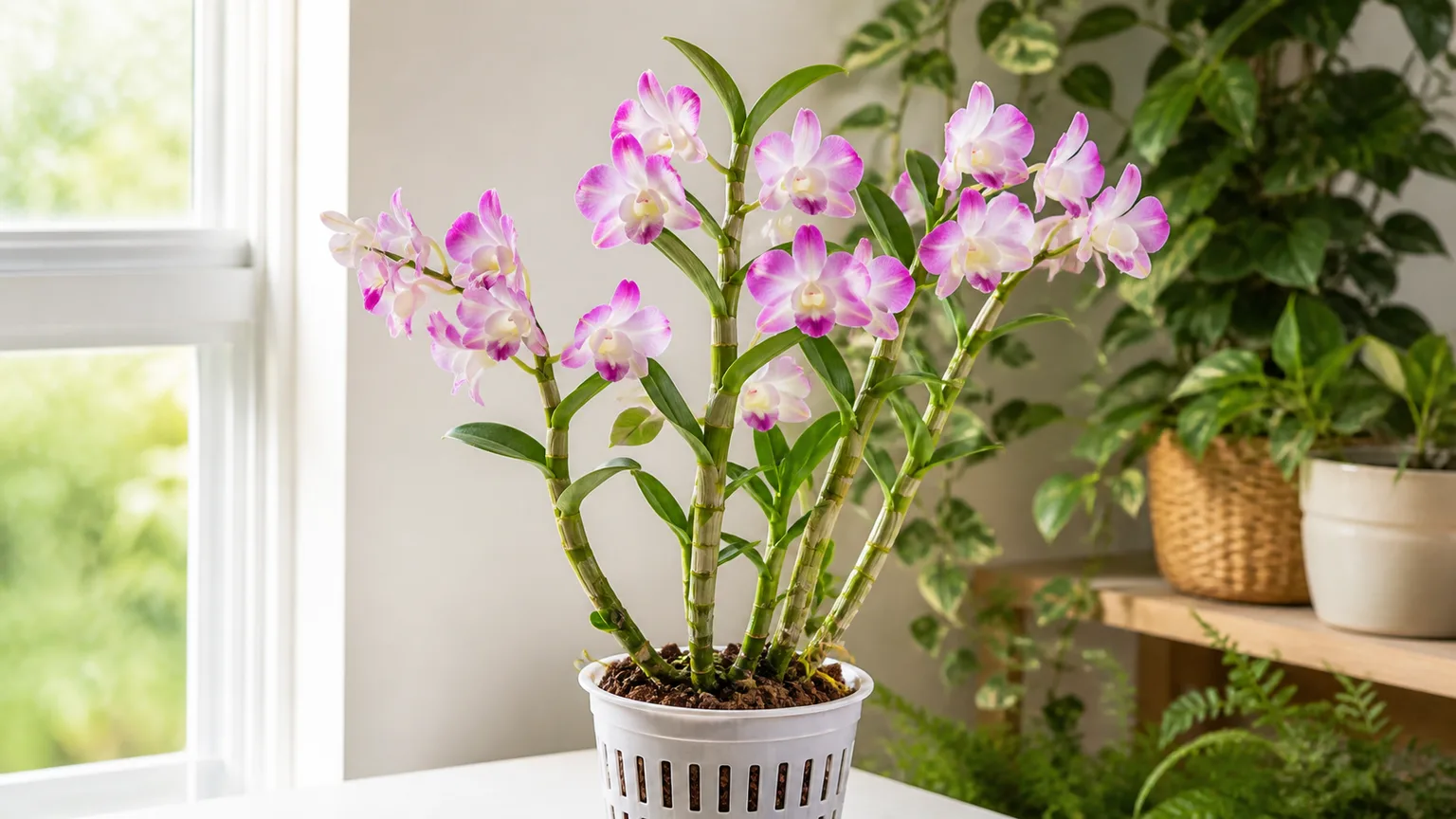
Before you change the light, watering, or fertilizer, read the plant label. Dendrobium is a very large genus, and the warm-growing phalaenopsis types sold in many shops do not follow exactly the same seasonal routine as cool-growing nobile or kingianum hybrids. The most reliable Dendrobium orchid care starts with matching the plant’s group to your home, then using the canes, leaves, roots, and new growth as feedback.
These orchids are epiphytes or lithophytes rather than ordinary soil plants. Their thick, cane-like pseudobulbs store water and nutrients, while their roots need both moisture and air. That explains the central rule for growing them indoors: water thoroughly, let excess water escape, and do not keep the root zone wet simply because the surface looks dry.
Start by identifying which Dendrobium you have
Look for a name tag, hybrid name, or the words phalaenopsis type, nobile type, kingianum, or antelope type. If the label only says Dendrobium, use the plant’s flowering pattern and cane habit as clues, but avoid forcing it into a care category until you can confirm the name. The Royal Horticultural Society’s Dendrobium growing guide separates the common garden-center plants into cool-growing and warm-growing groups for exactly this reason.
Warm-growing or cool-growing: the label changes the routine
| Type you may see | Typical indoor cue | What changes in care |
|---|---|---|
| Phalaenopsis-type or Phalaenanthe hybrids | Evergreen canes with flowers carried along the upper cane | Warm conditions, bright light, steady moisture during active growth, and no forced dormancy if the plant continues growing |
| Spatulata or antelope types | Twisted, horn-like petals and repeated flowering potential | Bright light, warmth, humidity, and consistent moisture; a hard winter rest is usually not the bloom trigger |
| Nobile-type hybrids | Canes that may lose leaves and flower from nodes along older canes | Brighter, cooler autumn and winter conditions, less water after canes mature, and a genuine rest period before spring flowers |
| Kingianum and related cool growers | Compact canes and a preference for a cooler seasonal cycle | A cool night drop and reduced autumn watering can matter more than extra fertilizer |
These are working categories, not perfect botanical boxes. The genus contains roughly 1,600 accepted species and many more hybrids, so a species or hybrid label always outranks a generic care chart. Even the American Orchid Society notes that different Dendrobium groups vary in light, temperature, moisture, and flowering response; treat the numbers in this guide as starting ranges rather than promises.
The practical rule is to recreate a bright, airy, seasonal treetop environment, a point also made in Our Wild Garden’s Dendrobium routine. Its simple care sequence is useful, but a fixed seven- to ten-day watering interval still needs to yield to the pot, medium, room temperature, and plant type in front of you.
What healthy Dendrobium growth looks like
A healthy plant gives you more useful information than a calendar. New canes should emerge from the base or along the rhizome, expand steadily, and feel firm rather than hollow. Mature canes may be leafless in deciduous types yet still remain valuable reservoirs for the next flowering cycle, so leaf loss alone is not proof that the cane is dead.
Leaves should generally be medium green and held with reasonable firmness. Very dark, soft-looking leaves and long gaps between leaves suggest insufficient light; pale yellowing, dry tan patches, or a bleached side can point to excessive light or heat. Roots should be firm, not slimy or hollow, and the potting mix should contain visible air spaces rather than collapsing into a dense, sour-smelling mass.
The best baseline is simple: photograph the plant when it is healthy, note where it sits, and record when the mix dries. That makes a gradual decline easier to spot than relying on memory after a problem has already spread.
Give Dendrobium bright light without leaf scorch
Dendrobiums need bright light to build strong canes and flower, but “bright” does not mean uninterrupted hot midday sun through glass. The American Orchid Society’s Dendrobium culture sheet recommends a bright east or south window with several hours of filtered or indirect sun indoors. A sheer curtain is useful when the glass turns a south- or west-facing window into a heat trap.
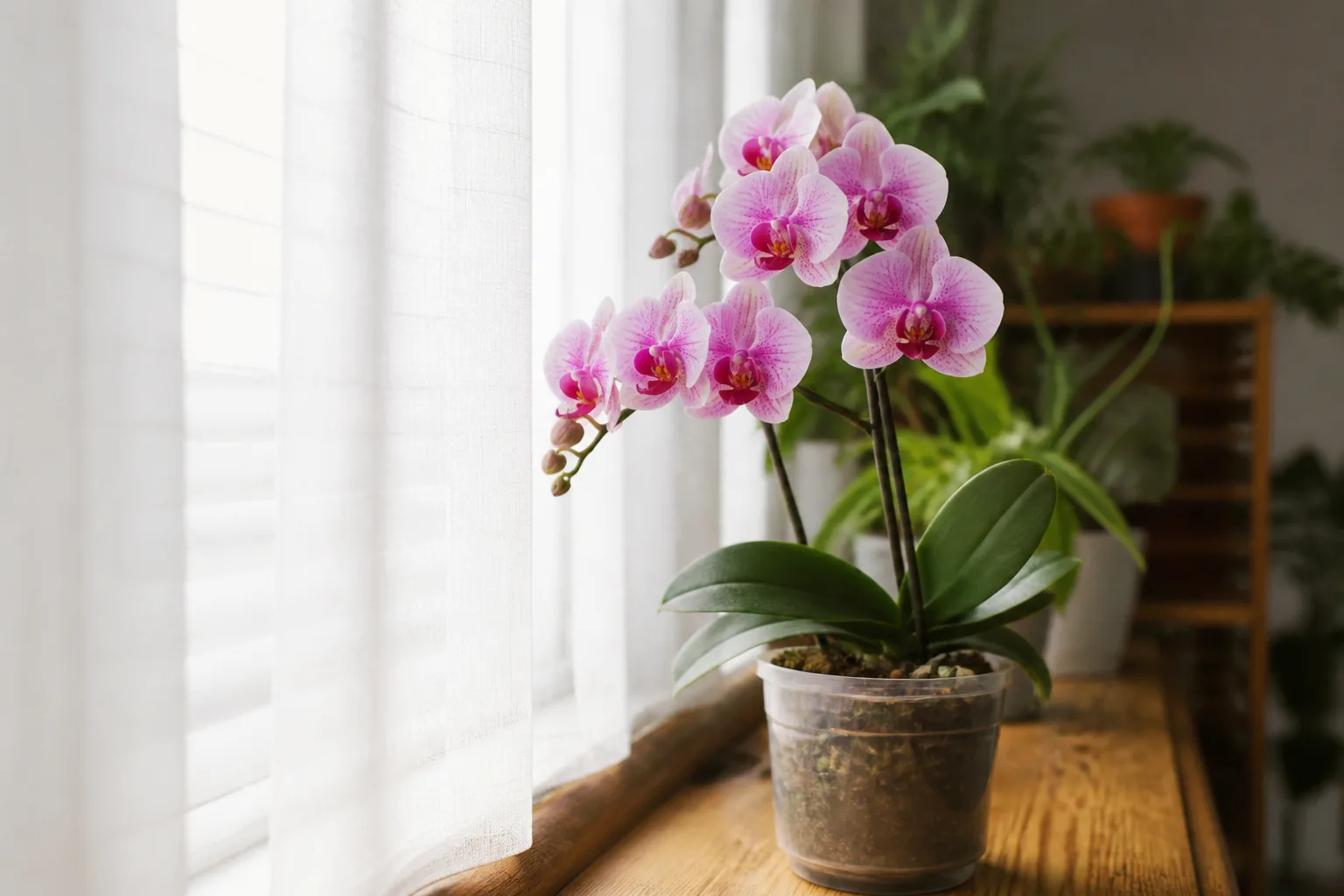
If the leaves are dark green and the plant produces weak, stretched canes without flower buds, move it closer to the window gradually or add a grow light. If the leaves become yellow-green, tan, or sharply scorched on the window-facing side, back the plant away or diffuse the light. Make one change at a time; moving it, repotting it, and increasing fertilizer in the same week makes the result impossible to read.
Light needs also shift with the group. Nobile-type and Latouria plants usually prefer filtered light, while Phalaenanthe and Spatulata groups can tolerate brighter conditions when humidity, water, and airflow keep pace. An east window is a forgiving starting point; a bright south window with diffusion can work well for a plant that still shows dark leaves and poor flowering.
Water by the root zone, season, and cane stage
Do not water a Dendrobium on a fixed weekly schedule. A small pot in a warm room may dry in a few days, while a larger plastic pot in dim winter light may stay wet much longer. Check the weight of the container, the dryness of the bark, and the condition of the roots before deciding.
During active growth, most potted Dendrobiums prefer the mix to become slightly drier between thorough waterings, not to remain bone-dry for long periods. Warm-growing types should not be left severely dry while they are making leaves or canes. Cool-growing nobile types are different: once the canes have matured and the plant enters its seasonal rest, watering may need to fall sharply.
The RHS guidance for Dendrobiums recommends watering when needed in spring and summer, allowing the compost to dry a little before watering again, then reducing frequency in winter. It also recommends rainwater or filtered water where possible, especially in hard-water areas. Water quality is not a substitute for drainage, though; a perfectly clean water source will still rot roots in a waterlogged pot.
Gardening Know How’s indoor orchid guide uses the same practical checkpoint: feel the medium, water deeply, and let the pot drain before it goes back into an outer container. That approach is more reliable than counting days because bark, pot size, light, and airflow change the drying rate.
The soak-and-drain routine that protects roots
- Lift the inner pot. If it feels noticeably lighter and the medium is dry inside—not just on top—it is a candidate for watering.
- Take the plant to a sink and run lukewarm water through the mix until the entire root zone is wet and water flows freely from the drainage holes.
- Let the pot drain completely before returning it to a decorative cachepot or saucer. Empty any collected water.
- Keep water out of leaf joints and new growth where it can sit and encourage rot. If the plant gets wet at the crown or between leaves, blot it and improve airflow.
Clear pots can make this easier because you may see wet bark, condensation, and roots at the same time. They are not required, and a clear pot is not a drainage system by itself. A pot with holes, an open medium, and a drying pattern that fits your room matter more than the color or material of the container.
Choose an airy medium and a snug pot
Regular houseplant soil is usually too dense for an epiphytic Dendrobium. Use a commercial orchid mix based on bark, or build an open mix with bark plus a coarse aeration ingredient such as perlite. A small amount of sphagnum can help a warm, dry home hold moisture, but it should not turn the pot into a wet sponge. The right mix is the one that stays open after repeated watering and dries at a manageable speed in your conditions.
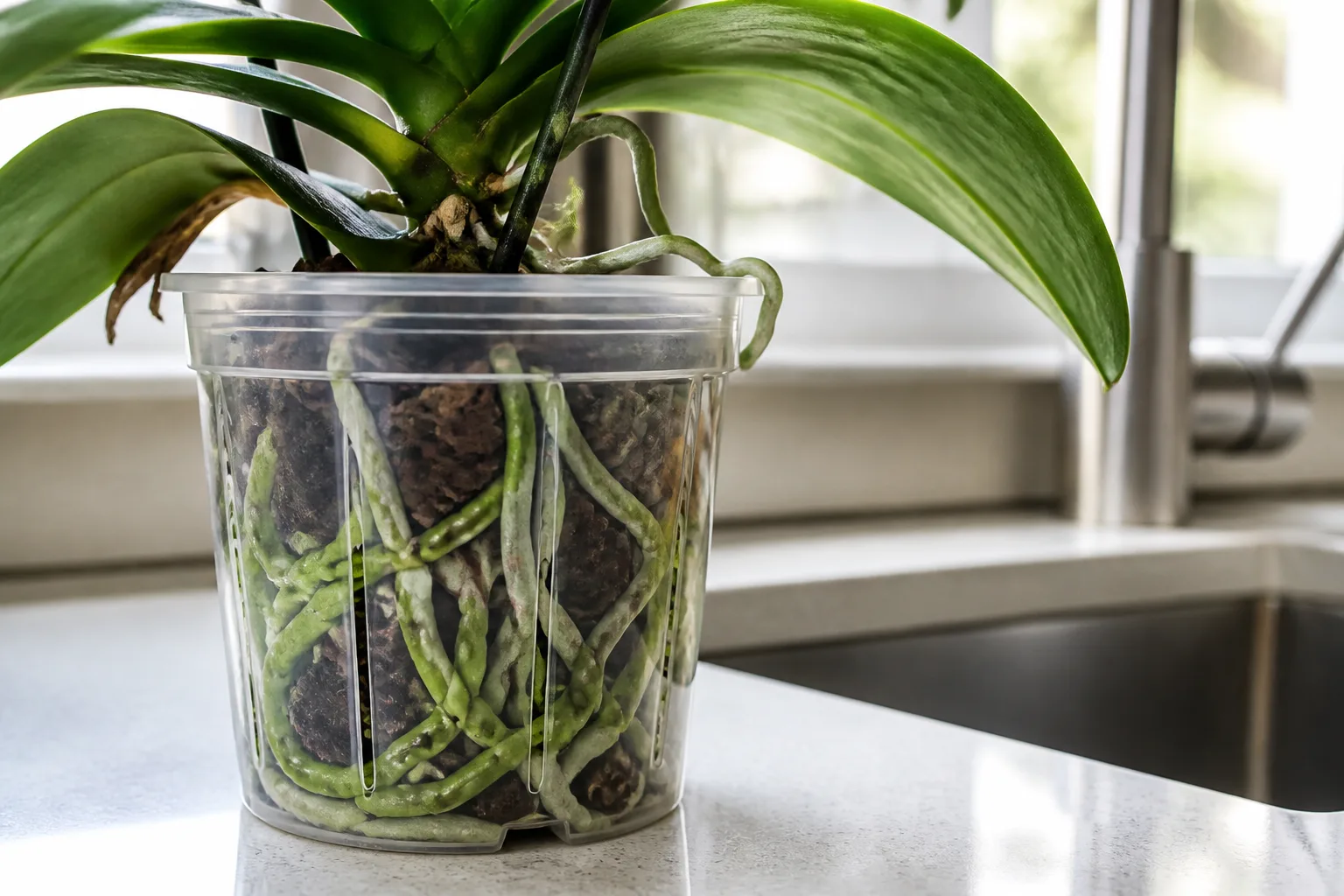
Choose a pot that fits the root mass with room for roughly the next couple of seasons, not a huge container selected for the plant’s eventual height. Oversized pots hold wet mix around a relatively small root system. Dendrobiums can look top-heavy in a snug pot; stabilize the container with a heavier outer pot or a discreet stake rather than jumping several pot sizes.
Repot when the bark has broken down, the pot remains wet for too long, the plant has outgrown its root space, or roots are rotting. If the mix is still open and the plant is growing well, repotting simply because a flower has faded is unnecessary. The best window is often just after flowering, as new roots begin, but the plant’s actual growth stage matters more than a particular month.
To repot, remove old mix, inspect every root, and cut only tissue that is soft, hollow, or clearly dead with a clean tool. Set the plant at the same depth, spread living roots through fresh mix, and anchor the canes so new roots are not rocked loose. Keep several firm canes attached; a dramatic cleanup that removes all old storage canes can delay the next bloom.
Balance temperature, humidity, and airflow
Temperature is where a generic Dendrobium schedule causes the most confusion. The AOS culture sheet gives a broad starting range of about 70–85°F (21–29°C) days and 55–65°F (13–18°C) nights for many Dendrobiums, while warm-growing groups can tolerate more heat when humidity and watering rise with it. The RHS gives cool-growing types a cooler range of about 50–75°F (10–24°C) and warm-growing types about 59–86°F (15–30°C). Those ranges overlap, but the seasonal response does not.
Aim for a modest day-to-night drop rather than a sudden blast of cold. Keep the plant away from a heating vent, air-conditioner outlet, and cold glass, especially while buds are forming. Sudden changes can cause buds or open flowers to drop even when the average room temperature looks acceptable.
Humidity around 40–70% suits many Dendrobiums, but humidity without air movement is a poor trade. A small fan on low nearby—not blowing hard enough to dehydrate leaves—helps wet surfaces dry and reduces the stagnant conditions that encourage fungal or bacterial problems. If a hygrometer shows very dry air, grouping plants or using a humidifier is usually more controllable than frequent misting.
Fertilize active growth, then flush salts
Feed when the Dendrobium is making roots, leaves, or new canes. A water-soluble orchid fertilizer at one-quarter to one-half strength weekly or every other week is a reasonable starting point, provided the product label supports that dilution. The AOS culture sheet recommends regular feeding during active growth and occasional flushing to limit salt buildup.
Flush the pot with plain water periodically, especially if the leaf tips turn brown while the roots and light look sound. A crust on the bark or pot rim, a sour-smelling medium, and browned root tips are additional reasons to review fertilizer concentration and water quality. More fertilizer cannot make a Dendrobium flower if the plant does not have enough light or the wrong seasonal temperature.
For cool-growing nobile types, reduce nitrogen-heavy feeding as the canes mature and autumn approaches. Do not continue a summer growth routine through a rest period. Warm-growing types may continue light feeding while actively growing, but winter feeding should still follow the plant’s growth rather than the date on the calendar.
Prune flowers without sacrificing useful canes
When flowers fade, remove the spent flower branch or flower clusters, but leave a firm green cane in place. Those canes are not disposable stems; they store water and nutrients and may carry future buds or support new growth. Cut a cane only when it is completely shriveled, pale brown, hollow, or diseased.
Use a sharp, clean snip and avoid gouging the rhizome. If you are unsure whether the structure is a flower branch or a cane, wait and identify it first. Dendrobiums do not follow the common moth-orchid rule that every green flower spike should be cut above a node. For a broader explanation of why orchid pruning depends on the genus, see this guide to pruning an orchid spike.
How to encourage reblooming
A Dendrobium that refuses to flower is usually responding to a mismatch between light, maturity, temperature, or seasonal watering—not asking for a stronger bloom fertilizer. First confirm that the plant is producing firm canes and healthy roots. A small, recently divided, recently repotted, or root-damaged plant may spend a season building strength before it flowers again.
Give the plant as much bright, safe autumn and winter light as the leaves can tolerate. Avoid moving it directly from shade to hot sun. If the leaves stay dark and the canes stretch, correct light before changing fertilizer; if the plant is already pale or scorched, more light will make the problem worse.
Match the rest period to the Dendrobium type
Warm-growing types: Keep warm-growing phalaenopsis-type and Spatulata Dendrobiums in bright, warm conditions. Maintain moisture when they are actively growing, allow only a modest dry-down, and do not impose a cold, dry dormancy simply because the plant has finished flowering. These types can flower at different times of year when light, growth, and maturity line up.
Cool-growing types: For nobile and related cool growers, let mature canes experience a cooler, brighter autumn and a clear reduction in water. Keep humidity and water lower during the rest, but do not let a plant with unripe canes or severe root damage dehydrate indefinitely. Resume more normal watering when flower buds or new growth show that the rest is ending.
The RHS explains that some cool-growing Dendrobiums flower in winter or spring after a brighter, drier autumn and winter, while warm-growing types do not need dormancy. The AOS Dendrobium Q&A also shows why species-specific exceptions matter: some plants need consistent moisture with only winter dryness, while others need a more distinct cool, dry rest. If the label is missing, ask an orchid society or nursery before attempting an extreme rest.
Propagate only an established plant
Division is the most dependable home method when a Dendrobium has several mature canes and a strong root system. Divide while repotting: use a sterilized cutting tool to separate the rhizome, then make sure each division has multiple healthy canes and enough roots to support them. The AOS culture guidance suggests keeping about three to five canes per division to reduce the setback in flowering.
Keikis are small plantlets that can form on older canes. Leave one attached until it has several roots and enough foliage to live independently; detaching a rootless keiki because it looks cute is a common way to lose it. Once ready, remove it with a clean tool and pot it into a small, airy orchid medium, keeping the mix only as moist as the new roots can use.
Growing Dendrobiums from seed is a specialist project because orchid seeds require carefully controlled germination conditions and, in nature, a fungal relationship. For a home grower, division or a well-rooted keiki gives a far better chance of producing a vigorous plant.
Diagnose growth problems before changing everything
Start with the root zone, then check light, temperature, watering, and fertilizer in that order. One symptom can have several causes, so a single quick fix—more water for every wrinkled leaf or less light for every yellow leaf—often misses the underlying problem.
Yellow leaves: Check whether the leaf is old and naturally due to drop, whether the roots are sitting wet, and whether the plant is receiving harsh direct sun. A deciduous Dendrobium may yellow and shed leaves as part of its seasonal cycle; an evergreen type that yellows alongside soft roots needs a different response.
Brown or crispy tips: Inspect for low humidity, fertilizer salts, hard-water residue, root damage, and sun scorch. Brown tips do not prove that the plant needs more water. If the medium is wet and the roots are damaged, adding water increases the problem; if the plant is dry and the tips are brittle, improve the watering pattern and humidity gradually.
Wrinkled canes: A few old canes can naturally become less full, but a newly growing cane that shrivels suggests the plant is not taking up enough water. Check for dead roots, a collapsed medium, severe dryness, or heat stress before pruning the cane. A firm green cane can still be useful even when it has lost leaves.
Separate root trouble from normal deciduous leaf drop
Normal seasonal leaf drop is gradual and tied to the expected cycle of a deciduous type; the remaining cane stays firm. Root trouble is more likely when several leaves become limp at once, the pot stays wet, the mix smells sour, or roots turn soft, brown, and hollow. Pulling back the medium and inspecting roots is more informative than guessing from the leaves alone.
If roots are rotting, remove the plant from the wet medium, cut away only damaged tissue, and repot into fresh, open mix. Stabilize light and temperature, keep water from pooling around the cane bases, and give the plant time to replace roots. Do not compensate for root loss with extra fertilizer; damaged roots cannot use it safely.
Handle pests and flower damage early
Inspect cane joints, leaf undersides, and the base of new growth whenever you water. Mealybugs and scale can hide in leaf sheaths, while spider mites are more likely when conditions are hot and dry. Isolate an affected plant, remove visible pests with a cotton swab or gentle wash where appropriate, and use a product labeled for indoor ornamentals exactly as directed. Recheck every few days because one treatment rarely reaches every life stage.
Flower buds may drop after a sharp temperature change, a move from a stable spot, severe drying, or a sudden shift in light. Keep a budding plant in one bright, draft-free location and avoid repotting while it is carrying a display unless the roots are in immediate danger. Small petal spots can result from flower disease or wet, stagnant conditions; remove badly affected blooms, keep flowers dry, and increase gentle airflow rather than spraying the whole plant indiscriminately.
Use a seasonal Dendrobium care calendar
- Spring: Watch for new roots and canes. Repot after flowering or when the medium has broken down, then begin regular feeding as growth resumes.
- Summer: Provide the brightest filtered light the plant can handle, water thoroughly when the mix begins to dry, and use airflow to prevent heat and stagnant humidity. Warm-growing types may grow quickly now.
- Autumn: Check the label before reducing water. Warm types can continue growing; cool-growing nobile types usually benefit from brighter light, cooler nights, less water, and less nitrogen as mature canes prepare to flower.
- Winter: Keep warm types bright and stable, watering according to growth and drying speed. Keep cool types on their appropriate rest rather than watering automatically. Protect all Dendrobiums from freezing glass, heaters, and abrupt drafts.
The calendar is a prompt to observe, not a replacement for observation. A Dendrobium in a dry, bright apartment may need water sooner than one in a cool, humid room. Adjust only after checking the pot, roots, and current growth stage.
Conclusion
Dendrobium orchid care becomes manageable when you stop treating the genus as one plant. Identify the type, give it bright filtered light, use an airy bark-based medium, water deeply but let the root zone breathe, and keep firm canes instead of cutting them away after flowering.
For reliable reblooming, warm-growing types need consistent growth conditions while cool-growing types often need a brighter, cooler, drier season. When leaves turn yellow, tips brown, or canes wrinkle, inspect the roots and recent changes before reaching for more water or fertilizer. A Dendrobium that is allowed to follow its own growth cycle can reward you for years without demanding a fussy routine.



