Rubber Plant Care Indoors: Light, Water, and Soil
Grow Ficus elastica indoors with a practical light, watering, soil, feeding, pruning, repotting, and troubleshooting routine for glossy leaves.
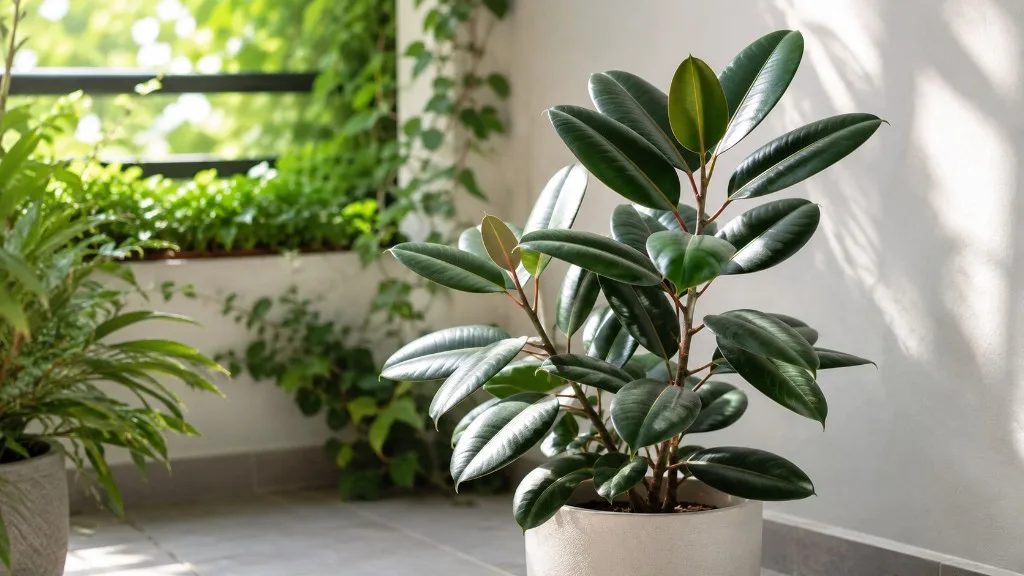
Rubber plant care indoors is mostly about keeping three variables in balance: bright filtered light, a root zone that dries between thorough waterings, and stable warmth. Ficus elastica can tolerate an imperfect week, but it struggles when a dim room, wet soil, and a sudden draft reinforce one another.
The practical routine is simple. Put the plant near a bright window, check the soil before watering, let excess water drain completely, and adjust the schedule when light or temperature changes. Then use pruning and repotting to control size rather than trying to force a stressed plant to grow faster.
Quick care rules for a healthy rubber plant
| Care factor | Good indoor starting point | What to watch |
|---|---|---|
| Light | Bright, filtered light for most of the day; gentle morning sun is usually easier to manage | Long gaps between leaves, leaning, dull foliage, or bleached patches |
| Water | Water when the upper 1–2 inches of mix feel dry, then soak and drain | Soil that stays wet for many days, or a root ball that becomes bone-dry |
| Soil and pot | Airy houseplant mix in a pot with a real drainage hole | Slow runoff, sour smell, or a cachepot holding runoff |
| Temperature | A steady warm room away from drafts and cold glass | Sudden leaf drop after a move, vent blast, or cold night |
| Feeding | Diluted houseplant fertilizer during active growth | Brown edges, crusty soil, or stalled growth after repeated heavy feeding |
These are starting points, not rigid targets. A large plant in a small terracotta pot beside a bright window may drink much faster than a small plant in a deep plastic pot several feet from the glass. The plant’s light, container, mix, and root mass determine how quickly it moves through water.
Know your rubber plant before you change its care
The name “rubber plant” usually means Ficus elastica, a broadleaf evergreen in the mulberry family. Its thick, glossy, oval leaves emerge with colored stipules and may be deep green, burgundy, or variegated with cream and pink. NC State Extension notes that wild plants can become enormous, while indoor specimens are commonly managed in the range of roughly 2 to 10 feet with training and support. (NC State Extension)
That difference matters when you set expectations. A rubber plant is not a naturally tiny tabletop plant; it is a tree being managed in a container. If it becomes top-heavy, leans toward a window, or produces a long bare stem, the solution is usually a better relationship between light and pruning—not a sudden jump to a much larger pot.
What healthy growth looks like
Healthy growth includes firm leaves with a natural sheen, a new leaf emerging from a pointed sheath, and stems that remain sturdy enough to support the canopy. Older lower leaves may yellow and drop occasionally as the plant reallocates resources, but a rapid cascade of leaves, widespread limpness, or yellowing paired with wet soil deserves an inspection.
Varieties such as ‘Robusta’ and ‘Burgundy’ have solid-colored leaves. ‘Tineke’, ‘Ruby’, ‘Belize’, and similar cultivars carry less green tissue in their variegated leaves, so they generally need a brighter position to maintain strong growth and color. NC State’s cultivar list is useful for confirming the range of forms sold under this species. (NC State Plant Toolbox)
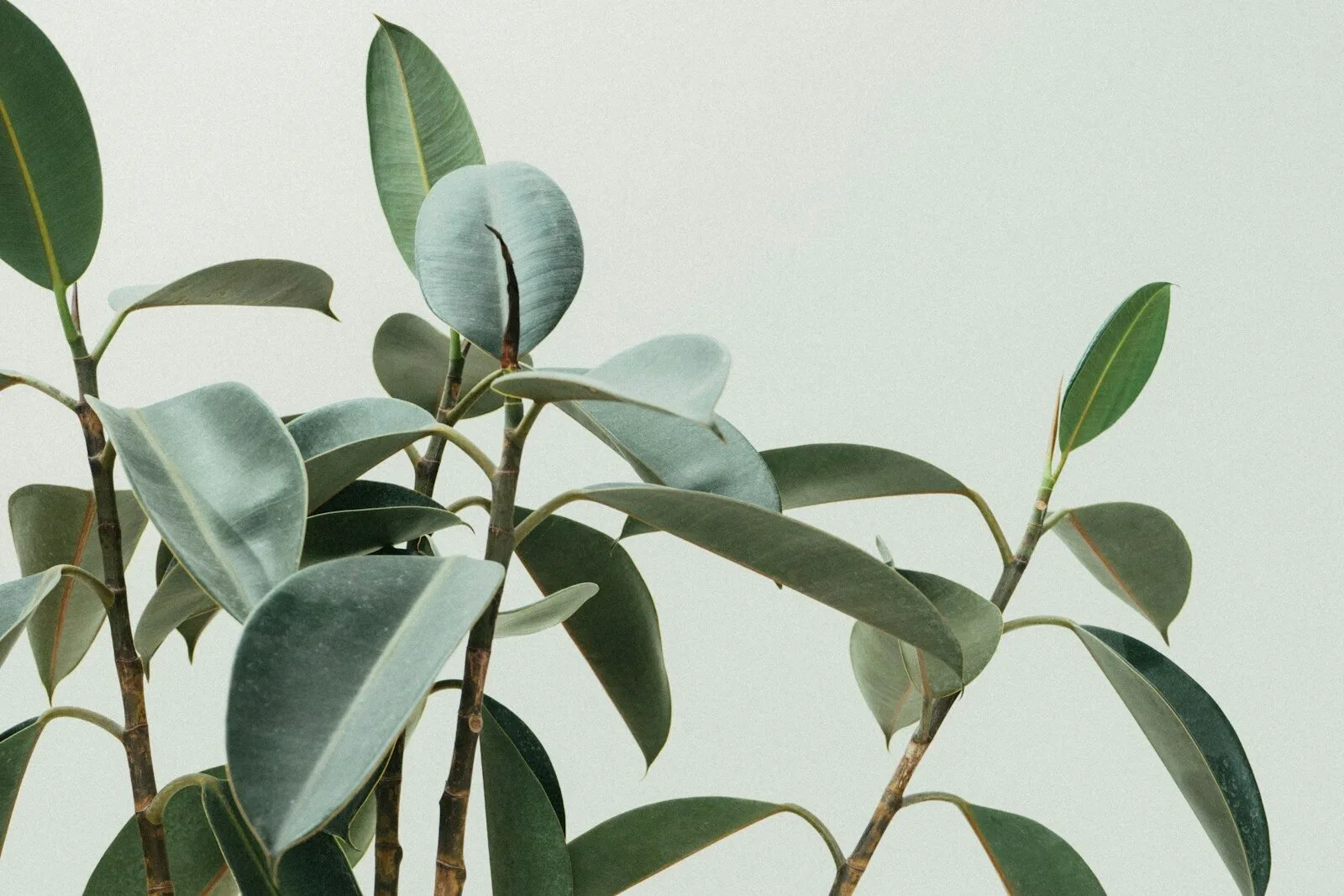
Give Ficus elastica the right light
Place a rubber plant in bright, indirect or filtered light. An east-facing window is often a forgiving starting point; a south- or west-facing window can work when the plant is several feet back or protected by a sheer curtain. The goal is strong ambient brightness without baking the same leaves against hot glass every afternoon.
Light is not just a growth-speed setting. It also controls how quickly the pot dries. In weak light, the plant uses less water, the mix stays wet longer, and a weekly watering habit becomes riskier. In stronger light, the plant may need water sooner, but it may also produce shorter gaps between leaves and more robust new growth.
The RHS describes Ficus elastica as a tropical evergreen grown in bright but filtered or indirect light, with moist but well-drained growing conditions. That combination is more useful than the vague instruction to keep the plant “in a bright room,” because a bright room can still have a dim corner several feet from its only window. (RHS)
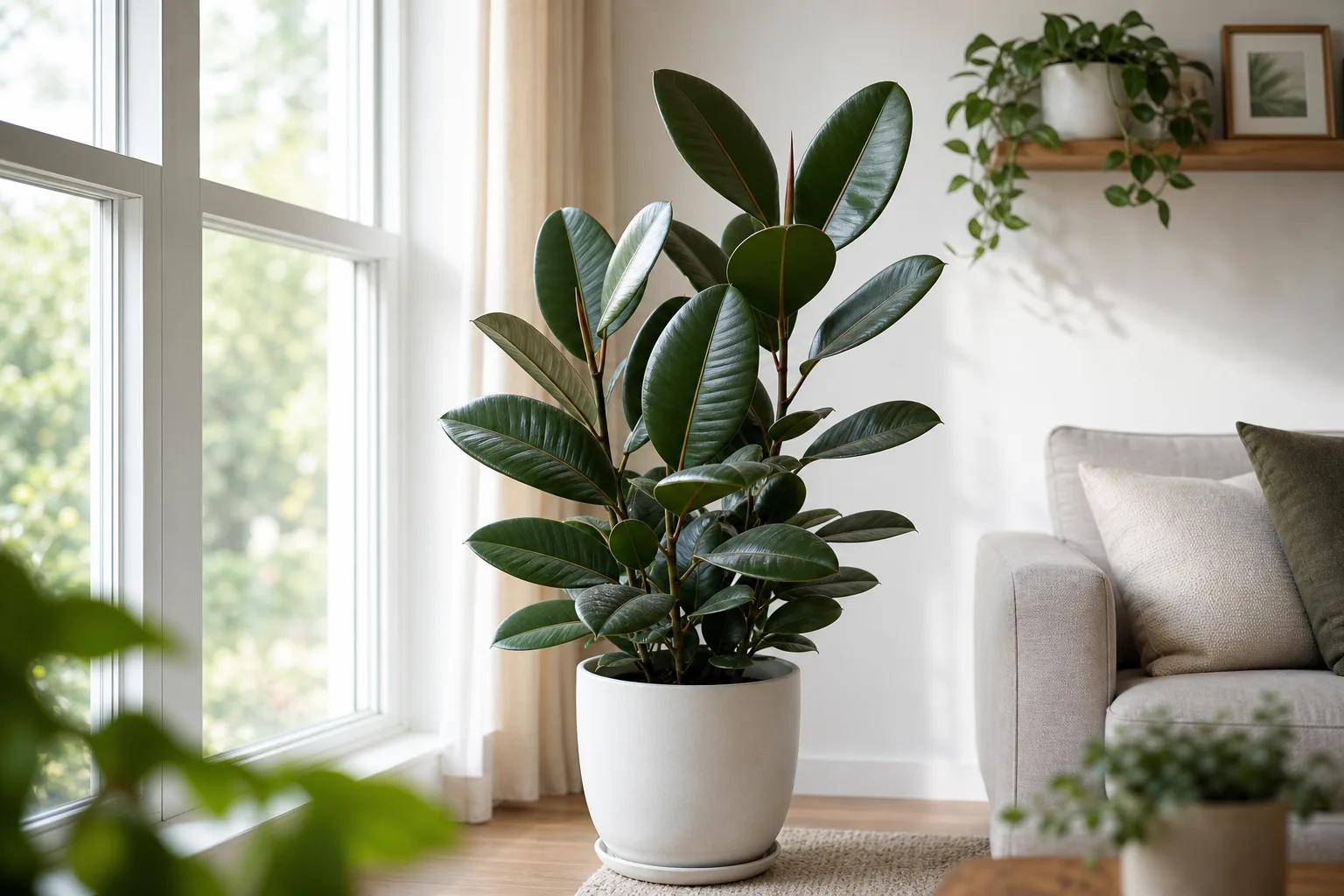
Choose a window by exposure, not by room name
Use the leaves and the distance from the window to fine-tune placement. If the plant stretches toward the glass, produces small new leaves, or loses lower leaves while the soil remains wet, move it closer to brighter filtered light. If a leaf develops a sharply defined bleached or crispy patch on the window-facing side, step it back or filter the sun.
Rotate the pot a quarter-turn every week or two if the plant leans. Avoid moving it repeatedly between a dim corner and a sunny window; gradual changes are easier for ficus roots and leaves to absorb. When upgrading the light, start with a little morning sun or brighter filtered exposure, then increase it over about one to two weeks while watching for scorch.
Give variegated cultivars a brighter margin
Variegated leaves can look pale even when they are healthy, so judge the plant by new growth, stem spacing, and the stability of the pattern rather than by color alone. If a variegated rubber plant repeatedly produces solid-green shoots, cut those shoots back to a point where patterned growth remains; the all-green branch has more chlorophyll and can outgrow the slower variegated stems.
Do not put a freshly purchased variegated plant into harsh midday sun to “fix” its color. Give it bright filtered light, let it acclimate, and make changes in small steps. More light can support stronger color and growth, but it cannot reverse leaf tissue that has already scorched.
Water by soil condition, not by calendar
Water a rubber plant thoroughly when the top 1–2 inches of potting mix feel dry. Pour slowly over the surface until water begins to leave the drainage hole, wait briefly, then empty the saucer or cachepot. This wets the root ball more evenly than a small daily splash and prevents runoff from becoming a hidden reservoir under the pot.
Both NC State Extension and UF/IFAS emphasize regular watering without overwatering and allowing container soil to become fairly dry between waterings. The exact interval depends on the room, so a schedule such as “every Sunday” is only a reminder to check—not a reason to water. (NC State Extension; UF/IFAS Extension)
Use a two-part soil test
Before watering, press a finger into the mix near the middle of the pot, not just the surface. Then lift the pot or compare its weight with how it felt just after a full watering. A dry surface over a heavy, cool root ball does not mean the plant is ready; a light pot with mix pulling from the sides may need a slow, complete rehydration.
If the mix is dry only at the top but damp below, wait and check again in a few days. If water runs straight down the sides and out immediately, the root ball may have shrunk away from the pot or become water-repellent. Water in several small passes, allowing each pass to soak in, rather than flooding the pot once and assuming the center is wet.
The most useful warning sign is not a number of days. It is a mismatch: yellow leaves and wet soil point toward a slow or oxygen-poor root zone, while drooping leaves and very dry soil point toward thirst or root damage from repeated drought. Confirm the soil condition before changing the plant’s light or feeding.
Change the rhythm in winter and during heat
Short winter days usually slow growth and evaporation, so the same summer watering interval can leave the roots wet for too long. Move the plant away from cold glass and drafts, reduce watering as the mix dries more slowly, and resume more frequent checks when brighter light and new growth return.
During a hot spell, do not automatically water every day. Check the root zone, protect the plant from harsh sun, and look for a faster dry-down caused by stronger light, warm air, or a smaller pot. The right response to heat is often a more frequent inspection—not a fixed increase in water.
Build the root zone with the right soil, pot, and drainage
Choose a well-drained, moisture-holding houseplant mix rather than garden soil or a dense, fine medium. A practical starting blend is a quality indoor potting mix with some perlite or pumice and a modest amount of orchid bark. The ingredients are less important than the finished texture: water should spread through the mix, then leave the pot, while enough structure remains for air-filled pores after watering.
The RHS lists moist but well-drained conditions and recommends houseplant compost for Ficus elastica. UF/IFAS likewise stresses well-drained soil and letting container soil become fairly dry between waterings. Do not put a layer of gravel in the bottom of the pot as a substitute for a drainage hole; the root zone above it can still remain saturated. (RHS; UF/IFAS Extension)
Use a container with at least one unobstructed drainage hole. A decorative cachepot is fine only if you can lift the nursery pot out and discard runoff after watering. A rubber plant can become heavy, so choose a stable container, but do not compensate for a light, top-heavy plant with an oversized pot full of wet mix.
Match mix texture and pot size to the room
A deep plastic pot in low light dries slowly. A small terracotta pot near a bright window dries quickly. If your plant stays wet for more than a week or two despite a bright position, inspect the roots, pot size, and mix before simply watering less; the container may be much larger than the root ball or the substrate may have compacted.
When repotting, move up only one pot size or roughly 1–2 inches wider than the current root ball. Extra empty mix around a small root system stays wet longer and can create the very leaf yellowing you were trying to prevent. Repot into fresh mix when the old medium has collapsed, drainage has become unpredictable, or roots circle densely and emerge from the hole.
Stabilize temperature, humidity, and placement
Keep the plant in a warm, steady place away from exterior doors, heating vents, air conditioners, and cold windows. NC State Extension recommends temperatures above 55°F and specifically notes that drafts and cold temperatures can cause trouble. A rubber plant may tolerate a brief change, but repeated swings are a common trigger for sudden leaf drop. (NC State Extension)
Average household humidity is often adequate if the plant is watered well and the roots are healthy. If the room is very dry, a humidifier or a cluster of plants can help more consistently than occasional misting. Do not let a humidity tray keep the pot base in standing water; the pot should remain above any water line, and airflow around the leaves still matters.
Treat the plant as a container houseplant outside tropical, frost-free conditions. UF/IFAS lists rubber tree for warm climates and container or patio use, while RHS gives it a warm, sheltered profile. Indoors, “summering outside” is optional, not required; a stable bright window is safer than a sudden move into outdoor sun and wind. (UF/IFAS Extension; RHS)
Feed during active growth without salt buildup
Fertilize when the plant is actively producing new leaves, usually in brighter spring and summer conditions. Use a complete liquid houseplant fertilizer diluted according to the label, and apply it to already-moist soil rather than to a bone-dry root ball. RHS recommends a monthly high-nitrogen feed during growth; for a home collection, a balanced product used conservatively is a reasonable starting point. (RHS)
More fertilizer does not compensate for low light. A plant that cannot use the water and nutrients available to it may accumulate salts in the pot, showing crust on the mix or brown leaf edges. Reduce or pause feeding when growth slows, flush the pot occasionally with plain water if the mix and drainage allow it, and never fertilize a plant that is freshly repotted, severely wilted, or showing possible root rot until the root zone is stable.
Prune, shape, and clean the leaves safely
Prune a rubber plant to control height, remove damaged growth, or encourage branching. Use clean, sharp bypass pruners and make a cut just above a leaf node—the point where a leaf or former leaf attaches to the stem. A cut removes apical dominance from that section, which can allow buds below the cut to develop into side branches when light and plant health are adequate.
Prune during active growth when possible, but do not wait for spring if a damaged or diseased stem needs removal. Avoid taking more than about one-third of the canopy in one session; a severe haircut can reduce the plant’s ability to photosynthesize and increase stress. The pruning guidance from Homes & Gardens also highlights the node target, the one-third limit, sharp tools, and the plant’s irritating latex sap. (Homes & Gardens)
Wear gloves and keep a cloth nearby because cut stems can release white latex sap. Keep pruning waste away from children and pets, wash tools after use, and let the cut surface dry without smearing sap across furniture or skin. The sap is one reason a rubber plant is a poor choice for a household where a pet can chew the leaves.
Wipe the broad leaves with a damp, soft cloth when dust accumulates. Skip oily leaf-shine products, which can leave a film and make it harder to inspect the leaf surface for scale, mealybugs, or spider mites. Cleaning is maintenance, not a treatment for pests; inspect leaf undersides and stem joints separately.
Prune above a node when you want branching
If the plant is tall and bare at the base, first improve the light before pruning. Cutting a weakly lit stem may shorten it, but it will not create a full canopy if the plant still cannot support new growth. Once light is adequate, choose a node facing the direction where you want a branch, make one clean cut, and wait rather than making several extra cuts the same day.
A cut top can sometimes be propagated, but latex sap, drying conditions, and rooting time make it less predictable than propagating soft, healthy material. If you only want a fuller parent plant, discard the cutting after it has stopped dripping rather than turning every pruning session into a second project.
Repot and move outdoors without shock
Repot when roots circle densely, push through the drainage hole, lift the plant out of its pot, or when the mix has broken down and stays wet. Water the plant a day or two before repotting if the root ball is very dry, slide it out gently, and inspect for firm pale roots versus dark, mushy, or foul-smelling tissue. Remove only clearly damaged roots, then use a clean pot just modestly larger than the root ball.
After repotting, water thoroughly so the new mix settles, allow runoff to escape, and return the plant to the same light level it already knows. Do not immediately move it into harsher sun, drench it repeatedly because it looks temporarily limp, or feed it to “help it recover.” Stable light and evenly moist—but not waterlogged—mix are the priorities while disturbed roots reestablish.
If you take the plant outside for summer, begin in bright shade or dappled shade. Over the next week or two, increase exposure gradually while protecting the leaves from strong afternoon sun, wind, and heavy rain. Check for scale, mealybugs, spider mites, and hitchhiking insects before bringing it indoors again, and isolate it from other houseplants for a short inspection period.
Bring it back inside before nights become cool in your area, not after the first cold shock. The plant does not need an outdoor season to thrive; outdoor time is worthwhile only if you can acclimate it carefully and provide a clean, stable return indoors.
Troubleshoot yellow leaves, leaf drop, and pests
Yellow leaves are a symptom, not a diagnosis. A single older lower leaf can be normal aging, while several yellow leaves at once may point to saturated roots, low light, cold stress, underwatering, pests, or a recent environmental change. Look at the pattern, the soil, and the newest growth together.
Leaf drop is similar. UF/IFAS notes that overwatering can cause leaf loss, and NC State Extension also identifies temperature drops and cold drafts as causes. A rubber plant can also shed after a move because the light, temperature, and root moisture balance changed all at once. (UF/IFAS Extension; NC State Extension)

Run a ten-minute triage before changing everything
- Check the soil at mid-depth. Wet soil with yellowing or limp leaves moves drainage and root health to the top of the list; dry soil with a light pot points toward thirst or a missed watering cycle.
- Inspect the roots if wetness persists. Slide the root ball out carefully. Firm, light-colored roots are reassuring; mushy roots, a sour odor, and collapsing mix suggest oxygen stress and possible rot.
- Read the light pattern. Long bare gaps, leaning, and small new leaves suggest insufficient brightness. Bleached or crispy window-facing patches suggest sun changed too quickly or is too intense.
- Look for drafts and recent moves. Note whether the plant was rotated, repotted, moved near a vent, or placed against cold glass in the last few weeks.
- Inspect leaf undersides and stems. Scale can look like small fixed bumps; mealybugs may appear as white cottony clusters; spider mites can leave fine webbing and stippled leaves. Isolate a suspect plant and choose a treatment appropriate for the pest and product label.
- Change one major variable first. Correct the drainage problem, improve the light, or remove the draft, then give the plant time to show whether new growth improves. Simultaneous drastic changes make the original cause harder to identify.
ASPCA lists weeping fig under the common names fig and Indian rubber plant and identifies it as toxic to cats, dogs, and horses. Keep Ficus elastica away from animals that chew leaves or stems, and contact a veterinarian or the ASPCA Poison Control Center if ingestion is suspected. (ASPCA)
Conclusion
The easiest way to grow a rubber plant indoors is to make the environment predictable. Give it bright filtered light, use a pot with real drainage, water only after the upper mix dries, and keep it away from cold drafts and abrupt moves.
When growth gets leggy, improve light before pruning. When leaves yellow or drop, inspect soil, roots, temperature, and pests in that order instead of reaching for fertilizer. With those checks in place, Ficus elastica can become a tall, glossy, manageable houseplant without demanding a complicated care schedule.



