How to Grow and Care for Cattleya Orchids
Grow Cattleya orchids indoors with practical guidance on bright light, pseudobulbs, watering, repotting, feeding, pests, and what helps a plant bloom again.
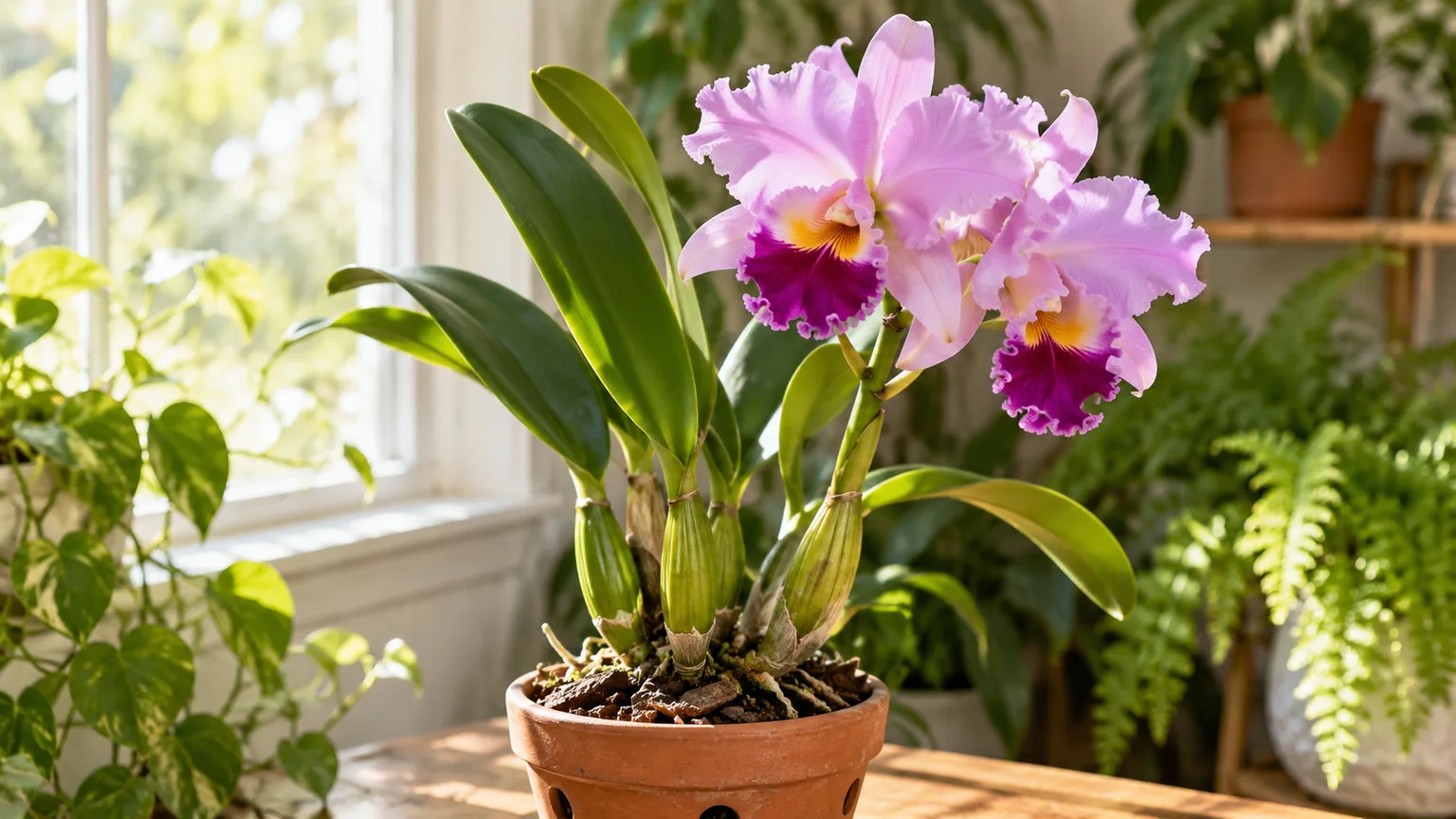
Cattleya orchids reward a bright window and an airy root zone with substantial, often fragrant flowers. The trick is to care for the growth in front of you: a Cattleya stores water in pseudobulbs, advances sideways along a rhizome, and may grow leaves for months before a mature growth is ready to flower. Once you understand those parts, watering and repotting become easier to time, and a plant that does not bloom right away is less likely to be “fixed” with too much fertilizer or frequent disturbance.
Cattleya orchid care at a glance
For a healthy indoor Cattleya, provide very bright light, a potting medium that drains quickly, and a thorough watering when that medium has reached dryness. Let the pot drain fully, give the plant moving air, and feed lightly while new roots and pseudobulbs are actively growing. Keep the plant warm enough for growth, with a cooler night where practical, and avoid frost or long periods of cold, wet roots.
The best schedule depends on pot type, bark size, room temperature, humidity, and the individual hybrid. A small Cattleya in a clay pot near a sunny window can dry in a few days; a large plant in a plastic pot with finer mix may take much longer. Use the calendar as a reminder to inspect, not as an instruction to water every Sunday or repot every second year.
Understand the plant’s growth habit before setting a routine
Cattleyas are tropical, mostly epiphytic orchids: in nature, many attach their roots to tree branches rather than growing in dense soil. Their thick roots are adapted to brief wetting followed by access to air, which is why a loose orchid mix is safer than ordinary potting soil. The American Orchid Society’s Cattleya Culture Sheet describes this quick wet-and-dry rhythm and recommends watering when the medium reaches dryness (American Orchid Society).
A Cattleya grows as a chain. A horizontal rhizome produces successive upright pseudobulbs, and each pseudobulb stores water and supports one or more leathery leaves. New roots usually emerge from the newest growth, while flowers are produced by mature growths; the older pseudobulbs continue to support the plant and should not be removed just because they look less polished than the newest one.
Pseudobulbs make Cattleyas more tolerant of a short dry interval, but they are a reserve rather than a license to neglect the plant. The rhizome’s sideways growth also explains why the orchid eventually “walks” across its pot and why a division needs several mature growths. A species or hybrid name helps refine care because bloom rhythm and temperature preferences vary.
Give Cattleyas bright, graduated light
Light is usually the first condition to improve when a Cattleya grows leaves but refuses to flower. The AOS gives a greenhouse target of roughly 2,000–3,500 foot-candles and notes that indoor plants generally need a bright window, ideally with more than four hours of direct sun to bloom. Those are useful reference points, not a reason to put a recently purchased plant straight into hot, unfiltered midday sun.
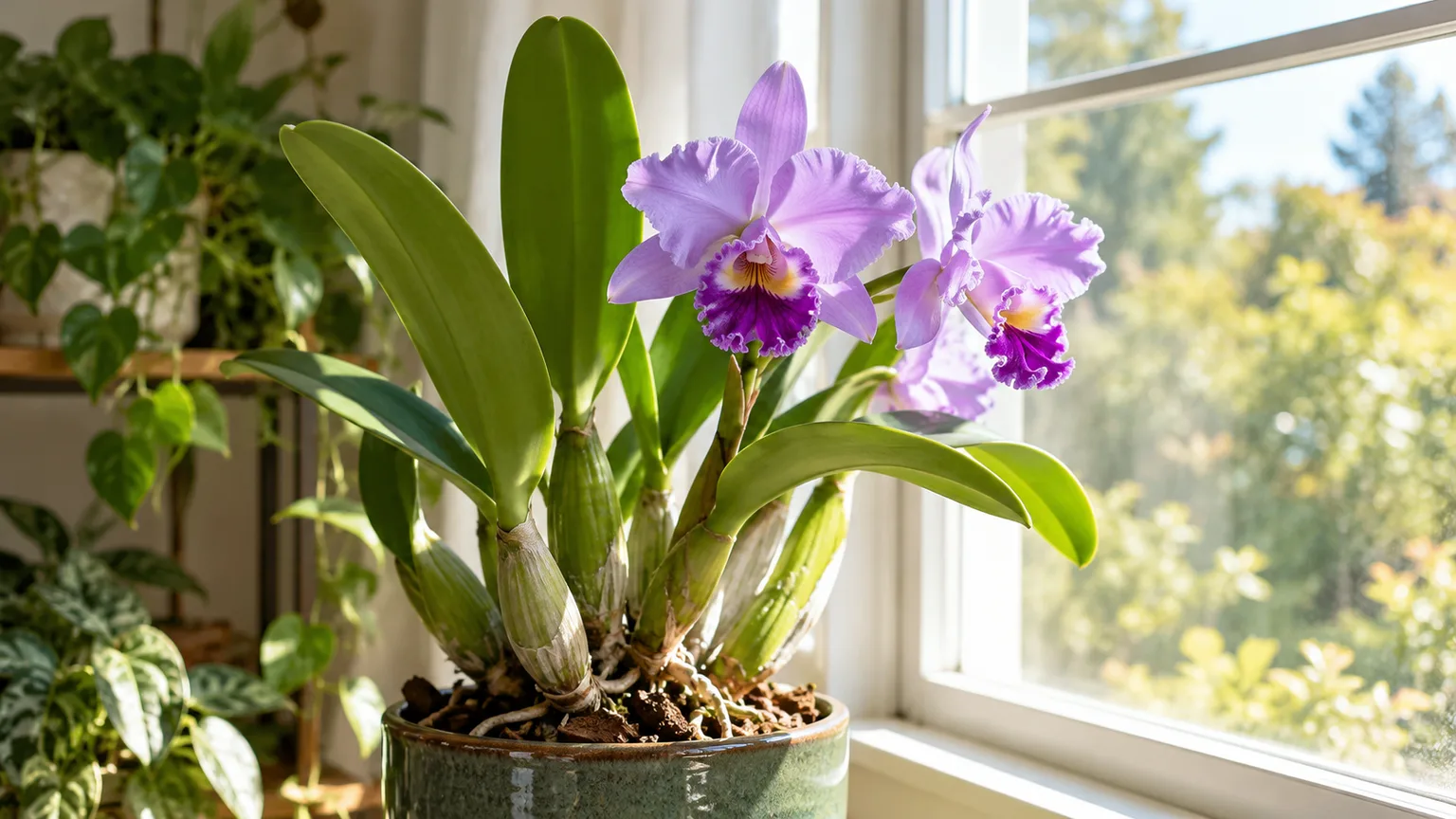
Cattleyas need a brighter growing position than many common indoor orchids; increase sun gradually.
Indoors, a bright south-facing window can work well in many homes; an east or west window may also be bright enough, especially if the glass receives a long stretch of sun. In very sunny or hot climates, use a sheer curtain or move the plant a little back from the glass during the harshest exposure. In a darker home, a grow light can supplement daylight, but keep it far enough away that the leaves do not heat up and use a consistent daily schedule.
Acclimate a plant gradually whenever you increase its light. Start with the brightest filtered position it can tolerate, then extend direct exposure in small steps over a week or two. This is especially important for a plant arriving from a shaded store, a greenhouse with shade cloth, or a shipping box; a sudden jump can leave permanent bleached or tan scorch patches even if the final location is suitable.
For a newly shipped or bare-root plant, BB Orchids’ post-arrival guidance also recommends a settling-in period and gradual light exposure. That advice addresses shipping stress specifically; an established Cattleya still needs the brighter long-term position described above.
Read the leaves before changing the window
Leaf color offers a useful, though imperfect, gauge. The AOS describes a healthy Cattleya leaf as chartreuse green; North Carolina State Extension notes that very dark leaves can signal insufficient light, while direct sun can burn foliage. In ordinary home conditions, aim for a medium to light olive green rather than dark glossy green or a bleached yellow surface (NC State Extension Plant Toolbox).
A darker green plant that makes healthy leaves but never flowers may need more light, but rule out other factors before moving it. A pale yellow leaf with a dry, sharply bounded patch on the window side points more toward sun scorch than a nutrient shortage. Increase exposure gradually, change only one condition at a time, and give a new mature growth a chance to finish before deciding whether the change worked.
Build in a useful day-night temperature change
Many Cattleyas grow well at normal indoor temperatures, especially when days are warm and nights are somewhat cooler. The AOS gives a broad general range of 70–85°F (21–29°C) by day and 55–72°F (13–22°C) at night, with a night drop of about 10–15°F (5–8°C) supporting growth and flowering. The exact range shifts with the species or hybrid, so the plant’s label or breeder’s culture notes should take precedence over a single universal number.
A home grower does not need to make a complicated thermostat program. A room that warms naturally during the day and cools several degrees overnight may already provide a useful difference. Avoid placing the orchid against cold winter glass, in a heating vent’s hot stream, or beside an air conditioner that blows directly on new growth.
Heat above the usual range raises water demand and makes airflow more important. Colorado State University PlantTalk also notes that Cattleyas can grow in typical homes; during a hot spell, shade the strongest sun and check the mix more often instead of keeping it constantly wet.
Water by the medium’s drying cycle
Water deeply when the Cattleya’s medium has dried, then allow excess water to drain. Do not keep the roots continually damp, but do not interpret “dry between waterings” as permission to leave the plant severely dehydrated for weeks. The pseudobulbs provide a reserve; they are a buffer for normal dry-down, not a substitute for an attentive routine.
Use lukewarm water and run it through the pot until it flows freely from the drainage holes. The AOS cautions that water colder than 50°F (10°C) can injure roots and advises against hard water or water softened with sodium chloride. If your tap water is heavily mineralized or salt-softened, use a suitable lower-mineral source when practical and periodically flush the medium with plain water to reduce fertilizer-salt buildup.
A mounted Cattleya or one in coarse bark can dry much faster than a potted plant in a humid room. Conversely, a large plastic pot, fine mix, cool weather, or limited air movement can extend the dry-down. This is why a weekly rule can leave one grower’s plant thirsty and another’s rotting; establish the pattern in your own conditions before settling on a routine.
Check the pot, roots, and season together
Feel the mix below the surface, lift the pot to notice its weight, and look for how quickly condensation or dampness disappears. If the Cattleya is in a clear pot, roots may look greener after watering and paler as they dry, but root color alone is not a complete moisture meter. Test near the center of the pot, where bark can remain damp after the exposed top pieces look dry.
During active root and pseudobulb growth, the plant may use water faster. In cooler, darker months or when growth slows, the same mix may take longer to dry, so lengthen the interval rather than continuing the summer schedule. A thirsty-looking pseudobulb with firm roots calls for a normal thorough watering; a wrinkled pseudobulb with a heavy, sour-smelling pot calls for a root inspection because damaged roots cannot take up water normally.
Always empty the saucer or decorative outer pot. Standing water deprives roots of air and can rot the base of the plant, while water trapped among leaves is unnecessary for this group. Water in the morning when possible so any splash on leaves or pseudobulb sheaths can dry during the day.
Choose a breathable mix and a snug pot
Use a coarse, open orchid medium that holds some moisture without collapsing into a dense mass. Fir or pine bark is a common base; perlite or horticultural charcoal can help maintain air spaces, while a modest amount of sphagnum may be useful in a particularly dry home. Mature plants generally use a coarser grade than small seedlings, which have finer roots and different moisture needs.
The practical growing guide from Logee’s Plants likewise emphasizes an airy medium and allowing the pot to approach dryness. Its preference for clay pots is one workable grower’s approach because clay dries faster; it is not a requirement for every home, especially where a small pot or dry room would make the roots desiccate too quickly.
Avoid ordinary houseplant potting soil. It packs tightly around the roots and stays wet in a way that does not suit a plant adapted to air-exposed roots. The same principle applies to pot size: choose a container only large enough for the root mass and the next couple of years of growth, with unobstructed drainage. An oversized pot contains more wet medium than the roots can use and makes it harder to know when watering is safe.
Plastic pots hold moisture longer; clay pots dry faster and can steady a heavy plant. Neither material is automatically best. Choose based on how quickly your home dries the mix and how consistently you can water. If the rhizome runs across the pot, orient the oldest pseudobulbs toward one edge and leave open space in the direction of the newest growth. Keep the rhizome at the surface instead of burying it under bark.
Repot when new roots are starting
Repot when the medium breaks down, drains poorly, or the rhizome has run to the pot’s edge—not just because a particular date has arrived. The AOS suggests that a Cattleya may need repotting when first acquired, when the rhizome protrudes, or when the mix decomposes, often after two to three years. The best window is generally just as new roots or a new shoot begin, when fresh root tips can anchor into the new medium (American Orchid Society).
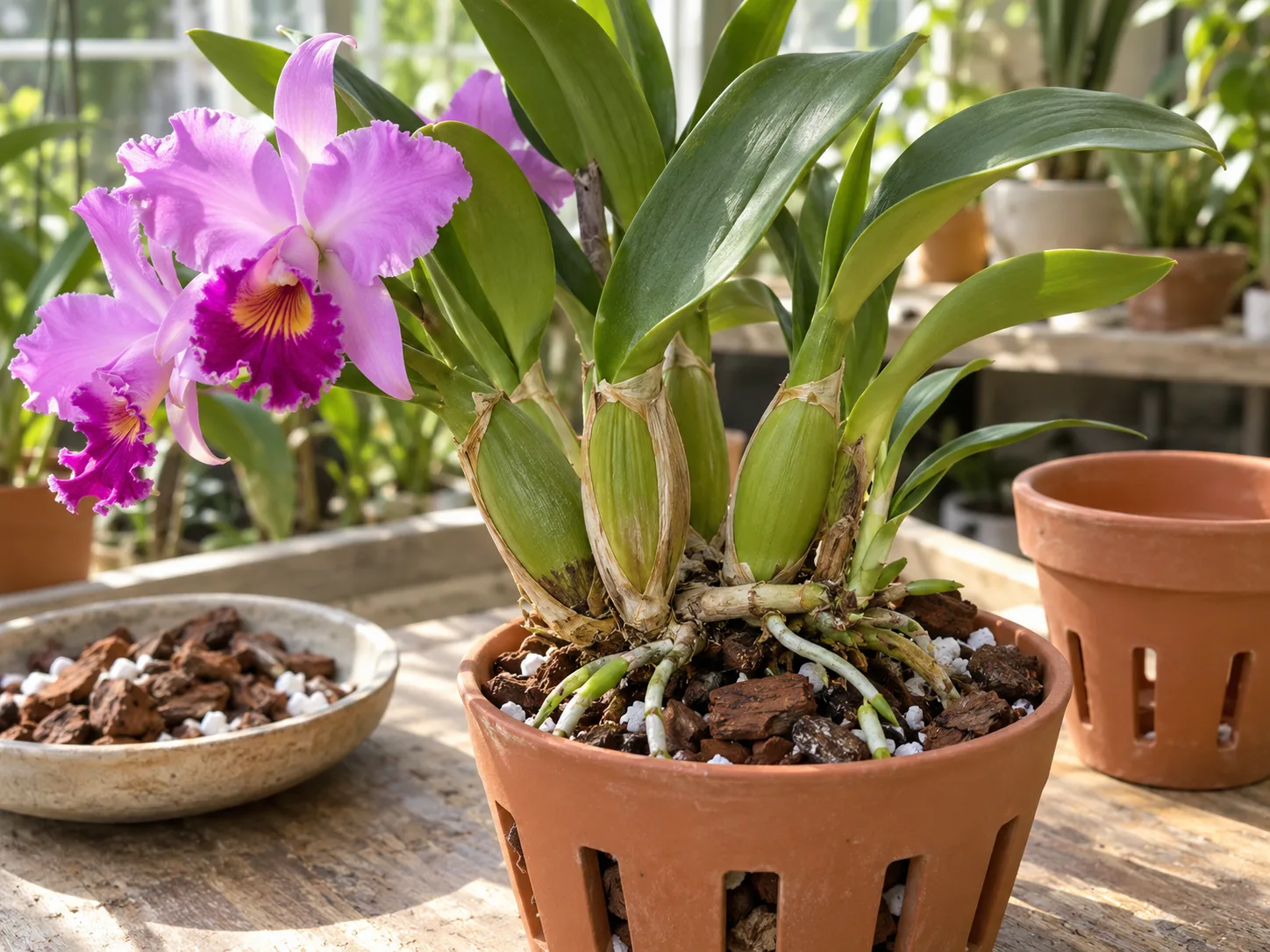
Keep the rhizome at the medium surface and leave room in the pot for the next lead to grow.
Gardening Know How’s Cattleya guide also uses a two-to-three-year interval as a practical repotting range. Treat that as a time to inspect the medium, not a deadline: bark may stay useful longer in one setup and break down sooner in another.
Prepare a clean draining pot, fresh bark-based orchid medium, and sharp, sterilized snips. Ease the plant from its pot and remove loose, decomposed mix without tearing every living root away. Trim only roots that are clearly dead, hollow, collapsed, or mushy; firm roots, even if brown-stained or old, may still be useful. Set the plant so the oldest pseudobulbs sit at the back and the current lead points toward free space.
Pack bark around the roots just firmly enough to hold the plant upright, without burying the rhizome or crushing tender root tips. A plant that rocks will break emerging roots as they try to attach, so secure it with a stake or tie if needed. Water according to the root condition and medium, then resume a normal thorough watering when the mix approaches dryness; avoid keeping the freshly disturbed root zone saturated.
Repotting and dividing are different decisions. A small clump can need a larger pot without being ready to split. The AOS advises keeping at least six mature pseudobulbs on a plant before dividing it, with three to five growths left on each division, which preserves more stored energy for regrowth.
Keep humidity moderate and air moving
Cattleyas appreciate moderate humidity, but the goal is moist air around the plant, not perpetually wet foliage or a soggy pot. The AOS places many orchids around 40–70 percent relative humidity during the day and notes that humidity helps a plant cope with bright light and warm, dry air. Colorado State PlantTalk gives a higher possible range for home Cattleyas; in practice, avoid chasing a single percentage if the plant is growing well and the roots dry appropriately.
If the room is consistently dry, a room humidifier can raise humidity more reliably than occasional misting. A pebble tray may make a small local difference, but the pot must sit above the water line and the saucer must not become a reservoir for the roots. A simple hygrometer near the growing area helps you understand the room before buying equipment.
Air movement matters as humidity rises. A gentle fan reduces stagnant pockets in a greenhouse or crowded plant room, but it should not blast the plant or dry new root tips. Avoid misting flowers or leaving water trapped in leaf sheaths.
Feed during active growth, then taper
Use a complete orchid fertilizer at a diluted concentration while the plant is actively growing roots or pseudobulbs. The AOS recommends regular feeding at roughly one-quarter to one-half of the normal label dose during active growth, then reducing or stopping as growth slows in autumn or winter. This is a safer starting point than applying a strong dose in the hope that fertilizer will force a bloom.
Cattleya-specific sources differ on exact formulas and frequency because water quality, medium, climate, and growth stage all matter. Colorado State PlantTalk suggests monthly water-soluble fertilizer, while the AOS and NC State describe lighter, more frequent applications as another workable routine. Pick one label-based program, use it consistently during active growth, and adjust to the health of roots and new leaves rather than stacking multiple products.
Flush bark occasionally with plain water to reduce accumulated salts. If white crust builds up or root tips blacken after feeding, dilute the fertilizer further. Avoid concentrated fertilizer on dry roots; high-phosphorus “bloom boosters” are less dependable than adequate light, mature growth, and healthy roots.
Follow the seasonal growth cycle
A Cattleya’s calendar is its growth, not a fixed month. A new lead appears along the rhizome, forms roots, and develops a pseudobulb and leaves. Once that growth matures, a flower may form in a sheath or emerge from the leaf base, depending on the species or hybrid. Some plants bloom soon after a growth finishes; others wait for a change in day length or temperature, and certain hybrids can flower more than once in a year.
Keep older pseudobulbs attached. They store water and contribute to the plant’s energy supply even after they have bloomed, and removing them can weaken the next growth. A shriveled old pseudobulb may be part of a normal aging process if the rest of the plant and the roots are healthy; widespread shriveling on current growths deserves a closer look at watering and roots.
As the plant slows, reduce feeding and let the mix dry more fully. Not every Cattleya needs a hard, bone-dry winter rest: hybrids vary, and warm indoor conditions may keep some growing. Use the cultivar label when available and watch for new roots or growths.
Encourage flowering without forcing it
Start with light. Cattleyas need substantially brighter conditions than common moth orchids, and insufficient light is a frequent reason for healthy leaves without flowers. The AOS’s sunny-window guidance is useful, but a plant moved from a dim shop should be acclimated in stages; scorch can set back the plant without solving its underlying growing conditions.
Next, check that the newest pseudobulb has matured. A young division, recently imported plant, or newly repotted orchid may spend a growth cycle rebuilding roots and leaves before it is ready to flower. A mature growth may produce a sheath that remains empty for a while; this is not automatically a crisis, since some varieties initiate buds later in their seasonal cycle.
Review feeding and day-night conditions only after confirming light and maturity. Heavy nitrogen feeding can favor leafy growth over flowering, and an indoor room that remains uniformly warm may provide a weaker seasonal cue than a naturally cooler night. Do not change light, fertilizer, watering, and temperature at once. Make a measured adjustment, keep a short record of new growth, and assess the next completed pseudobulb rather than expecting an immediate flower spike.
Cattleyas usually flower about once per year, although hybrids may bloom more than once and bloom months vary. North Carolina State Extension and Colorado State University both emphasize variation among species or hybrids; the flower date is not a reliable way to diagnose plant health on its own. A healthy, steadily growing orchid that skips one expected season may need more time, not a drastic intervention.
Divide only a mature clump
Division is the practical home method for propagating a mature Cattleya. Wait until the plant has enough growths to make viable sections, then divide during repotting as new roots are beginning. Leave at least three mature pseudobulbs with each piece; three to five gives a division more stored reserves and a better chance of settling in without losing a full growing season.
Use a clean, sharp tool to cut the rhizome between growths. Keep the newest lead with a substantial connected section of mature pseudobulbs, and avoid making several tiny pieces merely to increase the number of plants. Pot each division in a snug container with fresh airy mix, position its rhizome at the surface, and secure it so new roots are not disturbed by movement.
After dividing, provide bright but not abruptly intensified light and wait for new roots before resuming heavier watering or feeding. Some wrinkling may occur as the piece adjusts; persistent shriveling with no new roots calls for a moisture and root check. Seed propagation is a laboratory task for most growers, so division is the practical home method.
Check for pests before damage spreads
Inspect leaf undersides, the bases of leaves, flower sheaths, and the papery covering around pseudobulbs whenever you water. Scale insects may look like small fixed brown or pale bumps; mealybugs often appear as cottony clusters in crevices. Thrips can scar flowers and young tissue, while spider mites may leave stippling or fine webbing, especially in hot, dry conditions. NC State Extension lists scale, mealybugs, thrips, slugs, and snails among pests that can affect Cattleyas.
Isolate a plant as soon as you find a pest, then confirm what you are seeing before treating. A gentle rinse or careful removal may help with a small infestation, but pesticide and soap products can injure orchid flowers or tender tissue if used incorrectly. If you use a treatment, choose one labeled for the plant and pest, follow its directions, and test it on a small area first; repeat inspections because hidden insects can survive an initial cleanup.
Good airflow and careful watering lower disease risk, but they do not make the plant immune. Clean tools between plants, remove fallen debris, and isolate spreading or wet-looking spots before cutting away large areas of tissue.
Troubleshoot roots, leaves, and pseudobulbs
Wrinkled pseudobulbs can mean the plant has been too dry, but they can also appear when roots are damaged and cannot absorb water. Lift or inspect the pot before increasing the watering frequency: firm roots and a light, dry pot suggest thirst, while a heavy pot, sour smell, or soft roots suggest poor drainage or root rot. Adding more water to a plant with failing roots accelerates the problem.
Dark green leaves with no flowers point first toward low light, especially if the plant is otherwise making foliage. Bleached or tan patches on the brightest side often indicate sunburn after a sudden change in exposure. If leaves yellow generally, check whether the oldest leaf is simply aging, whether the pot remains wet, or whether direct sun is too intense before assuming that the plant needs fertilizer.
A pseudobulb that turns soft and black at its base is more concerning than an old bulb that is merely wrinkled. Remove standing water, isolate the plant, inspect the roots and medium, and use sterilized tools if damaged tissue must be removed. Brown or black spots on leaves can have several causes—including physical injury, sun exposure, pests, or infection—so do not treat a spot’s color alone as a diagnosis.
If an orchid is not blooming but its leaves and pseudobulbs are firm, make a short checklist: Is the light bright enough? Has the newest growth matured? Was it divided or shipped recently? Is fertilizer being applied too heavily as growth slows? Has the plant been kept warm day and night with no seasonal difference? Work through those possibilities in order rather than repotting, dividing, or feeding the plant in response to every missed flower.
Adjust care indoors and outdoors
Indoor Cattleyas are easier to protect from cold and rain, but homes can be short on light and dry unevenly. Put the plant close to the brightest suitable window, then monitor leaf color and how long the medium remains damp. A south window that performs well in winter may be too intense in summer; sheer fabric, distance from the glass, and gradual acclimation are more useful than a fixed rule that every orchid must have indirect light.
In a frost-free climate, you can move a Cattleya outdoors for warm weather if you acclimate it gradually and provide filtered light, shelter from harsh afternoon sun, and protection from wind-driven rain. Begin in shade, then increase exposure as the plant adjusts. Bring it back inside before nights approach its cold tolerance, and inspect it for slugs, snails, and insects before placing it among other houseplants.
A mounted Cattleya outdoors receives excellent airflow but can dry very quickly, especially in hot, breezy conditions. It may need more frequent checks than a potted orchid, sometimes more than once daily during heat, while a plant in a pot may need much less. Do not copy the watering interval from another grower unless the mounting, weather, pot, and mix are similar.
Conclusion
Successful Cattleya care comes down to a few linked decisions: provide strong light without a sudden sun shock, water when the airy medium dries, and keep the rhizome and roots above a dense, waterlogged mix. Follow the plant’s new roots and pseudobulb development to time repotting, feeding, and division, and keep older growths in place while the next lead matures.
If it is growing but not flowering, begin by checking light and maturity before changing fertilizer or disturbing the roots. If it is wrinkling, inspect the roots and how the pot dries before adding water. With those observations guiding your routine—and with room for hybrid differences—a Cattleya can become a durable, repeat-flowering houseplant rather than a one-season display.