How to Grow and Care for Chenille Plant
Grow chenille plant as a houseplant or patio specimen: learn what soil to use, when to water and prune, how to start cuttings, and when to bring it in.
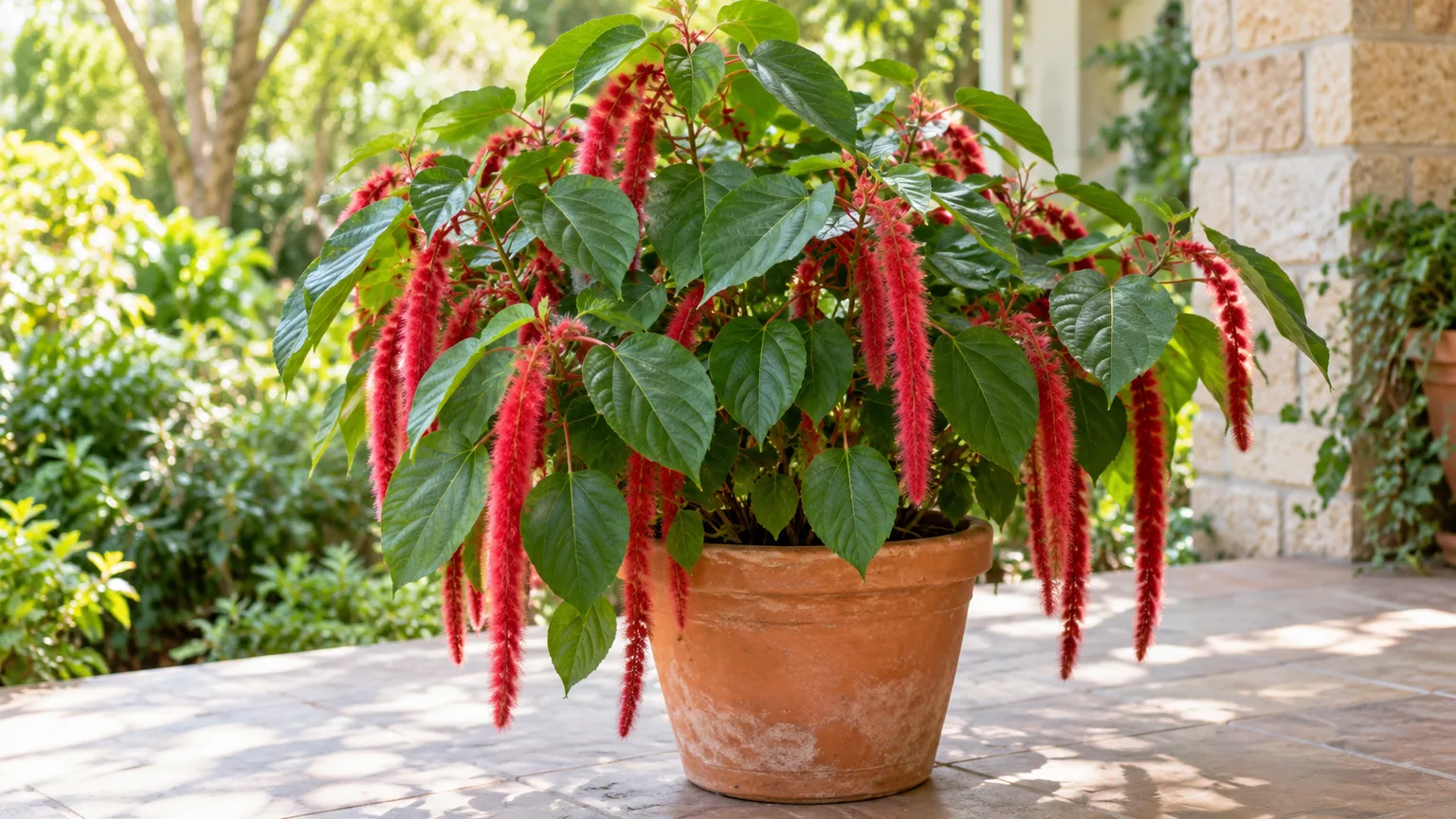
Chenille plant (Acalypha hispida) is grown for its long, soft-looking red flower tassels, which hang beneath large green leaves. It can flower for much of the year in warm conditions, but it is a tropical shrub, not a cold-hardy perennial. In most climates the simplest way to keep one is in a container that can spend summer outside and winter in a bright, warm room.
The reliable-care formula is straightforward: give it bright light, warm temperatures, and soil that stays lightly moist while draining freely. The tricky part is adapting those conditions as the seasons change. A pot drying in hot outdoor weather may need frequent checks, while the same plant beside a dim winter window uses less water and fertilizer.
Know Which Chenille Plant You Have
The familiar chenille plant is Acalypha hispida, an upright to arching evergreen shrub in the spurge family. Its broad, toothed, often heart-shaped leaves are attractive, but the distinctive feature is the female plant’s drooping, densely packed flower clusters, or catkins. NC State and UF/IFAS describe flowers that can reach about 18 inches; they may appear red, crimson, or pink, and the plant can bloom whenever warmth and growth allow. (NC State Extension; UF/IFAS Extension)
Chenille plant is dioecious: male and female flowers occur on separate plants. The long, showy tassels are female inflorescences, and ornamental nursery plants are generally selected for those flowers. If a plant raised from seed has leaves but no decorative catkins, its sex may be the reason; a seedling is not guaranteed to become a flowering female.
Labels can also use “dwarf chenille” for related Acalypha species such as A. pendula, which has a low, trailing habit and shorter flowers. ‘Alba’ is a white-flowered form of A. hispida, while ‘White Margined’ combines pale catkins with light leaf margins. Check the botanical name and growth habit before choosing a hanging basket or planning the plant’s mature size. (NC State Extension; Wisconsin Horticulture)
Choose a Container or a Warm Outdoor Spot
This plant works as a dramatic container specimen, a hanging-basket plant, or a landscape shrub in a reliably mild climate. Its flowers can dangle well below the foliage, so a raised pot or basket displays them clearly; a ground-grown specimen has room to become a broad shrub. University references differ slightly on minimum hardiness: NC State lists Zones 10a–11b, while UF/IFAS includes Zone 9b in its regional planting range. These are regional estimates, not a promise that leaves or stems will withstand every cold snap.
For gardeners outside frost-free areas, grow chenille plant in a pot with drainage holes. Keep it outdoors only after nights are consistently warm, and bring it inside before cold weather threatens. University of Wisconsin–Madison notes that temperatures below 50°F can damage the plant and that growth requires temperatures above 60°F; using 55–60°F as a cautious move-inside window gives you time to transition it before a sudden cold night. (NC State Extension; UF/IFAS Extension; Wisconsin Horticulture)
Outdoors, choose a sheltered position where the plant receives strong light but can escape punishing late-afternoon sun in hot-summer regions. Indoors, give it the brightest warm location available, with filtered sun near an east-, south-, or west-facing window. Avoid placing the foliage against cold glass or beside a frequently opened exterior door, heating vent, or air-conditioning outlet.
Give It Bright Light Without Scorching It
Light affects both the plant’s shape and its flowers. Indoors, a bright window with several hours of strong natural light is more useful than a distant spot that looks bright to a person but receives little direct daylight. A sheer curtain can soften intense midday or afternoon sun through hot glass. Horticulture magazine’s chenille-plant profile likewise emphasizes warm conditions and bright sun for indoor growth, while NC State lists full sun to partial shade for outdoor culture. (Horticulture; NC State Extension)

Do not move a shade-grown plant directly into full outdoor sun. Start it in bright shade for several days, then gradually increase exposure over one to two weeks, watching for pale, scorched patches or crisp leaf edges. If those marks appear on the sun-facing side, move the pot back into filtered light; old damage will not turn green again, so judge the adjustment by new leaves.
Indoors, long gaps between leaves, thin stems, and a plant leaning toward a window point to inadequate light. Move it closer to the brightest window or add a grow light on a regular daily schedule. Improving light is usually a better first step than feeding a leggy plant more fertilizer, which can produce soft growth without fixing the cause.
Water to Keep the Root Ball Evenly Moist
Chenille plant prefers steady moisture and should not dry out completely, but constantly saturated soil deprives roots of air. Water the pot thoroughly when the surface has begun to dry and the upper layer feels only slightly damp, then let excess drain through the holes. Empty a cachepot or saucer after watering instead of leaving the base submerged. Wisconsin Extension describes the target as moist rather than wet, while NC State notes that the plant needs moderate moisture and dislikes poorly drained conditions. (Wisconsin Horticulture; NC State Extension)
There is no dependable “every three days” or “once a week” schedule for every plant. A small plastic pot in a sunny, warm room dries at a different pace from a large glazed pot in winter, and a hanging basket may lose water quickly in wind. Check the soil before watering, and recheck sooner during hot spells or when the plant is putting on new leaves and flowers.
When the root ball has become very dry, water slowly until the mix is evenly wet and drainage begins; compacted peat can repel a quick splash, so pause and water again rather than pouring a large amount over the rim. If the soil remains wet for days, do not add water because a leaf droops. Check that the drainage holes are open, remove standing water, and assess whether the mix or pot is too dense for the room’s conditions.
Build Moisture-Retentive but Free-Draining Soil
Use a high-quality general-purpose potting mix that holds some water but does not collapse into a dense, airless mass. A standard indoor mix is a good starting point. If it stays soggy for too long, blend in a modest amount of perlite or fine bark to improve air space; if it dries almost immediately, use a mix with more moisture-retaining organic material or a slightly larger pot. The goal is an even-moisture root zone, not a cactus-style mix that dries rapidly or garden soil packed into a container.
Always use a container with unobstructed drainage holes. A decorative outer pot is fine if you lift the nursery pot out to drain, or empty collected water promptly. Do not add a layer of gravel to the bottom as a substitute for drainage; the texture of the entire mix and open holes matter more than a stone layer.
In garden beds in warm climates, choose well-drained soil and amend only when needed to improve structure. NC State reports that A. hispida tolerates several soil textures and a broad pH range, but both NC State and UF/IFAS identify drainage and salt sensitivity as practical constraints. It can manage short dry periods once established, but it is not a good choice for a persistently flooded spot or a salt-exposed coastal planting. (NC State Extension; UF/IFAS Extension)
Keep Chenille Plant Warm and Humid
Warmth is essential for active growth and reliable flowering. Keep the plant above about 60°F when possible, and protect it from chilly drafts and abrupt temperature swings. It may survive a cooler winter room better than a summer room, but expect slower growth and fewer blooms rather than trying to force tropical growth under weak winter light. The practical distinction is between “cooler and resting” and “cold enough to injure.”
Chenille plant appreciates humid air, especially in heated or air-conditioned rooms, but constant wetness on the flowers is unhelpful. Grouping it with other plants or running a room humidifier can raise local humidity more consistently than occasional misting. If you do mist surrounding foliage, do it early enough for leaves to dry and keep water off the fuzzy catkins; Wisconsin Extension specifically advises avoiding wet flowers where possible. (Wisconsin Horticulture; Melinda Myers)
Humidity is not a cure for underwatering or root trouble. A plant with wet soil and limp leaves may have stressed roots, while a dry root ball needs water rather than a humidity tray. Keep airflow gentle and avoid crowding the plant into a stagnant corner, particularly if blooms or foliage remain wet for long periods.
Fertilize by Growth, Not by Calendar
Container plants use nutrients as they make leaves and flowers, so regular feeding during active spring and summer growth is useful. A balanced, complete liquid fertilizer diluted according to its label is easier to adjust than an aggressive, frequent dose. Start conservatively, apply only to moist soil, and follow the product’s intervals; if growth slows in a cool, dim room, reduce or pause feeding until the plant is actively growing again.
The advice to feed chenille plant ranges from monthly to more frequent applications because climate, container size, and fertilizer strength differ. NC State recommends monthly feeding for indoor plants during spring and summer, while Wisconsin Extension describes container plants as frequent feeders when forming flowers and allows diluted soluble or slow-release fertilizer. A safe routine is to start with a half-strength dose at the longer end of the label interval, then adjust only if growth is active and the plant responds well. (NC State Extension; Wisconsin Horticulture)
Do not use yellow leaves alone as a signal to add fertilizer. Wet roots, cold, low light, or an undersized root-bound pot can all cause pale foliage. If you see a crust on the mix or browned edges after repeated feeding, pause fertilizer, water thoroughly so salts can drain, and reassess the plant’s growth before resuming.
Improve Flowering by Fixing Light, Warmth, or Pruning
The red tassels are made up of many tiny flowers packed along a hanging spike. They fade and brown with age, so a few old catkins do not necessarily mean the plant is unhealthy. In warm tropical conditions, flowering can be prolonged or nearly continuous; in a cooler home, expect a seasonal lull when light and growth slow. The plant is more likely to flower well when it is actively growing in bright light and warm temperatures than when a calendar says it should.
If a healthy-looking plant has few flowers, check the growing conditions in this order: light first, nighttime temperature second, then root health and recent pruning. A shaded indoor location or prolonged cool spell can suppress flowering. Overfeeding is not a shortcut to blooms; excess nitrogen may push leafy growth, and a plant with damaged roots cannot support a strong flower display.
Remove fully faded tassels with clean pruners if you want to tidy the plant. The Wisconsin Extension and Horticulture profiles report that removing spent flowers can support continued bloom, but this does not override the need for warmth and light. Leave new flower spikes in place and avoid trimming healthy tips simply because the plant is not blooming during a winter slowdown. (Wisconsin Horticulture; Horticulture)
Prune for Shape and Take Cuttings
Fast-growing chenille plant can become rangy, woody, or too wide for its spot, particularly after it has spent a summer outdoors. Prune to control size, remove damaged stems, and encourage a fuller outline. Make each cut just above a healthy leaf node, where new side growth can emerge, and avoid removing so much foliage at once that the plant cannot recover. A light shaping cut during active growth is easier on the plant than a severe haircut in a dim winter room.
For a major size reduction, time pruning after a flowering flush or in spring as growth resumes. NC State recommends pruning after flowering, and Wisconsin Extension notes that older overwintered plants may become woody and flower less. If the original has grown lanky, starting fresh spring cuttings can be more effective than repeatedly cutting it back to bare stems. (NC State Extension; Wisconsin Horticulture)
Use sharp, clean pruners and wear gloves if your skin is sensitive. The University of Wisconsin–Madison Extension cautions that sap can irritate some people and that ingestion may cause stomach upset. Keep cut stems away from children and pets, wash sap from skin or tools, and ask a clinician or veterinarian for advice if exposure causes symptoms. (Wisconsin Horticulture)
Propagate with Spring Stem Cuttings
Stem cuttings are the most practical way to make another chenille plant with the same growth habit. Start in spring, when the parent plant is growing and has fresh, healthy stems. Wisconsin Extension recommends 4- to 6-inch cuttings with at least two leaves; a well-drained medium, rooting hormone, and bottom heat can improve the rooting setup. (Wisconsin Horticulture)
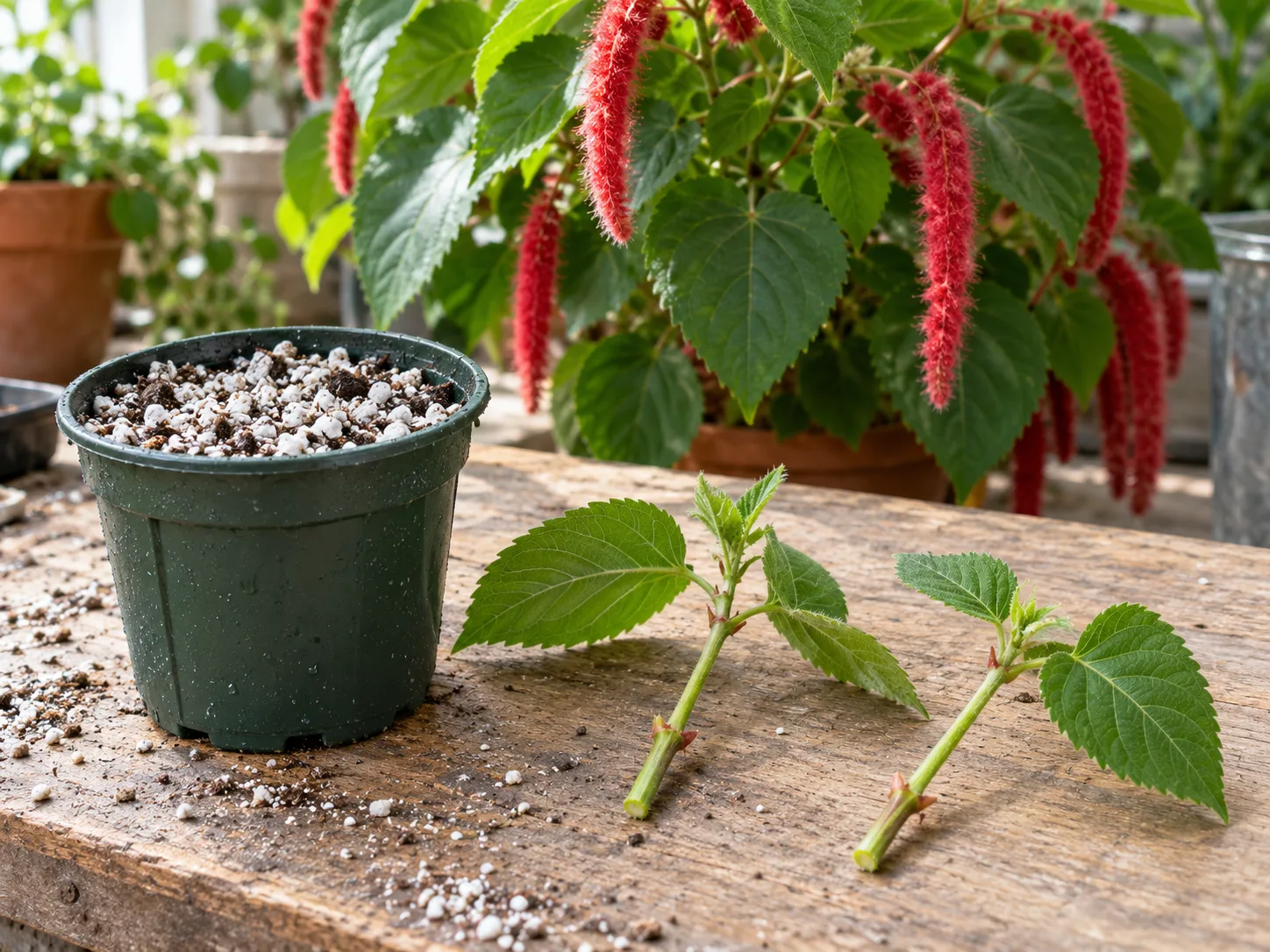
- Fill a small pot with a clean, airy rooting mix and moisten it evenly; it should feel damp, not waterlogged.
- Take a 4- to 6-inch healthy stem tip just below a node. Remove leaves from the lower portion, leaving at least two near the top.
- If you use rooting hormone, follow its label. Insert the lower node into the medium and firm the mix gently so the cutting stands upright.
- Place the pot in bright indirect light in a warm location. Covering it loosely with a clear bag can reduce moisture loss, but keep the cover from touching the leaves and vent it regularly.
- Keep the mix lightly moist and check for new growth or gentle resistance when you tug very lightly. Do not keep pulling the cutting up to inspect roots.
New growth is a useful sign, but it does not prove the cutting has a strong root system. Once it is established, move it gradually into brighter light and pot it on only when roots hold the mix together. The parent plant’s sex is not visible from a cutting if it has not flowered, so a cutting from a known flowering female is the best route when the goal is red tassels.
Repot Before the Root Ball Becomes Hard to Water
Repot in spring when roots circle the pot, emerge heavily from the drainage holes, or the mix dries unusually fast despite careful watering. Move up only one pot size, using a container with drainage. A much larger pot can hold more wet mix than the roots can use, making it harder to maintain the plant’s preferred evenly moist—not saturated—conditions.
Slide the plant out while supporting the root ball rather than pulling on the stems. Loosen only tightly circling outer roots, set the plant at its previous soil depth, fill around it with fresh mix, and water until excess drains. Keep it in the same light for a short recovery period; do not combine repotting, severe pruning, and an abrupt move into full sun on the same day.
If an old plant has become woody and difficult to keep attractive, repotting may not solve the underlying age and light problem. Take a few healthy cuttings before attempting a major renovation so you have a backup plant. This reset is often less stressful than trying to preserve a large root-bound specimen through another low-light winter.
Overwinter Without Keeping Summer Conditions
In a frost-prone climate, move the container indoors before nights approach the low 50s°F, and earlier if a cold snap is forecast. Inspect the foliage for pests, remove dead flowers, and place the plant in the brightest warm room available. Horticulture writer Melinda Myers also recommends moving the plant back inside as fall temperatures decline, while Wisconsin Extension notes that indoor winter conditions can cause some decline even when the plant is being kept safely. (Melinda Myers; Wisconsin Horticulture)
Reduce watering because the plant will use moisture more slowly in cooler, lower-light conditions, but do not let the root ball become bone dry. Let the upper layer begin to dry, then water enough to moisten the root zone and drain away excess. Stop or greatly reduce fertilizer while growth has stalled; resume a cautious active-growth routine only when new spring leaves appear.
Before returning the plant outdoors, wait until frost risk has passed and nights are reliably mild. Acclimate it over a week or two, beginning in bright shade and increasing light gradually. This reduces the combined shock of stronger sun, wind, and faster evaporation after months in a sheltered room.
Troubleshoot Yellow Leaves, Drooping, and Sparse Blooms
Read the whole plant and the soil together rather than treating one yellow leaf as a diagnosis. Note whether symptoms affect old or new leaves, whether the pot is dry or wet, and whether the plant recently moved, got cold, or received fertilizer. Then change one condition at a time and watch new growth; damaged leaves rarely recover even after the underlying cause is fixed.
Yellow Leaves or Wilting
Yellow leaves with wet, heavy soil point first to poor drainage, overwatering, or cold roots. Empty the saucer, check the drainage holes, and let the upper layer dry before watering again. If the mix smells sour or the stem base is soft, slide the plant out and inspect the roots; trim only soft, dark roots with clean shears and repot into fresh airy mix if healthy roots remain.
A drooping plant with dry soil may simply need a thorough drink, particularly after a hot day outdoors. Water slowly until the root ball is evenly damp, then confirm that the pot drains. If it wilts again quickly, check for a root-bound plant, a very windy position, or intense afternoon sun before increasing the watering frequency indefinitely.
Leggy Growth or Few Flowers
Long, widely spaced stems usually signal low light, especially after a winter indoors. Move the plant closer to a bright window or provide a grow light, then pinch or prune only after healthy growth resumes. If it is outside, gradual exposure to brighter conditions can improve compact growth without scorching foliage.
Sparse flowers can reflect low light, cool nights, a recent hard prune, or the natural winter slowdown. First improve light and warmth; next confirm that roots are not staying waterlogged or bone dry. Avoid pushing fertilizer to weekly doses just to force flowers, because that cannot compensate for poor growing conditions and may stress the roots.
Pests and Safe Handling
Inspect leaf undersides, stem joints, and new growth for fine webbing, pale stippling, cottony clusters, or small immobile bumps. NC State and UF/IFAS list spider mites, mealybugs, scale, whiteflies, and aphids among occasional pests. Isolate an affected indoor plant, remove heavily infested debris, and rinse or wipe reachable foliage while keeping the flower tassels as dry as practical. Recheck weekly; if you choose a pesticide or insecticidal soap, use only a product labeled for that plant and pest, following its directions. (NC State Extension; UF/IFAS Extension)
Pet-safety descriptions are not fully aligned across references. NC State’s plant profile marks A. hispida as non-toxic to cats, dogs, and horses, while Wisconsin Extension warns that sap may irritate sensitive people and ingestion may cause stomach upset. Keep the plant and pruning debris out of reach if an animal or child tends to chew houseplants, and contact a veterinarian or poison-control professional if ingestion is followed by symptoms. (NC State Extension; Wisconsin Horticulture)
Conclusion
Chenille plant rewards steady care more than complicated routines. Give Acalypha hispida bright light, warmth, and a root zone that stays evenly moist but drains freely; then adjust water and fertilizer when winter slows its growth. Prune after a flowering flush, take spring cuttings from a plant whose flowers you like, and move outdoor containers before cold nights arrive. If blooms fade or leaves yellow, check light, temperature, and soil moisture first—the condition of the roots and the season usually explain more than a rigid calendar does.



