Cilantro Bolting: How to Delay Flowers and Save the Harvest
Learn why cilantro bolts, how to delay flowering with cool timing, shade, steady moisture, and succession sowing, and what to do when stalks appear.
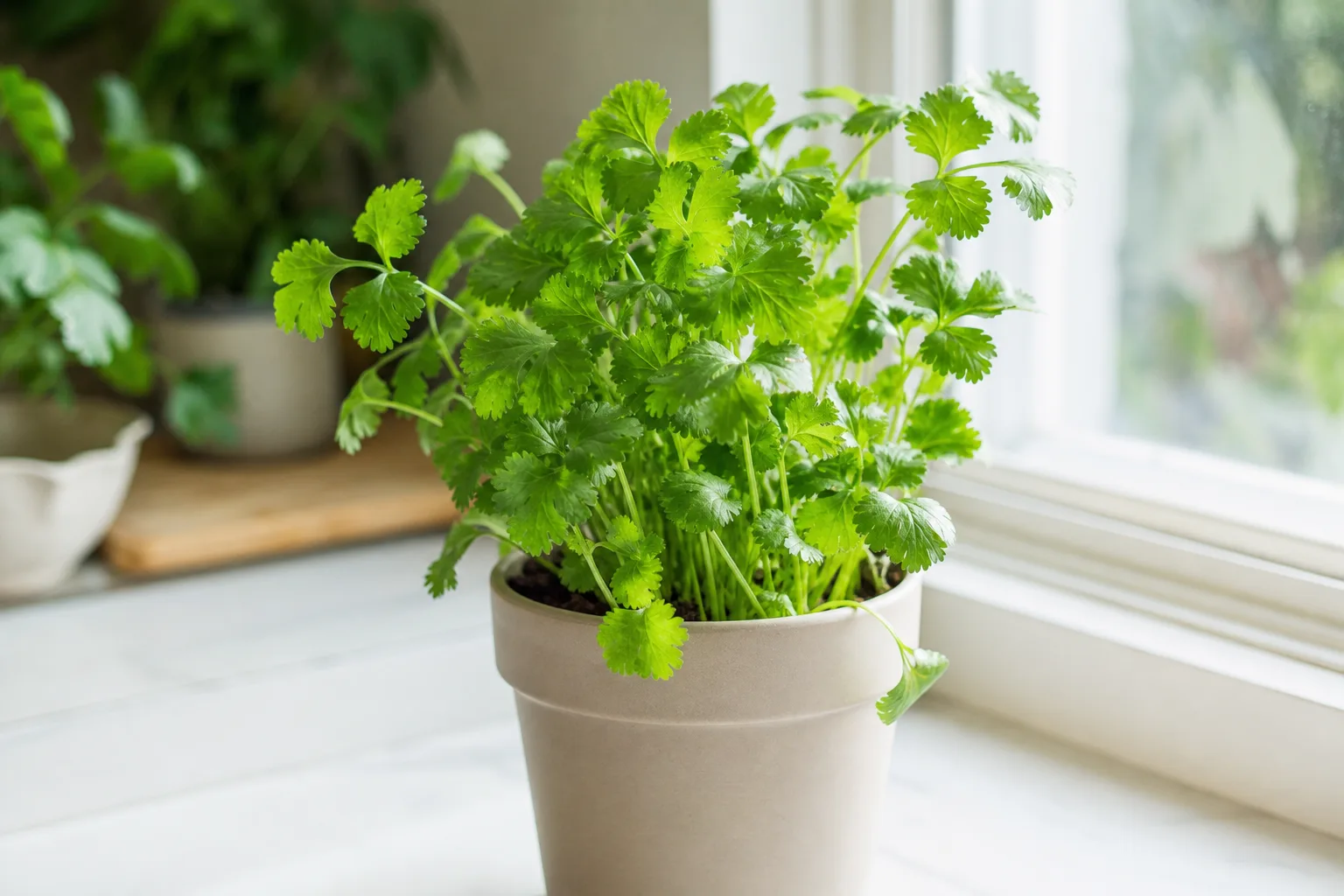
Cilantro bolting is the point when a leafy plant begins sending up flower stalks and shifting its energy toward seeds. It often seems to happen overnight: a low clump of broad leaves turns into a taller plant with narrow, feathery leaves and small buds. You can delay that change by growing cilantro in the right season, keeping its roots cool and evenly moist, and harvesting without damaging the crown. You cannot prevent flowering forever; cilantro is an annual herb with a short leafy phase.
The most dependable way to keep fresh cilantro available is to pair those delay tactics with succession sowing. Grow one small batch for leaves, then start another before the first one flowers. If your current plant already has a rising stalk, harvest usable leaves now and choose whether you want the flowers, coriander seeds, or space for a new sowing.
What cilantro bolting means—and what it does not mean
Bolting is the transition from vegetative growth, when cilantro makes leaves and stems, to reproductive growth, when it produces flowers and seeds. It is not a disease, a sign that you watered incorrectly, or proof that the plant is dying from neglect. The plant is completing its normal life cycle. Warm conditions and lengthening days can speed that transition, especially when a plant has already had several weeks to establish itself.
Cilantro (Coriandrum sativum) is a short-lived annual. UF/IFAS Extension describes it as a cool-season herb whose flowering and seed production accelerate in hot weather and long days; the leaves also become smaller and less appealing after the plant bolts. UF/IFAS Extension explains the useful trade-off: fall and winter growing in warm parts of Florida can extend leaf harvest, while spring warmth brings flowers and seed.
Bolting does not make the plant useless. The flowers can attract beneficial insects, and the round seeds are coriander. The change matters most if you want a steady crop of tender leaves, because flowering stems are tougher and the plant gradually puts less effort into fresh foliage. Think of prevention as buying a longer leaf-harvest window, not keeping one plant leafy all summer.
How to recognize the first signs of bolting
A cilantro plant that is simply growing taller is not necessarily bolting. Look at the shape and texture of its newest growth. Early signs include a central stem that rises above the leafy mound, a thicker and more upright stalk, narrower or more finely divided upper leaves, and small clusters of buds at the tips. Once the white or pale pink flowers open, the plant has clearly entered its reproductive stage.
The narrower, fernlike leaves are a useful clue, but the rising stalk and bud clusters are more decisive. Gardening Know How describes the smaller, more finely divided foliage that can appear as cilantro goes to seed; read that change together with the plant’s upright center rather than treating one leaf as proof.
The useful intervention window is between the first vertical push and the opening of the flower clusters. At that stage, take the leaves you still want and, if the plant is vigorous, snip one developing flower stalk just above a leafy junction. Then watch what happens over the next few days. If several new stalks rise quickly, the plant is moving toward seed production and repeated cutting is unlikely to restore a long leafy phase.
Do not diagnose bolting from yellow leaves alone. Older outer leaves may yellow as a plant grows, while saturated soil, drought, root damage, or leaf disease can also affect color. A healthy leafy plant has a compact center and fresh, broad leaves; a bolting plant develops a conspicuous upright stem and bud clusters. That distinction helps you decide whether to adjust watering or accept that flowering has begun.
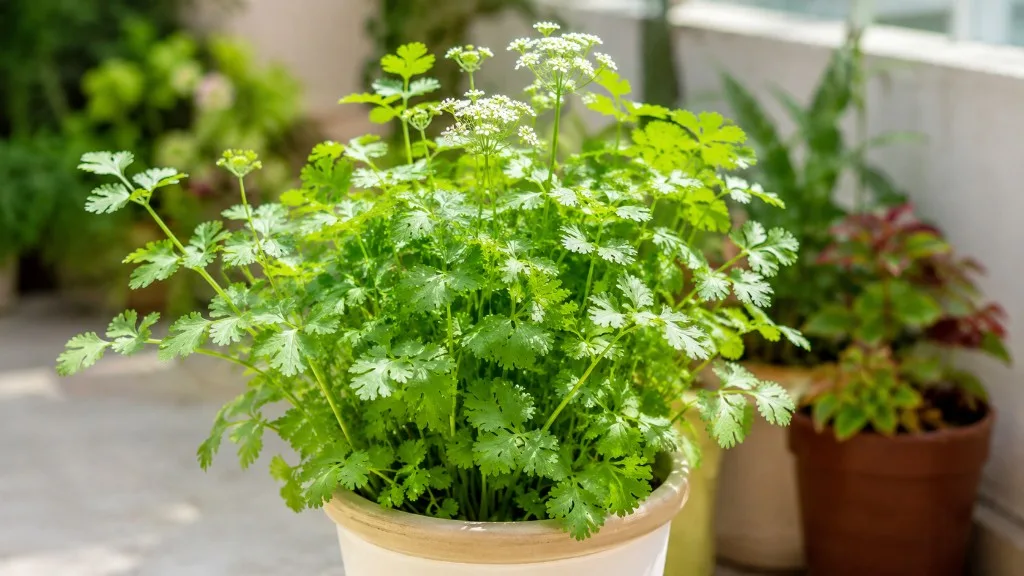
Flower stems and small umbels mark cilantro’s shift from leaf production toward coriander seed.
What starts cilantro flowering
Cilantro responds to the conditions of the season, not just to a thermometer reading on one afternoon. Heat speeds development, and longer days can combine with warm weather to push a plant toward flowering. Oregon State University Extension reports that both temperature and day length influence flowering and seed set; in mid-summer, cilantro may flower and produce seed in four to six weeks, while cooler spring or fall conditions can support leafy growth for several weeks or months. OSU Extension also notes that the crop completes its life cycle faster in warm weather.
Extension recommendations use different temperature signals. Utah State University’s cilantro fact sheet suggests keeping the soil below 75°F, while an Oregon State guide warns that cilantro bolts quickly when temperatures are above 80°F. Those numbers describe useful regional guidance, not a universal switch that every plant crosses at the same point. Air and soil temperatures are different; cultivar, plant age, available water, and length of day also affect how long the leafy stage lasts. Utah State University Extension gives the lower soil-temperature reference, while OSU Extension offers the warmer-weather rule of thumb.
Use the numbers as a warning to change the planting plan, not as a promise that shade or extra water will cancel hot weather. If daytime warmth is building, the soil stays warm overnight, and the days are lengthening, begin the next sowing in a cooler location or pause until the season shifts. That seasonal adjustment usually matters more than trying to rescue an aging plant with more fertilizer or increasingly frequent pruning.
Choose a planting window that fits your climate
There is no single calendar date that works across a continent. The right time to grow cilantro is the part of your local year when the plant can build leaves before sustained heat and long days arrive. In many temperate regions, that means an early spring crop and another in late summer or fall. In areas with mild winters and hot summers, cilantro often performs best from fall through winter, then flowers as spring warms.
Cool-spring regions
Sow outdoors as soon as the soil can be worked and the severe-freeze period is past, rather than waiting until warm-season vegetables are ready for planting. Cilantro tolerates cool growing weather and often rewards an early start with a longer leaf harvest. If spring turns warm quickly where you live, make smaller repeat sowings every two or three weeks while conditions remain suitable instead of planting a large row once and hoping it lasts.
When summer heat becomes persistent, do not keep scattering seeds into hot, bare soil and expect the same leaf yield. Seeds may germinate, but young plants can race into flowers before they provide much to harvest. Give the crop a break through the most difficult heat, use a partially shaded site if you want to experiment, and restart when temperatures begin to moderate. Local extension calendars are more useful than a generic month-based schedule because elevation, coast, and urban heat islands shift the season.
Warm-winter regions
In subtropical and other mild-winter climates, fall is often the better starting point. Sow as nights cool and continue small batches through the mild season; the plant can make leaves through winter and flower as spring temperatures rise. UF/IFAS County Extension guides for Florida commonly list cilantro among cool-season herbs, but the exact sowing window differs between North, Central, and South Florida. Use your local planting calendar to avoid copying dates from a county with a different frost pattern or heat arrival.
A winter crop is not necessarily frost-proof. If a hard freeze is forecast, protect young seedlings or place a portable container under cover, then remove protection when temperatures rise. The aim is to keep plants growing steadily through cool weather without exposing seedlings to extremes. When the warm season returns, let a few plants flower for pollinators or coriander, and reserve your leafy harvest expectations for the next cooler window.
Direct-sow cilantro and protect its roots
Cilantro develops a taproot, so direct sowing in the place where the plant will grow avoids a move that can disturb its roots. Sow seeds about a quarter to a half inch deep in loose, well-drained soil and keep the seedbed evenly damp until seedlings emerge. Thin crowded seedlings only after they are established, leaving enough space for air to move through the foliage while retaining some leaf cover over the soil.
Starting seeds indoors can help when outdoor soil is too cold, but transplant the seedlings while they are small and handle the root ball gently. Do not tease apart tangled roots or shake soil from them. Set the seedling at its original depth, water it in, and give it a few days of shelter from harsh afternoon sun. A transplant that pauses after root disturbance may lose valuable time in a short season; direct sowing is simpler when the bed is ready.
Some gardeners sow several seeds together and later thin the clump for repeated small harvests. That works if the plants have enough space and you keep the center ventilated. A dense carpet may shade its own roots, but overcrowding also holds moisture against leaves and makes harvesting awkward. Think in terms of a productive patch, not the maximum number of seeds per square inch.
Choose a cooler site and manage afternoon sun
Cilantro needs bright light to make compact growth, but hot afternoon sun can warm the leaves and root zone faster than the plant can comfortably handle. In a mild climate, a sunny bed is often productive. In a warm spring or summer, choose a spot that gets morning sun and afternoon shade, or use light shade from a taller crop. Gardenary recommends using the shade of warm-season crops such as tomatoes or peppers; that arrangement can work when the plants do not crowd or compete with cilantro for water.
A simple site test can prevent a disappointing sowing. Check the bed in the early afternoon, not only in the morning. If the surface is exposed to reflected heat from a wall, concrete path, or south-facing patio, a position a few feet away may be cooler. Mulch lightly around established plants to slow soil drying and temperature swings, but keep material clear of the crowns so stems do not sit against damp mulch.
Too much shade has a cost. Plants may become sparse and stretched as they reach for light, and the leaves dry more slowly after rain or watering. Partial shade is a heat-management tool, not a substitute for adequate light. If a site remains hot even with afternoon shade, use the cooler season for leaf production and try a fall crop rather than expecting one bed to overcome the local climate.
Keep the root zone moist, not waterlogged
A cilantro seedbed should not dry out while seeds are germinating, and young plants need steady access to moisture as roots establish. Once the plants are growing, water when the upper soil begins to dry and give the root zone a thorough drink. The goal is evenly moist soil with drainage—not a permanently wet crown or a pot standing in a saucer of water. A hot, dry plant may stop producing tender leaves even before it flowers.
Check below the surface before watering by using a finger or a small trowel. The top inch can look dry while the soil below remains damp, especially under mulch or in a heavy container. If the root zone is still cool and moist, wait. If it is dry several inches down and the plant is beginning to wilt, water at soil level and reassess after the plant recovers. Do not respond to every afternoon droop with more water; temporary heat wilt and chronic root-zone dryness are not the same condition.
Overwatering is not a bolting cure. Soggy soil can damage roots and reduce plant vigor, while extra fertilizer may produce soft growth without extending the season. Correct drainage first, then maintain more even moisture with a thin mulch layer. If a container dries out every day, move it away from a heat-reflecting surface or use a larger pot with drainage rather than repeatedly flooding a small, overheated root ball.
Harvest leaves without stripping the plant
Harvesting keeps the crop useful and can remove a few immature flower shoots, but it should not be treated as a way to reset the plant’s life cycle. Start once several stems are large enough to use. Take the oldest outer stems first, cutting them near the base while leaving the young central leaves intact. If you only need a small amount, snip selected stems rather than shearing the entire top into an even mound.
For a vigorous, leafy plant, remove no more than about a third of its foliage at one time, then allow it to refill before taking another large harvest. The exact amount depends on plant size and growing conditions; a small or recently transplanted plant needs less. If an upright flower stalk appears, you can cut it below the buds while there is still leafy growth below the cut. That may buy a little time, particularly in cool weather, but it cannot prevent the plant from producing another stalk.
Avoid repeatedly pinching every growing tip or cutting the plant down to bare stems. Leaves are the plant’s energy-producing surface, and a hard harvest reduces the growth it can support. Instead, harvest lightly and often enough to use the leaves while they are tender. Gardenary’s practical cilantro guidance similarly emphasizes frequent harvesting, but the more important correction is to pair that harvest with season and planting strategy. A plant in sustained heat will still flower even if you inspect it daily.
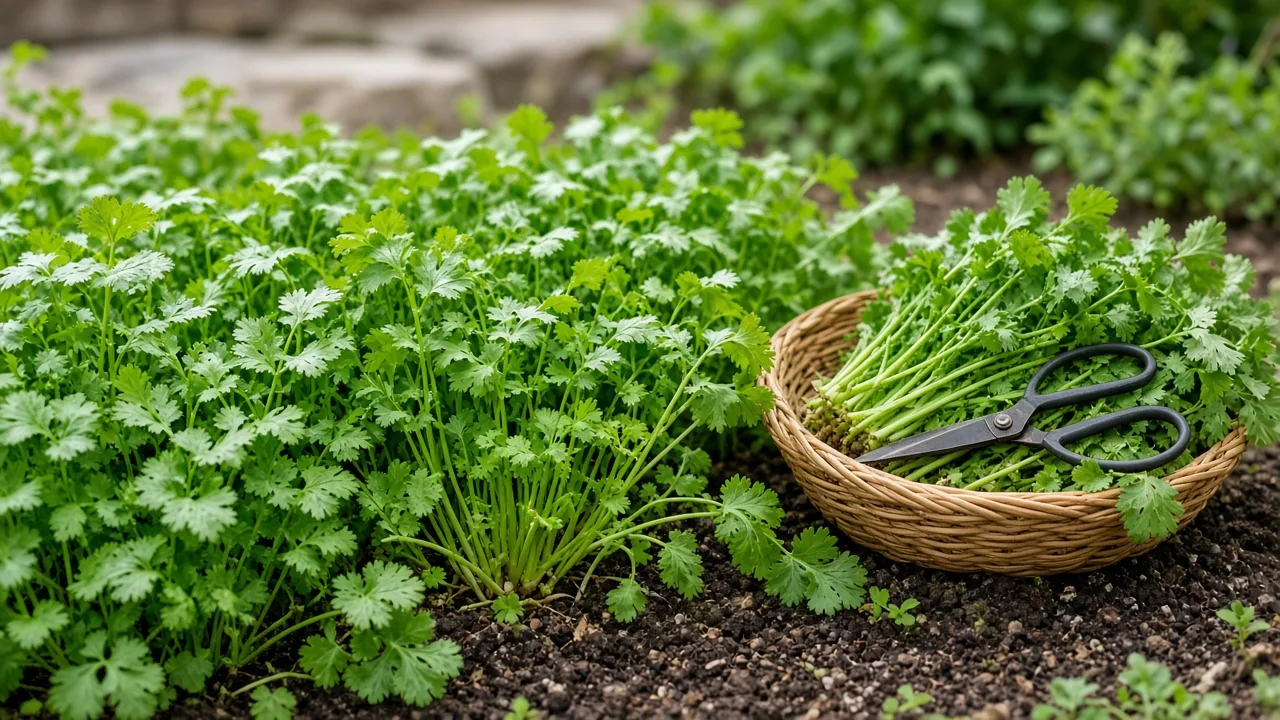
Selective harvesting takes usable stems while leaving the center of the plant available for continued growth.
Choose a slow-bolting variety with realistic expectations
Seed packets may describe cilantro as “slow bolt,” “slow bolting,” or “long standing.” These labels mean the variety is selected to stay leafy longer under suitable conditions; they do not mean it is immune to flowering. A slow-bolting cultivar planted into peak summer heat can still make flowers before it yields a worthwhile harvest. The label is most useful when you already have a good planting window and want to extend it.
Cultivar names vary between seed companies and regions. Utah State University Extension lists ‘Slow Bolting’ and ‘Leisure’ for leaf harvest, while Oregon State recommends ‘Marino’ and ‘Santo’ as types that grow quickly and are slower to bolt. UF/IFAS agricultural guidance also mentions ‘Long Standing’ and ‘Slo Bolt.’ These sources describe useful options rather than a universal ranking, so compare the variety information on the packet available to you and choose one sold for leaf production.
If you grow cilantro repeatedly, keep notes on the name, sowing date, first harvest, and first flower stalk. That gives you a local comparison between cultivars in your actual bed rather than relying on a broad claim that one type is “best.” Do not spend extra on a specialty packet expecting a long summer harvest if your site is already hot; planting date and shade often make a larger difference than the cultivar name.
Use succession sowing for a steady leaf supply
Succession planting is the most reliable way to keep cilantro in the kitchen because every individual plant is short-lived. Rather than sowing a large amount at once, start a small patch every two or three weeks during a suitable cool growing window. As the oldest group grows tall or flowers, the next patch will be young enough to harvest. Oregon State University Extension recommends planting in successive small batches every few weeks and avoiding peak summer heat when a crop is likely to bolt before it produces many leaves.
Do not follow the interval blindly through the hottest weeks. If new cilantro bolts as soon as it emerges, pause sowing or move the next batch to a cooler, partly shaded position. Resume when nights cool and days shorten. In a warm-winter climate, that may mean repeated fall sowings rather than spring sowings. The calendar is about matching seedling growth to a moderate season, not filling every week with another planting regardless of weather.
For a household that uses cilantro occasionally, two or three small sowings may be enough. For a cook who wants a bunch every week, plant more frequently or sow several short rows with staggered dates. Mark each row or pot with the sowing date; otherwise it is easy to forget which patch should be harvested first. This simple record also tells you how long cilantro lasted in your microclimate and when to begin the next cycle next year.
Grow cilantro in containers without overheating it
A container makes cilantro easier to move into afternoon shade, but it is not automatically cooler than a garden bed. Dark pots on paving can heat quickly, and small volumes of potting mix dry faster than in-ground soil. Choose a pot with drainage holes and enough depth for a taproot, fill it with a free-draining potting mix, and place it where it gets bright light without reflected afternoon heat.
Direct-sow into the final pot when possible. If you need to move the pot, do so before the plants are large and avoid disturbing their roots. During warm weather, check the moisture more often than you would in a garden bed, but feel the mix before watering. The container should drain freely after a thorough watering; empty any standing water from a saucer so the roots are not left saturated.
If a container plant bolts, move it to a cooler location only if it still has healthy leafy growth and the shift will help. A pot cannot change the length of the day or stop a mature plant’s life cycle. In a hot climate, container growing is most valuable because it lets you place cilantro in a cooler shoulder season, protect seedlings from an unexpected cold snap, or restart a batch when the weather improves.
What to do when a flower stalk appears
Make a quick decision based on the plant’s stage and your goal. If a single stalk is just emerging and you still want leaves, harvest tender outer stems and snip the stalk below its buds. Keep the rest of the foliage intact, move the pot or provide afternoon shade if heat is the obvious pressure, and maintain even soil moisture. Check again soon; if more stalks appear, treat that as a signal that the plant is transitioning rather than as a pruning problem.
If most of the plant has tall, branching stems and buds, take any leaves that still taste good and stop removing every flower. At that point, you may get more value by letting the flowers open for beneficial insects and allowing seeds to form. If you need space for another crop, remove the plant after harvesting the leaves you want. If it is in a convenient spot and not diseased, you can leave it standing until the seeds mature.
The right next move may be a replacement sowing, not another cut. In cool conditions, sow another small group as soon as there is room. In hot conditions, wait for a cooler window or use partial shade. Do not feed an aging plant heavily in an attempt to force leafy growth; fertilizer cannot reverse reproductive development and may give you a weaker, less flavorful crop.
Decide whether to keep flowers or collect coriander
Cilantro flowers are small, airy umbels, and the flowering patch can be useful to pollinators. If you want seeds, let the flowers set seed and watch the clusters as they change from green to tan or brown. Cut the seed heads when most are dry but before the seeds scatter, place them in a paper bag, and let them finish drying in a cool, airy place. Shake or rub the dry clusters over a tray to release the round seeds, then store them in a labeled, airtight container.
The dry seeds are coriander, the spice; cilantro is the name commonly used for the leaves. You can save some seed to sow next season, use some in cooking, and leave a few clusters for self-sowing if that suits your garden. If you want a particular cultivar to come true, check whether it is an open-pollinated variety or a hybrid before relying on saved seed. Seed from a hybrid may not reproduce the same traits as the parent plant.
Do not harvest green seeds as if they were finished spice. They need time to mature and dry, and damp seed stored in a sealed jar can spoil. If your goal is leaves, it is reasonable to remove flower stalks early; if your goal is coriander, stop pruning and let the plant finish. Choosing one goal for each plant makes the end of the season less frustrating.
Common mistakes that make the harvest shorter
Planting too late in spring is a frequent cause of a disappointing leaf crop. A nursery may sell cilantro beside warm-season herbs, but that does not mean the weather is ideal. Start when conditions are cool enough for leafy growth, then plan the next batch before persistent heat arrives.
Treating one temperature as a guaranteed cutoff leads to false expectations. Extension recommendations differ by region and by whether the guide refers to soil or air temperature. Use warmth, day length, and the plant’s visible growth together. If the central stem is elongating and days are hot, act early even if a thermometer is below a number you read elsewhere.
Watering every day without checking the soil can leave roots waterlogged, while ignoring a drying pot can stall growth. Water deeply when the root zone needs it, then let excess drain. Cutting off every flower stalk repeatedly can also waste time when the plant is already mature; one early stalk may be worth removing, but several new stalks mean the crop is finishing.
Finally, do not expect a slow-bolting label, extra fertilizer, or a shaded corner to overcome a badly mismatched season. Combine the useful levers—right planting window, less root disturbance, afternoon protection, steady moisture, selective harvest—and let succession sowing provide the backup crop. That approach accepts the plant’s biology while giving you more chances to harvest good leaves.
Conclusion
You can delay cilantro bolting by growing it in cool weather, reducing afternoon heat, protecting its roots, watering consistently without saturating the soil, and harvesting selectively. A slow-bolting variety may add time, but no cultivar or pruning method can keep cilantro leafy forever. When the first stalk appears, take the leaves you want and decide whether the plant will provide flowers, coriander, or space for another sowing.
For a continuous supply, start new seed in small batches during the season that suits your climate, then pause when conditions are too hot. That is more dependable than trying to force a single annual plant to last through summer. Once you match the sowing calendar to local weather, flowering becomes a predictable handoff to the next crop rather than a surprise that ends the harvest.



