40 Purple Clematis Varieties for Every Garden Space
Compare 40 purple clematis varieties by flower color, bloom season, size, and pruning group to choose a vine for a trellis, pot, or border in your climate.
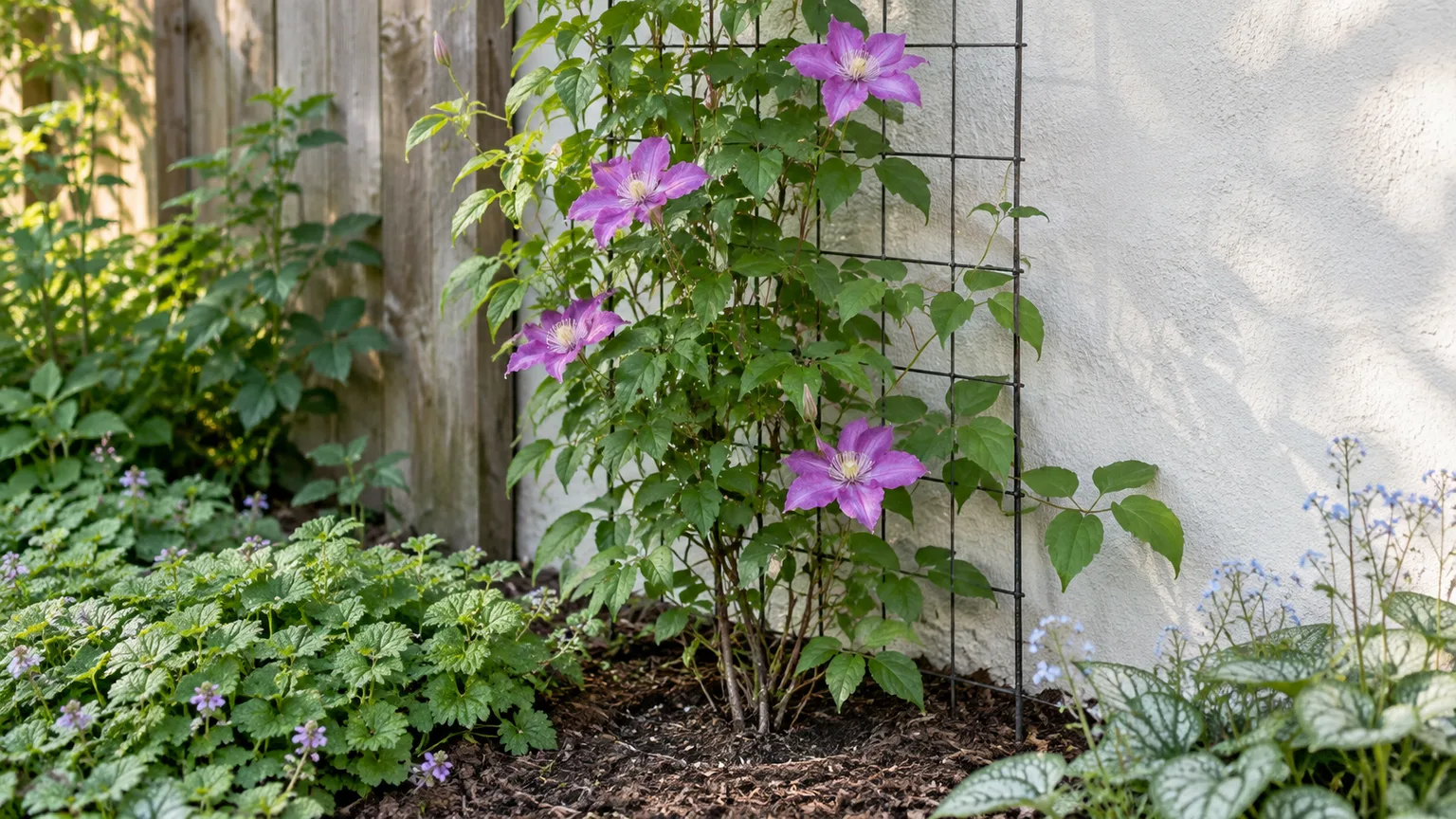
Clematis can turn a fence, arch, or patio pot into a vertical flower display, but “purple clematis” covers a wide range: blue-violet stars, wine-red bells, pink-striped petals, and flowers that shift color as they age. The right choice depends on more than the shade in a catalog photo. Match the plant’s mature size, bloom season, and pruning habit to the support and amount of care you can give it.
The forty selections below include large-flowered hybrids, compact cultivars, small-flowered species, and herbaceous clematis that do not climb like a typical vine. A few are plum, magenta, or bicolored rather than true purple; they earn a place because their color reads as purple in the garden and pairs naturally with violet flowers.
How to choose a clematis that fits your garden
Start with the space the plant must occupy. A vigorous clematis can reach well beyond a short trellis, while compact cultivars stay within the scale of a container, narrow fence, or obelisk. Check the mature height and spread on the nursery label, then choose a support that will still be sturdy after the vine is covered in leaves and rain-wet flowers.
Next, decide when you want flowers. Early-blooming clematis often flower on stems made the previous year. Large-flowered hybrids can have a spring flush and, for some cultivars, another wave later. Many late-flowering varieties bloom on new growth in summer or fall. Combining different flowering habits is more reliable than expecting one vine to flower continuously from spring through autumn.
Finally, think about pruning before you buy. If annual pruning feels intimidating, choose a clematis whose label clearly identifies its group and keep the tag. Small flowers, a compact shape, or a purple bloom do not tell you how to prune it. Check the cultivar name and pruning advice together.
Check the pruning group before you buy
Clematis pruning groups describe when a plant flowers and whether those flowers form on old or new stems. The Royal Horticultural Society divides clematis into three groups: Group 1 blooms early on growth from the previous season and generally needs little routine pruning; Group 2 covers many large-flowered hybrids that bloom in late spring or early summer, often with a later flush; Group 3 flowers later on the current season’s growth and is cut back in late winter. The timing follows flowering biology, so a hard cut at the wrong time can remove the next display. See the RHS clematis pruning guide and confirm the specific cultivar’s group on its label.
For a first clematis, do not buy by flower photo alone. Ask the nursery for the cultivar’s pruning group and local hardiness rating, especially if you are choosing a large-flowered hybrid or planting in a climate with hot summers or severe winters. A listing may use UK pruning-group terminology and another may use a North American zone range; neither number guarantees the same result in every microclimate.
Large-flowered clematis for a bold display
These choices make a strong focal point on a fence, arch, or sturdy trellis. Their wide flowers are conspicuous from a distance, but large-flowered types need a suitable location and thoughtful pruning; they are not automatically the easiest choices for a beginner.
- H.F. Young — Broad, pale lavender-blue flowers make this a soft rather than saturated purple choice. Its generous blooms show well against a dark fence, and a spring display may be followed by another flush. Give it enough vertical space and check the nursery tag for its pruning group before trimming.
- Nelly Moser — White petals with a central mauve-pink stripe give this classic variety a cooler, two-tone look. The stripe is easiest to read where the flower receives bright light without harsh afternoon heat. It suits a wall or trellis where you can enjoy the pattern up close.
- Doctor Ruppel — Large pink-purple flowers carry a deeper band through each petal, so the plant adds pattern as well as color. Use it where blooms can be seen at eye level, such as beside a path or on an entrance trellis. The striped flowers are more distinct than a solid-purple cultivar.
- The President — Deep blue-violet, star-shaped flowers bring a clear purple accent to a small or medium support. It is a useful choice when you want a strong spring show and may get repeat flowers later, depending on growing conditions and care. Leave room to train its stems rather than letting them knot together.
- Carnaby — Pinkish-purple petals with a contrasting center keep this compact-to-medium climber from reading as a flat block of color. Its flowers are large enough to stand out on a patio trellis, and an established plant can produce a later flush. Place it where the flowers will not be hidden behind dense foliage.
- Crystal Fountain — This cultivar’s layered purple-pink petals frame a prominent, fountain-like center of stamens. The unusual flower form makes it a natural specimen for a container obelisk or a small garden feature. Give it a close viewing position; the detail is part of its appeal.
- Samaritan Jo — Pale star-shaped blooms with dark purple edges offer a lighter, more delicate alternative to solid violet varieties. It stays manageable compared with many vigorous climbers, so it can dress a compact trellis or roomy pot. The edging shows best against a simple green background.
- Piilu — Ruffled pinkish-purple flowers can appear single or double, giving the plant a changeable look over the season. Its moderate size makes it one of the more flexible choices for a small garden. A support with several fine crosspieces helps the stems spread instead of forming a single clump.
- Vyvyan Pennell — Large double flowers in deep purple and rosy lavender bring a lush, almost peony-like effect to an arbor or wall. Because double flowers can be heavier than single ones, use a firmly anchored support. Preserve older stems until you know the plant’s pruning group.
- Jackmanii — A well-known cultivar with velvety, deep violet flowers, Jackmanii gives a classic purple clematis look on a sunny fence or pergola. Its simple, broad petals are easy to see across a yard. The RHS lists Jackmanii among cultivars that can be managed using a combined Group 2/3 pruning approach; follow the plant label for the exact method.
Compact clematis for pots and small supports
Shorter clematis still need a climbing aid unless they are specifically sold as herbaceous or non-clinging forms. A pot also needs consistent moisture and enough root room; a compact top does not mean the plant will thrive in a tiny, fast-drying container.
- Huvi — Reddish-purple flowers and a shorter growth habit make Huvi useful where a full-size vine would overwhelm a patio. Let it climb a narrow obelisk or low fence rather than pairing it with a large pergola. Its compact scale also makes it easier to keep the stems visible and orderly.
- Prince Charles — Soft lavender flowers appear over a long summer season, giving this cultivar a gentle, cool-toned effect. It is compact enough for a container or small trellis and can be a good choice when you want many flowers without a towering vine. Keep the pot watered through hot spells.
- Sapphire Indigo — Deep purple flowers on a naturally low, bushy plant make Sapphire Indigo versatile: use it in a large pot, let it scramble through a border, or grow it as a low groundcover. Unlike a conventional climbing clematis, it does not need a tall support to earn its space.
- Cezanne — Pale purple flowers with contrasting light stamens are large for a compact plant. Its manageable size suits a small patio, balcony container, or front-of-border support. Keep the potting mix evenly moist, and avoid a container so small that it heats and dries quickly in summer sun.
- Alita — Reddish-purple flowers with a pale center give Alita a crisp contrast in a compact, summer-flowering package. It is a practical option for gardeners who want a visible flower display on a short support. If deer browse in your area, use the label’s resistance claims as a guide, not a guarantee.
- Franziska Maria — Double purple blooms with lighter centers create a fuller look than a single-flowered clematis. It can work in a modest bed or container where the flowers are close to a path. Train its stems gently and give them several routes up the support to keep the plant balanced.
- Abilene — Lavender and pink two-tone flowers bring brightness to a balcony or narrow garden. Its compact habit limits the amount of support needed, while the bicolor petals keep the display noticeable. Choose it when you want a softer, more playful color than a deep wine-purple cultivar.
- Mrs. Yuki — Deep reddish-purple petals with bright centers create a high-contrast look on a small trellis. It is a useful choice for a sunny patio or border support where the flowers can be viewed at close range. Protect the root zone from drying even when the upper vine gets good sun.
Reliable purple bloomers for summer and fall
If late-season color is your priority, look for clematis that bloom on current-year growth. These cultivars can fill a seasonal gap after spring shrubs have finished, but “long blooming” still depends on climate, establishment, and adequate water.
- Hagley Hybrid — Soft mauve-pink flowers arrive from midsummer into fall, when many spring-blooming vines have faded. Its less intense color pairs well with silver foliage and white flowers. Use it on a fence or pergola where a succession of blooms can soften a broad, plain surface.
- Madame Julia Correvon — Starry, wine-red to purple flowers arrive in summer and continue into fall. This vigorous, adaptable cultivar can cover a fence or scramble through a large shrub, but it needs a support or companion plant sized for its mature growth. Gardenia also includes it among its clematis selections for warm-climate gardens.
- Ernest Markham — Bright magenta-purple flowers make Ernest Markham a strong late-summer accent on an arbor or wall. It is a vigorous grower, so plan for the full length of its stems instead of treating it as a small trellis plant. Its vivid color is particularly effective against pale stone or light foliage.
- Happy Birthday — Deep purple flowers with reddish streaks give this variety a rich, layered appearance. It can bloom over a long period and fits in a pot or border when a support is provided. Use it as a medium-scale accent rather than letting it compete with a larger climber for the same structure.
- Rouge Cardinal — The flowers are a saturated crimson-red that can look nearly purple in some light. This late-season clematis is a good choice if you like a warm, dramatic color and want the vine to cover a larger vertical surface. The RHS includes it among cultivars suited to a combined pruning approach.
- Gipsy Queen — Deep purple flowers emerge on a vigorous vine in midsummer and can continue into fall. The dark color reads especially well against a bright wall or pale garden furniture. Its size makes a substantial support essential; do not squeeze it onto a narrow obelisk.
- Will Goodwin — Lavender-toned, ruffled flowers with golden centers bring a softer, bouquet-like look to a trellis. It can be grown where the flowers are easy to reach for cutting, though leaving blooms on the plant gives pollinators more time to visit. Pair it with a support that spreads stems evenly.
- Julka — Velvety purple-red petals contrast with bright green foliage, making Julka a strong choice for a small tree, fence, or garden border. It can scramble as well as climb, so use it to weave color through a shrub if you can keep its stems from overtaking nearby plants.
Small-flowered and herbaceous clematis
Not every clematis is a giant star-shaped flower on a tall vine. Small bells, urns, and non-climbing forms provide a more natural look and can fit informal borders where a large hybrid would feel too formal.
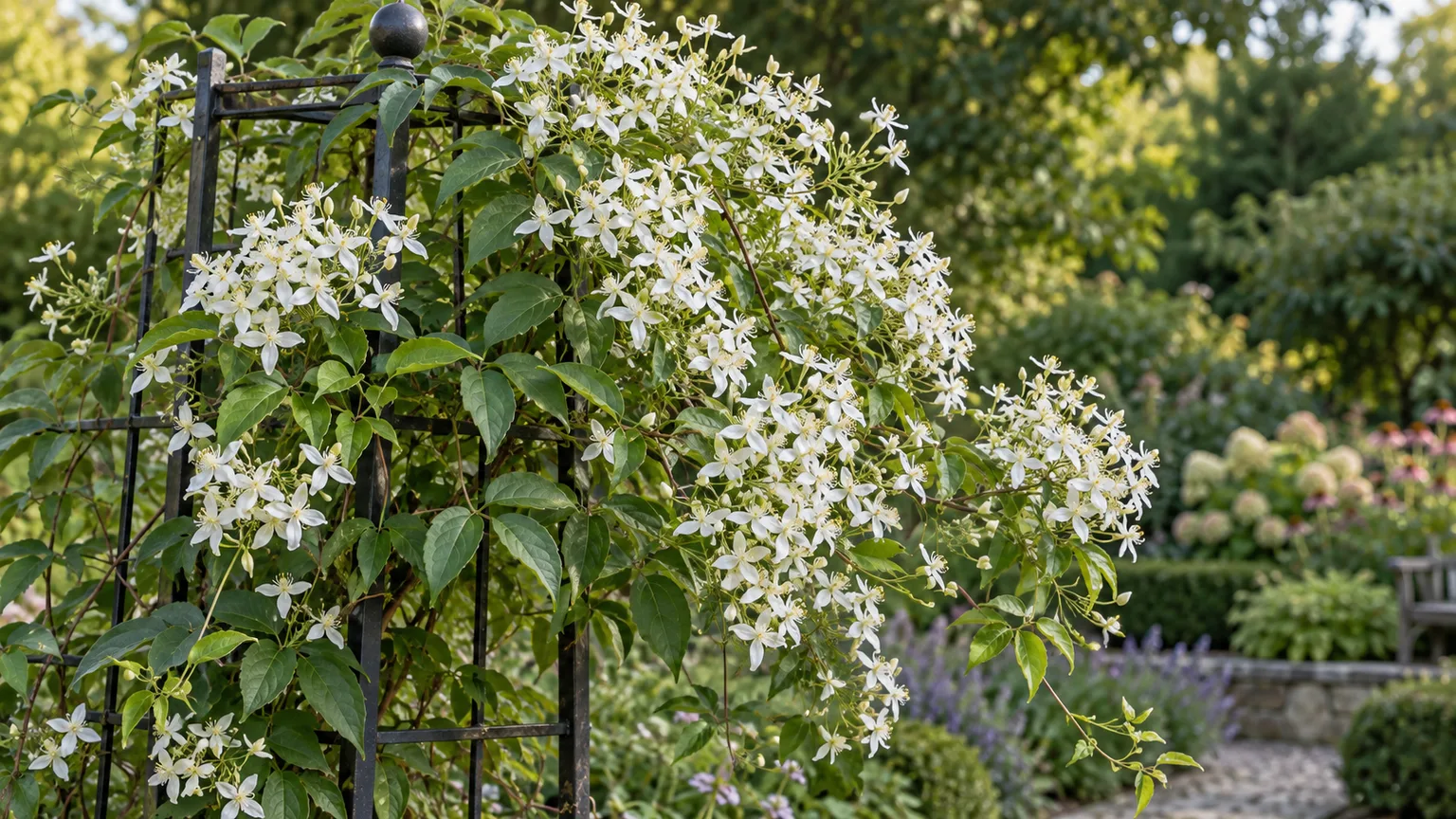
- Alpine clematis — The alpine group offers nodding, bell-shaped flowers in spring, often in blue-violet or purple shades. These smaller blooms create a woodland feel rather than the oversized-flower effect of a hybrid. It is a good direction for gardeners who value early flowers and a softer, less formal silhouette.
- Hairy clematis — This North American native type has fine hairs on its stems and leaves, plus purple bells that attract attention without dominating a planting. Use it in a naturalistic bed with grasses or other prairie plants. Its modest height makes it easier to fit into a border than a tall vine.
- Anemone clematis — The name describes a small-flowered type with pinkish-purple blooms that resemble anemones. It can climb, sprawl, or work as a groundcover, so it is useful when you want a relaxed plant rather than a tightly trained wall covering. Give it space to weave through nearby perennials.
- Pale leatherflower — Bell-shaped, dusky purple flowers and a native range make pale leatherflower a choice for a naturalistic garden. It tolerates varied soils but does best when the root zone does not dry completely. Let it mingle with shrubs or a loose support instead of forcing it into a formal shape.
- Crispa — Also called curlflower, this small-flowered clematis bears unusual nodding bells with curled edges. It naturally favors moist conditions, making it a better candidate for a consistently watered bed than a hot, dry container. Its distinctive flower form is a conversation piece even when the color is subtle.
- Vasevine — The urn-shaped, purple flowers of vasevine have a wilder look than broad-petaled hybrids. It can climb through a shrub or onto a light support, creating a layered habitat planting instead of a single flat wall of flowers. Leave some seedheads if you enjoy the fluffy late-season texture.
- Solitary virgin’s bower — This bushy, non-climbing clematis is a useful reminder that the genus includes herbaceous forms. Its nodding flowers appear on upright stems, so place it in a border rather than expecting it to wrap around a trellis. It adds a clematis flower to a spot with no vertical structure.
Stripes, doubles, and color-changing flowers
Purple can be the main color or just one part of a flower’s pattern. These selections add visual variety when you want more than a solid violet bloom.
- Elsa Spath — Flowers open a vivid purple and soften toward pink as they age, so the same vine can show several tones at once. That gradual change creates a more natural, shifting display than a uniform cultivar. It works well on a medium support where flowers can be viewed throughout the season.
- Ramona — Lavender flowers with bright red anthers add a small but noticeable contrast at the center of each bloom. It can flower on old and new stems, which is one reason to avoid an indiscriminate hard cut. Remove spent flowers only if you want to tidy the plant or encourage another flush.
- Sprinkles — Pink-purple petals with white stripes make this variety an easy choice for a playful, high-contrast display. It is suited to flower beds and can provide blooms for arrangements. Keep the support open enough that the stripes remain visible rather than burying the vine in a dense hedge.
- Yamato — Bright purplish-blue flowers appear in late spring or early summer, bringing a cooler color than many red-purple cultivars. It is less common than familiar nursery staples, so confirm that the seller’s plant label matches the name. Choose it for a medium trellis where the early flowers are easy to see.
- Maria Therese — White petals with raspberry-purple stripes give Maria Therese a bright, two-tone effect. The pale background helps the flowers stand out in partial shade, though all-day deep shade can reduce flowering. It is a strong option for a lighter-colored wall or a shaded patio edge.
- Fireworks — Purple petals marked with magenta bars and creamy centers make Fireworks one of the most graphic choices on this list. The large flowers draw the eye to an arbor or fence, and the pattern can be seen from across a garden. Anchor the support securely before the vine fills in.
- Westerplatte — Dark purplish-red flowers create a rich, velvety display in spring and early summer, with possible later blooms. It can ramble across an obelisk, arbor, or wall. The color is dramatic but not blue-violet, so combine it with paler lavender plants if you want a layered purple palette.
Plan bloom succession instead of chasing “all summer” claims
For a long display, combine plants with different flowering windows rather than expecting one clematis to keep every stem in bloom. An early small-flowered selection can open while a large-flowered hybrid is forming buds; a late-flowering viticella-type cultivar can then take over in midsummer. Gardenia’s lower-South clematis selection guide includes both early and late flowering forms, while Gardening Know How’s garden-spot guide likewise recommends choosing clematis by the job and location.
A simple combination might pair an early alpine type, a spring-flowering large hybrid such as The President, and a late cultivar such as Madame Julia Correvon or Ernest Markham. Leave enough space between plants to prevent their stems from tangling, and avoid placing two vigorous vines on one small support. In a compact garden, one well-chosen repeat bloomer may be easier to manage than three competing plants.
Match the vine to the support
Clematis climbs by winding leaf stalks around narrow supports. It cannot cling to a broad, flat wall by itself, so add a trellis, wires, netting, or an obelisk with openings the leaf stalks can reach. Tie in young stems loosely while they are growing, then let the plant grip the structure. A support should be anchored independently; do not rely on the vine’s stems to hold it upright.
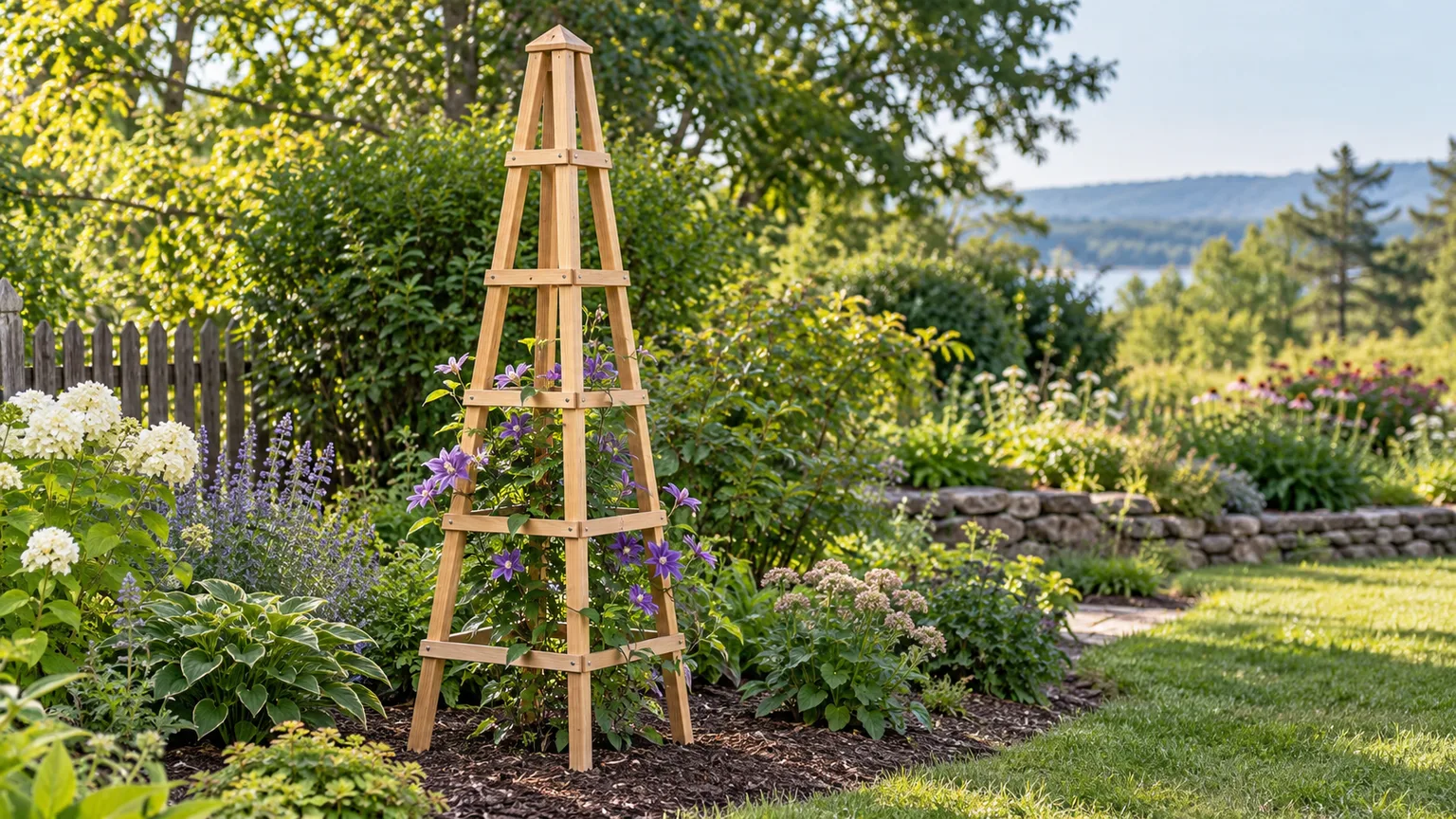
Choose a small clematis for a container obelisk, a medium cultivar for a fence panel, and a vigorous variety for an arbor or substantial trellis. Large-flowered cultivars can be top-heavy in wind and rain, while small-belled species look more natural scrambling through a shrub. The practical selection advice from Gardening Know How similarly sorts clematis by the space they need, including pots, borders, and structures.
Give clematis light above and cool soil below
Most flowering clematis perform best with sun on the foliage and flowers, but the root zone should stay evenly moist and should not bake in a bare, hot bed. A low perennial, mulch, or a flat stone can shade the soil surface without shading the whole vine. This is a useful starting point, not a rule that every clematis requires deep shade at its base.
Many purple cultivars tolerate some afternoon shade, particularly in hot climates, but a deeply shaded site usually means fewer flowers. If your garden has limited sun, try a cultivar whose label specifically allows partial shade and favor pale flowers that remain visible in lower light. The RHS notes that growing position and pruning both affect flowering, so diagnose those basics before assuming a clematis needs extra fertilizer.
Plant and establish a clematis well
Plant in well-drained soil that holds moisture without staying waterlogged. Water the root ball deeply after planting and keep it from drying out while the plant establishes. A container clematis needs a generously sized pot with drainage; pots heat and dry faster than garden soil, so check moisture during hot or windy weather rather than following a fixed calendar.
Set the support in place before stems become tangled. Train the first shoots toward it and protect the base from accidental damage by lawn equipment or digging. Container cultivars such as Huvi, Cezanne, or Sapphire Indigo are more manageable than a vigorous vine, but they still need dependable water and a structure suited to their growth habit.
Prune by flowering habit, not guesswork
Use the nursery label to identify the pruning group. For Group 1, wait until after the early flowers before shaping; cutting the old stems in winter can remove the next spring’s buds. Group 2 needs light, selective pruning rather than a routine cut to the ground. Group 3 blooms on new growth and can be cut back in late winter to encourage a fresh framework. These are group-level guides; cultivar-specific directions take precedence.
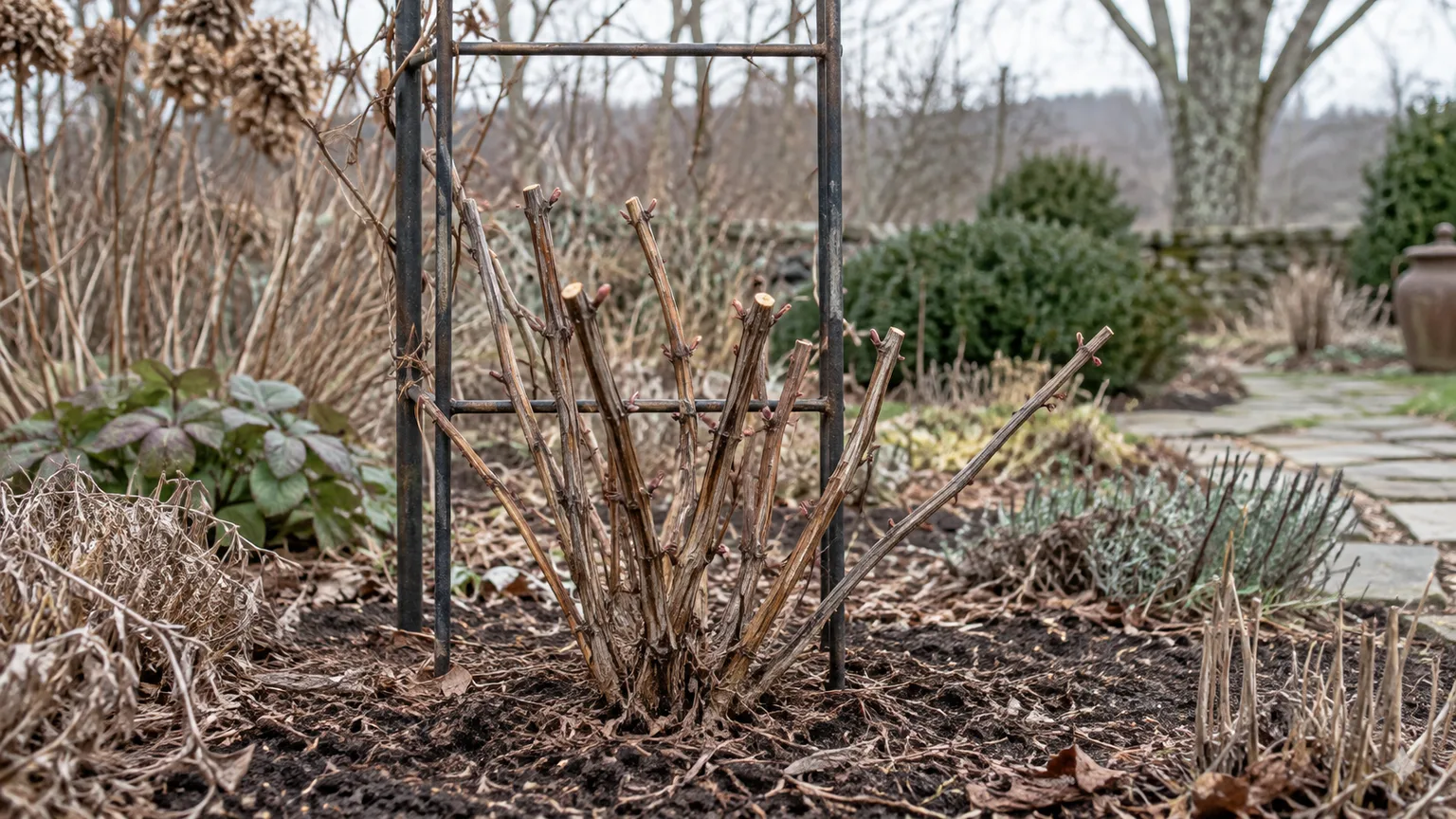
When the label is missing, observe when the plant flowers before making a major cut. An early display on last year’s stems points to a different approach from flowers that appear on new growth later in summer. The RHS pruning advice explains this timing-based method and cautions that pruning at the wrong time can prevent flowering. A conservative removal of dead or broken stems is safer than cutting an unidentified vine hard.
Recognize wilt and other common problems
If one stem collapses suddenly, do not assume the entire plant is lost or immediately dig it out. Large-flowered hybrid clematis are more prone to clematis wilt, but drought, root injury, and other stresses can also cause wilting. Check soil moisture and look for damage at the base; remove affected growth with clean pruners and watch whether healthy shoots return. The RHS clematis FAQ and Missouri Botanical Garden’s wilt guide describe the disease and the importance of distinguishing it from other causes of wilting.
Thin, weak flowering can have simpler explanations: too little light, dry soil, crowded stems, or pruning that removed the flowering wood. Check the cultivar’s age and group, then make one adjustment at a time. That is more useful than increasing fertilizer without knowing whether the roots are dry or the plant was pruned at the wrong point in its cycle.
Use color and growth habit in a planting scheme
Deep purple varieties such as Jackmanii and Sapphire Indigo make a strong contrast against pale stone, silver foliage, or white flowers. Lavender types such as H.F. Young and Will Goodwin soften a sunny fence, while striped selections like Nelly Moser and Maria Therese suit a position where their patterns can be seen close up. For a warm palette, pair the wine tones of Madame Julia Correvon or Rouge Cardinal with apricot, bronze, or cream flowers.
A clematis can climb through a compatible shrub, soften a fence, or frame a doorway, but it still needs enough room and light. Avoid planting several large vines at the same point simply to get more color; crowded stems are harder to train, inspect, and prune. If you are unsure, start with one cultivar whose size, flowering period, and pruning group fit your garden, then add a second clematis with a different season.
Conclusion
The best purple clematis is the one that fits your support, climate, and appetite for pruning. For a pot, start with a compact selection such as Huvi, Cezanne, or Sapphire Indigo; for bold flowers, consider The President, Jackmanii, or Crystal Fountain; for late color, look at Madame Julia Correvon, Ernest Markham, or Rouge Cardinal. Small-flowered types offer a softer, more natural effect.
Before buying, check the mature size, flowering window, hardiness guidance, and pruning group on the actual plant label. Then give the roots steady moisture, train young stems onto a suitable support, and prune only when you know whether that clematis flowers on old or new growth. Those details will do more for a full season of purple blooms than choosing a cultivar by color alone.