How to Grow and Care for a Carrotwood Tree Outdoors
Learn how to grow and care for a carrotwood tree, identify its fruit, and check regional invasive status before planting or collecting seed in your area.
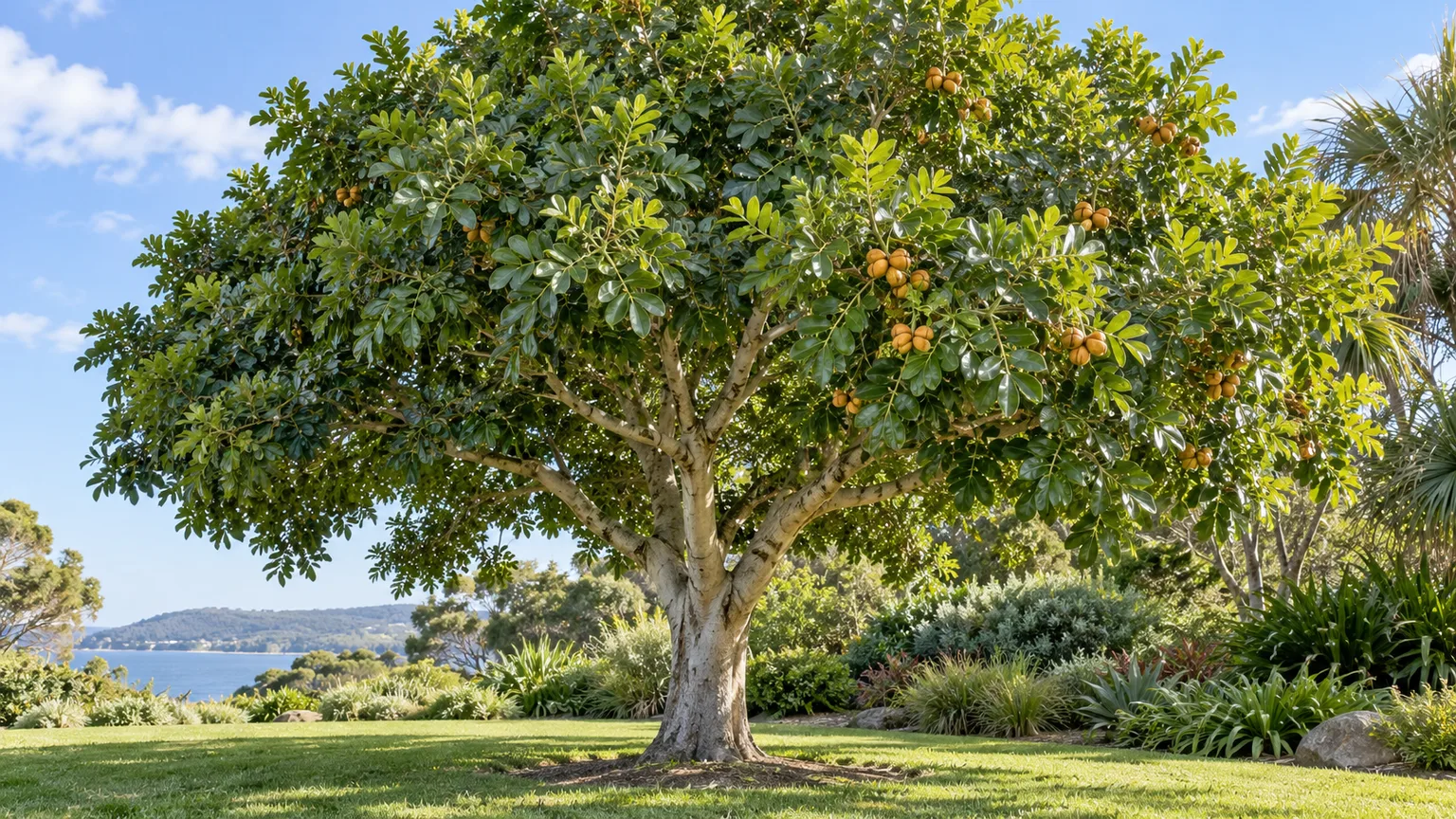
Carrotwood (Cupaniopsis anacardioides), also called tuckeroo, is a glossy-leaved evergreen from Australia and New Guinea. Its rounded canopy, orange inner bark, pale flowers, and bright seed capsules make it attractive in warm landscapes, but bird-dispersed seeds have helped it escape cultivation in places where it becomes invasive.
The first step is not fertilizer or pruning: check whether planting or possessing the tree is allowed where you live. UF/IFAS currently lists carrotwood as prohibited throughout Florida, while an older Texas invasive-species fact sheet reports naturalized populations in coastal areas and some inland locations. If local guidance permits the species, the care itself is relatively uncomplicated: give it sun, allow room for a medium-size canopy, water the root ball as it establishes, and avoid trying to manage a full-size tree as an indoor plant.
Should You Plant a Carrotwood Tree Where You Live?
Start with your exact location, not a broad hardiness-zone chart. The tree’s ability to thrive in warm conditions says nothing by itself about whether it is environmentally appropriate or legally permitted in your county, state, or island.
Use this decision rule before shopping: if a current state assessment or local invasive-species authority lists carrotwood as prohibited or recommends against planting, choose a different tree. If the status is unclear, pause and ask your county extension office or state plant-regulatory agency; do not assume that a tree sold at a nursery is permitted or low-risk. If local guidance supports planting it, then check whether a 25- to 35-foot evergreen canopy and seasonal fruit cleanup fit the site.
In Florida, the answer is decisive: do not plant or propagate carrotwood. The UF/IFAS Assessment classifies it as prohibited across North, Central, and South Florida, and the University’s invasive-plant directory describes bird-spread seedlings and recommends native alternatives. That statewide assessment is more useful for a current decision than older landscape articles that treat the tree as a normal Florida ornamental.
Identify Carrotwood Before You Buy It
Carrotwood is in the soapberry family, Sapindaceae, and is usually a slender, single-trunked evergreen with a rounded crown. UF/IFAS lists a typical landscape height and spread of about 25 to 35 feet and a moderate growth rate, while its invasive-plant directory records trees reaching about 33 feet. Plan for the larger end of those ranges, especially when a nursery label describes a young specimen rather than its eventual canopy.
The leaves are alternate and pinnately compound: several glossy, leathery, oval leaflets attach along a central leaf stalk, often in pairs. Leaflets tend to be yellow-green to dark green with smooth or slightly wavy margins. The outer bark is gray, and a naturally exposed or cut surface can show the vivid orange wood that gives the tree its common name. Do not identify a tree by the word “carrotwood” alone; use the botanical name on the tag and compare several traits.
Small white to greenish flowers grow in branched clusters near the leaf axils. After flowering, the tree develops rounded, woody capsules with three ridges or lobes; they turn yellow-orange as they mature, then split to expose shiny dark seeds surrounded by orange-red tissue. UF/IFAS sources describe the bloom and fruit seasons somewhat differently, which is expected in a tree grown across warm climates: flowering ranges from late winter or spring into summer, and fruit ripening can fall in spring or early summer (UF/IFAS invasive-plant directory). Treat local observations as more useful than a fixed month printed for another region.
Invasive Status Depends on Location
The strongest current regional warning is Florida. The UF/IFAS Assessment lists Cupaniopsis anacardioides as prohibited in all parts of the state, citing federal and Florida Department of Agriculture noxious-weed rules. The UF/IFAS Center for Aquatic and Invasive Plants also identifies it as a Florida noxious weed and explains how birds carry its seeds into dunes, marshes, hammocks, and other natural areas. Do not buy it, move seedlings, or sow its seed in Florida; for a tree already on a property, ask local extension or the appropriate plant-regulatory agency about lawful management.
Do not turn those regional examples into a blanket claim that every carrotwood is invasive—or into an assurance that it is safe. The Florida Natural Areas Inventory documents Florida habitat impacts and bird dispersal; a Texas Invasives fact sheet, last updated in 2008, reported naturalized populations concentrated in coastal areas and some inland spread. That old Texas page is not a current county-by-county survey. In California, UF/IFAS notes ornamental street-tree use in the south, while Calflora records the species as nonnative; neither fact alone establishes present invasive status across the state. Look up the exact species name in current state and local lists, then consider nearby wetlands, coastal habitat, parks, and natural areas before planting.
The distinction matters: invasive status, a noxious-weed designation, and a legal planting restriction are related but not interchangeable labels. A university assessment may advise against planting based on ecological risk; an agency rule defines what is prohibited; a local ordinance may add its own restrictions. Check the live agency source rather than relying on an old garden-center tag or an undated online summary.
Choose a Site for the Mature Canopy and Seed Cleanup
If local authorities say the tree is suitable, choose a permanent location before you plant. Carrotwood can reach roughly 25 to 35 feet in both height and spread, so it belongs in an open lawn, broad planting area, or large landscape—not in a small foundation bed where repeated cutting would be needed to hold it away from a wall.
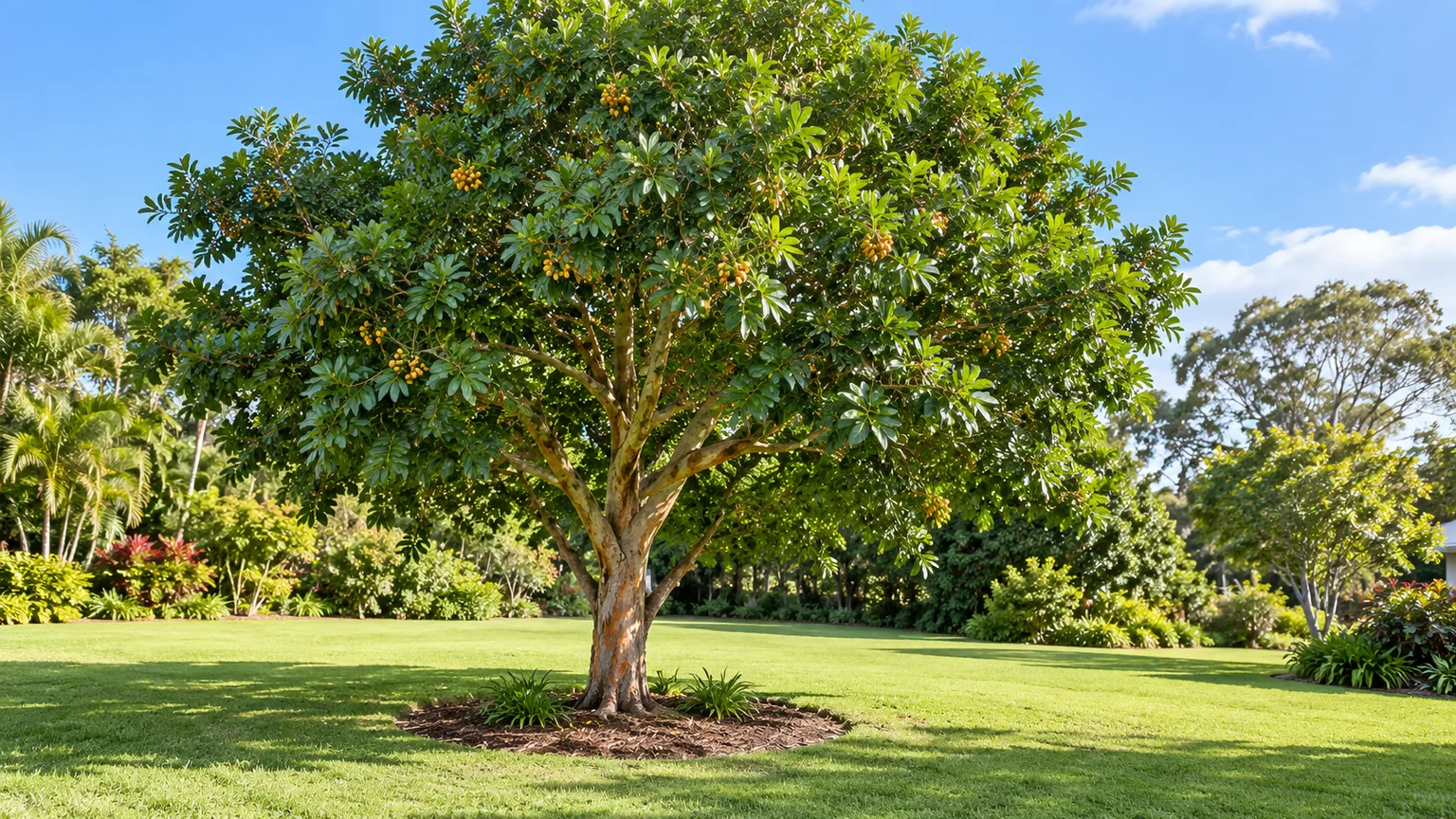
Allow the crown to develop without overhanging a roof, narrow walkway, parking pad, outdoor dining area, or swimming pool. The tree is evergreen, but that does not mean it is litter-free: flowers and capsules fall, and ripe capsules can split to expose seeds. A Southern California garden writer describes fruit drop as a real consideration near a pool (The Smarter Gardener); that is a useful placement scenario, not proof that every tree produces the same amount of litter.
Also consider where the tree’s seeds could travel. Avoid planting beside a creek, wetland, coastal natural area, preserve, or undeveloped parcel, especially in a warm, humid region where seedlings could establish beyond the yard. A sensible site has full sun, room for the mature canopy, access for seasonal cleanup, and no sensitive natural area immediately downstream or downwind of dropped fruit.
Light, Soil, and Drainage
Give carrotwood full sun for a compact, balanced canopy and reliable growth. UF/IFAS lists full sun as its light requirement, though invasive-plant references document the species growing in both sun and shade in Florida habitats. Tolerating shade in the wild is not a reason to put a landscape tree in a cramped or dark corner.
UF/IFAS records tolerance for several soil textures, including sand, loam, and clay, and for soils that are occasionally wet. That flexibility should not be confused with a preference for chronically saturated soil. Choose a site where water drains after rain; if a planting area stays puddled or waterlogged for days, select a different spot rather than adding a small pocket of compost that may hold water around the roots.
UF/IFAS also records high drought and salt-aerosol tolerance, traits that help explain why the species has been used in warm coastal landscapes. Those are established-tree tolerances, not instructions to neglect a new planting or to irrigate with seawater. During establishment, water the root ball when its soil begins to dry, and use fresh water so salts do not build up in the root zone.
Plant a Nursery Tree Correctly
Plant only when the species is permitted and recommended locally. In places where it is considered suitable, work during mild weather and avoid transplanting during extreme heat or a prolonged dry spell. Choose a healthy nursery tree with an intact root ball, a straight trunk, and a visible flare where the trunk widens into its first structural roots.
Dig a broad hole no deeper than the root ball. Loosen the sides of the hole, remove the container, and check for roots circling tightly around the outside; tease a few loose or make shallow vertical cuts if needed rather than leaving a dense spiral. Set the tree so the root flare sits level with or slightly above the surrounding ground, backfill with the excavated soil, and water slowly to settle it. Do not bury the trunk or create a low basin that holds water against the bark.
Spread mulch over a broad ring to reduce competition from turf and slow surface drying. Keep the mulch a few inches clear of the trunk and leave the root flare visible. A stake is useful only if the root ball rocks or the site is exposed to strong wind; ties should be loose enough to allow slight trunk movement and removed once the tree is stable.
Water Young Carrotwood by Soil, Not Calendar
A nursery tree needs regular checks while its roots spread out from the original root ball. The Gardening Know How guide to carrotwood describes watering newly planted trees weekly when rain is absent; use that as a reminder to inspect the tree, not as an automatic schedule for every soil and climate. Sandy soil, hot weather, wind, and a small root ball dry faster than cool weather or a moisture-retentive site.
Check the soil in the nursery root ball and just beyond it. If the upper few inches are dry and the root zone is not saturated, apply water slowly enough to soak the root ball and surrounding planting area; if soil is still damp, wait and check again. Short, frequent sprinklings wet the surface but may leave most roots dry, while constantly wet soil deprives roots of oxygen and can cause decline.
Keep checking through the first growing season and into the next if the tree has not rooted well beyond the original ball. Once established, carrotwood’s drought tolerance usually reduces irrigation needs, but a long hot dry spell can still stress any tree. Water deeply when the active root zone is genuinely dry, then let excess moisture drain rather than following a fixed once-a-week routine for life.
Mulch, Fertilizer, and Soil Care
Refresh organic mulch only as it decomposes, keeping it shallow and away from the trunk. A visible root flare helps you catch planting-depth problems early and keeps bark from remaining damp under a mulch pile. Expand the mulched area as the canopy grows, while avoiding deep digging or repeated tilling over established roots.
Do not fertilize carrotwood automatically twice a year. UF/IFAS characterizes it as adaptable to a variety of soils, and Gardening Know How says established trees generally do not need routine feeding. If growth looks weak, first check sun exposure, root-ball moisture, drainage, and whether the tree is newly planted; yellow leaves alone do not prove a nutrient deficiency.
If those checks do not explain poor growth, use a soil test or local extension recommendation before applying fertilizer. A high-nitrogen product can push leafy growth without solving waterlogged roots, shade, or a root disturbance. Follow label directions only when feeding is genuinely warranted, and keep lawn fertilizer from accumulating against the trunk.
Prune for Structure, Not to Shrink the Tree
Young-tree pruning should create a sound framework, not an artificially tiny silhouette. If you are keeping a permitted tree, select a main leader where appropriate, remove competing stems while they are small, and retain well-spaced scaffold branches that can carry the mature crown. Correcting a narrow fork or rubbing branch when it is young creates a smaller wound than removing a thick limb years later.
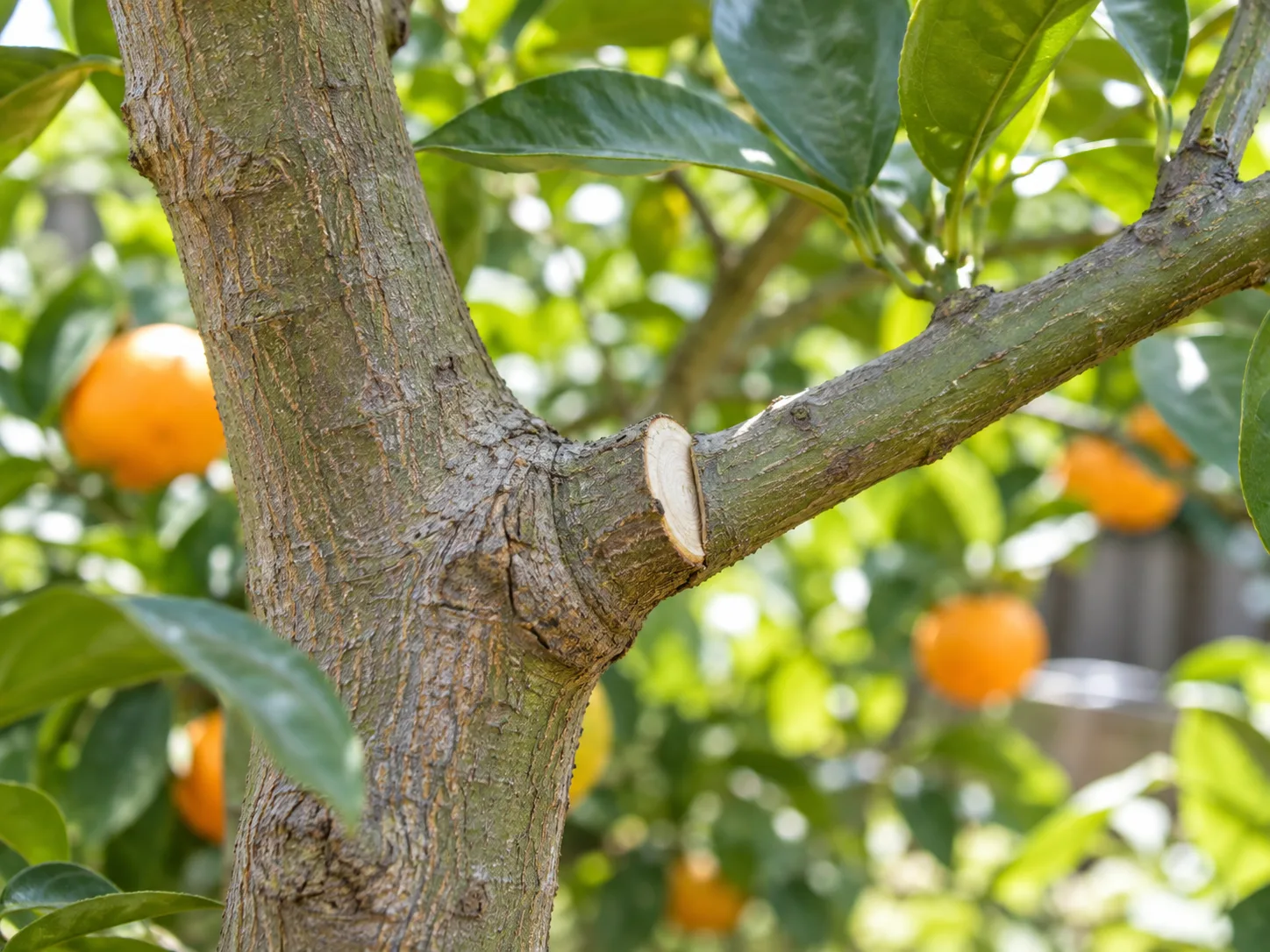
Make each cut just outside the branch collar, the slight raised area where a branch joins the trunk or a larger limb. Remove dead, broken, diseased, or crossing branches first, then step back and reassess; avoid stripping the interior or removing so much live canopy that the tree is left with a few long, weak limbs. Use sharp, clean tools sized for the branch, and do not leave stubs or make flush cuts into the trunk.
Do not top carrotwood to keep it below wires or away from a building. Topping creates large wounds and a cycle of fast, poorly attached regrowth; it also cannot make the roots or mature spread disappear. If a branch is high, large, near a structure, or entangled with utility lines, hire a qualified arborist rather than climbing a ladder with a saw. Pruning can manage structure and clearance, but it cannot correct a bad planting location or override an invasive-plant restriction.
Flowers, Capsules, and Seed Spread
The fruit is not a soft berry. It is a woody three-lobed capsule that changes from green to yellow-orange, then dries and splits to expose dark seeds wrapped in orange-red tissue.
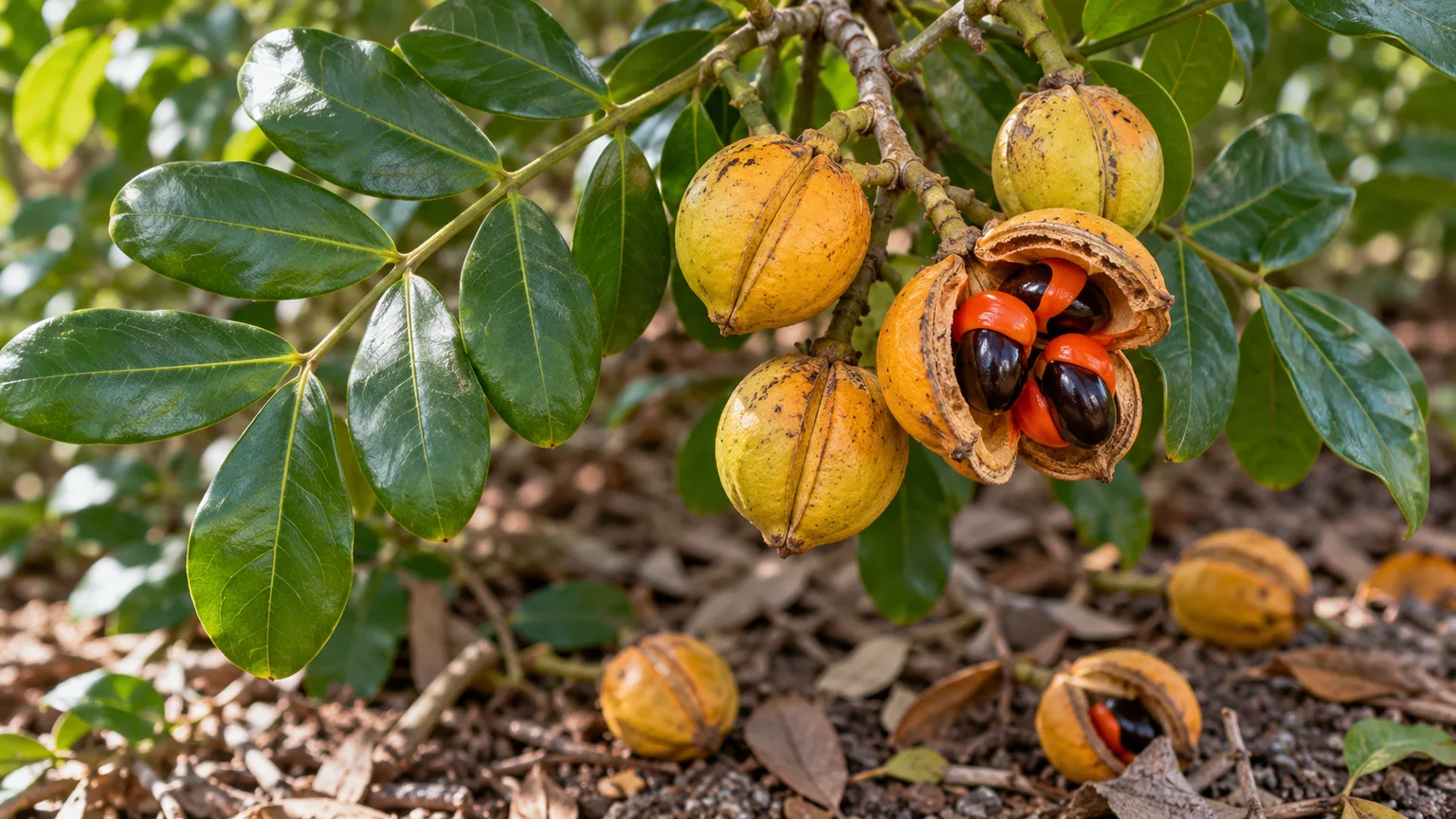
Flower and fruit timing shifts with climate; Florida references place fruit ripening in spring or early summer, but a warmer or cooler local site may differ.
Birds eat or carry the conspicuous seeds and disperse them away from the parent tree. UF/IFAS and Florida Natural Areas Inventory connect that movement with seedlings in natural areas and the formation of dense stands in some Florida habitats. This is why fruit is more than a cleanup issue: a tree can seed beyond a property line even when the yard itself is well maintained.
Do not rely on regular pruning, excess watering, or fertilizer to make a tree seed-free. Removing capsules before they split may reduce some seed escape if the tree is permitted and small enough for safe access, but it is not a substitute for choosing a different tree where the species is prohibited or invasive. Do not eat the fruit or seeds based on an unsourced online claim; the extension and invasive-plant references used here discuss their structure and wildlife dispersal, not a food-safety recommendation.
Can You Grow Carrotwood in a Container or Indoors?
A small seedling can be held temporarily in a nursery pot in a region where it is legal to own, but a container does not make the species a low-risk houseplant. The tree is an outdoor evergreen that can reach 25 to 35 feet; keeping it in a pot long term means restricting roots, watering frequently, repotting or root-pruning, and managing a canopy that still wants to grow. A window a foot away is not a meaningful indoor-light plan for a tree of this size.
Do not start a container plant if the reason is to evade a local planting ban or invasive-plant guidance. A potted specimen can still flower, fruit, or be moved outdoors, and discarded seeds or soil can create an escape route. If you want a permanent container tree, ask a local nursery or extension office for a genuinely compact species suited to your climate and pot volume.
Propagate Only Where Local Guidance Allows
UF/IFAS lists seed as the propagation method, but that does not mean seed propagation is appropriate everywhere. In Florida, where the species is prohibited, do not collect, trade, or sow carrotwood seeds. In other regions, check current local rules and ecological guidance before propagating; a plant that is already established in a neighbor’s yard is not automatically safe to reproduce.
Where planting is permitted, use mature capsules from a known, legally grown tree and prevent surplus seed from being carried away. Clean the seeds from the capsule’s fleshy covering, sow them in a free-draining seed-starting mix, and keep the medium evenly moist in a warm, bright place. UF/IFAS confirms seed propagation, but the sources reviewed here do not give a reliable germination timetable, so do not assume every seed will sprout within a fixed number of weeks.
Move a seedling to a larger container only when roots need room, and keep it protected from drying while it is small. Decide on a permanent planting site before growing a large specimen; carrotwood’s mature dimensions and local status matter more than how easy the seedling is to raise. Never give seedlings away without telling the recipient the botanical name and the need to check local restrictions.
Diagnose Yellow Leaves and Dieback
Yellow leaves are a symptom, not a diagnosis. Start by checking soil moisture at the root ball, recent rainfall, irrigation, and drainage; both drought and saturated roots can produce yellowing, wilting, and leaf drop. Also consider whether the tree was recently planted, its roots were disturbed, nearby soil was excavated, or a new layer of soil or paving changed the root zone.
Look for a pattern before treating. If yellowing is limited to a few older interior leaves while fresh growth remains healthy, monitor the canopy and remove only leaves or branches that are truly dead. If one branch or one side of the crown wilts progressively, or dieback continues despite reasonable soil moisture, take clear photos and ask a local extension agent or certified arborist to inspect it. Avoid reflexively adding high-nitrogen fertilizer, because it can hide the real problem without repairing damaged roots.
UF/IFAS lists carrotwood as susceptible to Verticillium wilt, a vascular disease that can cause branch decline, but not every yellow leaf means the tree has it (UF/IFAS tree profile). A qualified local diagnosis matters because drought, root injury, drainage issues, and disease can overlap in their visible symptoms. Do not cut into the trunk, apply a fungicide, or remove large sections of the canopy based only on a photo or one symptom.
Pests and Diseases to Watch
UF/IFAS reports no major pest concerns for carrotwood while noting its susceptibility to Verticillium wilt. That is a useful expectation, not a guarantee that an individual tree will never have insect feeding, storm damage, or a disease problem. Inspect new symptoms before treating, especially if a tree is stressed by poor drainage, drought, or root disturbance.
If you notice leaf spotting, sticky residue, unusual scale-like bumps, or repeated branch dieback, photograph the upper and lower leaf surfaces and the affected stems. Share those details with your county extension office or a certified arborist, along with the tree’s watering history and whether symptoms are confined to one side. Many different causes can produce similar browning, so diagnosis should precede insecticide or fungicide use.
Do not prune out diseased branches and leave them beside a natural area when the issue is uncertain. Confirm recommended disposal with local extension, particularly if an arborist suspects a transmissible disease or if the tree is in or near regulated habitat. If the entire tree is unstable or has major deadwood over a path or building, treat that as an arborist and safety issue rather than a routine garden chore.
Florida Alternatives and Choices Elsewhere
For Florida gardeners, the answer is not to find a way to grow carrotwood carefully; it is to plant a recommended alternative. The UF/IFAS Center for Aquatic and Invasive Plants identifies paradise tree (Simarouba glauca), pigeon plum (Coccoloba diversifolia), and Florida Cupania (Cupania glabra) as native alternatives. Each has a different size, leaf texture, fruit, and site preference, so compare mature dimensions and confirm suitability for your specific Florida region before choosing one.
Those names are Florida-focused and should not be carried uncritically into other states or islands. A native shade-tree list from a dry inland county will not be interchangeable with a coastal Florida recommendation. Ask your local extension service or botanical garden for a tree with the role you need—evergreen screening, filtered shade, coastal tolerance, or a medium-size canopy—and check that it is not on a local invasive or prohibited list.
If you are outside a region where carrotwood is prohibited, consider whether the benefit is worth the seed-management responsibility. A smaller native evergreen with non-invasive fruit, or a deciduous shade tree chosen for your local climate, may create less long-term work and a lower risk of escape. Match alternatives to the actual site rather than choosing the nearest visual substitute from another region.
Common Carrotwood Care Mistakes
The most consequential mistake is buying first and checking local status later. Confirm the botanical name and current rules before purchase; common names can be inconsistent, and Florida’s current UF/IFAS assessment lists the species as prohibited statewide. A second mistake is assuming that a plant’s ability to tolerate coastal conditions means it is harmless in every coastal ecosystem. Invasive risk depends on where seeds establish and how they disperse, not only on whether the tree grows well in a garden.
Other preventable mistakes include planting a 30-foot tree beside a foundation, scheduling watering by the calendar, adding nitrogen whenever leaves turn yellow, or treating a pot as a permanent way to contain a tree. Avoid aggressive topping, unsafe ladder pruning, and using unverified fruit-edibility claims as a reason to leave capsules where children or pets can reach them. When a mature tree is already present, first identify it, check local requirements, and then ask an extension professional or arborist about the safest next step.
Conclusion
Carrotwood can grow into a handsome evergreen, but the right care begins with a local status check. UF/IFAS lists the species as prohibited in Florida, while an older Texas source reports naturalized populations in parts of the state; check current local guidance wherever you live.
Where authorities do permit carrotwood, give it full sun, well-drained soil, room for a roughly 25- to 35-foot crown, moisture during establishment, and structural pruning rather than repeated size reduction. Do not fertilize on a schedule or treat the capsules as a harmless garden extra: birds disperse the seeds, and the tree can escape in favorable habitats. When local recommendations discourage it, choose a regionally appropriate alternative instead.



