How to Grow Pothos in Water Long-Term
Grow pothos in water long term with a safe water line, the right light, diluted fertilizer, and a simple cleaning schedule for healthy roots and new leaves.
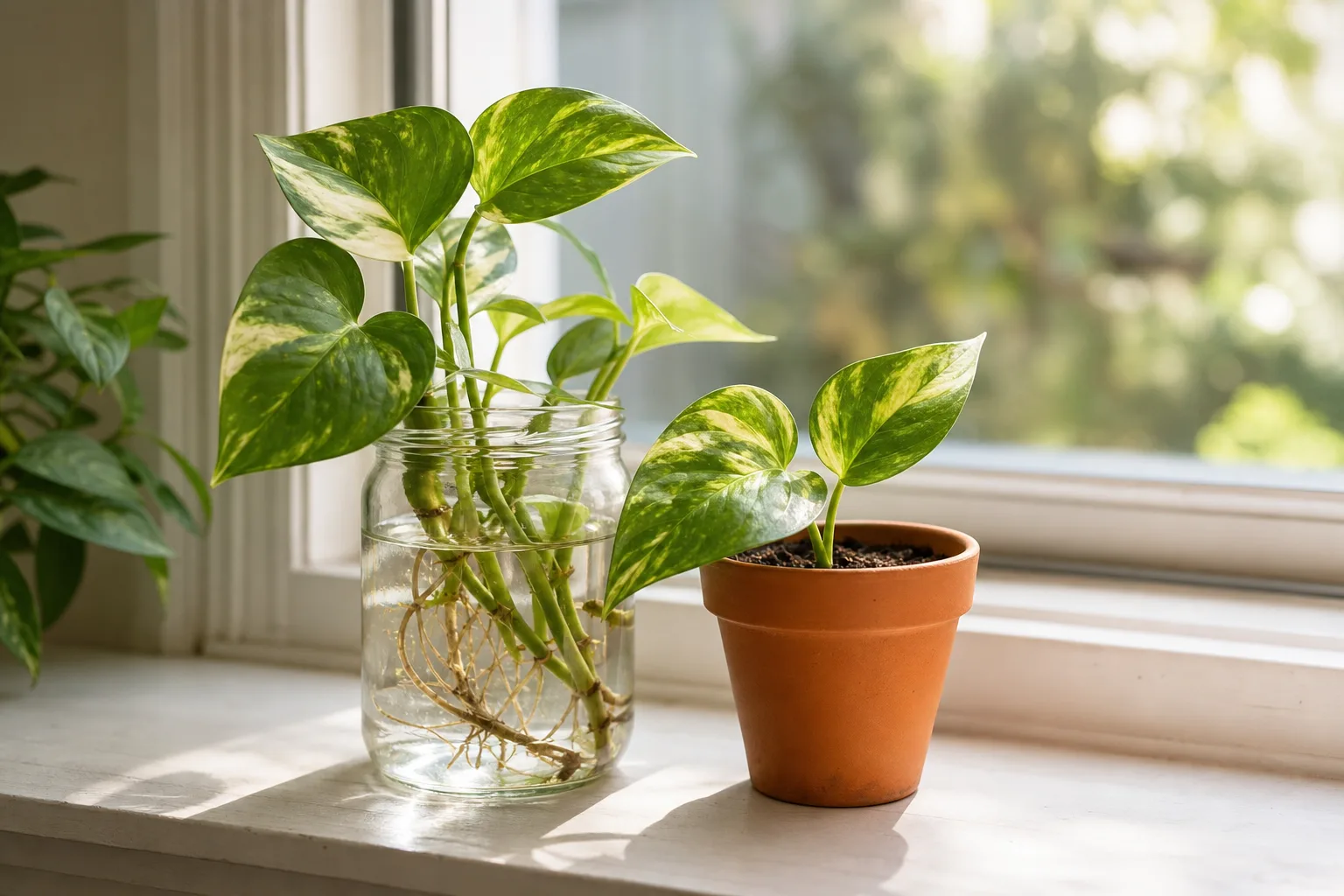
Yes, pothos can live in water long-term
A pothos can grow in water for the long term, not just root there for a few weeks. It needs a healthy node-bearing cutting, light for photosynthesis, oxygen around its roots, and a source of mineral nutrients once it has used what was stored in the cutting. A jar of plain water can start roots, but it is not a complete long-term growing system by itself.
Water culture suits someone who likes watching roots develop, wants a soil-free display, or prefers to check a visible water level rather than estimate soil moisture. It can also make a trailing vine grow more slowly and stay compact. The trade-off is that you take over jobs potting mix normally handles: supplying minerals, keeping the water clean, supporting the stems, and noticing problems before roots sit in stagnant, dirty water.
Hydroponic growing works because plants receive light while roots access both oxygen and nutrients in water. The National Park Service explains those basic requirements and describes hydroponic arrangements that keep roots in nutrient water while exposing part of the root system to air National Park Service hydroponics overview. A decorative pothos vase is a much simpler system, but the same principle helps explain why a clean water line and regular refreshes matter.
Propagation and permanent water culture are different jobs
A cutting can root in water without being ready to live there indefinitely. During propagation, the vine uses stored resources while new roots form; after it starts producing leaves and longer growth, the plant needs ongoing nutrients and a reliable light source. If the cutting is only meant to move into a pot, you can keep the setup simple and short-term. If it will remain in a vase, plan for routine maintenance from the start.
“Hydroculture” or water culture means growing a plant with roots in water rather than in potting mix. It does not mean submerging the whole vine. The water should reach roots or one or two stem nodes, while leaves and most of the stem stay above the surface. This boundary reduces the chance that foliage will sit wet and decay, and it makes the plant easier to inspect.
A common source of confusion is that a rooted cutting may sit in plain water and look healthy for a while. That early success does not prove the water contains enough nutrients for months of new growth. Think of the first roots as the establishment phase, then shift to dilute feeding and repeatable cleaning once the plant has settled.
Choose the right starting material
The easiest route is a small, healthy cutting taken from a vigorous pothos. It starts with fresh tissue that can produce water-adapted roots, and it avoids the shock of trying to clean every particle of potting mix from a mature root ball. If you already have a rooted water cutting, you can use that as well; check that its roots are firm and that the stem base is not soft or foul-smelling before keeping it.
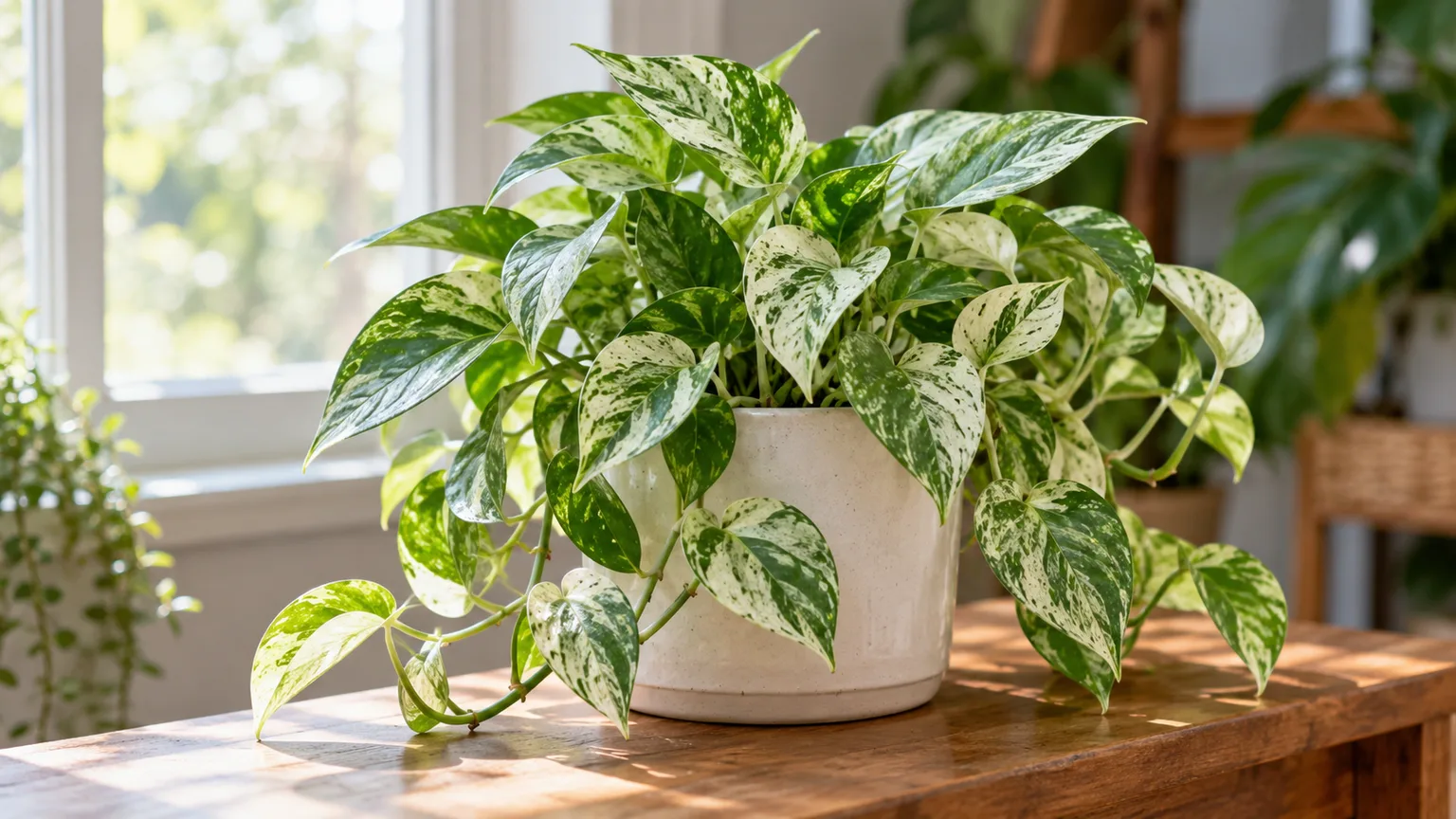
Choose a cutting from a plant that is actively growing and free of obvious pests or widespread yellowing. A weak, dehydrated, or badly damaged vine is a poor candidate because water does not reverse the original stress. Variegated pothos can grow in water too, but leaves with less green tissue may grow more slowly in dim conditions, so place them where they receive brighter indirect light.
Why a cutting is usually safer than a soil-grown root ball
Roots formed in potting mix have developed in a different balance of moisture and air than roots formed in a vase. Moving a whole plant from soil into water can leave old roots saturated, trap bits of organic mix in the container, and make it harder to distinguish normal adjustment from decay. Some growers do convert established plants, but it is more work and often involves leaf drop while the plant adjusts.
Starting with a cutting avoids most of that cleanup. If you want an established plant rather than a new vine, consider rooting several cuttings from the same parent and grouping them in one vessel. For a full comparison of cutting methods, use the separate pothos propagation guide; the instructions here focus on keeping a water-grown plant healthy after it roots.
What a useful pothos cutting looks like
A good cutting has at least one visible node, the small joint on the stem where a leaf and often an aerial-root nub emerge. Cut just below a node with clean, sharp scissors, and keep one or more leaves at the top. Remove any leaf that would be underwater; a submerged leaf becomes decaying debris rather than useful foliage.
Longer cuttings with several nodes can root at more than one point, but they also need a taller or wider vessel to keep leaves above water. For a small vase, one or two nodes below the water line is usually enough. Do not cut away every aerial root just because it looks dry; the node is the important part, and the cutting can make new water roots even if no aerial root is visible.
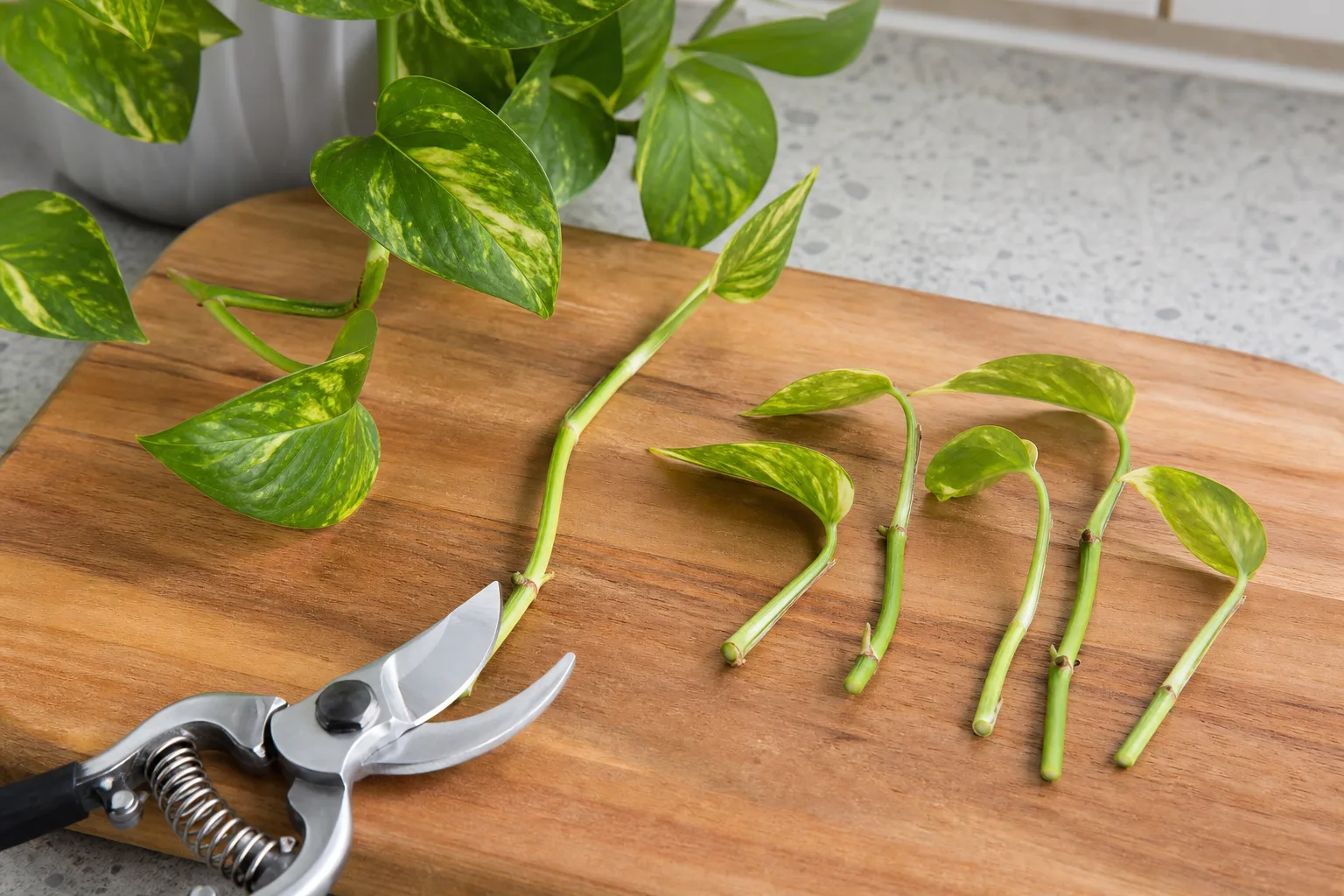
Choose firm, node-bearing vine sections and keep every leaf above the water line.
Set the water line and choose a vessel
Use a watertight container with enough depth for roots to hang without folding tightly against the bottom. A narrow neck, propagation station, or simple support can keep the stem upright while the roots grow. A wide jar works too, but it is easier for the cutting to tip or for leaves to slide into the water, so you may need a small support or a few clean stones to stabilize it.
Clear glass lets you see roots and the water level, which makes early monitoring easy. It also lets light reach the water, encouraging algae on the vessel walls. An opaque container blocks more light and can reduce visible algae, though you will need to lift the plant occasionally to inspect the roots. Neither container color is essential; choose the one that makes you more likely to check and clean the setup.
Fill with fresh, room-temperature water until the lowest node or roots are covered. Keep leaves, petioles, and the upper stem above the surface, and do not fill the vase to the rim. Leave space for evaporation and for the roots to move without pressing the cutting against the bottom. Decorative pebbles are optional; if you use them, wash them first and remember that they can hide debris or make cleaning harder.
Root the cutting before treating it as a display plant
Place the prepared cutting in bright, indirect light and check the water level every few days. Root nubs often begin to show within a couple of weeks, but timing varies with warmth, light, cutting condition, and season. Do not keep pulling the cutting out to check progress; watch through the glass or gently lift it only if the water becomes cloudy or the stem looks soft.
During this early stage, change the water when it becomes cloudy, develops a film, or smells stale. A planned refresh every week or two is a useful starting rhythm for a new cutting, especially in a warm room or a clear jar. When you change it, rinse the container and gently swish debris from the roots with clean water; do not scrub or bend the new, fragile roots.
Once roots are branching and the cutting has held firm growth, decide whether it is a short propagation project or a permanent water plant. If your goal is soil, potting it once the roots are established can make the transition easier than leaving it for many months. If you want a water-grown display, keep the roots in the vessel, begin a conservative nutrient routine, and continue monitoring rather than treating root formation as the finish line.
Give water-grown pothos enough light
Set the vessel near a bright window where the leaves receive indirect light for much of the day. Pothos tolerates lower light, but tolerance is not the same as strong growth: in a dim corner, the vine may stretch between leaves, lose some variegation, and use water and nutrients slowly. If new growth is small or the gaps between leaves widen, move the plant closer to a brighter window gradually rather than adding more fertilizer first.
Avoid hot, direct afternoon sun through glass. It can heat a small volume of water quickly and scorch foliage, while the stronger light also encourages algae in a clear vessel. A little morning sun may be tolerated in some rooms, but judge the actual leaf temperature and color rather than relying only on the window direction.
Rotate the vase occasionally if the vine leans toward the window, and give the stems enough room to trail without being pulled by their own weight. A shelf with stable indirect light is usually easier than a narrow sill where the container can be knocked over or exposed to temperature swings. In winter, slower growth is normal; keep the same light placement and reduce feeding if the plant is barely growing.
Feed it without overloading the water
Water contains no potting mix to replenish minerals as the plant grows, so a pothos kept in water long-term eventually needs fertilizer. The NPS overview identifies nutrients mixed into water as a basic part of hydroponic growth NPS hydroponic requirements. For a small indoor display, use a complete water-soluble fertilizer labeled for hydroponics or water culture, rather than solid granules that are meant to dissolve through a pot of mix.
Wait until roots are established and the plant is beginning to grow before you feed it. Then follow the fertilizer label for water-grown plants and the amount of water in your vessel. If the product gives only a standard houseplant rate, begin at a conservative fraction of that rate and watch the response; a vase has little buffer, so adding a full-strength dose by guesswork can leave concentrated salts around the roots.
A practical starting interval is every four to six weeks during active growth, adjusted to the product label and the plant’s response. Do not keep adding fertilizer every time you top off evaporated water, because repeated top-ups can concentrate minerals. If you make a weak nutrient solution for a refill, still perform complete water changes on schedule so unused salts do not accumulate.
More fertilizer does not mean faster growth. Excess nutrients can stress roots and can feed algae when light reaches the water. Pale leaves may signal poor light, an old cutting, root trouble, or a nutrient issue; inspect the whole setup before increasing the dose.
Refresh water and clean the container
Topping off replaces water lost to evaporation, but it does not remove mineral residue, decaying leaf fragments, or old nutrient solution. Give the vessel a complete change as part of maintenance, and do it sooner whenever the water turns cloudy, feels slick, smells unpleasant, or contains a fallen leaf. Wash away algae from the inside of the glass instead of adding an algaecide or household cleaner to the plant’s water.
Horticulture articles use different schedules: Gardening Know How’s pothos water-care guide describes a two-to-three-week complete change, while Epic Gardening’s pothos guide recommends changing it about weekly or every other week. Those intervals are best treated as a starting range, not a reason to ignore what is happening in your own vase. A warm, sunny clear jar may need cleaning sooner than a small opaque vessel in a cool room.
During a full refresh, pour out the old water, rinse the vessel, and refill with fresh water. If roots are crowded, use the opportunity to remove only roots that are clearly mushy or detached; firm roots should stay intact. Do not let the plant sit dry for a long time while you scrub the jar, and avoid scraping the roots against rough decorations.
A simple maintenance schedule
| Check | What to do | When to act sooner |
|---|---|---|
| Water level | Keep the lowest roots or node covered; top up with fresh water when it drops | Refill before roots are exposed to dry air for long periods |
| Water condition | Replace all water about every 1–3 weeks as a starting point | Change immediately if it clouds, smells, turns warm, or develops a film |
| Vessel | Wipe or wash the interior during a full water change | Clean when algae, slime, or mineral crust appears |
| Roots and stem | Look for firm roots and a solid stem base | Remove the plant for inspection if roots soften or the stem darkens |
| Fertilizer | Feed established growth according to the diluted product label | Pause feeding if growth slows, roots discolor, or algae increases |
The goal is not a rigid calendar. Check the water weekly, top it up when needed, and use a complete refresh to reset the vessel before residue accumulates. This gives you a repeatable habit without changing clean water every day or leaving dirty water untouched for months.
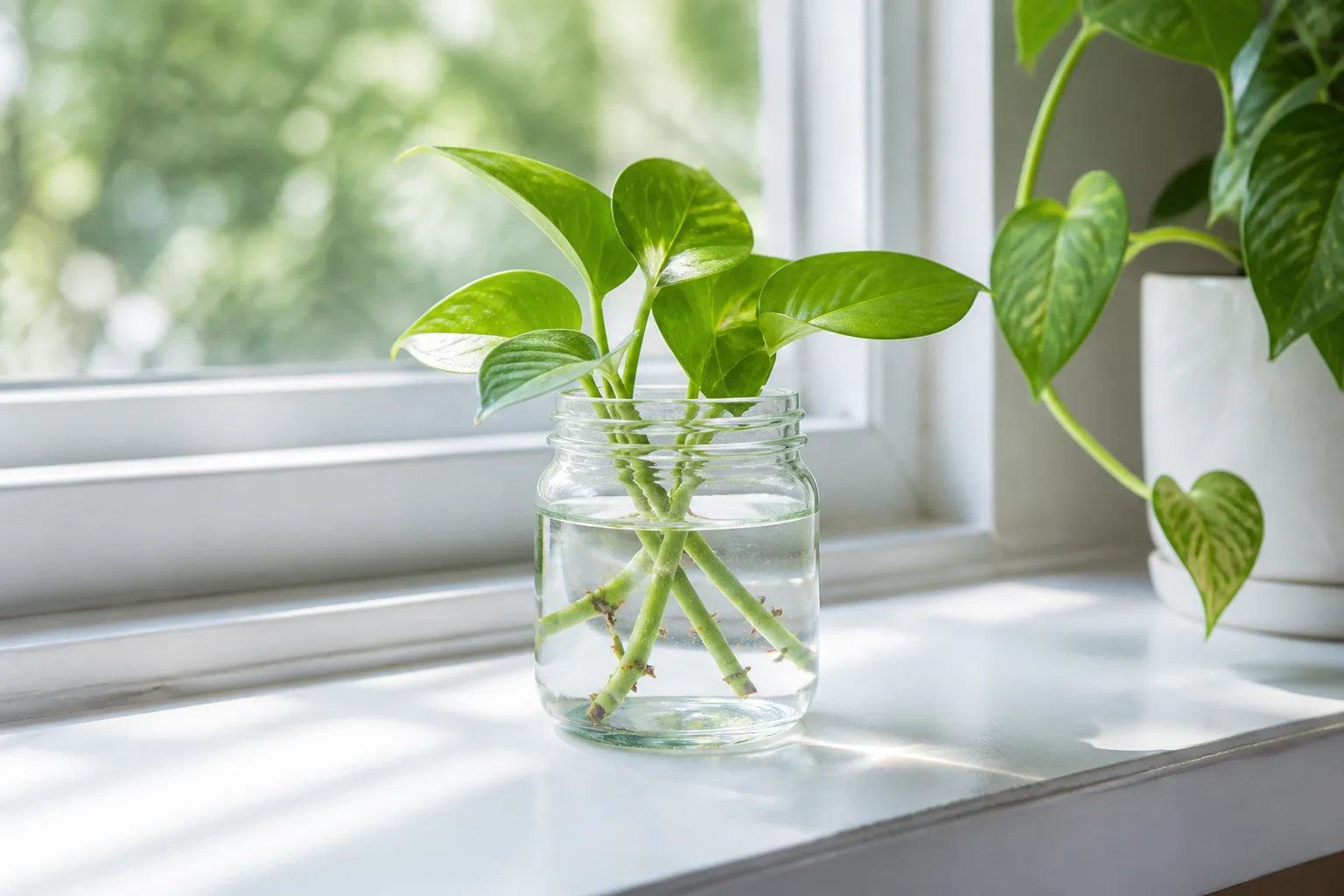
A clear jar makes root growth easy to see, but it also makes algae and residue easier to spot.
Keep the vine balanced as it grows
A water-grown pothos will keep extending its stems if light and nutrients support new growth. Trim a vine above a node when it becomes too long for the display or begins pulling the vase off balance. You can root the removed section in water, then add it back to the main container after it forms roots, which creates a fuller arrangement without crowding the original cutting immediately.
As roots lengthen, untangle them gently during a water change only if they have become packed or are trapping debris. Roots do not need to fill every inch of the vessel, and cutting healthy roots simply to make a neat shape can temporarily slow the plant. If the root mass is so dense that the container is hard to clean, move the cuttings to a wider vase or divide them among two containers.
Use a stable, heavy-bottomed vessel for long trailing stems. A narrow glass may look tidy at first but become top-heavy as leaves and vines lengthen. For a hanging display, keep the vase securely supported and check more often that water loss has not exposed the roots.
Troubleshoot yellow leaves, stalled growth, and root problems
A water-grown pothos can show familiar leaf symptoms for several different reasons, so avoid treating every yellow leaf as a request for fertilizer. Start with the water itself: note whether it is clear, whether the level still reaches the roots, and whether the stem base is firm. Then check light, temperature, root texture, and the timing of the last fertilizer dose.
One older leaf yellowing while the rest of the vine remains firm may be normal turnover, especially after a cutting is first moved or a season changes. Several leaves yellowing in a short period, a soft stem, or a sudden halt in new growth deserves a closer look. Fix the likely cause first and give the plant time to respond; changing the water, location, fertilizer, and vessel all at once makes it difficult to tell what helped.
Yellow leaves or no new growth
If multiple leaves turn yellow, inspect the roots before assuming a nutrient shortage. Firm roots and a solid stem suggest checking light and whether the plant has been sitting in the same nutrient solution for too long. Soft, slimy roots point toward water quality or decay instead, and adding fertilizer to that water can make the problem harder to correct.
If the roots look healthy but the plant has been in a dark location, move it into brighter indirect light and hold fertilizer at the usual low schedule. If it has received strong direct sun, move it back from the glass and replace warmed water. A single yellow older leaf can be removed cleanly, but do not strip healthy leaves just to make a cutting look perfect.
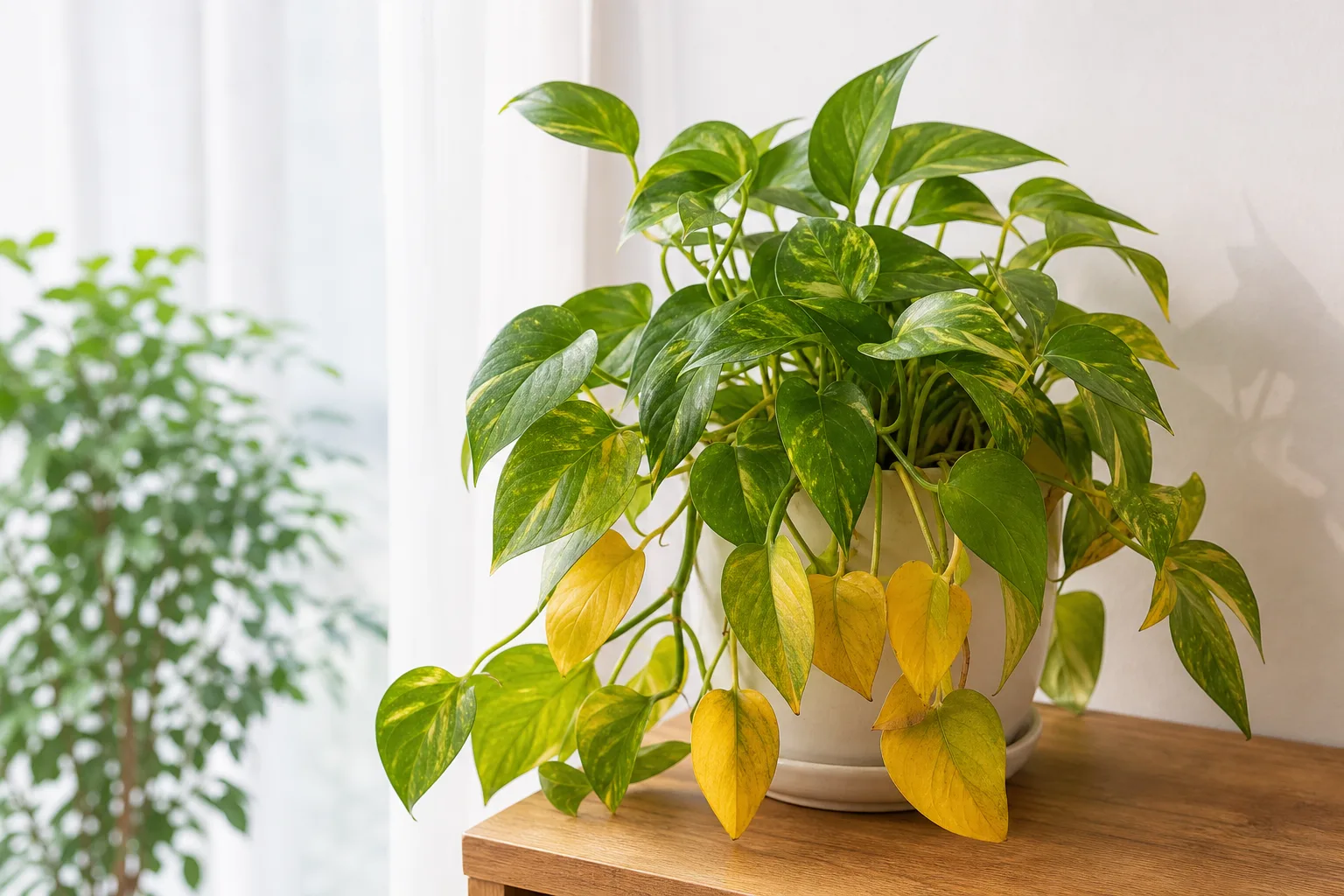
Yellow leaves are a symptom, not a diagnosis; check the roots, water, and light before changing fertilizer.
Brown, soft, or slimy roots
Root color by itself is not a reliable diagnosis. Roots may look tan or pick up color from minerals and the vessel, but they should generally feel firm. Roots that are mushy, slimy, collapsing, or foul-smelling, especially with a softening stem base, are a stronger warning that tissue is decaying.
Remove the cutting from the vase and rinse it gently. With clean scissors, trim only tissue that is clearly dead or mushy, wash the container, and restart with fresh water at a lower line so the stem is not unnecessarily buried. If rot has reached the node or stem, cut above the damaged area into firm tissue and restart with a healthy node; a decayed section will not recover just because the water is changed.
Algae, cloudy water, and mineral residue
Green growth on a clear vase usually means light is reaching the water and there are enough nutrients for algae to use. It does not automatically mean the pothos is dying, but a thick film makes roots harder to inspect and can trap debris. Scrub the container during a full change, remove decaying leaves, and either move it out of direct sun or switch to an opaque vessel.
Cloudy water after a recent fertilizer dose can mean the mix is too concentrated, the water contains debris, or decaying tissue is present. Pour it out, rinse the roots and vessel, and refill without adding another dose until the plant is stable. A white crust that returns quickly may come from minerals left as water evaporates; clean the jar and try a different low-mineral water source for a few changes before making other changes.
Water versus soil: which setup fits your goal?
Water is a good fit if you value a clean, visible display and are comfortable with a small but regular maintenance routine. You can watch roots, check the water level at a glance, and avoid carrying bags of potting mix into the home. However, water culture is not maintenance-free: nutrients must be supplied, the vessel needs cleaning, and a water-rooted plant can be less forgiving of a missed refresh or concentrated fertilizer than a plant in a larger pot of mix.
Soil is usually better if you want faster, larger growth or a plant that can be left alone for longer between checks. Potting mix also provides physical support and stores water and nutrients between watering, though it hides the roots and can be overwatered. Neither method is universally better; the right one is the one you can maintain while providing enough light and appropriate nutrition.
A simple decision rule helps: choose water for a compact decorative cutting you can inspect weekly; choose soil for a larger, fuller pothos or if you do not want to measure fertilizer and clean a vase. You can also keep a few cuttings in water while the main plant stays in a pot, which gives you the visual effect without converting your whole collection.
Can a water-grown pothos move back to soil?
Yes, a pothos that has grown roots in water can be planted in soil later. The transition is possible, but water roots formed under constant moisture may need time to adapt to the air-and-water balance in potting mix. The plant can pause, wilt slightly, or lose a leaf while it establishes; that does not automatically mean the transfer has failed.
Choose a small pot with drainage holes and a loose, well-draining houseplant mix. Plant the roots without bending them into a tight ball, water the mix evenly, and keep it lightly moist—not waterlogged—while the plant adjusts. Give it bright indirect light and avoid fertilizing immediately after the move, when damaged or changing roots are already adapting.
If the roots are extremely long, avoid chopping them all back at once. You can trim only damaged sections, place the healthy roots into a pot with enough room, and secure the vine so it does not wobble. For a new water-rooted cutting, the separate pothos propagation guide covers the broader choice between water, soil, and other rooting media.
Conclusion
You can keep a pothos in water long-term if you treat the vase as a small growing system rather than a jar you never revisit. Start with a healthy node-bearing cutting, keep leaves above the water, give it bright indirect light, and refresh the water before it becomes cloudy or stale. Once roots are established, add complete, diluted nutrients according to the product label and watch how the plant responds.
The most useful routine is simple: check the water weekly, refill when roots are exposed, fully change it every couple of weeks as a starting point, and clean the vessel whenever algae or residue appears. If yellow leaves or soft roots develop, inspect before feeding; light, water quality, root condition, and fertilizer can produce similar symptoms. With those checks, a pothos can remain a healthy, attractive water-grown plant for years, even though growth may be slower than in a well-cared-for pot.