25 Types of Orchids: Which One Fits Your Home?
Compare 25 types of orchids by flower shape, growth habit, light, water, and difficulty so you can choose the right houseplant for your room.
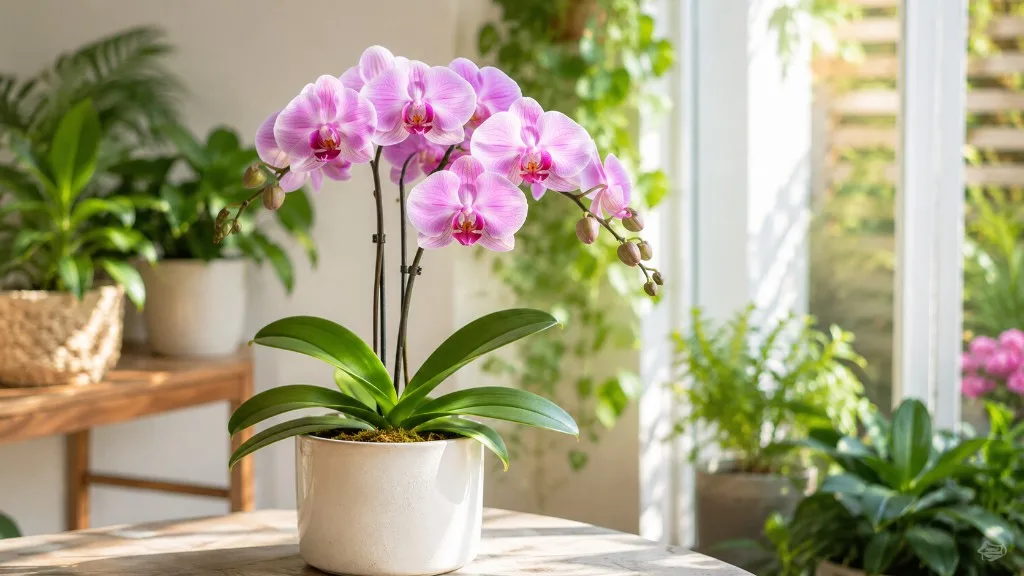
An orchid’s flower can tell you what you like, but its growth habit tells you whether it will like your home. A flat-faced moth orchid may be happy on an east windowsill, while a Vanda wants far more light, airflow, and frequent moisture. A Cymbidium may be easy in a cool sunroom and frustrating in a hot apartment.
This guide compares 25 types of orchids by the clues you can see, the room each type suits, and the care difference most likely to matter. The names describe genera or a named species group, not a promise that every hybrid behaves identically. Use the chart as a shortlist, then confirm the nursery label before changing light, watering, or potting medium.
Choose an orchid by room, not by flower color
Start with the conditions you already have. If your brightest spot is a curtained east window, begin with Phalaenopsis, Paphiopedilum, or Ludisia. If you have a bright south window with room for a hanging basket and you enjoy checking roots often, Vanda or a high-light Cattleya becomes realistic. If your home stays warm at night, cool-growing Masdevallia and Miltoniopsis are poor first choices no matter how much you love their flowers.
The American Orchid Society describes orchid culture as a balance of light, water, fertilizer, temperature, air movement, and humidity rather than one magic trick. That is the useful lens for this list: pick the type whose natural rhythm overlaps with your room, then adjust the routine around the plant instead of forcing the room to behave like a greenhouse. (American Orchid Society)
Read growth form before you read the care tag
Look for one of two basic shapes. A monopodial orchid grows upward from one central stem, producing new leaves from the top; Phalaenopsis and Vanda are familiar examples. A sympodial orchid spreads sideways from a rhizome, making new shoots and swollen pseudobulbs that store water; Cattleya, Oncidium, and many Dendrobiums fit this pattern.
Then ask where the roots expect to live. Many popular orchids are epiphytes, meaning they grow on trees rather than in soil and use their roots to anchor themselves while collecting water and nutrients from rain, humidity, and debris. Terrestrial orchids grow in a ground-based medium, while lithophytic types grow on rock; the categories change the pot, drainage, moisture, and fertilizer strategy. (Epic Gardening)
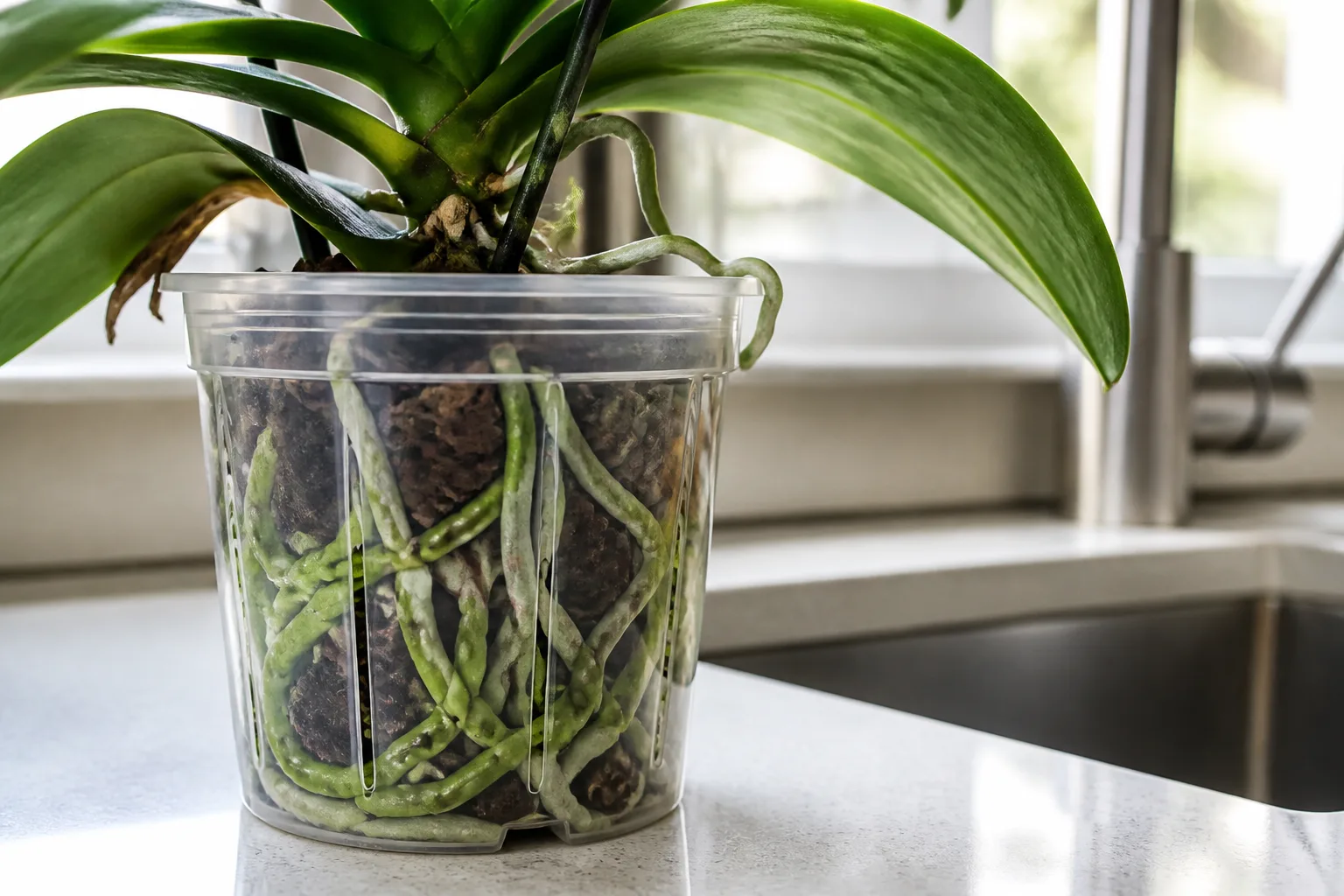
Do not interpret “epiphyte” as “never water.” It means the roots need both moisture and air. The velamen around an epiphytic root absorbs water like a sponge, but a root kept saturated for too long can suffocate and rot. That is why a clear pot, a breathable medium, and a complete drain are practical tools rather than decorative orchid habits.
Quick comparison chart: 25 orchid types at a glance
Use the chart to narrow your choices. “Moist” means the plant should not remain bone-dry for long; it does not mean a pot of stagnant water. “Dry” means the medium should approach dryness between thorough waterings, especially when pseudobulbs are present.
| Orchid type | What helps identify it | Best home fit | Main care flag |
|---|---|---|---|
| Phalaenopsis (moth) | Broad, flat flowers; thick leaves; one central crown | Warm east or filtered south window | Bright indirect light; water just before bark fully dries |
| Paphiopedilum (lady’s slipper) | Pouch-shaped lip; fan of leaves | Lower-light shelf or east window | Keep evenly moist; leaf pattern changes temperature preference |
| Ludisia (jewel) | Velvety dark leaves with bright veins | Warm, humid tabletop | Grown for foliage; use an airy terrestrial mix |
| Zygopetalum | Purple-green patterned, often fragrant flowers | Bright, moderately cool room | Do not let the root zone dry completely |
| Cymbidium (boat) | Long strap leaves; tall sprays; boat-shaped lip | Bright, cool sunroom or mild patio season | Cool fall nights help initiate spikes |
| Cattleya (corsage) | Large flowers with a prominent lip; pseudobulbs | Bright filtered window | Strong light and a dry-down between waterings |
| Brassavola (lady of the night) | Narrow pale petals and white lip | Bright, airy window or mount | Evening fragrance; high light and airflow |
| Brassia (spider) | Long, thin sepals that resemble spider legs | Warm bright window | Humidity and airflow matter as much as light |
| Oncidium (dancing lady) | Branching sprays of small dancing flowers | Bright window with room for spikes | Many hybrids need regular moisture but not sodden bark |
| Epidendrum | Clusters of smaller flowers; cane or reed-like growth | Brightest indoor window or grow light | Often needs more light than a typical shelf provides |
| Trichocentrum (mule ear) | Thick, broad leaves; showy flowers | Bright, warm display area | High light; let chunky medium approach dryness |
| Psychopsis (butterfly) | Odd, insect-like flowers on long spikes | Bright to moderate warm room | Leave a healthy green spike until its blooming pattern is known |
| Dendrobium | Cane-like stems; flowers along canes or at tips | Bright window; depends on type | Care varies sharply; some need a winter rest |
| Catasetum | Waxy, unusual flowers; seasonal leaf drop | Warm grow-light shelf or greenhouse-like room | Reduce and stop water during true dormancy |
| Miltonia | Brazilian pansy orchid; warmer-growing group | Bright, warm room with steady moisture | Let the mix dry somewhat between waterings |
| Miltoniopsis | Cooler pansy-like flowers with a broad face | Cool, humid room | Keep evenly moist and avoid heat spikes |
| Masdevallia | Fused triangular sepals; unusual kite-like flowers | Coolest bright room | Heat and dry air are the main hazards |
| Phaius (nun’s orchid) | Tall pleated leaves and upright flower spikes | Bright floor-plant space | Terrestrial, large, and moisture-loving but not soggy |
| Phragmipedium | Slipper pouch with long, often sequential blooms | Warm, bright, humid setup | Never let it dry completely; use a draining plastic pot |
| Spathoglottis | Pleated leaves and terrestrial growth | Bright patio or warm indoor spot | Needs even moisture, light, and airflow |
| Vanda | Strap leaves and exposed aerial roots | Very bright window, basket, or greenhouse | Frequent watering and high humidity; not a dim-room orchid |
| Rhynchostylis | Dense, fragrant flower clusters; hanging roots | Warm, humid basket display | Sensitive to harsh sun, stale air, and poor drainage |
| Aerangis | Small white flowers on hanging racemes | Humid mounted or basket display | Needs airy roots and consistent moisture |
| Vanilla planifolia | Long climbing vine with thick leaves | Warm conservatory or large grow tent | Needs support, high humidity, and hand pollination for pods |
| Laelia | Cattleya-like flowers on pseudobulbs | Bright, warm-to-intermediate room | Strong light and a seasonal dry period may be needed |
The Missouri Botanical Garden’s home-orchid guide is useful for calibrating the broad categories: it lists Phalaenopsis as the easiest home orchid, gives Cattleyas a higher-light position, describes Cymbidiums as cool growers, and warns that Dendrobium care changes by species. Treat those entries as starting points, not a fixed weekly schedule for every hybrid. (Missouri Botanical Garden)
Beginner-friendly orchids for ordinary homes
The best beginner orchid is the one your room can support without daily intervention. A plant that tolerates a little missed watering is still a poor choice in a dark, stagnant corner; a “difficult” plant can be manageable when its temperature and humidity requirements already match your space.
Phalaenopsis is the safest first purchase for most people. Its broad leaves and long-lasting sprays are easy to recognize, it accepts the warm temperatures common indoors, and it tolerates lower light than many showier genera. Give it bright filtered light, a chunky bark-based medium, and a thorough watering when the roots and mix are approaching dryness—not an automatic drink every seven days.
Paphiopedilum is an excellent alternative if your room is bright but not sunny. Its pouch-shaped flowers make identification easy, and the plant generally prefers to remain evenly moist. Mottled-leaf types are warmer growing; many green-leaf types prefer cooler conditions, so the leaf pattern is a useful clue before buying.
Ludisia is the choice for someone who loves orchids but cares more about foliage than a long flower display. The jewel orchid is terrestrial, with velvety leaves marked by bright veins, and it is less dependent on a high-light bloom cycle. Use a moisture-retentive but airy mix, keep humidity steady, and avoid treating it like a tree-dwelling Phalaenopsis.
Zygopetalum rewards a grower who can maintain regular moisture and good airflow. Its purple, green, and brown flowers are often strongly scented, and its leaves should not be allowed to shrivel from repeated dry-outs. Cymbidium can also be approachable, but only where the grower can provide bright light and cool fall nights; a hot apartment may prevent flowering even when the leaves look healthy.
For pet households, verify the exact orchid rather than assuming every genus has the same safety profile. The ASPCA lists Phalaenopsis orchid as non-toxic to cats and dogs, while any plant material can still cause stomach upset if eaten; keep a plant label or photograph with your pet-safety records. (ASPCA Phalaenopsis orchid)
Bright-window and fragrant orchid types
Some orchids fail indoors because they are watered correctly in a room that is simply too dim. If a plant produces leaves but never flowers, do not immediately add fertilizer. First ask whether the foliage is receiving enough usable light to build the energy needed for a spike.
Cattleya, Brassavola, and Brassia
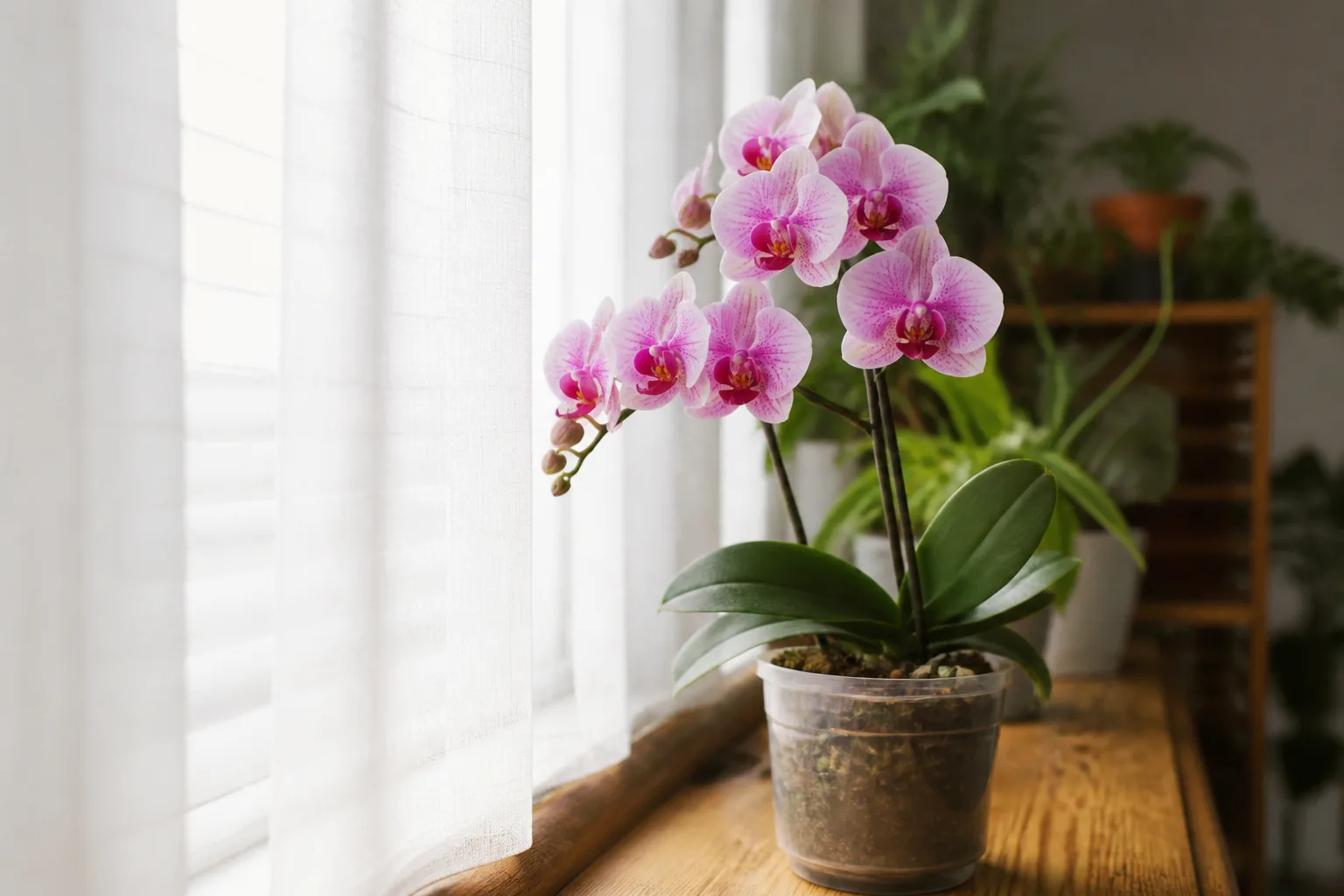
Cattleya is the classic corsage orchid: large, often fragrant blooms, thick pseudobulbs, and a prominent lip. It wants brighter filtered light than Phalaenopsis and a real dry-down between waterings. A sheer curtain or a spot set back from south or west glass usually works better than unfiltered midday sun.
Brassavola has narrow pale petals and a white lip, with fragrance that is often strongest in the evening. It suits a bright, airy window or a mount where its roots dry quickly. Brassia, the spider orchid, has long sepals and an exotic silhouette; it also needs bright light, warmth, humidity, and airflow. Both are more rewarding when you can observe the roots and adjust watering to the container rather than trusting a calendar.
Oncidium, Epidendrum, Trichocentrum, and Psychopsis
Oncidium produces branching sprays of small flowers, often yellow and brown, and is commonly called the dancing lady orchid. It is a large, varied group, so the pseudobulbs, leaf thickness, and hybrid label matter. Water when the mix is nearly dry, then soak thoroughly and let excess water drain.
Epidendrum can form tall, reed-like growth with clusters of smaller flowers and usually wants more light than a dim room can provide. A grow light may be more useful than moving it closer to hot glass. Trichocentrum, sometimes called mule-ear orchid, has thick leaves and a brighter-light temperament; its leaves can serve as a better light gauge than the flowers, which may be seasonal.
Psychopsis has some of the strangest flowers in this list, but its unusual spikes are not disposable. Leave a healthy green spike attached until you know how your plant flowers; some orchids can reuse a spike or bloom from structures that look finished to an inexperienced eye. That small pause prevents an enthusiastic pruning mistake.
Cool, wet, or seasonally resting orchids
The most important split in this group is not flower color—it is whether the plant needs continuous moisture, a cool night cue, or a true dry rest. Do not impose dormancy on an orchid because another plant on your shelf went dormant. Read the genus and, for Dendrobium or Catasetum, the type or hybrid name.
Dendrobium, Catasetum, Miltonia, and Miltoniopsis
Dendrobium is too diverse for one care card. Cane-shaped stems may carry leaves along their length or only at the top; some types stay evergreen, while others drop leaves and need a winter rest to flower. Bright light is common ground, but watering and temperature must follow the section or hybrid.
Catasetum is a specialist’s seasonal orchid. It grows strongly while pseudobulbs and leaves are developing, then may drop its leaves and enter dormancy. As the plant goes dormant, watering must be reduced dramatically and eventually stopped; continuing a wet routine after leaf drop can rot the dormant structure.
Miltonia and Miltoniopsis are often sold under overlapping “pansy orchid” language, but the distinction matters. Brazilian Miltonia types are generally warmer and can handle a little more drying; cooler-growing Miltoniopsis from cloud-forest regions prefer steady moisture, high humidity, and protection from hot rooms. If the label only says pansy orchid, ask the seller which group you are buying.
Masdevallia, Phaius, Phragmipedium, and Spathoglottis
Masdevallia is for a cool, humid grower. Its fused sepals create triangular or kite-like flowers, but the more useful buying clue is temperature: hot summer rooms and dry furnace air are harder on it than a slightly imperfect watering routine. Give it airflow without a direct fan blast.
Phaius, the nun’s orchid, makes a large terrestrial floor plant with pleated leaves and tall spikes. It wants light, warmth, and regular moisture, but the pot still needs drainage. Spathoglottis is another terrestrial orchid with pleated foliage and a more garden-like habit; it can work as a warm patio or seasonal indoor plant where bright light and airflow are available.
Phragmipedium is the outlier for chronic over-waterers because it should not be allowed to dry completely. The pouch-shaped flowers can open in succession over months, but the plant still needs clean water, an airy medium, and a pot that drains. The Missouri Botanical Garden specifically recommends moisture retention without stagnation, bright light without direct sun, and constant air movement for this group. (Missouri Botanical Garden)
Specialty orchids for mounted displays, humidity, and vines
These orchids are beautiful houseplants only when “houseplant” includes a basket, a humidifier, a grow-light shelf, or a room with unusually good airflow. They are not automatically impossible; they simply have a narrower margin for a dry or dim home.
Vanda, Rhynchostylis, Aerangis, and Laelia
Vanda is the classic high-demand orchid: strap-like leaves, long aerial roots, high light, and frequent watering in warm weather. It is often grown in a basket with little or no medium. That setup dries quickly, so it works for someone who enjoys daily observation—not for a plant left in a dark office for a week.
Rhynchostylis carries dense, fragrant flower clusters and looks striking in a basket. It is less forgiving of harsh direct sun, poor drainage, and stagnant air than a common moth orchid. Aerangis has small pale flowers on hanging racemes and is usually happiest mounted or basket-grown where its roots can breathe. Both need humidity that is paired with moving air; still, wet air is an invitation to disease.
Laelia resembles Cattleya in its pseudobulbs and flower structure and is commonly encountered in alliances and hybrids. Give it bright filtered light, a chunky mix, and a seasonal rhythm appropriate to the plant’s label. If it is sold as a Cattleya alliance hybrid, use the seller’s culture notes rather than trying to force it into a pure-species schedule.
Vanilla planifolia and other collector choices
Vanilla planifolia is a climbing orchid, not a compact windowsill plant. Its thick vine needs a support to climb, warm temperatures, high humidity, and a long growing season. Producing vanilla pods indoors requires hand pollination when the flower opens, so buy it for the foliage and challenge unless you have a controlled setup and patience.
The unusual choice in this section is not necessarily the hardest; it is the least forgiving of a generic care label. Collector orchids reward a grower who can record light, temperature, pot weight, and growth cycles. A simple log becomes especially useful when a plant has a rest period, a seasonal spike, or roots exposed in a basket.
Care differences that matter more than the label
Once you know the growth form, most orchid advice becomes easier to interpret. The American Orchid Society’s central warning is that incorrect watering kills more orchids than any other mistake, but “incorrect” includes watering too often, too little, at the wrong stage, or in a medium that has lost its air spaces. (American Orchid Society watering guidance)
Watering and medium follow the roots
Use the root zone to decide when to water:
- No pseudobulbs: Phalaenopsis and Vanda have little stem storage, so water just before the medium becomes fully dry. Vandas in warm baskets may need water much more often than potted Phalaenopsis.
- Pseudobulbs: Cattleya, Oncidium, many Dendrobiums, and Laelia can use stored water. Let the medium approach dryness between thorough waterings, especially during a resting season.
- Never fully dry: Phragmipedium, Zygopetalum, Miltoniopsis, and many Paphiopedilums need more consistent moisture. “Moist” still requires drainage and air around the roots.
- Terrestrial types: Ludisia, Phaius, and Spathoglottis can use a finer, more moisture-retentive mix than an epiphyte, but regular potting soil that stays dense and wet is still a poor default.
- Dormant types: Catasetum and some Dendrobiums need their watering reduced after growth finishes. The leaf drop or cane maturity is a biological signal, not a reason to panic-water.
For common epiphytic orchids, use chunky orchid bark with perlite and horticultural charcoal, or a commercial mix with similar air space. University of Connecticut guidance warns that old bark breaks down and that retail moss packed tightly around roots can stay soggy; repot into fresh, open medium when the mix collapses, drains slowly, or smells sour. (University of Connecticut orchid care and repotting)
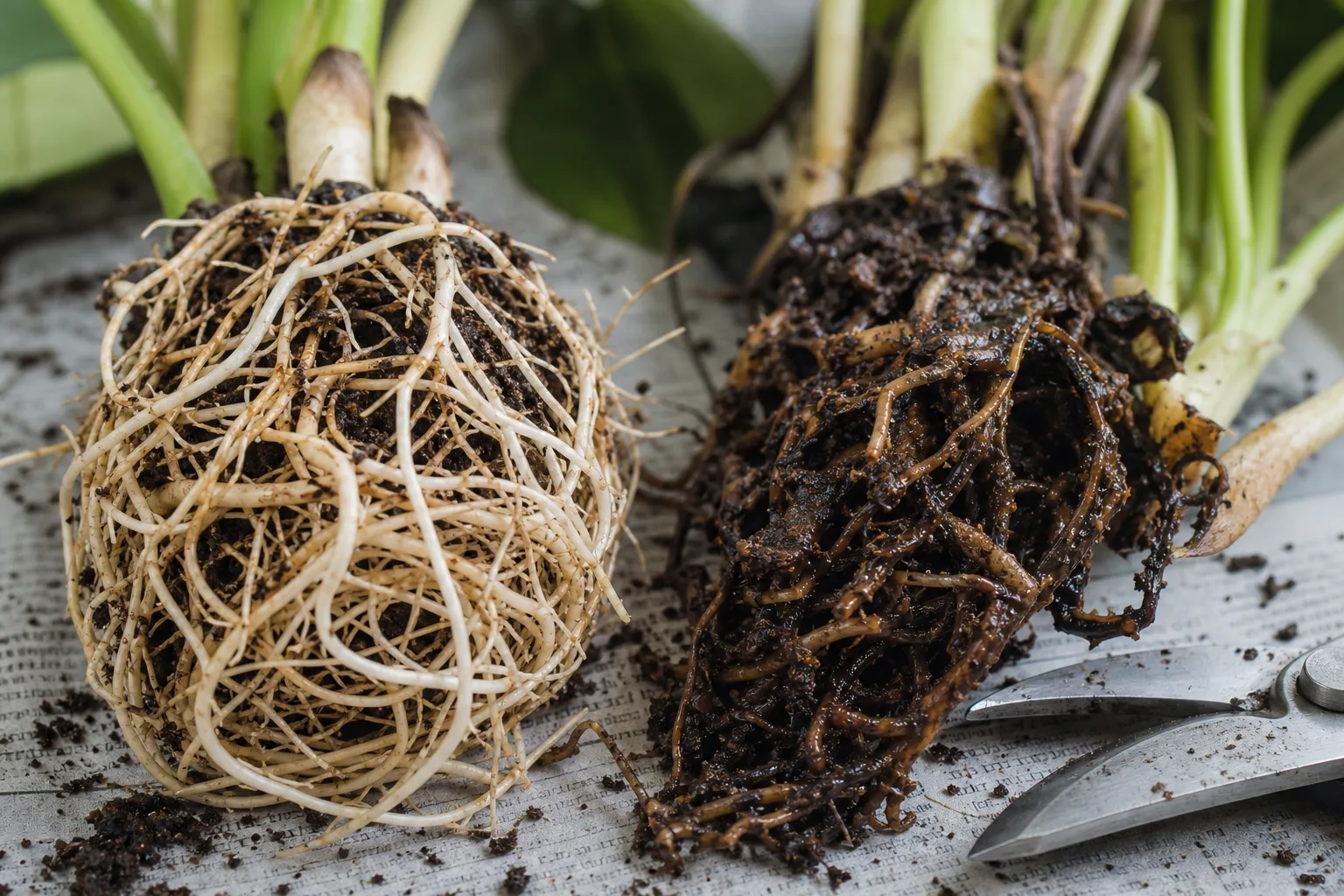
Water thoroughly until liquid runs from the drainage holes, then let the pot finish draining. A skewer, pot weight, and root appearance are more useful than a universal weekly rule. If the roots are brown and mushy, adding water because the leaves look wrinkled makes the problem worse; root loss can make an overwatered orchid look thirsty.
Light, temperature, humidity, and air movement
An east-facing window is a dependable starting point for Phalaenopsis and Paphiopedilum. Cattleyas, Brassavolas, Vandas, Oncidiums, and many Epidendrums need brighter conditions, while Masdevallia and Miltoniopsis need protection from heat. Use a sheer curtain or move the pot back from south and west glass; a sudden jump from dim store light to hard afternoon sun can scorch leaves.
Temperature is part of identification. Warm growers such as Phalaenopsis and Vanilla suit ordinary heated rooms, although they still benefit from a modest night drop. Cymbidium and many cool-growing Paphiopedilums need cooler nights to initiate flowers, while Masdevallia and Miltoniopsis can decline in a hot room even when humidity is high.
Humidity does not cancel air movement. Group plants, use a humidifier, or place a pot above—not in—a shallow pebble tray, then keep gentle air circulating around the leaves. The target is a root and leaf surface that receives moisture and dries at a reasonable pace, not a sealed glass box with wet foliage overnight.
Fertilize an actively growing orchid lightly after watering so dry roots do not receive a concentrated salt solution. A weak, regular feed is safer than a heavy “bloom booster,” and a thorough plain-water flush helps limit fertilizer salts. Stop or reduce feeding for a diseased, rootless, or truly dormant plant until it resumes active growth.
How to identify and buy an untagged orchid
Flower color is the weakest clue because hybrids borrow colors freely. Look at the labellum, or lip, first: a broad frilled lip suggests Cattleya, a pouch suggests Paphiopedilum or Phragmipedium, and a small central lip under wide flat petals points toward Phalaenopsis. Long spider-like sepals suggest Brassia; fused triangular sepals point toward Masdevallia; a boat-like lip and strap foliage suggest Cymbidium.
Next check the plant’s architecture. One crown with leaves stacked upward is monopodial. A chain of canes or swollen pseudobulbs along a rhizome is sympodial. Thick aerial roots and a bark-filled pot suggest an epiphyte; a clumping plant in a finer mix may be terrestrial. If the orchid is not flowering, growth form and leaves can narrow the options, but they may not identify a hybrid with certainty.
At purchase, choose firm leaves, active root tips, and a plant that is stable in its pot. Avoid a root ball packed into a sour-smelling, waterlogged plug, black or hollow roots, a soft crown, or a plant whose only attraction is a forced flower spike. The American Orchid Society’s orchid exploration resources are useful once you have a genus or alliance name, especially when a retail tag uses a hybrid or outdated trade label. (American Orchid Society orchid exploration)
Mistakes that make the right orchid look difficult
The most common failure is watering by the store card instead of the plant. “Weekly” may be a reasonable starting observation for a mature Phalaenopsis in bark, but it is not a command for a Vanda basket, a dry winter room, a decomposed moss plug, or a Catasetum in dormancy.
The second mistake is treating every orchid as an epiphyte in bark. Ludisia, Phaius, and Spathoglottis can use a different mix, while Phragmipedium needs sustained moisture and Vanda may be happiest with roots largely exposed. Match the medium to the roots, then match the watering rhythm to how fast that medium dries.
Other avoidable errors include choosing a high-light orchid for a dim shelf, placing a cool grower beside a radiator, keeping a cachepot full of water, leaving water in the crown, and pruning a green spike before identifying the genus. Repotting, moving, fertilizing, and increasing humidity all in the same week also hides the cause of a setback. Change one major variable, observe the response, and let new roots or leaves confirm that the plant is recovering.
Conclusion: choose the orchid your room can support
The most useful orchid list is not a ranking of the prettiest flowers. It is a way to match room conditions to plant biology. Choose Phalaenopsis or Paphiopedilum for a forgiving start, Cattleya or Brassavola for a bright window, Cymbidium or Masdevallia for cool conditions, Phragmipedium or Zygopetalum if you can maintain moisture, and Vanda or Vanilla only when you have the light, humidity, support, and attention they require.
Once the plant is home, identify its growth form, inspect the roots, and record how long the medium takes to dry. That small amount of observation will tell you more than a generic watering calendar—and it is the difference between collecting orchid names and actually growing the plants behind them.



