Pennyroyal Plant Care: How to Grow *Mentha pulegium*
Pennyroyal grows easily—and spreads fast. Get practical planting, watering, pruning, seed, and division advice, plus clear guidance on toxicity and pet safety.
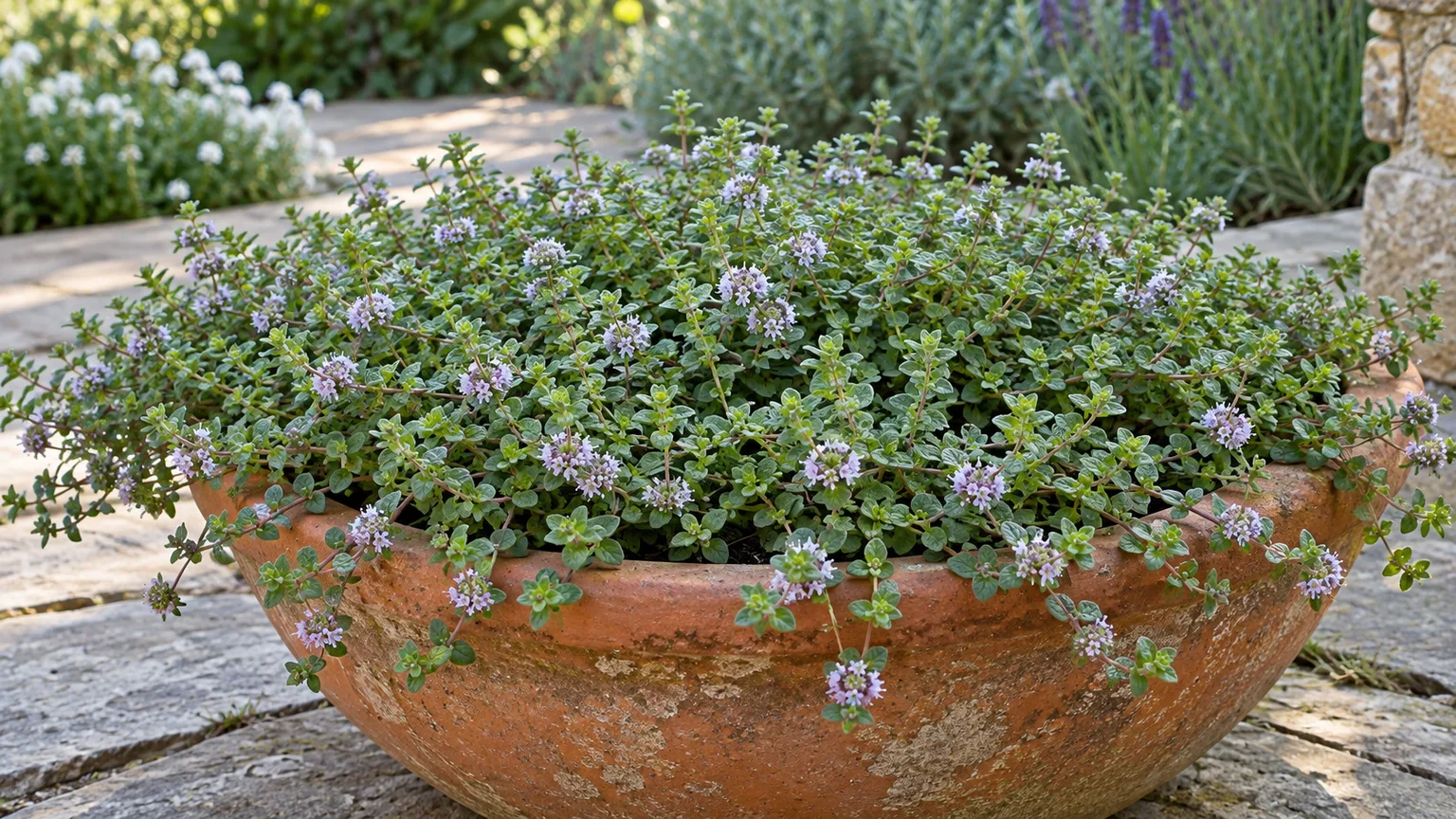
European pennyroyal is easy to grow because it tolerates a range of garden conditions and spreads by creeping stems that root as they go. That vigor is also the main reason to plan its location before planting: a pot on hard paving is easier to manage than a patch threading through a mixed border. There is a second decision to make first. Pennyroyal is an ornamental plant, not a kitchen herb or a safe do-it-yourself insect remedy.
Confirm You Are Buying European Pennyroyal
The plant covered here is European pennyroyal, Mentha pulegium, a low, creeping perennial in the mint family. It carries small opposite leaves on spreading stems and produces little lilac flowers in whorls during summer; the Royal Horticultural Society describes it as a highly aromatic, mat-forming mint and explicitly notes that it is not edible. RHS Plant Profile
The common name can also mean American pennyroyal, Hedeoma pulegioides. That is a different genus, not a variety of Mentha pulegium. Seed packets and online plant listings may use “pennyroyal” loosely, so check the Latin name before buying; if a seller lists only the common name, ask which species it is. Gardening Know How
Most garden references describe the species rather than a widely established named cultivar with different care needs. Treat an unfamiliar cultivar name as a claim to verify on the nursery tag, not a reason to assume the plant will stay compact or behave differently from spreading mint. The botanical identity matters more than the common name because care, spread, and safety advice can be mixed up when the two species are conflated.
Set a Safety Boundary Before You Plant
Pennyroyal is harmful if eaten, according to the RHS profile. Its concentrated essential oil is a much more serious hazard: Poison Control reports that ingestion has caused severe illness, liver failure, and death, and advises people never to use pennyroyal oil as medicine or insect repellent. It also warns that infants have been seriously sickened by teas made with pennyroyal. RHS Plant Profile Poison Control
Keep the plant, prunings, dried leaves, and all essential-oil products away from children and pets. Do not use pennyroyal in food, tea, potpourri, pet bedding, homemade sprays, flea collars, or skin products; “natural” does not make the plant or oil safe. Pet Poison Helpline lists pennyroyal oil as a pet toxin and advises immediate veterinary help when an animal may have eaten a potentially toxic substance. Pet Poison Helpline
Ordinary ornamental gardening is a different exposure from swallowing oil, but the plant’s location should still prevent accidental nibbling. If a child or adult may have swallowed pennyroyal, call a poison center immediately; in the United States, Poison Control is at 1-800-222-1222. If a pet chews any part of the plant or contacts oil, call a veterinarian or animal poison service with the plant label, time, and estimated amount; do not wait for symptoms or try a home remedy.
Wear gloves when pruning and wash your hands and tools afterward. The RHS flags the plant as harmful if eaten and recommends protective equipment when handling it, so keep the clippings off food-preparation surfaces and out of places where children or animals can reach them. If you have a young child, a pet that grazes, or a household member who may mistake plants for edible herbs, choose a different ornamental instead of relying on reminders.
Give Pennyroyal the Conditions It Likes
Pennyroyal grows in full sun or partial shade and prefers soil that stays moist. It can be vigorous in a wide range of garden soils, but a container needs drainage so its roots are not trapped in stale, saturated mix. The practical target is steady moisture with air still reaching the roots, not a rigid watering schedule. RHS Plant Profile
Light: Balance Sun With Summer Moisture
Full sun encourages compact growth and summer flowers when the soil does not dry out too quickly. In a hot or exposed yard, morning sun with light afternoon shade is often easier to manage, especially in a pot that heats and dries faster than the ground. If the stems stretch toward the light and flowering is sparse, move the container to a brighter spot gradually rather than compensating with extra fertilizer.
Partial shade is not a problem, but deep shade can make a mat loose and damp. More air and light around the leaves help the plant dry after rain and reduce the conditions that favor mildew. If you are choosing between a baking patio and a shaded, poorly ventilated corner, a bright site with some afternoon protection is the better compromise.
Soil: Keep It Moist Without Guesswork
Use an ordinary potting mix that holds some water but drains freely. The RHS lists pennyroyal for several soil types, from clay to sand, and notes it tolerates moist to poorly drained ground; that broad tolerance should not be read as a reason to leave a container sitting in a full saucer. Empty collected water after irrigation, and avoid packing the pot with dense garden soil.
For an in-ground plant, improve only what the site needs. If the soil is very sandy and dries in a day, mix in a modest amount of finished compost; if heavy clay stays soupy, raise the planting area or use a pot instead. Pennyroyal does not need a carefully engineered pH or a rich, heavily amended bed to grow, and making the site too fertile can encourage more foliage and spread than you want.
Contain Pennyroyal Before It Goes in the Ground
Pennyroyal extends outward on creeping stems. Where a stem node touches moist soil, it can root and establish another point of growth; clipping only the visible top does not necessarily remove the rooted edge. In the United States, the Invasive Plant Atlas classifies M. pulegium as exotic and records invasive listings in some states, including California and Oregon. Its distribution map is explicitly incomplete, so check your own state, county, and local invasive-plant guidance before planting. Invasive Plant Atlas of the United States
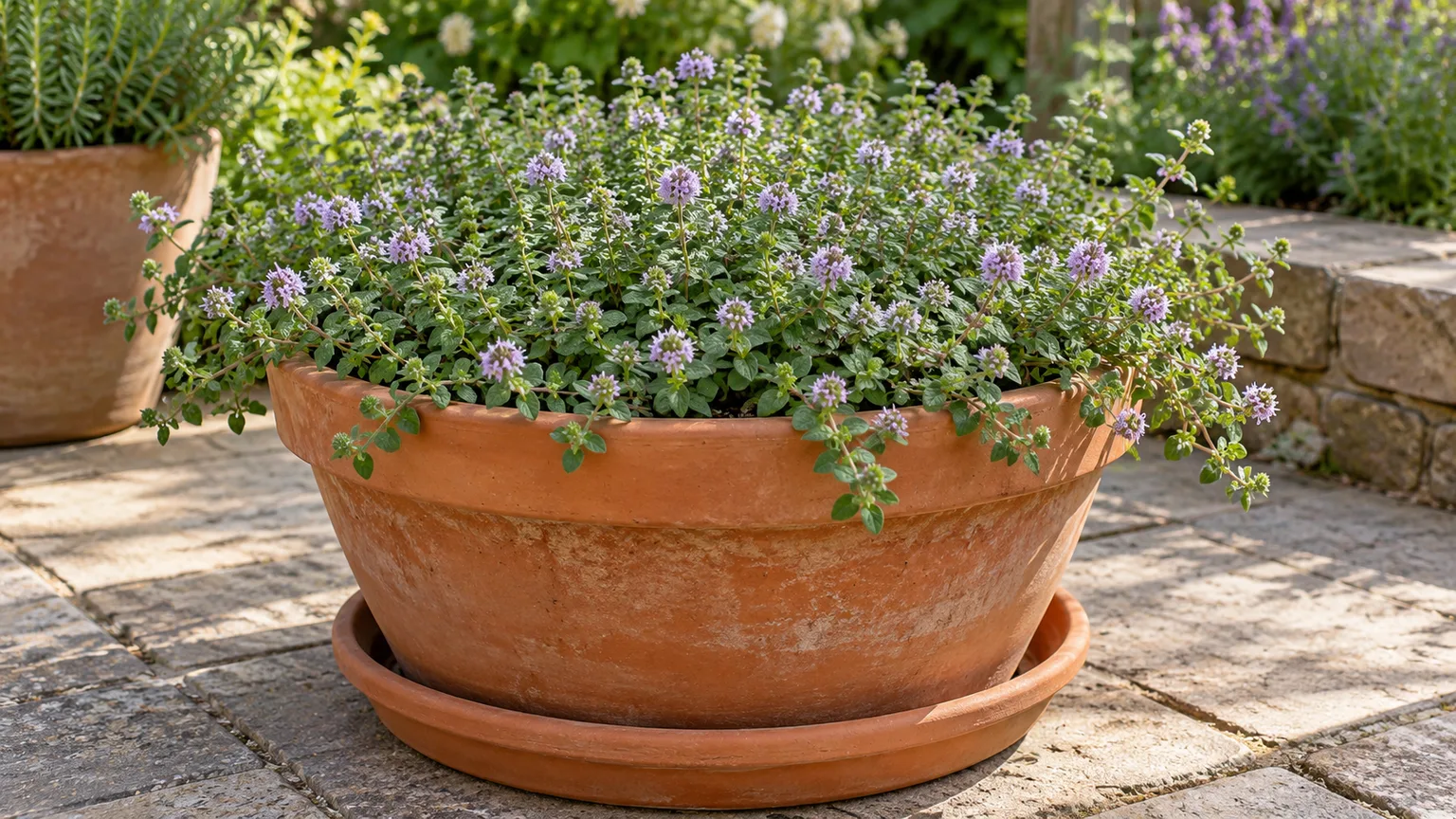
A Pot Is the Most Reliable Home-Garden Choice
Choose a broad pot with several drainage holes and enough room for the creeping stems to drape without touching garden soil. Set it on paving, a balcony, or another hard surface, not directly on a damp bed; raise it on pot feet if the drainage holes would otherwise rest against soil. A saucer can catch runoff, but empty it rather than leaving the roots submerged.
Check the underside and rim during the growing season. Pull back any stem that reaches a neighboring pot or bed, and inspect the drainage holes for roots entering the ground below. A pot slows and localizes spread; it is not a sealed barrier if stems can touch soil or roots can grow through the bottom.
In hot weather, the pot can dry faster than a garden bed, while an unglazed clay pot usually loses moisture more quickly than glazed ceramic or plastic. Use the material that fits your climate and watering habits, then let the soil—not the pot label—tell you when to water. If you need to leave for several days during a heat wave, move the container to bright partial shade or arrange someone to check its moisture.
If You Plant in a Bed, Check Local Risk First
A garden bed is an option only where local rules allow the plant and where you are prepared to watch its perimeter. Avoid wetlands, stream banks, pasture edges, drainage channels, and any place where floodwater, soil movement, or mowing can carry rooted pieces into natural areas. A shallow landscape edging is not dependable containment for a plant that can root from stems lying on the surface.
If local authorities list pennyroyal as invasive or prohibited, do not plant it and do not share divisions. If it is permitted and you still choose a bed, use a dedicated, inspectable area with a hard boundary, keep stems clipped away from soil beyond that boundary, and check after wet weather when runners can root quickly. The Invasive Plant Atlas cautions that its county and state map is incomplete, so the absence of a record is not proof that planting is safe in your area. Invasive Plant Atlas of the United States
If an established patch has escaped, start with the rooted stems at the edge rather than mowing over the canopy. Loosen the soil, lift rooted nodes and connected runners carefully, bag plant pieces that could re-root, and return to the area to pull new shoots; one cleanup rarely removes every fragment. For a large patch near water or a conservation area, ask a local extension service or land manager about a site-specific control plan before using any herbicide.
Plant or Transplant After Frost Risk Passes
Plant a nursery start in spring once hard frost has passed, or at a time when the soil is workable and mild weather gives the roots time to settle. Water the nursery pot first, slide the rootball out without tearing the stems, and set it at the same depth it was growing; burying the crown deeply is unnecessary. Backfill, press the mix lightly around the roots, and water until excess drains from the pot.
Give the plant room inside its container, not a long runway into the garden. One small start can fill a broad pot as it sends out runners, while multiple plants planted close together in the ground can merge into a dense patch before you have learned how fast your local conditions support growth. Keep the plant label with the pot so the species and safety instructions stay visible.
For a new planting, watch the rootball over the next few weeks. Water when the upper mix begins to lose its damp feel, but do not keep pouring water just because the top surface looks lighter; a finger check a little below the surface gives a better indication. New growth at the stem tips is a more useful establishment signal than an exact number of days.
Water by Checking the Root Zone
Keep young transplants evenly moist while they establish. Once the plant is growing, check the upper inch of soil: if it is still cool and damp, wait; if it is beginning to dry, water thoroughly and let the pot drain. In a garden bed, rain and soil type change the interval, so a fixed “every day” or “every week” rule can either leave the plant thirsty or keep its roots unnecessarily wet.
Containers need closer attention during hot, windy spells because the small soil volume loses moisture quickly. Water at the soil line and avoid leaving runoff in a saucer overnight. A plant that wilts in a pot on a hot afternoon may be short of water, but confirm the mix is dry before watering; a wet pot with drooping stems suggests the roots may be short of oxygen or damaged rather than thirsty.
Pennyroyal likes moisture, but “moist” does not mean keeping every pot saturated. If the soil smells sour, stays heavy for days, or the lower stems darken while the mix is wet, pause watering and check whether drainage holes are blocked. Move the pot out of a standing-water tray and replace compacted mix if it no longer drains.
Feed Lightly and Prune the Edges
Pennyroyal does not need frequent feeding. If it is growing in a container and the foliage becomes pale or growth stalls despite proper light and watering, refresh part of the potting mix or use a balanced, label-directed fertilizer once during active growth; do not feed a plant that is already spreading aggressively. A thin layer of compost around an in-ground plant is usually enough, and excessive feeding can favor leafy growth over flowers. Gardening Channel
Pruning is primarily a containment job. Every week or two during warm, wet growth, follow the stems to their tips and check where nodes are touching soil; lift or cut any runner that crosses the pot rim, reaches a neighboring planter, or roots outside the intended patch. The wetter the season, the more often you should inspect, because a node sitting on moist ground can settle in before the next monthly tidy-up.
After the summer flowers fade, cut back untidy stems to keep the plant compact, as the RHS recommends. Wear gloves, collect the cut material promptly, and do not use it as tea, seasoning, potpourri, pet bedding, or a home insect treatment. If you do not want seedlings, remove flower stems before seed matures, but remember that controlling seed does not stop the plant’s main route of spread: its creeping rooted stems.
Propagate Only When You Want Another Plant
Pennyroyal is easy to multiply, which is a benefit only if you have a safe destination for another pot. A rooted stem can become a new plant with little effort, so do not share cuttings casually or move rooted soil into a yard where pennyroyal is not wanted. If you are removing an escape, do not treat the removed pieces as free starts.
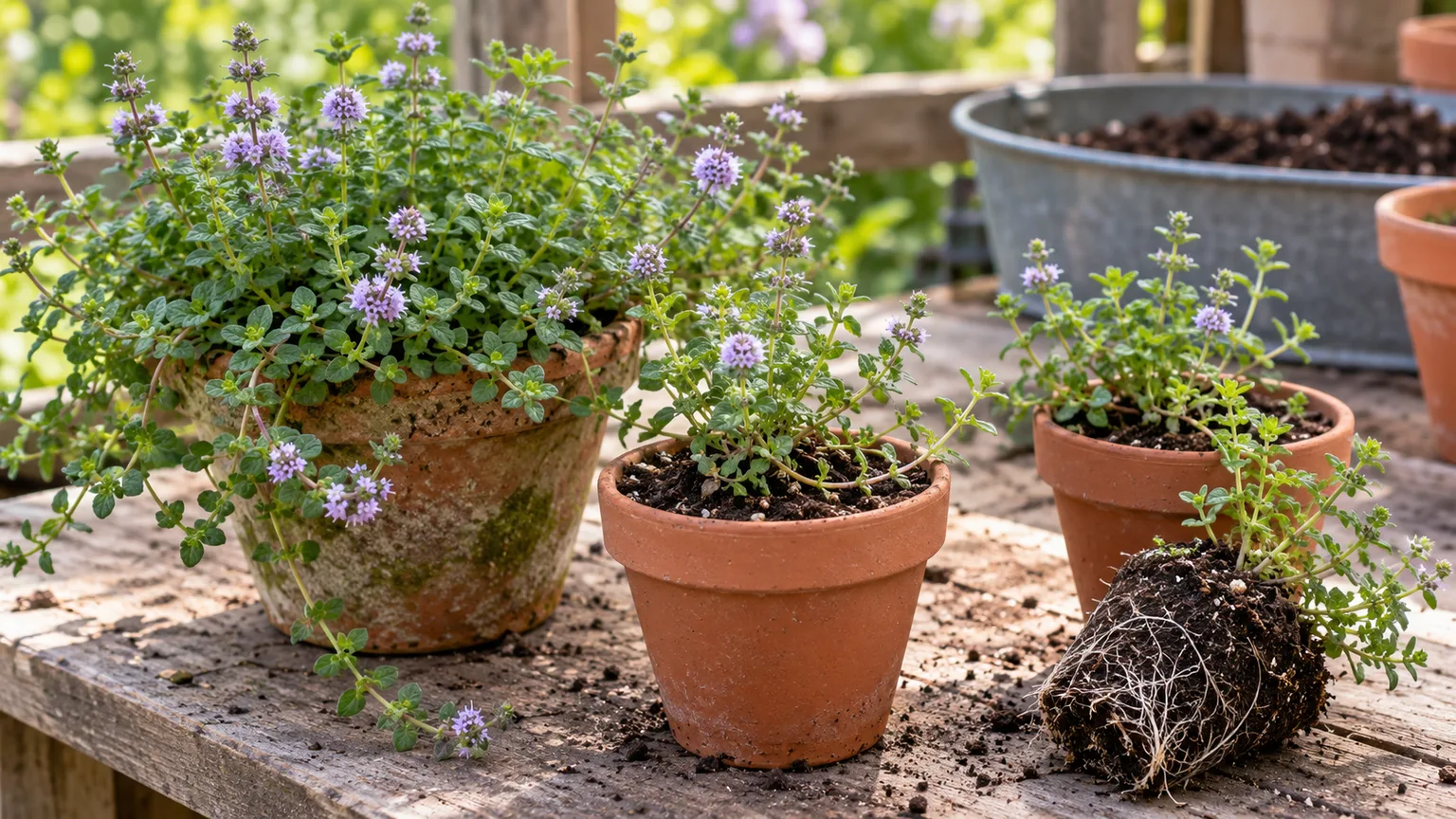
Divide Rooted Stems in Spring or Fall
Division is the most reliable way to make a new plant. In spring or fall, water the parent a few hours beforehand, lift a small rooted section from the edge with a clean trowel, and separate it so the piece has both roots and live shoots. Replant it immediately at the same depth in a pot with drainage, firm the mix gently, and keep it evenly moist while it settles; the RHS lists spring or autumn division as a propagation method. RHS Plant Profile
Use a small division rather than tearing up a large part of the colony. If the parent plant is already outside its container, remove every loose stem fragment from the work area and do not carry the soil to another bed. Label the new pot clearly, keep it out of reach of children and pets, and give it away only if local rules permit and the recipient understands the plant’s spread and safety limits.
Start Seed on the Soil Surface
Pennyroyal seed needs light to germinate, so press it onto the surface of a moist seed-starting mix rather than burying it. Keep the surface damp with gentle watering or misting, provide bright light, and maintain mild indoor temperatures; Gardening Channel gives a germination window of roughly one to three weeks under suitable conditions. Seedlings are small, so keep the tray where it will not be disturbed and transplant only after they have several true leaves and outdoor frost risk has passed. Gardening Channel
Seed is slower and less predictable than dividing a rooted edge, and it creates extra plants you then need to contain. If your only goal is to maintain one ornamental pot, there is no need to collect seed or propagate it. Buy one correctly labeled start, grow it in isolation, and remove unwanted volunteers as soon as you can identify them.
Overwinter Pots and In-Ground Plants Differently
Pennyroyal is sold as a perennial, but published North American hardiness ranges differ at the colder edge, and a pot exposes roots to colder air than the same plant in the ground. Treat the nursery’s local guidance as a starting point rather than a guarantee, especially in a windy site or where a container can freeze solid. In a cold-winter region, move the pot against a sheltered wall or into an unheated protected space after the plant dies back; do not bring it into a warm room simply to keep it actively growing.
Reduce watering while growth is dormant, but do not let the rootball become bone dry for a long stretch. Make sure the pot drains after winter rain and is not sitting in a saucer full of water. In a mild climate, leave the container outside in a sheltered place and remove dead stems when new growth resumes.
In-ground plants within their local growing range usually need less winter care than pots. Mark the boundary before stems disappear so you can find the planting in spring, and inspect the edge for runners before growth accelerates. If the species is discouraged or listed locally, winter dieback is not a reason to leave it in place; follow local removal guidance while the patch is accessible.
Diagnose Mildew, Rust, and Chewed Leaves
Pennyroyal is not immune to pests simply because its foliage is aromatic. The RHS lists caterpillars and leafhoppers among possible pests, and powdery mildew and mint rust among possible diseases. Check the undersides of leaves and the newest stems before treating anything; a few chewed leaves are different from a spreading infestation, and curling or pale growth can also come from heat, inconsistent water, or crowded roots. RHS Plant Profile
White powdery patches, rusty orange-brown marks, or leaves collapsing in a densely packed center often point to poor airflow and persistent dampness. Thin the mat, water the soil rather than repeatedly wetting foliage, and remove affected leaves into household waste. If damage continues, identify the pest or disease before selecting a control; use any pesticide only if its label allows that specific site and plant, and never apply a product to clippings that might be mistaken for edible mint.
If the whole plant wilts, check soil moisture before diagnosing disease. Dry soil and a hot container call for a thorough watering and a less exposed position, while soggy soil and a soft, dark crown call for better drainage and less frequent watering. Pennyroyal’s vigorous growth can hide a pot-bound root mass, so tip the plant out only when drainage has failed or the roots have filled the container—not as a routine annual chore.
Treat Pest-Repellent Claims Conservatively
The plant’s strong minty smell and its history as a folk repellent are not proof that a live planting will protect vegetables, pets, or people from mosquitoes or fleas. A garden plant does not provide measured coverage, and a scent-based method is especially unreliable when wind, rain, and the pest’s behavior change. The responsible reason to grow pennyroyal is ornamental interest in a contained site, not dependable pest control.
Do not crush leaves into a skin rub, brew them into a spray, put cut stems in pet bedding, or distill your own oil. Poison Control specifically warns against using pennyroyal oil as either medicine or insect repellent because of its toxicity. If you need insect control, identify the pest and use a method intended for that pest and setting; avoid exposing children, pets, or beneficial insects to an untested botanical mixture. Poison Control
Conclusion
Grow European pennyroyal only if you can give it a contained place and keep its foliage away from anyone who might eat it. A broad pot on hard paving, evenly moist but freely draining mix, and regular checks for rooted runners are the simplest way to enjoy its low mat and summer flowers without letting it become a garden-wide chore. Treat the plant as ornamental, never as food or a homemade repellent, and check local invasive guidance before planting it outdoors.



