How to Grow and Care for N’Joy Pothos
Keep N’Joy pothos healthy with bright indirect light, a reliable watering check, airy soil, easy propagation, and clear fixes for common leaf problems.
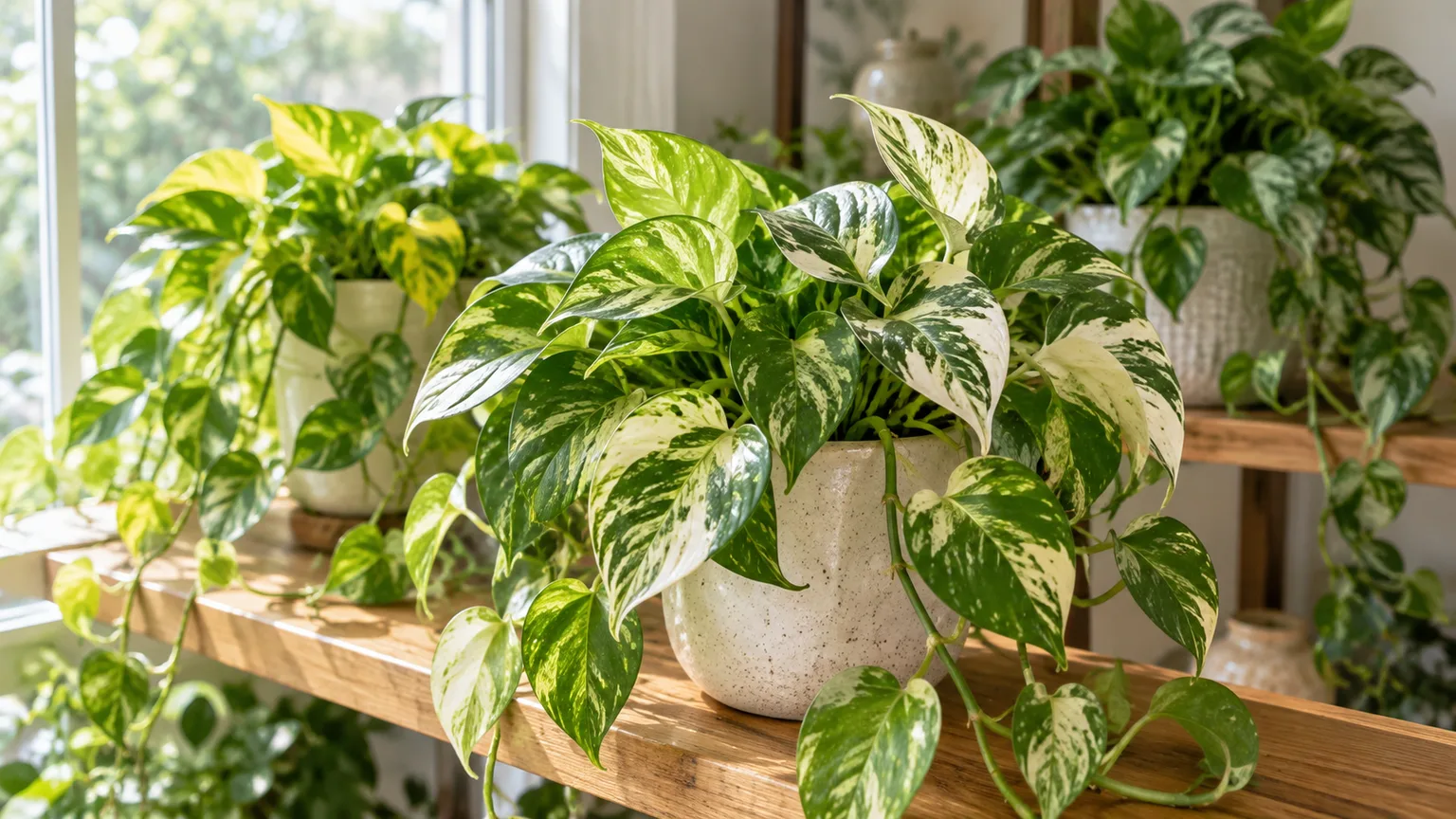
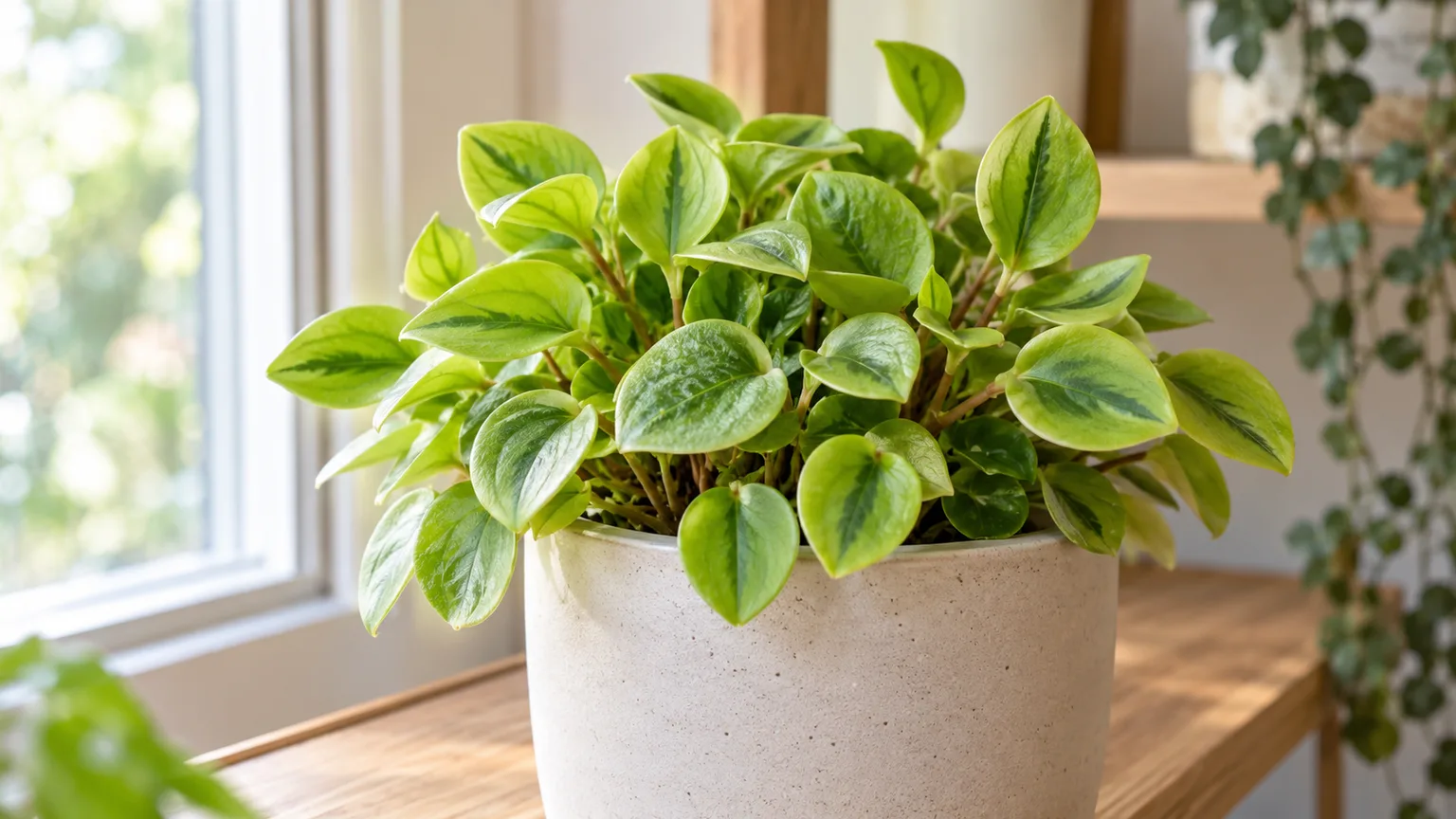
N’Joy pothos is a compact, highly variegated cultivar of pothos with green leaves broken up by crisp cream or white patches. It is forgiving about ordinary indoor conditions, but it grows more slowly than many all-green pothos and needs enough light to keep new leaves strongly patterned. The easiest routine is to place it near bright filtered light, let the potting mix partly dry, then water through and empty the saucer.
This guide is for the plant sold as N’Joy pothos, usually labeled Epipremnum aureum ‘N’Joy’. It covers the care decisions that make the biggest difference, including how to distinguish it from similar cultivars, how to propagate a vine with the right kind of cutting, and how to keep this toxic plant out of reach of pets.
N’Joy Pothos at a Glance
| Care question | Practical starting point |
|---|---|
| Light | Bright, indirect light; protect from harsh midday sun |
| Water | Water when the upper 1–2 inches of mix feel dry, then drain fully |
| Potting mix | Airy houseplant mix with added perlite if the mix stays dense |
| Temperature | Comfortable indoor warmth; avoid cold drafts and sudden chills |
| Humidity | Normal home humidity is usually workable; extra humidity is optional |
| Growth habit | Slow to moderate, trailing or climbing; pace varies with light and season |
| Fertilizer | A balanced houseplant fertilizer at a modest rate during active growth |
| Safety | Toxic if chewed; keep away from cats, dogs, and young children |
These are starting points rather than a calendar. A small nursery pot in a sunny, warm room can dry much faster than a large planter in winter, and an N’Joy in a dim corner can remain wet long after the surface looks dry. Check the plant and its mix before you change the routine.
The RHS lists N’Joy as a tender evergreen climber with green-and-cream variegated leaves and notes that shade can reduce the variegation. Indoors, most plants are sold and maintained in their juvenile trailing form, so long vines and relatively small leaves are normal. (RHS N’Joy pothos profile)
How to Tell N’Joy Apart From Other Variegated Pothos
N’Joy’s pattern is usually clean blocks of green and cream-white. Look closely at the pale sections: N’Joy generally lacks the tiny green flecks within its white patches that are common on Pearls and Jade. Marble Queen typically has a more finely marbled, mixed pattern across the leaf, while some plants sold as Glacier have smaller, rounder leaves and more silvery areas. Labels and leaf shapes vary, so use several leaves rather than one new or damaged leaf to identify a plant.
These cultivars have broadly similar indoor needs, but their leaves and growth pace are not identical. Ohio Tropics notes that N’Joy is slower-growing than golden pothos and distinguishes it from Pearls and Jade by the absence of green splashes in the pale areas. That slower pace is a cultivar trait, not proof that the plant needs stronger fertilizer or more water. (Ohio Tropics, “Pothos NJoy: 5 Practical Care Tips”)
Check the botanical label when buying; common names are not always used consistently. The RHS profile lists ‘N’Joy’ and ‘Hansoti12’ among the plant’s names, while the plant is commonly sold as Epipremnum aureum ‘N’Joy’. A nursery’s exact naming may differ, but the foliage should have the compact, green-and-cream look you want.
Give the Leaves Bright, Filtered Light
Put N’Joy close enough to a bright window to support steady growth, but not where strong direct afternoon sun hits the leaves for hours. An east-facing window often provides gentle morning sun; a south- or west-facing window can work if a sheer curtain or a little distance filters the strongest rays. Since window direction, glass, trees, and latitude change the actual light, watch the leaves rather than treating a fixed number of feet as universal.
Light affects both growth and pattern. In deep shade, the plant may produce smaller leaves, longer gaps between them, and less distinct variegation; new growth can look greener. The RHS says shade reduces the contrast in N’Joy’s leaves, and Wisconsin Extension notes that low light can reduce variegation in pothos generally. Move it gradually toward brighter indirect light and judge the new leaves over several weeks; older leaves will not recolor. (RHS N’Joy pothos profile; University of Wisconsin–Madison Extension, “Pothos”)
A little soft direct morning sun is different from hot, concentrated afternoon rays. If pale patches develop dry tan or brown areas on the window-facing side, pull the pot back or filter the light. If the plant is healthy but simply slow, compare the newest growth and the distance from the window before adding fertilizer.
Water After the Upper Layer of Mix Dries
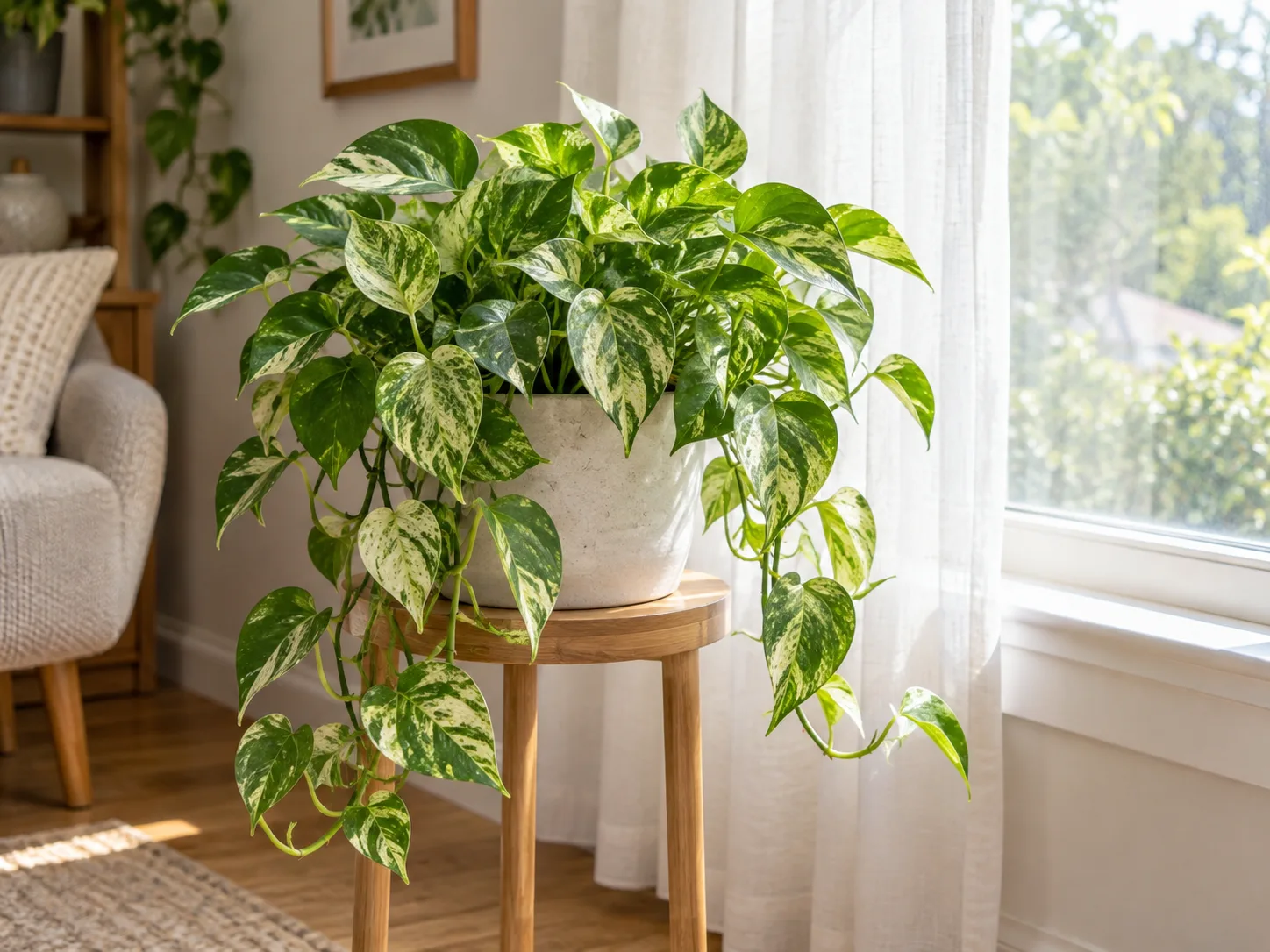
Water by checking the mix, not by watering every Saturday. Push a finger about an inch into the pot; when that upper layer feels dry, water slowly until excess runs through the drainage holes. Let the pot drain, then empty the cachepot or saucer so the roots are not left sitting in water.
This check works better than reading the surface alone. A crusty or dry-looking top can sit above a wet lower root zone, especially in a large pot or a dense mix; watering again because the surface looks pale can keep roots oxygen-starved. If the pot still feels heavy and the mix is cool or damp below the surface, wait and check again in a few days.
In warm bright months, the pot may dry sooner as the plant grows. In winter or a cool room, water use slows, so the interval stretches. Wisconsin Extension advises letting pothos dry slightly and watering when the soil surface is dry, while Ohio Tropics cautions against letting the mix become completely dry or leaving the plant in standing water. (University of Wisconsin–Madison Extension, “Pothos”; Ohio Tropics, “Pothos NJoy”)
If water runs straight down the sides and out without wetting the center, the mix may have become hydrophobic or the root ball may be packed. Set the nursery pot in a shallow bowl of water for 10–15 minutes, then drain it thoroughly. Do not leave it soaking for hours; the goal is to re-wet a dry root ball, not to keep the roots submerged.
Use an Airy Mix and a Pot With Drainage
Choose a standard indoor potting mix that stays lightly moist but does not compact into a dense, wet mass. If the mix holds water for many days, blend in perlite to open it up; Ohio Tropics suggests three parts general potting mix to one part perlite as a practical starting formula. You can use a chunkier commercial mix if it suits your watering habits, but N’Joy does not need an elaborate recipe to grow indoors. (Ohio Tropics, “Pothos NJoy”)
The pot must have drainage holes. A decorative cachepot is fine as an outer cover, but remove the nursery pot to water or pour out every bit of collected runoff before returning it. A drainage hole does not compensate for soil that stays waterlogged, so consider the mix, pot size, light, and watering pattern together.
A small step up from the current pot is safer than moving into a much larger container. Extra soil around a small root system dries slowly; the plant may remain wet for too long even if you have not increased the number of waterings. Keep the root ball at its existing depth and avoid burying the leaf stems.
Keep It Warm Without Chasing Tropical Humidity
Normal indoor temperatures suit N’Joy, especially when the room stays consistently warm. Avoid cold window glass, exterior-door drafts, heating vents, and sudden temperature swings. Ohio Tropics recommends keeping the plant at about 65°F (18°C) or warmer for active growth; if your home is cooler, expect growth to slow and water less often rather than trying to compensate with fertilizer. (Ohio Tropics, “Pothos NJoy”)
Humidity recommendations can sound more demanding than they need to be. N’Joy may appreciate more humid air, but a humidifier is not a basic requirement in a comfortable home if the leaves are healthy and new growth is opening normally. If tips keep drying while the mix is properly watered and the plant is away from direct heat, modestly raising room humidity can help; group plants with some airflow rather than misting the leaves repeatedly.
Wipe dust from the leaves with a soft damp cloth every few weeks. Clean leaves are easier to inspect for pests and can use available light more effectively. Support the leaf from underneath while wiping so you do not crease the petiole or tear a delicate pale section.
Feed Lightly While It Is Growing
N’Joy is not a heavy feeder, and a slow pace does not mean you should increase fertilizer. During spring and summer, use a balanced liquid houseplant fertilizer at the label’s conservative rate, or dilute it if the product’s standard dose is intended for faster-growing plants. The RHS recommends balanced liquid feeding during the growing season for N’Joy; Wisconsin Extension gives a less frequent schedule for pothos generally, so follow the product directions and the plant’s response rather than stacking both schedules. (RHS N’Joy pothos profile; University of Wisconsin–Madison Extension, “Pothos”)
Pause feeding in winter when growth has slowed, after repotting into fresh mix, or while the plant is recovering from root trouble. Fertilizer cannot correct low light or waterlogged roots. If a white crust forms on the pot rim or mix, stop feeding and flush the soil with plain water through the drain holes.
Prune and Train Vines for a Fuller Plant
Long vines are normal; prune only when you want to control the shape, remove damaged growth, or make cuttings. Use clean scissors and cut just above a healthy node, the joint where a leaf stem meets the vine. That node can produce a new shoot, while the trimmed section can become a cutting if it includes a node of its own.
One long stem will continue to trail as a single vine, so pruning alone may not fill a sparse pot immediately. To make the container look fuller, root several short cuttings and plant them back into the same pot once established. This creates multiple growing points around the rim and is more reliable than expecting an old bare section of vine to sprout leaves along every inch.
N’Joy can trail from a shelf or hanging planter, or climb a moss pole or other support. A support changes the display and can encourage climbing growth, but it is optional; you do not need a pole to keep the plant healthy. Secure vines loosely so that ties do not pinch the stems, and keep the support stable enough that it will not pull over the pot.
Propagate From Stem Nodes
A cutting needs a node—the small joint on the stem where a leaf attaches and aerial roots may emerge. A leaf with its petiole but no stem node may stay green in water, but it will not develop into a new vine. Choose a healthy stem with at least one firm node and one leaf; beginners may find a two-node cutting easier to handle.
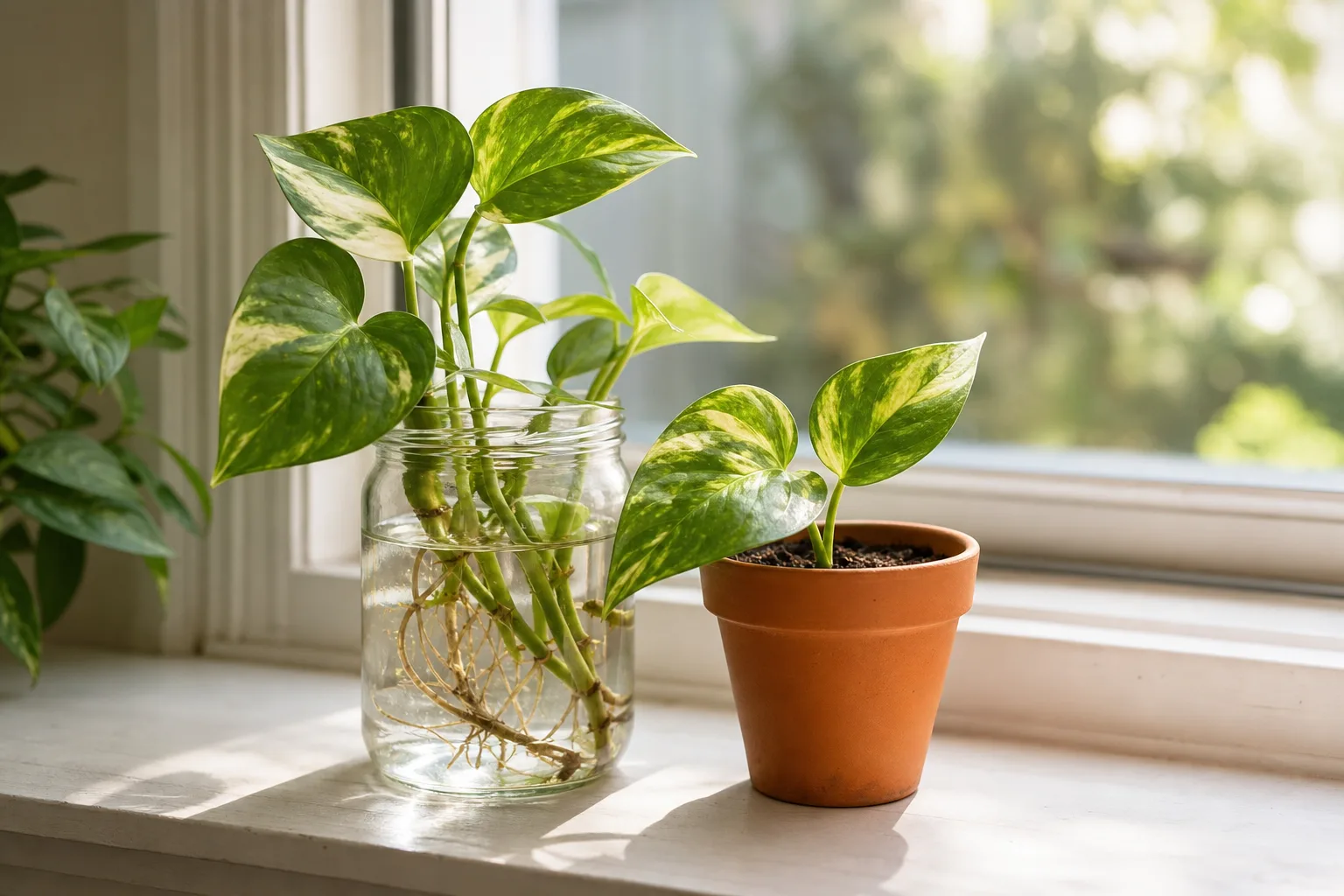
Use clean snips to cut below the node, then remove any leaf that would sit underwater or under the potting mix. For a water cutting, place the node in clean water and keep the leaf above the surface; set the glass in bright indirect light and refresh the water when it clouds or drops. When several roots are about 1–2 inches long, pot the cutting into a small container of airy mix and keep the soil lightly moist while it adapts.
Water-rooted cuttings can pause after transplanting because roots formed in water must adjust to a less uniform soil environment. That pause is not necessarily failure: keep the mix just lightly moist, maintain warmth and indirect light, and avoid tugging the cutting every day. Ohio Tropics describes using a node-and-leaf cutting for N’Joy, and Epic Gardening’s propagation guide explains the node requirement and compares water and soil rooting. (Ohio Tropics, “Pothos NJoy”; Epic Gardening, “How to Propagate Pothos Plants”)
Water or Soil: Which Rooting Method Fits?
Water rooting is easy to monitor because you can see whether roots are forming and whether the node remains submerged. It is a good choice if you want to share cuttings or watch the process, but plan to transfer them to mix once the roots are established. Very long, tangled water roots can be harder to settle into a small pot without breaking.
Soil rooting avoids a water-to-soil transition, but the cutting and mix need closer attention because you cannot see the roots. Set the node in moist, airy propagation mix, keep the leaf above the surface, and let excess water drain. If it is difficult to keep a small cutting from drying out, a loose clear cover can help temporarily; vent it and remove it once new growth starts so the stem is not trapped in stale, wet air.
Either method can work. Pick water if visibility and ease matter most; choose soil if you want the cutting to establish in its final medium and can maintain even, light moisture. Do not take cuttings from a plant with active rot or pests, and do not expect a tiny leafless stem fragment to behave as quickly as a leafy cutting.
Repot When Roots Have Filled the Pot
Repot when you see roots circling the root ball, emerging from the drainage holes, or leaving so little mix that the plant dries unusually fast after a thorough watering. A root appearing from one hole by itself is not an emergency. N’Joy grows slowly enough that a fixed annual repot is often unnecessary; inspect the roots before deciding.
Move it into a pot only one size larger, keeping the root ball intact unless roots are dead or tightly circling. Use fresh airy mix and a container with drainage, then water once to settle the soil and drain the excess. Spring or early summer is convenient because the plant is actively growing, but a badly compacted or waterlogged root ball should be addressed when you notice it.
If the plant is growing well and the roots have room, refresh the top layer of mix rather than repotting. A larger pot will not make N’Joy grow faster; it can instead leave more wet soil around a small root system. Do not repot solely because the vines are long.
Troubleshoot Yellow Leaves, Brown Patches, and Slow Growth
A leaf color change is a clue, not a diagnosis. Look at how many leaves are affected, where they sit on the vine, how wet the root ball feels, and whether the change appeared after moving the plant. Make one adjustment at a time and watch the next leaves; existing scorched or yellow leaves usually will not turn green again.
Yellow Leaves Usually Point to a Root-Zone or Light Issue
One older leaf turning yellow occasionally can be normal. If several leaves yellow at once, check moisture first: a persistently wet mix, a pot with no drainage, or a sour smell points toward root stress. Let the mix dry appropriately and inspect the roots if the plant continues to decline; healthy roots are firm, while rotting roots are soft and dark.
If the root ball is dry and pulling away from the pot, water it thoroughly and adjust the interval so it does not repeatedly become bone-dry. When the mix is neither very wet nor very dry, assess light and temperature. A colder position or a deep-shade corner can slow growth and contribute to leaf loss, so move the plant to brighter filtered light and warmth before adding fertilizer. Wisconsin Extension notes that yellowing, brown tips, and root rot can follow watering problems in pothos, which is why checking the root zone is more useful than reacting to leaf color alone. (University of Wisconsin–Madison Extension, “Pothos”)
Brown Tips or Patches Need Different Checks
Crispy brown tips or edges can follow a very dry spell, low humidity, salt buildup, or root damage. Check whether the whole root ball dries too far between waterings, whether fertilizer has been used heavily, and whether the pot drains. If you see pale tan patches only on leaves facing a sunny window, sun scorch is more likely; move the plant back from direct rays and watch new leaves for improvement.
A few damaged sections can be trimmed for appearance, but do not remove every leaf with a small blemish. If the damage spreads while the plant is in damp soil, look at the roots and stem base before increasing humidity or watering. On variegated leaves, the white sections can be more prone to visible scorch, so avoid using an exposed windowsill as a test location.
Slow Growth Is Often Normal—but Not Always
N’Joy usually grows more slowly than vigorous golden pothos, and growth can nearly pause in winter. Compare it with its own recent growth instead of comparing it with another cultivar. If spring and summer pass with no new leaves, move it closer to bright indirect light, confirm that roots are healthy, and check whether the pot stays wet for too long.
Long spaces between leaves and smaller new leaves often point to insufficient light. A single all-green shoot may be a reversion rather than a signal that the whole plant needs a fertilizer boost. If a reverted stem is disrupting the plant’s pattern, prune it back to a node on a stem that still has the variegation you want.
Check for Mealybugs, Scale, and Spider Mites
Inspect leaf undersides, petiole joints, and the stem where it meets the soil whenever you water. Mealybugs look like small white cottony clusters; scale appears as firm brown bumps; spider mites may leave fine stippling and delicate webbing, especially in hot, dry conditions. Wisconsin Extension identifies mealybugs, scale, and spider mites as pothos pests, and the RHS also lists these pests for N’Joy. (University of Wisconsin–Madison Extension, “Pothos”; RHS N’Joy pothos profile)
Isolate an infested plant before the insects spread to nearby houseplants. Wipe or rinse off a small infestation, then inspect the plant again over the following weeks; sticky residue, fresh bumps, or returning webs mean the first pass missed some pests. If you use an insecticidal soap, follow its label and test a small area first, because pale variegated leaves can show damage more clearly than solid green leaves.
Keep N’Joy Pothos Away From Pets and Children
Treat N’Joy as toxic if chewed. The ASPCA lists golden pothos, Epipremnum aureum, as toxic to cats and dogs because it contains insoluble calcium oxalates; the listed signs include oral irritation, burning of the mouth and lips, drooling, vomiting, and difficulty swallowing. Since N’Joy is a cultivar of the same species, place it where pets cannot reach or nibble its trailing vines. (ASPCA Animal Poison Control, “Golden Pothos”)
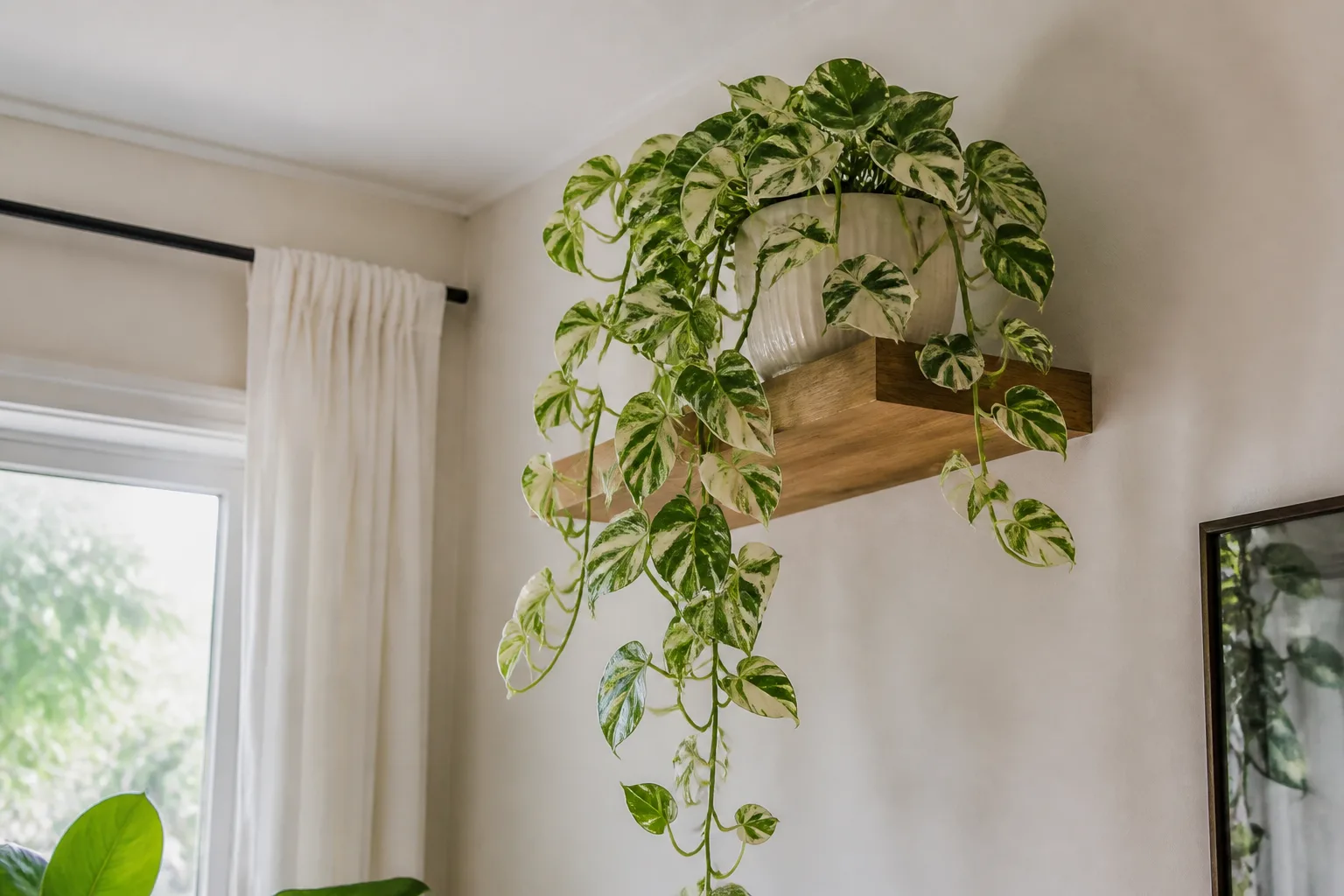
A high shelf is not automatically safe for a cat that climbs, and a hanging basket is not safe if the vines dangle within reach. Use a closed room, a stable high location that your pet cannot access, or choose a non-toxic plant if you cannot prevent chewing. Keep pruned stems and fallen leaves out of reach too.
The sap may irritate skin or eyes, so wash your hands after pruning and avoid touching your face while handling broken stems. If a pet may have eaten any part of the plant, contact a veterinarian or animal poison-control service promptly and keep the plant name available. Do not wait for symptoms to worsen before seeking case-specific advice.
Conclusion
N’Joy pothos is easy to maintain when you give its variegated leaves bright filtered light, water only after the upper mix has partly dried, and keep the roots in a draining pot. Its slower growth is often normal, so avoid trying to force it with extra fertilizer or an oversized container. Use pruning and node-bearing cuttings to shape a fuller plant, inspect leaves and roots before troubleshooting, and keep the vines beyond the reach of children and pets.