Miltonia Orchid Care: Light, Water, Humidity, and Potting
Miltonia spp.
Learn how true Miltonia differs from Miltoniopsis and how to balance bright filtered light, warmth, humidity, watering, and an airy orchid mix.
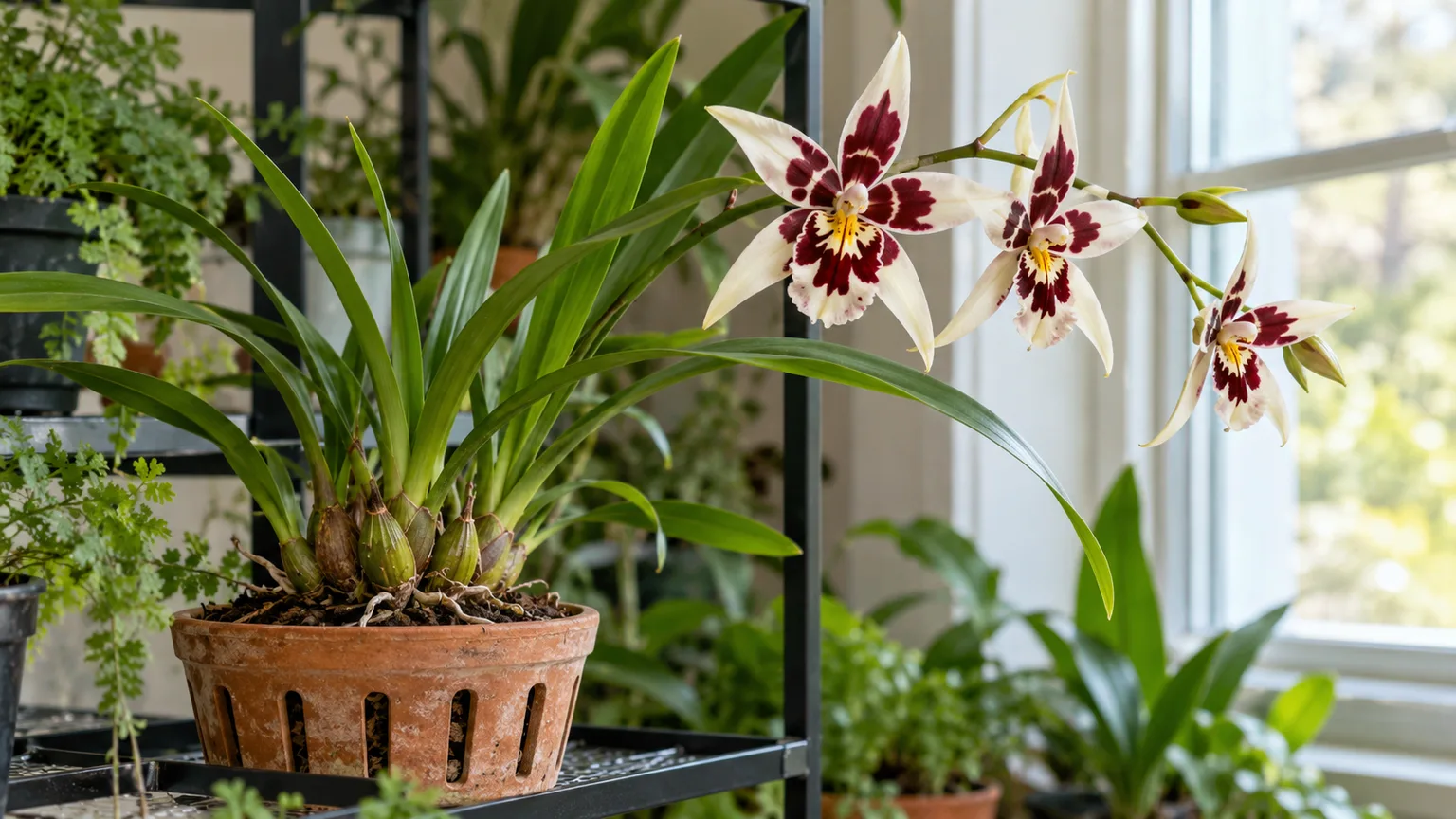
Miltonia Orchid Care Guide: Warm-Growing Miltonia Basics
Start with wateringThe most common care mistake for MiltoniaWatering guide →Miltonia care essentials
Light
Bright filtered light, around 2,000 foot-candles for true Miltonia
Water
Water thoroughly when the fine orchid medium is approaching dryness, then let excess water drain completely. True Miltonia needs regular moisture and high humidity, but its roots should not stay waterlogged. Do not follow a rigid weekly schedule: check how quickly the pot dries in your growing conditions.
Soil
Use a fine-grade epiphytic orchid mix, such as small bark with perlite and charcoal, with a little chopped sphagnum if the mix dries too quickly. Do not plant Miltonia in ordinary potting soil.
Humidity
Temperature
Fertilizer
During active growth, use a balanced orchid fertilizer at half strength about every two weeks. Reduce feeding in dim, overcast, or cool periods and flush the medium with plain water every fourth or fifth watering to limit salt buildup.
About Miltonia
Miltonia is native to Tropical South America, with most true Miltonia species native to Brazil; individual species have narrower ranges., typically reaches Varies by species and hybrid. Many cultivated plants are compact, while a Miltonia cuneata flower spike can bring the plant to about 60 cm tall. indoors, with moderate under warm, humid conditions; new pseudobulbs and flower spikes develop from the creeping rhizome. growth. Miltonia has a sympodial epiphytic orchid with pseudobulbs and a creeping rhizome growth habit and part of the Orchidaceae family. It is also known as Miltonia orchid and Brazilian Miltonia.
| Detail | Information |
|---|---|
| Also known as | Miltonia orchid, Brazilian Miltonia |
| Native region | Tropical South America, with most true Miltonia species native to Brazil; individual species have narrower ranges. |
| Mature size | Varies by species and hybrid. Many cultivated plants are compact, while a Miltonia cuneata flower spike can bring the plant to about 60 cm tall. |
| Growth rate | Moderate under warm, humid conditions; new pseudobulbs and flower spikes develop from the creeping rhizome. |
| Growth habit | Sympodial Epiphytic Orchid With Pseudobulbs And A Creeping Rhizome |
| Scientific name | Miltonia spp. |
| Family | Orchidaceae |
How to care for Miltonia?
How much light does Miltonia need?
Bright filtered light, around 2,000 foot-candles for true Miltonia. Partial shade. Bright indoor light behind a sheer curtain
- Bright filtered light, around 2,000 foot-candles for true Miltonia - Bright filtered light, around 2,000 foot-candles for true Miltonia.
- Partial shade - Partial shade.
- Bright indoor light behind a sheer curtain - Bright indoor light behind a sheer curtain.
When should you water Miltonia?
Water thoroughly when the fine orchid medium is approaching dryness, then let excess water drain completely. True Miltonia needs regular moisture and high humidity, but its roots should not stay waterlogged. Do not follow a rigid weekly schedule: check how quickly the pot dries in your growing conditions.
- Check the medium below the surface and lift the pot to gauge its weight. Water when the bark is nearly dry - Water thoroughly when the fine orchid medium is approaching dryness, then let excess water drain completely.
- then drain the pot fully. Pleated new leaves or shriveling pseudobulbs can indicate water or humidity stress - Water thoroughly when the fine orchid medium is approaching dryness, then let excess water drain completely.
- inspect the roots before adding more water - True Miltonia needs regular moisture and high humidity, but its roots should not stay waterlogged.
- Drain excess water - Water thoroughly when the fine orchid medium is approaching dryness, then let excess water drain completely.
What soil works best for Miltonia?
Use a fine-grade epiphytic orchid mix, such as small bark with perlite and charcoal, with a little chopped sphagnum if the mix dries too quickly. Do not plant Miltonia in ordinary potting soil.
- Fine orchid bark with perlite and charcoal for airflow and drainage. - Use a fine-grade epiphytic orchid mix, such as small bark with perlite and charcoal, with a little chopped sphagnum if the mix dries too quickly.
- Add a modest amount of chopped sphagnum if the root zone dries too fast. - Use a fine-grade epiphytic orchid mix, such as small bark with perlite and charcoal, with a little chopped sphagnum if the mix dries too quickly.
- Avoid dense garden soil and containers without drainage holes. - Do not plant Miltonia in ordinary potting soil.
Grower notes for Miltonia
Check the label for Miltonia or Miltoniopsis
True Miltonia are warm-growing orchids, mostly from Brazil. The cooler Andean orchids sold as “pansy orchids” are generally Miltoniopsis, a separate genus. Their temperature and moisture needs differ, so confirm the botanical name before following a care label.
Give it bright shade, not a sunny windowsill
The American Orchid Society recommends relatively shaded light while noting that true Miltonia needs more light than Miltoniopsis. A bright filtered window is a useful home starting point; keep direct midday sun off the thin leaves and adjust by watching new growth.
Keep the roots moist and airy
Miltonia comes from humid habitats and needs abundant water, but the medium must drain completely. Water thoroughly when the mix nears dryness, then let the pot drain. Flush with plain water regularly because these orchids are sensitive to salt buildup.
Warmth and humidity work together
The American Orchid Society says warmer-growing Miltonia can tolerate temperatures above 32°C only when humidity remains around 70–75% or higher, and gives 16°C as a minimum. In a dry home, avoid pushing the temperature high without also improving humidity and airflow.
Use a shallow, open orchid mix
Miltonia has fine roots and a creeping rhizome. A shallow pot, airy fine orchid mix, or mount gives roots room and prevents stale, compacted media. Repot after flowering as the next growth begins, or sooner if the mix has broken down.
Let the pseudobulbs guide seasonal changes
New pseudobulbs mark the growth cycle, but rest requirements vary among species and hybrids. Some Miltonia slow after a pseudobulb matures; reduce water only when growth has paused, and do not force the cool, dry routine used for another orchid group.
Is Miltonia safe for pets?
No genus-wide pet-safety classification for true Miltonia was verified. ASPCA lists one “Pansy Orchid” under the older name Miltonia roezlii alba, while current horticulture identifies pansy orchids with Miltoniopsis; that entry does not establish safety for all Miltonia. Keep pets from chewing it and ask a veterinarian about any ingestion.
The ASPCA Pansy Orchid entry is a single taxon under the older name Miltonia roezlii alba; NC State lists Miltoniopsis roezlii as the pansy orchid. Do not generalize that non-toxic listing to the true Miltonia genus. Species-level pet status remains unverified.
Watering Miltonia
For Miltonia, check the medium below the surface and lift the pot to gauge its weight. Water when the bark is nearly dry, then drain the pot fully. Pleated new leaves or shriveling pseudobulbs can indicate water or humidity stress; inspect the roots before adding more water. and water check the pot every few days in warm weather and water when the medium is nearly dry. Reduce frequency when growth slows or the room is cool, while avoiding a prolonged bone-dry mix. Water more often during warm active growth. After a new pseudobulb matures, some species need a short rest; ease back only if the plant has stopped growing, and follow its species or hybrid label rather than imposing a long dry dormancy on every Miltonia.
| Detail | Information |
|---|---|
| How often | Check the pot every few days in warm weather and water when the medium is nearly dry. Reduce frequency when growth slows or the room is cool, while avoiding a prolonged bone-dry mix. |
| How to check | Check the medium below the surface and lift the pot to gauge its weight. Water when the bark is nearly dry, then drain the pot fully. Pleated new leaves or shriveling pseudobulbs can indicate water or humidity stress; inspect the roots before adding more water. |
| Seasonal changes | Water more often during warm active growth. After a new pseudobulb matures, some species need a short rest; ease back only if the plant has stopped growing, and follow its species or hybrid label rather than imposing a long dry dormancy on every Miltonia. |
Signs of overwatering
- The mix stays wet for an extended period or smells stale.
- Roots become soft or dark instead of firm.
- The plant weakens while the pot remains heavy and wet.
Signs of underwatering
- New leaves develop accordion-like pleats.
- Pseudobulbs become unusually shriveled.
- The mix is dry through the root zone and the plant loses turgor.
Soil & potting for Miltonia
Use a mix of Fine orchid bark with perlite and charcoal for airflow and drainage., Add a modest amount of chopped sphagnum if the root zone dries too fast., Avoid dense garden soil and containers without drainage holes. for Miltonia. Keep the mix airy and freely draining while retaining some moisture. Choose a shallow pot with open drainage or mount the plant if you can maintain humidity and regular watering. Repot repot when the medium breaks down or the creeping rhizome reaches the pot edge, usually after flowering as new growth begins. The interval varies with the mix and growing conditions; avoid disturbing healthy roots without a reason., ideally in after flowering, when new growth is starting.
| Detail | Information |
|---|---|
| Recommended mix | Fine orchid bark with perlite and charcoal for airflow and drainage., Add a modest amount of chopped sphagnum if the root zone dries too fast., Avoid dense garden soil and containers without drainage holes. |
| Drainage | Keep the mix airy and freely draining while retaining some moisture. Choose a shallow pot with open drainage or mount the plant if you can maintain humidity and regular watering. |
| Repotting frequency | Repot when the medium breaks down or the creeping rhizome reaches the pot edge, usually after flowering as new growth begins. The interval varies with the mix and growing conditions; avoid disturbing healthy roots without a reason. |
| Best season to repot | After flowering, when new growth is starting |
Signs it needs repotting
- The mix has collapsed, stays wet too long, or smells stale.
- New growth has reached the edge of the shallow pot.
- The plant is unstable because its creeping rhizome has outgrown its mount.
Humidity & temperature for Miltonia
Fertilizer & pruning for Miltonia
Use during active growth, use a balanced orchid fertilizer at half strength about every two weeks. Reduce feeding in dim, overcast, or cool periods and flush the medium with plain water every fourth or fifth watering to limit salt buildup. for Miltonia.
| Detail | Information |
|---|---|
| Fertilizer type | During active growth, use a balanced orchid fertilizer at half strength about every two weeks. Reduce feeding in dim, overcast, or cool periods and flush the medium with plain water every fourth or fifth watering to limit salt buildup. |