Miltonia Orchid Care: Growing, Watering, and Blooming
Learn how Miltonia differs from Miltoniopsis, then set the right light, warmth, humidity, watering, potting mix, and repotting timing for healthy growth.
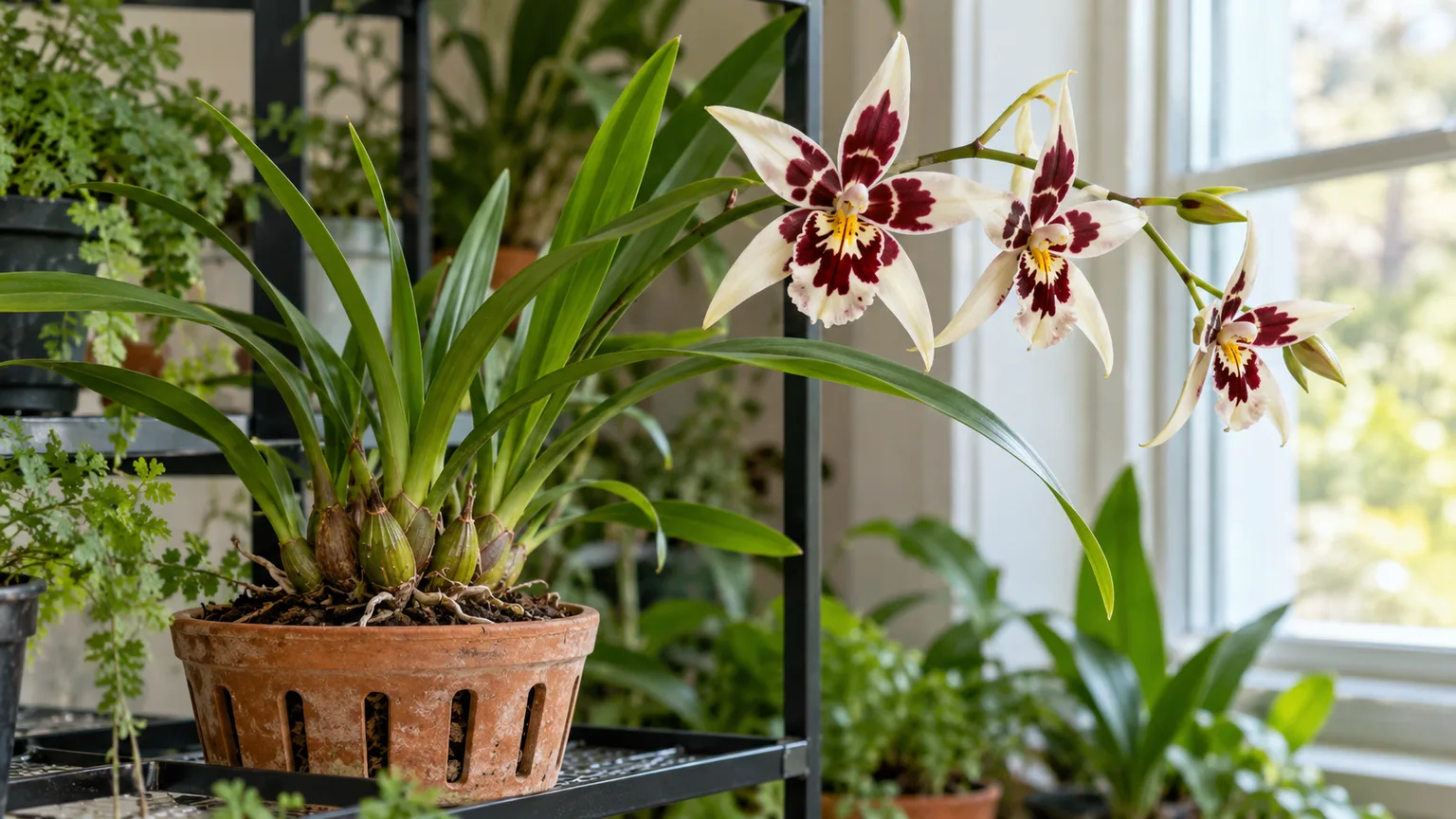
The first Miltonia-care decision happens before you water: check what the plant actually is. Orchids sold under the familiar name “pansy orchid” may be true Miltonia or the related but cooler-growing Miltoniopsis. Both have elegant flowers and exposed, air-hungry roots, but a routine that suits one can stress the other. The American Orchid Society’s current culture guidance describes true Miltonia as a warm-growing orchid that wants bright shade, plentiful water that drains freely, and a shallow growing space. That profile—not a generic orchid calendar—is the useful starting point.
Start by Identifying Miltonia vs. Miltoniopsis
The names are often mixed in retail listings and older care material. The American Orchid Society classifies Miltonia in the Oncidiinae subtribe and describes the genus as a group of nine species from Brazil and southern South America. The cooler-growing Miltoniopsis is a separate genus, even though it was once grouped with Miltonia and the two are still sometimes sold with overlapping common names. The AOS Miltonia profile is a useful botanical reference; Orchid Bliss’s Miltonia overview also explains why the names are easily confused.
How to tell the difference
Look first at the flowers, but treat shape as a clue rather than a lab-grade identification. True Miltonia flowers tend to look flatter and more star-like, with relatively distinct, spreading segments and intricate markings. Miltoniopsis flowers are usually rounder and more pansy-like, with a broad lip and a contrasting central “blotch.” A grower’s tag, hybrid name, or seller’s care notes can be more reliable than a quick visual guess, especially when a hybrid has traits from several parents.
The growing behavior adds context. True Miltonia is the warmer-growing group in the AOS culture sheet; Miltoniopsis is generally treated as a cooler-growing orchid that is more vulnerable to prolonged heat. A flat flower does not guarantee a particular temperature preference, and a hybrid may land between familiar patterns. If you cannot confirm the name, ask the seller or a local orchid society before imposing a strong cool-rest routine.
What to do with an unlabeled plant or hybrid
Keep the plant in bright, filtered light, provide moving air, and avoid both bone-dry roots and a pot that stays soggy while you gather more information. Photograph the whole plant, the flower face, the side of the flower, and the pseudobulbs; include the label if one came with it. Orchid societies and specialist growers can often narrow down an identification from those details, but do not infer an exact species from one bloom photo alone.
For a confirmed Miltonia, use the warm-growing instructions below as a baseline. If the seller identifies it as Miltoniopsis, do not assume the warmer targets below apply: favor cooler conditions and consult that plant’s cultivar-specific guidance. This one distinction prevents many “mystery” problems that are actually a mismatch between the label and the care routine.
Miltonia Orchid Care at a Glance
| Need | Starting point for true Miltonia | What to watch |
|---|---|---|
| Light | Bright shade; filtered light, not harsh direct sun | Leaves should remain firm and green rather than bleached or scorched |
| Temperature | Intermediate to warm; avoid cold exposure and stagnant heat | The AOS lists 60°F (16°C) as the minimum and says brief heat above 90°F (32°C) requires very high humidity |
| Humidity | High humidity; AOS gives at least 70% as a culture target | Pair moisture in the air with airflow, not a sealed, stagnant enclosure |
| Water | Water plentifully, let the medium approach dryness, and drain completely | Frequency changes with pot depth, mix, air movement, and season |
| Pot and mix | Fine, airy epiphyte medium in a shallow pan or basket; mounting is possible | Deep pots and decomposed mix can damage shallow roots |
| Fertilizer | Balanced orchid feed at half strength during active growth | Flush the pot periodically to limit salt buildup |
These are a baseline for the genus, not a rigid timer for every home or hybrid. The AOS culture sheet supplies the specific light, humidity, feeding, and potting guidance; adjust the interval between waterings to the actual medium and conditions rather than copying a number of days. Read the AOS culture sheet alongside the plant’s label when you set up its spot.
Choose Bright, Filtered Light
True Miltonia needs more light than its cooler-growing relative, but “more” does not mean a sunny windowsill with unfiltered midday rays. The AOS lists roughly 2,000 foot-candles for good growth and warns that direct sun can burn the thin leaves quickly. A bright east-facing window, a bright north-facing exposure, or a lightly curtained brighter window can work; the right choice depends on latitude, season, glass, and how close the leaves sit to it.
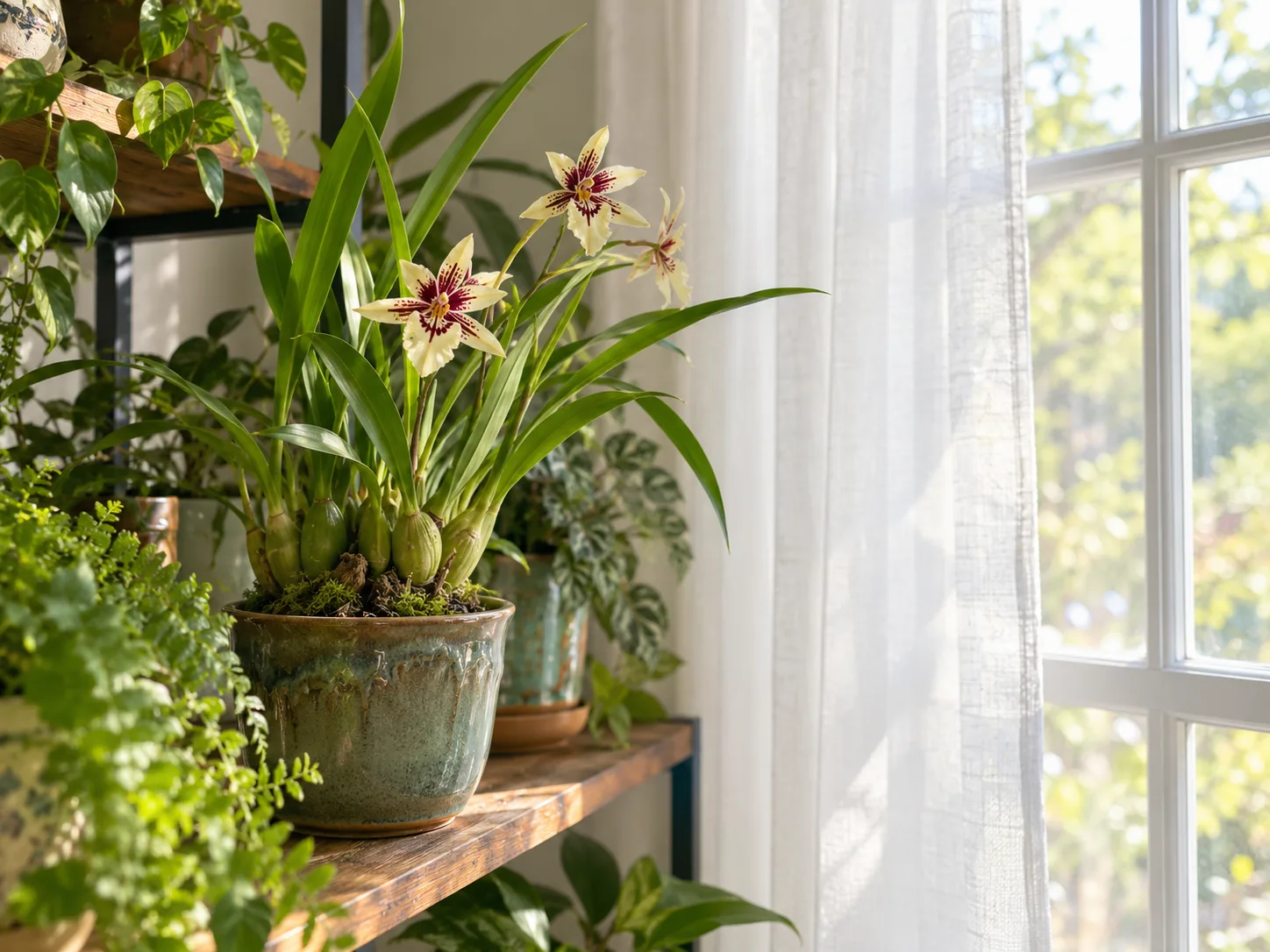
Use the plant’s response to refine placement. A hand-held light meter or phone sensor can help you compare shelves, but its reading is only useful if you measure at leaf height and remember that sunlight changes through the day. If a patch of direct sun moves across the plant, shift it back or filter the window. Bleached patches or dry tan areas on the side facing the glass point toward excessive light or heat; very dark, soft growth and a plant that never matures a new pseudobulb can indicate light that is too weak, though root condition and feeding matter too.
Do not chase a single ideal window direction. An east window can be gentle in one home and intensely hot in another; a north window can be too dim in a shaded building. Start with bright, diffuse light, check the plant at midday, and make one small placement change at a time so you can tell whether the leaves and new growth improve.
Keep Warmth, Humidity, and Air in Balance
The “humid orchid” advice is incomplete unless it also addresses airflow and temperature. The AOS culture sheet says true Miltonia requires at least 70% humidity, notes that lower humidity stresses it, and cautions that excessive humidity can be worse. In an ordinary dry room, a room humidifier with a hygrometer is more predictable than frequent leaf misting or a small pebble tray. Keep the humidifier clean, direct its output into the room rather than onto the plant, and leave space around leaves so air can circulate.
High humidity does not make a waterlogged pot safe. Roots still need air between watering events, and leaves or flowers that stay wet in cool, stagnant conditions are more vulnerable to spotting and rot. A small fan across the room, an open growing area, and a well-drained pot help move air without blasting the orchid with a drying draft. If you use a cabinet or enclosure, make sure it is ventilated and that condensation does not remain on the plant.
Temperature targets depend on the name on the label
The AOS places true Miltonia in the intermediate-to-warm group. Its culture sheet gives a minimum of 60°F (16°C), and says the plant can tolerate temperatures over 90°F (32°C) only when humidity is maintained at 70% to 75% or higher. Treat those as boundary information, not everyday targets: a warm room with moving air and hydrated roots is safer than trying to test the plant’s heat tolerance, and cold windows or outdoor nights below the stated minimum call for protection.
This is where mixed labels matter most. A care page for “pansy orchids” may give a cool-night temperature that fits Miltoniopsis but not every true Miltonia. Do not force a cold rest simply because someone says all orchids need one to flower. Keep a stable, moderate day-to-night rhythm, let the plant grow and mature its pseudobulbs, and follow the grower’s advice for a named hybrid. If you want to improve a bloom cycle, first correct light, root health, and the growing season; abrupt temperature swings can damage a plant without solving the real constraint.
Water Thoroughly, Then Let the Medium Approach Dryness
A Miltonia wants generous water, but its roots must not sit in stagnant water. The AOS describes plants that receive frequent heavy rain in their native habitat, says the growing medium must drain perfectly, and recommends allowing the pot to approach dryness between waterings. The key is the phrase “approach dryness”: a shallow pot of fine bark can dry fast, while a deep pot packed with dense or decomposed material can stay wet long after the surface looks dry.
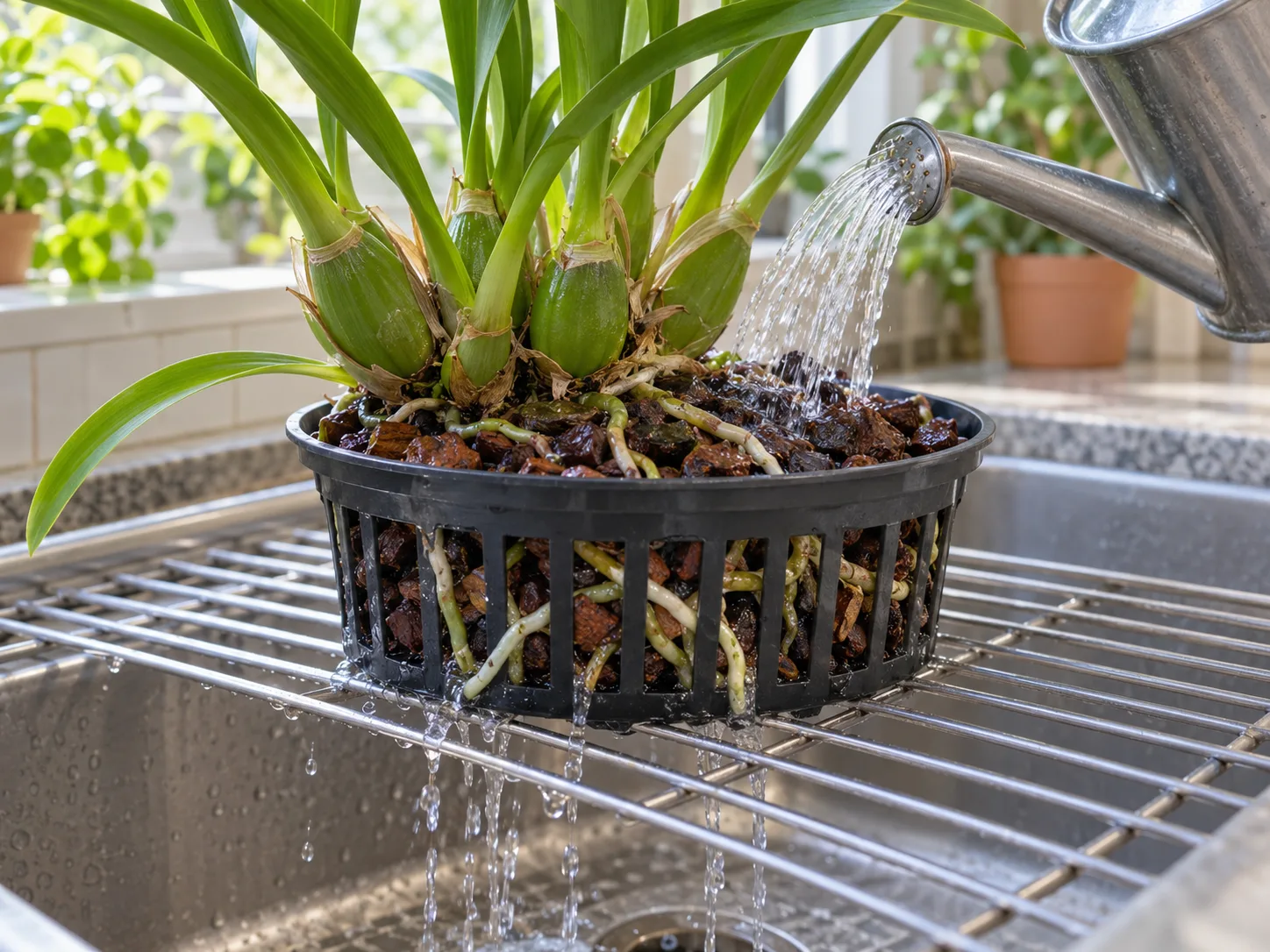
When the medium is ready, take the plant to a sink and water the mix evenly until water runs freely from the drainage holes. Let it finish draining before returning it to a decorative cachepot or shelf. Avoid leaving the pot standing in collected water. If the plant is mounted, the exposed roots dry faster, so it may need much more frequent watering than a potted plant; inspect it daily in warm, dry weather and water when the root surface and mount have lost their moisture, not by a fixed weekly reminder.
How to decide when to water
Check more than the top layer. Lift the pot to learn its weight after watering and as it dries; feel the mix near the center if the pot allows access; and look for a mix that is no longer wet but has not become bone-dry. A clear inner pot can make moisture and root condition easier to observe, but transparency alone does not improve drainage. If the mix smells sour, remains wet for many days, or has collapsed into fine debris, fix the medium and pot rather than trying to solve the issue with smaller splashes.
New leaves that emerge with accordion-like pleats can follow inadequate water or humidity while the leaf is expanding. They will not flatten later, so use the next growth to assess whether the correction worked. Before increasing watering, check whether roots are alive and whether the medium is actually absorbing water; roots lost to rot cannot take up water, so a wilted-looking plant may be wet rather than thirsty. The American Orchid Society’s Miltonia guidance also recommends flushing the pot every fourth or fifth watering to wash away accumulated salts.
Pick a Fine, Airy Mix and a Shallow Container
Miltonia roots are fine and shallow, so an ordinary houseplant pot filled with dense potting soil is a poor fit. Use an epiphyte medium that holds some moisture without sealing off air. The AOS gives examples including a seedling-grade bark mix with charcoal and perlite, or tree fern fiber with chopped sphagnum; the exact recipe can vary with the humidity and watering habits in your space. The goal is not a magic ingredient ratio but a mix that wets evenly, drains promptly, and still retains a modest amount of moisture around fine roots.
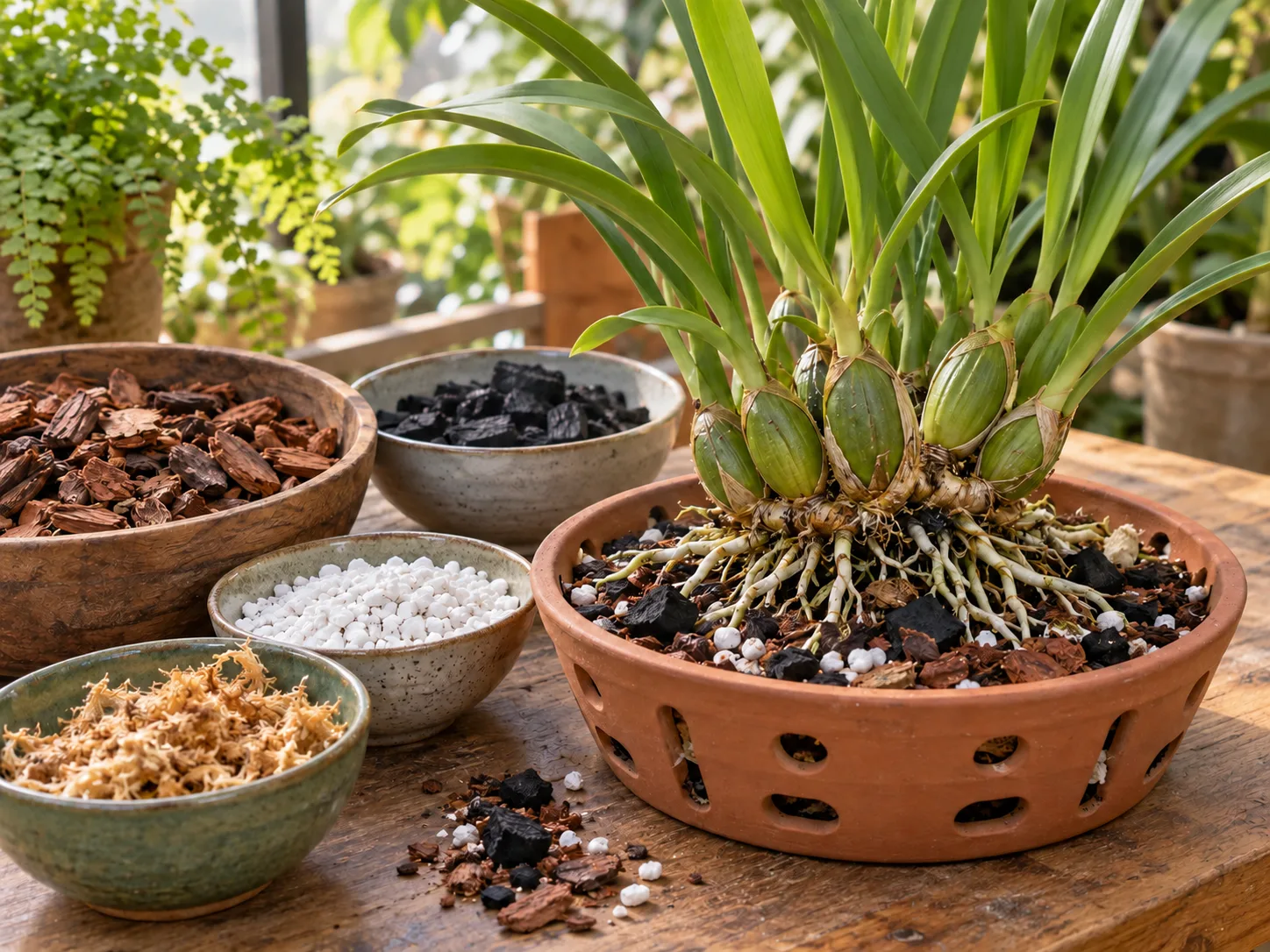
A shallow bulb pan or basket is often a better match than a deep pot, and an elongated creeping plant can also be grown on cork, tree fern, or another suitable mount if you can keep its roots hydrated. Any pot should have open drainage; do not rely on a gravel layer at the bottom to make a deep pot safe, because it does not remove excess water from the medium above it. Select a container that gives the roots room to sit naturally without surrounding the plant with a large volume of slowly drying mix.
Sphagnum can be useful in a dry home or an open basket, but a dense wad can stay wet too long in a humid, cool room. Bark can be a better fit where drying is slow, but coarse chunks may leave a fine-rooted plant unstable or thirsty. If your current mix dries unevenly, changes smell, or breaks down into compacted crumbs, replace it with a fresh, airy medium instead of adding more water to compensate.
Fertilize Lightly During Active Growth
Feed a growing Miltonia modestly rather than trying to force flowers with strong fertilizer. The AOS recommends balanced fertilizer at half strength every two weeks, with the rate reduced during overcast weather or winter. That is a useful starting point when the plant is actively making roots and pseudobulbs; if growth has slowed or the roots are stressed, reduce or pause feeding until the plant is growing well again. Follow the product’s dilution label and avoid doubling up on separate fertilizer products.
Fertilizer salts can accumulate around orchid roots because the plant receives repeated applications in a small volume of medium. Flush the pot with plain water every fourth or fifth watering, as the AOS advises, and make sure the runoff can escape. If leaf tips turn brown or a pale crust forms on the mix or pot, review water quality and feeding strength before adding supplements. A so-called bloom booster is not a substitute for light, mature growth, healthy roots, and suitable temperatures; the AOS mentions a higher-phosphorus option for early spring, but routine balanced feeding is easier to manage and does not promise flowers on demand.
Repot After New Roots Begin
Repotting timing is unusually consequential for this orchid. The AOS says to repot after flowering when new growth is starting, and its genus profile emphasizes waiting until a new growth has initiated roots. A mistimed repot can set the plant back; established plants can take several growing seasons to rebuild mature pseudobulbs after a severe setback. That makes a fresh medium and a well-timed root window more important than moving the orchid into a larger pot on an annual calendar.
Inspect the mix regularly and repot when it has decomposed, drains poorly, smells sour, or the root system has outgrown its shallow space. If roots are actively rotting or the medium has collapsed and stayed wet, intervene sooner because leaving the problem can cost more roots; protect any viable new growth and expect a recovery period. If the plant is healthy and the medium is still open, do not disturb the roots just because the flower spike has finished.
A low-stress repotting sequence
Prepare the new shallow pot and fresh medium before removing the plant. If bark is very dry, pre-moisten it so it does not immediately pull all water away from the roots. Ease the orchid from the old container, loosen only mix that releases readily, and keep firm, living roots. With a sterile tool, remove only roots that are clearly dead, hollow, or mushy; do not trim healthy roots to make the plant fit a preferred pot.
Set the plant so the creeping rhizome and pseudobulbs are not buried under the mix, and leave the newest growth room to expand. Settle the medium around the roots without packing it tight, then secure the plant so it does not rock and snap new root tips. Water according to the condition of the roots and medium, let everything drain, and return it to the same bright, humid, airy conditions. Hold fertilizer until active root or shoot growth resumes; avoid a series of extra changes that make it impossible to tell what the plant needs.
Divide Only a Mature Clump
Division is a way to propagate a crowded, established plant, not a shortcut to multiply a small orchid. Miltonia grows sympodially: new shoots develop along a creeping rhizome and form pseudobulbs that store resources. A useful division needs a viable lead, healthy roots, and several mature pseudobulbs behind it. Tiny divisions may survive but often take longer to regain flowering size, so leave the mother plant a substantial section as well.
The least disruptive time is the same window used for repotting: after flowering, when new roots are beginning. Remove the plant carefully, find natural gaps along the rhizome, and cut with a sterilized blade rather than tearing the roots apart. Pot each section in a shallow container with fresh airy medium, keep the new growth above the mix, and secure it. Do not water on a timer during recovery; follow the moisture of the medium, protect new root tips, and wait for active growth before returning to regular feeding.
Encourage Reliable Flowering
Flowers follow healthy growth rather than a single secret temperature trick. A mature pseudobulb, adequate bright shade, sound roots, consistent moisture, and regular but restrained feeding give the plant the resources to flower. Bloom timing varies with species and hybrids, so a nonflowering plant is not automatically overdue simply because another grower’s plant blooms in spring. Track when your own new growth begins and matures; that record is more useful than a universal bloom calendar.
If the plant grows leaves but no flower spikes, review light first, then ask whether the new pseudobulb reached mature size and whether the plant was weakened by root loss or repeated repotting. Confirm the label before adjusting temperature. True Miltonia and Miltoniopsis do not share one universal cool-night recipe, and a cold exposure can be the wrong response for a warm-growing plant. Once flowers fade, remove a spent spike with a clean tool if it is brown or finished; keep green pseudobulbs and leaves, which still support future growth.
Diagnose the Problem Before Changing Care
| What you see | First check | Better next step |
|---|---|---|
| Pleated or accordion-like new leaves | Was the root zone too dry, or was humidity low while the leaf expanded? Are roots alive? | Correct moisture or room humidity gradually; do not keep watering a pot that stays wet. |
| Yellowing or soft leaves | Is the mix decomposed, the pot cold, or the plant in direct sun? Is the yellowing limited to one old leaf? | Check the roots and medium, move away from harsh sun, and change one condition at a time. An older leaf declining can be normal. |
| Black, brown, or water-soaked patches | Did sun hit the leaf, or did wet tissue stay cool and stagnant? | Improve filtered light and airflow; remove severely damaged tissue with a clean tool if decay is advancing. |
| Limp plant with wet medium | Are roots firm and functional, or hollow and mushy? | Do not add more water by reflex. Remove the cachepot, inspect roots, and replace collapsed medium if needed. |
| No flowers | Has the plant produced a mature pseudobulb? Is the light adequate? Is the name on the tag reliable? | Confirm identification, improve light gently, and allow a full growth cycle before changing temperature. |
| Spots on flowers or visible insects | Are blooms staying wet? Do you see scale, mealybugs, mites, or thrips? | Isolate the plant, inspect undersides and leaf bases, and use a treatment labeled for the pest and plant if needed. Avoid misting open blooms. |
Use the pattern across new growth rather than judging a single old leaf. One yellowing lower leaf can be part of normal aging; several new leaves yellowing with soft roots point to a different problem. Likewise, brown roots are not automatically dead if they remain firm, while a dark, soft root may be unable to function. When uncertain, photograph the roots and plant, check the medium’s smell and wetness, and change one cause at a time.
Conclusion
Successful Miltonia care starts with an accurate name, then depends on a few linked conditions: bright filtered light, warm-to-intermediate temperatures, high humidity with moving air, generous watering with excellent drainage, and a shallow space for fine roots. Let the potting mix and roots—not a calendar—tell you when water is due, and flush regularly so fertilizer salts do not build up.
Most important, wait for new roots before routine repotting or division. If the plant struggles, confirm whether it is Miltonia or Miltoniopsis, inspect the roots, and correct the single most likely mismatch before changing everything at once. That patient, evidence-led approach gives the pseudobulbs time to mature and gives the next bloom cycle a healthier foundation.



