Why Leaf Drop Occurs on Houseplants and What to Do About It
Learn why houseplant leaves fall and what to check first. Match leaf color, soil moisture, roots, light, temperature, and pests to a practical next step.
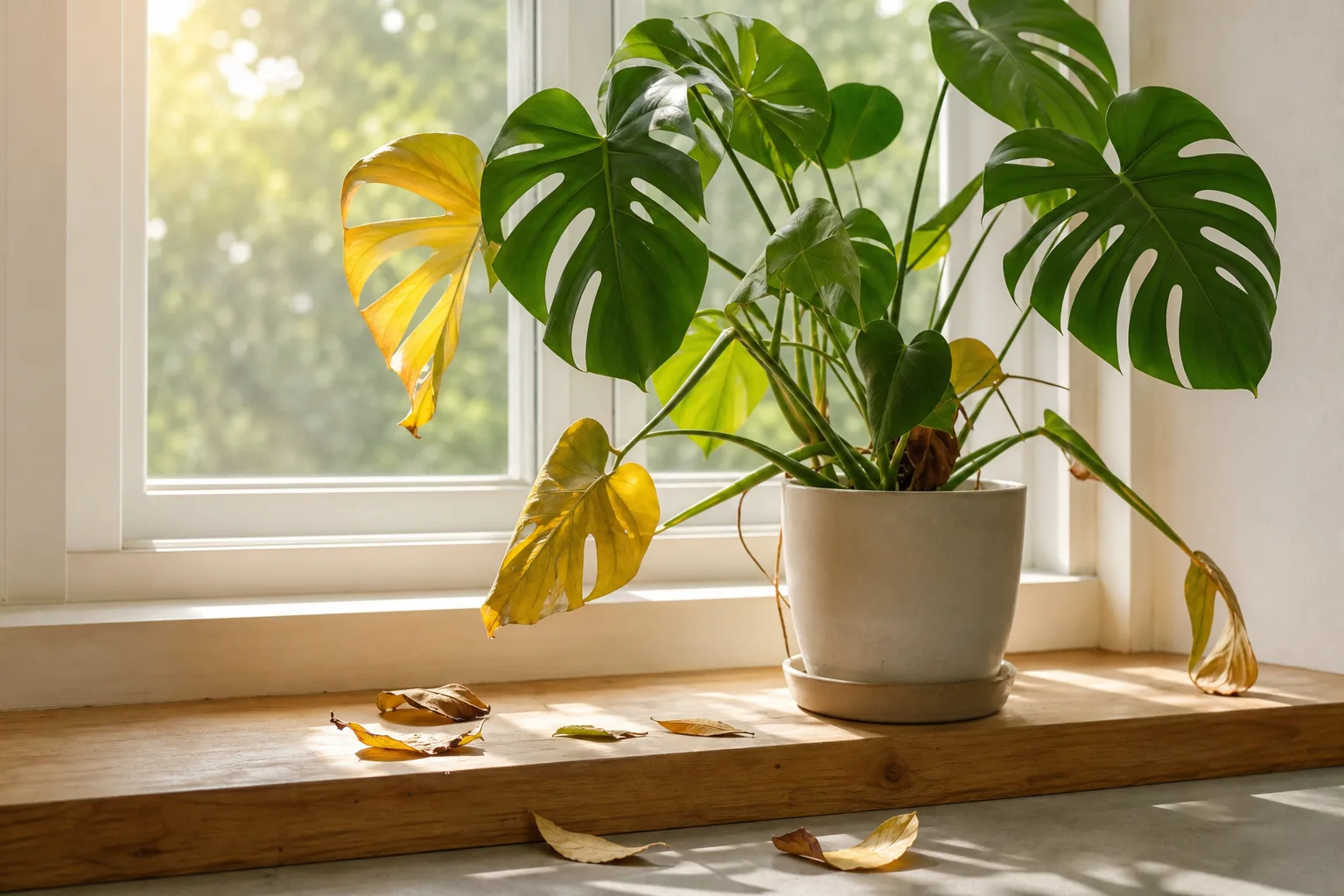
Leaf drop can mean a houseplant is adjusting, struggling to take up water, reacting to a sudden change, or supporting a pest population. The same symptom can point to very different problems, so a fallen leaf by itself is not enough to diagnose the cause. Start by checking which leaves are affected and what the plant, its potting mix, and its recent surroundings reveal. Then make one correction that fits the evidence and give the plant stable conditions to respond.
Decide whether the leaf drop is normal or a warning
An occasional older leaf near the base turning yellow, drying, and falling is often part of normal growth. As a plant adds new foliage, it may shed a small number of older leaves that are shaded or no longer useful. The Royal Horticultural Society’s guide to leaf damage on houseplants notes that older leaves on a healthy plant naturally die back over time; the odd lower leaf turning yellow is not automatically cause for concern.
The pattern changes the level of concern. A leaf or two lost gradually, while stems stay firm and the growing tips continue to develop, is different from several leaves falling over a short period, loss from both new and old growth, soft stems, widespread discoloration, or a plant that wilts while its mix remains wet. A short-lived indoor plant may also decline after its natural display period. Confirm the plant’s identity and normal growth cycle before treating every yellow leaf as a disease.
Look for a trend rather than reacting to a single leaf. Is new loss continuing? Is the plant still producing sound new growth? Does the issue affect the whole plant or just one exposed side? Those details help separate an ordinary shed from a condition that needs a change in care. If the loss is broad or accompanied by pests, rot, or collapsing stems, inspect promptly.
Gather clues before changing the plant’s care
Do not start by watering, feeding, spraying, or repotting. Those actions can make the wrong problem worse: extra water is harmful when roots are already starved of oxygen, fertilizer can stress damaged roots, and moving a plant repeatedly adds another change. Iowa State Extension’s houseplant diagnosis guidance explains that several factors can contribute at once and that identifying the primary issue matters before treating a symptom.
Map where the leaves are falling
Look at the plant from all sides. Note whether loss is concentrated on the lowest, oldest leaves; at the top; on the window-facing side; or throughout the canopy. Lower leaves that gradually yellow can reflect natural aging, reduced light reaching shaded foliage, or a root-zone problem. Leaves exposed to harsh direct sun may show bleached or scorched patches before they fall. A single bare stem or one-sided patch may point to local damage, shade, or a branch problem rather than a whole-plant watering issue.
Also check what is underneath the plant. Freshly fallen leaves may still be green and flexible, while older dropped leaves are often yellow or dry. Fallen foliage may show pests, sticky marks, or spots more clearly than leaves still attached. Avoid concluding that a plant has a nutrient deficiency just because older leaves yellow: water stress, poor roots, insufficient light, and normal aging can look similar.
Read the leaves and stems before they drop
Color and texture narrow the possibilities, but they are clues rather than proof. Uniform yellowing can accompany too much water, too little water, low light, a sudden temperature change, or old age. Dry, crisp tissue at the edge can follow dry soil, dry indoor air, hot air, or sun scorch. Soft, dark, water-soaked patches suggest tissue injury or disease rather than simple drought. Pale stippling, fine webbing, cottony clusters, small bumps, and shiny sticky residue justify a pest inspection.
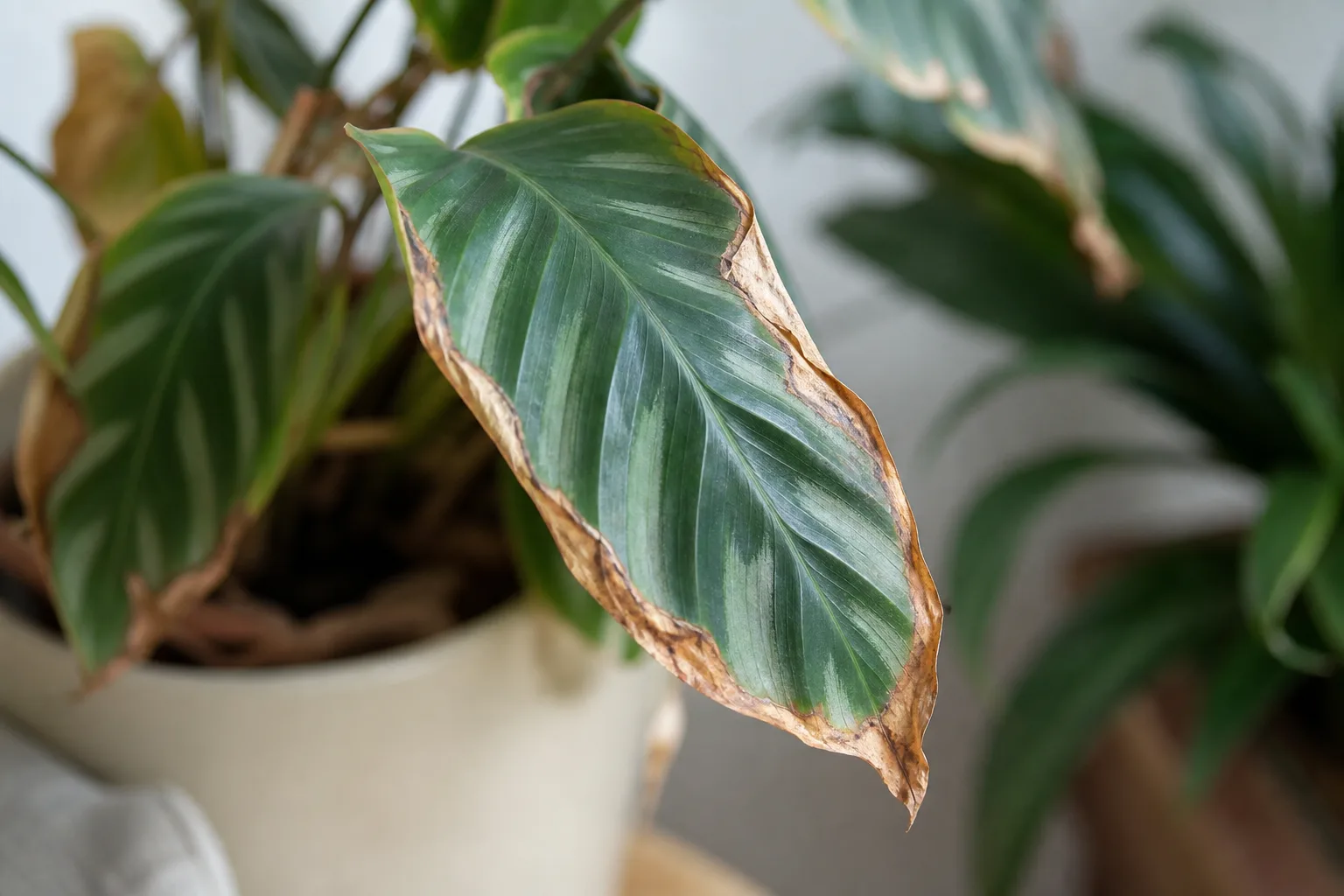
Check the stem where affected leaves attach. A naturally aging leaf generally separates from a firm stem; a dark, soft, or pinched stem base is more concerning. Turn leaves over and inspect leaf joints, new growth, and the undersides. Some pests are too small to spot without a magnifier, so look for feeding patterns as well as insects.
Check the root zone and reconstruct recent changes
Feel the mix a short distance below the surface, not just the dry crust. Is it damp, saturated, compacted, bone-dry, or pulling away from the pot? Check whether the pot has a drainage hole and whether water is standing in its saucer or cachepot. A plant can wilt in wet mix when damaged roots cannot absorb water, so wilting alone does not mean it needs another drink.
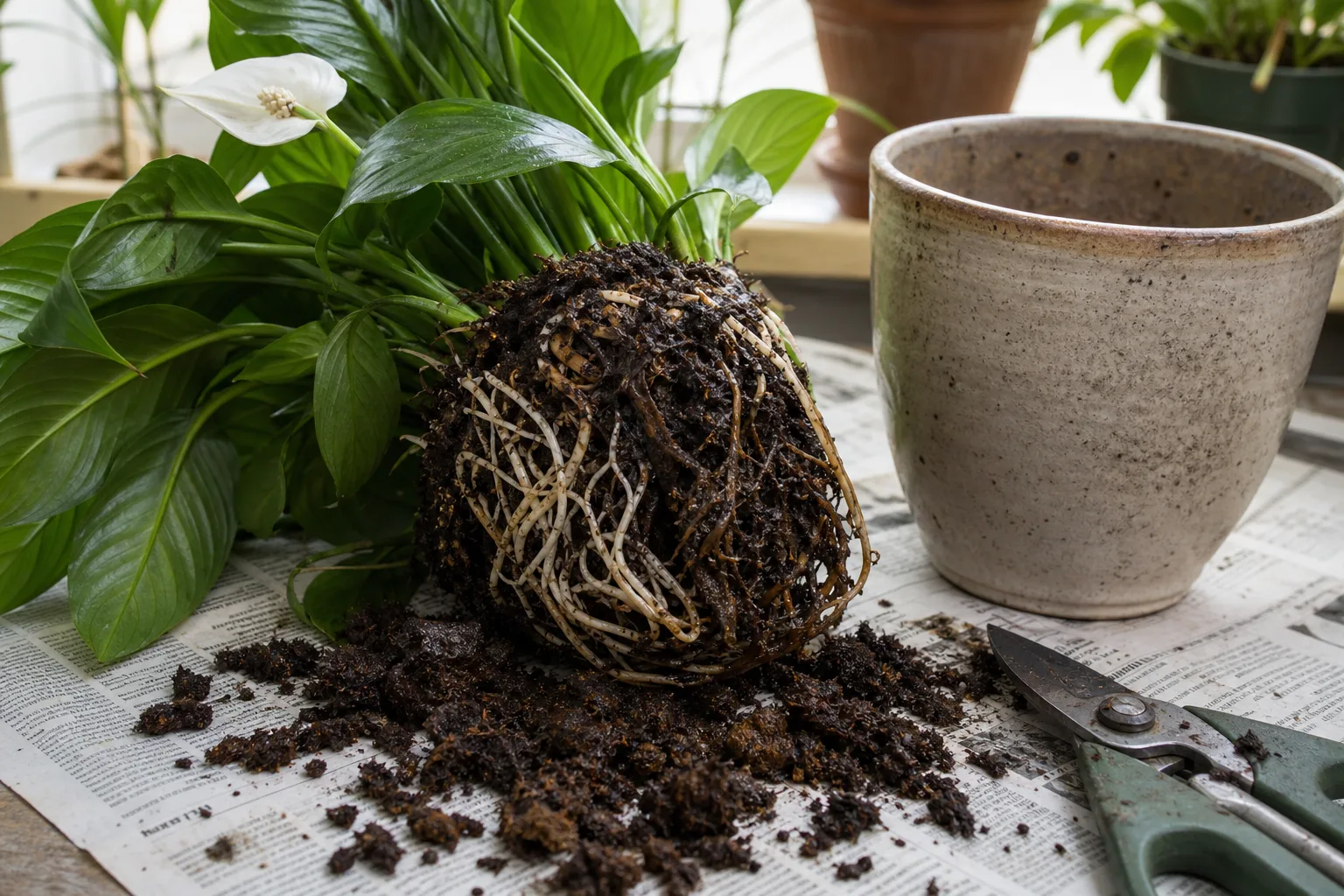
If the plant is declining broadly and the potting mix stays wet, gently slide the root ball out only if it is easy to do without tearing healthy roots. Healthy roots are usually firm and pale; rotted roots are soft, dark, and may smell sour. Iowa State Extension describes root rot signs and cautions against confusing them with drought. Do not unpot a plant that has only lost one old leaf and otherwise looks healthy.
Finally, reconstruct what changed in the last few weeks: a move from a greenhouse or store, repotting, a new window, outdoor-to-indoor transition, heating or air-conditioning starting, a cold night, a missed watering, or a new nearby plant. Write down the change and when loss began. A recent event becomes useful evidence when it matches the direction and timing of the symptoms.
| What you observe | What it may suggest | Check before acting |
|---|---|---|
| One older lower leaf yellows slowly; upper growth looks sound | Normal aging or shade on older foliage | Watch for spread; confirm stems and new growth remain healthy |
| Green leaves drop across the plant after a location change | Light, temperature, humidity, or transport stress | Compare the old and new locations and check the root-zone moisture |
| Limp leaves with dry, crumbly mix | A dry root ball or watering that is too infrequent for this plant | Check moisture below the surface and whether the root ball is evenly dry |
| Limp leaves with wet mix and yellowing on old and new leaves | Root stress or rot from prolonged wetness | Confirm drainage and inspect roots if decline is widespread |
| Speckling, webbing, cottony marks, bumps, or sticky residue | Possible sap-feeding pests | Inspect undersides, stem joints, and neighboring plants with a magnifier |
The table is a starting point, not a diagnosis. Two problems can overlap. For example, a plant moved to a darker room may use water more slowly, so watering habits that worked beside a brighter window can leave the new location’s mix wet for longer.
Match the pattern to the most likely cause
Use more than one clue before deciding. Iowa State Extension’s overview of yellow, brown, and dropping leaves lists environmental extremes, watering, humidity, light changes, and nutrition among possible contributors. The practical question is which of those fits the leaf pattern and the plant’s actual growing conditions.
Older lower leaves yellow one at a time
If just one or two lower leaves turn yellow gradually while the stem tips look healthy, normal aging is a reasonable explanation. Older leaves also receive less light when a plant grows dense foliage above them. Remove a fully yellow leaf with clean scissors if it is unsightly, then watch whether the same pattern continues into healthy leaves.
If lower leaves keep dropping and the plant is becoming thin or stretched, assess light before adding fertilizer. Indoor light can be weaker than it appears, especially several feet from a window or during short winter days. A low-light plant may survive in a dim position but shed older leaves as it adjusts. Move it closer to suitable indirect light in small steps; do not place a shade-adapted plant in strong midday sun to compensate.
Pale leaves across the plant can have other explanations, including root stress or nutrient shortage. Fertilizer is not a cure for leaves that are yellow because the roots are too wet to function. Consider feeding only after checking moisture, drainage, light, and species needs, and only when the plant is actively growing. Follow the fertilizer label and avoid increasing the dose to reverse existing yellowing.
Green leaves fall soon after a move
A healthy-looking green leaf that drops after a move can follow a sudden change in light, temperature, air movement, or humidity. A plant going from a bright, humid greenhouse to a dim home may shed foliage while adapting. Moving it beside a cold pane, heating register, frequently opened exterior door, or air-conditioning vent can create a different stress. Ficus and other foliage plants can be especially noticeable about changes in placement, but each species has its own tolerance.
Return the plant to a stable spot with light and temperature suited to its label or a reputable species guide. Avoid rotating it through several rooms while trying to find a perfect position. When a seasonal move is necessary, acclimate gradually. Iowa State Extension notes that abrupt changes in light intensity can cause leaf drop. Protect tropical plants from cold during transport and keep foliage away from hot and cold drafts once indoors.
Crispy margins, limp leaves, or scorch appear
Dry soil plus limp foliage and crisp edges points toward a root ball that has dried too far, but confirm that the container is not simply dry on the surface. If the mix is very dry and has shrunk away from the pot, water slowly until it is evenly moist and excess drains freely. A peat-heavy or compacted mix can become difficult to rewet; repeated small splashes may wet only a channel down the side. A thorough rewetting in stages is safer than flooding the saucer and leaving the pot standing in it.
Low humidity more often shows first as crispy tips or margins on humidity-sensitive tropical foliage, especially during heated winter weather. It can contribute to leaf loss, but raising humidity will not repair a failing root system. Grouping plants or using a room humidifier can raise humidity; routine misting gives only a brief effect as the droplets evaporate. Measure room humidity if you need to know whether conditions are actually dry, and keep leaves dry enough to avoid creating a persistently damp, poorly ventilated canopy.
Bleached patches, tan scorched areas, or damage concentrated on the sun-facing side suggests light or heat exposure. Move the plant out of direct hot sun or filter the light, then let it adjust. The RHS guide explains that excessive light can brown or scorch leaves, while heat can also intensify water loss. Damaged areas will not turn green again; judge recovery by whether newer foliage emerges without the same injury.
Wet mix, yellow leaves, and wilting occur together
This combination is easy to misread. A waterlogged root zone can deprive roots of oxygen and damage their ability to take up water, so leaves may droop even though the soil feels wet. Yellowing of both older and newer leaves, persistent wet mix, mushy roots, or a soft stem base strengthens concern about overwatering or root rot. The RHS houseplant health guide describes simultaneous old and new leaf loss, brown patches, and dark mushy roots among signs associated with overwatering.
Check that drainage holes are open and empty standing water from the outer pot or saucer. Allow the mix to dry to the degree appropriate for that species before watering again; do not impose the same drying interval on a fern, succulent, and tropical aroid. If roots are already soft and brown, remove only dead tissue with clean tools and move the plant into fresh, suitable mix and a pot with drainage. If the roots are firm and pale, avoid needless repotting and correct the watering pattern instead.
Underwatering can produce some of the same signs. A very dry root ball, crispy lower leaves, and soil pulling from the container are evidence to water, not to reduce it. The Missouri Botanical Garden’s leaf-drop advice recommends checking the soil because both excessively wet and very dry conditions can lead to dropped leaves. Base the decision on the mix and roots, not the word “drooping.”
Spots, stippling, webbing, or sticky residue appear
Inspect for pests when leaves have tiny pale dots, a dusty or bronze cast, fine webbing, white cottony clumps, fixed brown bumps, distorted new growth, or shiny sticky patches. Spider mites can be tiny; tap a suspect leaf over white paper and look for moving specks. Mealybugs often look like small cottony deposits at joints, while scale insects appear as attached bumps. Aphids and whiteflies can leave sticky honeydew. The Penn State Extension guide to indoor plant pests and diseases connects spider-mite feeding with stippling, webbing, and premature leaf loss, and notes that several sap-feeding insects leave honeydew.
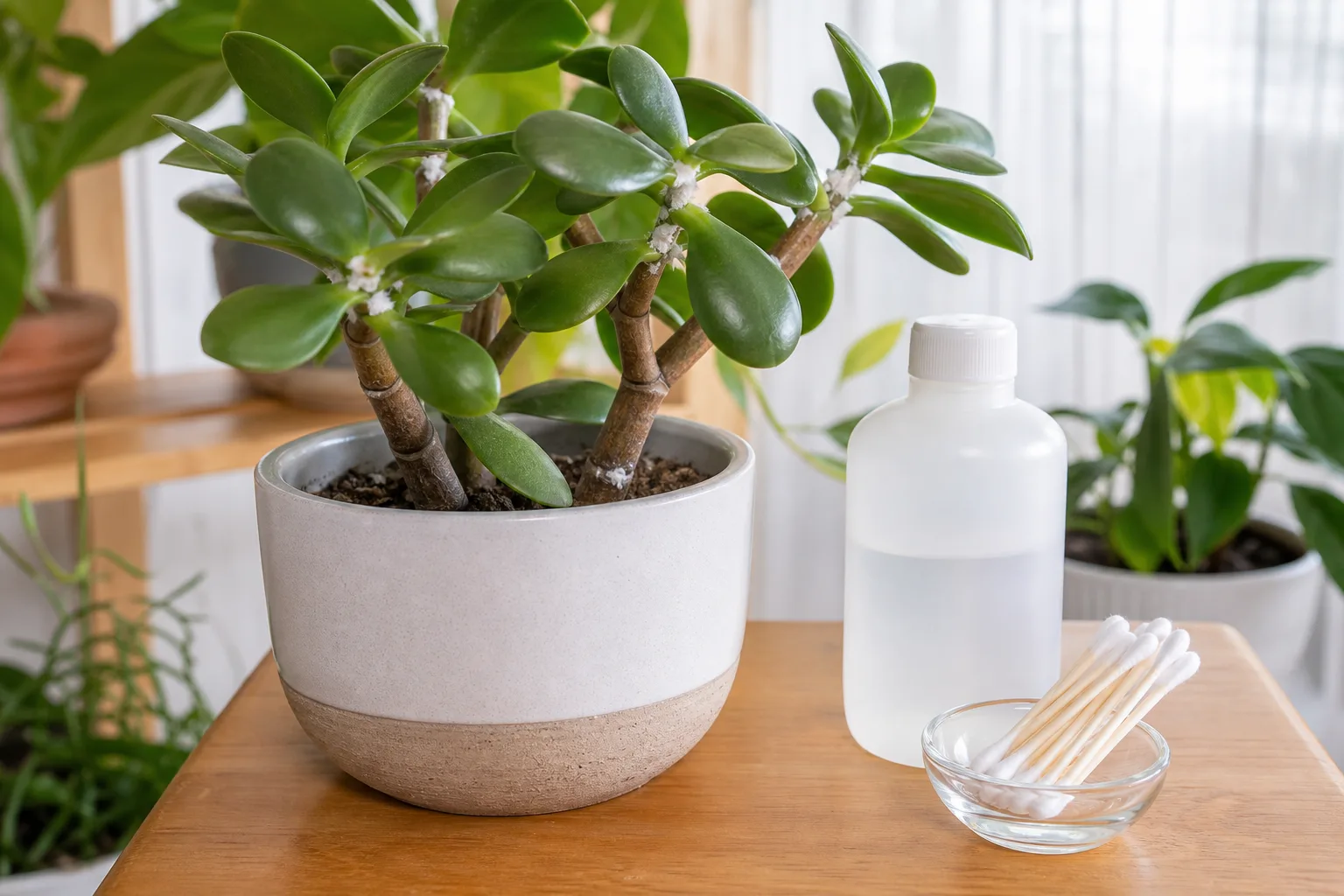
Isolate a plant with suspected mobile pests from other houseplants while identifying the pest. Check nearby plants, especially those touching its leaves. A few pests can often be rinsed from sturdy foliage or removed with a damp cloth or cotton swab; fragile or fuzzy leaves may not tolerate washing. Use a pesticide only when the pest is identified and the product label includes that plant and indoor use. Test a small area first if the label allows, and repeat only at the interval on the label. Sticky leaves, spots, or yellowing alone are not enough reason to spray.
Dark spots with yellow margins, expanding lesions, or patches that remain wet can indicate a leaf-spot disease, especially if foliage stays damp and air movement is poor. Remove heavily affected fallen material, avoid wetting foliage when watering, and improve gentle airflow. If the spots continue spreading or stems become soft, seek a diagnosis from a local Extension office or plant clinic instead of applying a broad pesticide.
Correct the cause that the evidence supports
Once one explanation fits several clues, change that condition and leave the rest steady. This makes the result easier to read and reduces added stress. If the plant has more than one problem, prioritize urgent ones such as active pests, standing water, or a softening stem base; then revisit light, humidity, and nutrition after the immediate issue is controlled.
Adjust watering from the root zone outward
There is no reliable calendar interval for every houseplant. The amount of light, room temperature, pot size, mix, and species all affect how quickly roots use water. Iowa State Extension’s houseplant-care guide recommends watering according to the plant’s needs rather than following a schedule. Check below the top layer and learn what the pot weighs when freshly watered and when it is ready for another drink.
When the mix is dry to the depth the plant tolerates, water across the surface until the root ball is moistened and excess drains from the bottom. Empty the saucer after drainage. When it remains wet, do not water again simply because a leaf droops; improve drainage, remove standing water, and let the mix dry appropriately. A pot without a drainage hole makes it harder to judge and control moisture. Where persistent wetness coincides with a pot much larger than the root ball, a smaller draining pot may help the mix dry at a healthier pace.
Stabilize light, temperature, and humidity
Match light to the species and make location changes gradually. A bright-looking corner may be several feet from the window, behind a screen, or shaded by trees outside. Notice how the light changes through the day and season. If moving toward a window, add light in steps and check for direct sun, hot glass, or afternoon heat. If the plant was moved away from a cold draft but now gets less light, find a stable position that solves both issues.
Keep plants away from heating and cooling vents, exterior doors, and cold window glass. Most tropical foliage houseplants prefer the sort of stable room temperatures people find comfortable, though plant labels and species references should guide exceptions. In dry rooms, a humidifier or grouping plants can help humidity-sensitive species; do not expect misting to fix dry air for long. The Iowa State Extension humidity FAQ explains that misting is short-lived because the foliage dries quickly. Keep air circulating gently, especially in humid conditions.
Isolate and treat confirmed pests
Keep a pest-affected plant apart from the collection until you have a treatment plan. Remove badly damaged leaves and visible pests where practical, clean the shelf and tools, and inspect nearby plants on both sides of the leaves. For washable plants, a careful lukewarm rinse can dislodge some soft-bodied pests; repeat inspection matters because eggs or hidden insects may remain. Avoid harsh home mixtures that can burn foliage or leave harmful residues indoors.
Choose a registered insecticidal soap or horticultural oil only when the product label explicitly covers the pest, plant, and indoor application. Apply it to the surfaces where insects feed, including leaf undersides when instructed. Do not treat a stressed plant in hot direct sun, and do not assume a single application removes an infestation. University of Minnesota Extension recommends isolating plants with pests and emphasizes early inspection and nonchemical methods when suitable. Follow label directions for personal protection, ventilation, and repeat applications.
Give the plant time and know when to escalate
After correcting the likely cause, hold the plant in a stable place and monitor the same clues you used to diagnose it. Old damaged leaves may continue to yellow or drop because their tissues are already injured. That does not automatically mean the correction failed. Better signs are a firm stem base, a root ball that dries at a reasonable pace, fewer new symptoms, and new leaves that emerge without the same damage. Take a photo from the same angle every week or two so changes are visible without repeatedly handling the plant.
Do not prune healthy green leaves to make a stressed plant look tidy; remaining foliage still supports growth. Remove fully dead leaves and fallen debris with clean hands or tools. Pause fertilizer until the plant is growing again unless a trusted species-specific source says otherwise. White crust on soil or pot rims may be mineral or fertilizer salts; heavy feeding will not remove it. If salt buildup is likely and the pot drains freely, flush the mix outdoors or in a sink and let it drain completely, or repot into fresh mix if the old mix is compacted.
Repot only when evidence points to a root problem, a pot with no usable drainage, severe root crowding, or mix that has broken down and stays wet. A larger pot is not automatically better: extra mix around a small root system can remain wet for too long. When repotting is justified, choose a clean container only modestly larger than the root ball, use a mix suited to the species, and water it through once so the roots settle.
Ask a local Extension office, plant diagnostic clinic, or qualified horticulturist for help if roots and stems are deteriorating, leaf spots are spreading, a pest cannot be identified, or the plant continues to decline despite a clear correction. Include the plant name if known, clear photos of the whole plant and both sides of affected leaves, a description of the mix and drainage, and the timing of recent changes. Those details are more useful than a photo of a single fallen leaf.
Conclusion
Houseplant leaves fall for several reasons, and the most helpful fix depends on the pattern. An old lower leaf may be ordinary turnover; green leaves after a move, crispy edges, wet soil with wilting, or pest signs call for different checks. Read the plant before changing its care: map the loss, inspect the leaf and root zone, and connect the evidence to one likely cause. Then make a measured correction, keep conditions steady, and judge recovery by the health of new growth rather than the leaves that have already fallen.