Orchid Care & Growing Guide for Indoors
Learn indoor orchid care: bright filtered light, bark-based potting mix, when to water by roots—not calendar—and how to rebloom Phalaenopsis after flowers fade.
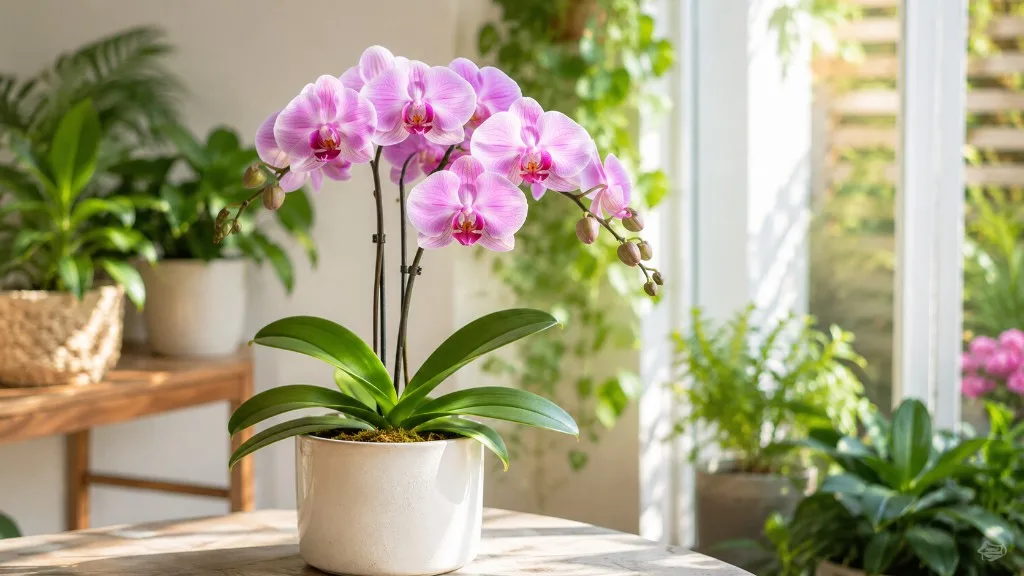
An orchid in bloom looks effortless. A week later, when the last petal drops, the same plant looks like a problem waiting for the trash. That cycle is why orchid care feels harder than it is: most buyers treat the flowers as the whole plant, then panic when the display ends. The orchid itself—the leaves, crown, and roots—is often still healthy. With the right light, a porous medium, and watering based on roots rather than a calendar, a common indoor Phalaenopsis can live for many years and bloom again. The American Orchid Society frames success as balancing light, water, fertilizer, temperature, humidity, and air movement—not chasing one trick. (American Orchid Society)
This guide focuses on orchids grown indoors, especially the moth orchids sold in grocery stores and garden centers. If you want genus-specific depth on the most common beginner plant, the Phalaenopsis orchid hub breaks care into light, watering, soil, and related topics. For lifespan expectations and long-term recovery, see how long orchids live.
Orchid Quick Reference
Use this table before you change three variables at once. Orchids punish stacked mistakes.
| Factor | Indoor target | First check if something looks wrong |
|---|---|---|
| Light | Bright indirect; east window or filtered south/west | Very dark green leaves, no new growth |
| Water | When bark/moss is nearly dry; copious drain | Roots—not leaves—tell the story |
| Medium | Orchid bark mix with perlite/charcoal; not potting soil | Sour smell, fine sludge in drainage water |
| Temperature | Most Phalaenopsis: ~65–80°F days; cooler nights help rebloom | Bud drop after heat spikes or cold drafts |
| Humidity | ~40–70%; gentle airflow | Crisp leaf edges in dry rooms |
| Fertilizer | Dilute during active growth; plain-water flush monthly | Salt crust on pot or medium |
| Pets | Phalaenopsis non-toxic to cats/dogs per ASPCA; GI upset still possible | (ASPCA Phalaenopsis) |
| Repot | Refresh medium every 1–3 years or when bark breaks down | Roots escaping pot, staying wet too long |
What Makes Orchids Different From Ordinary Houseplants
Orchidaceae is one of the largest plant families on Earth, with wild species on every continent except Antarctica and countless hybrids in trade. What unites the orchids most people grow indoors is not delicate flowers—it is an epiphytic lifestyle. In nature, many popular houseplant orchids grow on tree branches, collecting rain, humidity, and debris while their roots hang in open air. They are not designed to sit in dense, always-wet soil.
That biology explains the two care rules that matter most: give roots air, and alternate moisture with dryness. An orchid root wrapped in velamen—a spongy outer layer—stores water but suffocates if kept saturated. The AOS states that more orchids are killed by incorrect watering than any other mistake, largely because overwatering rots roots before the plant can signal trouble clearly. (AOS watering techniques)
Epiphytic roots and why potting soil fails
Regular potting soil compacts, holds water, and excludes air. Epiphytic orchid roots need a chunky, fast-draining mix—usually bark, sometimes with sphagnum moss, perlite, and horticultural charcoal. University of Connecticut Extension warns that orchid roots “like air and will rot if kept soggy and wet,” and recommends removing the tight sphagnum packing many retail orchids arrive in once you get them home. (UConn orchid care)
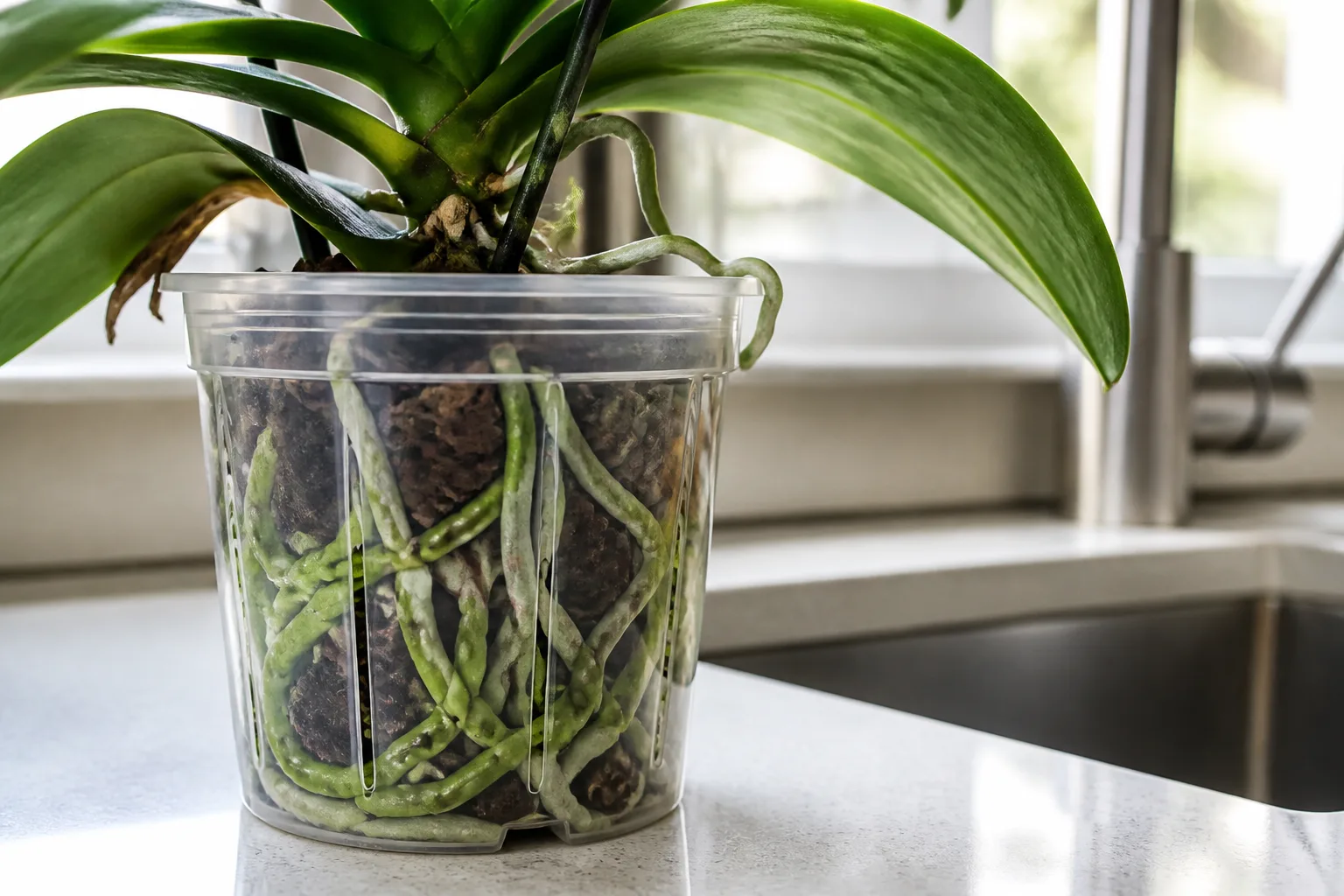
Clear plastic inner pots are useful tools, not gimmicks. Green roots often mean recent moisture; silvery-gray roots mean dryness approaching watering time. Texture matters more than color: firm roots are viable; mushy, hollow, or papery roots are not.
Light Requirements for Blooms and Healthy Leaves
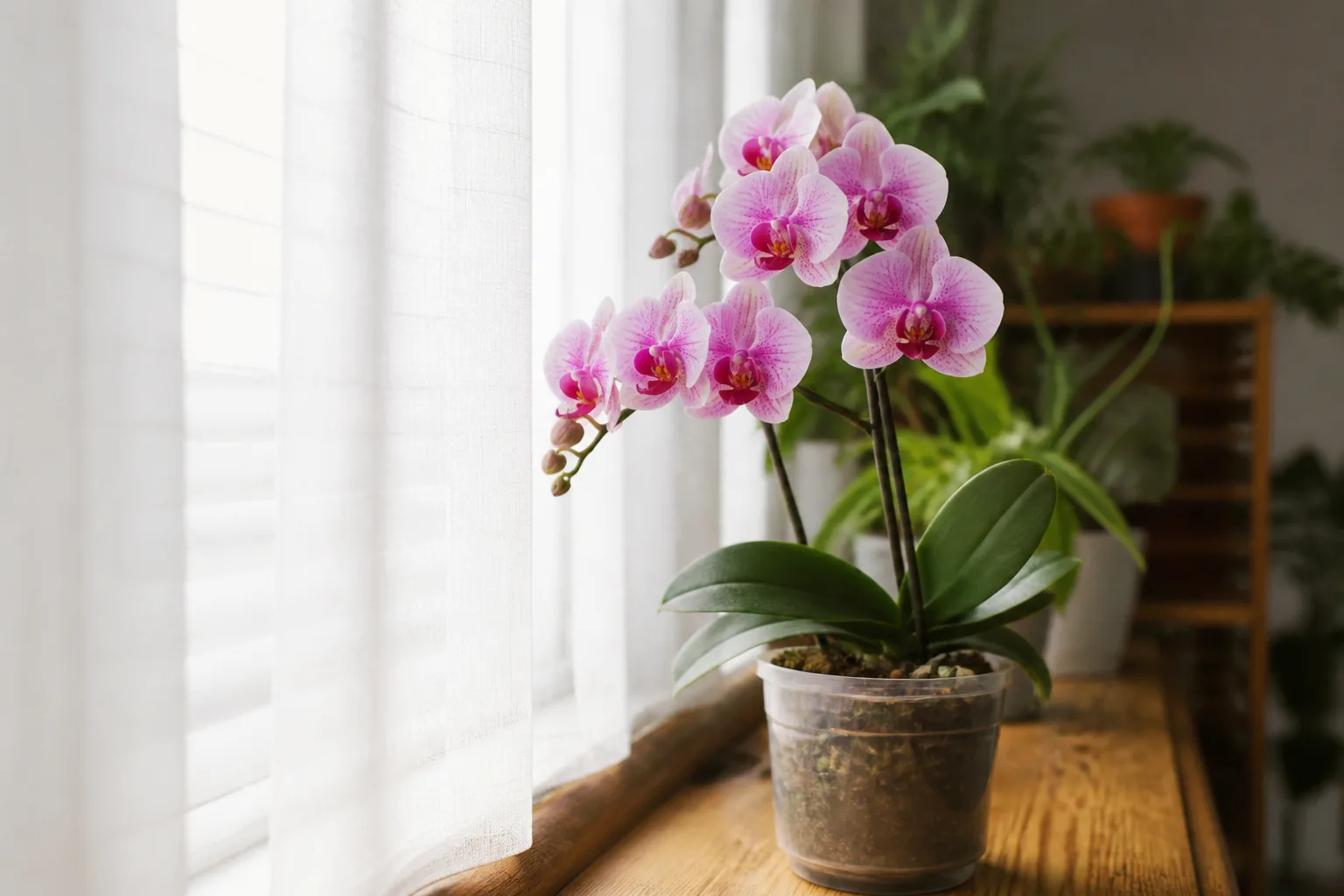
Orchids need bright light to build the carbohydrates that fuel leaves, roots, and future spikes. In the wild, a tree canopy filters sun; indoors, that translates to bright indirect light. An east-facing window is the classic starting point for Phalaenopsis. South- or west-facing glass can work with a sheer curtain or the plant set back from the pane so midday rays do not scorch leaves. UConn notes that direct sun can produce red-tinged scorch on moth orchid foliage. (UConn orchid care)
Leaf color is a rough light gauge. Very dark green, limp, or slow-growing plants often need more usable light—not more fertilizer. A medium grassy green suggests adequate intensity for Phalaenopsis. Bleached patches or hot, tan spots on the window-facing side mean pull the plant back or filter the light.
If your only bright spot is weak in winter, a full-spectrum grow light 12–18 inches above the leaves for 12–14 hours can supplement. Move plants gradually when upgrading light; a dim store display orchid can burn when slammed against summer glass.
Watering: When and How Much
There is no universal “water every Tuesday” schedule that works for every home. Humidity, pot size, medium type, airflow, season, and light all change drying speed. The AOS rule is simpler and harder: water just as the plant dries out, and water copiously when you do. (AOS watering techniques)
Phalaenopsis and other orchids without water-storage pseudobulbs should be watered just before the medium dries completely—before leaves wrinkle badly. Cattleya, Dendrobium, and Oncidium with pseudobulbs can tolerate—and often prefer—a fuller dry-down between drinks. Vandaceous orchids in warm, bright conditions may need water several times a week; the AOS notes that sealed, dry root tips on vandas mean you waited too long.
Reading roots before you pour
Wrinkled leaves do not automatically mean “water now.” Overwatering and underwatering can both produce shriveled foliage because damaged roots cannot move water. Maryland Extension explains that uniform yellowing and shriveling of newer leaves, not just the oldest ones, signals distress—often root failure from rot or broken-down medium. (Maryland Grows)
Before watering, check:
- Pot weight — a dry bark pot feels light.
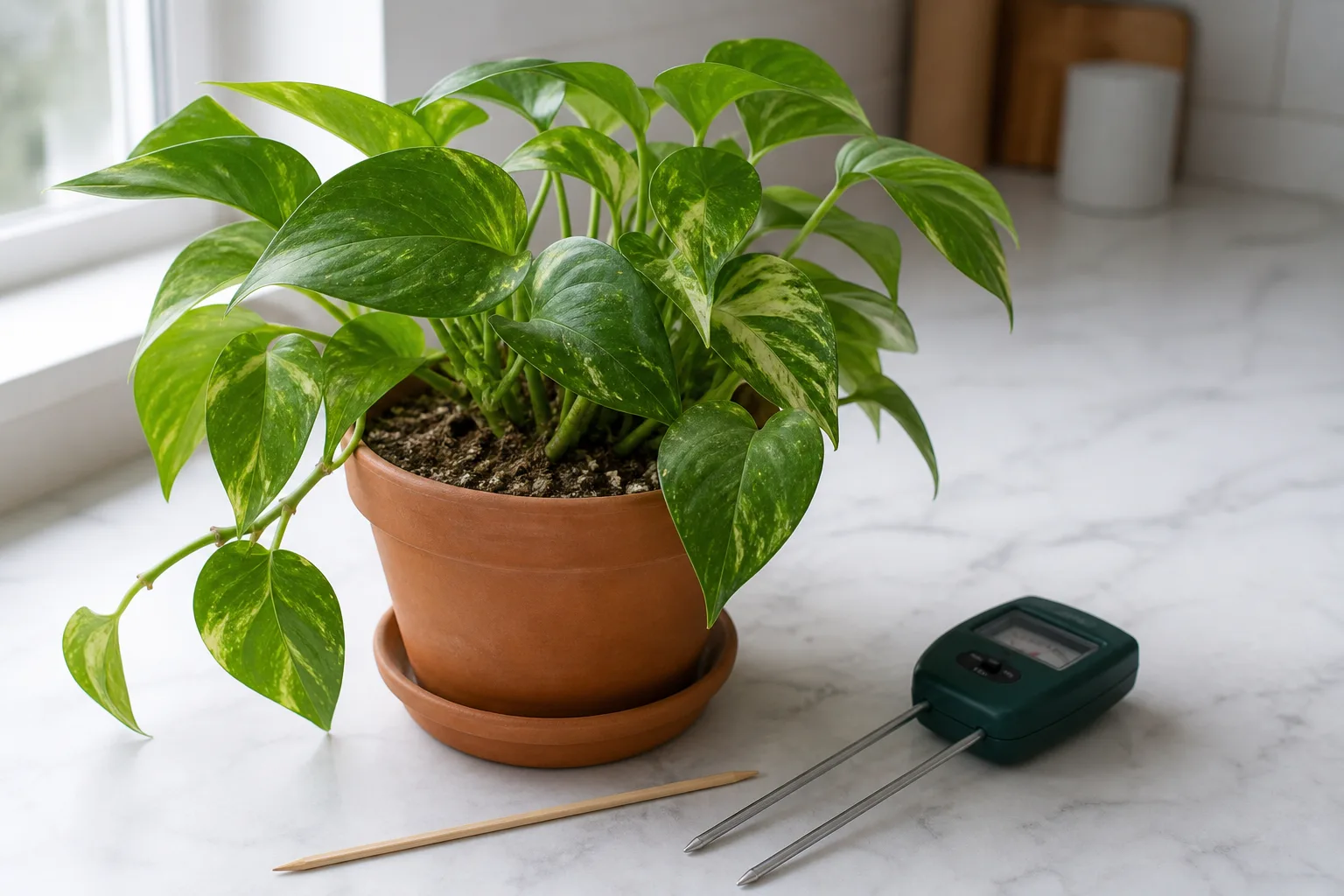
- Skewer or finger — sticky fine particles on a chopstick mean moisture remains in moss-heavy mixes.
- Root appearance in clear pots — plump green roots recently had water; flat silver roots are approaching thirst; brown mush is rot.
At the sink, run room-temperature water through the medium until it drains freely. Let the pot finish draining; empty cachepots and saucers. Water in the morning so the crown dries by night. Keep water out of the tight leaf junction (crown); standing water there invites crown rot. The AOS recommends a thorough flush at least monthly to leach fertilizer salts—even if you use a lighter routine between full soaks.
Ice cubes on orchids are a retail shortcut, not a horticultural standard. A cube may avoid crown flooding but still fails if you never inspect roots or drainage. Judge moisture; do not outsource the decision to frozen volume alone.
Potting Medium and Containers
Choose medium for root behavior, not flower display. A workable orchid mix contains bark, perlite, and horticultural charcoal. UConn advises refreshing bark annually at repot time because it breaks down over roughly two years, collapsing into a wet, airless mass. (UConn orchid care)
Sphagnum moss holds more water than bark—helpful in dry rooms, risky for heavy-handed waterers. Retail orchids packed in moss for shipping should be unpacked once home; roots need air at the pot wall, not a moss cocoon.
Containers should drain. Unglazed terracotta, slotted orchid pots, and clear plastic pots with side holes all increase airflow. Decorative outer pots are fine if they never hold standing water. When repotting, a snug pot is usually safer than an oversized one; extra volume stays wet around a small root ball.
If water runs through instantly or the mix looks like coffee grounds in the drain water, the bark has decomposed—repot into fresh medium even if the calendar says you are early.
Temperature, Humidity, and Air Movement
Most indoor Phalaenopsis tolerate ordinary home temperatures between about 65°F and 80°F during the day. They dislike cold drafts, blasting heat vents, and dry furnace air. Large temperature swings can drop buds before they open—watch placement near AC returns and winter window leaks.
Rebloom cues for many Phalaenopsis include cooler night temperatures in the 55°F–65°F range plus a wider day-night differential in fall. The AOS explains that a moth orchid sitting in the middle of a constantly warm room may grow well yet skip blooming because it never senses seasonal change; a window seat or brief cooler-night location can help. Day temperatures above about 82°F can also suppress Phalaenopsis flowering. (AOS rebloom guidance)
Indoor humidity around 40–70% supports healthy foliage. Increase humidity with a humidifier, grouping plants, or a pebble tray where the pot sits above the waterline—not in it.
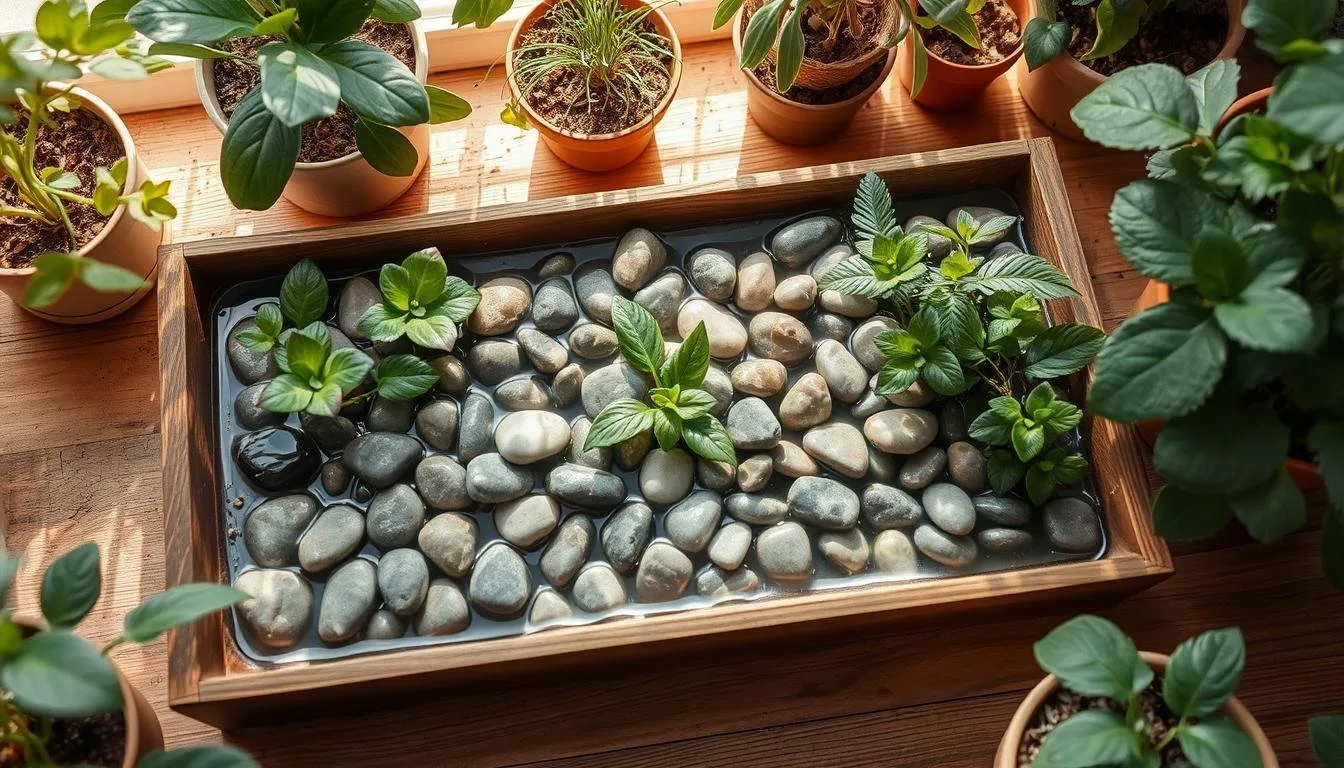 Mist lightly in the morning if you must, but misting is a weak substitute for proper medium moisture and airflow.
Orchids also need gentle air movement. Stagnant, humid corners encourage disease; direct fan blasts cause desiccation. Space orchids so leaves do not touch neighbors; good circulation mimics the open canopy they evolved under.
Fertilizing Without Burning Roots
Orchids are not heavy feeders, but they do need nutrients to replace spent bark and support new growth. UConn recommends a high-nitrogen houseplant formula (such as 30-10-10) at label strength every two weeks during spring, summer, and fall for bark-potted Phalaenopsis, switching to a half-strength high-phosphorus formula (10-30-20) in winter to support blooming. Moss-potted plants may do better with a balanced 10-10-10. (UConn orchid care)
General indoor guidance also supports weak, regular feeding during active growth with occasional plain-water flushes to prevent salt buildup. Never fertilize a dehydrated, rotting, or newly repotted plant with damaged roots—fix moisture and roots first. A white crust on the pot rim or burned root tips after feeding points to salt stress.
Common Orchid Types and What Changes in Care
Identity matters. “Orchid” on a tag is like saying “tree”—light, water, and rest periods differ sharply by genus.
Phalaenopsis, Dendrobium, Cattleya, and Cymbidium
Phalaenopsis (moth orchid) — Monopodial growth from a central crown; no pseudobulbs. Keep evenly moist-never-wet; bright indirect light; rebloom often tied to cool nights and adequate stored energy. Most beginner-friendly.
Dendrobium (cane orchid) — Sympodial canes; often needs a clearer dry rest after growth phases depending on section/type. Bright light; flowers along canes.
Cattleya (corsage orchid) — Pseudobulbs store water; allow medium to dry more between waterings. Strong light relative to Phalaenopsis; sensitive day-length cues for fall bloomers.
Cymbidium (boat orchid) — Strap leaves, multiple spikes; some mini types suit cool bright rooms. Larger standards often want cooler winter nights than typical heated apartments.
When unsure, photograph the plant and compare growth habit—single stem with fleshy leaves (Phalaenopsis) versus chains of pseudobulbs (Cattleya/Oncidium). Label before copying a watering rule from a friend.
Care After Flowering and Getting Rebloom
Flowers falling off is normal. The plant is redirecting energy to leaves and roots—not dying. The AOS lists three rebloom requirements: health, stored carbohydrates from adequate light, and the genus-specific blooming cue. (AOS rebloom guidance)
After bloom, keep the orchid in bright indirect light, maintain stable watering, and avoid repotting and heavy feeding simultaneously unless the medium is clearly failing. For Phalaenopsis, provide cooler nights in fall if your home stays warm 24/7—near a window (without cold glass contact) or a cooler room overnight.
Patience is part of the process. UConn notes new flowers on moth orchids often appear 6–9 weeks after proper post-bloom care, though low light can delay or prevent spikes entirely. Some plants skip a cycle after a stressful retail life; healthy new roots and leaves are progress even without immediate flowers.
Pruning Spikes and When to Cut
Use clean scissors or pruners. For Phalaenopsis with a still-green spike, you can cut above the first node below the lowest faded bloom—sometimes the same spike branches and reblooms faster. If the spike turns brown and dry, cut it near the base. Cutting to the leaf level is safe but usually slower to rebloom because the plant must grow a new spike from scratch. (UConn orchid care)
Other genera differ: many Dendrobium and Cattleya spikes are removed once brown. When in doubt, genus ID first; a green spike is a resource, a brown one is not.
Repotting Step by Step
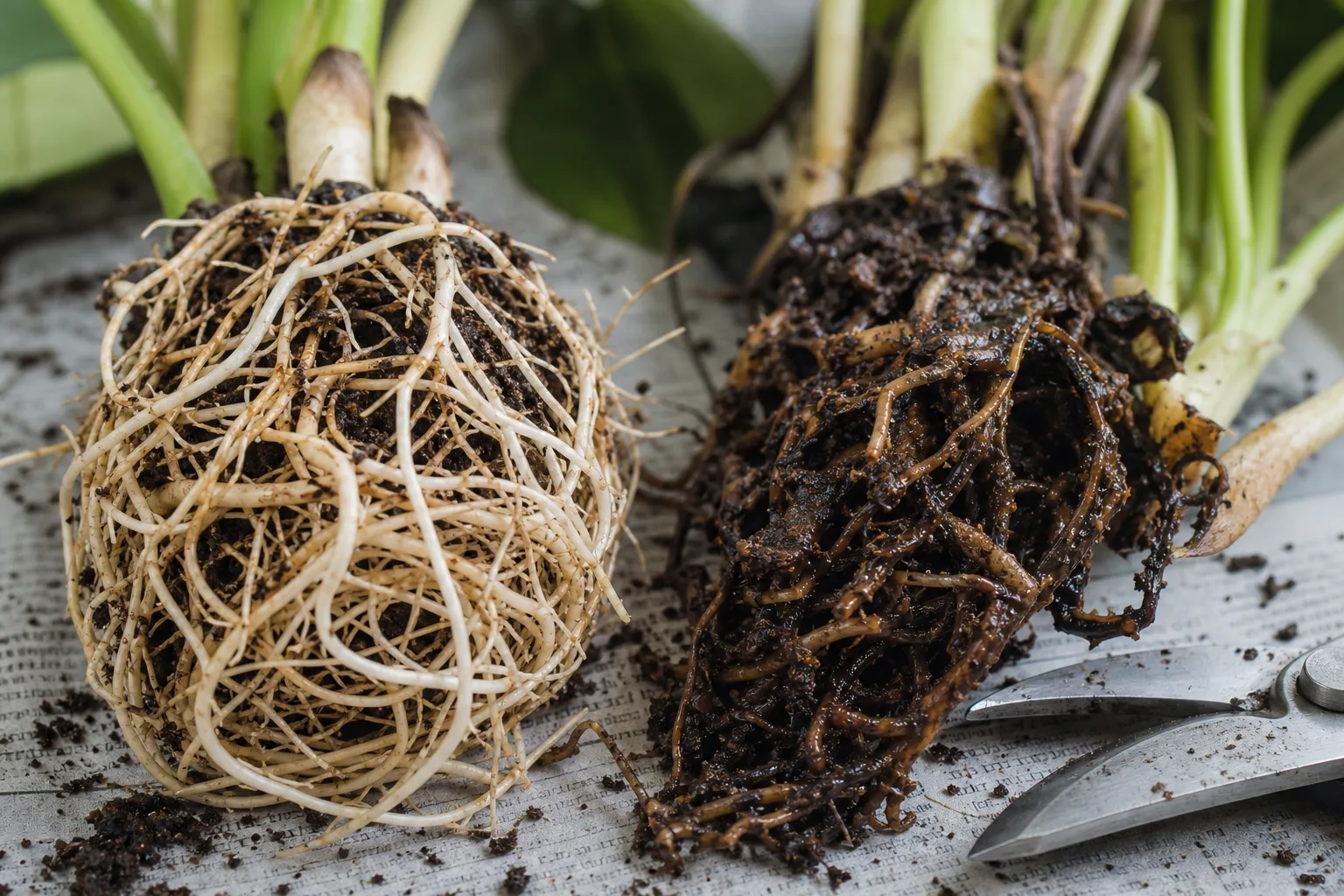
Repot when bark breaks down, roots overflow the pot, or rot recovery requires fresh medium—not because the calendar says so. After flowering is the safest window; avoid disturbing a plant in full bloom if you can wait.
UConn’s sequence translates well to home growers:
- Unpot the orchid; remove plastic liners and old moss.
- Trim dead roots—brown, mushy, hollow, or papery— with sterilized scissors.
- Place the root ball on fresh bark mix halfway up a clean pot; spread roots outward.
- Stake if needed with a chopstick beside the plant until new roots anchor.
- Backfill bark to about half an inch below the rim.
- Soak the potted plant in tepid water ~20 minutes, then drain fully.
- Top off bark if settling exposes roots.
Choose pots with drainage holes—mandatory. Side-slotted orchid pots and terracotta both work; match pot size to roots, not ambition.
Propagating by Division
Seed propagation is for specialists; home growers usually divide sympodial orchids with multiple healthy growths. Moisten medium, unpot, inspect roots, and gently separate clusters with at least three to four pseudobulbs and active roots each. Pot divisions in fresh mix, stake, and water lightly until new root tips appear.
Phalaenopsis rarely divides at retail size; they more often produce keikis (baby plants) on spikes or nodes, which can be removed and potted when roots are several inches long. Never force apart monopodial plants that have only one crown.
Pests and Diseases
Orchids are not pest magnets, but stressed plants attract the usual houseplant visitors: aphids, mealybugs, scale, spider mites, thrips, whiteflies, and fungus gnats in soggy medium. The AOS cultural guide emphasizes prevention through drainage, airflow, and removing infected tissue before chemicals. (AOS pests and cultural issues)
Start with physical removal—cotton swabs with diluted alcohol on mealybugs and scale, shower rinses for mites, yellow sticky traps for gnats and whiteflies. Insecticidal soap or neem oil can follow label directions on test leaves first. UConn advises against fertilizing diseased plants and recommends pesticides only after cultural fixes fail.
Root, crown, and leaf rots from overwatering are the most common “diseases” indoors. Crown rot from water sitting in the growth point can kill a Phalaenopsis outright. Black spots on leaves may be bacterial or fungal; isolate, improve airflow, trim affected tissue with sterile tools, and fix the wet conditions that enabled spread.
Troubleshooting Common Problems
Yellow leaves — The oldest Phalaenopsis leaf yellowing and drying is normal senescence. Uniform yellowing on newer leaves plus shriveling suggests root trouble—overwatering, broken-down medium, or crown rot from night-wet crowns. Repot and trim rot; adjust watering. (Maryland Grows)
Wrinkled leaves with dry medium — Underwatering or previously rotted roots that cannot absorb. Soak, then establish a root-check routine; if roots are gone, rescue may require a smaller pot and humidity tent—not more daily splashes.
Bud blast — Buds drop when stressed: inconsistent watering, ethylene from ripening fruit nearby, fumes, heat/cold drafts, or sudden light changes. Stabilize the environment before blaming the plant.
Spike turns yellow/brown — Often normal after bloom. If premature on a green plant, check overwatering, sunburn, or fertilizer burn.
No rebloom for a year — Usually insufficient light, warm nights without a differential, or weak roots. Upgrade light first, then temperature cues, then gentle feeding—one variable at a time.
Conclusion
Orchid care rewards observation more than optimism. Learn to read roots in a clear pot, keep the crown dry, use bark—not soil, and water copiously but only when the medium is nearly dry. Match watering logic to your genus, give Phalaenopsis enough light to store energy for the next spike, and expose it to cooler fall nights when your home runs warm around the clock. After flowers fade, prune the spike thoughtfully, repot if the medium is breaking down, and measure progress in new roots—not in whether a bloom appears next month. Do that consistently and the plant that looked “done” after Valentine’s Day can still be on your windowsill years from now.