Beefsteak Tomatoes Care: Grow Big, Healthy Fruit
Learn beefsteak tomatoes care from seed to harvest, with planting, support, watering, pruning, feeding, container, pest, disease, and harvest tips.
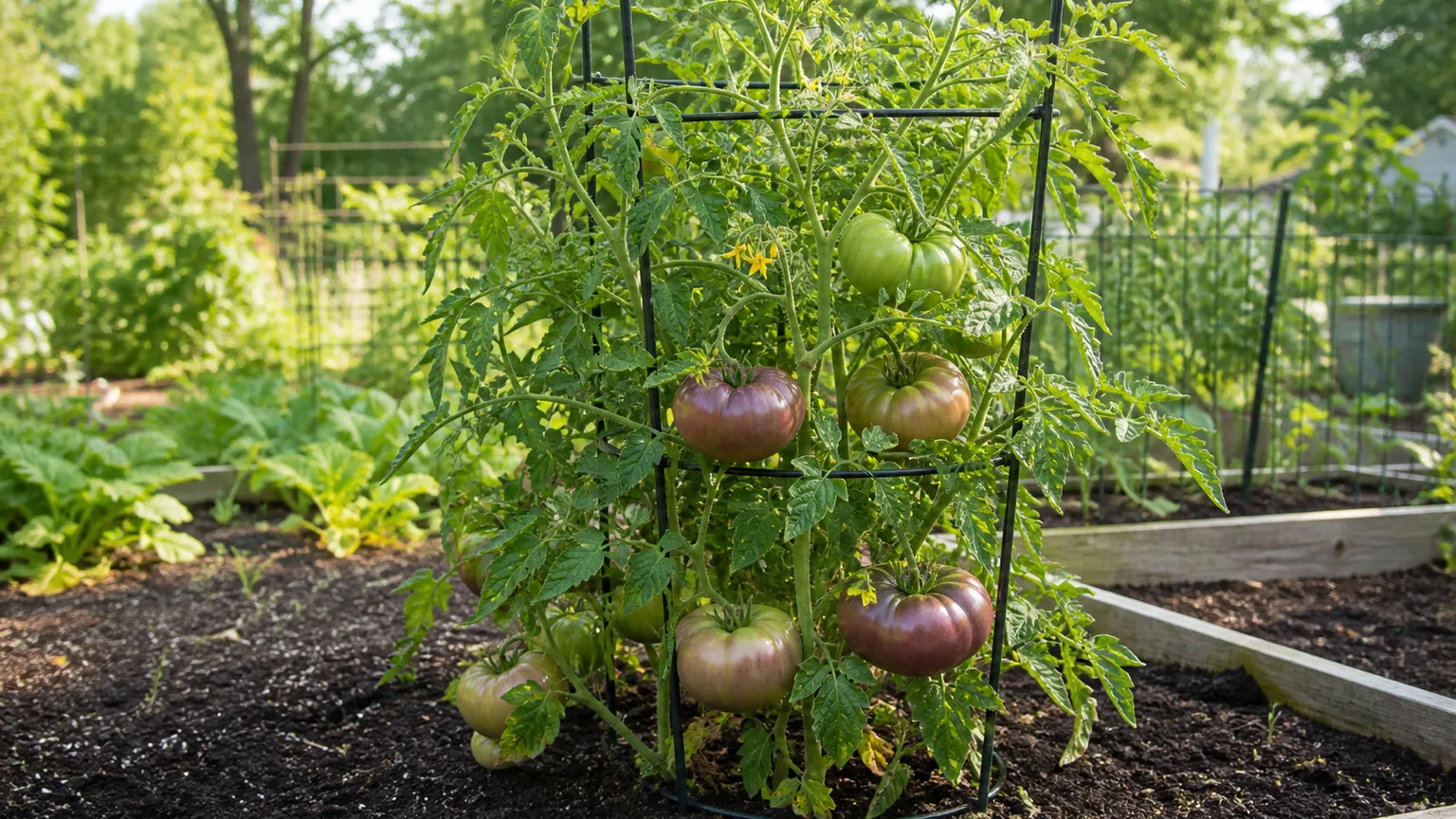
Beefsteak tomatoes reward a little planning. Their large, meaty fruits need a long warm season, a reliable root zone, and support that is already in place before the first heavy trusses form. The biggest mistake is to treat them like compact patio tomatoes: a thin stake, a dry pot, or a late-season pruning job can turn a promising plant into a tangled, stressed vine.
The name beefsteak describes a group of large-fruited tomatoes rather than one perfectly uniform cultivar. Many are indeterminate vines, but a few compact beefsteak types exist, so check the seed packet or plant label before deciding how much space and training the plant needs. The RHS tomato guide separates tall cordon or indeterminate plants from bush or determinate plants, a distinction that determines nearly every care decision that follows.
Beefsteak tomatoes in a nutshell
Beefsteaks are grown for thick flesh, substantial size, and slicing texture. Fruit can be red, pink, orange, yellow, striped, or dark-colored, and the familiar ribbed shape is common but not universal. Large fruit takes time and plant resources to develop, which is why a beefsteak plant may produce fewer tomatoes than a cherry tomato while still giving you a more useful sandwich or burger slice.
For a productive season, give the plant at least 6–8 hours of direct sun, fertile but well-drained soil, consistent moisture, and a tall, sturdy support. A useful starting target is 24–36 inches between plants, with more room—up to 36–48 inches—where summers are humid, the plants will not be pruned tightly, or disease pressure is high. Count rain and irrigation together rather than adding a fixed amount of water on top of every storm.
Most varieties are planted as warm-season annuals. Start seeds indoors about 6–8 weeks before your local last frost, then transplant only after cold nights have passed and the soil has warmed. In a short season, choosing a relatively early beefsteak or buying a healthy transplant is often more effective than planting a late, oversized nursery plant that is already flowering in a cramped pot.
Choose a variety that fits your season and space
Read the complete plant description, not just the word “beefsteak.” Compare days to maturity, growth habit, disease-resistance codes, mature height, expected fruit size, and whether the variety is recommended for outdoor growing or a greenhouse. A 90-day indeterminate heirloom can be delicious, but it is a poor match for a short cool season unless you start early and protect it.
Indeterminate versus determinate growth
Most beefsteaks are indeterminate, meaning the main vine keeps extending, producing leaves, flowers, and fruit until frost, disease, or another severe stress ends the season. They need a tall support and regular tie-in. They also benefit from a pruning plan because an unsupported indeterminate plant can make more side shoots than a gardener can realistically manage.
Determinate or bush beefsteaks stop growing at a genetically limited size and tend to set and ripen a more concentrated crop. They are easier to fit into a large container or small bed. Do not automatically remove every sucker from a determinate plant: those side branches may carry a meaningful share of its fruit. If the label says “bush,” follow the variety’s directions and limit maintenance to ground-contact leaves and any branches that need support.
The practical rule is simple: fruit type does not tell you growth habit. A plant labeled “beefsteak” still needs its own label checked. If you cannot find the habit, assume a tall support is safer than a short cage and give the plant room to grow.
Varieties worth considering
For classic heirloom flavor, gardeners often choose ‘Brandywine Pink,’ ‘Cherokee Purple,’ or ‘German Striped,’ accepting that fruit may be irregular and cracking may be more common. Modern hybrids such as ‘Big Beef’ are popular when you want large slicers with better productivity or disease-resistance options. The RHS profile for ‘Beefsteak’ lists the traditional type as a cordon, or indeterminate, tomato, while its profiles for cultivars such as ‘Beefmaster’ and ‘Buffalosteak’ show that fruit size and intended setting vary by cultivar.
Choose resistance codes as risk management, not a guarantee. A resistant variety can still struggle in saturated soil, suffer from a different disease, or become infected under intense pressure. In a wet climate, disease resistance and airflow may be more valuable than the last few ounces of potential fruit size.
Plant in the right place
Light, soil, and spacing
Set beefsteaks where they receive 6–8 hours of direct sun, preferably with morning light and enough breeze for leaves to dry after rain. A warm wall, raised bed, or sheltered slope can help in a cool region. In very hot climates, some afternoon shade can reduce heat stress, but dense shade will cost you flowering, flavor, and ripening speed.
Use soil that holds moisture without staying waterlogged. Incorporate finished compost when preparing a bed, but do not fill the planting hole with a pocket of rich material that is dramatically different from the surrounding soil. Roots need to move outward into a balanced, aerated root zone. A soil test is more useful than guessing with repeated lime, calcium, or fertilizer applications.
Space plants according to the way you will grow them. A single-stem, well-trained vine can fit closer than a sprawling, lightly pruned plant, but close spacing is a poor shortcut in rainy weather. Give each plant enough room to inspect the underside of leaves, tie stems, harvest fruit, and remove a diseased leaf without brushing the whole row.
Start seeds or transplant at the right time
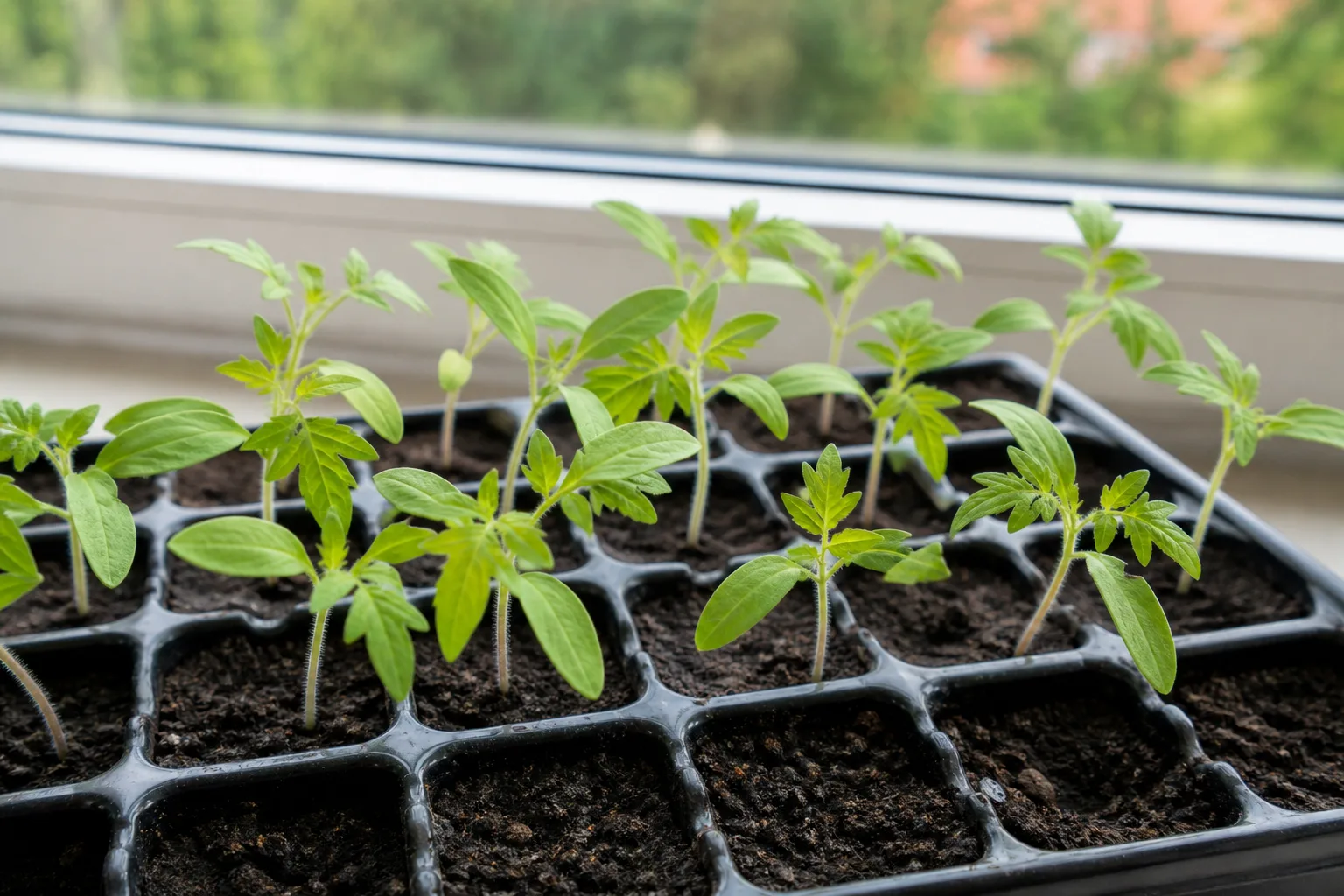
Sow indoors 6–8 weeks before the average last spring frost in a clean seed-starting mix. Keep the mix evenly moist, not saturated, and give seedlings very bright light as soon as they emerge. Warm conditions speed germination, but warmth without strong light creates tall, weak stems. If the seedlings stretch, lower a suitable grow light or move them to a brighter position rather than burying a long stem under a dim window.
Seed starting and hardening off
Pot seedlings on when they have a couple of true leaves or roots are filling the cell. Handle them by a leaf or the root ball, not by the stem. One reason to avoid buying the largest, most flower-covered transplant is that it may have spent too long root-bound; a stocky young plant usually adjusts better than a stressed plant trying to carry flowers from a small pot.
Harden off for about 7–10 days. Start outside in bright shade for a short period, then increase exposure to sun and wind each day while bringing plants in if nights are cold. A seedling raised under artificial light can scorch if moved directly into full midday sun. Hardening off is not optional acclimation theater; it prevents a light and wind shock that can stall the plant just as the season begins.
Plant deeply for a stronger root system
Transplant after the danger of frost has passed and nighttime temperatures are reliably mild. The exact date depends on your climate, but a cold soil is a stronger warning than the calendar. The RHS recommends planting once temperatures are reliably above about 60°F (16°C), while other warm-climate guidance may use a different threshold; local frost dates and soil conditions should control.
Remove the lowest leaves and bury the stem so the first remaining leaves sit just above soil level. Tomatoes can form adventitious roots along a buried stem, increasing the rooting area and helping a tall beefsteak withstand drought and fruit weight. Do not bury a leaf in wet soil, and do not compress the soil around the stem. Water deeply after planting and install the cage, stake, or trellis immediately.
Support the plant before vines load with fruit
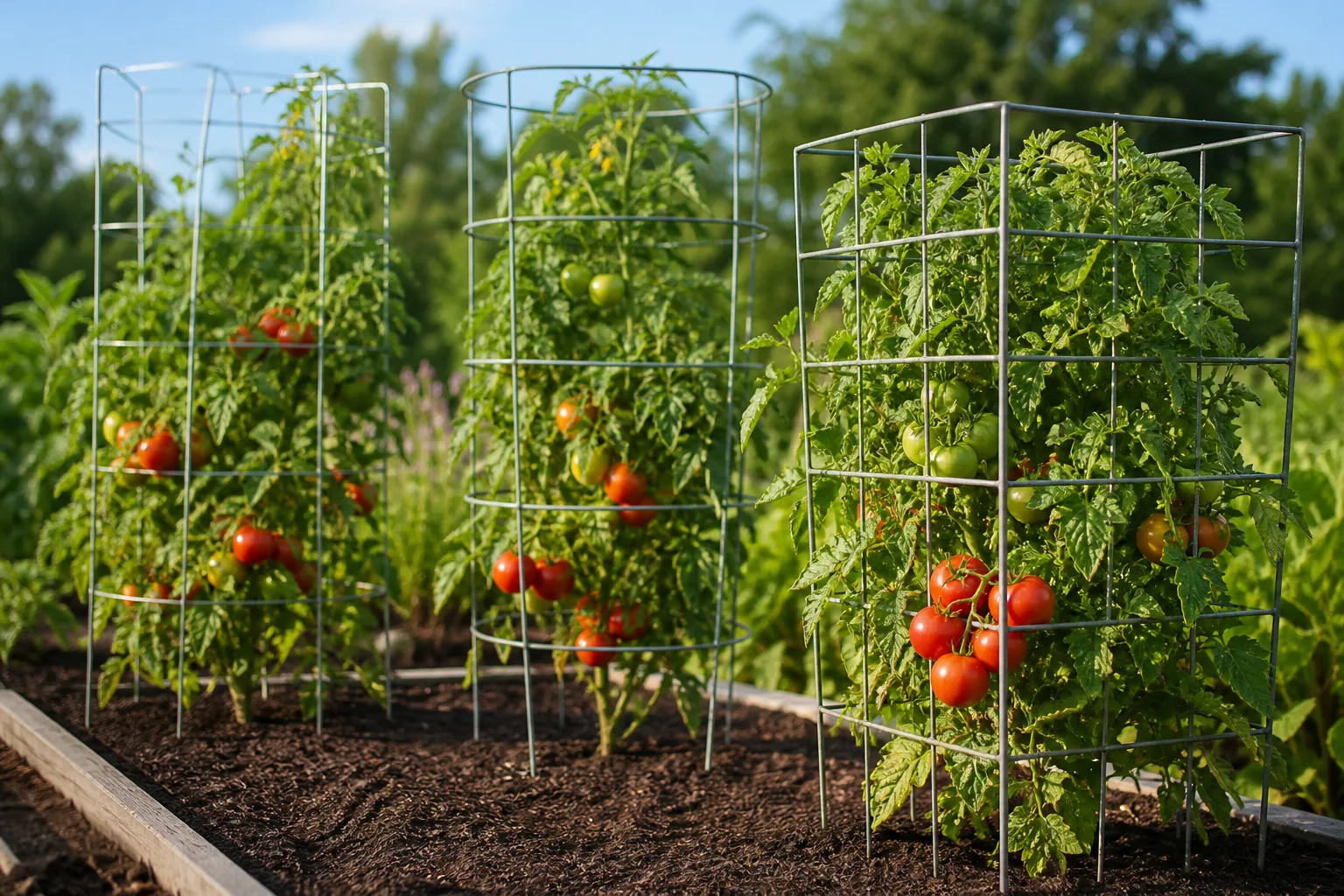
Support is structural care, not decoration. A beefsteak truss can bend a stem, and a mature indeterminate vine can pull a flimsy cage out of the ground. The RHS guidance notes that cordon tomatoes need tall supports and must be attached by hand because they do not naturally cling or twine around a support.
Cage, stake, or trellis: choose by plant
Use a large, heavy-gauge cage for a gardener who wants moderate pruning and several supported branches. The cage should be anchored deeply enough that wind and fruit weight cannot tip it. A short decorative cage is useful only for a genuinely compact variety.
Use a stake when you are prepared to train a plant to one or two leaders. Place the stake before or at planting so you do not drive it through established roots. Tie the stem loosely with soft material, checking often as it thickens. Tight knots can girdle stems during rapid growth.
Use a trellis or overhead string when you want a vertical system and have a secure structure. This works particularly well in a greenhouse, but the anchor must support the mature plant, not only the weight of an empty vine. Tie or clip growth before it flops. Supporting a horizontal branch beneath a heavy fruit cluster can prevent a late-season split at the stem.
Keep fruit and leaves off the soil where practical, but do not strip the plant bare to make it look tidy. Healthy leaves power fruit development and shade ripening fruit from sunscald.
Water for steady growth and crack-free fruit
The goal is an evenly moist root zone, not a rigid watering calendar. As a broad starting point, established in-ground tomatoes often need about 1–2 inches of water per week from rain plus irrigation, with more frequent checks in heat, sandy soil, raised beds, or containers. Push a finger several inches into the soil or use a moisture probe near the root zone; the surface alone can look dry while deeper soil is wet, or look damp after a shallow watering while roots are thirsty below.
Water slowly at the base so moisture penetrates 6–8 inches rather than running off. Drip irrigation and soaker hoses make this easier and keep leaves dry. A layer of clean organic mulch reduces evaporation and smooths the swings between a dry bed and a sudden soaking rain. Keep mulch slightly away from the stem to avoid a perpetually wet collar.
This sequence is supported by University of Georgia Cooperative Extension’s watering guidance: water stress affects fruit development, disease, pollination, and nutrient movement, while base watering and mulch reduce avoidable fluctuations. Do not let a wilting plant go bone-dry and then flood it repeatedly. Correct the pattern gradually, improving drainage if the soil remains saturated.
Feed for fruit instead of leaves
Start with soil and plant growth, not a bag promising giant tomatoes. Compost can improve the structure and fertility of a bed, but a soil test tells you whether additional nutrients or lime are justified. A tomato fertilizer is not a substitute for full sun, a healthy root system, or water that can drain.
Nitrogen is essential for leaves and stems, but too much can produce a dark-green jungle with delayed flowers and soft, fast growth. Avoid lawn fertilizer and repeated high-nitrogen applications. A balanced fertilizer at planting may be enough for an enriched bed; containers and sandy soils often need a planned follow-up feed because nutrients leave with drainage water.
Once fruit begins to swell, follow the label for a tomato or vegetable fertilizer and use the stated rate. Do not stack a granular feed, liquid feed, compost tea, and calcium product simply because the plant is flowering. High phosphorus is not automatically better, and eggshells added at planting will not quickly correct a calcium-delivery problem. The plant must have healthy roots and steady moisture to move calcium into developing fruit.
If the plant is pale, first inspect water, roots, the undersides of leaves, and recent weather. Feed only after ruling out waterlogging, drought, disease, and pests. CDFA’s tomato nutrient guidance is a useful reminder that rate, timing, and the existing soil matter as much as the printed N-P-K numbers.
Prune and train without overdoing it
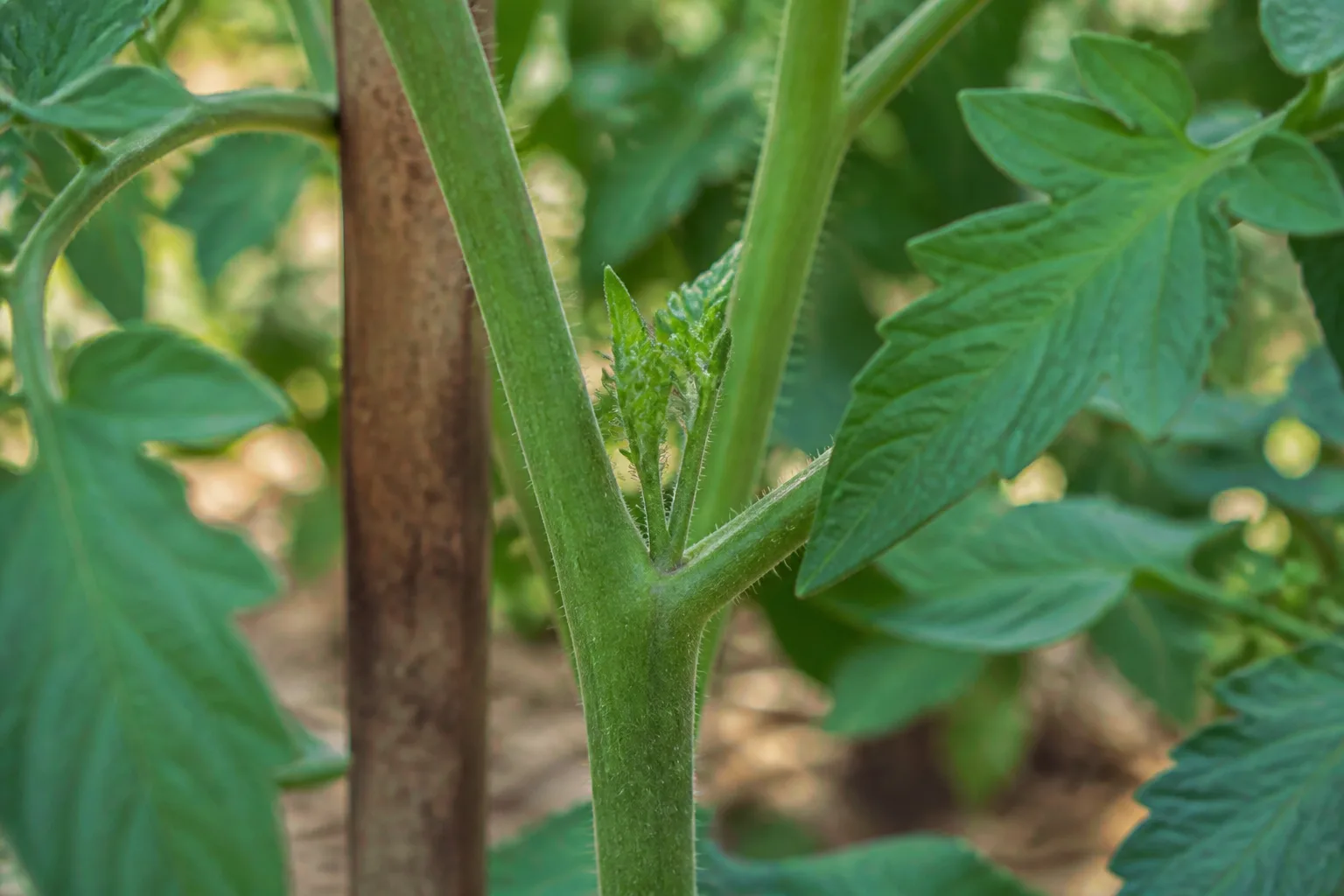
Pruning is a choice that trades some potential shoots for a more manageable, better-aired vine. On an indeterminate beefsteak, remove most unwanted suckers—the shoots emerging from the angle between a leaf and the main stem—while they are small and easy to pinch. Choose one or two leaders for a stake or narrow trellis, or retain more stems if your support is wide and strong enough.
Do not apply the same rule to a determinate plant. Removing every sucker from a bush tomato can remove fruiting wood and reduce yield. On either type, remove leaves that touch the ground and promptly remove clearly diseased tissue, but preserve enough healthy foliage to shade fruit.
The practical pruning rhythm is a brief inspection once or twice a week in active growth. Work on a dry plant, use clean sharp snips for larger stems, and clean tools between plants when disease is suspected. If a vine has already become a thicket, do not strip half the canopy in one afternoon. Thin gradually and avoid exposing all developing fruit to intense sun. Savvy Gardening’s pruning guidance is especially useful on the risks of determinate pruning, wet-weather work, over-pruning, and sunscald.
About a month before the expected first frost, you can pinch out new growing tips on an indeterminate plant and remove flowers that have little chance to mature. This directs attention toward existing fruit. It is a late-season decision, not a routine summer requirement.
Grow beefsteaks in containers
A beefsteak can grow in a pot, but the container must be large, stable, and watered more attentively than a small patio pot. Choose a container with drainage and enough volume for the mature root system; a 5-gallon pot is a practical minimum for many large vining tomatoes, while larger is more forgiving in hot climates. One plant per large container is the safer default unless the variety is explicitly compact.
Use a quality container mix rather than garden soil, which can compact and drain poorly in a pot. Add support before the plant reaches full height, and position the container where wind cannot topple the vine. A pot on a heat-reflecting patio may dry far faster than a bed, so check moisture daily during flowering and fruiting. Water thoroughly until excess drains, then empty any saucer rather than leaving roots in standing water.
Containers expose the cost of inconsistent care. A plant that repeatedly swings from dry to saturated is more likely to wilt, crack fruit, or show blossom-end rot. If you cannot check it often, use a larger pot, mulch the surface, and consider drip irrigation with a timer that has been tested rather than trusting an uncalibrated schedule.
Help flowers set fruit
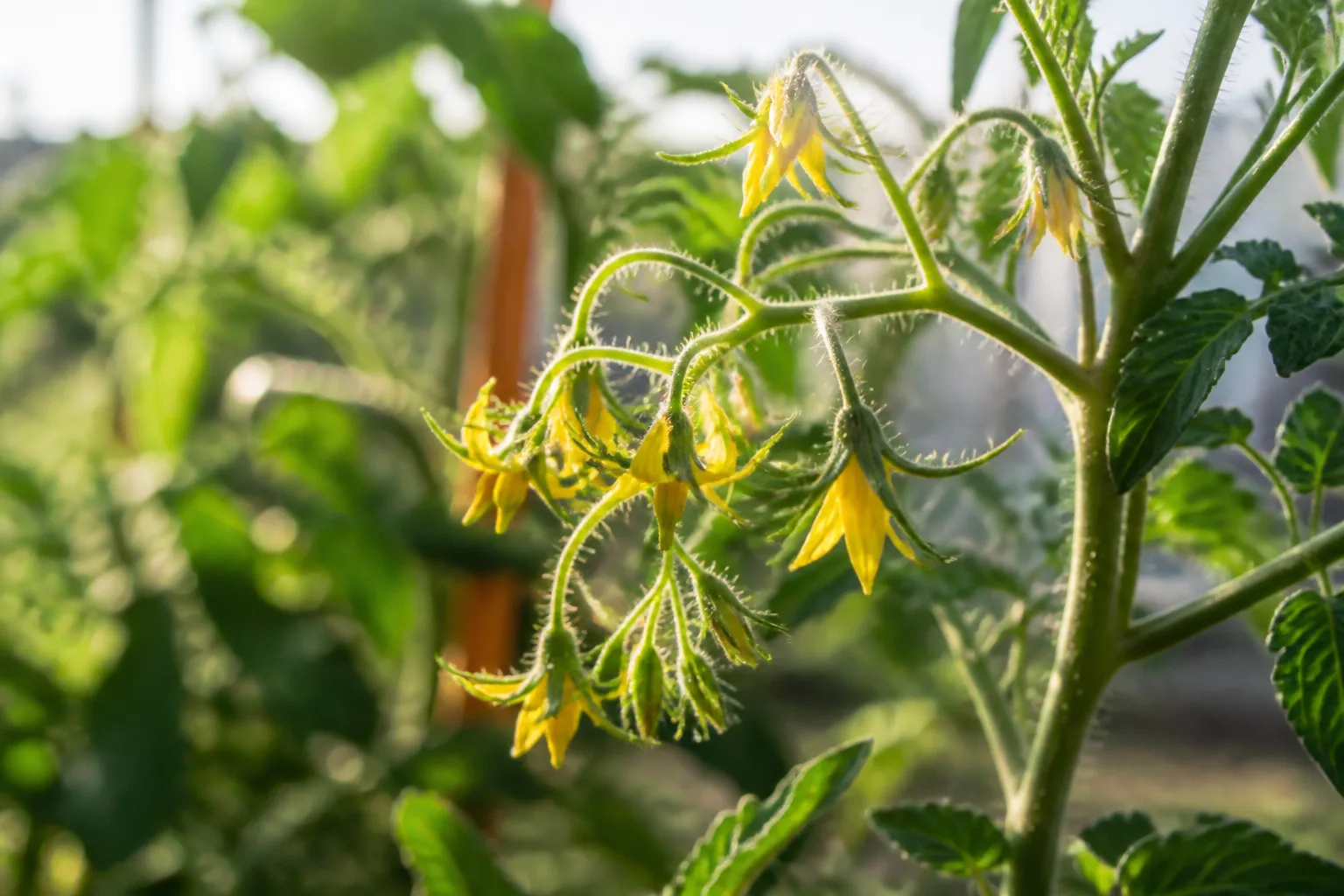
Tomato flowers contain the structures needed for self-pollination, but fruit set still depends on temperature, moisture, and movement. Cool nights, very hot days, drought, and sudden stress can cause blossoms to drop without a swelling fruit. This is common during a heat wave and does not necessarily mean you need more fertilizer.
Keep the root zone evenly moist while plants are flowering. In a greenhouse, ventilate on warm days and gently shake or tap an open flower cluster to release pollen. Outdoors, normal breeze and insect activity usually provide enough movement. Avoid spraying water directly onto flowers in the heat of the day, and do not try to compensate for poor conditions with a heavy feed.
When flowers keep dropping for more than a short weather event, check the plant’s growth habit, light, and temperature history. A nitrogen-heavy plant may be putting energy into leaves, while a shaded plant may simply lack the light needed to sustain fruit. Correct the underlying stress and wait for a better temperature window; flowers lost to a heat wave cannot be turned into fruit after the fact.
Harvest for flavor and protect ripe fruit
Days to maturity are estimates, not a ripeness test. Start checking fruit as it reaches full size and begins to change from mature green toward the variety’s final color. A ripe beefsteak should feel heavy and firm with a slight give, not hard and green or soft and leaking. Pick with clean hands or snips, leaving a short stem if it comes away easily.
For peak flavor, let healthy fruit finish coloring on the vine, especially when you can check the plant daily. Pick earlier at the breaker stage—when the first blush of final color appears—if birds, cracking rain, pests, or an approaching frost threaten the crop. UGA explains that breaker-stage tomatoes are physiologically mature and can finish coloring indoors. Keep them at room temperature out of direct sun; refrigeration can dull the texture and flavor of ripe tomatoes.
Check plants every few days during peak production. A large fruit left to soften on the vine can attract pests or split after a rain. Harvesting also reduces the load on the vine and gives remaining fruit a better chance to develop.
Troubleshoot pests, diseases, and fruit disorders
Start by identifying the pattern before treating anything. The UC Statewide IPM tomato overview groups tomato problems into insects, diseases, and environmental disorders, a useful distinction because a fungicide will not fix blossom-end rot and an insect spray will not fix waterlogged roots.
Hornworms: Look for stripped sections of foliage and dark droppings before searching the vine for a well-camouflaged caterpillar. Handpick and remove them; if you use a biological or chemical control, follow the current label and protect beneficial insects. Inspect frequently because a large hornworm can remove a surprising amount of leaf tissue quickly.
Aphids and flea beetles: Aphids cluster on soft new growth and may curl leaves; a firm stream of water can dislodge light infestations. Flea beetles make many small holes, especially on young plants. Row cover can protect young plants, but remove it when flowers need access to pollinators. Avoid spraying a broad insecticide merely because you see a few insects; first check whether the plant is still growing and whether beneficial predators are present.
Early blight and Septoria leaf spot: Lower leaves often show spots or yellowing first. Improve spacing and airflow, mulch to reduce soil splash, water at the base, and remove badly affected leaves on a dry day. Discard severely diseased debris rather than adding it to home compost. Rotate tomatoes and related Solanaceae crops when practical.
Late blight: Rapidly expanding dark lesions, collapsing foliage, or wet-looking fruit after cool, wet weather requires quick action. Isolate or remove affected material and seek local extension or plant-diagnostic guidance because late blight can spread rapidly and control depends on timing and the specific pathogen.
Blossom-end rot: A dark, sunken, leathery patch on the blossom end is a physiological disorder, not a contagious rot. The immediate fruit will not recover. Remove severely damaged fruit, correct uneven watering, improve drainage, and avoid a heavy nitrogen feed. N.C. Cooperative Extension explains that inconsistent moisture often prevents calcium from reaching developing fruit and recommends soil testing before adding lime. Adding calcium without fixing drought, root damage, or an incorrect pH is rarely the first move.
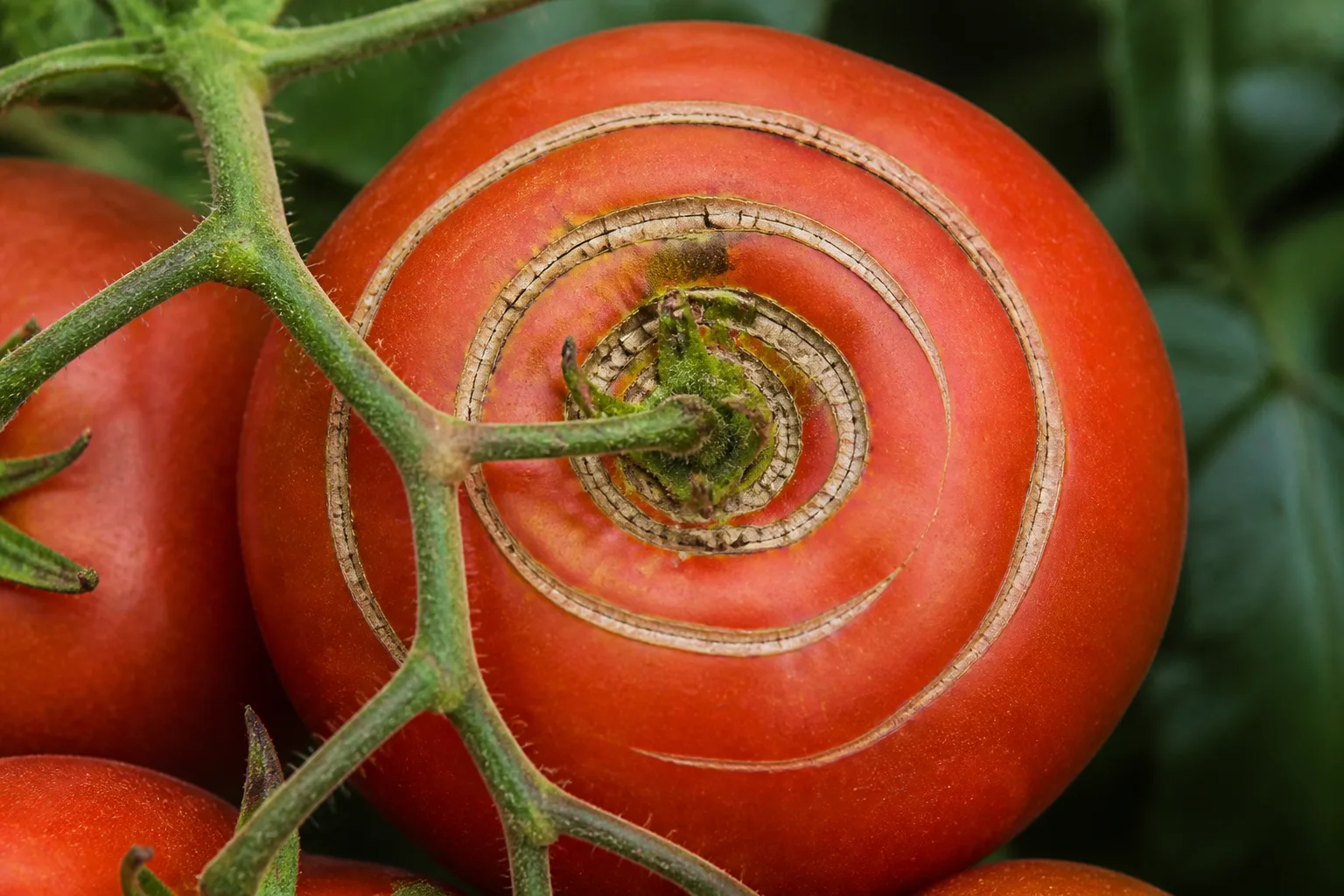
Cracking and splitting: Radial cracks run from the stem end; concentric cracks form rings around the shoulder. They are common when a dry root zone receives a sudden flush of water, especially as large fruit is ripening. Mulch, steady irrigation, avoiding excess nitrogen, and picking at the first mature color can reduce losses, but thin-skinned varieties may still crack during extreme rain.
Sunscald: Pale, bleached patches on exposed fruit usually mean the protective leaf canopy was removed too aggressively or a branch broke. Keep some leaves around developing fruit and train rather than stripping the plant. The answer to sunscald is better canopy management, not more fertilizer.
When something looks wrong, use this order:
- Look at the whole plant: is the problem on new growth, old leaves, fruit, or roots?
- Check soil moisture several inches down and inspect drainage, mulch, and recent rainfall.
- Examine undersides of leaves and the stem joints for insects, eggs, webbing, or lesions.
- Photograph the symptom and compare it with a university extension or integrated pest-management diagnosis.
- Remove only clearly affected tissue, sanitize tools, and monitor nearby plants.
- If using a pesticide, choose a product labeled for the crop and problem, follow the label exactly, and observe harvest intervals.
That sequence prevents a common cascade: a gardener mistakes blossom-end rot for a fungus, sprays the leaves, keeps watering irregularly, and loses more fruit while the real root-zone problem continues. It also keeps a few harmless cosmetic marks from becoming a needless chemical treatment.
Conclusion
Successful beefsteak tomato care is mostly a chain of timely decisions. Choose a variety that fits your season, plant it in full sun after the soil and nights warm, bury the stem deeply, and install real support before the vine grows. Then keep moisture steady, feed according to the soil and label rather than habit, prune only as the growth habit requires, and preserve enough foliage to protect fruit.
Large tomatoes are more sensitive to abrupt changes than their smaller cousins, so expect weather to influence the crop. A cracked tomato or a few dropped flowers does not mean the season is lost. Stabilize the root zone, improve airflow, inspect often, and harvest fruit when it reaches the right stage for your weather and kitchen. Those simple habits do more for a beefsteak harvest than chasing a single miracle fertilizer or pruning rule.



