Vanda Orchid Care Guide: Light, Water, Roots, and Baskets
Vanda spp. and cultivated hybrids
Vanda orchids need very bright light, warm humid air, and fast-drying roots. Learn how to water basket-grown Vandas without keeping roots wet.
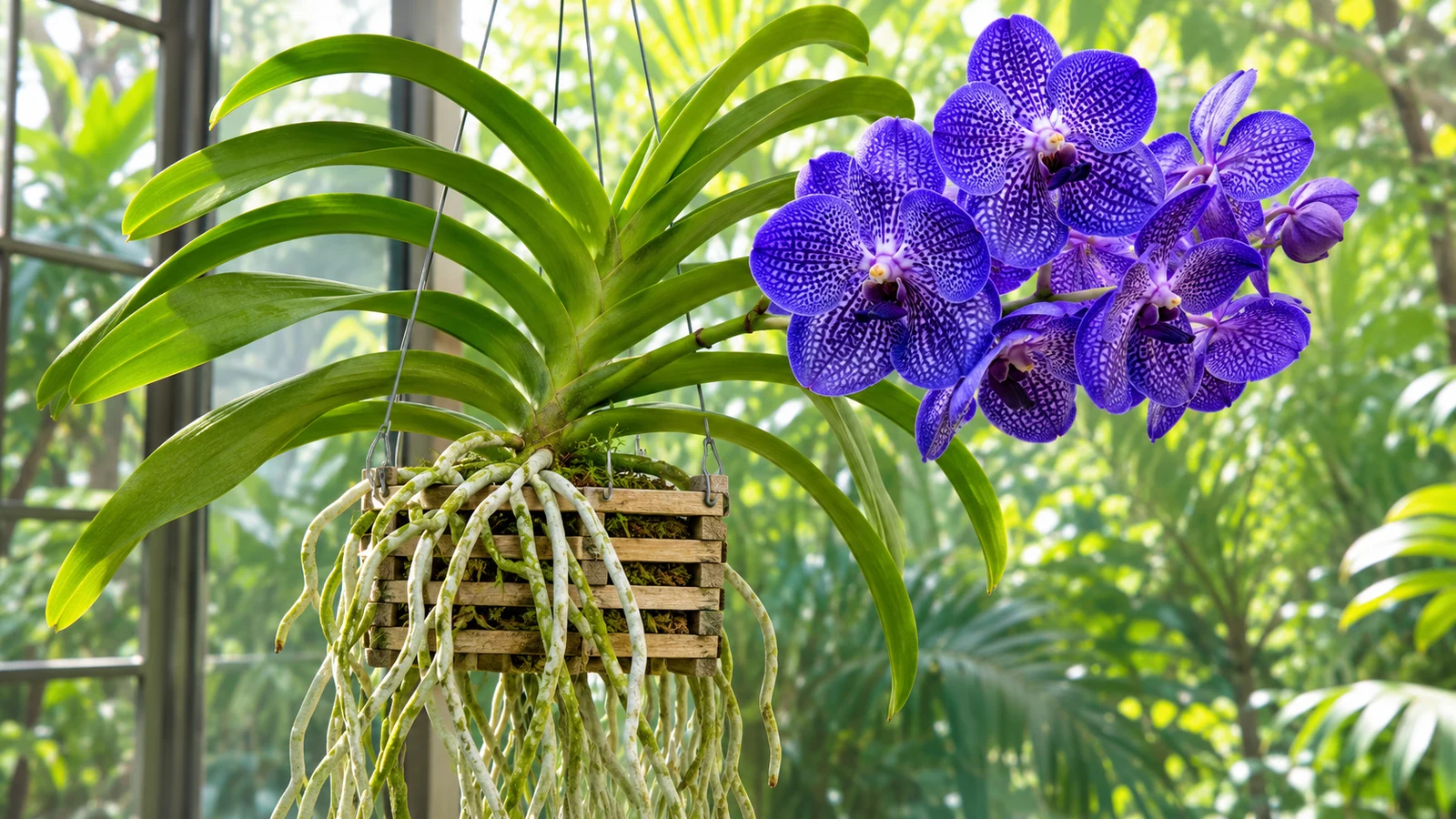
Vanda Orchid Care: Bright Light, Exposed Roots, and Watering
Start with wateringThe most common care mistake for VandaWatering guide →Vanda care essentials
Light
Very bright light; strap-leaved types need bright indirect or dappled light, while terete-leaved types tolerate stronger sun
Water
Vandas need frequent, thorough watering because their exposed roots and open baskets dry quickly. In warm, bright, airy greenhouse conditions, check them daily and water when the roots or medium have dried; some may need another drink during very hot weather. At home, use the root and medium dryness as your cue rather than following a fixed daily schedule. Let all excess water drain, and keep the roots from staying wet for long periods.
Soil
Do not use garden soil or ordinary potting mix. Grow Vanda bare-root in a slatted or open basket, or use a small amount of coarse, fast-drying orchid medium such as bark or lava rock when your home environment dries roots too quickly.
Humidity
Temperature
Fertilizer
About Vanda
Vanda is native to Tropical and subtropical Asia and the Pacific; ranges vary by species, typically reaches Medium to large, with upright stems and long aerial roots; size varies widely by species and hybrid indoors, with moderate to fast in warm, bright, humid growing conditions growth. Vanda has a evergreen, monopodial, tropical epiphytic orchid; some species also grow on rocks growth habit and part of the Orchidaceae family. It is also known as Vanda Orchid.
| Detail | Information |
|---|---|
| Also known as | Vanda Orchid |
| Native region | Tropical and subtropical Asia and the Pacific; ranges vary by species |
| Mature size | Medium to large, with upright stems and long aerial roots; size varies widely by species and hybrid |
| Growth rate | Moderate to fast in warm, bright, humid growing conditions |
| Growth habit | Evergreen, Monopodial, Tropical Epiphytic Orchid; Some Species Also Grow On Rocks |
| Scientific name | Vanda spp. and cultivated hybrids |
| Family | Orchidaceae |
How to care for Vanda?
How much light does Vanda need?
Very bright light; strap-leaved types need bright indirect or dappled light, while terete-leaved types tolerate stronger sun. Bright indirect light. Dappled outdoor light in warm weather. Gradually acclimated morning sun for suitable hybrids
- Very bright light - Very bright light; strap-leaved types need bright indirect or dappled light, while terete-leaved types tolerate stronger sun.
- strap-leaved types need bright indirect or dappled light - Very bright light; strap-leaved types need bright indirect or dappled light, while terete-leaved types tolerate stronger sun.
- while terete-leaved types tolerate stronger sun - Very bright light; strap-leaved types need bright indirect or dappled light, while terete-leaved types tolerate stronger sun.
- Bright indirect light - Bright indirect light.
- Dappled outdoor light in warm weather - Dappled outdoor light in warm weather.
- Gradually acclimated morning sun for suitable hybrids - Gradually acclimated morning sun for suitable hybrids.
When should you water Vanda?
Vandas need frequent, thorough watering because their exposed roots and open baskets dry quickly. In warm, bright, airy greenhouse conditions, check them daily and water when the roots or medium have dried; some may need another drink during very hot weather. At home, use the root and medium dryness as your cue rather than following a fixed daily schedule. Let all excess water drain, and keep the roots from staying wet for long periods.
- Check whether the aerial roots and any coarse medium have dried since the last watering. Water thoroughly with lukewarm water - In warm, bright, airy greenhouse conditions, check them daily and water when the roots or medium have dried; some may need another drink during very hot weather.
- then allow the basket or pot to drain freely. Adjust the interval to temperature - Vandas need frequent, thorough watering because their exposed roots and open baskets dry quickly.
- light
- humidity
- airflow
- and the amount of medium around the roots - In warm, bright, airy greenhouse conditions, check them daily and water when the roots or medium have dried; some may need another drink during very hot weather.
- Drain excess water - Let all excess water drain, and keep the roots from staying wet for long periods.
What soil works best for Vanda?
Do not use garden soil or ordinary potting mix. Grow Vanda bare-root in a slatted or open basket, or use a small amount of coarse, fast-drying orchid medium such as bark or lava rock when your home environment dries roots too quickly.
- For basket culture - Grow Vanda bare-root in a slatted or open basket, or use a small amount of coarse, fast-drying orchid medium such as bark or lava rock when your home environment dries roots too quickly.
- leave most roots exposed or use only a little coarse orchid bark - Grow Vanda bare-root in a slatted or open basket, or use a small amount of coarse, fast-drying orchid medium such as bark or lava rock when your home environment dries roots too quickly.
- For a pot - Do not use garden soil or ordinary potting mix.
- choose a ventilated container and coarse - Grow Vanda bare-root in a slatted or open basket, or use a small amount of coarse, fast-drying orchid medium such as bark or lava rock when your home environment dries roots too quickly.
- open orchid mix - Grow Vanda bare-root in a slatted or open basket, or use a small amount of coarse, fast-drying orchid medium such as bark or lava rock when your home environment dries roots too quickly.
- avoid dense
- water-retentive media
Grower notes for Vanda
Choose a bright, warm growing place
Vandas are high-light tropical orchids. Bright greenhouse light or a very bright window is usually needed for flowering, but the right exposure depends on the leaf type and hybrid. Strap-leaved forms generally suit bright indirect or dappled light; terete-leaved forms can tolerate stronger sun. Increase light gradually and protect leaves from sudden hot midday exposure.
Treat the exposed roots as part of the plant
Long aerial roots are normal for Vanda and help the plant take up water and nutrients. Do not trim healthy roots to make the orchid fit a small pot. An open basket or hanging setup leaves room for roots to grow and lets them dry after watering.
Water often, then let the roots dry
A Vanda in a warm, airy greenhouse may need a thorough drink every day because its roots dry quickly. That does not make daily watering a rule for every home. Check the roots and any medium, then adjust for temperature, light, humidity, and airflow. Avoid leaving the roots wet in a stagnant, cool space.
Pair humidity with moving air
Vandas grow well with humid air, but humidity alone is not enough. Keep air moving around the roots and leaves so the plant can dry between waterings and reduce the risk of rot. A hot, still room is not a substitute for a warm, humid growing environment with ventilation.
Expect a demanding indoor plant
The American Orchid Society cautions that many true Vanda species are too large and light-hungry for typical indoor conditions. Compact vandaceous hybrids may adapt more readily, but check the plant's leaf form and care label before choosing a window or greenhouse position.
Repot only when the growing setup needs it
Vandas do not need dense potting soil. Keep a healthy plant in its basket unless the medium has broken down, drainage has slowed, or the container is failing. When you do repot, handle brittle aerial roots gently and use a coarse, airy orchid medium.
Is Vanda safe around pets?
I did not find a Vanda-specific entry in the ASPCA plant search. The ASPCA notes that its list is not comprehensive, so this is an unverified status, not proof that Vanda is toxic or safe. Keep the orchid where pets cannot chew it and contact a veterinarian if an animal eats any part of the plant.
No species-specific toxic or non-toxic classification for Vanda was verified. Do not infer Vanda safety from an unrelated orchid genus.
Watering Vanda
For Vanda, check whether the aerial roots and any coarse medium have dried since the last watering. Water thoroughly with lukewarm water, then allow the basket or pot to drain freely. Adjust the interval to temperature, light, humidity, airflow, and the amount of medium around the roots. and water check exposed roots and any potting medium every day in warm, bright weather. Daily watering is common in greenhouses and hanging-basket culture, but a cooler or less airy home may need less frequent watering. As growth and evaporation slow in cool, dim weather, water less often while still preventing prolonged root shriveling. Increase checks and watering during warm, bright, fast-drying periods. Water less often during cool or low-light periods because the roots and medium dry more slowly; do not leave the plant in standing water at any time of year.
| Detail | Information |
|---|---|
| How often | Check exposed roots and any potting medium every day in warm, bright weather. Daily watering is common in greenhouses and hanging-basket culture, but a cooler or less airy home may need less frequent watering. As growth and evaporation slow in cool, dim weather, water less often while still preventing prolonged root shriveling. |
| How to check | Check whether the aerial roots and any coarse medium have dried since the last watering. Water thoroughly with lukewarm water, then allow the basket or pot to drain freely. Adjust the interval to temperature, light, humidity, airflow, and the amount of medium around the roots. |
| Seasonal changes | Increase checks and watering during warm, bright, fast-drying periods. Water less often during cool or low-light periods because the roots and medium dry more slowly; do not leave the plant in standing water at any time of year. |
Signs of overwatering
- Roots or medium remain wet for a long time, especially in a still, cool spot.
- Roots become soft or dark and begin to decay.
- New growth or flower buds decline where drainage or airflow is poor.
Signs of underwatering
- Aerial roots and any medium dry very soon after watering in warm weather.
- Leaves or roots become persistently shriveled during hot, dry conditions.
Soil & potting for Vanda
Use a mix of For basket culture, leave most roots exposed or use only a little coarse orchid bark., For a pot, choose a ventilated container and coarse, open orchid mix; avoid dense, water-retentive media. for Vanda. Very fast drainage and free airflow around the roots are essential. Repot repot only when the coarse medium begins breaking down or the container no longer supports the plant. A bare-root Vanda in a stable basket may not need routine repotting on a fixed calendar., ideally in during warm active growth, when new roots can establish quickly.
| Detail | Information |
|---|---|
| Recommended mix | For basket culture, leave most roots exposed or use only a little coarse orchid bark., For a pot, choose a ventilated container and coarse, open orchid mix; avoid dense, water-retentive media. |
| Drainage | Very fast drainage and free airflow around the roots are essential |
| Repotting frequency | Repot only when the coarse medium begins breaking down or the container no longer supports the plant. A bare-root Vanda in a stable basket may not need routine repotting on a fixed calendar. |
| Best season to repot | During warm active growth, when new roots can establish quickly |
Signs it needs repotting
- Bark or other medium has broken down and stays wet instead of drying freely.
- The basket or pot is damaged or can no longer support the plant securely.
- Roots are declining because the growing setup has lost drainage or airflow.