Dendrobium Orchid Care: Light, Water, and Winter Rest
Dendrobium spp.
Learn how to care for Dendrobium orchids with bright filtered light, airy bark, group-specific watering, and the right winter routine for cool- or warm-growing hybrids.
Dendrobium Orchid Care Guide
Start with wateringThe most common care mistake for DendrobiumWatering guide →Dendrobium care essentials
Light
Water
During active growth, water thoroughly and let the airy orchid medium dry slightly before watering again. Do not leave the pot standing in water. The schedule changes by group: nobile-type dendrobiums generally need a cooler, drier rest after their canes mature, while warm-growing Phalaenanthe and Spatulata types should not be forced into the same dry winter routine.
Soil
Use a free-draining orchid medium based on bark, not ordinary garden soil or dense houseplant potting mix. Choose the particle size and moisture retention for the growing space and the particular Dendrobium group.
Humidity
Temperature
Fertilizer
About Dendrobium
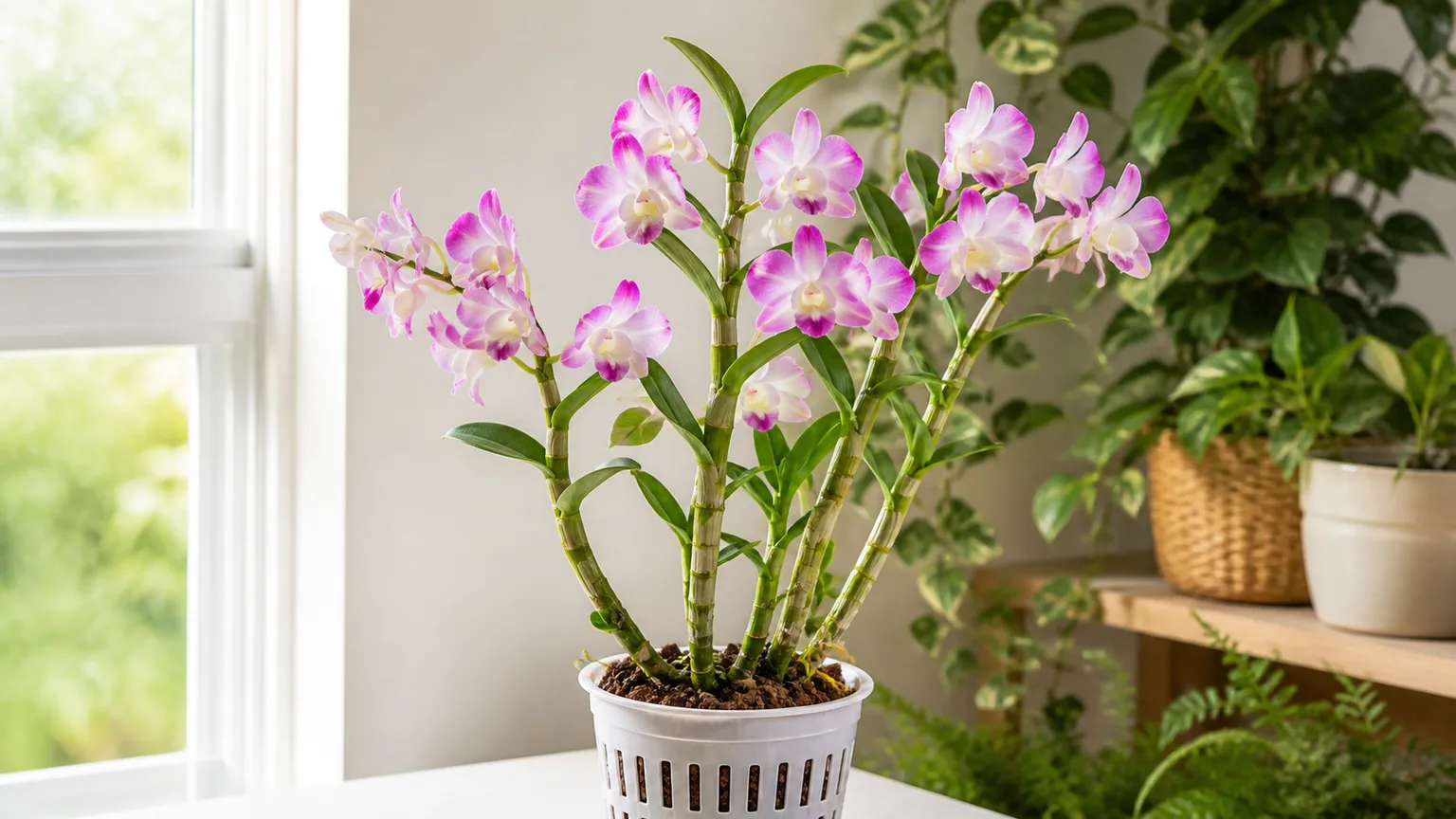
Dendrobium is native to Tropical and subtropical regions from East and South Asia across the Pacific, Australia, and New Zealand; the range varies by species., typically reaches Highly variable: RHS describes forms from a few centimetres tall to over two metres, depending on species and hybrid. indoors, with variable by group; new canes grow during active seasons, while some types slow down or rest after the canes mature. growth. Dendrobium has a epiphytic or lithophytic orchids; many popular hybrids form upright, cane like pseudobulbs that store water and nutrients. some are evergreen and others lose leaves seasonally. growth habit and part of the Orchidaceae family. It is also known as Dendrobium Orchid and Dendrobium Orchids.
| Detail | Information |
|---|---|
| Also known as | Dendrobium Orchid, Dendrobium Orchids |
| Native region | Tropical and subtropical regions from East and South Asia across the Pacific, Australia, and New Zealand; the range varies by species. |
| Mature size | Highly variable: RHS describes forms from a few centimetres tall to over two metres, depending on species and hybrid. |
| Growth rate | Variable by group; new canes grow during active seasons, while some types slow down or rest after the canes mature. |
| Growth habit | Epiphytic Or Lithophytic Orchids; Many Popular Hybrids Form Upright, Cane Like Pseudobulbs That Store Water And Nutrients. Some Are Evergreen And Others Lose Leaves Seasonally. |
| Scientific name | Dendrobium spp. |
| Family | Orchidaceae |
How to care for Dendrobium?
When should you water Dendrobium?
During active growth, water thoroughly and let the airy orchid medium dry slightly before watering again. Do not leave the pot standing in water. The schedule changes by group: nobile-type dendrobiums generally need a cooler, drier rest after their canes mature, while warm-growing Phalaenanthe and Spatulata types should not be forced into the same dry winter routine.
- Lift the pot to compare its weight after watering and as it dries. Check the bark below the surface and look for new root and cane growth - During active growth, water thoroughly and let the airy orchid medium dry slightly before watering again.
- water thoroughly when an actively growing plant is nearly dry - During active growth, water thoroughly and let the airy orchid medium dry slightly before watering again.
- then let excess drain away - During active growth, water thoroughly and let the airy orchid medium dry slightly before watering again.
- Drain excess water - During active growth, water thoroughly and let the airy orchid medium dry slightly before watering again.
What soil works best for Dendrobium?
Use a free-draining orchid medium based on bark, not ordinary garden soil or dense houseplant potting mix. Choose the particle size and moisture retention for the growing space and the particular Dendrobium group.
- Use medium or coarse orchid bark for an airy root zone. - Use a free-draining orchid medium based on bark, not ordinary garden soil or dense houseplant potting mix.
- Indoors
- add only a modest amount of sphagnum if the bark dries too quickly - Use a free-draining orchid medium based on bark, not ordinary garden soil or dense houseplant potting mix.
- while keeping the mix open and freely draining - Use a free-draining orchid medium based on bark, not ordinary garden soil or dense houseplant potting mix.
- Keep mounted or basket-grown plants evenly hydrated - Use a free-draining orchid medium based on bark, not ordinary garden soil or dense houseplant potting mix.
- these setups can dry faster than potted bark - Use a free-draining orchid medium based on bark, not ordinary garden soil or dense houseplant potting mix.
Grower notes for Dendrobium
Identify the group before changing winter care
Dendrobium is a large genus, not one uniform care recipe. RHS separates common nobile and kingianum hybrids, which prefer cooler conditions and a drier autumn-winter period, from warm-growing Phalaenanthe and Spatulata types. Check the plant label and keep its group-specific routine.
Bright light supports strong canes and flowering
Give the plant bright light with protection from harsh midday sun. The American Orchid Society notes that leaves grown too dark become lanky, while excessive exposure can yellow or scorch leaves. If the plant is healthy but will not flower, review its light and seasonal temperature before changing fertilizer.
Keep the canes that still have life in them
The upright canes store water and nutrients, and flowering stems emerge from their nodes. Do not cut a green or firm cane just because its flowers have faded; remove only a cane that is fully dry and dead.
Let water drain through the orchid bark
Water the root zone thoroughly, then let the pot drain. RHS advises that dendrobiums should not sit in water, and the American Orchid Society recommends allowing the medium to dry slightly between waterings during active growth. Check mounted plants more often because they dry faster.
Do not impose one dormancy on every Dendrobium
Nobile-type plants may need a cool, drier rest once their canes have matured; the RHS guide and specialist orchid growers describe this as a flowering cue for that group. Warm-growing Phalaenanthe and Spatulata types continue without that dormancy, so a prolonged dry spell can stress them.
Repot when roots or the medium call for it
Use an airy, bark-based orchid mix and a pot that is only slightly larger than the root mass. Repot as new roots emerge or when the bark has broken down, rather than repeatedly disturbing a plant that is growing well.
Pet safety: confirm the exact Dendrobium
A Dendrobium-specific toxic or non-toxic classification was not confirmed in the ASPCA cat plant list reviewed for this profile. That absence does not establish safety. Keep pets from chewing the plant and ask a veterinarian or animal poison service for advice if ingestion occurs.
Do not transfer safety findings from another orchid species to all Dendrobiums. The ASPCA cat list contains species-specific orchid entries, but this research did not find a Dendrobium entry; pet safety remains unverified.
Watering Dendrobium
For Dendrobium, lift the pot to compare its weight after watering and as it dries. Check the bark below the surface and look for new root and cane growth; water thoroughly when an actively growing plant is nearly dry, then let excess drain away. and water there is no reliable calendar interval for the whole genus. Check the bark and pot weight, then water when the medium is approaching dry during active growth. Mounted plants and warm, bright rooms can dry faster; reduce water only for groups that have a documented seasonal rest. Keep active growers evenly moist with slight drying between waterings. For deciduous or nobile-type plants, reduce watering after the canes mature and follow the cultivar's cool-season rest needs. Warm-growing types continue growing without a forced dormancy, so keep checking their medium instead of applying a genus-wide winter shutdown.
| Detail | Information |
|---|---|
| How often | There is no reliable calendar interval for the whole genus. Check the bark and pot weight, then water when the medium is approaching dry during active growth. Mounted plants and warm, bright rooms can dry faster; reduce water only for groups that have a documented seasonal rest. |
| How to check | Lift the pot to compare its weight after watering and as it dries. Check the bark below the surface and look for new root and cane growth; water thoroughly when an actively growing plant is nearly dry, then let excess drain away. |
| Seasonal changes | Keep active growers evenly moist with slight drying between waterings. For deciduous or nobile-type plants, reduce watering after the canes mature and follow the cultivar's cool-season rest needs. Warm-growing types continue growing without a forced dormancy, so keep checking their medium instead of applying a genus-wide winter shutdown. |
Signs of overwatering
- Bark stays wet for long periods or water remains in the cachepot.
- Roots become soft or dark, or new growth stalls in a persistently wet mix.
- Leaves or canes deteriorate while the root zone is still wet.
Signs of underwatering
- The medium dries rapidly during active growth and new canes stop extending.
- Canes become noticeably shrivelled rather than firm, especially outside a documented rest period.
Soil & potting for Dendrobium
Use a mix of Use medium or coarse orchid bark for an airy root zone., Indoors, add only a modest amount of sphagnum if the bark dries too quickly, while keeping the mix open and freely draining., Keep mounted or basket-grown plants evenly hydrated; these setups can dry faster than potted bark. for Dendrobium. Provide open drainage and good air around the roots. Water should run through the pot freely; never let the container sit in a saucer of water. Repot repot when the bark breaks down, the plant becomes unstable, or new roots begin to emerge; do not repot by a fixed annual calendar. Dendrobiums usually prefer a snug pot, and American Orchid Society guidance recommends allowing room for roughly two to three years of growth., ideally in repot after flowering or when fresh roots begin to emerge, so the plant can establish in the new medium. Avoid dividing a healthy clump unnecessarily.
| Detail | Information |
|---|---|
| Recommended mix | Use medium or coarse orchid bark for an airy root zone., Indoors, add only a modest amount of sphagnum if the bark dries too quickly, while keeping the mix open and freely draining., Keep mounted or basket-grown plants evenly hydrated; these setups can dry faster than potted bark. |
| Drainage | Provide open drainage and good air around the roots. Water should run through the pot freely; never let the container sit in a saucer of water. |
| Repotting frequency | Repot when the bark breaks down, the plant becomes unstable, or new roots begin to emerge; do not repot by a fixed annual calendar. Dendrobiums usually prefer a snug pot, and American Orchid Society guidance recommends allowing room for roughly two to three years of growth. |
| Best season to repot | Repot after flowering or when fresh roots begin to emerge, so the plant can establish in the new medium. Avoid dividing a healthy clump unnecessarily. |
Signs it needs repotting
- Orchid bark has decomposed and remains wet around the roots.
- New roots extend well beyond the pot or the clump has become top-heavy.
- The plant rocks in its container despite firm, healthy canes.