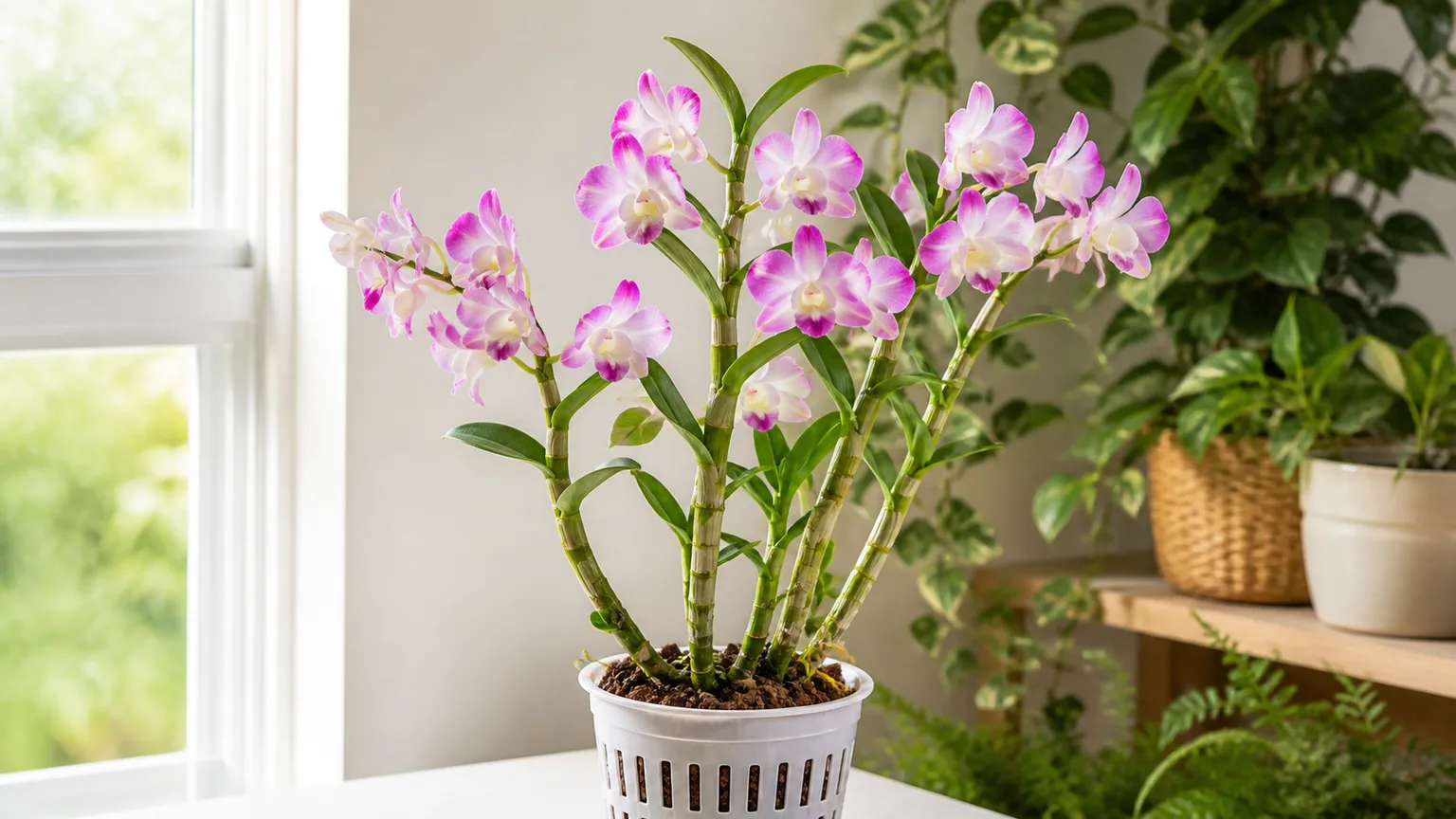
There is no single schedule for the genus. During active growth, water thoroughly when the bark is nearly dry and let excess drain. Reduce water in winter only for a group with a documented rest, such as many nobile types; warm-growing types should not be forced into dormancy.
Do all Dendrobium orchids need a winter rest?
No. Many nobile-type and deciduous dendrobiums benefit from cooler, drier conditions after their canes mature, while warm-growing Phalaenanthe and Spatulata types continue growing without a forced rest. Check the plant label before changing watering or temperature.
What light does a Dendrobium need indoors?
Give it bright light, softened from intense direct midday sun. Some high-light groups tolerate more sun than nobile types, so watch the leaves: lanky growth can indicate too little light, while yellowing or scorch suggests too much.
What potting mix is best for Dendrobium?
Use a free-draining orchid mix based on bark rather than ordinary soil. Keep the plant in a snug pot with open drainage, and repot when the bark breaks down or new roots begin to grow.
Is Dendrobium safe for cats?
This profile could not confirm a Dendrobium-specific status in the ASPCA cat plant list, so it does not label the genus safe or toxic. Prevent chewing and check the exact hybrid with a veterinarian if your cat may have eaten it.
How do I propagate Dendrobium?
Propagate Dendrobium from healthy stem or root divisions during active growth.
What soil is best for Dendrobium?
Use use a free-draining orchid medium based on bark, not ordinary garden soil or dense houseplant potting mix. Choose the particle size and moisture retention for the growing space and the particular Dendrobium group. A good mix includes Use medium or coarse orchid bark for an airy root zone., Indoors, add only a modest amount of sphagnum if the bark dries too quickly, while keeping the mix open and freely draining., Keep mounted or basket-grown plants evenly hydrated; these setups can dry faster than potted bark. Provide open drainage and good air around the roots. Water should run through the pot freely; never let the container sit in a saucer of water.
Written by Sai AnanthLead content writer at LeafyPixels. B.Pharmacy graduate from Andhra University with a background in pharmacognosy, turned indoor gardening writer after a long-time plant hobby became a research-led resource for home growers.View Sai Ananth's profile · Reviewed by LeafyPixels Review Board
This Dendrobium problems problem guide was researched and written by Sai AnanthLead content writer at LeafyPixels. B.Pharmacy graduate from Andhra University with a background in pharmacognosy, turned indoor gardening writer after a long-time plant hobby became a research-led resource for home growers.View Sai Ananth's profile. Problems symptoms on Dendrobium, lookalike causes, and step-by-step fixes are cross-checked against extension pest, disease, and care references before publication.
We prioritize sources that hold up under scrutiny:
University cooperative extension bulletins and fact sheets (Penn State, Clemson, UMD, NC State, and similar programs)
Botanical garden and horticultural society publications
Peer-reviewed plant science and veterinary toxicology references where pet safety matters (including ASPCA Animal Poison Control)
Established reference works on indoor plant culture
The LeafyPixels editorial team then reviews the draft for clarity, step-by-step usefulness, and fit with real apartment and home conditions-not ideal greenhouse setups. When guidance changes materially, we update the page and note the revision date.
Sources used
American Orchid Society — Dendrobium General Culture Sheet (n.d.) Group-specific light and temperature, active-growth watering, nobile rest, humidity, fertilizing, and bark potting.. [Online]. Available at: https://www.aos.org/orchid-care/care-sheets/dendrobium-general-culture-sheet (Accessed: 1 March 2024).
ASPCA Animal Poison Control — Cats Plant List (n.d.) Checked for a Dendrobium-specific cat classification; no genus-wide safety inference is made from the missing entry.. [Online]. Available at: https://www.aspca.org/pet-care/animal-poison-control/cats-plant-list (Accessed: 1 March 2024).
MissOrchidGirl — When to Water Dendrobium Orchids After Winter Rest (n.d.) Specialist grower observations on resuming water for Dendrobiums that require a winter rest; applied only to that group.. [Online]. Available at: https://missorchidgirl.com/when-to-water-dendrobium-orchids-after-the-winter-rest/ (Accessed: 1 March 2024).
RHS — Dendrobium Genus Guide (n.d.) Genus range, native regions, size variation, cane-like stems, and common hybrid groups.. [Online]. Available at: https://www.rhs.org.uk/plants/dendrobium (Accessed: 1 March 2024).
RHS — How to Grow Dendrobium (n.d.) Differences between cool- and warm-growing groups, light, water, humidity, seasonal rest, feeding, repotting, and cane care.. [Online]. Available at: https://www.rhs.org.uk/plants/dendrobium/how-to-grow-dendrobium (Accessed: 1 March 2024).