How Long Do Orchid Blooms Last by Type?
How long do orchid blooms last? Learn why Phalaenopsis often flowers for months, what shortens a display, and what to do when the last petals fall.
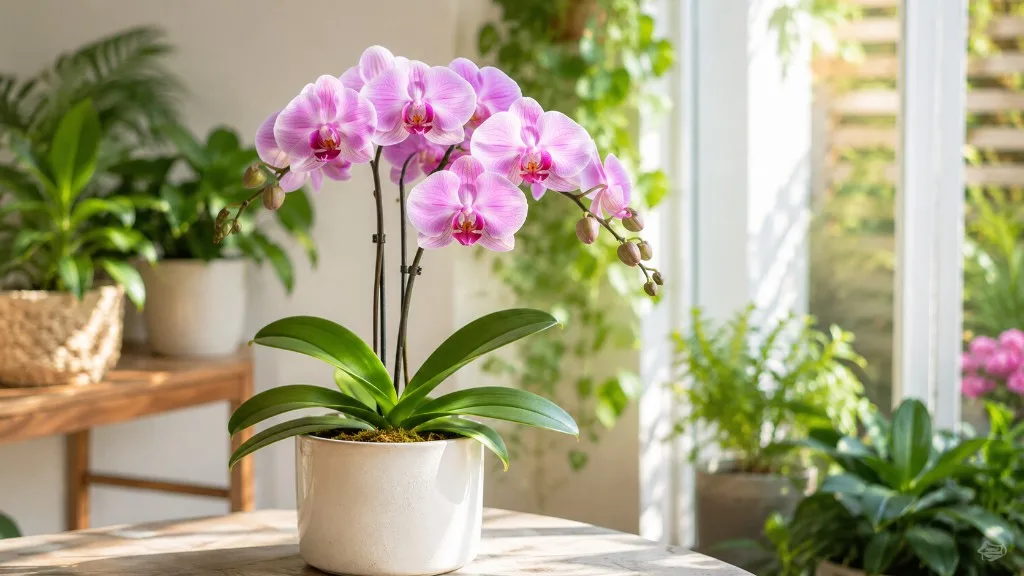
A healthy orchid can stay in flower for weeks or months, but there is no honest single number for every orchid. The familiar moth orchid, or Phalaenopsis, often keeps its display for several months indoors; many other orchids have a shorter or differently timed show. Even on one plant, individual flowers open and fade at different times, so the whole spike can look fresh long after its first blossom appeared.
For a grocery-store Phalaenopsis, “several months” is a useful expectation, not a warranty. The University of Connecticut Extension says moth-orchid blossoms can last for several months, while orchid type, hybrid, growing conditions, and how long the spike has already been open all affect what you see at home. The practical goal is not to force extra weeks from a flower that is naturally aging. It is to give the plant steady conditions, avoid preventable stress, and recognize when a display is simply finished.
The quick answer for a typical houseplant orchid
If you have a broad-leaved orchid with an arching stalk and rounded flowers, it is probably a Phalaenopsis. For that common houseplant, a display can last a few months under stable indoor conditions; the University of Connecticut Extension’s orchid care guide describes moth-orchid flowers lasting several months. Some hybrids hold flowers longer than others, and one plant may open a few buds at a time rather than all at once.
If your orchid is not a Phalaenopsis, treat that estimate as a comparison point rather than a promise. Orchidaceae includes thousands of species and many hybrids with different flowering rhythms. The label on the pot, a receipt, or a photo you can use to identify the plant is more helpful than assuming that every orchid sold in a grocery store behaves like a moth orchid.
A flower that lasts three months is not necessarily receiving a special trick. It may be a naturally long-lasting hybrid, the plant may be healthy, or the spike may have been only partly open when you brought it home. Conversely, a normal bloom can end earlier without signaling that the orchid is dying.
One flower and a whole spike have different clocks
People use “bloom time” to mean several things: the life of one flower, the period when a spike has at least one open flower, or the season when the plant is producing flowers. Those are different measurements. A single blossom can fade while neighboring buds are still opening, which extends the visible display beyond that flower’s lifespan.
Look at the spike as a sequence. On a branching or budded spray, the first flower to open is often the oldest, and new flowers may open farther along the stem over time. The display clock begins with the first open flower and ends when the last open flower has faded; counting from the day you purchased the plant can be misleading because it may have been flowering in the shop for a while.
This distinction also explains why two owners can report different bloom lengths for what appears to be the same orchid. One may be counting from the first bud opening, another from purchase, and another from the moment the final petal drops. When you want to compare plants, note the date the first flower opens and the date the last one fades, and record the orchid name if you know it.
Bloom duration depends on the orchid type
The Phalaenopsis is a useful baseline because it is widely sold and its flowers often last for months. That does not make it a fair model for every orchid. Even broad genera contain species and hybrids with different flower sizes, spike structures, seasons, and conditions.
| Orchid type | Practical expectation | What to keep in mind |
|---|---|---|
| Phalaenopsis (moth orchid) | The flowers may remain for several months. | This is the long-display houseplant most people mean when they ask about orchid blooms. |
| Dendrobium | Some flowering sprays last up to about four weeks. | Gardening Know How gives this as a broad guide; Dendrobium species and hybrids are varied. |
| Cattleya | Do not infer its flower duration from a moth orchid. | The American Orchid Society notes that most Cattleya-alliance spikes flower once, then dry back; spike behavior is not the same as exact flower lifespan. |
| Oncidium, Vanda, and Paphiopedilum | Duration depends on the species or hybrid and the individual spike. | Do not apply a Phalaenopsis calendar to these groups without checking their plant label or a culture guide. |
The Gardening Know How overview of Dendrobium orchids describes a spray that can last up to four weeks. That is useful as an example of why the word “orchid” does not equal “three months,” not a deadline for every Dendrobium. The American Orchid Society’s guide to finished flower spikes also separates the flowering habits of Phalaenopsis, some Dendrobiums, and the Cattleya alliance, which is a reminder to identify the plant before pruning it.
If you cannot identify the orchid, use the safest broad answer: expect the flowers to last from several weeks to months, observe how buds open, and avoid making a care change just to match an internet timetable. A plant tag that names the genus can narrow the question much more than a color or flower shape alone.
A store-bought orchid may already be mid-display
A flowering orchid at a store is a snapshot, not a fresh timer. Some flowers may have opened earlier, the oldest may already be beginning to fade, and the unopened buds may still extend the display. There is no reliable way to know how long the plant has been in flower just by looking at its price tag or the number of open blossoms.
Inspect more than the flowers before you buy or judge the plant. Look for firm leaves, a stable crown, a pot that drains, and roots that are not mushy or hollow. On the spike, a mix of open flowers and firm unopened buds generally means the display is still developing; several yellowing buds or flowers with thin, wrinkled petals suggest that part of the show may be near its end.
When you bring a flowering orchid home, let it settle in a bright location with a reasonably steady temperature. Repeatedly moving it from room to room to find a theoretical ideal can change the light, temperature, humidity, and airflow all at once. If the flowers remain firm and the buds continue opening, keep the routine steady instead of trying to “reset” the display.
What changes how long flowers stay attractive?
Some factors are part of the plant itself. Species and hybrid genetics set a ceiling on how long its flowers typically last, and flower size or the number of buds on a spike does not predict an exact duration. A Phalaenopsis hybrid selected for an extended indoor display may naturally outlast an orchid whose flowers are brief but dramatic.
Growing conditions can help the orchid avoid premature stress, but they cannot make a naturally short-lived flower stay fresh indefinitely. Abrupt temperature swings, hot or cold air from a vent, intense direct sun, a major change in placement, root stress, and rough handling can all contribute to a display that declines sooner than expected. The American Orchid Society specifically warns that fluctuating temperatures can cause ready-to-open Phalaenopsis buds to drop.
The most useful distinction is between protecting an existing flower and preparing the plant for the next flowering cycle. Bright filtered light, sound roots, and appropriate watering keep the plant functioning; they do not reverse the natural aging of open petals. Treat each care choice as a way to reduce stress, not as a guaranteed bloom-extending treatment.
Light: bright and filtered is the safe baseline
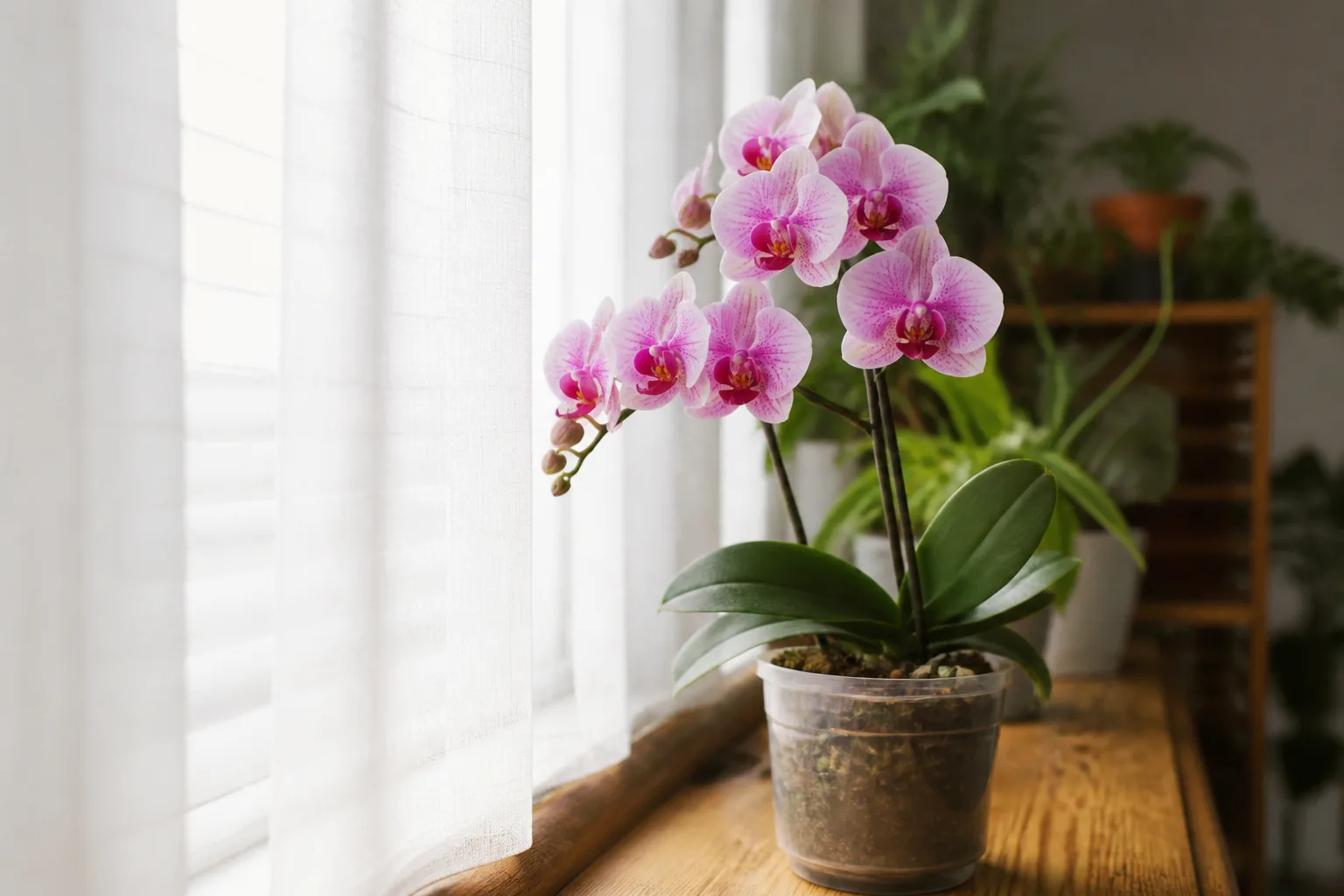
For a Phalaenopsis, bright indoor light without harsh direct sun is a sensible place to start. The American Orchid Society says moth orchids grow well in a bright window with little or no direct sun, while Colorado State University PlantTalk’s Phalaenopsis profile describes moderate to lower-light conditions such as an east or north window or diffused light. Both sources support a practical rule: give the plant enough ambient brightness, then filter strong sun rather than placing the flowers in a hot beam.
A sheer curtain or a position slightly back from a sunny window can soften intense midday rays. Do not move an orchid into direct summer sun because you heard that more light means longer-lasting flowers. Sunburn can damage leaves, and a hot windowsill can warm the flowers and roots more than the rest of the room.
For other orchid groups, light preferences differ. Some need brighter conditions than a moth orchid to grow or flower reliably, so use a genus-specific guide rather than treating “bright, indirect light” as a universal ceiling. If the plant is in a good spot and the flowers are aging normally, you do not need to move it simply because the petals are no longer as vivid as when they opened.
Temperature and location: avoid abrupt changes
Stable conditions matter more than chasing one perfect thermometer reading while the plant is in flower. Keep a flowering moth orchid away from blasts of heat from radiators or vents and from cold air pouring through an open window. The American Orchid Society notes that large temperature fluctuations can cause buds close to opening to drop; the University of Connecticut Extension similarly cautions that pronounced temperature changes can lead to premature bud loss.
A short seasonal temperature cue used to initiate a future Phalaenopsis spike is a different issue from maintaining an open display. The AOS describes cooler autumn nights as a flowering signal for mature plants, but that does not mean you should chill a plant that is currently carrying buds or flowers to make those flowers last longer. Do not place a warm-growing orchid outdoors overnight or next to cold glass to experiment with a bloom trigger.
Once the plant is settled, avoid unnecessary moves. If you need to relocate it, choose a spot with similar light and temperature, carry the pot upright, and keep the spike from bumping a doorframe or wall. This is especially useful when a plant is in bud: the stems can be brittle, and the flowers are not improved by a sudden change in its surroundings.
Water the roots, not the flowers
Water according to the orchid’s medium and roots, not according to the flowers or a fixed weekly schedule. A bark-filled pot may dry faster than tightly packed moss, and a clear nursery pot may reveal changing root color that an opaque ceramic cover hides. Water thoroughly when the medium is nearing dry for that plant, then let excess water drain completely.
Do not compensate for fading flowers by watering more often. Overwatering can damage roots and undermine the plant’s ability to support itself, while prolonged dryness can stress it too. If the flowers are fading but the leaves are firm and the roots look healthy, the bloom cycle may simply be ending; changing the watering schedule will not reopen old buds.
Keep water from standing in the crown, the point where the leaves meet, and do not leave the pot sitting in a full saucer or decorative cover. When possible, water in the morning so accidental splashes can dry, and avoid pouring water directly onto petals. The goal is a healthy root zone with good drainage, not a wet flower display or permanently soggy pot.
Humidity and airflow: balance matters
Orchids are not all adapted to the same humidity, and a household does not need greenhouse conditions just because an orchid is flowering. The American Orchid Society gives Phalaenopsis a humidity range that is higher than many homes, but it also emphasizes air movement; high humidity without circulation can encourage disease around wet plant tissue. In a typical room, focus on avoiding a persistently dry blast from a heater and providing gentle airflow rather than trying to turn the windowsill into a humid greenhouse.
A room humidifier may help a collection in a very dry home, but a small pebble tray will not change the humidity of an entire room in a measurable way. If you use a tray, keep the pot above the waterline and empty standing water from any outer container. Never let the orchid’s roots sit submerged simply to increase humidity.
Misting is not a dependable way to extend the life of open flowers. It briefly wets surfaces and may leave spots or moisture between petals, while the room air soon returns to its previous humidity. Keep the blossoms reasonably dry and make adjustments to the growing environment only when the plant and room conditions justify them.
Fertilizer will not freeze the bloom clock
Fertilizer supports growth over time; it is not a preservative for open flowers. A dose applied after the first bloom opens cannot reverse petal aging or force unopened buds to mature. Continue a sensible routine only if the plant was already being fertilized appropriately, and follow the product’s dilution directions rather than increasing the dose to chase more weeks of color.
Strong or frequent feeding can create avoidable salt buildup or damage roots, especially if the plant is not growing actively or the medium is not being flushed. Orchid care recommendations differ by medium and growing conditions, so there is no safe universal instruction to fertilize every week while in bloom. For a typical Phalaenopsis, use a weak, consistent, label-directed fertilizer during active growth, and do not treat a bloom spike as a reason to double the amount.
The same restraint applies to repotting. If the plant is stable and the pot drains, wait until flowering ends to refresh old medium or change the container. Repot during bloom only when there is a real problem—such as rotting roots, a broken pot, or a medium that stays waterlogged—and understand that disturbing roots may cost flowers or buds.
Flowers falling off: normal aging or a warning?
A flower that gradually loses color, wrinkles, or dries before dropping is usually completing its natural lifespan. On many spikes, the oldest blossoms fade first while younger flowers remain open or buds continue to develop. If the rest of the plant looks stable and the decline is gradual, removing the fallen flowers and maintaining ordinary care is usually enough.
A faster, more sudden drop deserves a closer look, but it still does not identify one cause by itself. Think back over the last several days: Did the plant travel home from a cold vehicle, sit by a heater, move to a darker room, receive a strong blast from an air conditioner, or get bumped while the spike was moving? The American Orchid Society points to temperature fluctuations as one cause of bud drop, and Epic Gardening’s troubleshooting of orchid flowers falling off likewise discusses several possible environmental and care stresses.
Check roots and leaves before changing water or fertilizer. If the pot is sour-smelling, constantly wet, or full of soft brown roots, the plant may have a root problem that needs attention. If the roots are firm and the leaves look healthy, but one or two oldest flowers have faded, do not repot or radically alter care just because the display is less colorful.
Buds dropping before they open need a different check
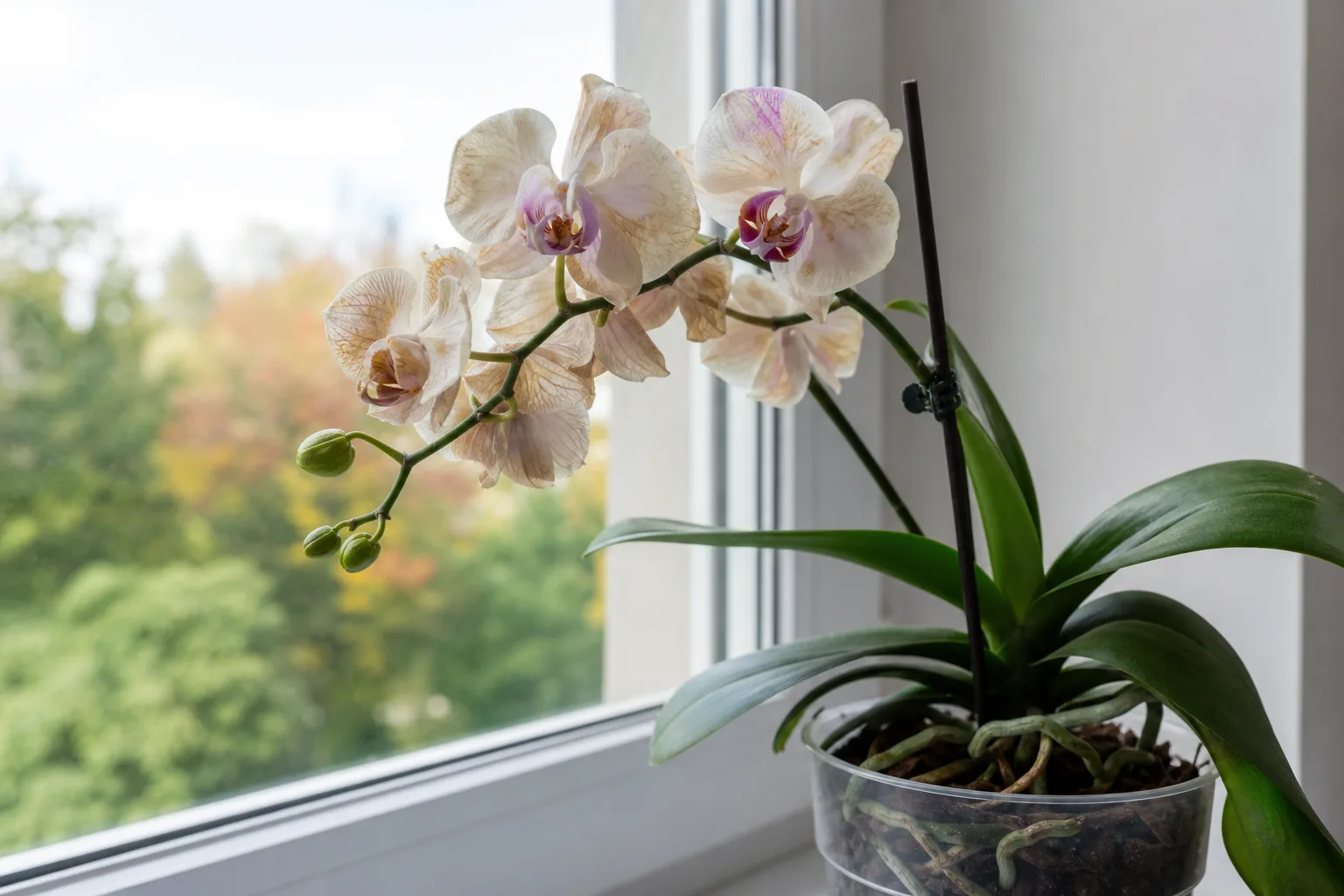
A bud that shrivels, turns yellow, and falls before opening is not the same as an old open flower fading. Growers often call this bud blast or bud drop. It can follow sudden temperature changes, a sharp change in light or location, very dry air, water stress, or another setback; the visible bud loss is a symptom, not a diagnosis.
Start with the most recent change, not a generic “add more water” rule. Was the orchid exposed to a cold draft or a hot vent? Did the pot stay wet longer after a move into a dimmer room? Did it get jostled in transit or carried upright with buds rubbing against a wall? The American Orchid Society’s Phalaenopsis culture sheet notes that fluctuating temperatures can cause buds ready to open to drop, so first restore a steady, appropriate location.
Do not try to save a bud that is already yellow, wrinkled, and detached. Instead, prevent additional losses by keeping the plant’s environment consistent and checking that the roots are neither dry for long periods nor sitting in stale, soggy medium. If several buds drop and the leaves or crown also deteriorate, investigate plant health rather than assuming that the natural bloom season is over.
How to tell when the bloom cycle is ending
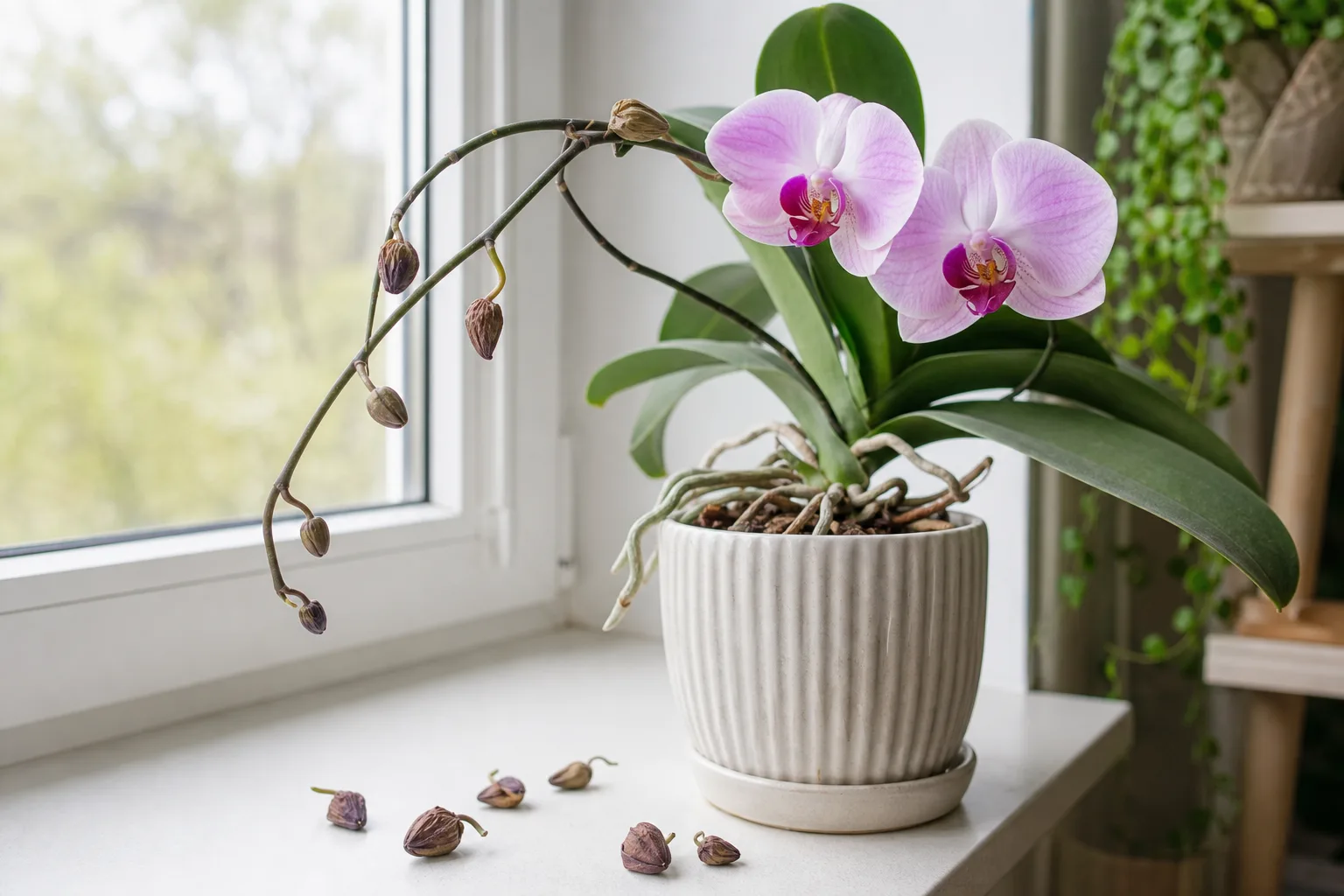
Watch the progression rather than a single petal. Natural aging tends to move through the open flowers: a lower or older blossom softens, fades, and drops while the spike and leaves remain firm. A flower can stay attached after it has wilted, so its presence does not mean it is still fresh.
An orchid display may end when the last open flower falls and the unopened buds stop developing. The spike itself may remain green for a while, or it may gradually yellow and dry. Neither change means the entire orchid is dead; the leaves, roots, and crown tell you more about the plant’s health than a finished flower stem does.
If you are unsure, give the plant a few days before cutting a green spike. Confirm that it is truly a spike rather than an aerial root, and check the orchid’s name before applying a Phalaenopsis-specific pruning tip. On a healthy moth orchid, an unused node may sometimes produce a smaller secondary branch, but that is a possible bonus rather than a guaranteed continuation of the same display.
A simple routine while the orchid is flowering
Keep the flowering orchid in a bright spot with filtered light and a steady temperature. Water the medium when it is nearing dry for that container, drain it completely, and keep water from collecting in the crown or between the flowers. These actions help preserve a healthy plant without treating every change in petal color as an emergency.
Support a tall spike if it is leaning or at risk of snapping, but do not force a natural curve straight. Use a clip loosely enough that it does not pinch the stem. When carrying or cleaning around the plant, move the pot rather than pulling on the flowers, and keep the spike away from direct contact with a window, curtain, or vent.
A quick weekly check is enough for many household orchids: look at the oldest flowers, unopened buds, root firmness, medium moisture, and the temperature around the plant. Note a sudden change in bud condition and what happened immediately before it. Keeping a short observation note can help you make one targeted adjustment rather than changing light, water, fertilizer, and location at the same time.
What to do after the last flower falls
Continue caring for the leaves and roots after the flowers drop. A Phalaenopsis commonly enters a quieter growth period before making another spike; the plant is not disposable just because its show is over. Keep it in appropriate light, water according to how the medium dries, and wait for new roots, leaves, or a spike rather than forcing a calendar deadline.
Then inspect the flower spike. A brown, dry spike has finished and can be removed with a clean tool. A firm green Phalaenopsis spike may have an unused node that can branch, but the American Orchid Society cautions that a secondary inflorescence may be smaller and can stress a plant that is not strong; allowing it to recover may be the better choice. Some orchids have different spike habits, so leave an unfamiliar green stem alone until you identify it.
Repot only if the medium has broken down, the roots need attention, or the plant has outgrown its current setup; flowering alone is not a reason to disturb healthy roots. If you want details on choosing between a green-node cut and removing a finished spike, see our guide to whether to cut an orchid stem after flowers die. For a Phalaenopsis, cooler autumn nights may help initiate a future spike, but the signal varies by hybrid and should not be confused with extending the flowers on the current spike.
Conclusion
For the common Phalaenopsis, expect a bloom display that can last several months, but treat that as a broad horticultural expectation rather than a countdown. Other orchids may flower for a shorter period, and the exact window depends on the type, hybrid, spike, and when the flowers began opening. The age of the flowers at purchase matters just as much as the care you give them at home.
Protect the display with steady light and temperature, roots that receive the right amount of water, and gentle handling. Let the oldest flowers fade naturally, investigate sudden bud loss by checking for recent changes, and judge the orchid’s future by its leaves and roots after flowering. A finished flower spike is one stage of the plant’s cycle, not proof that the orchid itself has failed.



