Does Grass Seed Go Bad? Test It Before Reseeding Your Yard
Old grass seed may still grow. Read its tag, test a sample under the right conditions, and decide whether to sow, adjust, or replace it before reseeding.
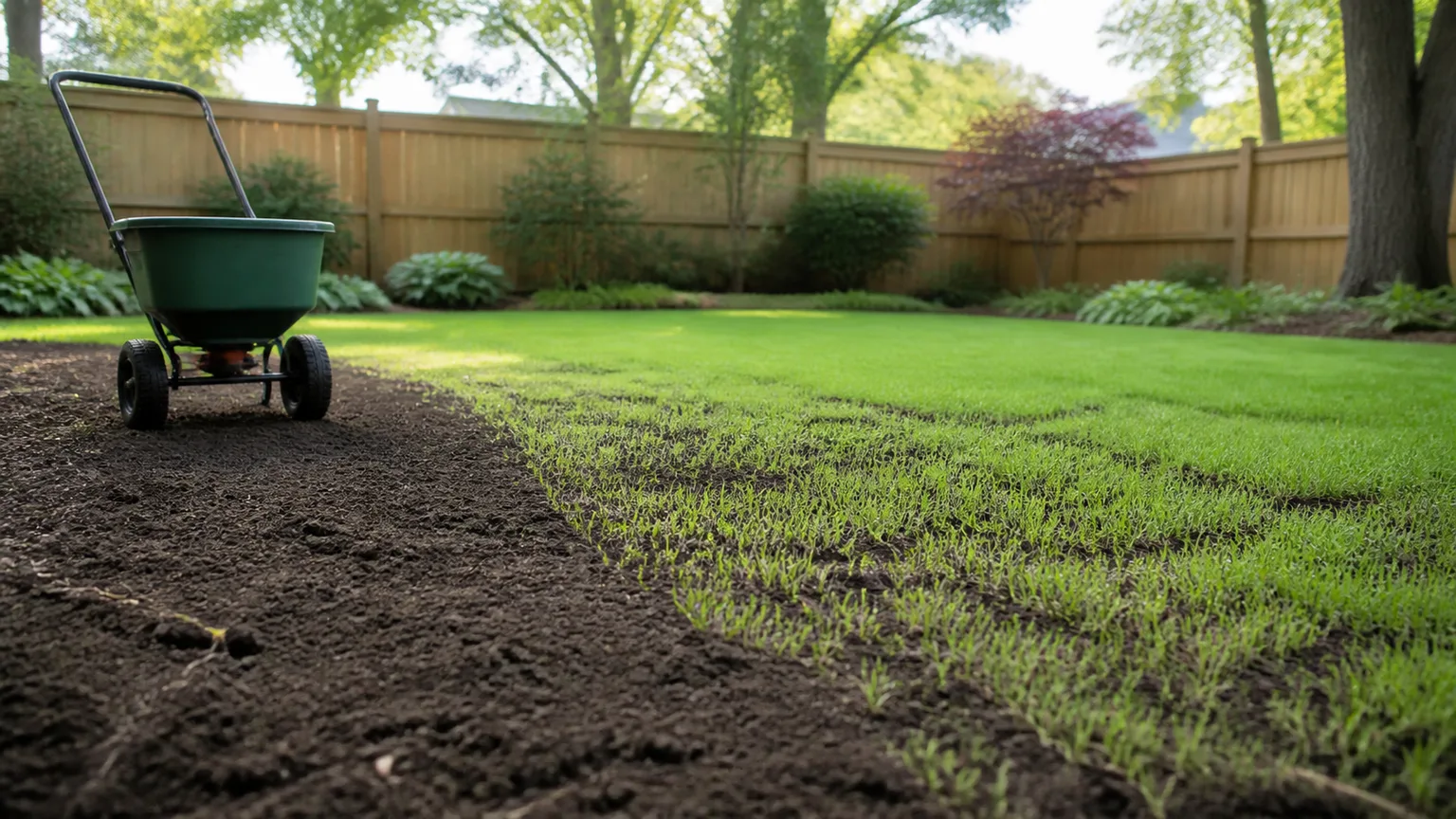
The half-used bag on a garage shelf may still grow, but the year you bought it cannot tell you how well. Grass seed loses viability as it ages, and the speed depends on the species in the bag, the condition of the seed when it was packaged, and whether heat or moisture reached it during storage.
Start with the seed tag and its storage history, then test a counted sample if you are unsure. That gives you a better answer than tossing seed because a date looks old—or scattering a full bag and hoping the lawn fills in.
The short answer: old grass seed may still grow
Grass seed does not switch from alive to dead on one universal expiration date. Its ability to produce normal seedlings generally declines over time, but a dry, intact bag kept in a stable, cool place may remain useful after the printed test date. A damp, moldy bag that spent a summer in a hot shed can be poor seed much sooner.
The printed germination percentage is a result for a sample from that lot when it was tested. It is not a promise that the same percentage will sprout years later, nor a date when every seed suddenly stops growing. If the lot is old, the bag was opened, or its storage is uncertain, take a representative sample and test it under conditions suitable for the grass species.
For a small repair, an older bag that tests well may be worth using. For a full renovation or a time-sensitive seeding window, the cost of fresh seed may be lower than the cost of preparing a lawn twice. The right decision depends on the test result and the consequences of uneven emergence, not on age alone.
What “bad” means for a bag of grass seed
Gardeners use “bad seed” to describe several different problems. A seed may be dead and unable to germinate, alive but slow or weak, or part of a blend in which one grass species has declined more than another. A bag can also be contaminated, wet, or damaged without every seed inside being dead.
Germination is the start of growth from a living seed; field emergence is when the shoot reaches the surface, and establishment is the later process of making roots and surviving mowing, weather, and traffic. A paper-towel test tells you whether some seeds in a sample can germinate under favorable conditions. It does not reproduce the rougher conditions in a lawn, and it cannot guarantee a thick stand.
Appearance is only a warning screen. Damp clumps, visible mold, insect debris, or a musty smell suggest that moisture or pests have affected the bag, so replacement is sensible for an important job. Clean-looking seed can still be dead, though, and a floating seed is not a reliable universal test: buoyancy can depend on shape, coating, and trapped air. Counted germination is the useful check.
How long does grass seed stay viable?
There is no dependable shelf-life number for every lawn-seed bag. Seed longevity changes with grass species and cultivar, initial quality, moisture, storage temperature, packaging, and handling; a number quoted for one mix does not automatically apply to another. The most useful estimate comes from the actual lot’s label and a home test, not an average advertised as a guarantee.
As a practical rule, treat leftover grass seed as worth checking after it has been stored through a season, especially if the bag was opened. A newer unopened bag is more promising than an older bag exposed to damp heat, but sealed packaging cannot undo poor storage before purchase or protect against a puncture. Seed kept dry and cool can remain viable longer than seed in a garage, although the germination percentage may still fall over time.
Published estimates illustrate why a calendar cutoff can mislead. McKay’s Grass Seeds, a seed retailer, gives one to two years as a general period for good germination, while lawn-care writer Nick Wayne describes a broader two-to-five-year range under ideal storage. Those are practical estimates, not guarantees for every cultivar or a controlled result for your lot. Kansas State recommends choosing grass seed produced the previous year when buying; that is a conservative buying standard, not proof that older seed is dead. Treat the first year as a reason to check the bag, and test it rather than assigning it a guaranteed life span. McKay’s Grass Seeds’ storage overview and Nick Wayne’s discussion of seed in the bag show the range of common advice.
University of Nebraska–Lincoln Extension explains that seed storage life varies by species and that lower temperatures and dryness generally extend storage life. Its longevity table is for vegetables, not turfgrass, so its year estimates should not be transferred to a bag of fescue or bluegrass. The broader lesson applies: seed type and storage matter, but a grass-seed lot needs a grass-specific test. UNL Extension’s storage and germination guide recommends checking stored seed rather than assuming that age alone settles the question.
Why a mixed bag has no single countdown
Many lawn products are blends or mixtures: a bag may contain several species, several cultivars of one species, or both. Those seeds differ in size and germination speed. A quick test that is stopped when the first ryegrass shoots appear can make the whole mix look successful while slower Kentucky bluegrass has not had enough time to sprout.
If the tag lists the components, note them before testing. When you can separate the species reliably, keep separate samples and use the expected germination window for each. If you cannot tell the seeds apart, regard a combined test as a rough screen of the bag—not a precise performance report for every species in it.
What changes grass seed in storage?
Seeds are living, resting structures. Over time, their internal tissues lose the ability to restart growth. A seed’s original condition and its storage environment influence how quickly that happens, so “opened” versus “unopened” is only one clue among several.
Look back at where the bag lived. Did it sit on a concrete garage floor through summer? Was it beside a water heater, exposed to roof leaks, or stored in a humid basement? Did condensation form after moving it from a cold car into warm air? Those details are more predictive than a neat calendar estimate because heat and moisture can damage a lot unevenly.
Heat and moisture do the most damage
High temperature speeds deterioration, while moisture allows seeds to absorb water and can encourage mold or premature metabolic activity. Utah State University Extension advises keeping stored seed away from hot and humid locations; it gives cool, low-humidity conditions as the preferred range for seed storage generally. This is broad seed-handling advice, not a shelf-life chart specific to turfgrass, so use it to improve storage rather than to calculate an exact extra number of years. USU Extension’s seed-storage guidance also cautions that coated seed can be affected by humidity changes.
Garages and sheds are convenient but often have large swings in temperature and humidity. A basement may be cool yet damp; an attic may be dry but hot. A stable indoor closet is usually a better choice for seed you plan to use next season, provided it is away from heat, plumbing leaks, direct sun, and household humidity.
Starting quality, packaging, and coatings matter
The storage clock starts with the seed’s condition before it reaches your shelf. A good lot that was mature, cleaned, and dried correctly has a better starting point than damaged seed. Keep the original label and packaging because they identify the species, lot, and test result; place an opened packet inside a sealed outer container to limit new moisture and pests.
Coated or pelleted seed needs extra caution. The coating adds material around the seed and may change how the product responds to humidity or how many actual seeds are present per pound. Follow the manufacturer’s storage and sowing instructions, and do not compare coated and uncoated bags by weight alone. A home test of a coated product can also be harder to interpret if the coating breaks down or obscures the seed.
Seed mixtures create another quality issue: one species can retain germination better than another. If your intended lawn depends on a particular component, such as a shade-tolerant fine fescue in a blend, an overall percentage does not show whether that component is still performing. The tag’s per-species figures and lot number are useful, but a fresh sample is the only direct check of the bag you have now.
Read the seed tag before opening the bag
Find the analysis tag—often a small printed label on the package—and record the lot number, species or varieties, purity, germination percentage, and test date. Penn State Extension explains that a turfgrass label includes the seed identity, lot number, purity, germination, and the date the germination test was conducted. The lot number helps trace the specific batch if you need to contact the seller or manufacturer. Penn State’s turfgrass seed guide describes these label fields and shows how purity and germination affect the amount of live seed in a bag.
The test date is not a universal expiration date. It records when a sample from that lot was tested; the germination percentage describes that test, not every seed’s future. Local labeling rules can specify how recent a test must be when seed is sold, so the date has regulatory context that varies by jurisdiction. For a homeowner deciding what to do with a bag stored since purchase, it is a starting reference—not proof the lot is still at the printed rate or proof that it is unusable.
Purity is the share of a bag’s weight that is the listed grass seed. Germination is the proportion of that pure seed that germinated in the test. Multiply the two percentages and divide by 100 to estimate pure live seed (PLS). For example, a label showing 95 percent pure seed and 85 percent germination yields about 81 percent PLS: 95 × 85 ÷ 100 = 80.75. That means the same weight of two bags may contain different amounts of expected live grass seed.
The formula is especially useful when comparing seed lots or adjusting a standard rate, but it does not predict field establishment. If you use a home test to update the germination estimate, be careful not to apply the label’s germination percentage twice. For a simple single-species bag, combine the label’s purity with the home result as a rough current PLS estimate; for a blend, calculate components separately only when you can identify and test them separately.
The lawn-care blog Lawn Phix likewise emphasizes inspecting the analysis tag instead of judging a bag by its front artwork or coverage claim. Its practical label-reading advice is most useful as a shopping and comparison aid; university extension guidance should remain the basis for interpreting label percentages and local turfgrass recommendations. Lawn Phix’s grass-seed guide includes an example label and discusses named varieties, purity, germination, and test dates.
Run a counted home germination test
A small test is a better investment than spreading an uncertain lot over the whole yard. You will use a few seeds, but you will learn whether the bag can produce seedlings and roughly how consistently they emerge. For an expensive or large renovation, a certified seed-testing lab can provide a formal analysis; a home test is a screening tool, not a substitute for a laboratory report.
University of Nebraska–Lincoln Extension suggests testing stored seed and describes a counted paper-towel method using a sample such as 25 or 50 seeds. Its specific temperatures and timing are written for vegetable seeds. For grass, take the same sampling principle but follow the species-specific germination conditions on the turf tag or a university turfgrass source. Kansas State University lists different average emergence windows by grass type under suitable soil temperatures, including 3 to 10 days for perennial ryegrass, 7 to 14 days for tall and fine fescues, and 10 to 30 days for Kentucky bluegrass. These are field averages, not a universal home-test deadline. K-State’s lawn establishment guide makes clear how much species and conditions affect germination timing.
Set up a fair test for the grass in your bag
Mix the remaining seed gently, then take a random sample from several parts of the bag rather than selecting only large, attractive seeds. If the bag is a mixture and the components are distinguishable, make separate samples. Write down the sample size and the species before you begin, so you will know exactly what your final percentage describes.
Place the counted seeds on a clean, damp paper towel or between two towels. The towel should be moist throughout but not dripping; excess water can reduce air around the seeds and encourage mold. Fold it loosely and place it in a covered container or bag that prevents drying without leaving the sample submerged. Keep it in a stable place at the temperature recommended for that grass, away from direct sun, radiators, and windows that heat up during the day.
Check the sample daily or every couple of days. Add a little water only if the towel is drying. Keep the test going through the expected germination window for the slowest grass you are testing; do not declare a bluegrass sample dead after the quick ryegrass has appeared. If the packet is coated or pelleted, read its handling instructions and consider using a shallow, clean seed-starting medium so the coating can behave more like it will at sowing.
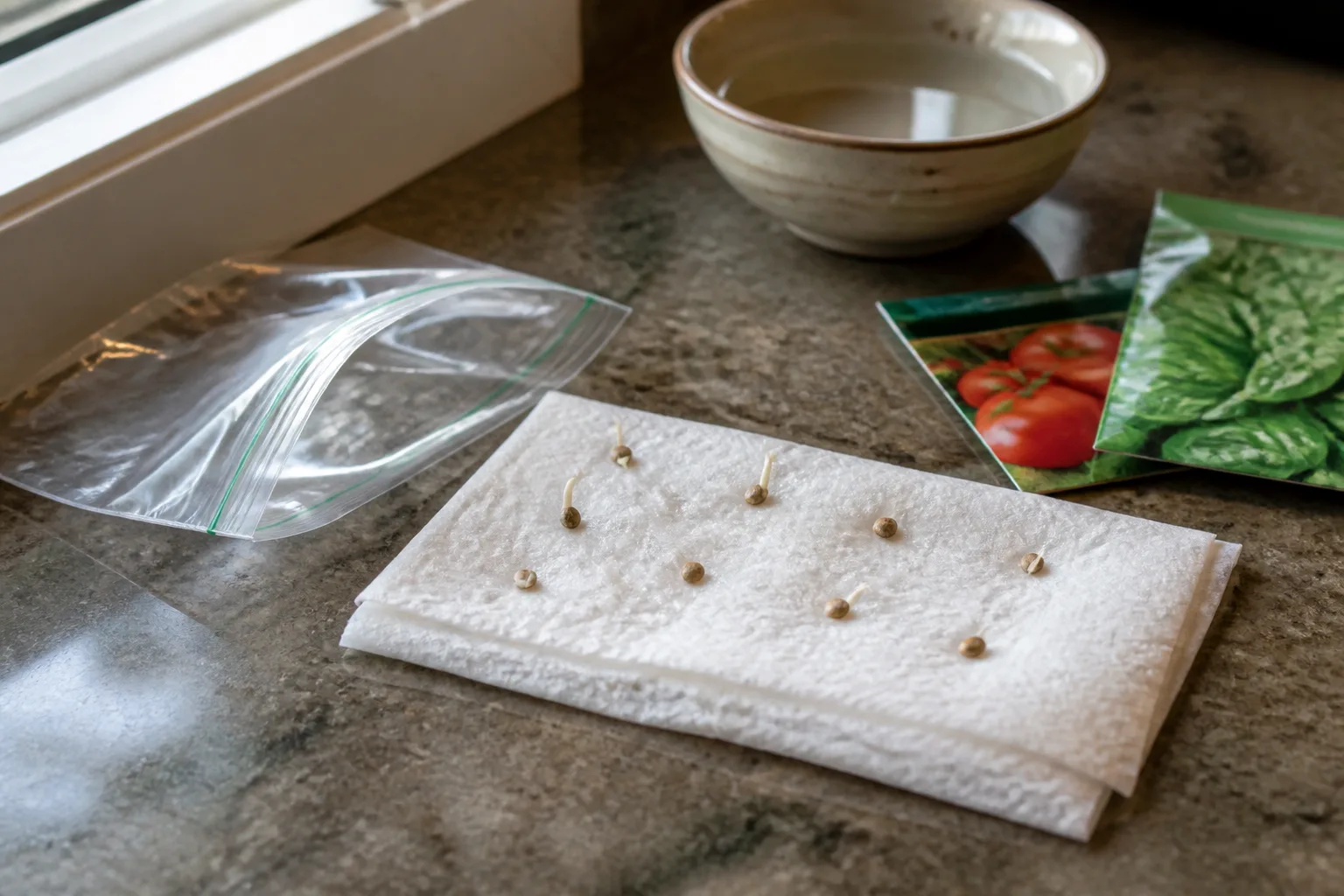
This example shows a general paper-towel germination check. For a turfgrass decision, test a counted sample from the actual grass-seed lot and give its species enough time to sprout.
Count normal seedlings, not just split seed coats
At the end of the test window, count seeds that have produced a healthy root and shoot, not merely seeds with a cracked coat or a tiny root tip. A seed that starts to germinate and then turns mushy or stops may not survive in soil. The goal is to estimate how many could become normal seedlings under favorable conditions, not to reward the first sign of activity.
Calculate the result as normal seedlings divided by seeds tested, multiplied by 100. If 43 of 50 seeds make normal seedlings, your sample’s observed germination is 86 percent. If 7 of 10 do, it is 70 percent—but with just ten seeds, each seed changes the result by ten percentage points, so the estimate is coarse. A sample of 25 or 50 gives a more useful home estimate when the bag contains enough seed.
The sample still has limits. A handful may not represent a bag that was partly wet or contaminated, and a mixture may hide a weak component among faster species. If the first result is surprising, repeat the test using another sample from elsewhere in the lot. For a lawn where uniformity matters, also compare your result with the original tag and consider a formal seed test rather than relying on a tiny sample.
Turn the test into a reseeding decision
Interpret your result together with the label and the size of the job. If the home test is close to the printed germination figure and the sample is reasonably uniform, the bag has a plausible chance of performing near its original quality. If the result is much lower, repeat it before assuming the whole bag is poor; sampling error or a test that was too short can make the first number misleading.
The stakes matter. A few bare spots near a path can tolerate some unevenness, especially if you can patch again. A full renovation, erosion-prone slope, or narrow seasonal window deserves more reliable seed because poor emergence means repeating the soil preparation, watering, and protection. Fresh, labeled seed is the simpler choice when the lot is visibly compromised or the test produces few normal seedlings.
When the result is close to the label
If a 50-seed test produces about the percentage printed on the bag, and the seedlings emerge steadily rather than in one small cluster, using the seed is reasonable if it suits your region and lawn. Follow the rate on the current package or a local extension recommendation for that species and project. Do not assume a high germination result makes the seed appropriate for the site: species, shade, traffic, and regional fit still matter.
If you are planting a small repair, use the seed during the correct window and save a little for patching only if it is stored well. Keep a note of the date, lot number, and test result with the remaining bag. That note turns next season’s decision into a comparison with your own actual lot rather than a guess from memory.
When germination is moderate or low
Suppose a test shows 60 normal seedlings from 100 seeds, while the label’s original germination percentage was 85. That gap suggests the lot has declined or the test conditions were not suitable. Repeat with another sample and check the grass type’s expected germination period. If the repeated result stays low, use fresh seed for a major job or plan a small trial patch before risking a larger area.
In theory, a lower germination percentage can be offset by sowing more seed: if a target assumes 80 percent germination but your test suggests 60 percent, 80 ÷ 60 is about 1.33, so the simple math points to roughly one-third more seed. Treat that as a starting estimate, not an automatic instruction. It assumes the sample reflects the whole lot, purity is known, species are uniform, and seedlings that sprout will survive; those assumptions often fail in mixed bags or stressful seedbeds.
Overseeding heavily can create crowded seedlings that compete for light, water, and nutrients. If you would need to multiply the rate substantially, replacing the bag may be cheaper and more predictable. For a blend, avoid compensating for a weak overall result without knowing which species failed; adding weight can distort the intended mix and still leave thin areas.
Store leftover grass seed to slow future decline
Before you put the bag away, close it against moisture and pests while keeping the label attached. Fold and clip a paper bag, then place it inside a sealed plastic bin or moisture-resistant container; keep small original packets inside a larger airtight container. Write the purchase or opening year on the outside if the tag does not make it easy to find. Store the container off a damp floor and away from direct sun, hot pipes, heaters, and seasonal temperature swings.
The refrigerator can be useful for dry seed only when the packet is sealed against humidity. Do not move a cold bag into warm room air and open it immediately; let the closed container warm to room temperature first so condensation does not form on the seed. Freezing is not necessary for most home lawn-seed leftovers, and seed that was not dry before sealing can be damaged by moisture or condensation during temperature changes.
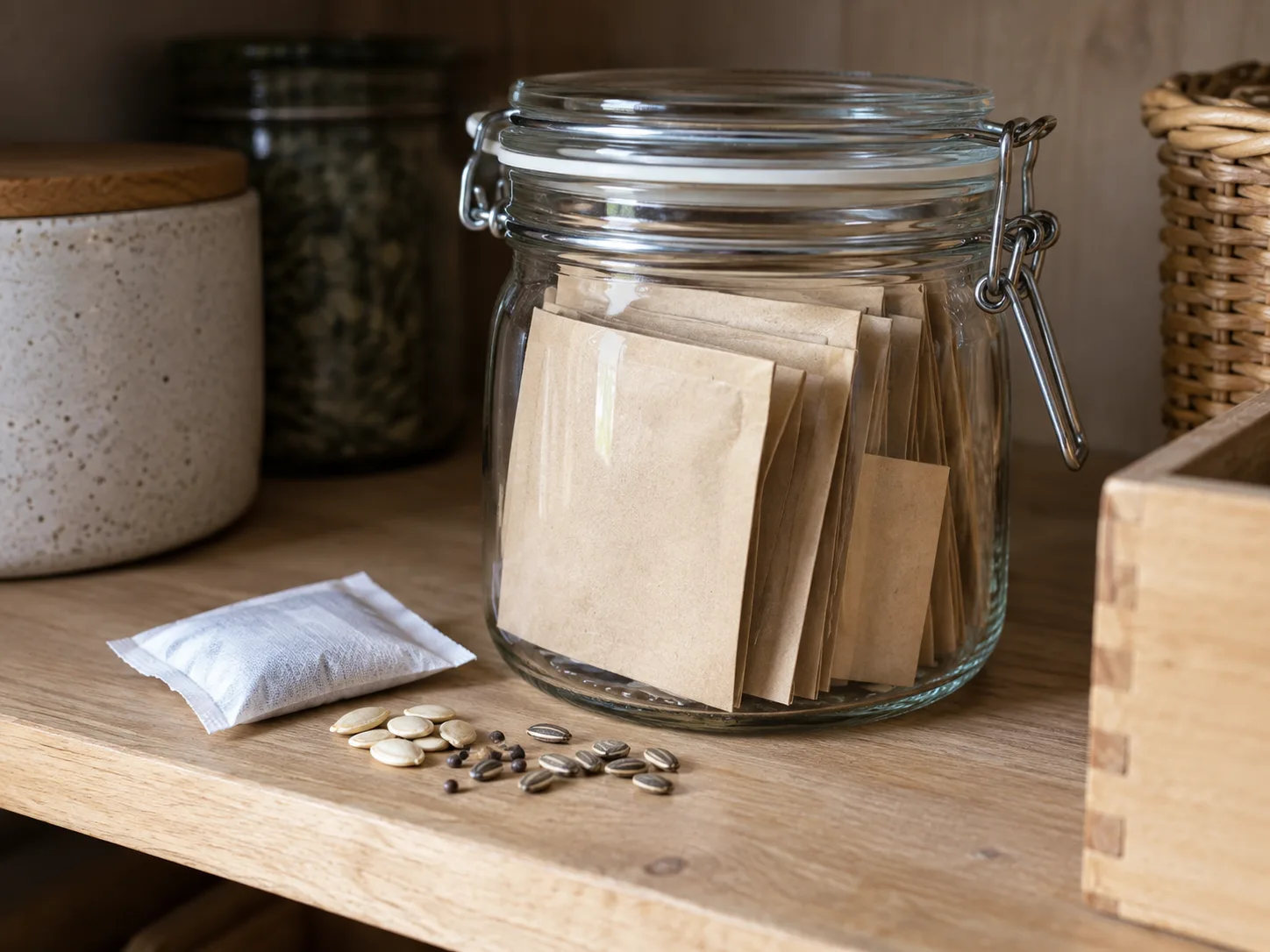
A sealed outer container helps keep stored seed dry. Keep the original turfgrass label and lot information with the bag so you can interpret the next germination test.
University extension references for general garden seed agree that lower temperature and low moisture favor longer storage, but vegetable-storage tables should not be read as turfgrass guarantees. For grass seed, focus on keeping the lot dry, protected, and stable; test it again before relying on it. A cool closet can be adequate for seed you plan to use next season. If you have a larger seed collection, our guide to storing seeds over winter covers the broader storage setup.
When good seed still fails in a lawn
A good home test does not prove that a lawn will emerge evenly. Paper towels provide reliable moisture and no compacted soil, washout, or competition. In a yard, seed can dry during germination, wash downhill in a storm, sit above thatch instead of touching soil, or be buried too deeply. Soil temperature also matters: Kansas State’s turfgrass guidance gives different suitable ranges for cool-season and warm-season grasses, and species can take very different lengths of time to show.
If a tested lot does not appear after sowing, check the seedbed before buying another bag. Look for seed still on the surface, crusted soil, runoff trails, standing water, repeated dry-outs, and recent herbicide use. A pre-emergent product may interfere with desirable grass seed; check the product label’s reseeding restrictions rather than assuming a viable bag will overcome it.
If you already planted and the yard is still bare, the relevant question shifts from storage viability to what happened in the lawn. Our grass seed troubleshooting guide walks through contact, moisture, depth, timing, and other field causes. For this bag, keep the test result and lot number: they help distinguish a weak seed lot from conditions that prevented otherwise viable seed from establishing.
Conclusion: test the lot, not the date
Grass seed can lose germination over time, but a printed test date is not a universal expiration date. The species, the lot’s starting quality, and its exposure to heat and moisture all change how much of the bag remains viable.
Read the label, note where the bag was stored, and test a counted sample under conditions suited to its grass type. Use a strong, uniform result with the appropriate seeding rate; test again or replace the lot when results are weak or the project cannot tolerate gaps. That short check is more useful than trusting a year printed on a bag—or throwing away seed that may still do the job.



