How to Remove Standing Water From Your Yard
Learn how to remove standing water from your yard safely, choose between sweeping and pumping, and find out when a puddle needs a drainage fix.
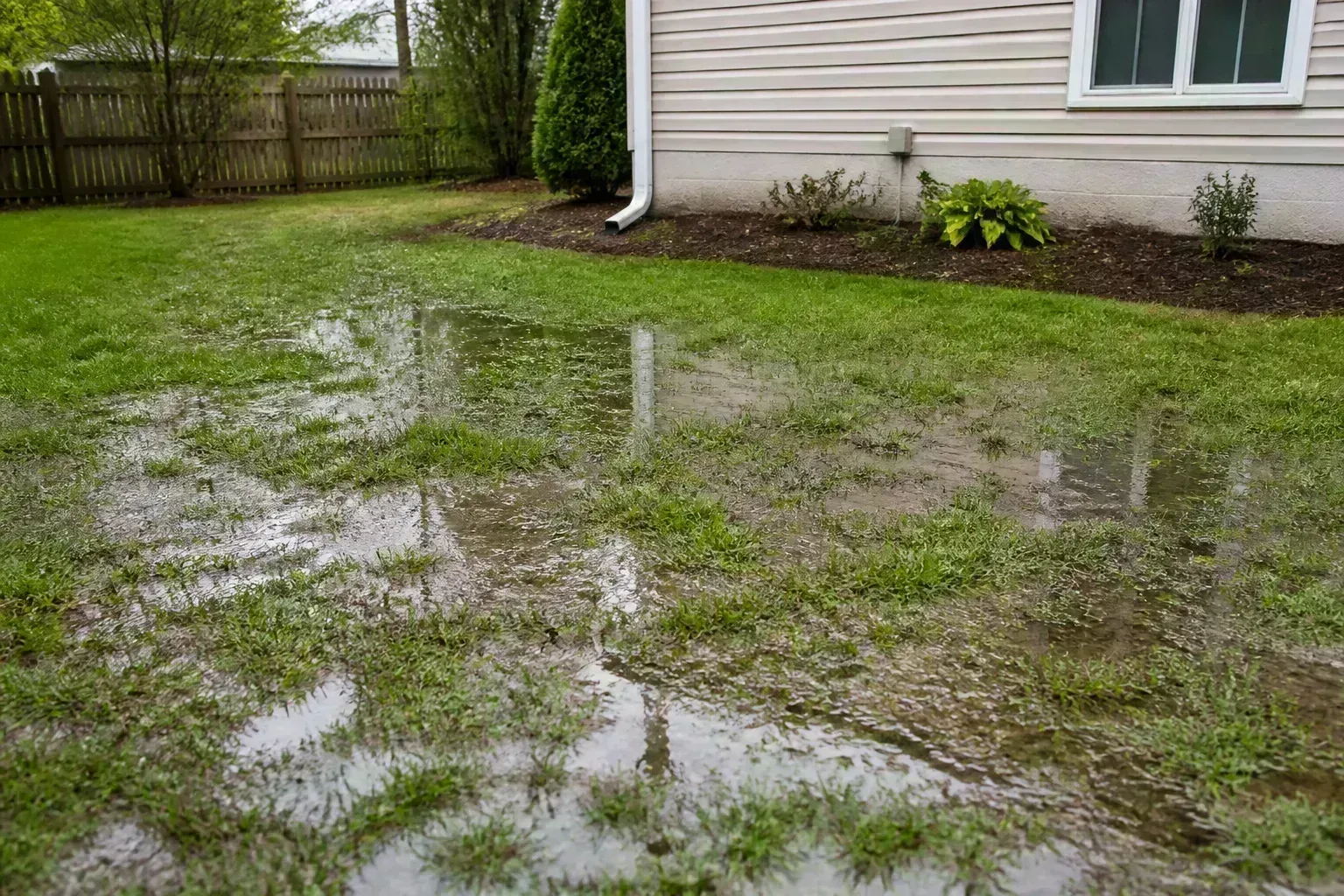
After rain, a shallow puddle on the lawn may need nothing more than time. A deeper pool, water beside the house, or a puddle that appears in dry weather is a different problem, and pushing it out of sight can send it toward a basement, sidewalk, septic area, or neighbor.
Start with safety and location. If the water is clean rainwater and only a thin layer covers a small patch of grass, you may be able to sweep it into a suitable planting border; a larger pool may need a pump and a known discharge route. If the water is moving, smells like sewage or fuel, touches electrical equipment, or is entering a structure, keep people and pets away and get help before trying to remove it.
Decide whether the water is safe to approach
Do not step into fast-moving water or water that may be electrically charged. The National Weather Service warns that floodwater can hide hazards and that even a small depth of moving water can knock a person off their feet; its flood guidance also says to stay out of water that may contain electricity. A normal shallow puddle after a rainstorm is not the same as floodwater, but water from a creek, backed-up drain, road, or unknown source deserves caution (National Weather Service flood safety guidance).
Before using a pump, rake, or shop tool, look for a fallen wire, outlet, extension cord, outdoor electrical equipment, or water in a basement or window well. Do not wade in to plug in a pump, move a cord, lift a grate, or inspect an obscured drain; if water is near electrical equipment, leave the area and contact the utility or a qualified professional. Keep children and pets away from water with unknown contents, and do not handle floodwater with bare hands or let it contact cuts.
Also pause if the water is still rising, spreading quickly, or deep enough to cover your shoes. That is a property or flood-safety response, not a lawn-care project; follow local emergency instructions and do not attempt to walk through moving water to reach a pump. If it is a shallow, clean rain puddle on open turf, continue with a surface check from dry ground.
Take a quick look before moving the water
The first few minutes can prevent an unhelpful fix. Note how deep and wide the pool is, whether rain has stopped, whether the water is still flowing in, and how close it is to the house, a retaining wall, a septic system, a well, or a property boundary. Mark the puddle’s edge with a small stake or take a photo from a fixed spot so you can tell whether it is shrinking.
Look uphill and around the edges for an obvious source: a downspout pouring into the spot, water running off a driveway, a blocked surface grate, a broken irrigation head, a hose left running, or a low point where several slopes meet. If water appears when it has not rained and the irrigation is off, do not assume it is groundwater; a pressurized water line, irrigation pipe, or drainage line can leak underground and surface at its lowest point.
Trace the source, path, and timing
Watch the water for a few minutes from a dry location. A narrow stream entering from one side points to runoff or a leak; a broad, shallow sheet across the yard suggests surface flow; water that slowly wells up from below or returns during a dry spell may involve groundwater or plumbing. Those clues do not prove a cause, but they help you decide whether a broom, a cleared grate, or a professional inspection is the sensible next step.
Write down when the pool appeared and when it began to shrink. If possible, compare the same place after a light rain and after a storm, and note whether the gutter or sprinkler was running; this separates “too much water at once” from “water cannot leave this spot.” Avoid digging a test trench or opening a drain while the ground is saturated, because you can damage a line or destabilize wet soil without learning where the water is supposed to go.
Move shallow water with the least disruption
For a small, clean puddle on grass, start with a wide, soft push broom or a landscape rake and move the surface water in a thin sheet toward a planting bed that can accept it. The RHS advises sweeping small areas of standing water off a lawn into borders before aerating; the practical limit is important: the border must be lower or permeable enough to receive the water, and the flow must not run toward a home, sidewalk, septic system, or neighboring lot (RHS advice on waterlogged lawns).
Make a few gentle passes rather than forcing a deep channel through the turf. A push broom spreads a shallow film across a broad area; a rake can guide water through a very small, existing low route, but do not cut a trench with it. Stop if the water turns cloudy with soil, begins to erode the lawn, or the receiving area starts to pond too.
Sweep a small lawn puddle into a suitable border
This is a temporary move, not a way to drain a flooded yard. Choose a border that is not already saturated and is away from the foundation; do not send a puddle into a vegetable bed with standing water, a play area, or a spot above a basement wall. If there is no safe nearby receiving area, let a clean shallow puddle soak in while you diagnose why it is there instead of pushing it somewhere else.
A small amount of water on a patio or driveway can be squeegeed toward an existing working channel drain or area designed to receive runoff. Do not direct it across a public sidewalk or street where it could create a slippery or icy patch, and do not lift a heavy drain cover while water is flowing or the contents are unknown. If a paved area slopes toward a door or garage, protect the opening from water without blocking an exit or creating a new trip hazard.
Clear a surface drain only from a safe position
If a yard drain or catch basin is visible and the water is clean and shallow, remove leaves and loose debris from the grate with a rake or gloved hand while standing on dry, stable ground. This simple step can restore flow when the grate is just covered; it will not fix a blocked underground pipe, a full or damaged basin, or water that has nowhere to discharge.
Never reach into a pipe, culvert, or deep catch basin, and do not remove a grate that may be heavy or unsecured. If the grate is submerged, the water smells foul, the water level does not drop after clearing surface debris, or you hear gurgling from drains inside the house, stop and call your local public works department or a drain professional.
Use a pump only when the pool is too large to move by hand
A pump can transfer a larger pool faster than sweeping, but it does not make the water disappear. Before switching it on, identify the destination and confirm that it can accept the flow without flooding a foundation, eroding soil, crossing a property line, reaching a sidewalk, or entering a storm or sanitary sewer without local approval. Penn State Extension recommends directing roof runoff to a large enough lawn or landscape area sloped away from the home, and that same idea applies to temporary discharge: the receiving area needs capacity and a safe route (Penn State Extension on runoff in the home landscape).
Use only a pump rated for the setting and follow its manufacturer’s instructions; a small pond or utility pump is not automatically suitable for sewage, muddy floodwater, or water with debris. Keep electrical connections dry, use properly protected equipment, and never enter water to position a plugged-in pump or retrieve a hose. If the water is near an outlet, panel, fallen wire, or flooded basement, leave it to emergency responders or a qualified electrician and water-removal professional.
A pump is useful when rain has stopped, the pool is standing still, and a hose can reach a stable place that will not send the problem elsewhere. It is a poor answer when the water continues entering, the entire yard is saturated, the outlet is blocked, or the only destination is a neighbor’s property or an unapproved drain. In those cases, a pump may lower the visible pool briefly while the same water returns or causes damage downstream.
Choose a response based on where water is collecting
Where water stands changes the safest first action. A lawn puddle, a flooded window well, a patio drain, and water beneath a leaking irrigation line are not interchangeable problems, even if each looks like a pool from a distance. Deal with the immediate threat first, then arrange the repair that addresses the source.
Water beside a house needs a different response
Water against siding, at a foundation, in a window well, or near a basement entrance needs prompt attention. If you can safely stop a running hose or sprinkler, do so; keep the area near outlets and electrical equipment clear, and do not dig beside the foundation or pump a basement without professional guidance. If water is entering the home, contact a water-removal or foundation professional; if the water is rising or electrical hazards are present, follow emergency guidance.
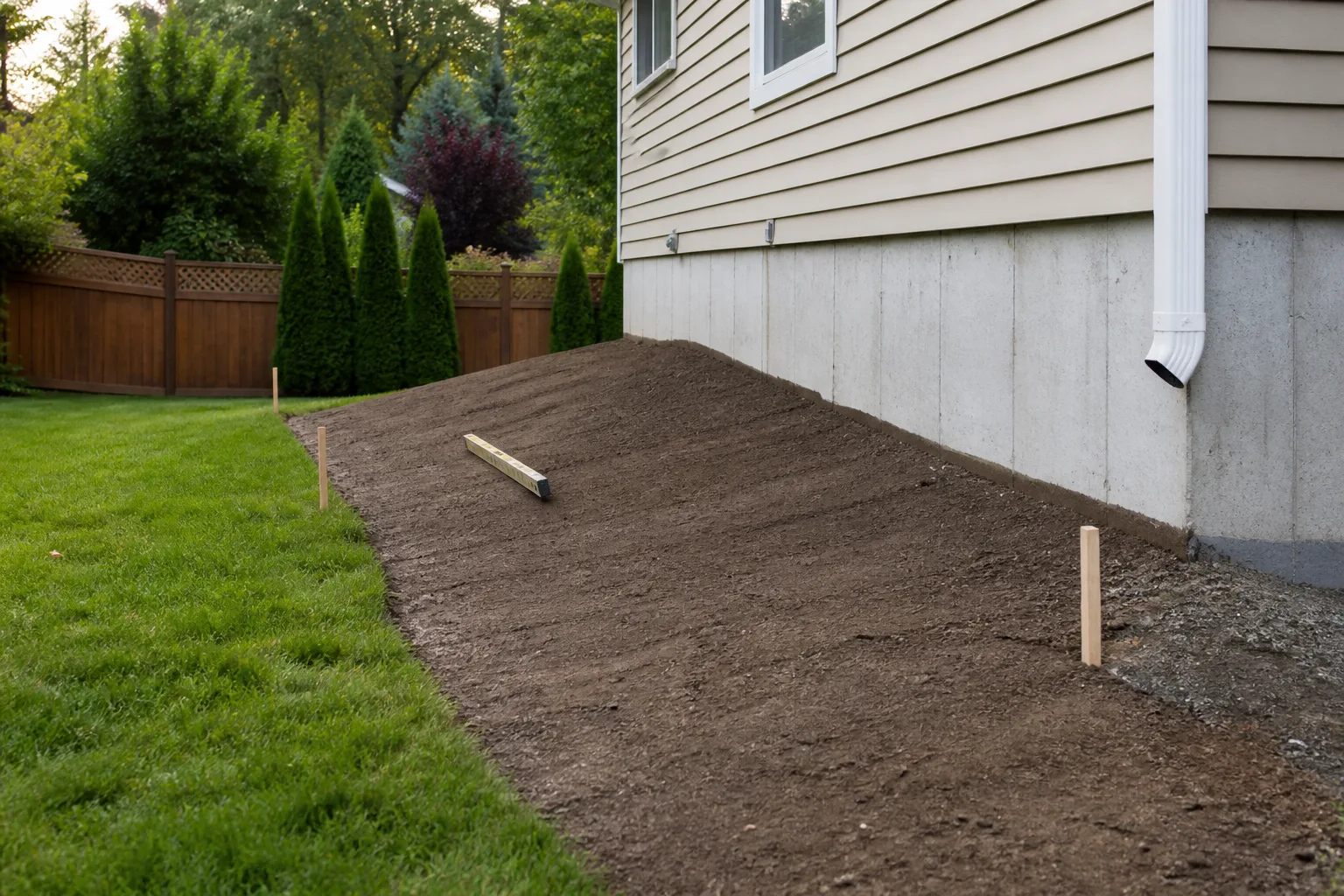
A surface pool outside the house may be fed by a downspout, a clogged window-well drain, or ground that slopes toward the foundation. Do not push the water around the house or discharge it to the other side of a basement wall; that only changes where it collects. Penn State’s guidance emphasizes that a receiving lawn or bed must be large enough and sloped away from the building, not simply close to the downspout (Penn State Extension runoff guidance).
A low lawn, garden bed, or patio needs a safe overflow path
If an isolated dip in the lawn holds water after rain, sweeping may help only while the pool is shallow. The longer-term question is whether the depression can drain into a lower, safe area, infiltrate into the soil, or needs a designed overflow route; a low bowl surrounded by higher ground cannot be emptied sustainably by repeated pushing. A flat patio may need its surface drain cleared, but if runoff has no exit, the drainage layout—not the volume of the puddle—is the issue.
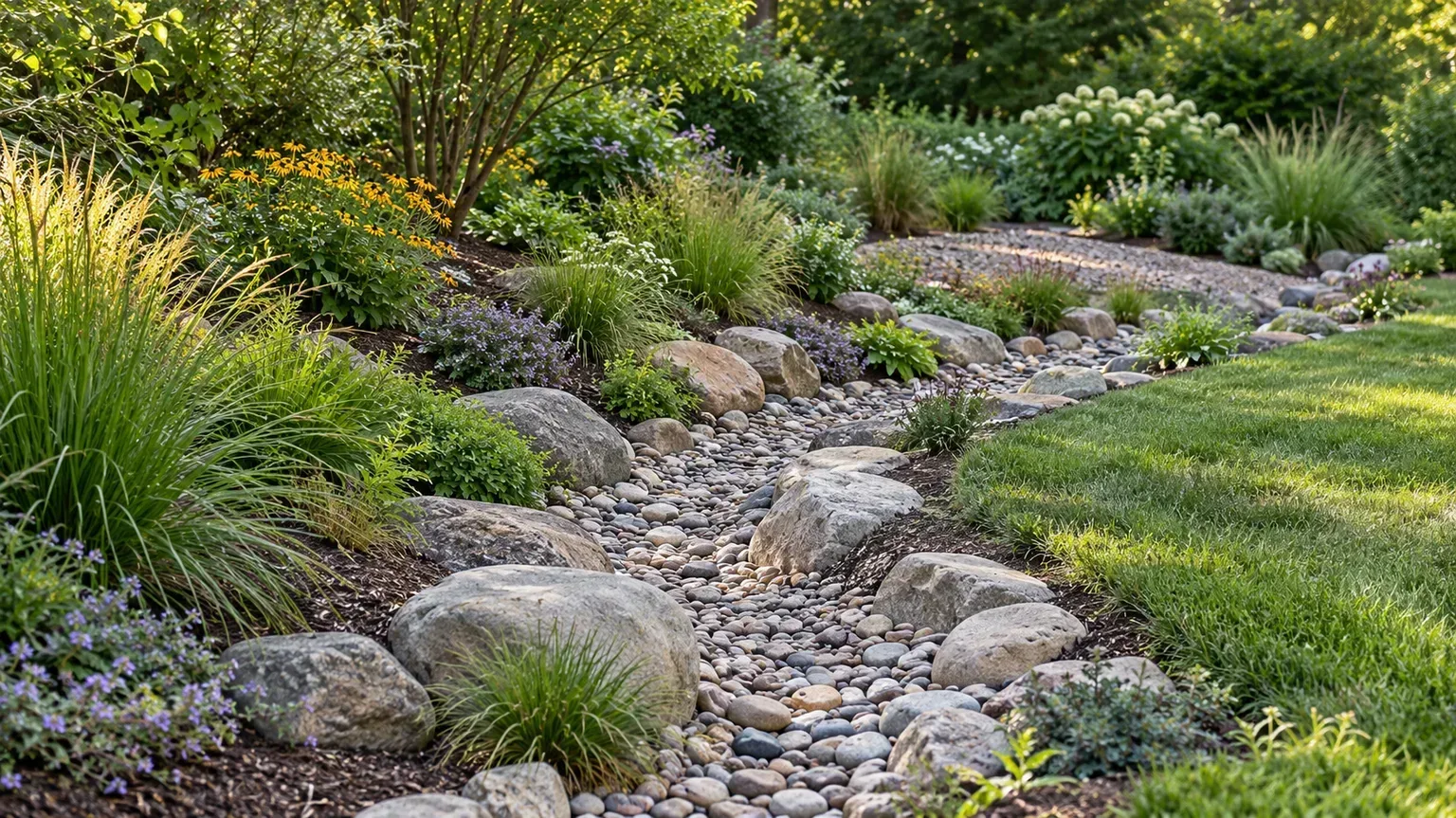
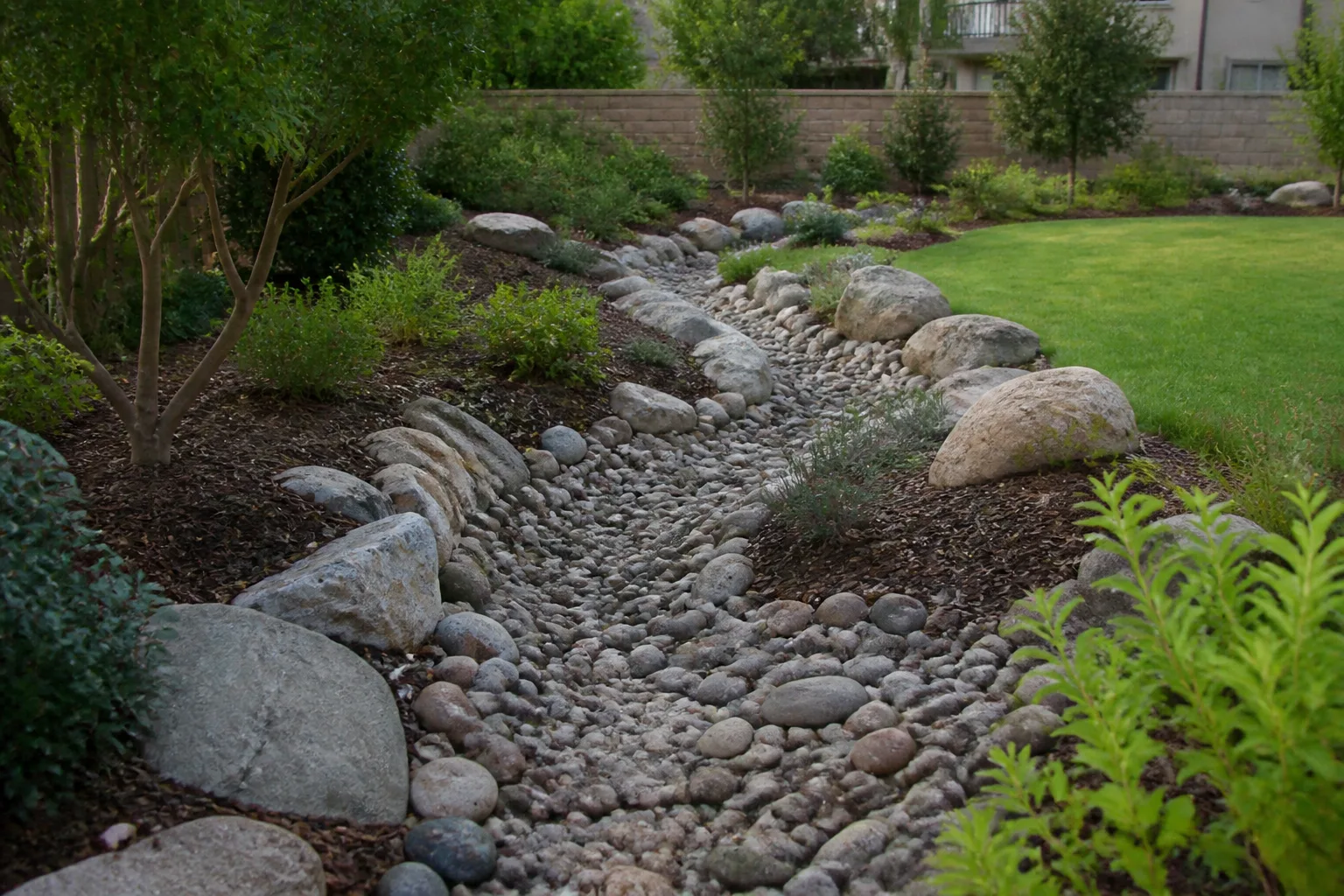
After the water recedes, inspect the outline of the pool and the route water took to reach it. A shallow swale can guide surface runoff, while a rain garden can receive water only if its soil and overflow are designed for that use; a bed that stays saturated is not a useful overflow basin. For more background on selecting and maintaining a surface route, Fine Gardening’s landscape-design discussion shows how swales and stone features can slow and direct runoff without treating them as a universal cure (Fine Gardening’s rainwater-management ideas).
Water that returns in dry weather may come from a leak
A wet patch that forms without recent rain deserves a different investigation from a storm puddle. Turn off irrigation zones one at a time and see whether the patch stops growing; if it does not, check hose connections and visible plumbing, but do not excavate near buried utilities or a foundation on guesswork. A sudden unexplained flow, a persistently wet line, unusual odor, or a fast-growing pool may require a plumber, irrigation technician, utility, or local public works response.
Do not use a pump to mask a continuing leak. The water will refill the low spot, and a pump discharge can wash soil away or redirect water toward structures. If a municipal water line, sewer, or storm-drain connection may be involved, report it to the relevant utility or authority rather than opening the system yourself.
Know when to wait and when the puddle needs investigation
After an intense storm, some yards hold surface water briefly because the soil is already saturated or rain arrived faster than it could soak in. Gardening Know How describes a puddle lasting less than a day after heavy rain as a potentially minor drainage issue, while water remaining longer or appearing after light-to-moderate rain deserves closer attention; treat that as a screening rule, not a universal deadline, because soil, slope, storm size, and season differ (Gardening Know How on yard drainage problems).
Watch for a clear trend instead of staring at the clock. If the pool is shrinking and the water is clean, leave the lawn undisturbed; if it is unchanged after rain has stopped, expands from below, returns in the same place, or reaches the house, investigate the cause. The RHS cautions that walking on waterlogged lawn can worsen the sticky, puddled surface, so do not mow, aerate, roll, or drive over soft turf just because you want to speed things up (RHS waterlogged-lawn guidance).
Avoid adding gravel to the puddle or poking holes through the wet ground as an emergency fix. Gravel cannot create a lower outlet, and piercing saturated clay may simply make a muddy hole that fills again; core aeration is more useful after the standing water is gone and the soil is moist rather than sticky. The RHS likewise recommends waiting for water to drain, or sweeping a small area into a border, before aerating.
Find out why the water is staying
Once the visible pool has shrunk, use the pattern to choose a permanent fix. The same yard can have more than one cause: a downspout can overwhelm a low spot, while compaction slows infiltration and a small ridge blocks the route out. A useful diagnosis asks what supplied the water, what stopped it, and where it could safely go instead.
Roof and hard-surface runoff arrives in concentrated bursts
A downspout can deliver roof runoff to one narrow patch, while a driveway or patio can send a sheet of water toward lawn that cannot absorb it quickly enough. Look for splash marks, displaced mulch, a fan-shaped deposit of sediment, or a channel beginning at a hard edge; those are clues that water is arriving in a concentrated stream rather than simply rising through soil. Penn State Extension notes that compacted lawns can behave like impervious surfaces and that fast runoff can contribute to erosion and flooding.
If water is coming from a gutter, check the gutter and downspout when conditions are dry, then confirm where the outlet releases in the next rain. Redirecting roof water to a lawn or landscape area may be appropriate only when that area is large enough and slopes away from the house; a barrel or buried pipe also needs an overflow route. Do not connect or discharge into public systems unless local authorities allow it.
Low spots, compacted soil, and a high water table behave differently
A shallow bowl in the grade holds water even when the surrounding soil drains reasonably well. A compacted surface may shed water across a broad area; heavy clay can slow infiltration through much of the yard; and a high water table or restrictive layer may keep the soil saturated from below. If puddles appear after modest rain across multiple places, or the ground stays wet during a dry stretch, adding a little compost or topsoil to one depression is unlikely to solve the underlying issue.
After the ground firms up, check the low spot with a straight board and level, inspect soil structure at the edge of a planting bed, and compare wet and dry areas. Do not make a deep test hole in a yard where underground utilities may be present. If the cause may be groundwater, a spring, a buried rock layer, or subsurface drainage, ask a drainage professional or local extension office to help interpret the site before you install a pipe.
Match the permanent fix to the kind of water
Use a surface route for water moving across the ground and a subsurface drain for water moving through soil; choose neither until you know where its outlet goes. A swale or stone-lined dry creek can guide surface runoff, regrading can remove a shallow depression when there is safe fall, and a French drain may collect subsurface seepage when the pipe can slope to a lawful outlet. A French drain without an outlet, or a dry well in soil that cannot infiltrate, can simply become a hidden storage pit.
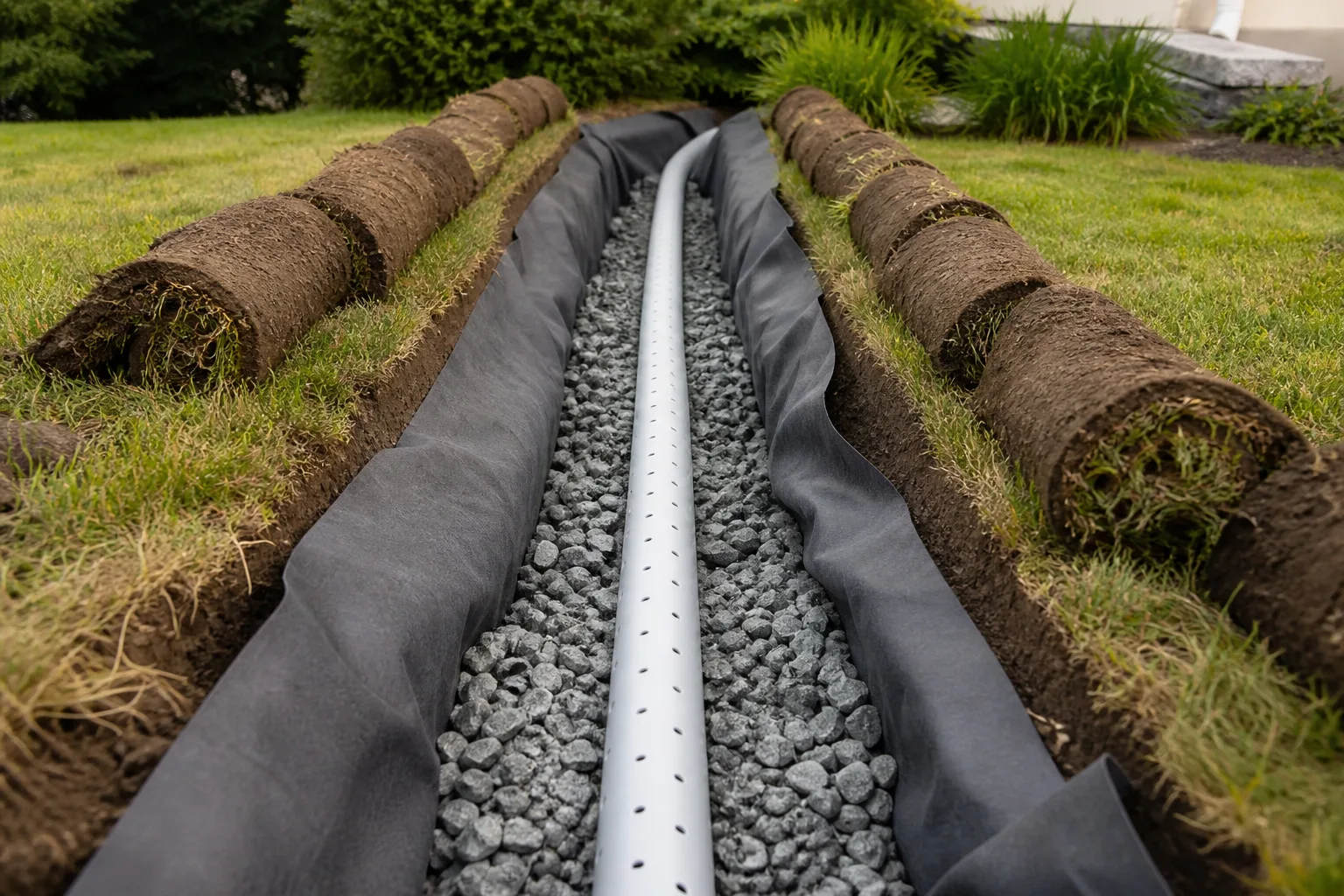
Infiltration features such as rain gardens or dry wells depend on site conditions, space, soil, groundwater, nearby structures, and maintenance. Penn State Extension describes rain gardens as places to capture and filter runoff, while Fine Gardening emphasizes directing water toward a safe location and reducing erosion; neither is a reason to send water toward a foundation or across a property line. Check local rules before changing grades, trenching, tying into a public drain, or altering a shared flow path.
For the broader design sequence—grading, downspouts, soil, swales, French drains, rain gardens, and plants—see LeafyPixels’ guide to preventing a soggy yard. This article’s first-response advice only gets the water that is present to a safe next step; a permanent system has to fit the whole site.
Avoid fixes that move the problem
Do not send standing water into the street, a public sidewalk, a neighbor’s yard, or a septic field just because those places are lower. It can create a slip hazard, erosion, nuisance, or property damage, and local codes may limit where stormwater can go. Penn State Extension’s downspout guidance specifically says to choose a receiving area large enough to absorb the water and sloped away from the home.
Do not dump bags of sand or gravel into a puddle, bury the pool with soil, or push water into a planting bed already saturated. These actions hide the surface while leaving the water with nowhere to go; fill can also raise grades against siding, bury vents, or divert runoff to a different low area. Wait until the soil is workable before correcting a depression, and use compatible fill while preserving the planned flow path.
Do not mow or aerate the lawn while it is soft enough to rut or smear. Heavy wheels and footsteps compress wet soil, and aerator tines can tear turf instead of making clean holes; waiting for the surface to firm up protects the grass and gives you a better repair. A persistent pool is a diagnosis problem first and a lawn-care chore later.
Know when to call a drainage or utility professional
Call for help if water is entering a basement, crawl space, window well, or foundation; if it is rising quickly or flowing across the property; or if it appears without rain and may come from a broken line. Also get a site assessment when a pool returns after modest rain, the whole yard is saturated, a retaining wall is leaning or bulging, the outlet is uncertain, or a prior drain did not work. Electrical hazards, sewage, fuel, chemical odor, or an unknown source are stop signs for DIY handling.
A qualified drainage professional should explain the water source, its path, the proposed receiving area, overflow behavior, and how the feature will be maintained. Ask whether the work changes runoff at the property line, requires permits, or connects to a public system; call the relevant utility-locating service before any digging. If the problem involves a sprinkler, water-service line, or sewer, choose the appropriate licensed trade or utility rather than asking a landscape crew to guess.
Conclusion
For a small, clean puddle on open turf, first watch it from dry ground; if it is shallow and shrinking, leave the saturated lawn alone, or gently sweep a little water into a border that can safely accept it. A larger still pool may be pumped only when the equipment is appropriate and the discharge has a stable, permitted destination. Keep out of moving, contaminated, rising, or electrically hazardous water, and treat water at a foundation or appearing in dry weather as a source problem.
When the same area ponds repeatedly, do not keep sweeping or pumping without learning why. Trace the water to its source, see how it moves, and match the lasting repair to the cause—surface runoff, a low spot, compacted soil, or a leak—with a safe outlet in the plan.