8 Plants to Keep Away From Your House—and Why
Learn which plants to keep away from your house, what each can realistically damage, and how to choose a safer distance for foundations, paths, walls, and windows.

The wrong plant in the wrong spot can mean years of pruning, blocked windows, lifted paving, escaped shoots, or a wall that is harder to inspect. But “never plant these near a house” is too broad: a redbud, a rhododendron, and running bamboo do not create the same risk, and none automatically breaks a sound foundation.
The better question is whether a plant’s mature size and growth habit fit the space you have. Below are eight plants that deserve extra thought near a home, what can realistically go wrong, and where each is better suited.
| Plant | Main concern near a house | Better placement |
|---|---|---|
| Running bamboo | Rhizomes escaping into paths or neighboring beds | A contained bed with a monitored barrier, or a large pot |
| Wisteria | Heavy, vigorous stems reaching siding, gutters, and roof edges | A sturdy freestanding pergola or purpose-built support |
| English ivy | Growth entering existing cracks and obscuring wall maintenance | A managed groundcover area or sound wall with regular inspection |
| Sumac | Root suckers spreading beyond a small foundation bed | A broad naturalized area where a colony can be contained |
| Pyracantha | Thorns and dense growth beside paths, doors, or windows | A boundary planting with clear access and room to prune |
| Large maple | Surface roots and canopy outgrowing a tight site | An open lawn or a location sized for the mature tree |
| Redbud | Branches crowding windows, rooflines, or narrow paths | A small-tree position with room for its canopy |
| Rhododendron | Soil or exposure that does not suit an acid-loving shrub | A tested, well-drained, partly shaded bed |
How to judge actual risks around a foundation
Start by separating four different issues that are often lumped together as “root damage.” Roots can lift or distort thin paving when they grow near the surface; vigorous shoots can escape a bed; branches can rub siding or block windows; and roots can enter a crack or leaking pipe that was already offering a route to water. These problems call for different fixes, so the plant’s name alone is not a diagnosis.
Purdue University’s Forestry and Natural Resources team explains that roots tend to move through loose, workable soil and are usually diverted by solid surfaces. A crack or leak changes the equation: roots can follow the moist opening, but that does not mean they drilled through intact concrete or an undamaged pipe. See Purdue’s explanation of tree roots and foundations before attributing a new crack to a nearby tree.
Distance matters, but there is no reliable universal number for every shrub, wall, soil, and foundation. A compact plant that stays below a window may fit a narrow bed; a large tree or vigorous vine needs room beyond its nursery-pot footprint. In areas with shrinkable clay, older shallow foundations, or known movement, get local advice before planting large thirsty trees or removing their roots.
Two practical tests help. First, look at mature height and width on a reliable plant label or regional nursery listing, then leave space for that spread plus a maintenance route. Second, check what is already nearby: drains, water lines, utility easements, paving, roof overhangs, and the wall’s condition. A narrow strip beside a cracked wall is a poor place for a plant that needs regular hard pruning, even if its roots are not inherently destructive.
1. Running bamboo

Bamboo is the clearest example on this list of why the growth habit matters more than the common name. Running bamboos such as many Phyllostachys spread by long underground rhizomes, while clumping types such as many Fargesia stay much closer to the original clump. An unmanaged runner can send shoots into a lawn, path, neighboring bed, or property line and become difficult to remove once the stand is established.
That spreading behavior is not the same as roots punching through a sound house foundation. The more predictable problem is losing control of the planting and finding new shoots in places where digging is difficult. The Royal Horticultural Society’s bamboo guide distinguishes running and clumping types and describes physical containment for runners; the University of Washington’s Elisabeth C. Miller Library also stresses that barriers deflect rhizomes and need annual checks.
Running and clumping bamboo need different plans
If you want bamboo beside a house for screening, identify the species and cultivar before you buy it. A clumping type may be a reasonable choice where there is enough mature width, while a running type belongs only in a deliberately contained area with a properly installed, inspectable barrier and room to maintain it. Barrier depth and construction depend on the species and site; do not assume a thin edging strip will stop rhizomes.
A large container can reduce spread, but it is not a zero-maintenance loophole. Check drainage holes and the ground beneath the pot for escaping rhizomes, and make sure the container can support the plant’s mature size without drying or tipping. If you cannot identify the bamboo or cannot inspect containment, do not put it beside the foundation, property line, or narrow hardscape.
2. Wisteria
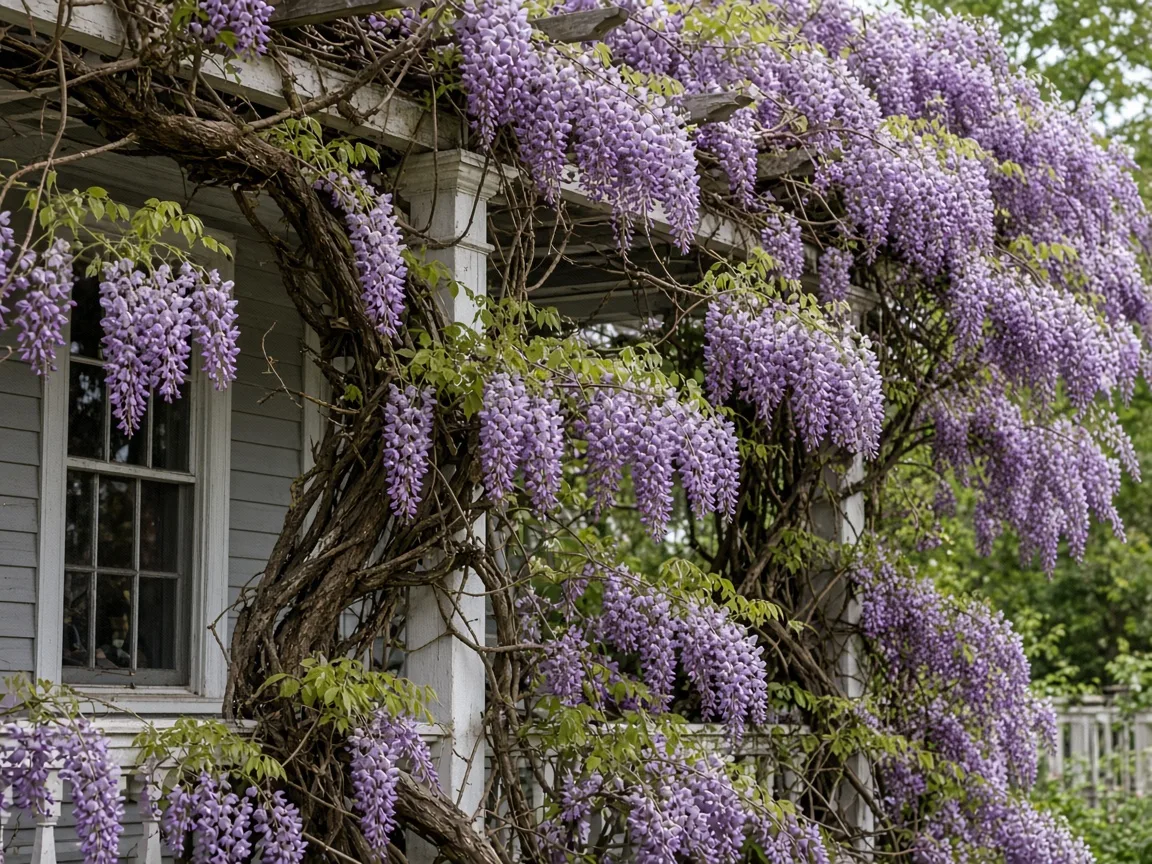
Wisteria is a woody climber, not a shrub, and its most manageable home-site risk is the structure it climbs. Established vines become heavy and vigorous; stems can crowd gutters, roof edges, windows, and trim, while constant growth into gaps makes inspection and maintenance awkward. A vine attached directly to fragile siding or a neglected wall is a different proposition from one trained on a sturdy, accessible support.
The RHS describes wisteria as capable of exceeding 10 meters (about 33 feet) in both height and width and advises providing strong wires, trellis, or a garden structure. That scale is why planting it “near the house” should mean near a support designed for it, rather than allowing it to climb whatever is closest. Read the RHS wisteria growing guide for the plant’s support and care needs before choosing a spot.
A freestanding pergola or a robust trellis set where you can reach every side makes pruning safer and helps keep the vine away from gutters and roof materials. If you want a wisteria on a wall, use a support system anchored for the load and keep the stems away from vulnerable finishes. Skip it if you cannot commit to regular pruning or if a ladder would be needed for routine control.
3. English ivy
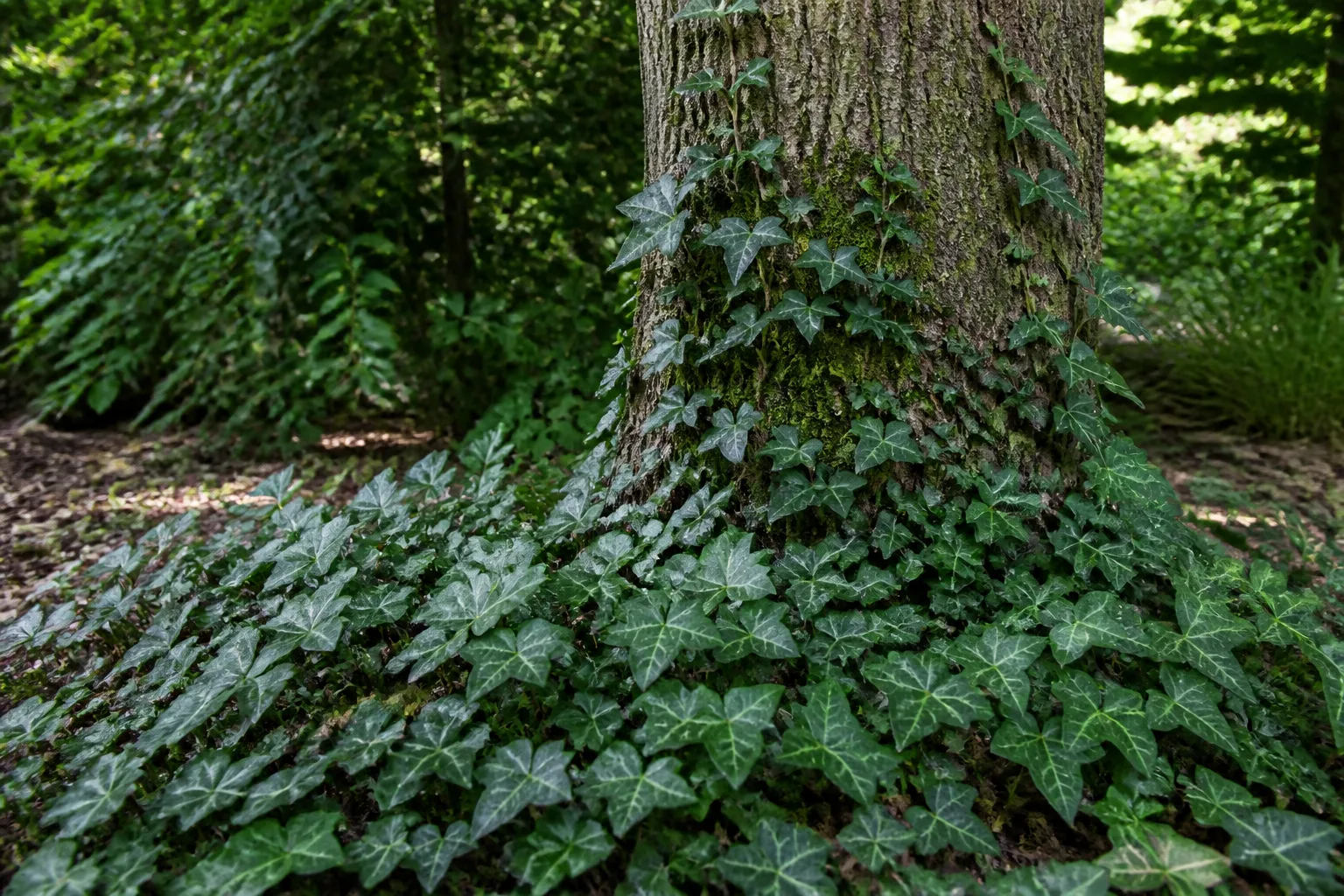
English ivy earns caution because it can be persistent and obscure the surface it covers, but it is inaccurate to say its aerial roots routinely bore into sound brick. The RHS says ivy usually does not cause structural problems on sound masonry; it is more likely to exploit existing cracks or weak joints, and pulling mature stems away can remove paint or loose mortar. Dense growth can also reach gutters, roof edges, and windows, making routine inspection harder.
That distinction matters before you choose to remove it. A young vine can be redirected or kept low with regular trimming, while an old cover on cracked masonry deserves a careful inspection first. If it is near a home, keep stems out of gutters and openings, and do not let it grow over vents, flues, or places where you need to inspect the wall.
The RHS guide to ivy on buildings notes that the wall’s condition is central to the risk. It also warns that a mature ivy on a house with shallow foundations and clay soil could contribute to subsidence in some circumstances. That is a specific site condition, not a reason to assume every ivy plant damages every building.
If ivy is already on the wall
Check for loose mortar, cracked render, damp patches, or movement before cutting. If the wall is sound and ivy is not interfering with the roof or services, routine trimming may be enough; if it is damaged or the plant is large and woody, ask a qualified building surveyor or experienced contractor how to remove it without tearing the surface apart. Avoid yanking a large mat off in one pull, because the removal itself can cause damage.
4. Sumac

Some sumacs are attractive small trees or shrubs with strong fall color, but species such as staghorn sumac can spread by suckers and form a colony. The inconvenience near a house is usually that new shoots keep appearing beyond the intended bed, not that every sumac has roots capable of breaking a foundation. In a narrow border, that spread can push into lawn edges, paths, or neighboring plants and turn a quick trim into repeated digging.
Before planting, identify the species and cultivar. A spreading sumac may fit a large naturalized slope or a rough edge where a colony is welcome; it is a poor match for a small foundation bed that must stay crisp. Horticulture magazine’s guide to controlling staghorn sumac discusses the suckering habit and why controlling an established planting takes persistence.
If you like the foliage but not the spread, look for a species or cultivar whose mature size and growth habit suit your site, and confirm the description with a regional nursery or extension service. Avoid relying on routine mowing alone to contain a woody colony, especially where you do not want shoots emerging through lawn or paving joints.
5. Pyracantha
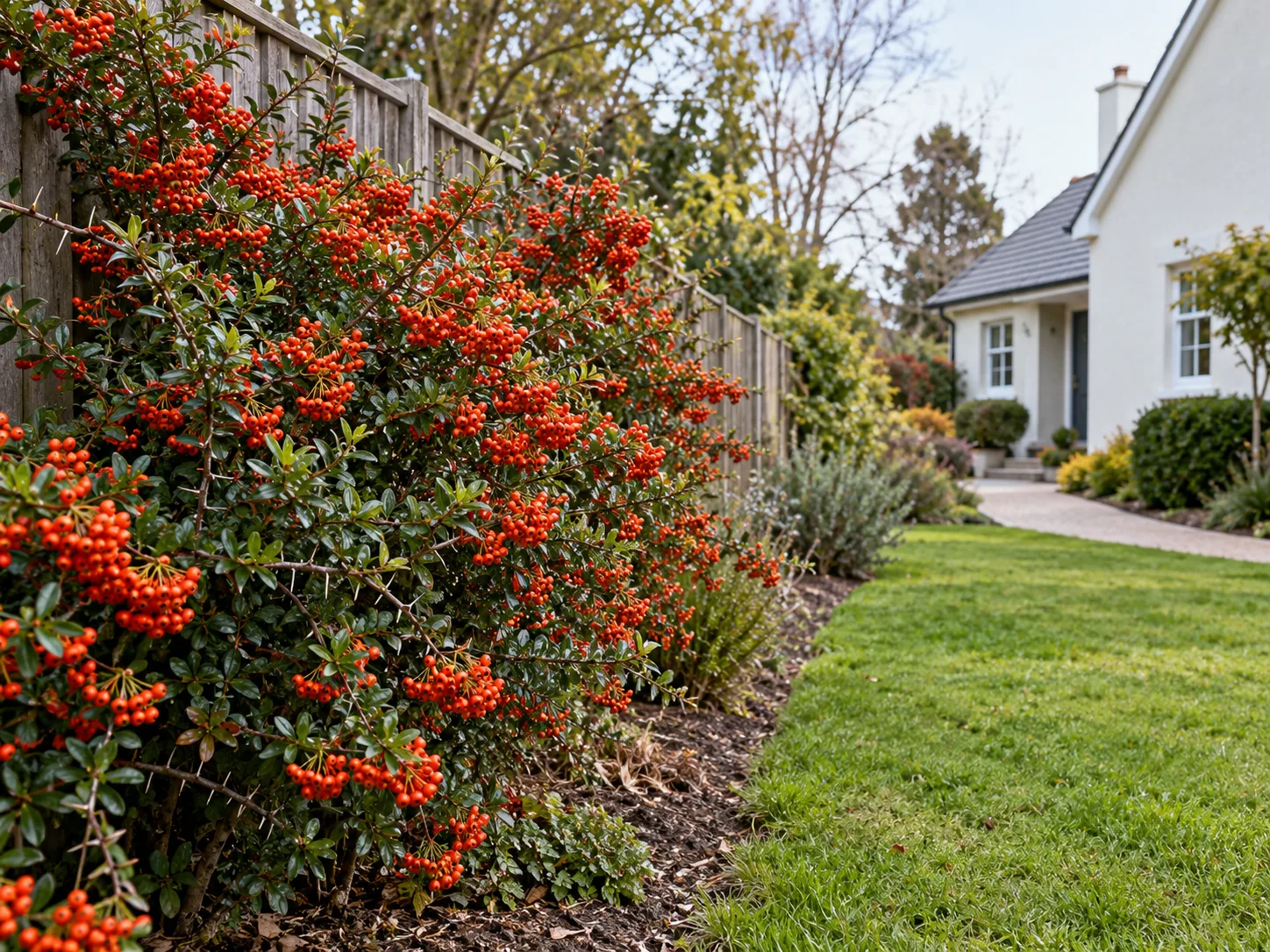
Pyracantha, also called firethorn, is a dense evergreen shrub with sharp spines and conspicuous berries. Its main near-house drawback is practical: a mature, thorny plant pressed against a door, window, walkway, or hose bib is uncomfortable to prune and can snag people using the space. That makes it a poor choice for a tight foundation strip, even when its roots are not the issue.
Use it only where you can reach around the shrub and keep its mature width clear of paths and windows. A boundary planting or broad bed can let the plant serve as a visual screen without forcing regular contact with its spines. If you need an unobstructed route for deliveries, children, pets, or maintenance, choose a non-spiny shrub instead.
Do not plan to keep a large firethorn small through constant severe cutting. That approach creates recurring thorny work and may remove the shape or flowering growth you wanted. Read the cultivar’s eventual dimensions first, and allow enough space that light pruning can keep it clear of the house rather than turning every trim into a close-quarters job.
6. Large maples
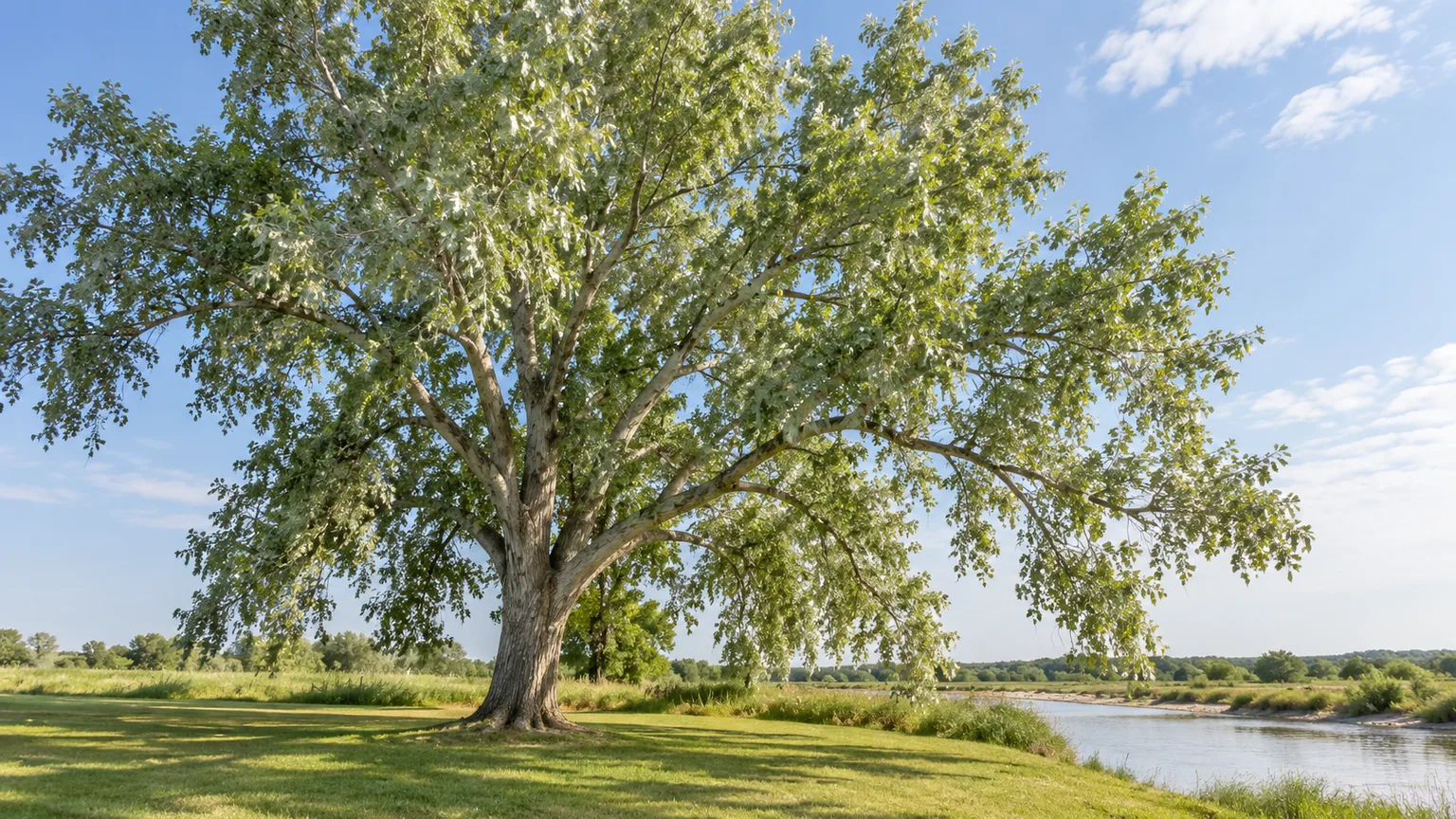
Maples are trees, not shrubs, and “maple” covers plants with very different mature sizes. A large, fast-growing maple in a small foundation bed can outgrow the site above ground and send surface roots into thin sidewalks or paving. Smaller ornamental maples may fit a compact yard, but they still need clearance for the canopy, branches, and mature root zone.
A common misconception is that roots seek out foundations and crack intact concrete. Purdue’s guidance is more precise: roots usually take easier routes through soil and can exploit nearby openings, while a leak or existing crack is often the invitation. Roots may also grow near the surface and distort lightweight paving, which is a real landscaping concern even when the foundation itself is sound.
Choose a maple only after checking the exact species and cultivar’s mature spread, not just the nursery pot or the colorful photo on its tag. Put large trees where a full canopy and root zone can develop without conflicting with a foundation, sewer line, driveway, or overhead utility. If the only available place is a few feet from the house, choose a genuinely compact tree or smaller plant rather than hoping repeated top-pruning will control an oversized species.
7. Redbud

Redbuds are often sold or described as shrubs when young, but eastern redbud commonly develops into a small tree. That makes branch clearance and mature canopy a more useful concern than labeling its roots “aggressive.” A redbud can suit a residential garden when it has room for its crown; it is simply a poor choice directly under eaves or where branches will press against a window or block a walkway.
Look up the mature width of the cultivar you are buying and leave room for both the tree and the people who need to pass or maintain the house. Account for the view from windows and the tree’s position relative to paving, rooflines, and service lines. A smaller cultivar does not mean “plant right against the wall”; it means the eventual size may fit a smaller yard if the site still has adequate clearance.
If you already have a healthy redbud near the house, do not remove it simply because a list labels redbuds dangerous. Inspect for actual conflicts such as rubbing branches, blocked gutters, or roots lifting a path, and address the specific issue. When a structural crack or tree decline is involved, have an arborist or building professional assess it rather than attributing the cause based on distance alone.
8. Rhododendron
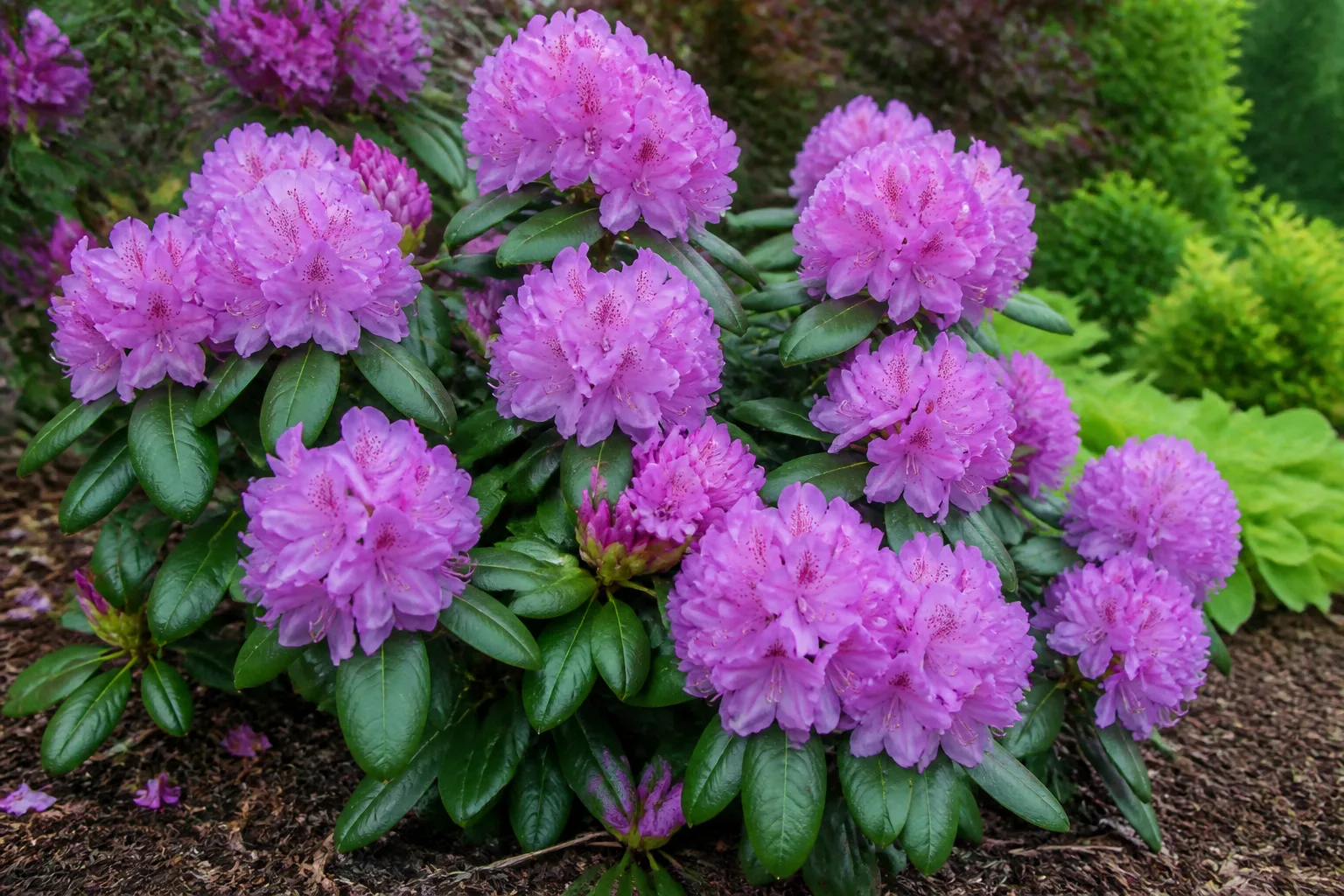
Rhododendron is included for a different reason: it is an acid-loving shrub that may struggle if the soil at the planting site does not suit it. The relevant question is not whether the foundation itself makes every nearby bed alkaline. Soil pH varies with local soil, amendments, irrigation water, and construction debris, so a guess based on proximity to concrete is not enough to diagnose the site.
Colorado State University Extension explains that soil pH affects nutrient availability and that rhododendrons are among the acid-loving plants that may fail in unsuitable alkaline soils. Test the bed before planting, then compare the result with the needs of the particular rhododendron. The CSU Extension soil pH guide also cautions that changing pH can be impractical in some soils, so testing first is more useful than automatically adding sulfur or other amendments.
Rhododendrons also need a location with the right light, drainage, and mature room. A sheltered, partly shaded bed with acidic, well-drained soil may be excellent even close to a house, provided branches do not block a walkway and the foundation planting can be accessed. If the soil is alkaline and difficult to amend, a container or a different plant matched to the site may be the lower-maintenance choice.
If a problem plant is already near your house
A plant’s presence beside a wall is not proof that it caused damage. Start by identifying the exact plant, noting its mature size and growth habit, and taking dated photos of the wall, nearby paving, visible roots, and any new cracks. Check whether the issue is changing over time, whether a gutter or downspout is leaking, and whether the plant is touching siding or blocking an inspection point.
Then match the remedy to the problem. Trim branches that rub or block access, keep vines out of gutters, monitor a bamboo barrier, and remove sumac suckers while they are still small if you are committed to containing the colony. For a crack, uneven floor, sticking door, or recurring water leak, document the change and contact a qualified building professional; a tree or landscape professional can help identify roots without guessing from the plant’s name.
What to check before pruning or digging
Do not cut a large tree root near a foundation based on a photo or a generic list. Removing a structural root can destabilize a tree, and digging near a foundation or buried utility can create a more immediate hazard than the plant. Contact the utility-locating service before excavation, and consult an ISA-certified arborist when major roots, large trees, or removal are being considered.
Old ivy is another case where the removal method matters. The RHS recommends inspecting the wall first because pulling vines away can dislodge weak mortar or paint; a small test area can show whether the surface is sound. If the wall is already cracked, rendered, or unstable, get building advice before trying to strip a mature plant off in a single session.
How to choose safer foundation plants
Start with the job you want the planting to do: soften a blank wall, screen a window, add seasonal color, or frame an entry. Then find plants that match the site’s sun, soil, drainage, climate, and available width. A plant that fits the light and moisture conditions will need less corrective pruning and is less likely to be crowded against the house because it is struggling in the wrong spot.
For narrow foundation beds, choose plants whose mature height stays below windows and whose width leaves an access gap for siding, vents, meters, and gutters. For large shrubs, vines, and trees, favor a broad bed or a separate support where you can inspect and prune from all sides. Garden design guidance from Better Homes & Gardens and Southern Living similarly emphasizes mature size and adequate spacing rather than choosing by nursery appearance alone.
Measure mature spread, then check access and services
Use the plant’s mature width as a starting point, then leave a clear route between its expected canopy and the house so you can inspect, paint, clean gutters, and reach utility equipment. The exact setback depends on whether you are measuring from the trunk, center of a shrub, or edge of a bed; follow the label or local horticulture recommendation for the species. If the listing gives only a ten-year size, assume the plant may continue growing beyond that figure.
Before digging, locate underground utilities and look for drains, irrigation, downspouts, paved paths, and property boundaries. A root barrier is a targeted containment tool for spreading plants such as running bamboo; it is not a substitute for choosing the right species or for solving a leaking pipe. A gravel or mulch strip can keep foliage away from siding and make maintenance easier, but it cannot prevent roots from finding an existing leak.
For a quick decision, ask: Will the mature plant touch or shade a part of the house I need to maintain? Can I prune or contain it safely? Is there room for its natural root and canopy spread? Does the site match its soil and moisture needs? If any answer is no, move the plant farther away or choose a smaller, less vigorous alternative suited to your climate.
Conclusion
You do not need to ban every maple, redbud, ivy, or rhododendron from a home landscape. You do need to match each plant’s mature size and growth habit to the wall, soil, paving, and maintenance access it will share. Running bamboo, a heavy wisteria, a spreading sumac, and a thorny firethorn each create different problems, while some plants on the list are manageable when correctly placed.
When in doubt, identify the exact cultivar, measure its mature spread, and inspect the site before planting. That small check is far easier than trying to control an oversized or spreading plant after it has settled beside your house.