24 Salt-Tolerant Plants for Beaches and Roadsides
Explore 24 salt-tolerant plants for coastal gardens and roadsides, with clear notes on salt spray, deicing salt, region, soil, and site fit.
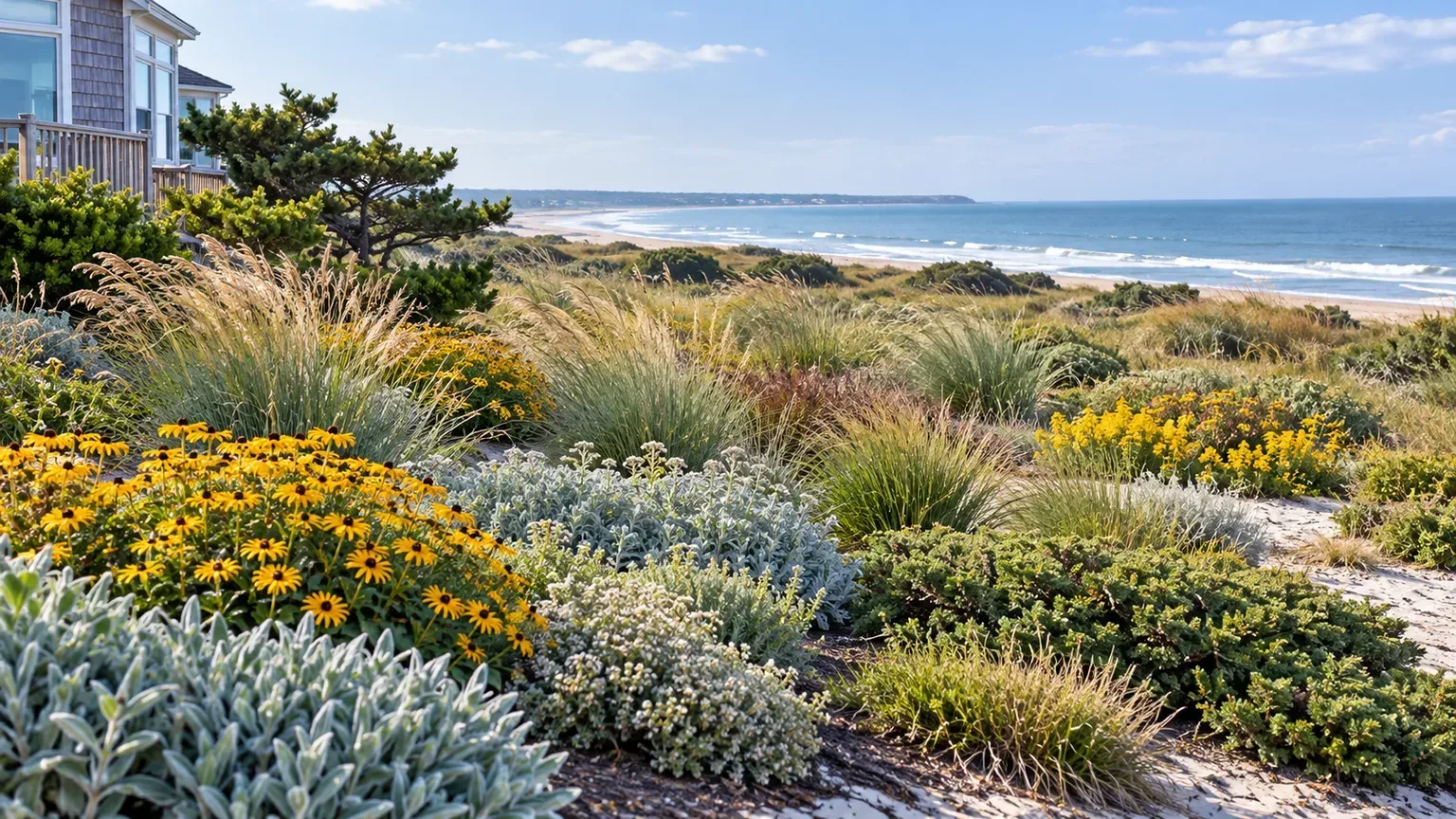
Salt-tolerant plants are species that withstand a particular amount or kind of salt exposure better than more sensitive plants. That may mean salt spray on leaves, saline soil around roots, or splashing from winter deicers. It does not mean a plant can grow in seawater or survive every salt dose. The best choices depend on where the salt lands, how often it arrives, and whether your climate and soil suit the plant.
The selections below include flowers and grasses for road edges, plants native to coastal habitats, shrubs for salt-exposed screens, and trees for larger landscapes. Each entry names the type of site where it makes sense. Use the list to create a shortlist, then confirm the specific cultivar and local plant guidance before buying. Salt tolerance is a useful filter, not a substitute for matching light, drainage, moisture, mature size, and native status.
Salt tolerance is not one trait
Salt can injure leaves, buds, stems, and roots. Salt dissolved in soil can also make water harder for roots to take up, even when the ground feels damp. Virginia Tech Cooperative Extension explains that saline soil, airborne salt spray, and deicing products can all damage landscape plants, but the exposure route and severity differ. The amount of salt, length of exposure, wind, sun, heat, and plant age all affect the result.
Salt spray, salty soil, and deicing brine behave differently
Along an oceanfront, wind can carry salt droplets onto foliage and soil. Storm surge or tidal water is a separate stress: a plant that tolerates spray may not tolerate roots submerged in brackish water. In a road verge, deicer dissolves in snowmelt, then reaches a planting through runoff, plow piles, and vehicle splash. A roadside bed may therefore have both leaf exposure and salty soil, while a sheltered coastal garden may receive spray but drain freely.
Virginia Tech Cooperative Extension’s salt-injury guide describes these different pathways and cautions that leaf burn and dieback can have other causes, including drought, root damage, pests, and disease. When several unrelated plants decline in the same exposed strip, map where the damage occurs and review drainage and salt sources before replacing everything. A soil test can help establish whether salt has accumulated around roots.
Start with exposure, soil, and region
Before choosing plants, answer four questions: Is the site near the ocean or a salted road? Does salt reach leaves, roots, or both? Is the soil dry, freely draining, or wet? Which species are native and noninvasive in your area? A dune plant may be a strong fit for exposed coastal sand but a poor choice for a compacted roadside strip. A winter-hardy shrub may cope with a northern road verge but fail in a subtropical summer.
The regional labels below are starting points, not planting guarantees. Salt tolerance can vary among cultivars, and strong exposure may defeat plants that manage moderate salt. At a shoreline, check local rules before disturbing dunes or marsh vegetation. King County’s marine shoreline native planting plan offers a useful reminder: its plant choices are for a specific Pacific Northwest shoreline, and shoreline work may be regulated. Use the equivalent local extension or conservation guidance where you live.
Roadside perennials for splash zones
For a sunny boulevard or sidewalk edge, start with compact perennials and grasses that can rebound after seasonal stress. A group of tolerant plants can reduce the visible impact of occasional splash, but none should be treated as protection against salt-laden snow dumped directly onto the bed. Savvy Gardening’s roadside plant guide includes several of the following as plants that performed in a road-adjacent garden; Peterborough & Area Master Gardeners also describes perennial options for winter-salt exposure. Their lists are practical starting points, not a controlled trial for every climate.
Six lower plants that can handle some road salt
-
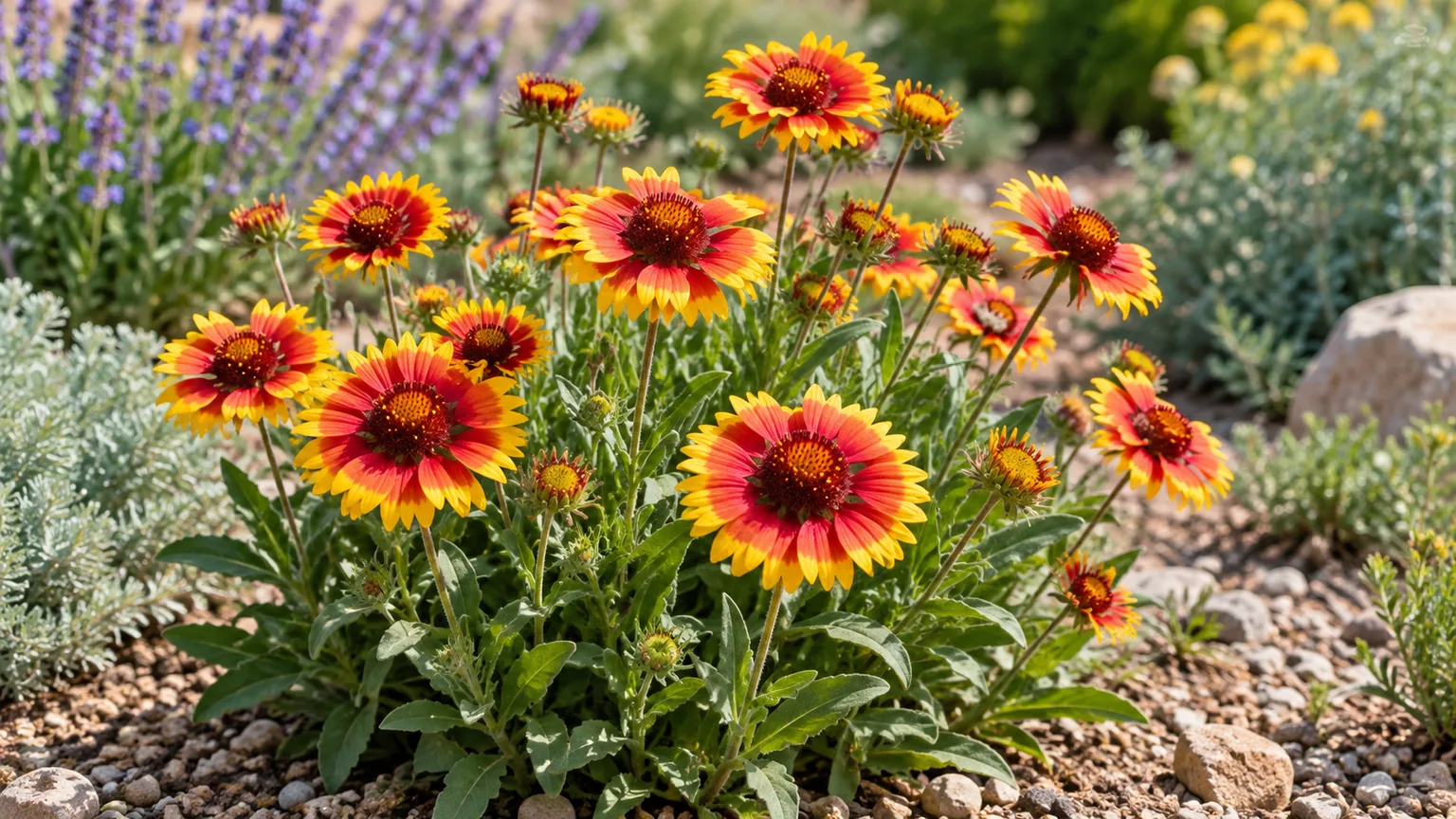
Blanket flower (Gaillardia spp.) — sunny, well-drained roadside beds. Blanket flower is one of the stronger choices for a hot, exposed flower border. It offers long-lasting color and handles leaner soil better than plants that need constant moisture. Give it sun and drainage; it is not a substitute for a salt-marsh plant or a flood-tolerant species. Different species and hybrids vary, so choose one suited to your region and let the planting establish before judging its performance.
-
Autumn Joy stonecrop (Hylotelephium ‘Herbstfreude’) — dry, sunny edges. This upright sedum has fleshy leaves and flower heads that age from pink to copper. Savvy Gardening rates it as moderately salt tolerant and reports success in a road-adjacent bed. It is a sensible option where splash is intermittent and the soil drains well. Avoid wet winter soil and do not pile salty snow over the crown; stress tolerance is not the same as immunity to concentrated brine.
-
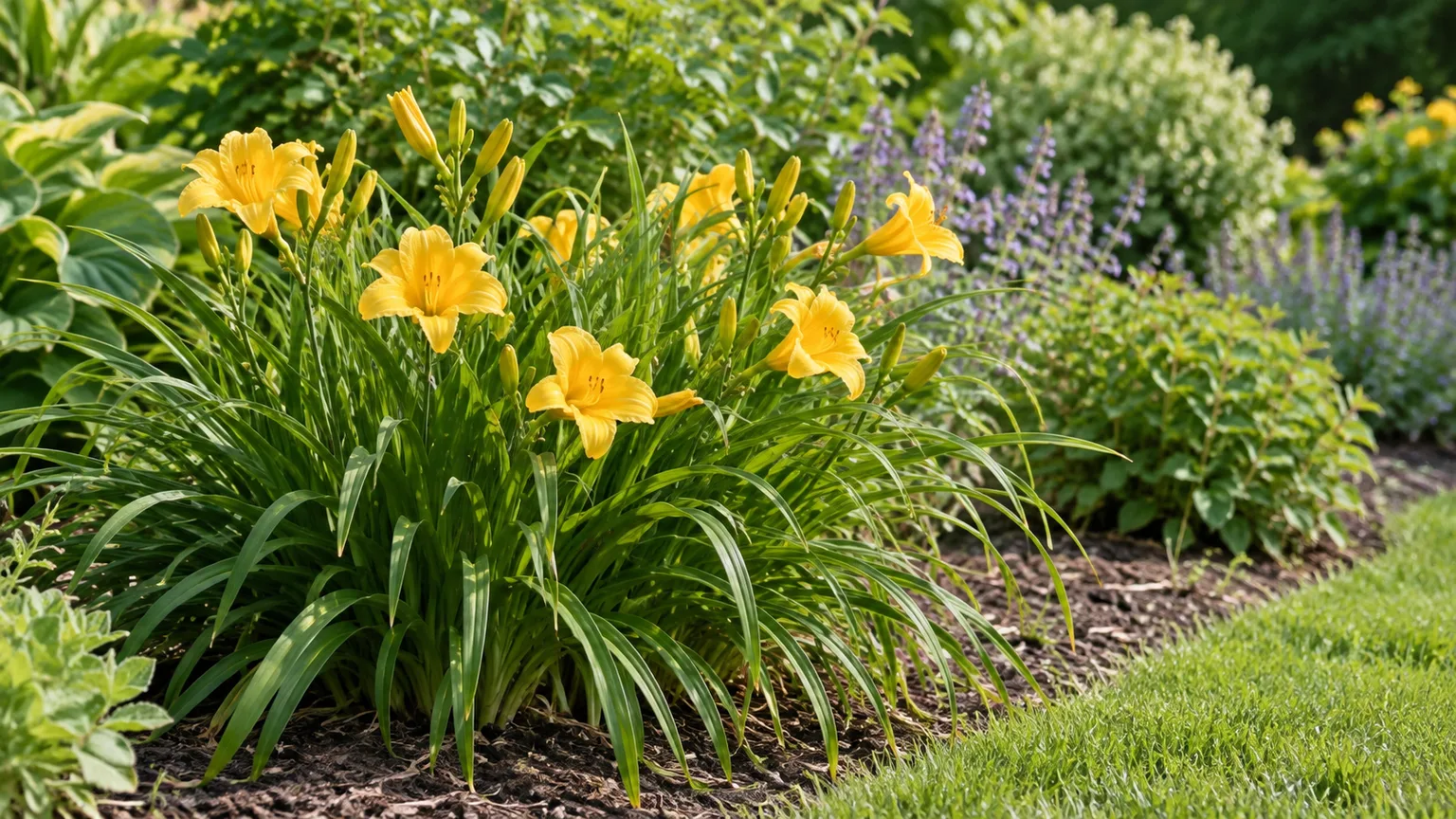
Daylilies (Hemerocallis spp.) — adaptable beds set back from direct spray. Daylilies are a practical choice where a gardener wants a low-care perennial with flowers and strap-like foliage. Peterborough’s Master Gardeners list them among roadside-salt options, but the label covers many species and cultivars, not one uniform level of tolerance. Pick a locally recommended variety, give clumps space, and remove spent foliage as needed. Keep them out of the spot where plows regularly leave snow.
-
Butterfly weed (Asclepias tuberosa) — sunny, sharply drained pollinator beds. This eastern North American native has orange flowers and deep roots, but it is slow to establish and dislikes being moved once mature. Savvy Gardening describes it as moderately salt tolerant in a roadside garden. Plant it in a permanent sunny position with drainage rather than in a wet curbside depression. Avoid confusing it with common milkweed, which spreads much more aggressively by rhizomes.
-
Russian sage (Salvia yangii, formerly Perovskia atriplicifolia) — hot, dry, open edges. Airy blue-purple flowers and aromatic foliage make Russian sage useful in a broad, sunny roadside border. Savvy Gardening and Peterborough’s Master Gardeners include it among moderate salt-tolerance candidates. It needs good drainage and room for a mature mound; do not try to keep it in a narrow ribbon beside a sidewalk. The newer botanical name may appear on tags, so check both names when shopping.
-
Columbine (Aquilegia spp.) — lightly salted, part-shade transitions. Columbines add early flowers where a garden gets morning sun or filtered light, and Savvy Gardening lists them as moderately to highly salt tolerant in its road-garden context. They are a better fit behind the most exposed edge than in a strip continually coated by brine. Species differ in native range and self-seeding behavior. Choose a regional species when possible, and keep seedlings only where they will not crowd neighboring plants.
Coastal groundcovers and grasses
For coastal gardens, favor plants from similar habitats and match them to dry sand, dune, marsh, or sheltered border conditions. UF/IFAS lists beach sunflower, gaillardia, seaside goldenrod, saltmeadow cordgrass, muhly grass, sea oats, yucca, and prickly pear among salt-tolerant coastal choices. The list includes different moisture needs, and some are only suitable in a particular region or habitat. Six options below show why the word “coastal” still needs a site description.
Six choices for sandy, exposed, or brackish sites
-
Beach sunflower (Helianthus debilis) — warm, sunny coastal groundcover. This spreading native brings yellow daisy-like flowers to sandy, open beds in Florida and parts of the warm Gulf Coast. It is a lower, more garden-friendly choice than a dune grass for some residential sites, though it needs room to spread. Use local guidance to confirm that it is native or appropriate where you live, and do not expect it to thrive in shade or persistently wet soil.
-
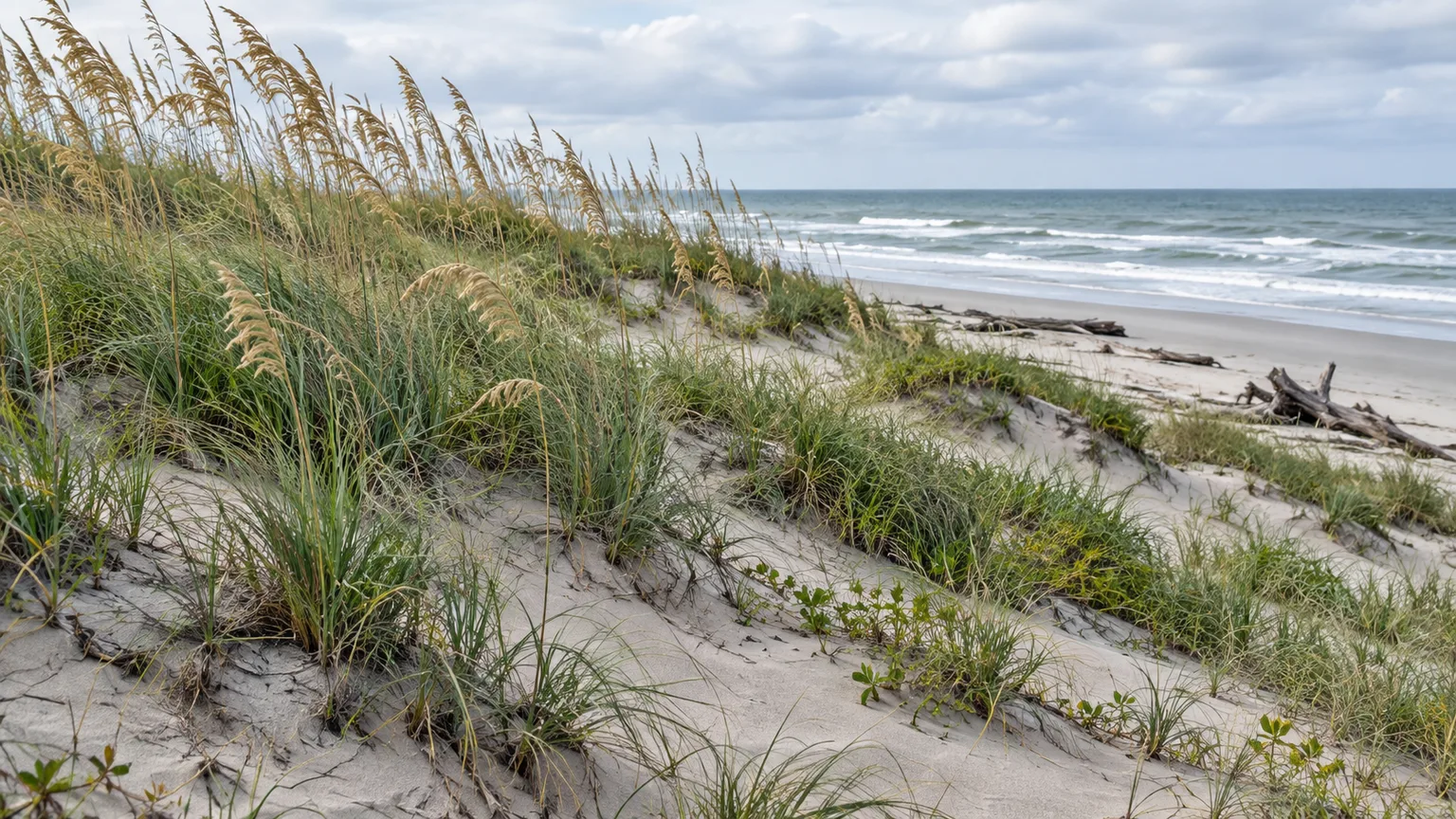
Sea oats (Uniola paniculata) — appropriate southeastern dune sites. Sea oats are adapted to exposed coastal sand and play an ecological role on dunes. They are not just a tall ornamental grass for any sunny border: use them only where local coastal guidance allows, and buy nursery-propagated plants rather than removing vegetation from a wild dune. They need space and a suitable sandy setting. If your yard is inland or the soil is heavy, choose a garden grass suited to those conditions instead.
-
Saltmeadow cordgrass (Sporobolus pumilus, often sold under Spartina patens) — moist brackish margins. This is the wet-site choice in the coastal group. It belongs in a marsh edge or similar moist habitat where brackish influence is part of the local plant community, not in a dry raised border. UF/IFAS includes it among Florida’s salt-tolerant native grasses. Before planting near a shoreline or tidal area, confirm species and placement with local restoration guidance; salt tolerance alone does not determine whether a site is suitable.
-
Seaside goldenrod (Solidago sempervirens) — sunny coastal beds and naturalistic borders. Seaside goldenrod is a coastal native with late-season yellow flowers that support pollinators. It can spread through underground stems, so allow room for a loose colony or use a contained bed. UF/IFAS lists it among coastal plants that tolerate wind and salt. It needs sun and is not a wetland substitute; choose a local goldenrod species if this one does not belong in your region.
-
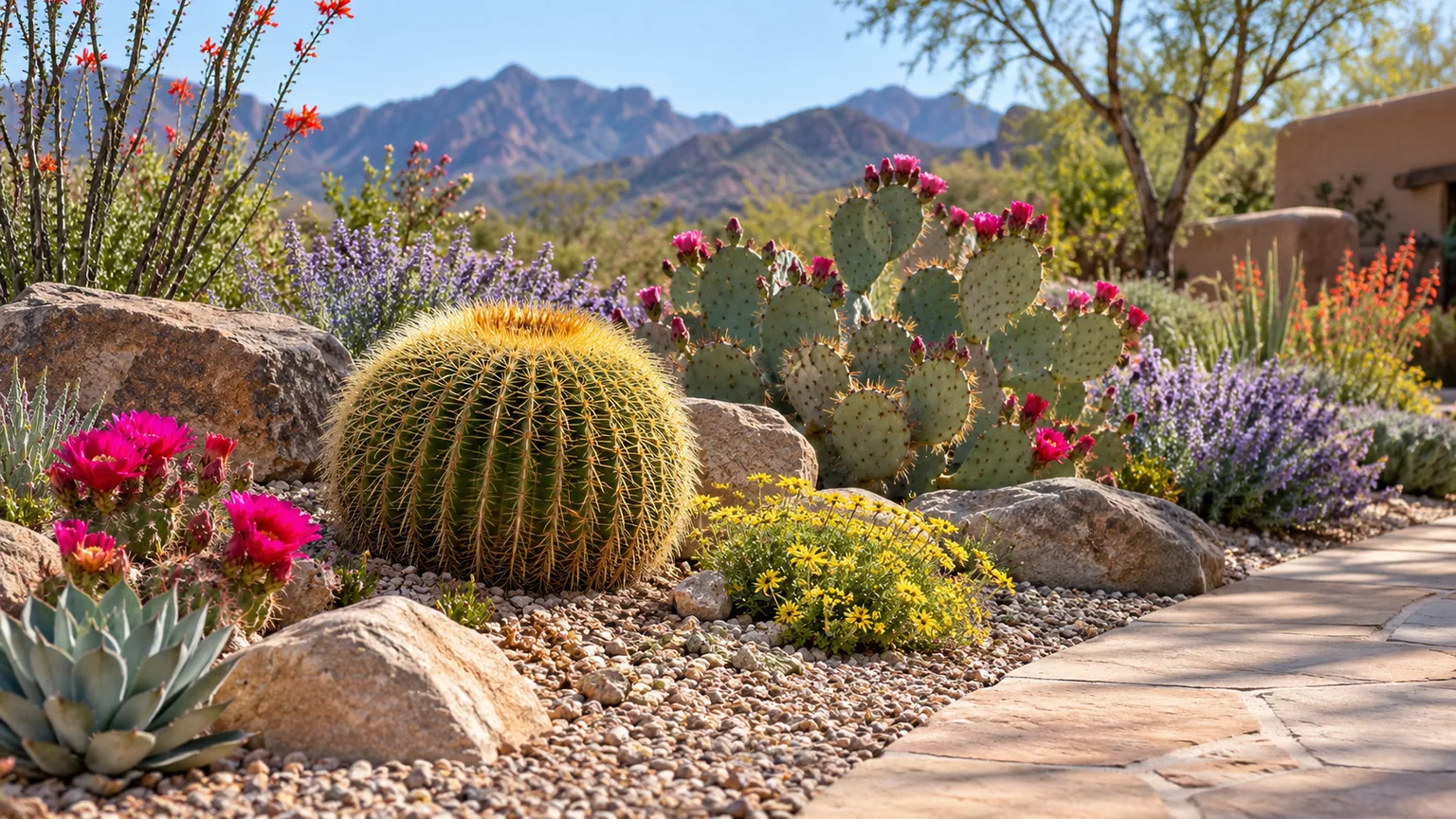
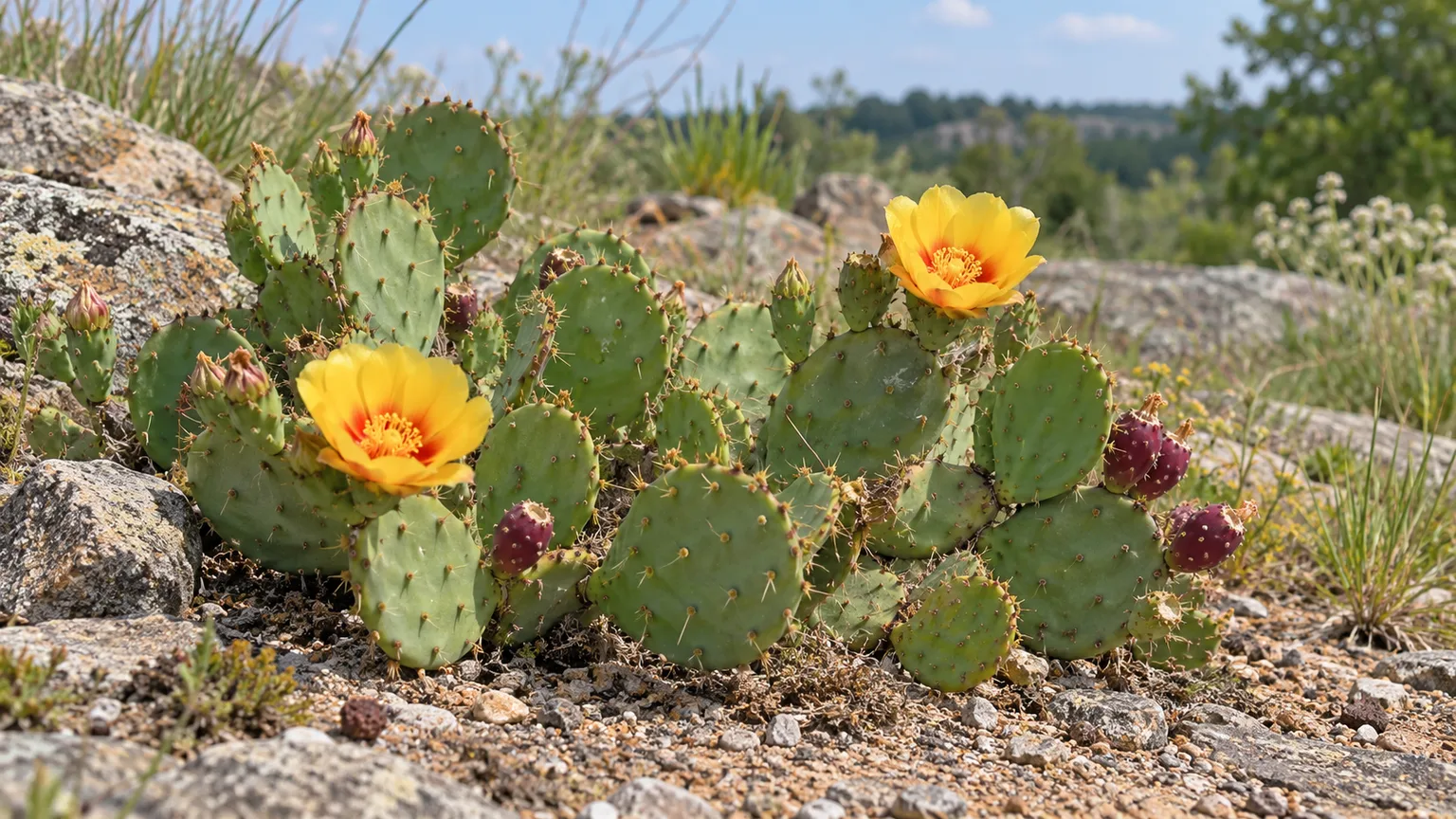
Eastern prickly pear (Opuntia humifusa) — dry, sunny, well-drained sites. This cold-tolerant cactus provides flowers and sculptural pads where the soil is sandy or rocky and drainage is fast. UF/IFAS and Virginia Tech include prickly pears among salt-tolerant landscape options. The spines and tiny glochids make placement a safety decision: keep the plant away from paths, play areas, and routine lawn work. It is a poor fit for soggy ground or a narrow walkway border.
-
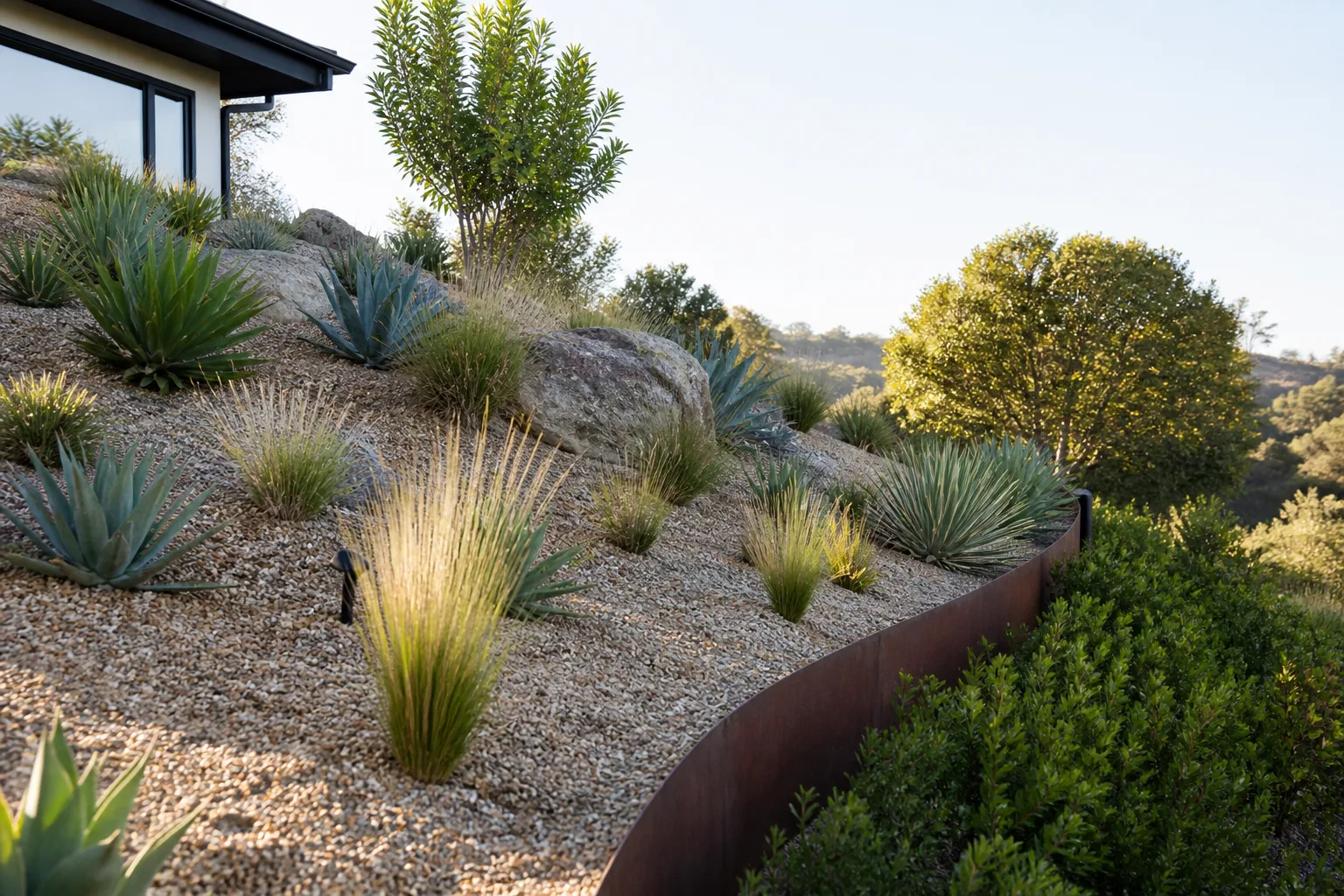
Adam’s needle (Yucca filamentosa) — dry coastal gardens and exposed sunny beds. Adam’s needle forms a rosette of stiff leaves and a tall summer flower stalk. It is a durable architectural accent for a sunny, well-drained site, and UF/IFAS lists yucca among salt-tolerant coastal choices. Leave clearance for the sharp leaf tips, especially beside a path or where children play. It can handle lean soil, but prolonged standing water and repeated saltwater inundation are different problems.
Salt-tolerant shrubs and low evergreens
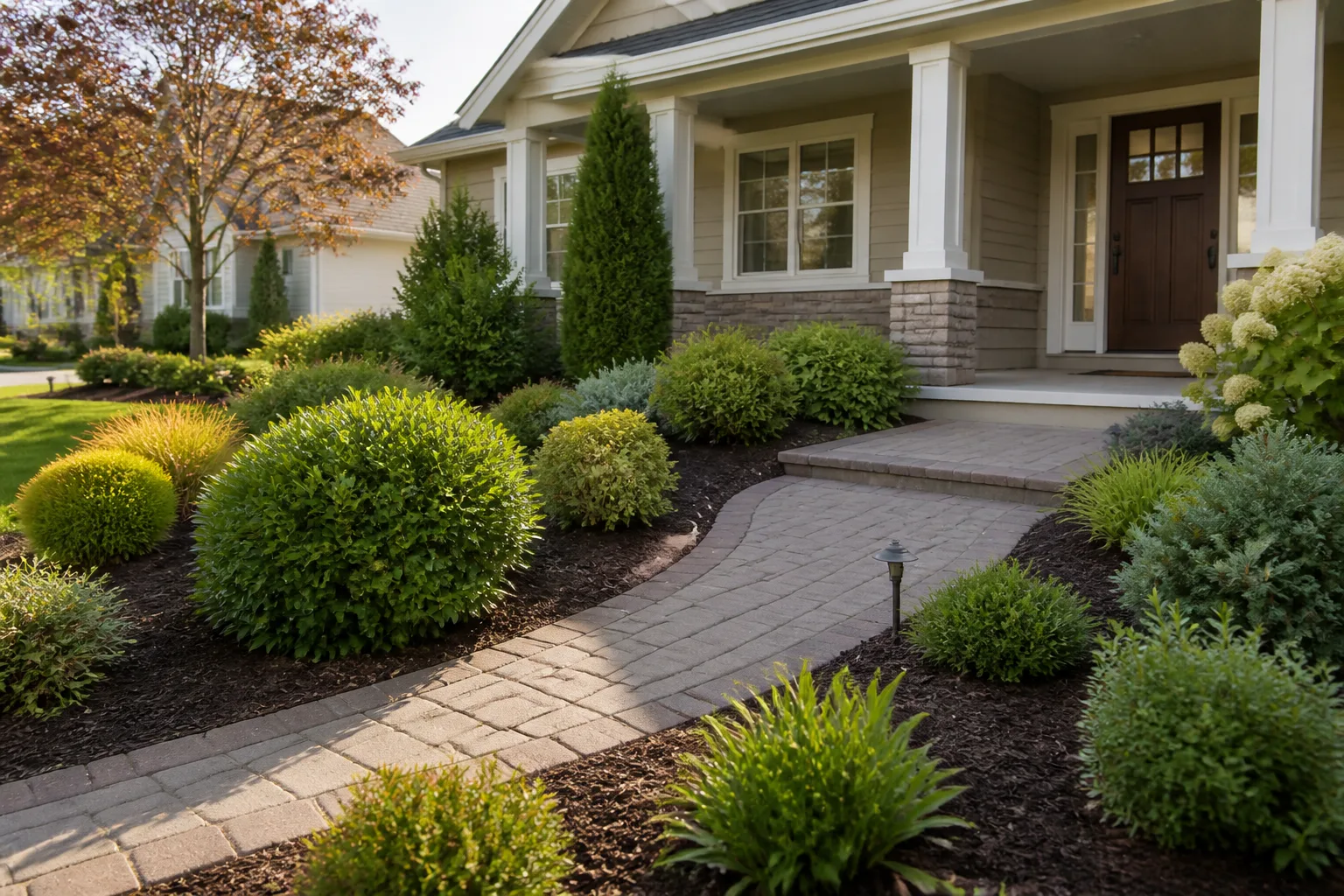
Shrubs and ground-hugging evergreens can take the brunt of wind or splash and create a more sheltered layer behind them. Virginia Tech’s woody plant guide lists the following eastern species for salt-prone landscapes. Consider mature size and native status before planting: an effective screen can become an overcrowded hedge if it is chosen only for its salt tolerance.
Six regional screens and groundcovers
-
Northern bayberry (Morella pensylvanica) — northeastern coastal screens. This tough shrub is useful on sunny or lightly shaded sites in the Northeast and Mid-Atlantic. Its waxy berries and dense, suckering growth can help form a natural screen, but the habit may be too broad for a narrow foundation bed. Bayberry is usually dioecious, so a female needs a male plant nearby to set fruit. Ask a regional nursery whether the plants are compatible and allow space for new suckers.
-
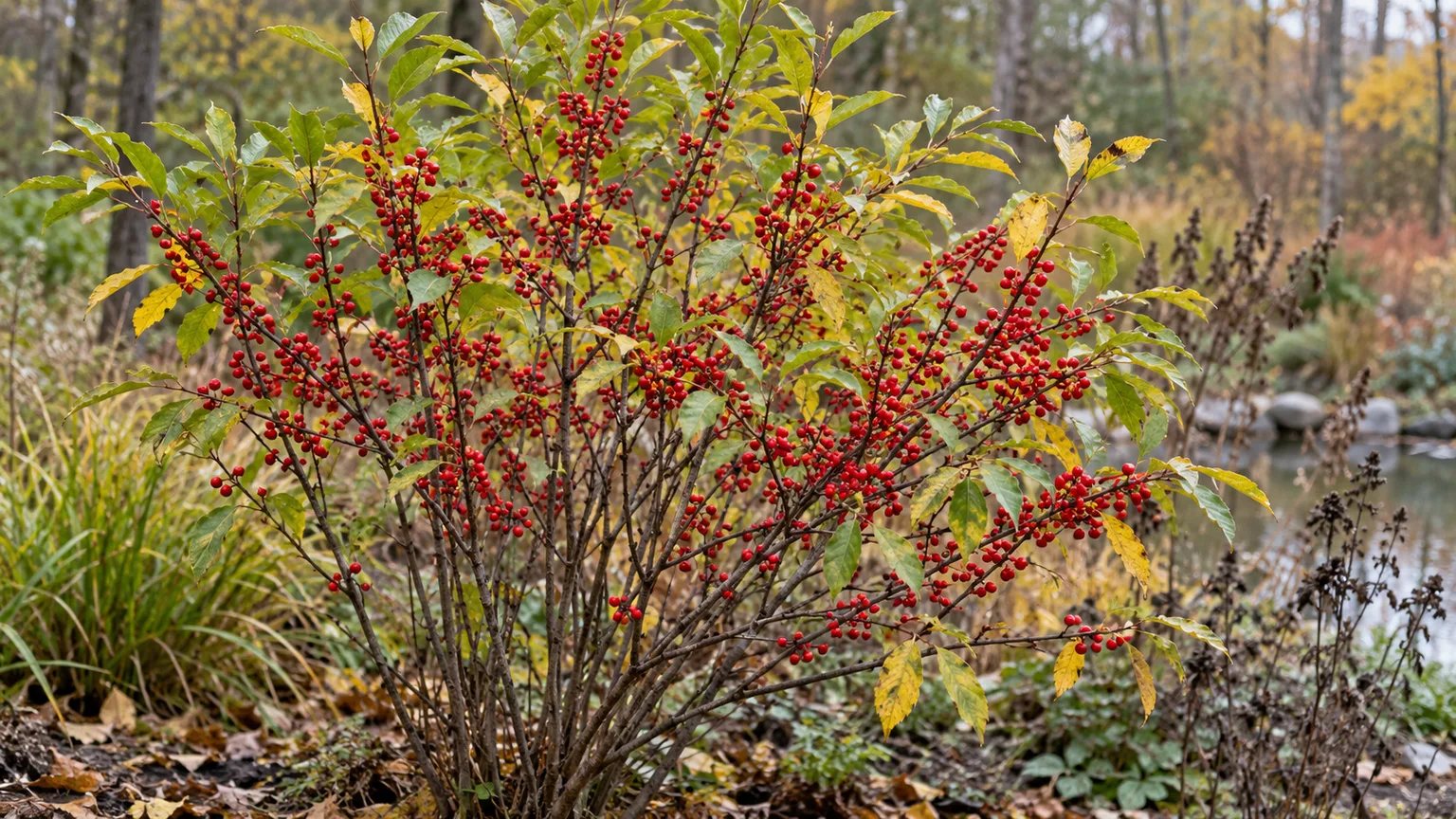
Winterberry holly (Ilex verticillata) — moist, colder-region beds. Unlike evergreen hollies, winterberry drops its leaves; its red berries show on bare stems in fall and winter. Virginia Tech includes it in its salt-tolerant shrub list. It prefers more moisture than many dry-coast plants, so use it in a garden that stays evenly moist but drains rather than a dune or parched berm. For berries, plant both male and female selections with overlapping bloom times.
-
Inkberry holly (Ilex glabra) — eastern native evergreen structure. Inkberry is a broadleaf evergreen that works in a mixed border or informal hedge where the soil is not bone dry. It appears in Virginia Tech’s salt-tolerant list and is native to eastern North America. Its natural form can become leggy as it matures, so plan for light renewal pruning rather than tight clipping every month. Select a cultivar that fits the space and confirm it is appropriate in your state.
-
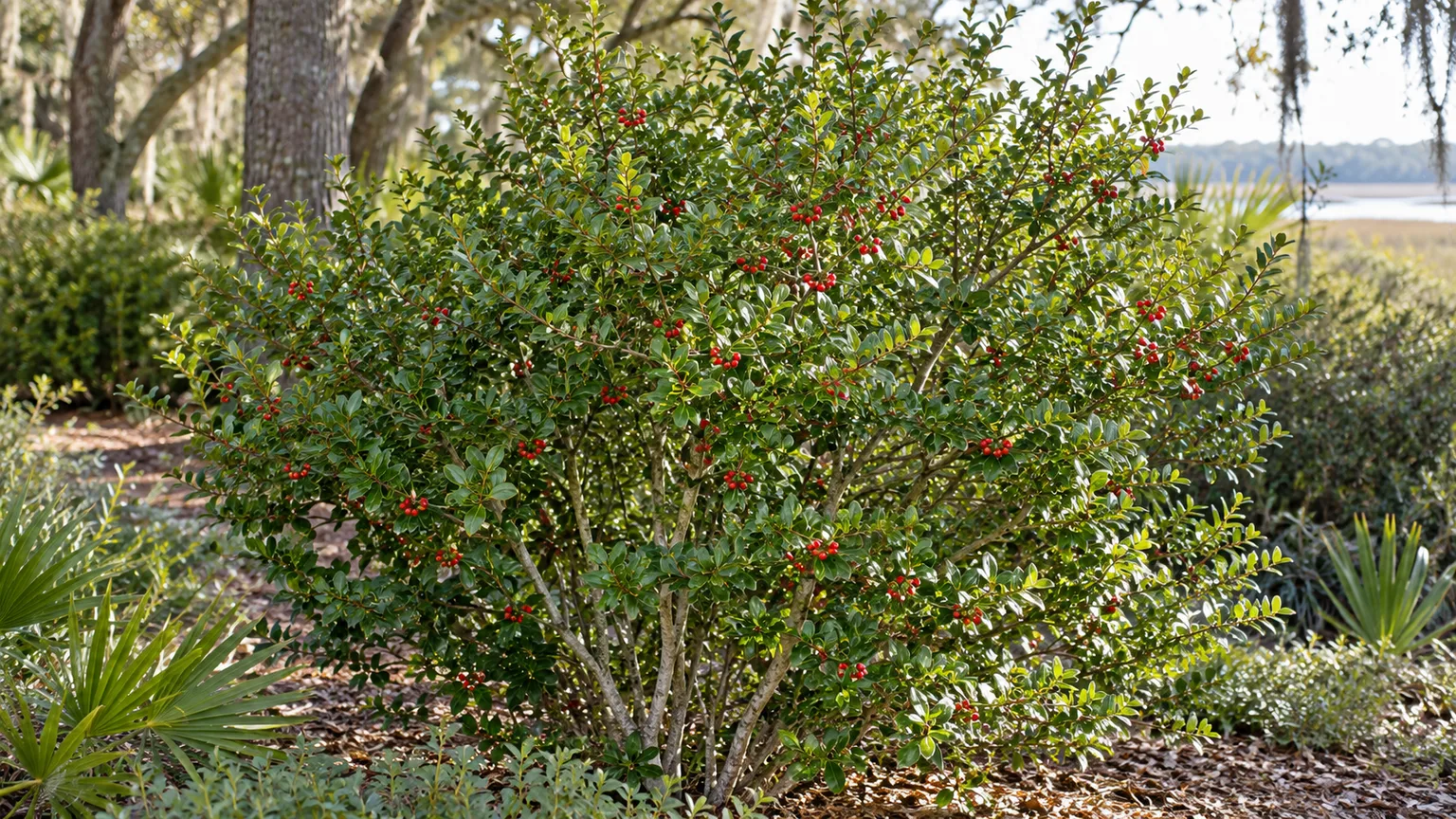
Yaupon holly (Ilex vomitoria) — southeastern evergreen screening. Yaupon is an adaptable native shrub or small tree for the Southeast and Gulf region, and both UF/IFAS and Virginia Tech include it among salt-tolerant choices. Cultivars differ greatly in size and shape, so select one for the intended screen rather than relying on repeated hard pruning. Female plants produce berries when pollinated by a male; the fruit is ornamental, not a casual food source.
-
Wax myrtle (Morella cerifera) — fast-growing southeastern wind filter. This evergreen shrub or small tree can provide a quick layer of shelter in warm coastal landscapes. UF/IFAS and Virginia Tech list it as a salt-tolerant option. Its growth can outpace a small garden, so check the expected mature dimensions and use selective pruning to keep it open. In a salt-exposed bed, a mixed screen is often more resilient than a single-species wall.
-
Creeping juniper (Juniperus horizontalis) — sunny, dry banks and groundcover. This low evergreen spreads across dry, well-drained slopes and can cover soil where turf is impractical. Virginia Tech includes creeping juniper in its salt-tolerant list. It is a regional choice rather than a promise for all climates, and its evergreen foliage can still suffer when repeatedly coated in concentrated road brine. Do not plant it where salty snow is piled or where water remains around the roots.
Trees and warm-coast plants
Large plants can intercept wind and create shade, but they require more planning than a flower border. Virginia Tech’s list includes eastern redcedar, oaks, and honey locust for salt-prone sites; UF/IFAS lists live oak and sea grape for Florida coastal landscapes. Check mature canopy, roots, utilities, and regional fit before planting. Salt resistance cannot solve an undersized tree lawn or a species planted outside its climate.
Six large plants for the right climate and space
-
Eastern redcedar (Juniperus virginiana) — dry, open sites across much of eastern and central North America. This native evergreen can function as a screen or windbreak where there is enough room for its mature height. Virginia Tech includes it among salt-tolerant trees. Because it holds foliage through winter, protect it from direct plow spray where possible; salt tolerance does not mean a conifer is the best choice in the most heavily salted strip. Avoid overhead wires and crowded sidewalks.
-
Pin oak (Quercus palustris) — large, moist-to-average roadside landscapes. Pin oak offers a strong canopy and fall color and is included in Virginia Tech’s salt-tolerant tree list. It needs space to mature and is not a fit for a narrow strip beneath wires. The species tolerates some wetter conditions, but site drainage and soil pH still matter. Choose a tree only after checking the planting space, utilities, and locally recommended oak species.
-
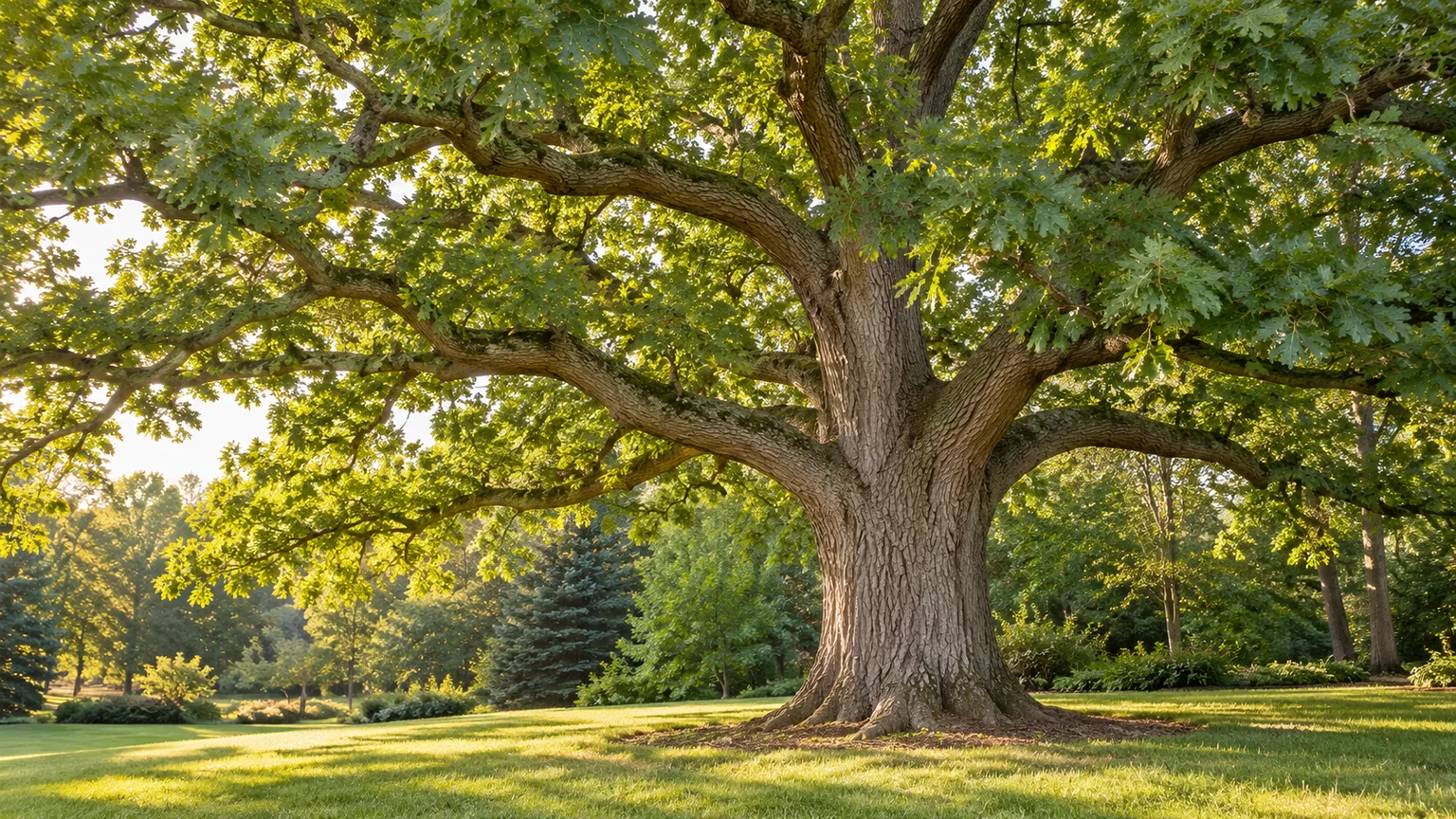
White oak (Quercus alba) — broad eastern shade tree. White oak can be a long-term canopy tree on a large property, with a broad crown and value for wildlife. Virginia Tech lists it among trees suitable for salt-prone landscapes. Its eventual size makes it a poor pick for small curb strips or beneath overhead lines. Do not plant it in a spot where the roots will be confined by pavement; allow room for a wide, durable tree lawn.
-
Honey locust (Gleditsia triacanthos) — open urban sites and larger roadside beds. Honey locust is included in Virginia Tech’s salt-tolerant tree list, and Northern Gardener names honeylocust among trees that may do well in a salt-strewn area. For a street planting, select a locally recommended thornless, podless cultivar rather than assuming every seedling has tidy traits. It still needs room for a spreading crown and should not be crowded against pavement, signs, or utility lines.
-
Live oak (Quercus virginiana) — warm Gulf and southern Atlantic coasts. Live oak is a major evergreen shade tree for warm climates, not a choice for cold northern roadsides. UF/IFAS lists it among Florida trees suited to salt exposure. Its sweeping canopy and substantial root zone require a large site and should be planned with buildings and utilities in mind. For a small yard, a regionally appropriate shrub or smaller native tree will be easier to maintain.
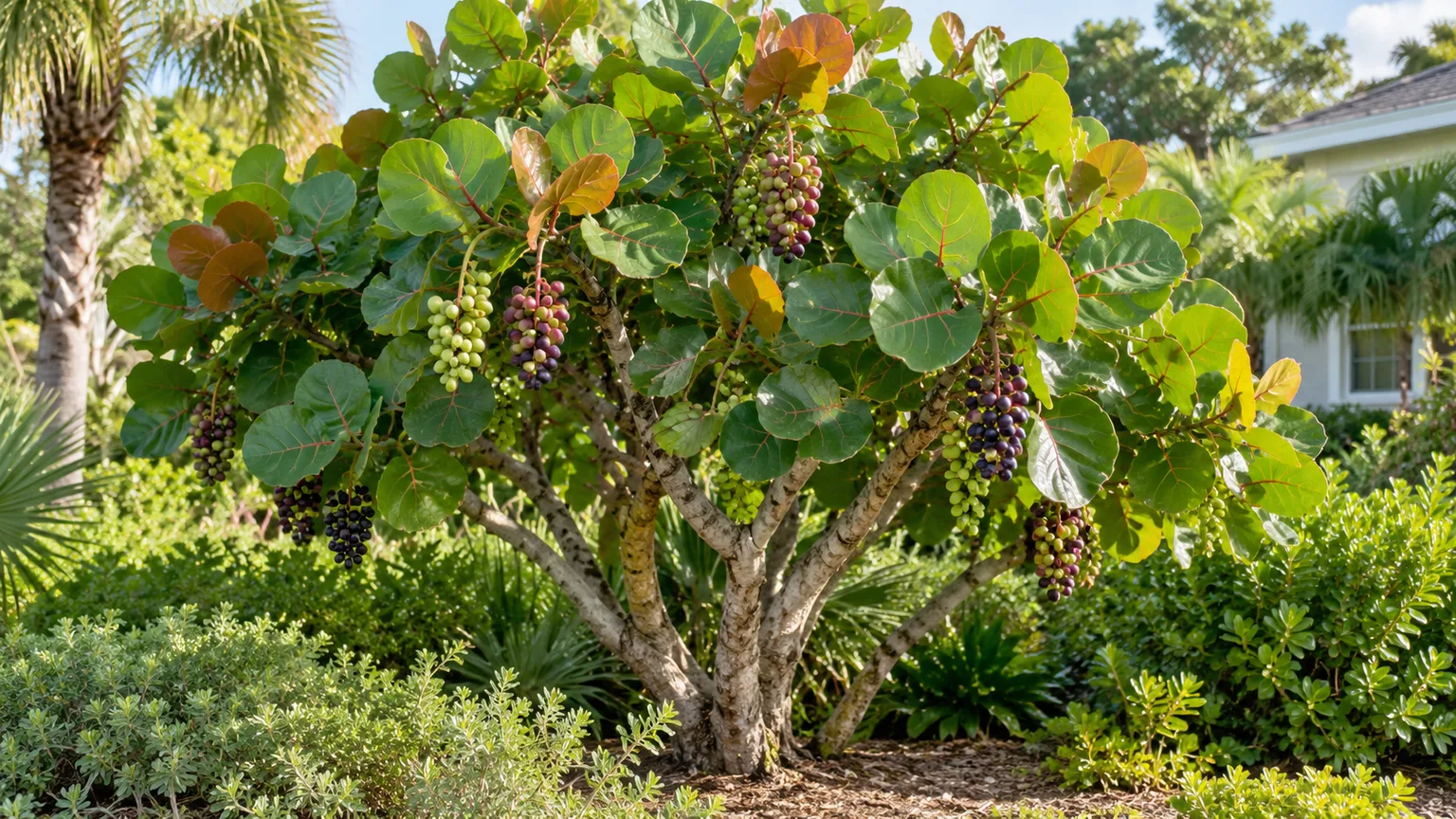
- Sea grape (Coccoloba uvifera) — tropical and subtropical coastal gardens. Sea grape has broad rounded leaves and can grow as a large shrub or small tree in warm coastal regions. UF/IFAS lists it among salt-tolerant edible landscape plants for Florida. It is frost-sensitive and can become wide, so it does not belong on a cold-climate or narrow roadside list. Allow space for its canopy and leaf litter, and follow local rules if planting near a protected shoreline.
How to match plants to your site
Use the 24 names as a filter, then narrow the choices with the site itself. A plant that tolerates salt may still fail from shade, drought, standing water, compacted soil, or winter cold. Choose plants from the same broad region as the garden whenever possible, and verify current invasive-species guidance before buying a vigorous groundcover or shrub.
For ocean-facing beds
First identify whether the bed receives wind-driven spray, occasional storm overwash, or regular tidal flooding. For a sunny, sandy bed that receives spray but is not flooded, coastal groundcovers and regionally appropriate shrubs are better starting points than plants selected only for road salt. For wet brackish margins, use a local marsh species such as saltmeadow cordgrass only if that moisture regime fits. Avoid moving dune or marsh plants from the wild, and check permitting rules before planting or altering coastal habitat.
For salty sidewalks and road edges
Look for where plows stack snow, where cars splash slush, and where meltwater flows. Keep the most exposed strip simple: use durable, locally appropriate perennials or grasses at the curb, then put sensitive shrubs farther back or uphill. Avoid planting a valuable evergreen directly where wet brine hits repeatedly. If runoff collects in a low spot, improve grading or drainage before buying plants; a salt-tolerant label will not fix waterlogged roots or compacted soil.
For inland gardens with salt exposure
Some yards get windblown salt from a road even when their soil is not coastal or saline. If the soil drains normally and only leaves receive occasional splash, road-ready perennials may be enough. If multiple plants show similar leaf-edge burn after winter or snow is stored on beds, consider a soil test and review the route runoff takes. A “coastal plant” can still be a poor fit inland if it cannot tolerate winter temperature, summer humidity, or your soil type.
Establish the planting before the next salt event
Plant in the season that gives roots time to establish before the harshest weather in your region. Prepare a broad planting area rather than a narrow pocket of amended soil; the goal is a consistent root zone with drainage suited to the plants. Water new plants deeply with fresh water, then adjust frequency to species and weather. A drought-tolerant yucca, moist-soil winterberry, and dune grass should not all be watered on the same schedule.
Mulch can reduce evaporation and help keep soil moisture more even, but keep it clear of stems and crowns. Do not add fertilizer as a response to brown leaves unless a soil test or clear deficiency supports it. Virginia Tech notes that salt injury can resemble other problems and recommends using soil and water testing and weather information as part of diagnosis. If a known salt spray coats foliage, a fresh-water rinse soon after exposure can remove residue; flushing soil is only sensible where water can drain through it without causing erosion or waterlogging.
Reduce salt exposure where you can
Plant choice is one layer of protection. A few changes to winter maintenance can reduce the amount of salt reaching the bed:
- Shovel or scrape first, then use only the labeled amount of deicer needed for safe traction.
- Keep plow piles and salted snow out of garden beds; meltwater from stored snow can carry salt into roots.
- Where it is safe and practical, use sand or traction material instead of extra deicer.
- Direct runoff away from sensitive plants and avoid spraying brine onto foliage.
- Put salt-tolerant plants on the exposed edge and less tolerant plants behind a permeable screen.
- Rinse visible residue from foliage with fresh water when conditions allow, and assess the soil if damage repeats.
Virginia Tech recommends reducing deicer applications, protecting roadside beds from plowed snow, and placing sensitive plants away from heavily salted pavement. Northern Gardener’s road-salt advice also stresses shoveling first and selecting plants for the boulevard exposure. These steps help, but in a severe site the most reliable solution may be a nonliving buffer or moving the planting farther from the splash zone.
Conclusion
The right salt-tolerant planting starts with a more precise question: are you dealing with ocean spray, salty soil, brackish flooding, or deicing splash? Use the roadside perennials for moderate pavement exposure, the coastal plants only in matching habitats, and shrubs or trees where space and regional climate support their mature size. Confirm local guidance, improve drainage and runoff where possible, and establish new plants with fresh water. A well-matched plant can withstand a difficult site; no plant list can make every site salt-proof.