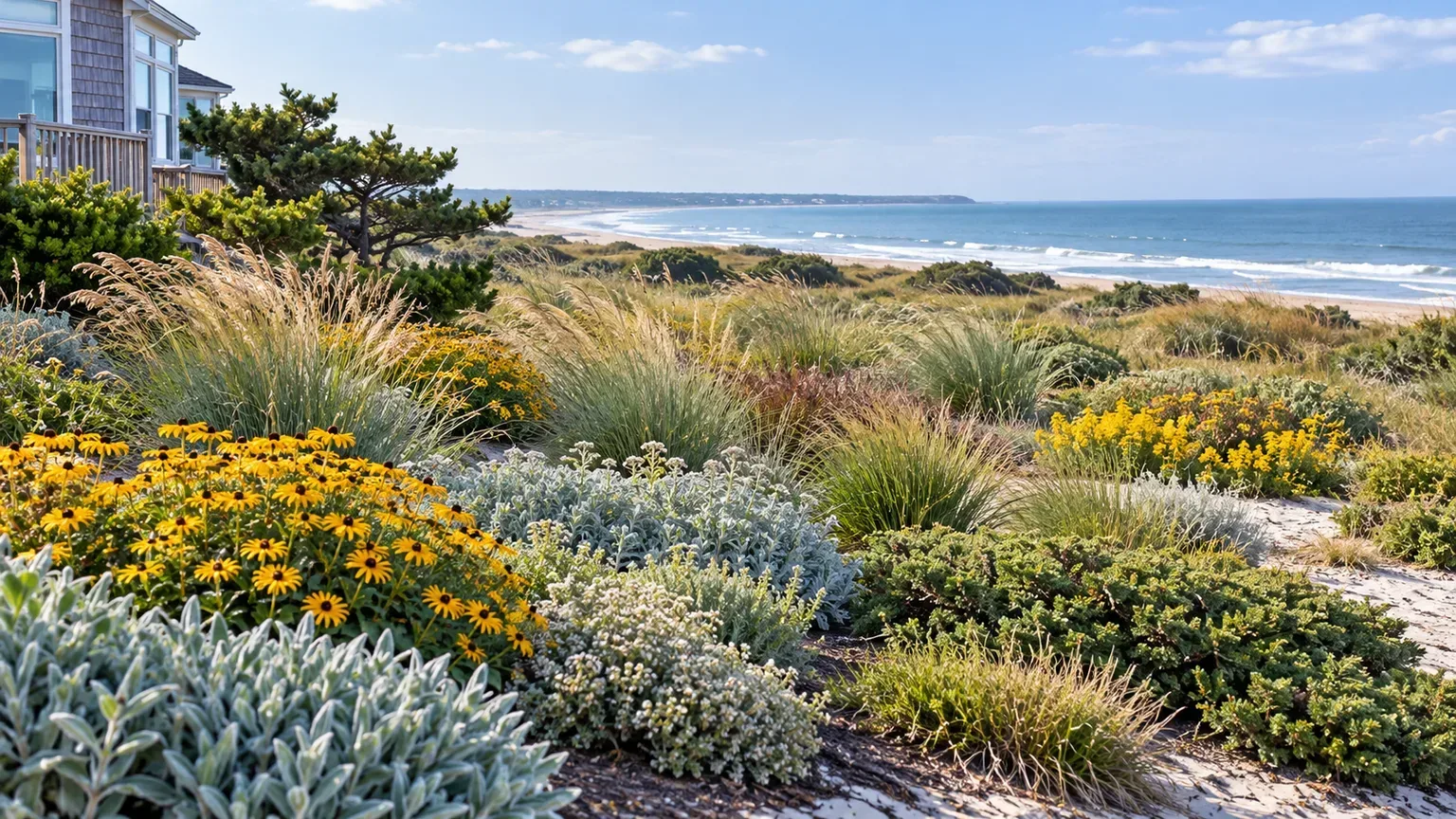
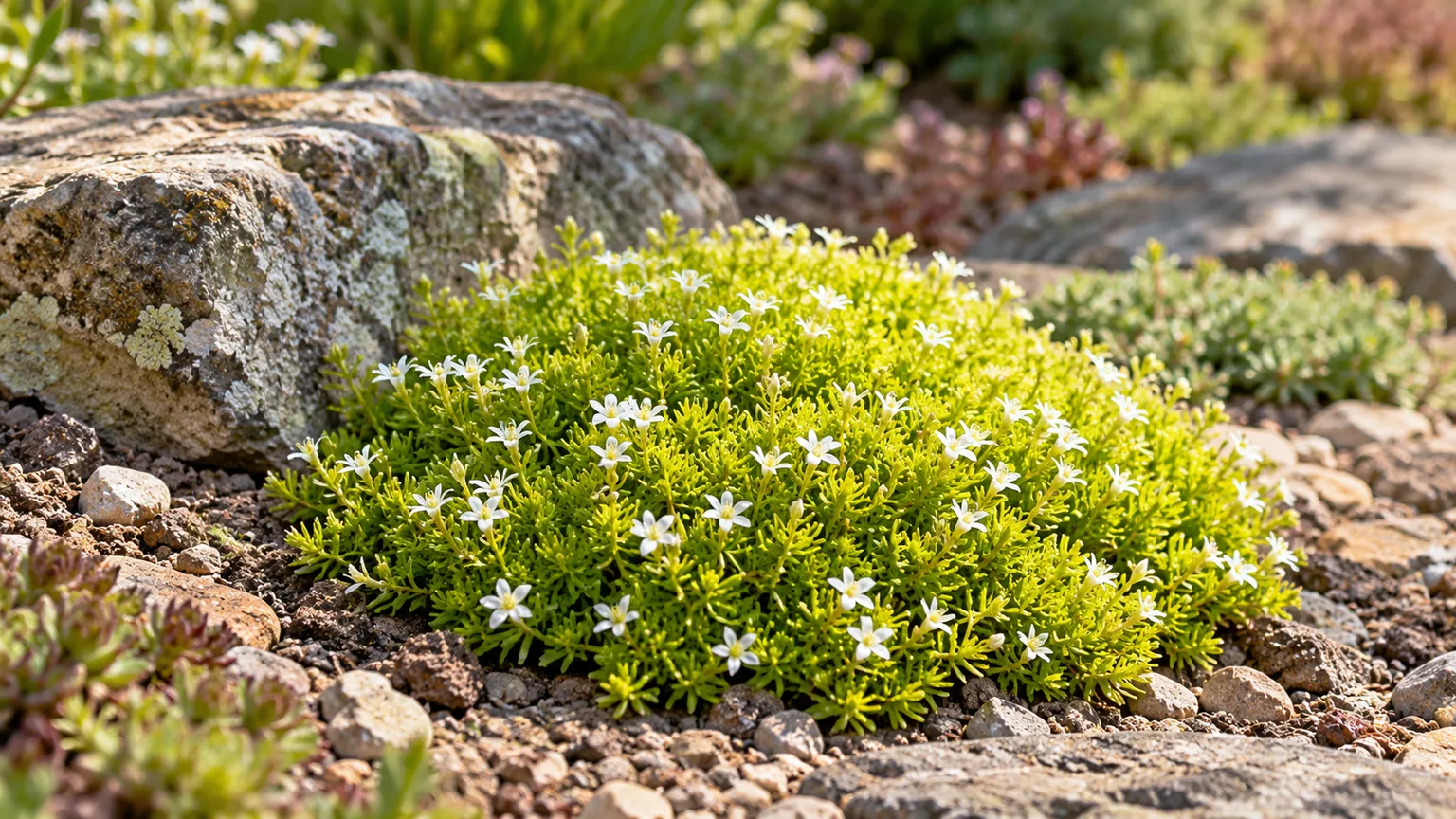
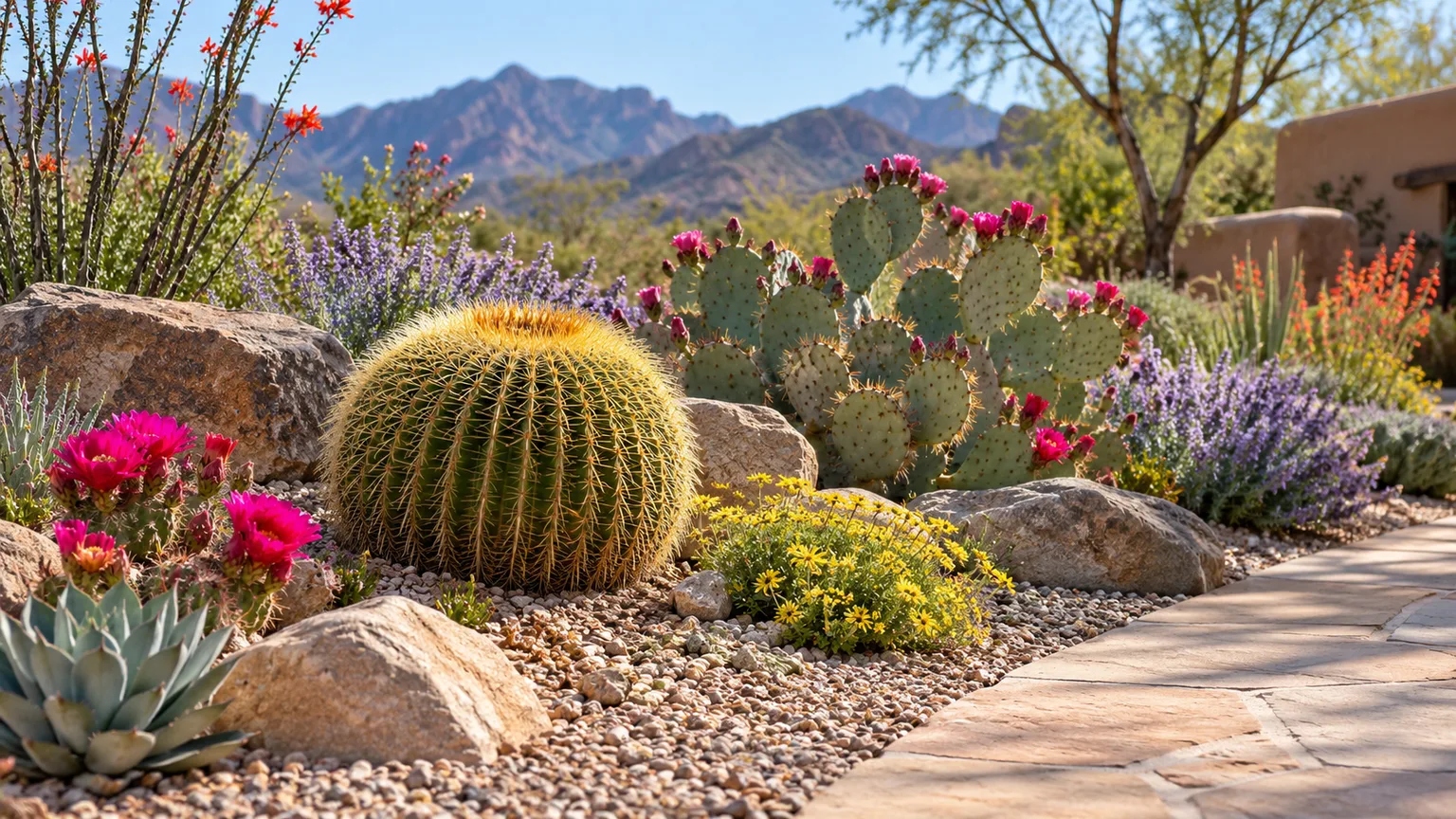
35 Drought-Tolerant Shrubs for a Low-Water Yard
Compare 35 drought-tolerant shrubs by sun, soil, size, flowers, and risks. Find a fit for your yard and learn how to water new shrubs through establishment.
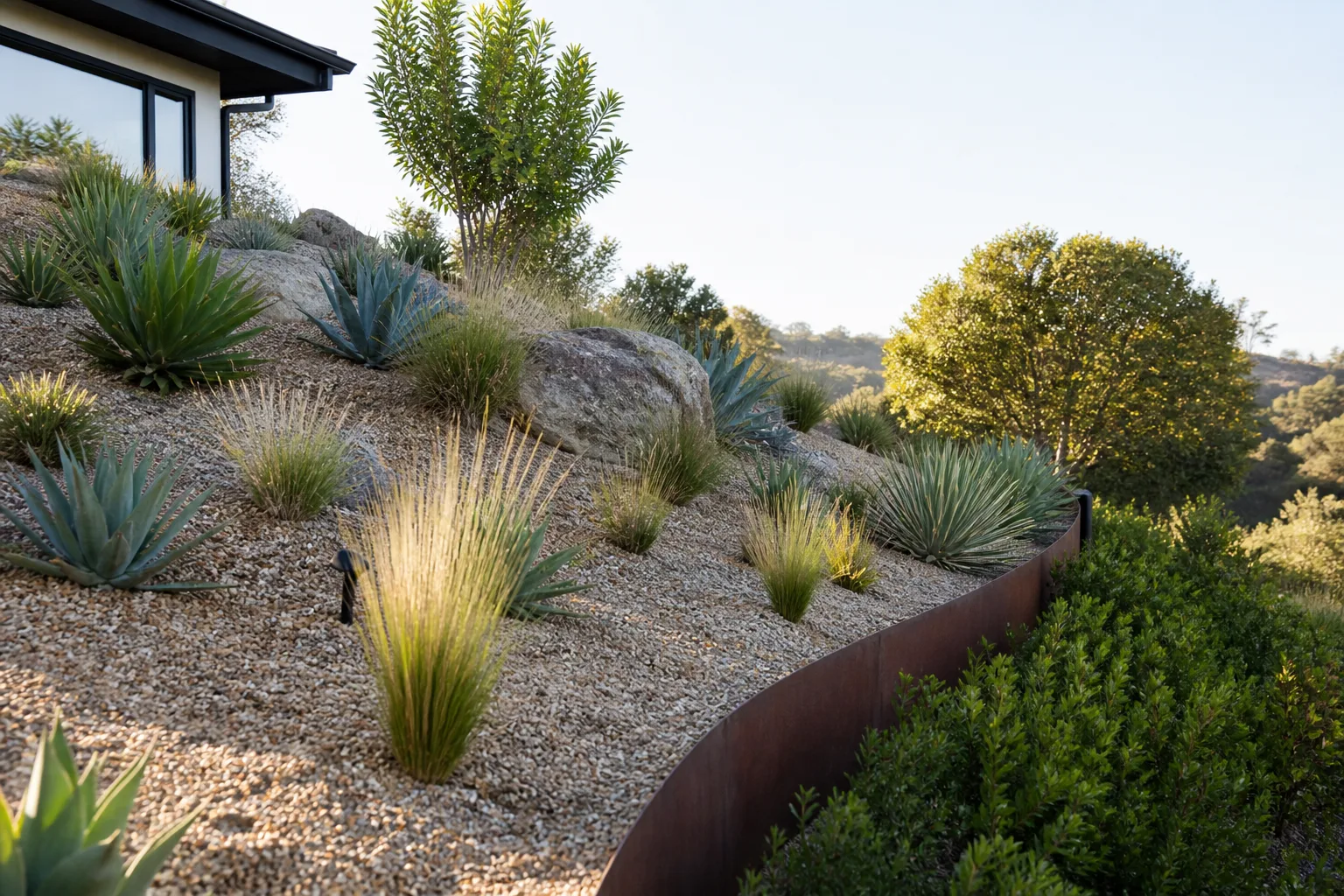
A drought-tolerant shrub can save water after it has settled into the ground, but the label does not mean “plant it and forget it.” A young shrub still has a small root system, a dry spell can arrive before roots spread, and even an established plant may flower or fruit poorly when soil stays parched. The best choice is the shrub that fits your climate, drainage, available space, and realistic watering routine.
This is a curated list of 35 shrubs and woody subshrubs used in low-water landscapes, not a national sales ranking. It includes strong dry-site options and conditional choices that handle a brief dry spell but need more moisture for good bloom or berries. Penn State Extension’s heat- and drought-tolerant plant list includes several of the same shrubs, while emphasizing that plant performance is tied to the growing conditions where they are used.
What drought tolerance really means for shrubs
Drought tolerance is not a single switch that turns irrigation off. It describes how well a plant can endure limited soil moisture, but performance changes with age, root depth, heat, wind, humidity, soil texture, and the length of the dry period. A shrub may survive a dry summer and still drop leaves, produce fewer flowers, or set little fruit.
Keep three situations separate when reading plant labels. “Tolerates drought once established” describes a mature root system in a suitable site; “drought resistant” is often a broad nursery phrase; and a plant that thrives on rainfall alone in one region may need supplemental water in another. Fine Gardening’s regional shrub recommendations show why local climate matters: expert-selected shrubs are separated by region because heat, cold, humidity, and rainfall change the best choices.
Even the meaning of “low water” depends on the garden. A shrub in a large, mulched bed with open soil can reach moisture that a plant in a small pot or tight foundation strip cannot. Think of drought tolerance as a site-fit trait, not a guarantee that one species will behave the same way in every yard.
Choose by site before choosing by flower
Before buying, record your winter minimums, hours of direct sun, soil drainage, mature width available, and whether you can water the root zone during establishment. Hardiness zones describe average winter lows, not summer drought tolerance; use them to screen cold survival, then confirm local recommendations for heat, rainfall, humidity, and winter wet.
Drainage is as important as dryness. Some shrubs that thrive in rocky soil decline where water sits around their roots after rain, while plants suited to heavier or consistently moist soil can fail in a desert bed. If a planting hole stays saturated, choose a better-drained location or a moisture-tolerant shrub instead of assuming that less watering will solve the problem.
Match the shrub to its job
A slope needs a shrub whose spread can cover ground without becoming an escape problem. A screen needs plants with the right mature height and width, while a pollinator border benefits from flowers at different times of year. A formal hedge also commits you to pruning; a slow-growing natural form may take longer to fill in but need fewer corrections.
Use the mature plant measurements on the label, not the nursery pot, to plan spacing. Better Homes & Gardens’ xeriscape overview describes grouping plants with similar water needs, irrigating efficiently, and using mulch to limit moisture loss and weeds. That simple layout rule prevents one thirsty shrub from dictating the irrigation schedule for an entire low-water bed.
Quick picks by landscape need
| Landscape need | First choices to investigate | Main trade-off |
|---|---|---|
| Sunny, fast-draining slope | Fragrant sumac, shrubby cinquefoil, cliffrose, mountain mahogany | Some spread broadly or need a dry climate |
| Late-summer flowers | Bluebeard, chaste tree, glossy abelia | Hardiness and mature size vary |
| Evergreen structure | Blue Star juniper, boxwood, yaupon-type alternatives | Boxwood and some evergreens need more water or cooler conditions |
| Berries and wildlife | Beautyberry, bayberry, buffaloberry | Pollination, thorns, and local suitability matter |
| Clay or moisture-retentive soil | Ninebark, panicle hydrangea, some abelias | These are not the first choice for a gravel-dry bed |
Native structure and dry-soil specialists
Start with these for open slopes, rocky gardens, and sunny borders where drainage is fast. “Native” means native to some part of North America, not necessarily to your state, so check regional origin and local nursery guidance before treating a plant as an ecological fit.
1. Cliffrose (Purshia stansburyana) — This western North American shrub suits rocky, exposed sites where a deep-rooted plant can help hold a slope. Its size varies with climate and soil, so allow room for a naturally irregular form rather than treating it as a clipped foundation plant. Choose it for a dry inland garden, not a wet, enriched bed.
2. Curl-leaf mountain mahogany (Cercocarpus ledifolius) — A long-lived evergreen or semi-evergreen shrub with small leaves and feathery seed tails, it brings structure to high-desert and mountain landscapes. It prefers sun and sharp drainage, and mature plants can be much larger than a small nursery specimen suggests. Avoid narrow spaces beneath windows where it will need repeated pruning.
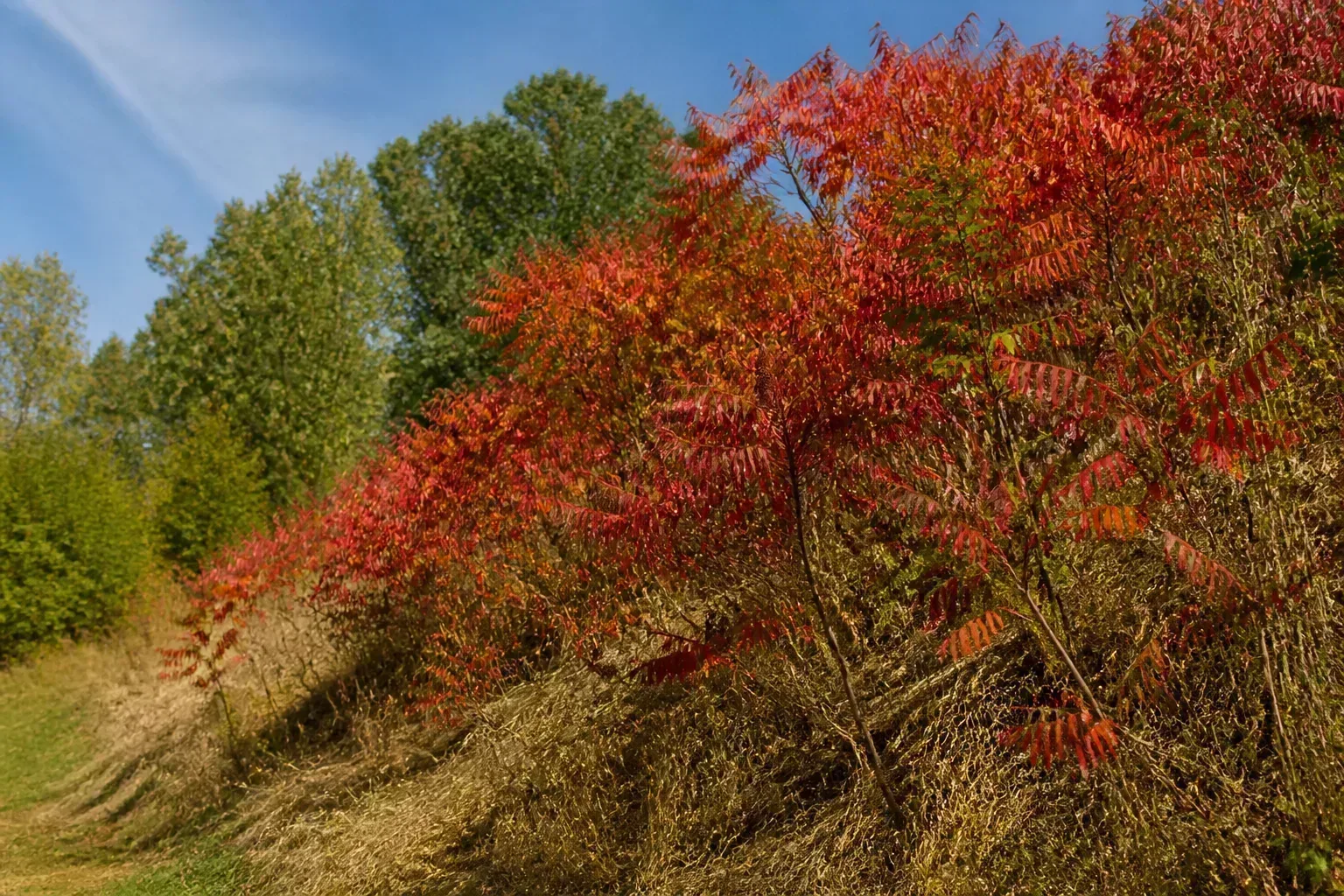
3. Fragrant sumac (Rhus aromatica) — This adaptable native offers citrus-scented foliage, spring flowers, red fruit, and strong fall color. NC State Extension’s profile lists it as tolerant of drought and dry or rocky soil; its ‘Gro-Low’ cultivar stays under three feet tall but may spread about eight feet, making it useful on slopes if that broad footprint is welcome.
4. Shrubby cinquefoil (Dasiphora fruticosa, formerly Potentilla fruticosa) — Compact and cold-hardy, cinquefoil produces a long run of yellow, white, pink, or orange flowers depending on cultivar. It tolerates lean soil and dry intervals better than many flowering shrubs, but still needs water while roots establish. Light thinning preserves its loose shape better than repeated shearing.
5. Silver buffaloberry (Shepherdia argentea) — Its silvery leaves and tough branches suit windy, open sites and dry screens. Plants are male or female, so female shrubs need a compatible male nearby to set fruit; the thorny stems and eventual spread make it a poor choice beside a walkway, play space, or small patio.
6. Mountain spray (Holodiscus dumosus) — Also called bush ocean spray, this western shrub has airy white flower clusters that age toward tan and can add fall color. It is a naturalistic choice for a well-drained border, not a precise hedge. Give it room because its height and outline vary with exposure and local conditions.
7. Mountain lover (Paxistima myrsinites) — This low evergreen-to-semi-evergreen shrub has small leaves and subdued flowers, so its value is quiet structure in a partly shaded, dry woodland edge. Protect it from reflected heat when young and do not read “shade tolerant” as “waterlogged soil tolerant.” It is a regional option, not a universal replacement for a sunny dry-site shrub.
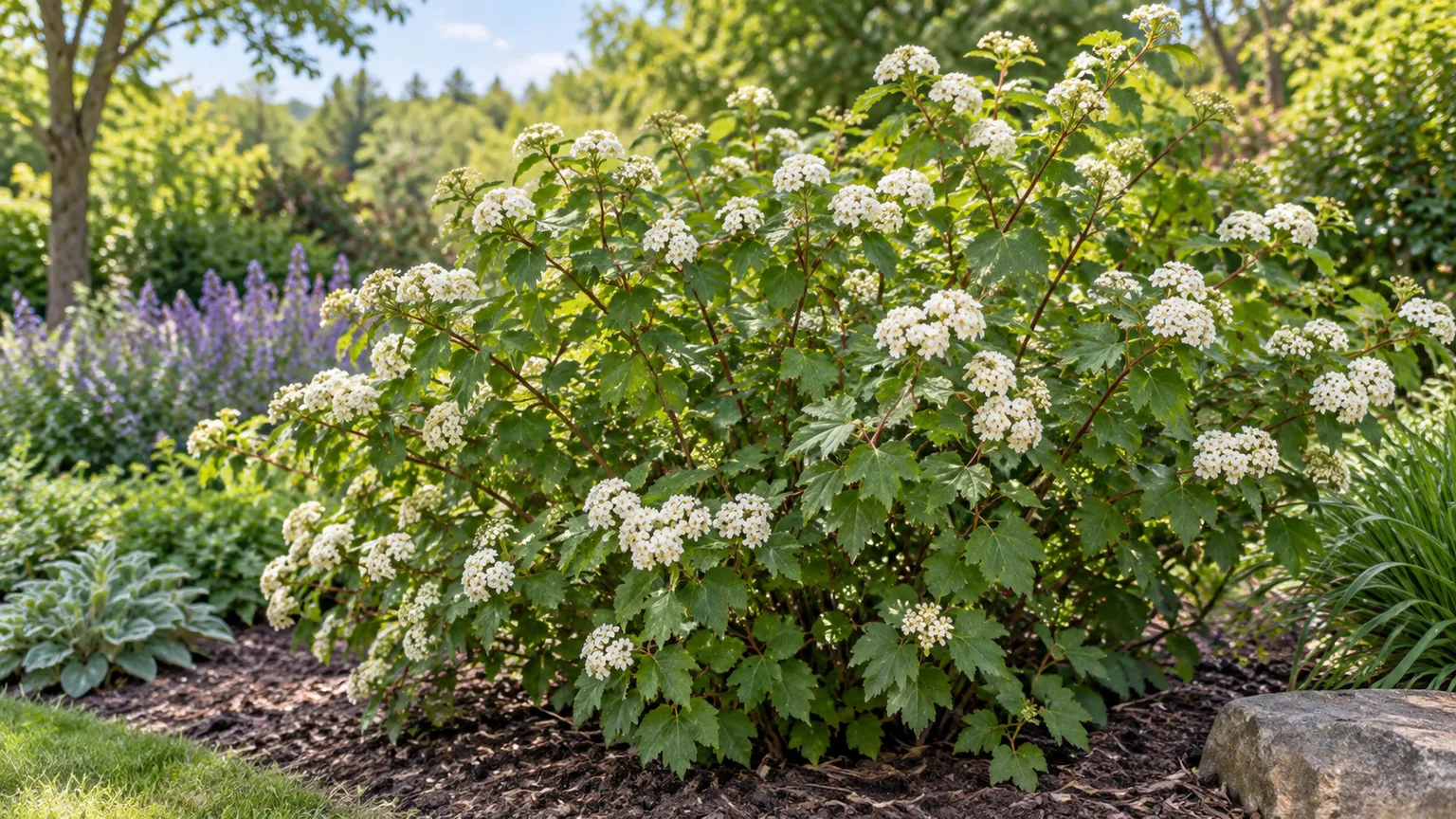
8. Ninebark (Physocarpus opulifolius) — Ninebark brings peeling bark, rounded flower clusters, and foliage cultivars in gold, copper, or burgundy. It handles cold and periodic dryness after establishment, but performs best where soil drains and the shrub can reach its mature size. Renew older stems at the base instead of constantly shearing the top.
Flowering shrubs for heat and pollinators
Flower production usually asks more of a plant than simple survival. If bloom is your priority, accept that a few deep waterings during a prolonged hot spell may protect the display; do not judge a flowering shrub only by whether it stays alive.
9. Beautybush (Kolkwitzia amabilis, also sold as Linnaea amabilis) — Arching branches carry pink bell-shaped flowers in late spring, then form a loose, fountain-like shrub. It can handle dry intervals after rooting into a sunny, well-drained site, but it is not a compact hedge plant. Prune after flowering if needed so you do not remove the next season’s bloom.
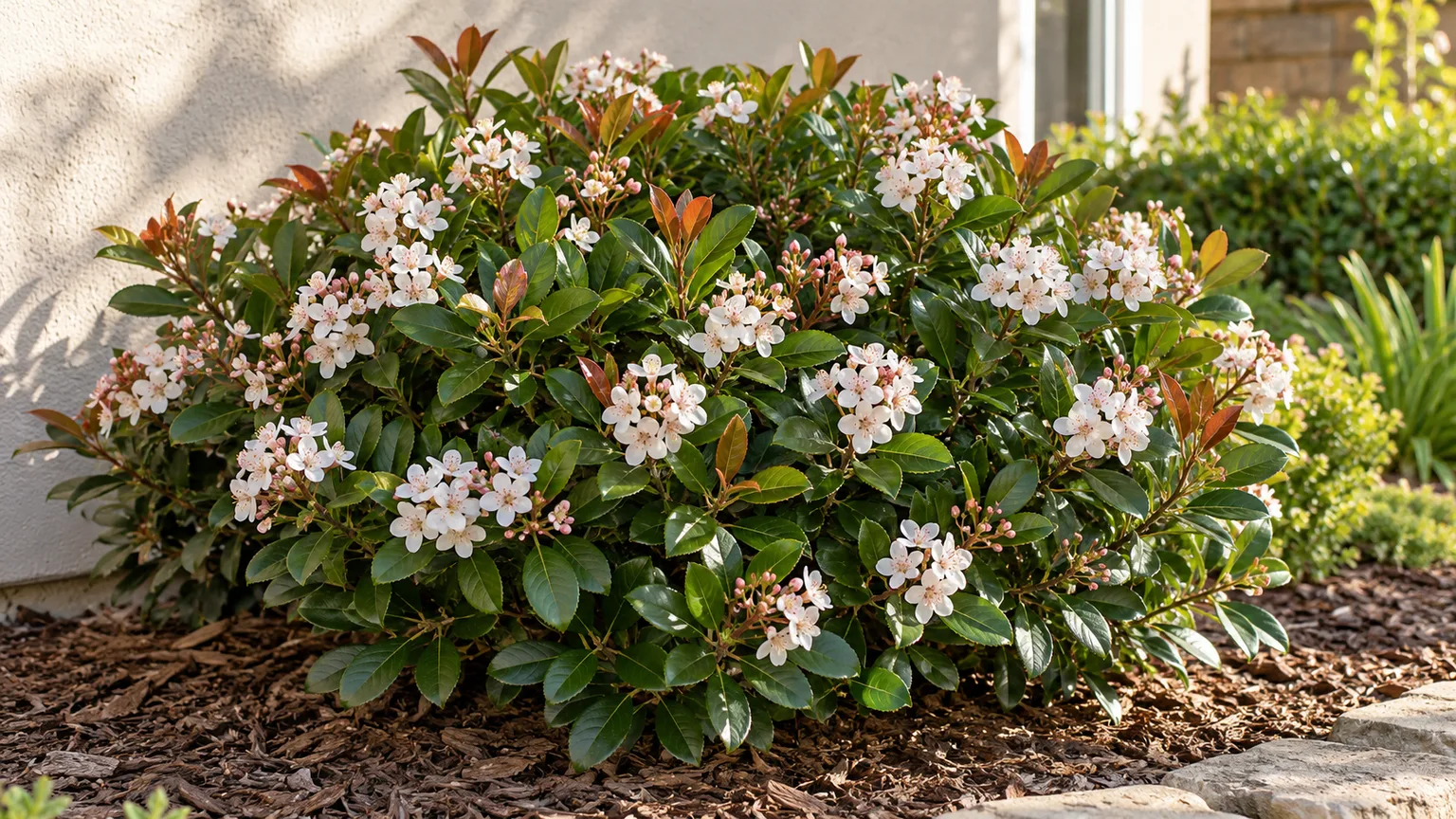
10. Indian hawthorn (Rhaphiolepis indica) — This evergreen shrub offers pink or white flowers, leathery leaves, and dark fruit in warm climates. It is best suited to mild-winter regions and well-drained soil; humid conditions can increase leaf disease. Give plants airflow and avoid placing them where irrigation constantly wets the foliage.
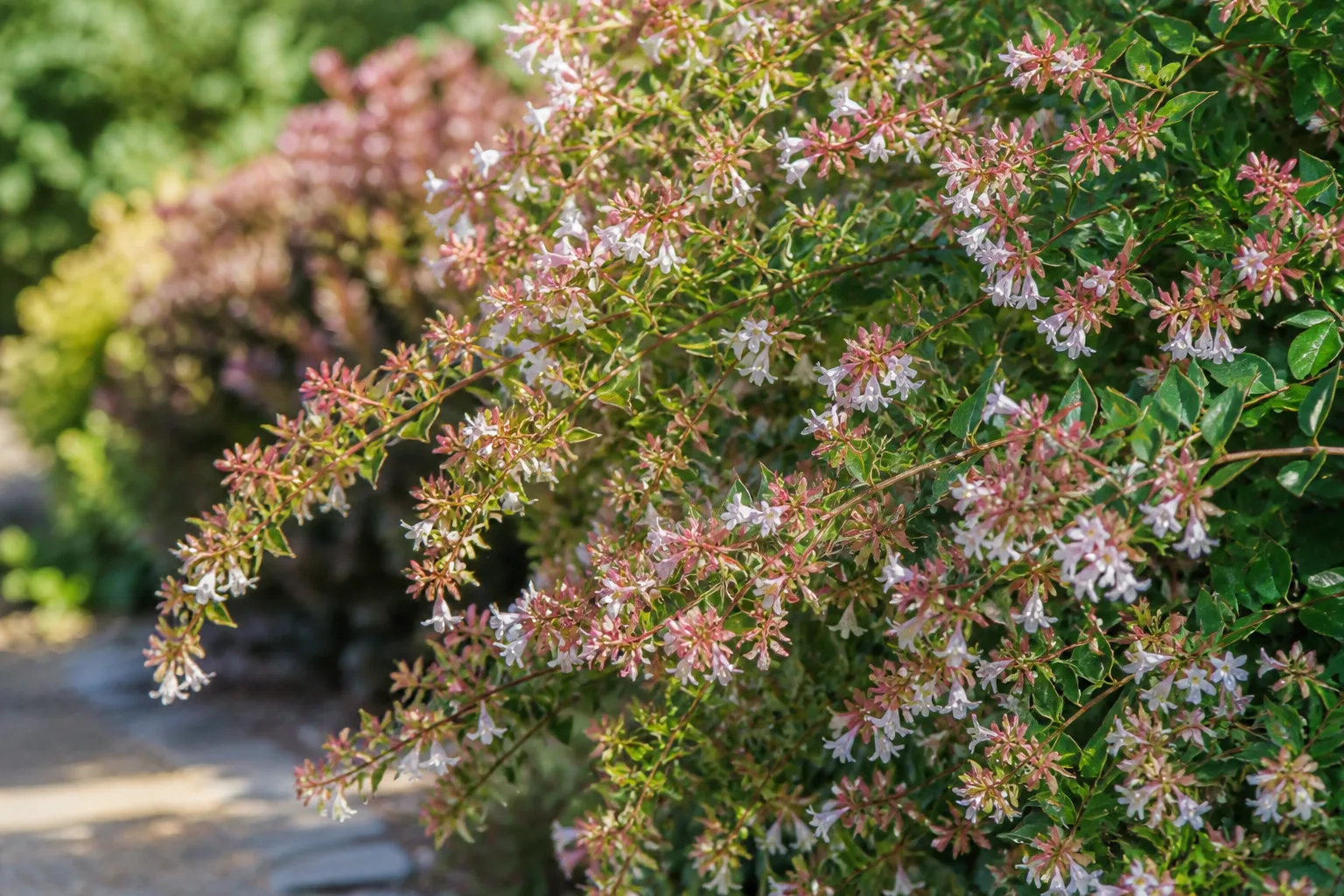
11. Glossy abelia (Abelia × grandiflora) — Glossy abelia produces small fragrant flowers over a long season and has arching stems that work as a loose hedge or foundation shrub. It tolerates sun or light shade and some dry weather once established. Choose a compact cultivar for a small bed, and shape lightly after bloom instead of shearing it into a box every month.
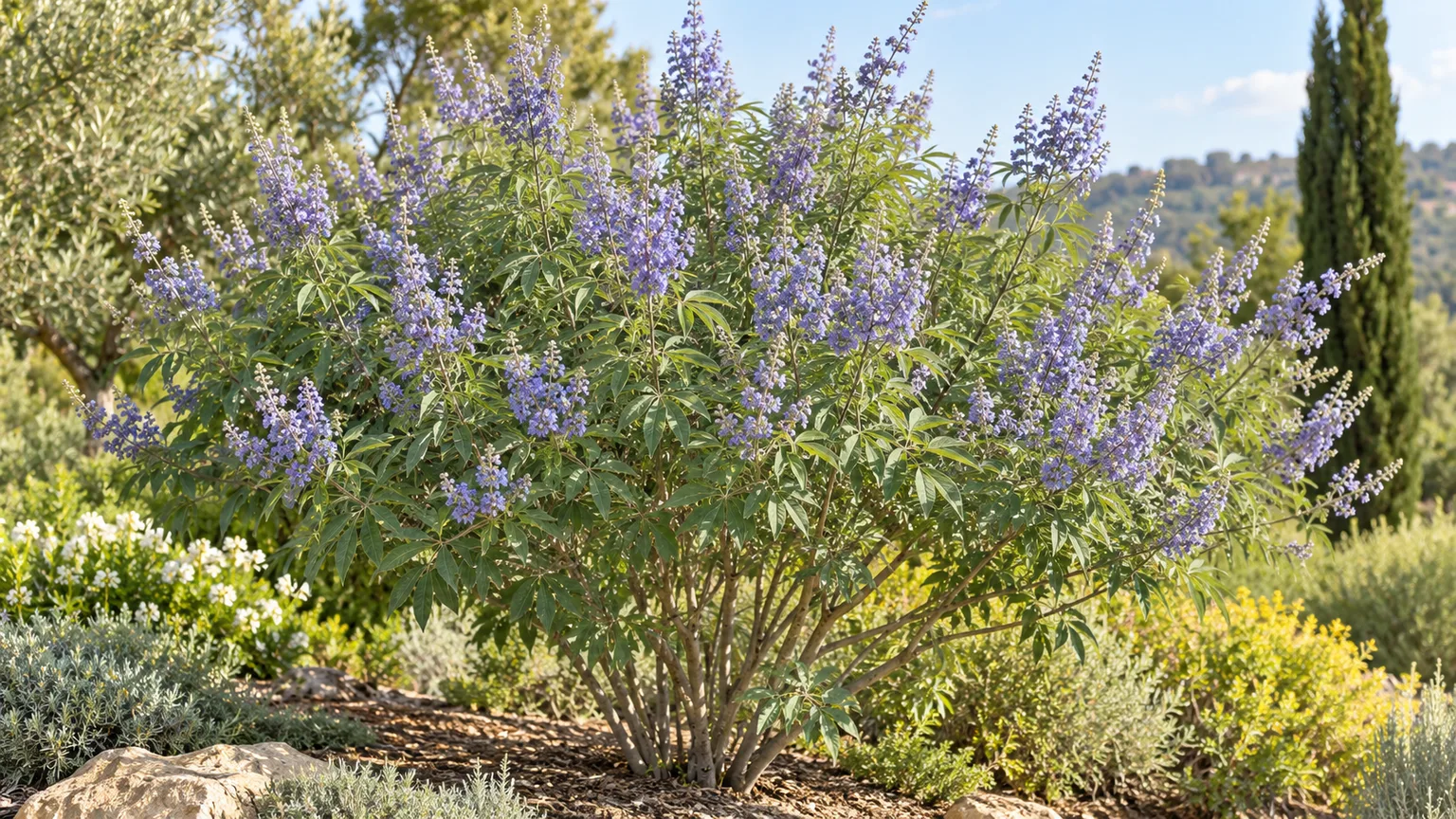
12. Chaste tree (Vitex agnus-castus) — Fragrant purple flower spikes and gray-green leaves suit hot, sunny gardens. This vigorous shrub can become a small tree, so measure the available width and overhead clearance before planting. It flowers on new growth; late-winter pruning can manage size, but hard annual cutting may turn a naturally broad plant into a maintenance project.
13. Red bird of paradise (Caesalpinia pulcherrima) — In frost-free or nearly frost-free climates, this broad shrub produces red-orange blooms and a tropical look with less irrigation than many lush ornamentals. It is not a cold-hardy substitute for a northern landscape shrub and may lose foliage or die back in cool weather. Give it full sun, fast drainage, and room.
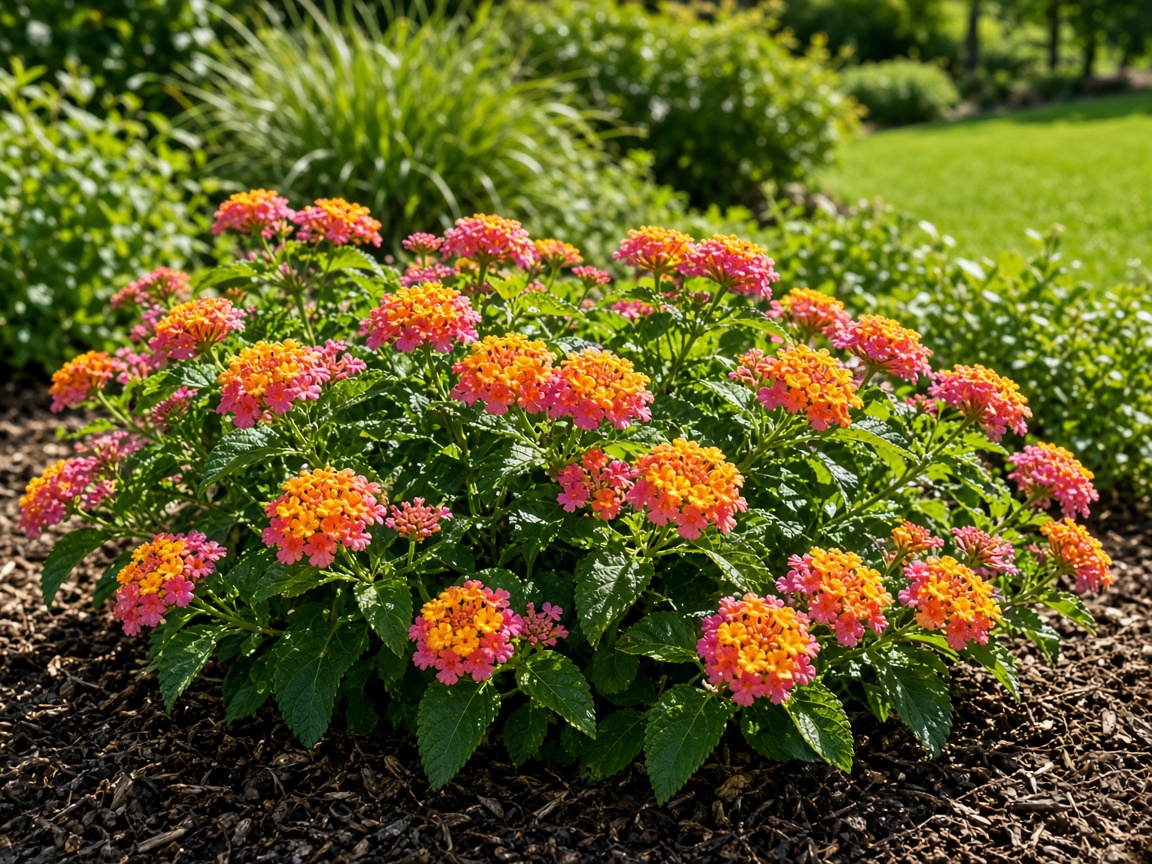
14. Lantana (Lantana camara and hybrids) — Lantana keeps flowering in hot weather and can be grown as a perennial in warm regions or as an annual where winter cold kills it. Check invasive-plant guidance before buying in subtropical areas, and account for pets: ASPCA lists Lantana camara as toxic to dogs and cats. If animals chew plants, choose a different shrub and confirm any substitute by its botanical name.
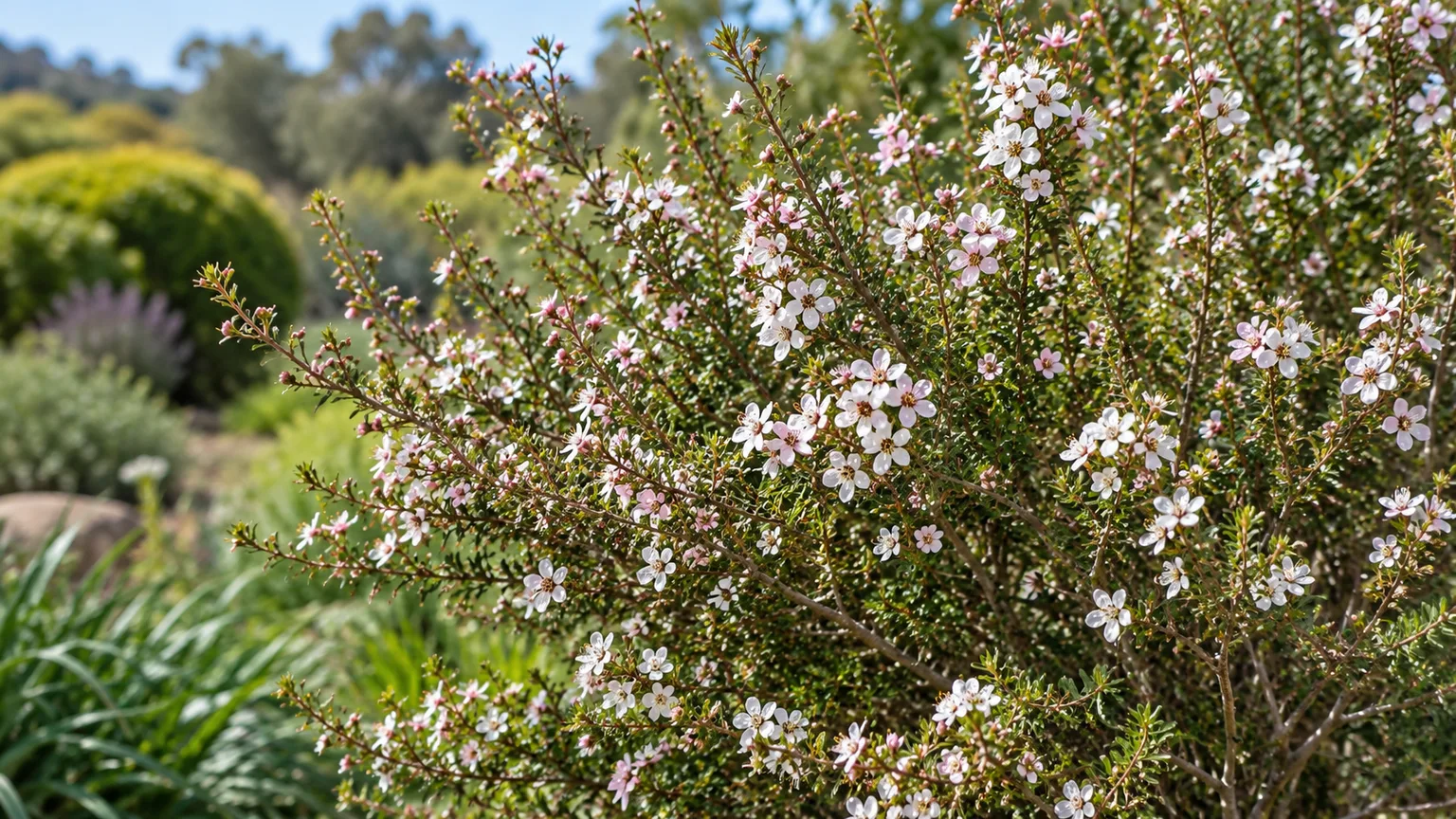
15. New Zealand tea tree (Leptospermum scoparium) — Manuka has fine evergreen foliage and small pink, white, or red flowers, and suits warm coastal or Mediterranean-style gardens. It wants acidic, sharply drained soil and is sensitive to winter cold and prolonged wetness. Treat it as a climate-specific choice rather than a broadly hardy water-saving shrub.
16. Littleleaf mockorange (Philadelphus microphyllus) — This smaller mockorange has white flowers with a citrus-like fragrance and a naturally informal outline. Plant it in full sun and rocky, well-drained soil where fragrance can be enjoyed without forcing it into a tight hedge. Water the root ball while young, then allow the soil to dry somewhat between deep soakings.
17. Winter jasmine (Jasminum nudiflorum) — Green stems carry yellow flowers in winter or early spring, making winter jasmine useful where a bank, wall, or informal screen needs color in a quiet season. It can spread or become rangy if left unchecked. Train it over a support or thin older stems after flowering to keep the plant within its space.
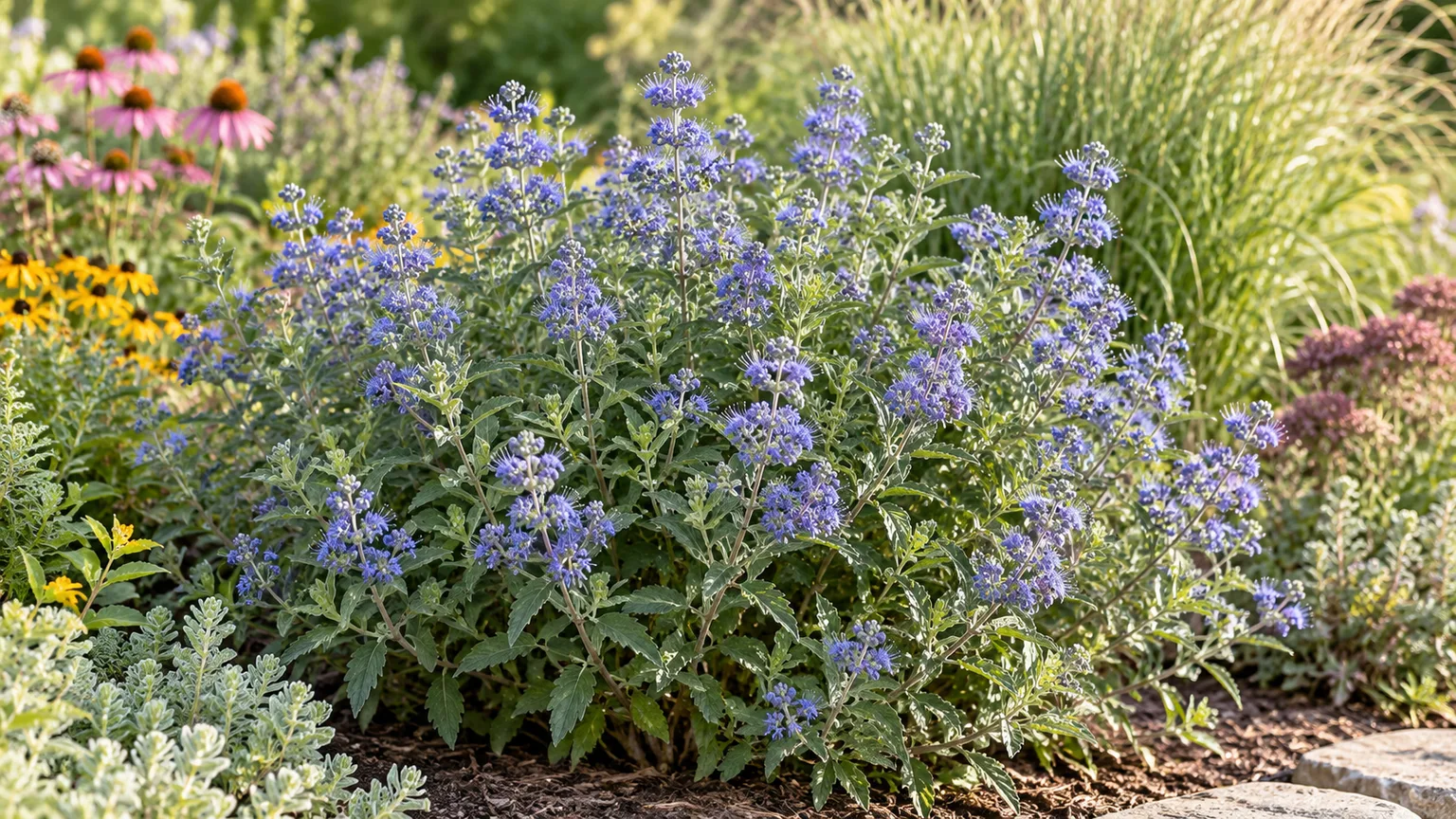
18. Bluebeard or blue mist shrub (Caryopteris hybrids) — Bluebeard has fragrant gray-green leaves and late-summer blue flowers, a useful timing gap in a sunny dry border. It is often cut back in late winter because it flowers on new growth, but new shoots may emerge late in spring. Do not dig it up too soon; soggy winter soil is a bigger threat than a brief dry spell.
19. Russian sage (Salvia yangii, formerly Perovskia atriplicifolia) — Silvery stems and lavender-blue flowers create a long-lasting haze of color in sunny gravel or prairie-style beds. It is technically a woody subshrub and may die back in cold climates, so use a local cultivar recommendation. Lean soil and restrained fertilizer help it stay upright; rich, wet soil encourages floppy growth.
Evergreen structure, hedges, and screening
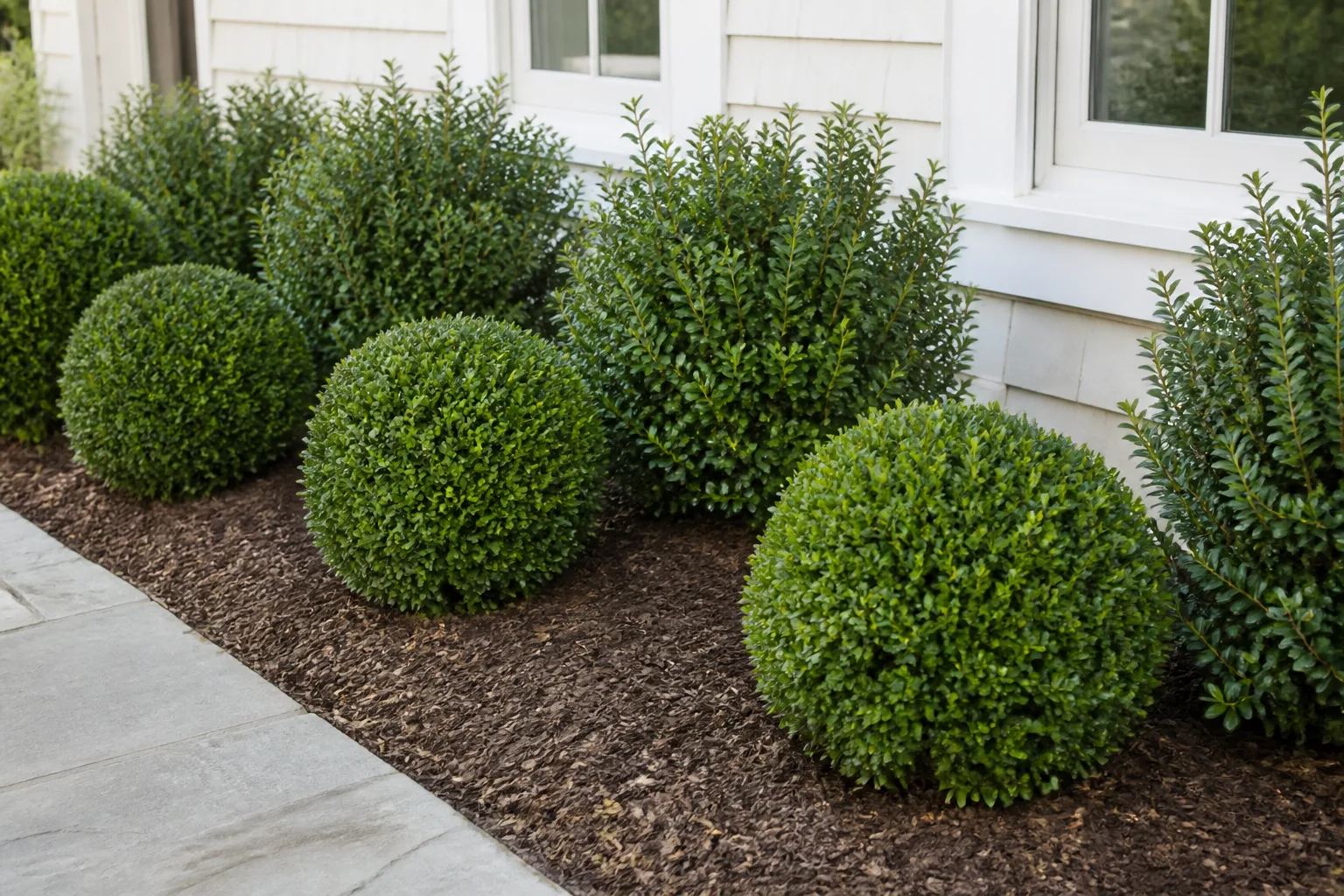
Evergreen leaves provide year-round structure, but they do not automatically make a shrub drought-proof. In windy or sunny climates, evergreen foliage can lose water in winter as well as summer, and a newly planted root ball can dry out even when nearby soil looks damp.
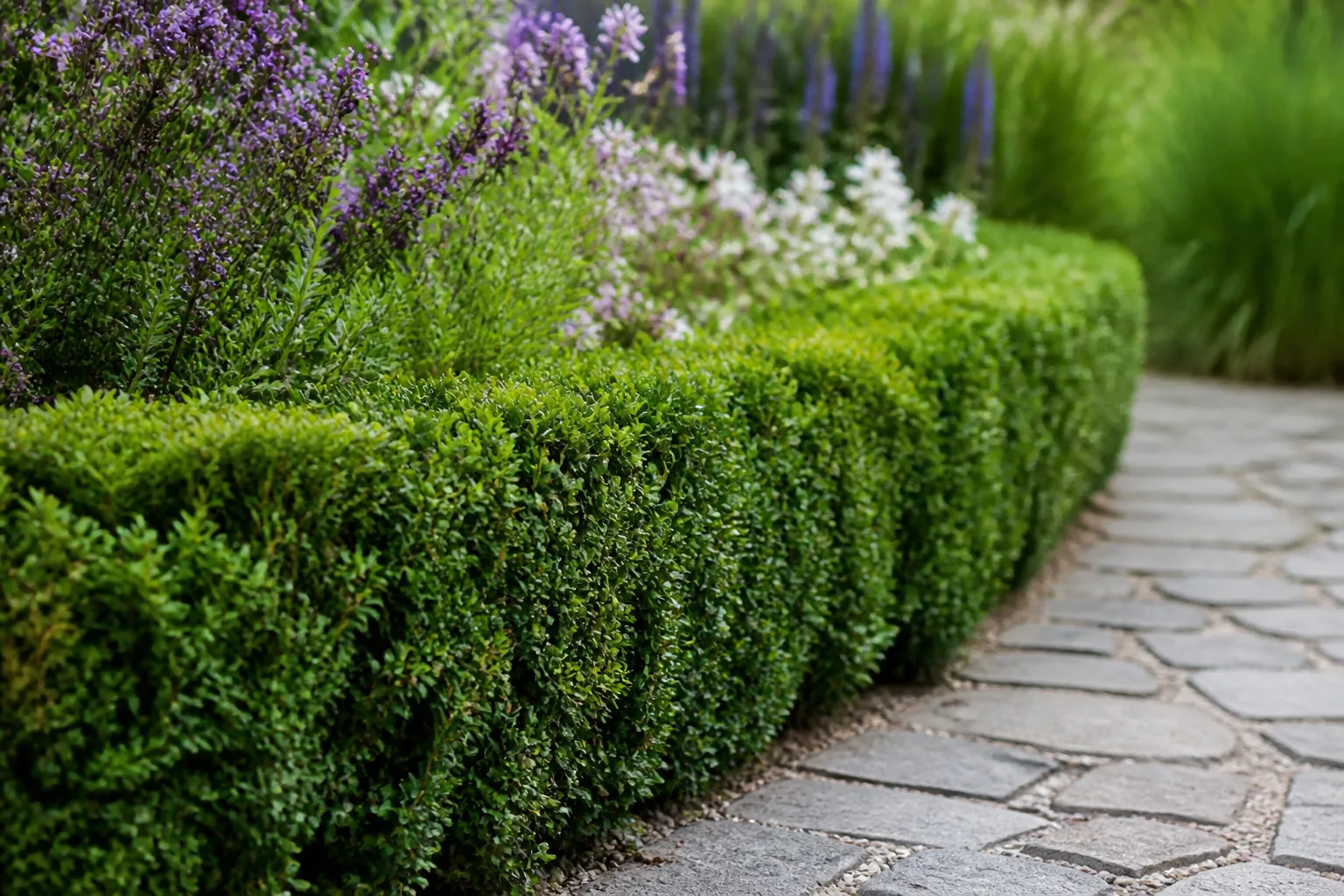
20. Boxwood (Buxus spp.) — Boxwood is useful for edging, low hedges, and formal shapes because it grows slowly and holds dense foliage. It is not a top choice for severe drought or poorly drained soil; protect it from winter wind and monitor moisture while roots establish. Select disease-tolerant cultivars for your region and avoid planting where the soil stays saturated.
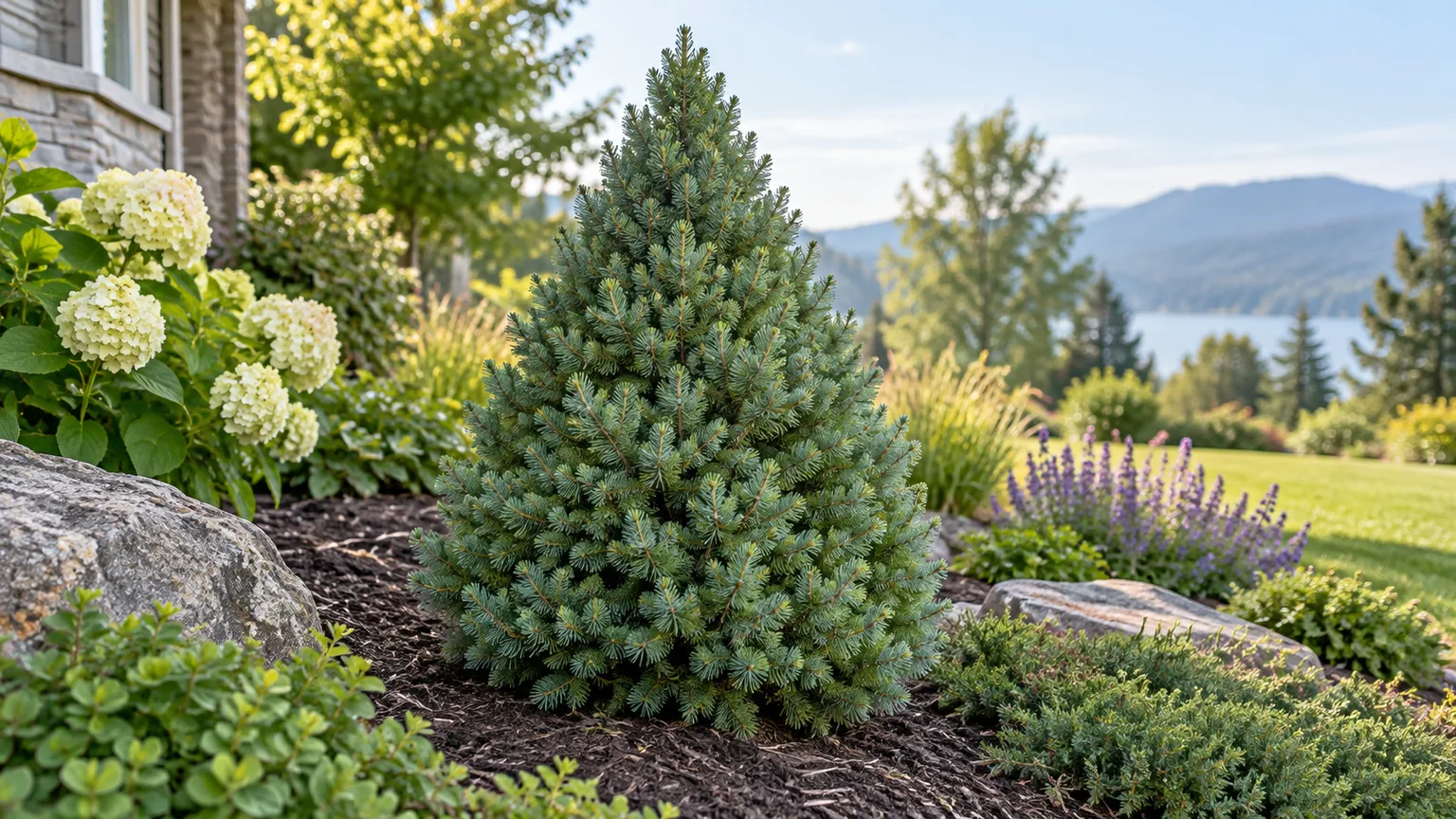
21. Dwarf Alberta spruce (Picea glauca ‘Conica’) — Its naturally conical form works as an accent in cool climates, but this spruce is a conditional low-water choice rather than a true xeric shrub. Heat, humidity, reflected pavement, spider mites, and prolonged dryness can all cause trouble. Choose it only where summers are moderate, drainage is good, and some establishment watering is available.
22. Leatherleaf viburnum (Viburnum rhytidophyllum) — Large textured leaves and flower clusters give this evergreen shrub presence in a screen or woodland-edge planting. It handles some dry intervals after establishment but needs more dependable moisture than juniper or buffaloberry. In hot climates, a partly shaded site and good airflow help the broad leaves look better through summer.
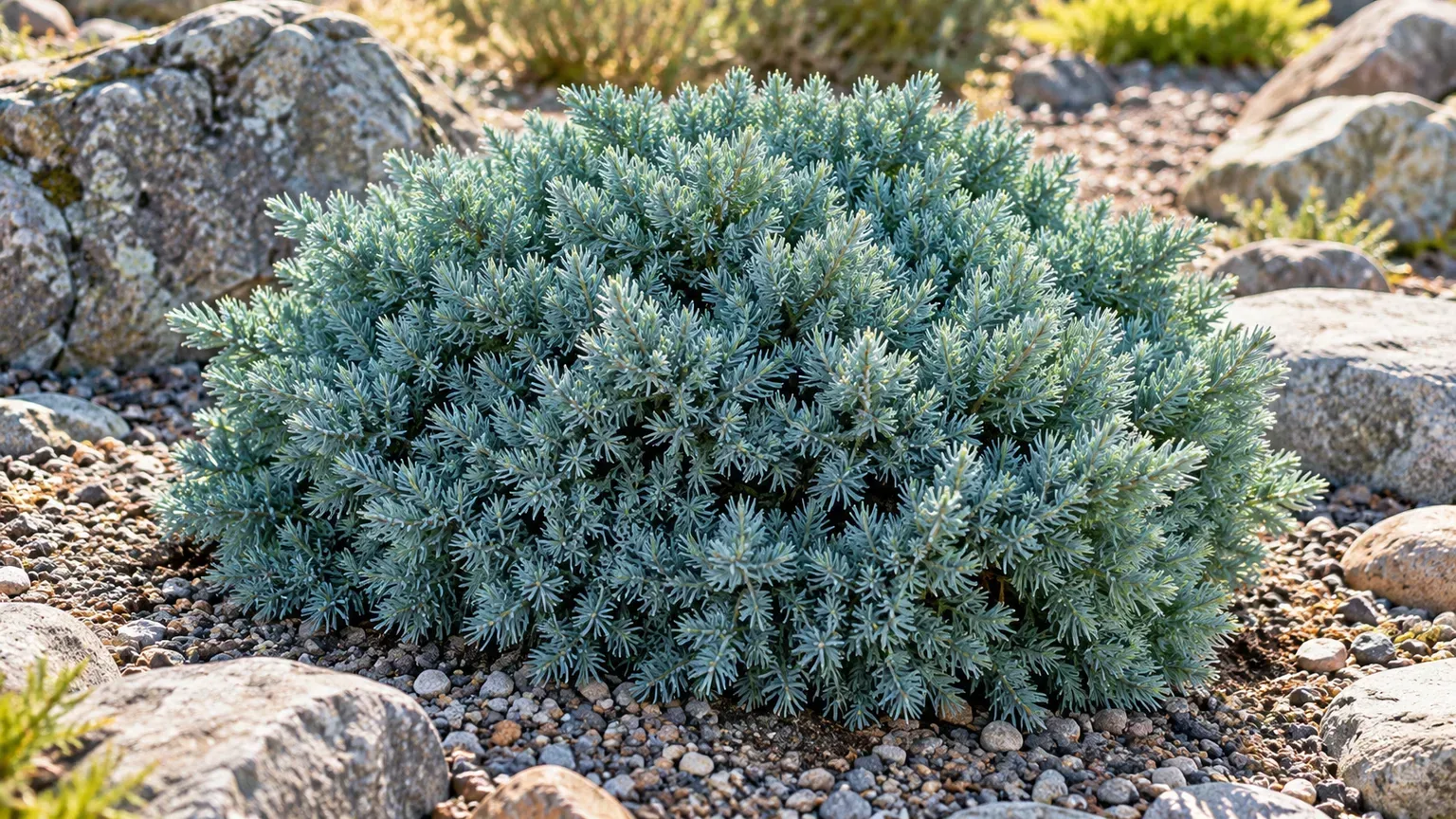
23. Blue Star juniper (Juniperus squamata ‘Blue Star’) — Blue-gray needles and a compact mound make this juniper a strong choice for sunny rock gardens, foundations, and containers with excellent drainage. Once established in a suitable climate, it usually needs little supplemental water. Avoid humid, poorly ventilated sites and downspouts; drought tolerance does not protect roots from standing water.
24. Rock cotoneaster (Cotoneaster horizontalis) — Herringbone branches, spring flowers, red berries, and fall color make rock cotoneaster useful on a bank or as a low informal cover. Some cotoneasters are invasive or restricted in parts of North America, so confirm the exact species and local status before planting. Do not use a spreading plant where birds can carry seed into natural areas.
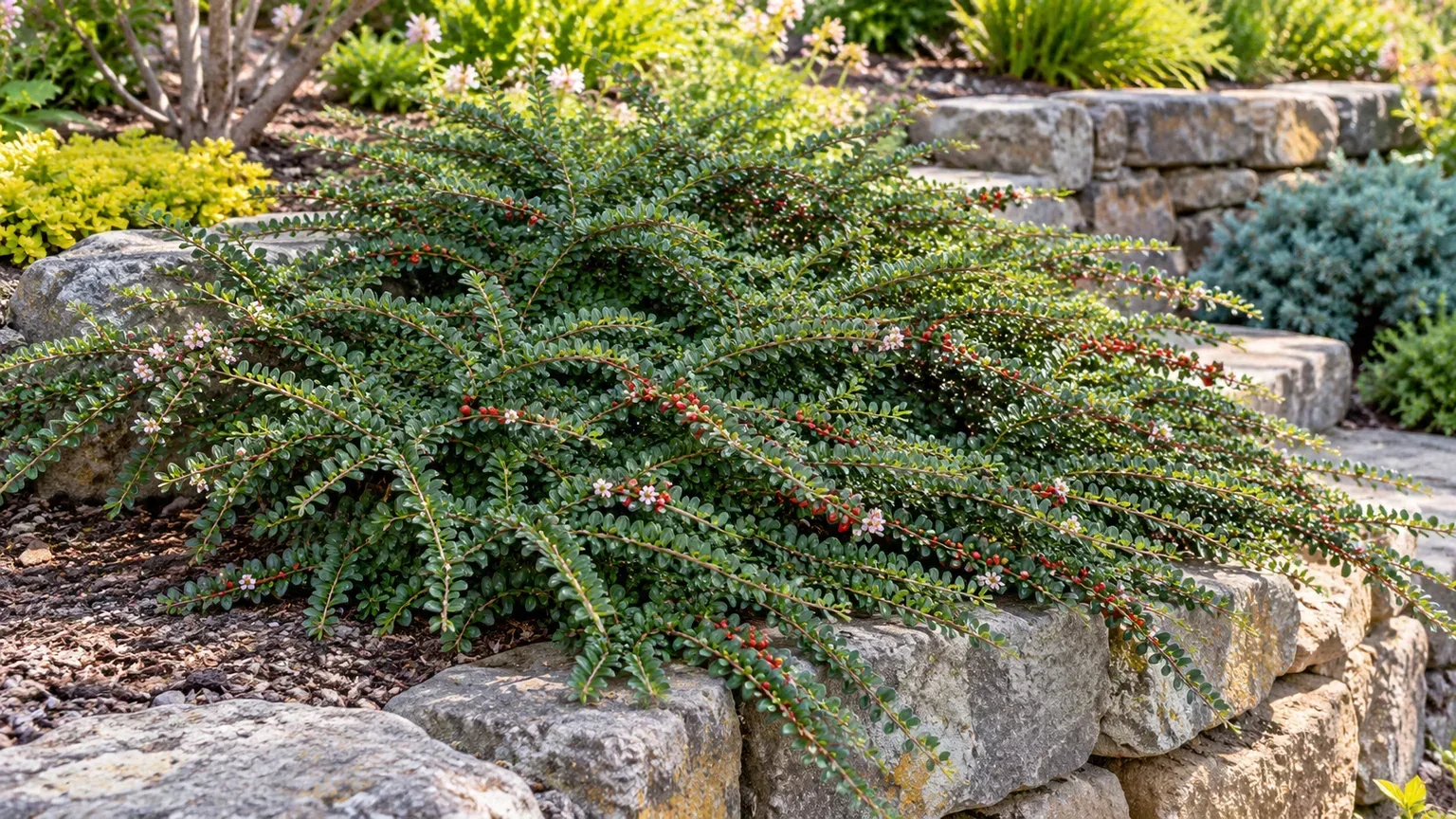
25. Heavenly bamboo (Nandina domestica) — Nandina is not a bamboo; it is a cane-forming evergreen or semi-evergreen shrub with fine foliage and winter berries. It handles heat and dry intervals, but it can spread in some southern landscapes, and ASPCA lists it as toxic to dogs and cats. If pets may chew berries or foliage, choose another shrub; if considering a cultivar, verify both local spread risk and its safety.
Berries, fall color, and seasonal interest
These shrubs offer color or fruit at a particular time of year, but some need more water than a true dry-site specialist. Choose them for the role they play in the garden, then group them with plants that share their moisture needs.
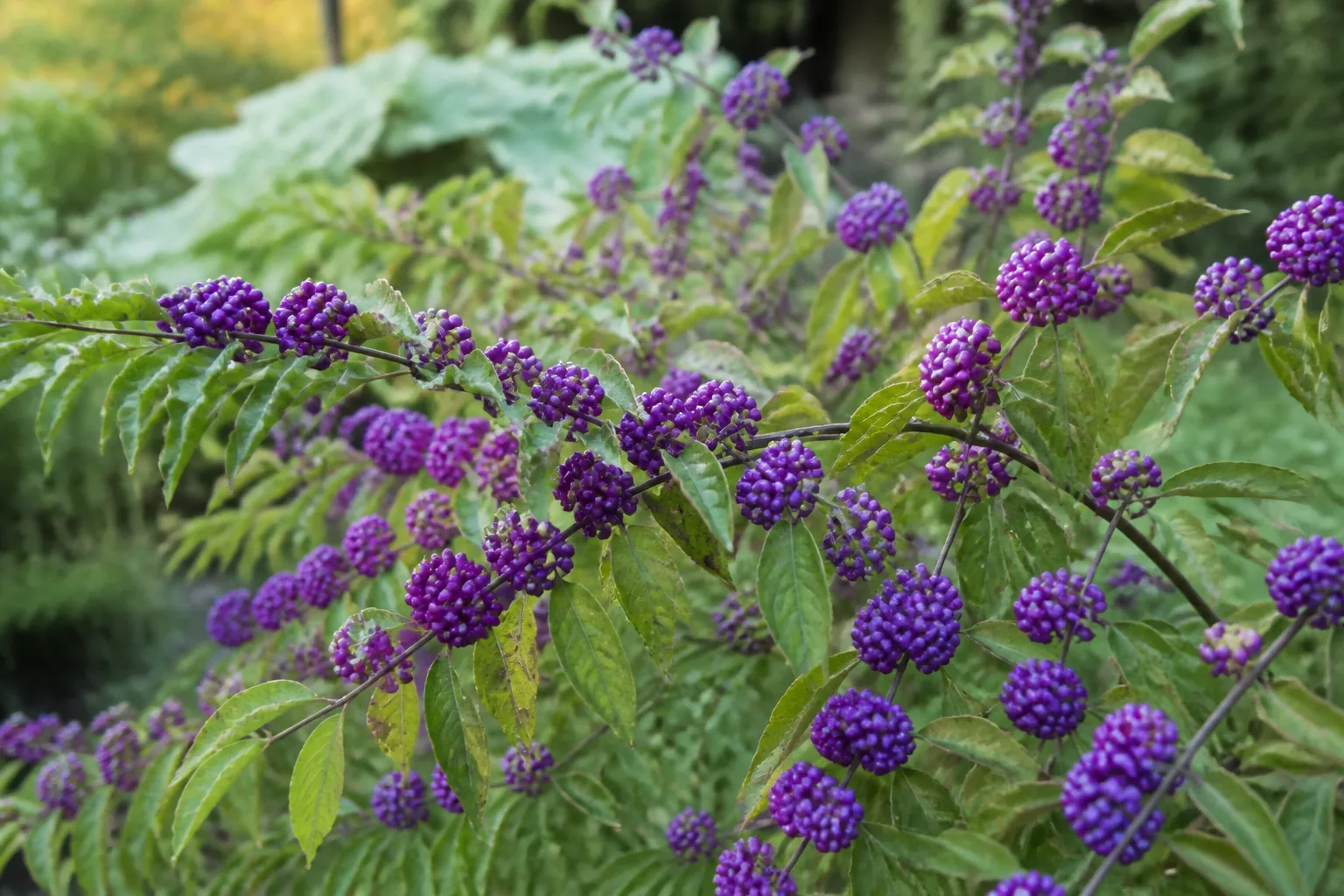
26. Japanese beautyberry (Callicarpa japonica) — This deciduous shrub is grown for vivid purple berry clusters that can linger after the leaves fall. Fruit display depends on weather, pollination, and plant health, so it is not a guaranteed winter show. Give it sun to light shade and decent drainage, and check whether a native beautyberry is a better regional fit.
27. Witch hazel (Hamamelis virginiana) — American witch hazel offers fragrant yellow flowers in late fall and clear yellow foliage, with a loose woodland shape. It can tolerate some dry periods once mature, but young plants appreciate consistent moisture and protection from hot afternoon sun. Use it in a partly shaded site with enough room to develop rather than in a hot gravel bed.
28. Purple smoke bush (Cotinus coggygria) — Smoke bush has airy flower plumes, colorful foliage in purple-leaved cultivars, and strong fall color. It can become a substantial shrub and prefers sun with well-drained soil. Treat it as a focal point or informal screen; hard renovation pruning can change the form and delay the display.
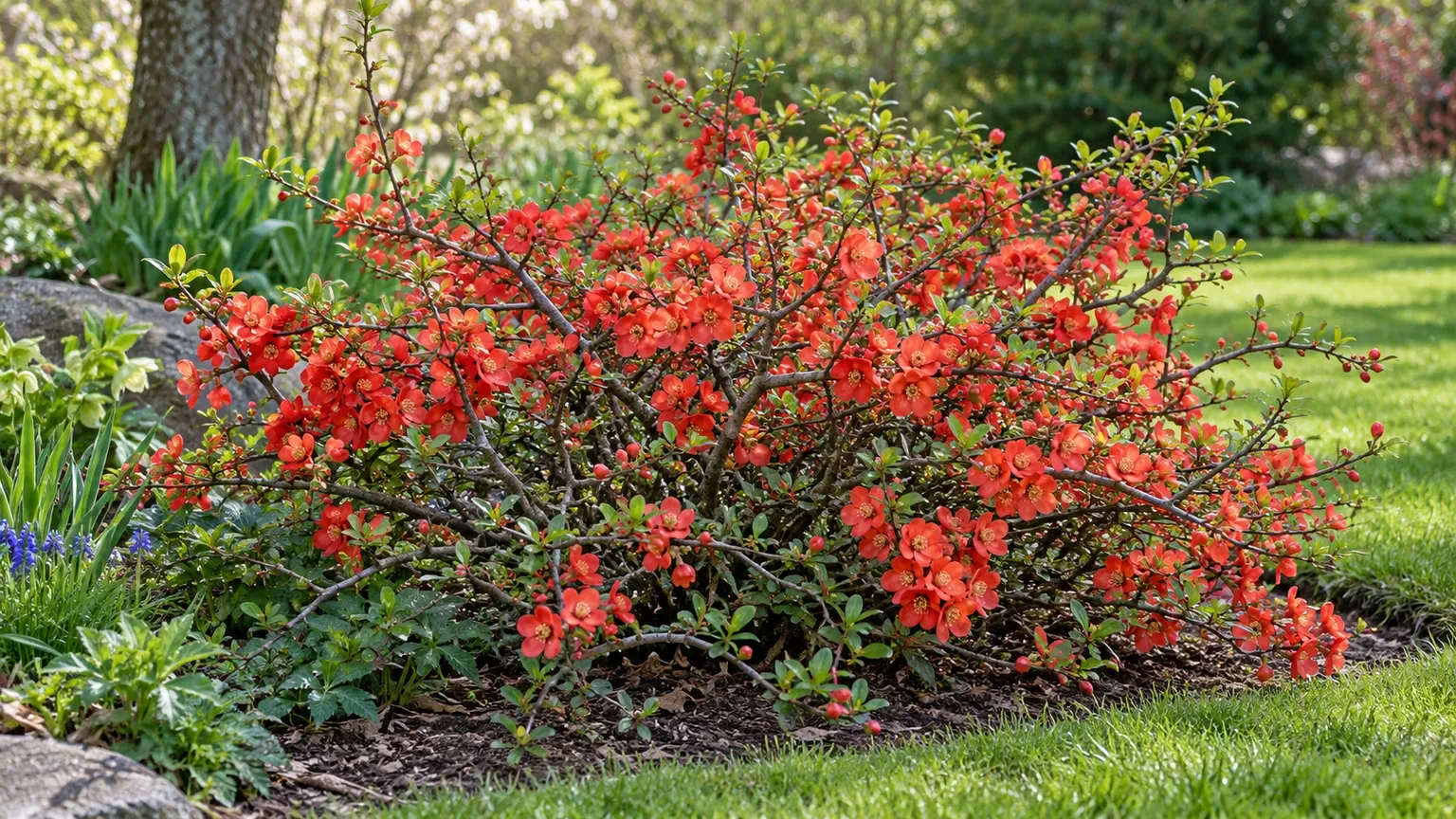
29. Flowering quince (Chaenomeles speciosa) — Red, orange, pink, or white early flowers appear on thorny branches before the leaves, and some plants produce fragrant fruit. It tolerates dry intervals once rooted and suits an informal barrier or back-of-border position. Keep it away from narrow paths, and prune after bloom if you want fruit and next year’s flowers.
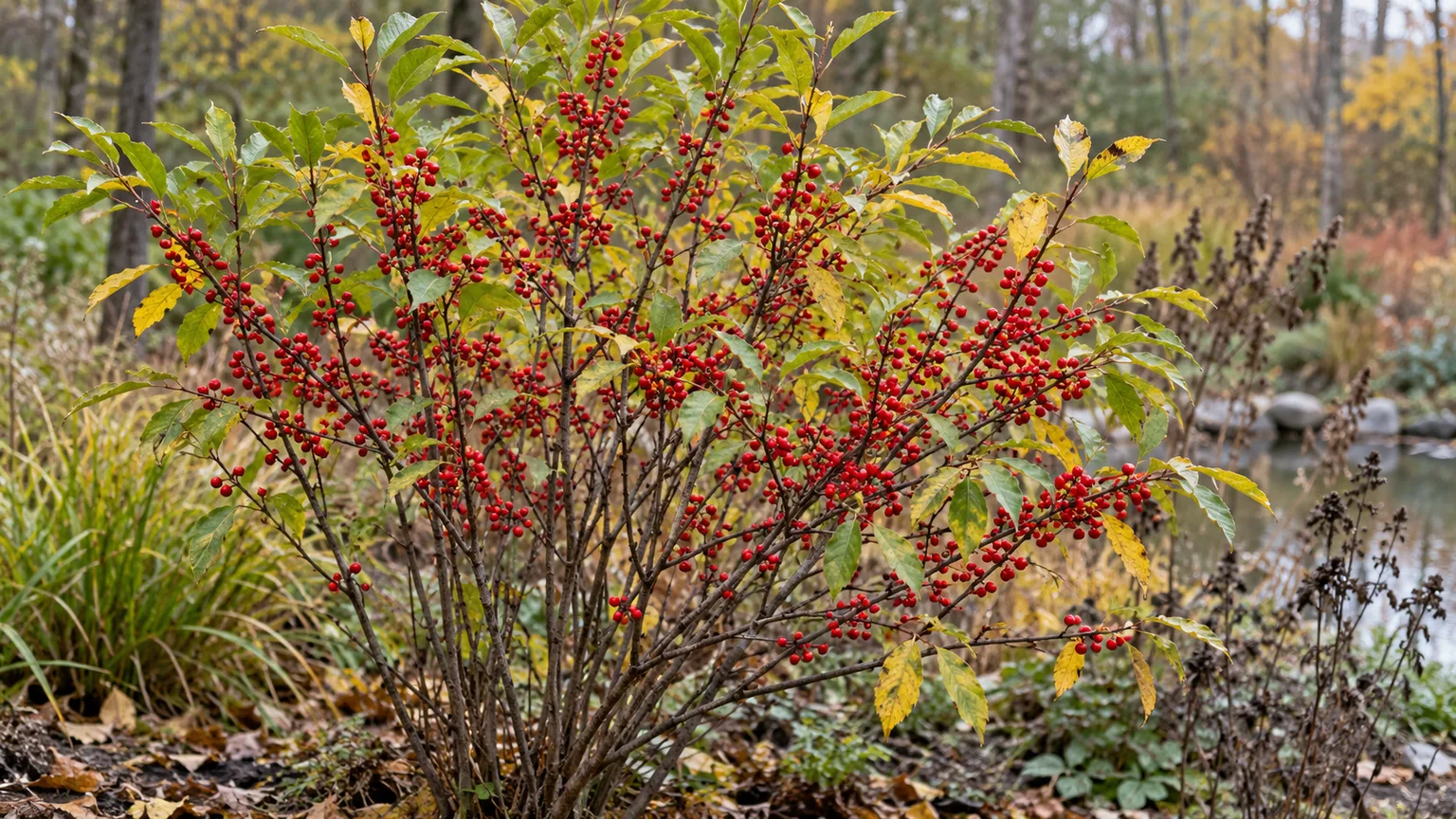
30. Winterberry holly (Ilex verticillata) — This deciduous native holly is famous for red berries in winter, but it prefers acidic soil and steady moisture rather than a dry gravel bed. A male pollinator is needed near compatible female plants for fruit. Treat the berries as ornamental, not food, and verify pet and child safety for the exact plant you intend to grow.
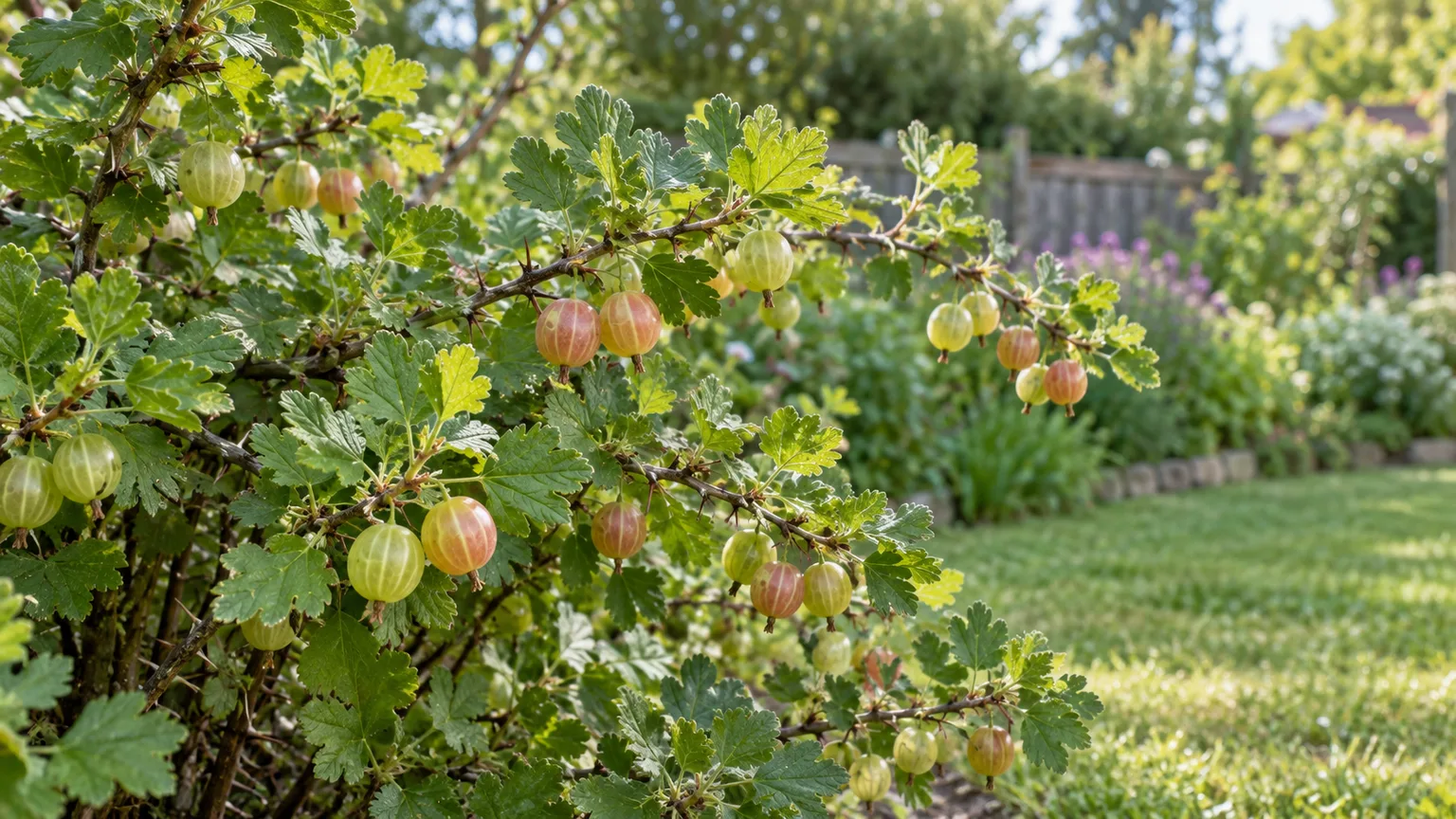
31. Currants and gooseberries (Ribes spp.) — These fruit shrubs can handle some dry weather after establishment, but regular moisture matters while fruit swells. Choose a climate-appropriate cultivar and give it sun suited to your region; in very hot climates, afternoon shade can reduce stress. Thorny gooseberries need a harvest path, while many currants are easier to reach in a small garden.
32. Burning bush (Euonymus alatus) — Burning bush is known for bright red fall foliage and can handle dry intervals after roots establish, but it is invasive in many regions. Do not buy it solely for color without checking state or provincial restrictions. Ask a local native-plant nursery for a similarly sized shrub with reliable autumn color that does not escape into nearby natural areas.
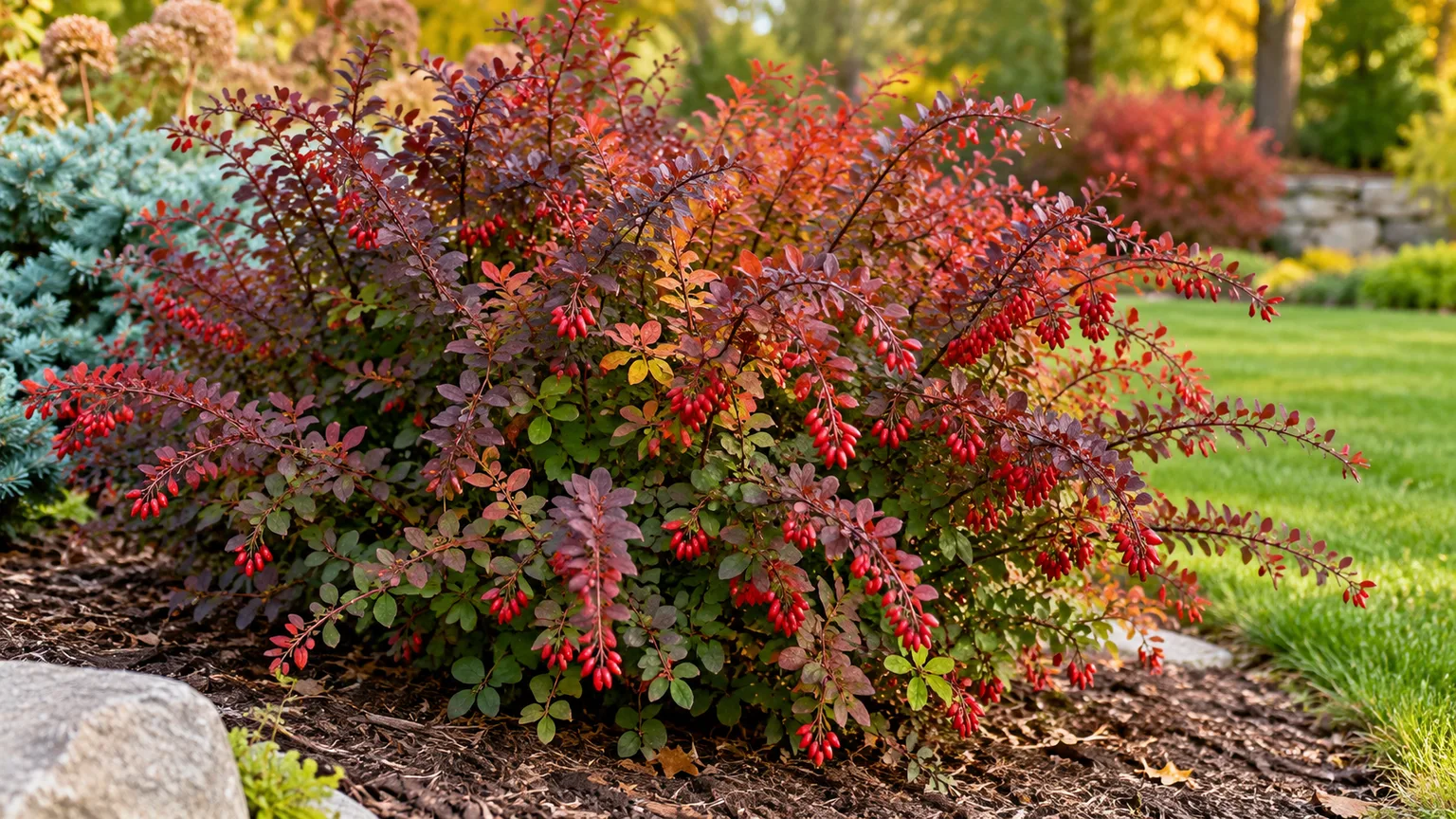
33. Japanese barberry (Berberis thunbergii) — Barberry’s colored foliage and thorns can look useful for a barrier, but its ecological cost often outweighs its water-saving value. NC State Extension identifies the species as invasive in North Carolina and describes spread by root suckers and bird-dispersed seed; it also lists sterile cultivar groups and native alternatives. Check your local rules before planting any cultivar.
34. Butterfly bush (Buddleja davidii) — Long flower panicles attract butterflies and other insects, and established plants tolerate heat and dry spells. The species is invasive in many places, however, so pollinator value is not a reason to skip a local check. Where it is restricted, choose a regionally native nectar shrub; where it is allowed, look for sterile cultivars approved by local experts.
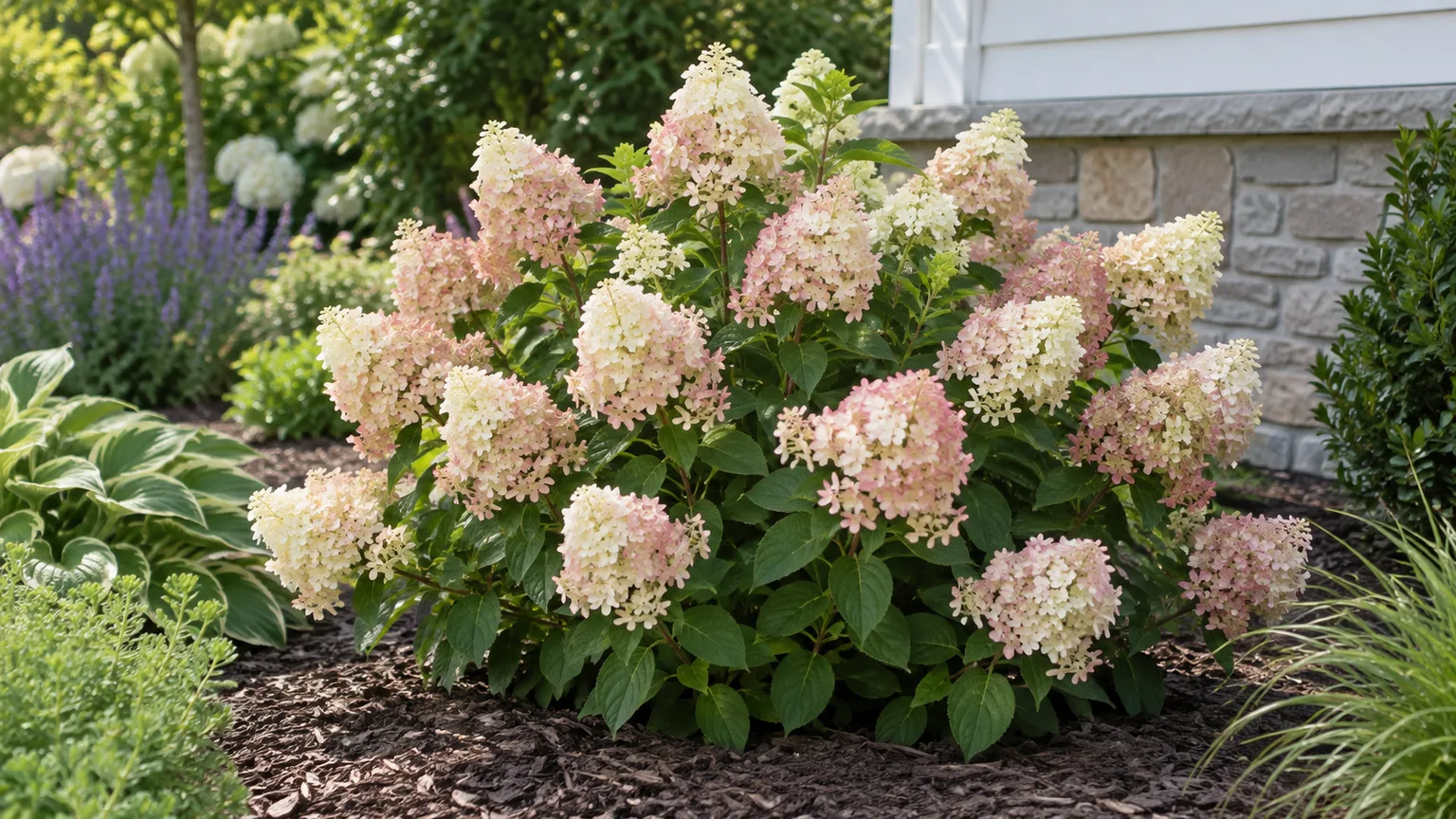
35. Panicle hydrangea (Hydrangea paniculata) — Panicle hydrangea can tolerate a dry spell better than bigleaf hydrangea once established, and it flowers on new wood. It still needs moisture for sturdy stems and full flower heads, especially during establishment and prolonged heat. Plant it in a better-watered zone, mulch the root area, and prune in late winter if size control is needed.
Plant for establishment before expecting drought tolerance
The first season is when a plant with a drought-tolerant reputation is easiest to lose. Roots are still concentrated in the original nursery ball, which can dry faster than the surrounding soil; rain may wet the bed without soaking that root ball. The aim is to keep the root system expanding into native soil, then gradually reduce irrigation.
Plant when your climate gives roots time to grow without immediate heat or frozen ground. Fall can work in mild-winter regions with reliable moisture; spring is often safer where winter is severe or soils stay cold and wet. Dig a broad hole no deeper than the root ball, keep the top of that ball level with or slightly above grade, and water slowly enough to wet the entire root zone.
Water the root ball deeply, then lengthen the interval
Check moisture several inches below the mulch and near the edge of the root ball before watering again. If the root ball is dry while surrounding soil is damp, water slowly at the root zone; if soil is already wet, pause and address drainage instead of adding more. Sandy soil, wind, heat, container culture, and a newly planted evergreen can all shorten the time between checks.
Once the shrub is growing normally, extend the interval between deep soakings rather than providing a small daily splash. Drip irrigation or a soaker hose can target roots without repeatedly wetting foliage, but reset it after establishment instead of leaving a low-water bed on a lawn schedule. Better Homes & Gardens and Fine Gardening both emphasize water-wise design and regional plant choice; neither turns a general label into a universal watering calendar.
Soil, mulch, spacing, and pruning
Do not fill a planting hole with rich potting mix or compost and assume that this fixes a poor site. A sharply different pocket can keep roots circling in the hole instead of spreading outward; first solve standing water, compaction, or runoff by choosing a better location, raising the bed, or selecting a shrub suited to the soil. A soil test is more useful than guessing at amendments.
Apply about two to three inches of mulch over the root area, keeping it several inches clear of trunks and stems. Mulch slows evaporation and weeds, but a mound piled against bark holds excess moisture near the crown. Gravel can fit a desert-style garden, yet dark stone and reflected pavement can raise root-zone heat; use it only where the plants and local climate are suited to that exposure.
Space shrubs by mature width so branches can grow without constant shearing. Remove dead or crossing stems and prune at the correct time for the plant’s bloom cycle; a shrub repeatedly cut into a smaller shape spends energy replacing foliage and may bloom less. Choose slow-growing or compact cultivars when space is tight instead of relying on frequent pruning to keep a large species small.
Troubleshoot stress before replacing a shrub
A plant that wilts is not automatically asking for more water. Afternoon leaves can droop temporarily in heat and recover by morning; roots sitting in saturated soil can also wilt because they are failing to take up water. Check moisture and drainage first, then look for pests, disease, root damage, or girdling if the site conditions do not explain the decline.
Read leaves and soil together
If soil is dry several inches down and the shrub stays limp overnight, apply a slow, deep soak and recheck the root ball. If soil is wet and stems near the base feel soft, stop irrigation and improve drainage. Brown margins may come from drought, salt, winter burn, root injury, or reflected heat from a wall or pavement, so do not treat a vague symptom with fertilizer or pesticide before identifying the cause.
When a shrub declines after its first year, review four things: whether the nursery root ball dried during establishment, whether mature width exceeds the space, whether water sits around the roots after rain, and whether local winter or summer conditions match the plant. Replacing the plant without correcting the mismatch repeats the failure.
Check invasive status, pet safety, thorns, and local fit
Low maintenance is not the same as safe or suitable. A shrub can use little water but spread into natural areas, carry sharp thorns beside a path, drop berries that attract pets, or fail from wet winter soil. The common name is not enough for a safety check: “sage,” “jasmine,” “beautyberry,” and “bird of paradise” can refer to unrelated plants.
Verify the plant name and regional guidance
Before buying Japanese barberry, burning bush, butterfly bush, lantana, nandina, or cotoneaster, check local invasive-plant lists and ask an extension office or native-plant nursery about substitutes. Cultivars differ, and a label such as “sterile” or “non-invasive” should be confirmed for the exact variety and region. NC State’s barberry profile provides one example of why this check matters: a plant may be drought tolerant and still be discouraged because it spreads.
If a dog or cat chews garden plants, identify shrubs by their botanical names and check the ASPCA’s current toxic-plant entries before planting. ASPCA lists lantana and nandina as toxic to dogs and cats; keep pets away from them and contact a veterinarian or poison-control service if ingestion occurs. Thorny quince, buffaloberry, and barberry also belong away from narrow gates, children’s play areas, and high-traffic paths.
Conclusion
The most useful drought-tolerant shrub is the one that fits the site after it matures. For sunny, fast-draining ground, investigate fragrant sumac, shrubby cinquefoil, cliffrose, mountain mahogany, Blue Star juniper, or bluebeard; for more moisture-retentive soil, ninebark and panicle hydrangea may be better conditional choices. Use local advice to screen species and cultivars for winter, humidity, invasive risk, and pet safety.
Water new shrubs deeply when the root ball begins to dry, mulch without burying stems, give each plant its mature width, and reduce irrigation only as roots spread. That short establishment phase is what lets a well-chosen shrub use less water later without asking it to survive on neglect.