5 Houseplants That Bring The White Lotus Look Home
Build a White Lotus-inspired plant corner with Monstera, Dendrobium orchids, bird’s nest fern, ti plant, and mini monstera, plus a practical room-by-room plan.
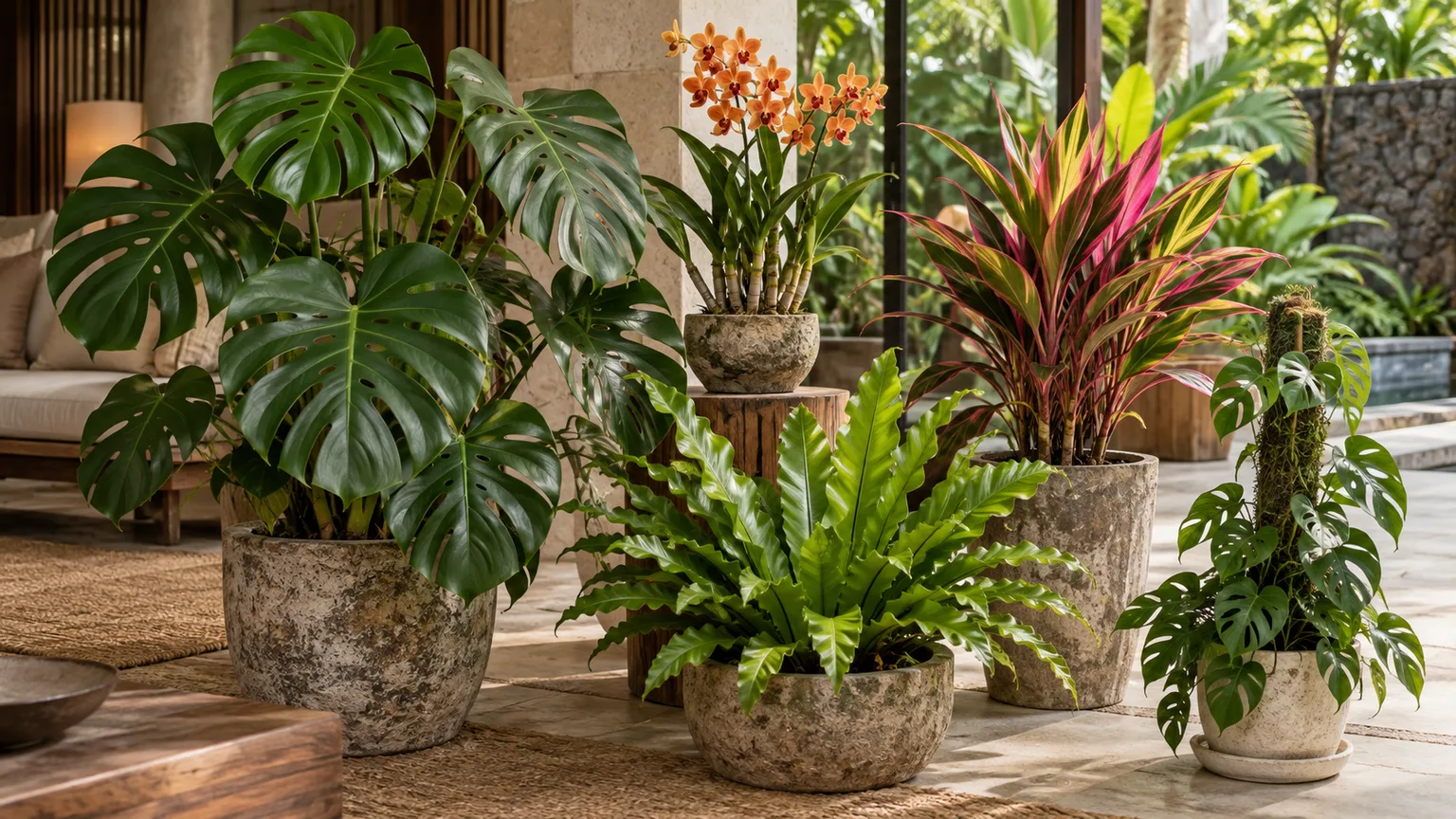
You do not need to recreate a hotel or fill every corner with foliage to borrow the plant styling of The White Lotus. The useful idea is its contrast: one generous, architectural plant; softer, rippled leaves; a brief but vivid flower display; and foliage with color beyond green. Choose plants for those separate jobs and the result feels composed rather than like a row of unrelated pots.
The five plants associated with the show in the supplied source are Monstera deliciosa, Dendrobium orchids, bird’s nest fern, ti plant, and mini monstera. They appear in different kinds of scenes, from a covered deck and villa entrance to a desk. That matters for decorating: their value is not that every home needs all five, but that each suggests a different way to layer a room.
Why these plants create a layered tropical look
The look comes from more than “lots of green.” Monstera leaves create a broad, split silhouette; the bird’s nest fern contributes a rippled mass; Dendrobium flowers provide a small point of color; the ti plant introduces pink and yellow; and the mini monstera echoes the larger Monstera in a smaller form. Put together, these differences give the eye several places to land.
That mix also gives you a practical decorating principle: vary the shape and scale, not just the plant count. A single oversized leaf plant can establish the mood. One compact flowering or colorful plant beside it can make the arrangement feel intentional. Adding more pots helps only when each one has enough room to be seen and the room can support its needs.
Thailand is the setting, not the origin of every plant
The series is set in Thailand, whose forests, grasslands, and wetlands support a rich plant landscape. The Convention on Biological Diversity country profile is cited for an estimate of about 15,000 plant species in Thailand, or roughly 8% of the world’s total (Thailand country profile). That context explains why a tropical plant palette suits the setting, but it should not be mistaken for a claim that all five houseplants come from Thailand.
The supplied source identifies Monstera deliciosa as native to Central America, which Kew’s Plants of the World Online narrows to Mexico through Guatemala (Kew: Monstera deliciosa). Kew lists Dendrobium’s native range as tropical and subtropical Asia through the Pacific and New Zealand, including Thailand (Kew: Dendrobium). It gives the bird’s nest fern (Asplenium nidus) a native range from Malesia to northern and northeastern Queensland (Kew: Asplenium nidus). For the ti plant (Cordyline fruticosa), Kew lists Papuasia to the western Pacific as native and Thailand as introduced, so it is not accurate to call this species a Thai native (Kew: Cordyline fruticosa). The mini monstera, Rhaphidophora tetrasperma, is native from Peninsular Thailand to Peninsular Malaysia (Kew: Rhaphidophora tetrasperma). Keeping those distinctions straight makes the inspiration more interesting: the design idea is a lush, layered tropical atmosphere, not a botanical map of one country.
The five houseplants and the role each one plays
Treat each plant below as a visual role first. The scene descriptions explain why it belongs in the palette; the placement advice is a decorating suggestion for translating that role into an ordinary home. It is not a care schedule. Before choosing a specific plant, check that its actual light, temperature, watering, and space requirements suit the intended spot.
1. Monstera deliciosa: the large-leaf anchor
Large Monstera deliciosa leaves are easy to read from across a room. Their openings and splits break up a broad green surface, so one mature-looking plant can give a corner more presence than several small pots. In the source’s show description, large Monsteras appear in the landscaping around the Ratliff villa’s covered deck. At home, borrow that sense of scale by letting a Monstera frame a seating area or stand beside a low, simple piece of furniture.
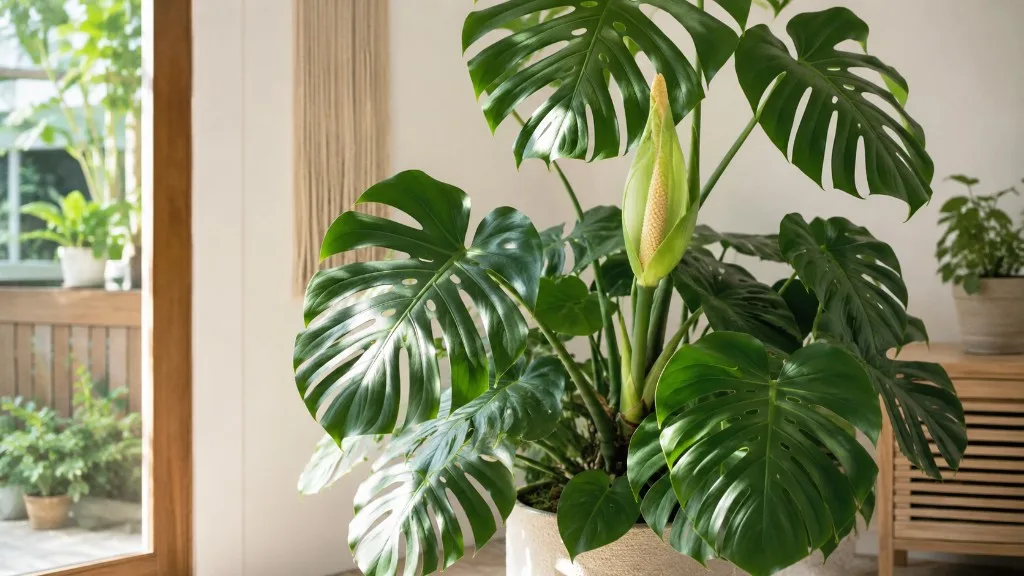
The word “anchor” is important: give the plant a defined place rather than squeezing it between a chair and a doorway. A clear patch of floor lets its silhouette register, while a plain container keeps the leaves as the main event. In a compact apartment, use a smaller specimen or skip it; forcing a large-leaf plant into a narrow walkway makes the room harder to use and weakens the relaxed feeling you are trying to create.
Monstera deliciosa is not a Thai native according to the supplied source, so use it for the foliage effect rather than as a claim of local authenticity. Its bold leaves are the strongest starting point if you want the room to feel tropical quickly. Add the other plants only after deciding whether the room needs color, flowers, or a softer shape beside that anchor.
2. Dendrobium orchids: a flowering focal point
The Dendrobium orchid described in the source is an orange-flowering plant placed beside Belinda’s desk. That is a useful scale cue: an orchid can make a small surface feel deliberate without competing with a large floor plant. A desk, side table, or console gives the flowers a close-up viewing spot, where their color reads as a detail rather than as another mass of foliage.
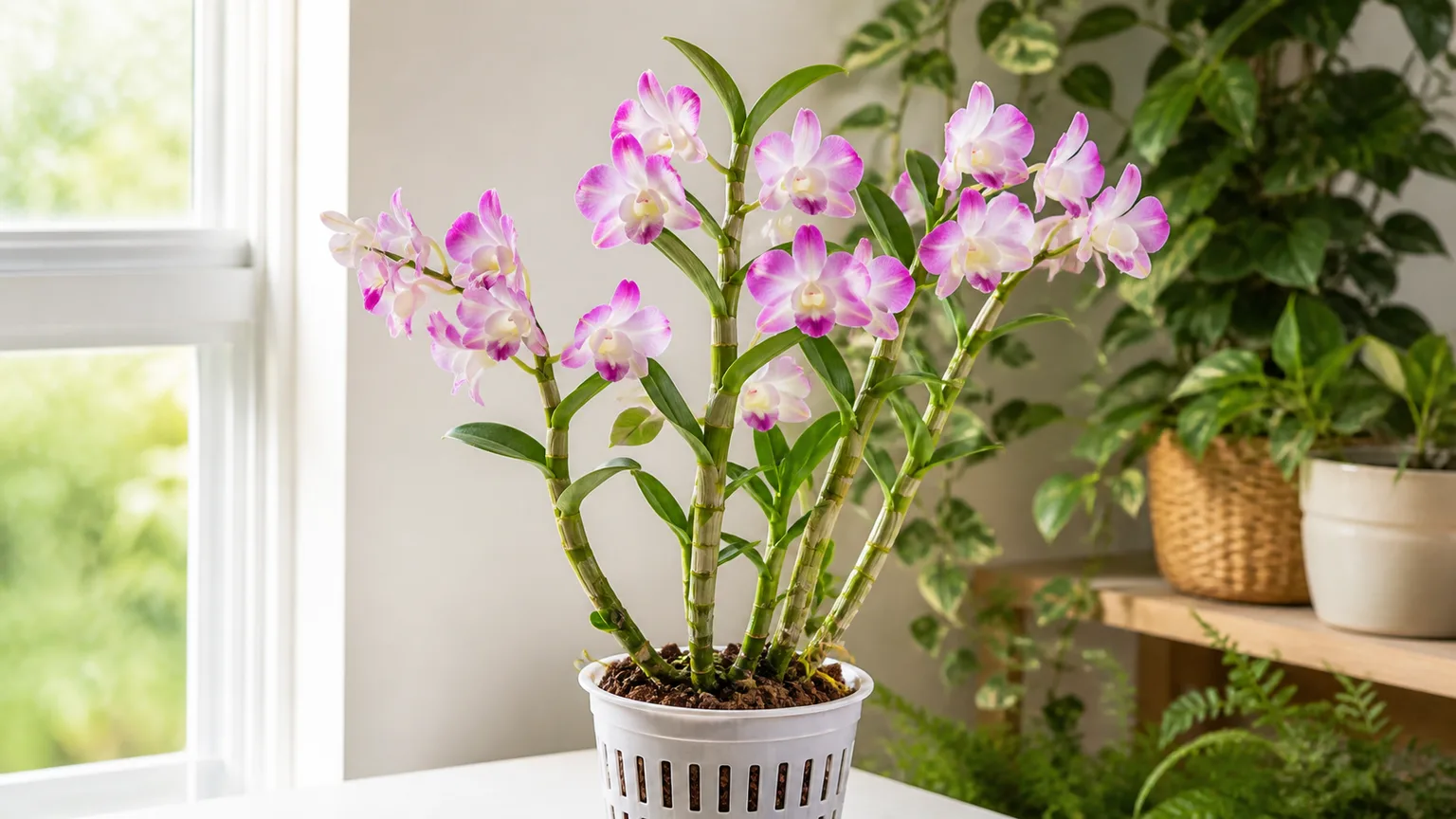
Dendrobium is a large group, not one single look: Kew currently lists 1,603 accepted species in the genus, whose native range includes Thailand and extends across tropical and subtropical Asia to the Pacific and New Zealand (Kew: Dendrobium). The source describes a bloom period of six to eight weeks in a year, with possible repeat flowering in ideal conditions. Plan around that limited season: enjoy the flowers when they are present, but do not buy an orchid expecting a permanent orange display. The plant can still contribute green stems and leaves when it is not in bloom.
For a restrained arrangement, let the orchid be the only flowering accent in its immediate grouping. Pairing it with the Monstera’s big leaves makes the difference in scale feel purposeful; placing it amid several other bright blooms can dilute the quiet focal point. Because “Dendrobium” covers many kinds, check the exact plant’s growing directions before treating any one placement or watering routine as universal; the American Orchid Society notes that light and temperature preferences differ among Dendrobium groups (AOS culture sheet).
3. Bird’s nest fern: sculptural texture
Bird’s nest fern is the texture plant in this set. Its broad, rippled leaves form a recognizable rosette, giving it a rounded outline that contrasts with the Monstera’s separated leaves and the ti plant’s upright color. The source describes potted bird’s nest ferns framing the entrance to Jaclyn, Laurie, and Kate’s villa. That placement works as a design cue: a fern can soften a threshold, mark the edge of a seating group, or fill a middle-height position between floor foliage and tabletop accents.
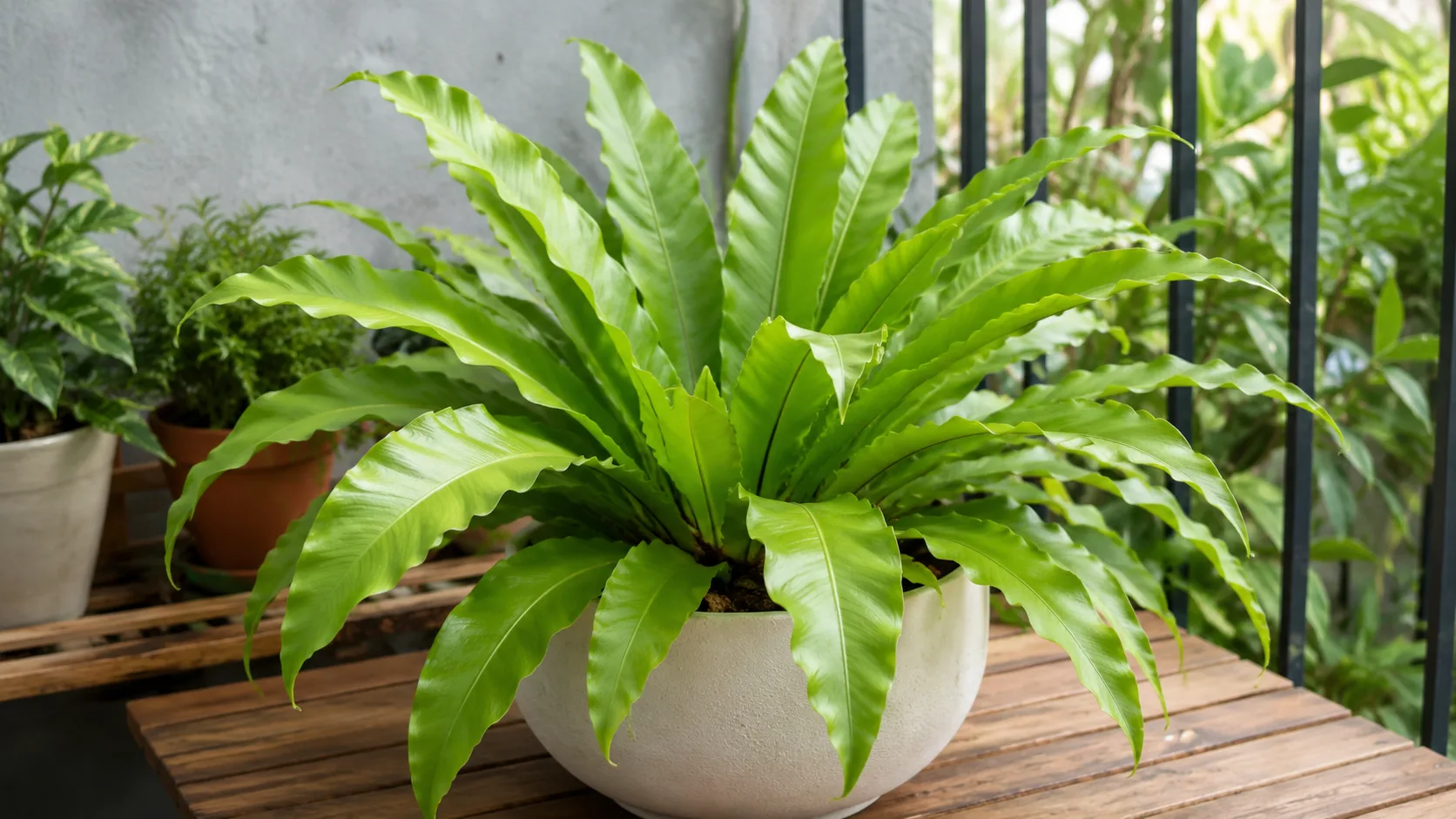
Its sculptural quality means it does not need a busy pot or a collection of accessories to look finished. A simple vessel and a little surrounding space let the leaf edges show. If you have a doorway in mind, keep the plant clear of the path and avoid treating the entrance as a dark, plant-filled set. A beautiful location is still a poor choice if it obstructs movement or does not suit the fern’s growing needs.
Use one bird’s nest fern where a group needs softness, not several identical specimens lined up together. It is especially useful when a room already has strong straight lines from shelves, windows, or furniture: the rippled foliage gives those edges a more organic counterpoint.
4. Ti plant: a shot of pink and yellow
Most of the palette is green, so the ti plant supplies a different kind of energy. The source describes its pink and yellow leaves as bright accents in the mostly green landscape around the property. In a home display, use that color as a deliberate punctuation mark: one ti plant can link the greenery to a warm cushion, artwork, or other color already in the room, without requiring the rest of the plants to match it.
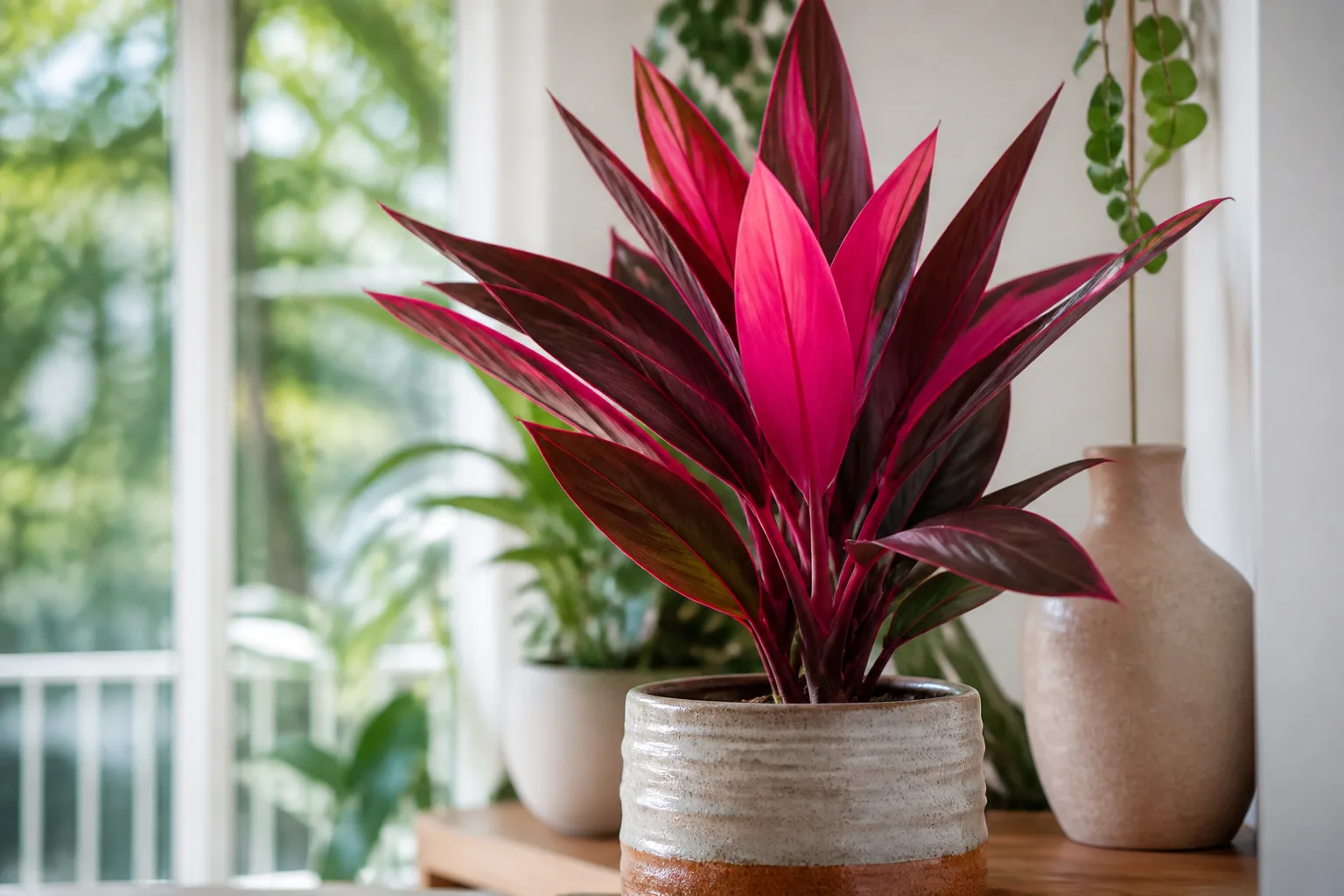
The source also identifies the ti plant as Cordyline, but the native range depends on the species: Kew lists Cordyline fruticosa as native from Papuasia to the western Pacific, and Thailand as an introduced range (Kew: Cordyline fruticosa). Its role in the arrangement is strongest when the colored foliage has a quieter background. Put it beside green-leaved plants rather than directly against a patterned wall or a pile of colorful objects. This lets the pink and yellow read as foliage, not visual clutter.
Think about color balance before you buy. If the room already has several saturated accents, the ti plant may be the only plant you need for contrast. If everything is neutral, it can become the feature that makes a modest grouping feel warm and tropical. As with every plant here, verify that the proposed home suits the particular ti plant you are considering; a styling plan cannot replace plant-specific care guidance.
5. Mini monstera: a smaller-leaf echo
Mini monstera gives you a way to repeat the Monstera motif at a smaller scale. The supplied source describes it as native to southern Thailand, and Kew lists its range as Peninsular Thailand to Peninsular Malaysia (Kew: Rhaphidophora tetrasperma). Its leaves are smaller than those of Monstera deliciosa. The source even suggests that, in the show’s scenes, the plant may be concealed by much larger elephant ear leaves. That uncertainty is useful: not every plant detail is meant to read clearly on screen, and a home display does not need a frame-by-frame match to capture the idea.
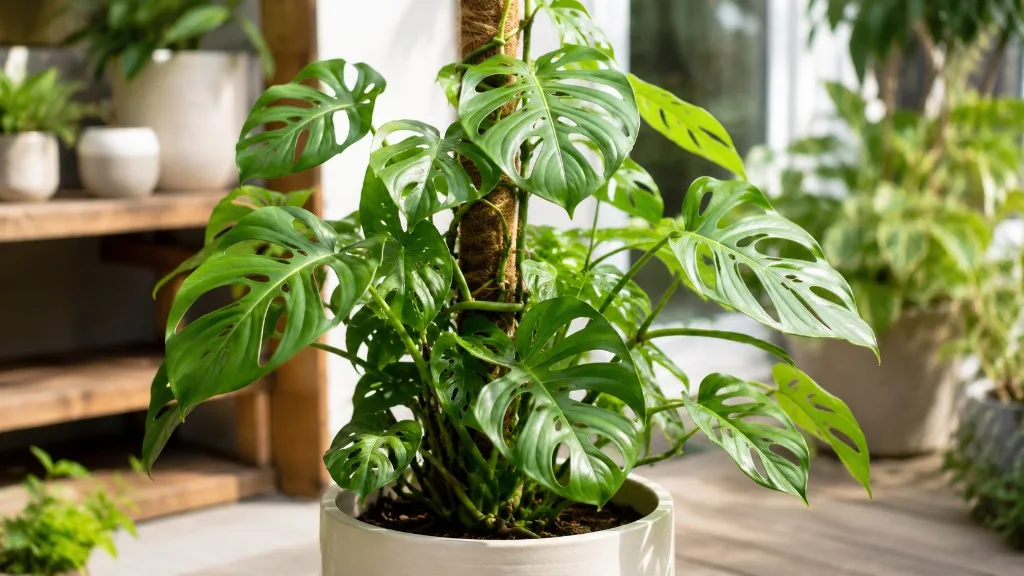
At home, use mini monstera as a supporting plant rather than another oversized centerpiece. Its smaller leaves can carry the visual theme onto a shelf or a narrower plant stand, creating a link between the large Monstera and the more compact fern or orchid. Leave enough visual separation for its leaf shape to be recognizable; burying it behind larger foliage defeats the point of adding a second scale.
The common name can cause confusion, so read the plant label carefully and compare the leaf size and growth habit with the plant you intended to buy. Do not assume that a mini monstera and Monstera deliciosa are interchangeable simply because their names sound related. The source treats them as two distinct picks and uses their difference in leaf scale as part of the appeal.
Arrange plants by visual scale
Begin with one anchor plant
Start by choosing the spot that can hold the largest plant comfortably. If you want the covered-deck feeling from the show’s Monstera scene, that may be an open living-room corner. If your home is small, the anchor can be a medium plant on a sturdy stand instead. The point is to choose one clear focal plant and build around it, rather than buying five plants at once and discovering that every pot wants the same square foot of floor.
Once the anchor is placed, step back and look at the whole room from the doorway and the main seat. Notice where the leaves interrupt a view, where a blank area feels too empty, and where a smaller plant could finish the composition. This simple distance check is more reliable than judging every pot from directly above it in a store.
Add contrasting shapes and heights
Use the bird’s nest fern to introduce a rounded, rippled silhouette, then decide whether the display needs the ti plant’s color or the orchid’s flowers. The mini monstera can repeat the split-leaf idea on a smaller scale. Those roles can sit in one loose group or be distributed around the room; the arrangement does not need to be a single five-pot cluster.
Vary height with the furniture and stands you already own. A low floor plant, a middle-height fern, and a tabletop orchid naturally create layers, while identical plant stands can make the display feel like a shop window. Keep leaves from pressing against walls or obscuring each other. A little negative space is what allows each plant’s shape to read.
Build the look in the rooms you use
Give the living area its frame
In a living room, place the Monstera where it can frame rather than block the seating area. A bird’s nest fern can sit nearby as a softer countershape, provided the light and other growing conditions work for both plants. The two do not have to touch or share a tray; a small gap helps each outline remain visible and gives the grouping a less staged appearance.
If the room has limited floor space, choose one of those plants as the main feature and use a tabletop accent elsewhere. The “resort” feeling depends on lushness and contrast, not on maximum pot count. A single large plant seen against an uncluttered wall can feel more generous than a tight collection crowded around a television or door.
Use the desk and entrance as smaller scenes
The source’s orchid placement beside a desk suggests a useful way to bring the theme into a work nook. A flowering Dendrobium can make a small surface feel considered; when it is not blooming, its presence will be quieter, so give the desk scene another visual anchor such as a simple pot or a nearby green plant. Keep the work surface functional and leave enough space for the objects you use every day.
The villa entrance framed by bird’s nest ferns offers a second small scene. At home, one fern can mark the transition from a hall to a living area without creating a pair of obstacles. A ti plant or mini monstera can then appear elsewhere as a color or shape echo. Distributing plants creates a coherent home more easily than copying a single dense arrangement into every room.
Choose plants before you shop
Check the location, space, and care fit
Before buying, write down the exact spot you have in mind and what you want the plant to contribute. “Large green leaves in the empty corner,” “flowers by the desk,” and “pink foliage against a neutral wall” are clearer goals than “something tropical.” They point toward different members of this list and make it easier to stop at one or two plants when that is all the space needs.
Then check the practical limits: available floor or tabletop space, the light in that location, nearby drafts or heat sources, and whether you can follow the particular plant’s care instructions. The supplied source is a visual list, not a care guide, so it does not provide enough information to declare these five plants equally easy or suitable for the same room. Confirm the needs of the exact plant and cultivar with its care label or a reliable horticultural reference before you purchase it.
Finally, buy in stages. Place the first plant, live with its scale for a few days, and only then decide whether the room needs another layer. If you cannot find a suitable location for a plant’s care needs, choose a different visual role or leave that plant out. A shorter list that thrives in the right places is a better home display than a complete set forced into unsuitable corners.
Keep the display cohesive with containers and breathing room
Containers are the quiet link between plants with very different shapes. Choose a small family of finishes—such as matte neutral pots, natural clay, or one repeated material—rather than five unrelated colors. A restrained container palette lets the foliage supply the contrast: deep green Monstera, rippled fern leaves, orange orchid flowers, pink and yellow ti foliage, and the smaller-leaf mini monstera.
You can also repeat one color from the room in a single pot, but avoid matching every container to the leaves. Pink foliage in a pink pot may disappear; a calm background makes its color easier to see. For a more relaxed composition, vary pot shapes slightly while keeping the finish consistent. That gives the display a collected look without turning it into visual noise.
Leave open surfaces and pathways around the plants. Empty space is part of the design: it separates one leaf silhouette from another, makes watering and moving the pots easier, and keeps a room from feeling like a greenhouse when that is not the goal. The most convincing tropical corner often has a deliberate edge where the planting stops.
Mistakes that make a tropical display feel crowded or misleading
The first mistake is assuming every plant connected with a Thailand-set series is native to Thailand. The supplied source gives different origins for several of these plants, and one should not be assigned an origin that the source does not provide. Use “tropical-inspired” to describe the home mood; reserve geographic claims for the individual plants whose origins are stated.
The second is expecting the Dendrobium to stay in flower indefinitely. The source’s six-to-eight-week estimate is a bloom window, not a promise of year-round color. If permanent color is the goal, make the ti plant’s foliage part of the plan or treat the orchid’s flowers as a seasonal focal point rather than the entire display.
The third is buying the full five before measuring or checking care. The plants do not all serve the same visual purpose, and the source does not establish that their needs are identical. A plant can be right for the look and wrong for a particular window, room temperature, or routine. Confirm those details before purchase, keep walkways clear, and let the arrangement grow only when the space supports it.
Conclusion
To bring the look home, begin with the plant whose visual job matters most. Choose Monstera deliciosa for a bold, large-leaf anchor; Dendrobium for an orange flowering accent; bird’s nest fern for rippled structure; ti plant for pink and yellow foliage; and mini monstera for a smaller echo of the split-leaf theme. One or two well-placed plants can establish the mood without reproducing a resort landscape.
Build the rest of the display around the room you actually have. Let shapes and colors contrast, keep containers restrained, and leave breathing room between plants. Before buying, confirm that each exact plant suits its proposed location and care routine; the styling can suggest a tropical escape, while the plants still need a home that works for them.