How to Get Rid of Centipedes in the House
Learn how to get rid of centipedes in the house with a practical first-day plan, basement fixes, and clear guidance on when to call a pro.
Finding a centipede sprinting across the floor is startling, but one sighting usually does not mean your home is overrun. House centipedes are predators that follow moisture and other small arthropods indoors. The most reliable solution is therefore a sequence: remove the visitor, make the room less hospitable, reduce the insects it hunts, and close the routes it uses to get inside.
That approach also tells you when to investigate further. An occasional centipede near a basement door after rain is different from several sightings each week in a damp basement. The first is often a stray hunter; the second suggests persistent moisture, abundant prey, or a sheltering population that deserves a closer inspection.
The fastest safe response when you see one
If the centipede is in an open area, use a vacuum with a hose attachment. Move slowly enough to capture it, then empty the canister or sealed bag outdoors. This avoids handling the insect and lets you remove it without spreading insecticide around a room where children or pets may spend time.
If you prefer to release it, slide a rigid card under a container and carry it outside away from doors, foundation cracks, and piles of damp debris. Do not pick it up with bare hands. House centipedes rarely bite people, but any wild arthropod can react defensively when trapped or pressed against skin.

Why centipedes suddenly show up indoors
Moisture creates the right hunting conditions
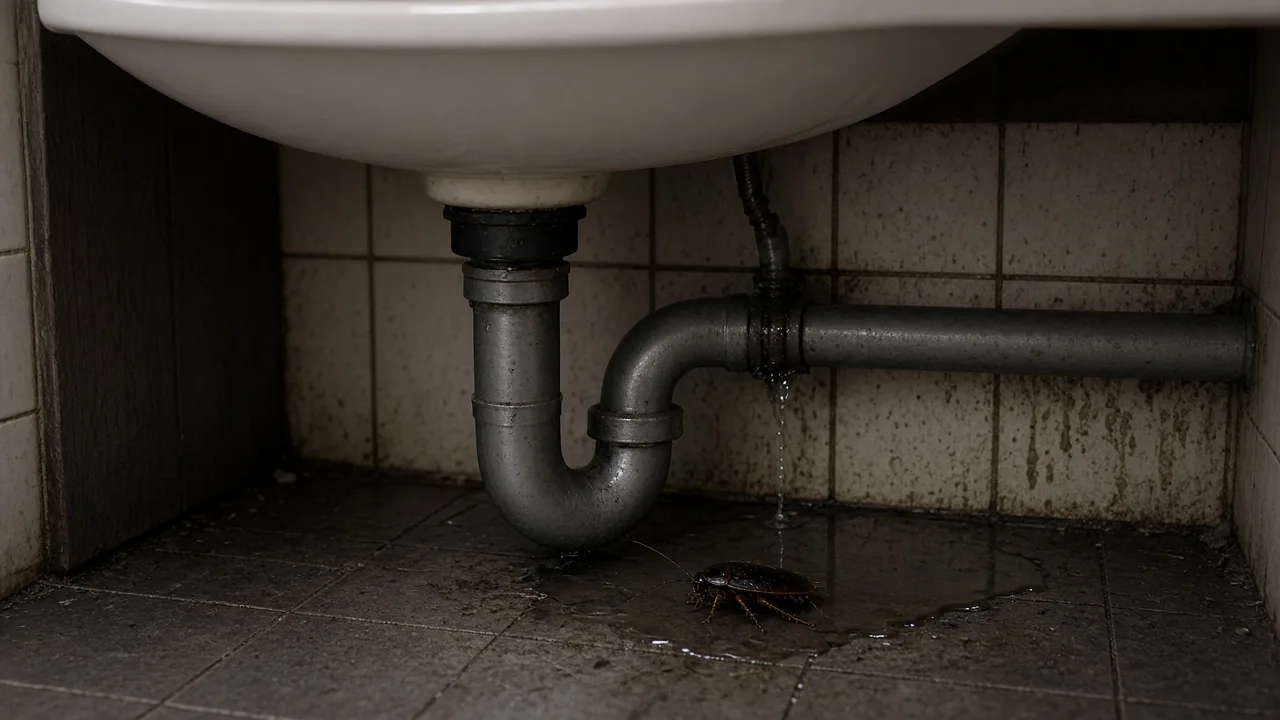
House centipedes favor dark, humid places because their bodies lose moisture easily and their prey is more common there. Bathrooms, laundry rooms, crawl spaces, basements, garages, and the area under sinks deserve attention first. A slow plumbing leak, wet foundation edge, condensation on cold pipes, or poorly vented bathroom can matter even when the room does not feel visibly wet.
Look for patterns rather than guessing. Sightings after showers point toward ventilation or a plumbing issue; sightings after rain point toward foundation moisture or door gaps; sightings around a laundry area point toward appliance hoses, floor drains, or damp stored materials. A hygrometer can help you identify a persistently humid room, but it cannot locate a leak by itself.
Other insects provide the food supply
Centipedes eat small insects and other arthropods, including silverfish, flies, cockroaches, crickets, earwigs, moths, and spiders. Seeing one does not prove that a particular pest is present, but repeated centipedes should prompt a calm prey-insect inspection. Check under sinks, behind appliances, in cardboard storage, along baseboards, and around floor drains for droppings, shed skins, webbing, live insects, or damaged packaging.
This is why killing visible centipedes alone can disappoint. If a damp room still supports a steady supply of prey, new hunters can arrive from outdoors or emerge from nearby hiding places. Treat the underlying pest according to its own identification and label directions instead of applying a broad spray without knowing what you are trying to control.
Cracks, clutter, and seasonal shelter open the door
Centipedes can enter through gaps under doors, cracks around foundations, damaged screens, utility penetrations, and openings around pipes. In cool weather, sheltered indoor spaces become more attractive; during wet weather, saturated outdoor habitat can push activity toward drier structures. Outdoor mulch, firewood, stones, leaf piles, and dense groundcover beside a foundation can provide both shelter and prey.
The phrase “suddenly have centipedes” often describes a change in conditions rather than a sudden birth indoors. A new leak, a wetter season, a moved woodpile, a neglected crawl space, or a change in heating and ventilation can make a previously quiet route noticeable.
Identify a house centipede before treating the problem
The common house centipede is usually yellowish or tan with three dark longitudinal stripes, very long legs, long antennae, and a fast, delicate-looking body. Adults have 15 pairs of legs, not 100. It is easy to confuse a house centipede with a slower, heavier outdoor centipede, millipede, or another many-legged animal, and the control plan may differ.
Identification matters for two reasons. First, house centipedes are generally nuisance predators rather than insects that damage food, fabric, wood, or houseplants. Second, an unfamiliar large centipede, a painful bite, or an animal found repeatedly in living areas may justify a local extension office or pest professional who can identify it accurately.
A five-part plan to stop repeat sightings
1. Dry the wettest rooms first
Repair leaks at faucets, toilets, supply lines, washing machines, and water heaters. Run bathroom exhaust fans during showers and long enough afterward to clear visible condensation. In a basement or crawl space, use a properly sized dehumidifier and address water entering through walls, floors, gutters, downspouts, or grading rather than relying on the appliance alone.
Do not seal a wet wall or cover a damp floor before finding the source. That can trap moisture and create a less visible problem. If you smell mold, see water damage, or find an active leak near wiring, handle the building repair through the appropriate professional rather than treating it as an insect problem.
2. Find and reduce prey insects
Start with sanitation and inspection: store dry goods in closed containers, clean crumbs and pet food, remove food waste, reduce standing water, and vacuum edges where insects hide. Take cardboard boxes off basement floors, launder or discard damp textiles, and keep stored materials a few inches away from walls when practical.
Sticky monitoring cards placed along walls can show whether silverfish, roaches, crickets, or other prey are active. Use them where children and pets cannot reach them, and check them regularly. The purpose is diagnosis, not a promise that traps alone will eliminate a larger problem.
If you find cockroaches, bed bugs, a large fly problem, or another established pest, follow that pest’s evidence-based control plan. Avoid “natural” mixtures that can damage surfaces or expose pets without reliably solving the source. Integrated pest management works best when monitoring, exclusion, sanitation, moisture control, and targeted treatment are combined.
3. Seal practical entry points
Inspect door sweeps, thresholds, window screens, basement windows, foundation joints, vents, and holes around pipes and cables. Replace torn screens and worn weather stripping. Use an exterior-grade sealant for suitable stationary cracks, but do not block required ventilation, drainage paths, weep holes, or equipment clearances.
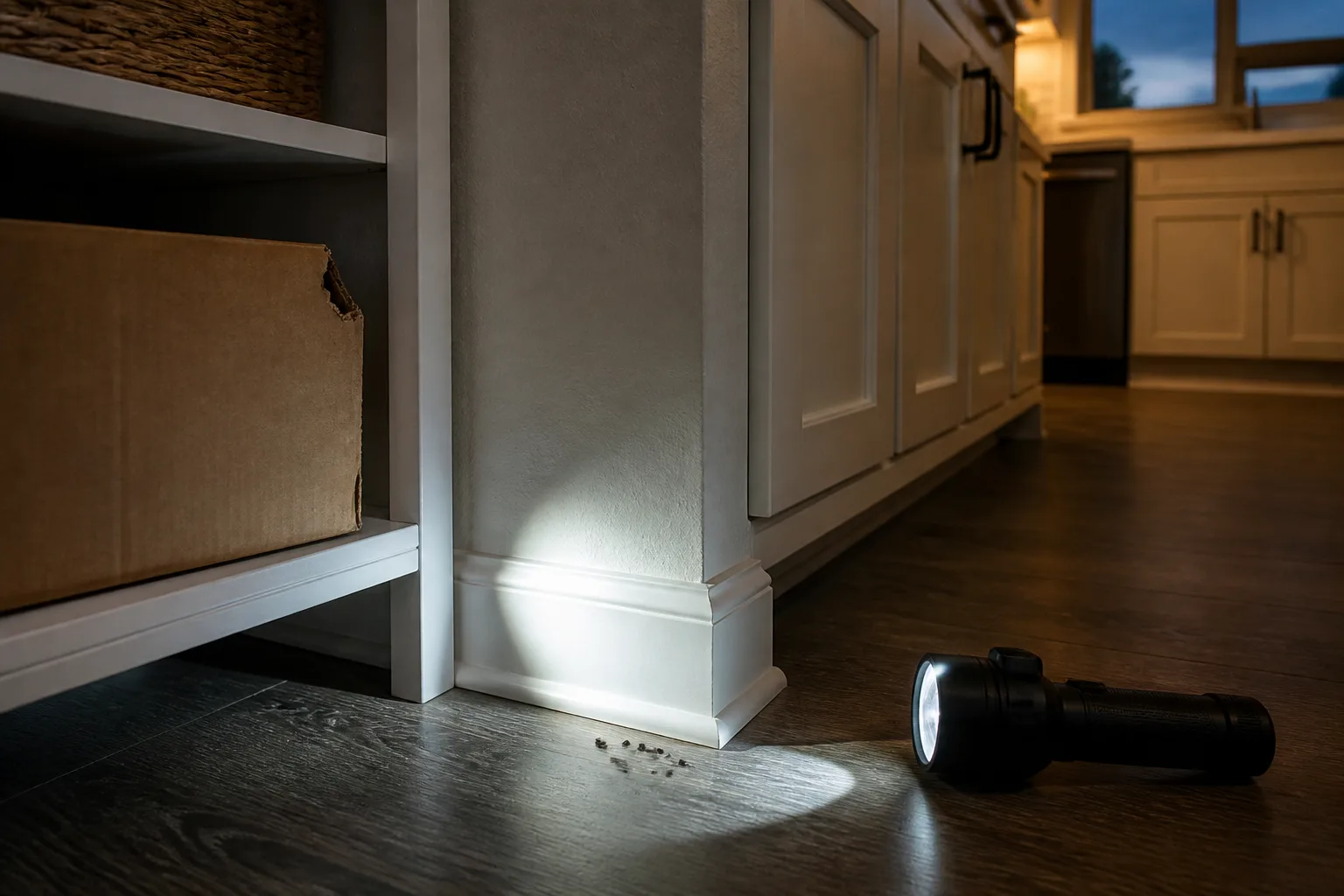
Check the bottom corners of exterior doors at night with the indoor lights on. A visible line of light is a useful clue, though not every centipede route will be visible this way. Pay special attention to the door between a garage and the living space, because garages can offer moisture, clutter, prey, and direct access indoors.
4. Remove hiding places around the foundation
Move firewood, lumber, leaf piles, compost, and dense piles of stones away from the foundation. Keep gutters and downspouts moving roof water away from the house, and adjust irrigation so the foundation is not repeatedly soaked. Pruning back vegetation can improve drying and inspection, but do not strip every planted area simply to eliminate a beneficial predator.
The goal is a drier, inspectable perimeter, not a sterile yard. Centipedes are part of the outdoor food web and may help consume other small arthropods. Focus on the narrow zone that touches the building and on materials that stay damp against doors, vents, or walls.
5. Monitor before escalating
Record where and when you see centipedes for two weeks. Note weather, room, time, nearby plumbing, and whether the insect was small and delicate or large and robust. If sightings decline after drying and sealing, you have useful evidence that the conditions were the main driver.
If activity continues, use the pattern to guide the next inspection. A basement-only pattern suggests moisture or foundation entry; bathrooms suggest plumbing and ventilation; sightings across several dry rooms suggest either multiple entry points or a prey problem that needs a broader evaluation.
What to do in a basement, bathroom, or bedroom
In a basement, begin with the floor-wall joint, sump area, windows, stored cardboard, and dehumidifier performance. Do not assume a floor drain is the source; centipedes can travel along edges and enter through cracks or nearby utility openings. A drain cover can help with some pests, but it will not correct a damp foundation or a leaking pipe.
In a bathroom, run the fan, inspect under the vanity and toilet, and look for loose caulk or slow leaks. Keep bath mats dry between uses and do not leave wet cleaning cloths in a closed hamper. If centipedes appear only at night, that is consistent with hunting behavior and does not by itself mean the bathroom is infested.
In a bedroom, check the exterior wall, windows, baseboard gaps, and clutter under furniture. A bedroom sighting can be a single traveler from a bathroom, basement, garage, or attached wall cavity. Focus on the route and the conditions rather than spraying the mattress, carpet, or sleeping area.
Should you use insecticide for centipedes?
Usually, not as the first move for one or two house centipedes. A vacuum, moisture repair, exclusion, and prey-insect control are more targeted and reduce exposure. Indoor pesticide applications can also kill non-target arthropods without solving the leak or entry gap that brought the centipede in.
If a recurring problem remains after those steps, read the entire product label and use only a product registered for the site and pest in your jurisdiction. Never mix products, use outdoor chemicals indoors, fog a room casually, or increase a concentration because an insect is unsettling. Keep people and pets away as the label requires, ventilate as directed, and store products in their original containers.
Avoid relying on essential oils, vinegar, cayenne, or scattered diatomaceous earth as a guaranteed barrier. Some odors may alter insect movement briefly, but that is not the same as durable exclusion. Dusts can become airborne, lose effectiveness when damp, and create an exposure concern when applied carelessly. If the situation requires chemical treatment, a licensed professional can select a narrow, appropriate application and find the conditions that make it necessary.

When recurring centipedes justify professional help
Call a pest professional when you see centipedes frequently despite drying and sealing, when another pest is clearly established, or when the source appears to be inside a wall, crawl space, or inaccessible foundation void. Professional help is also sensible if you cannot safely inspect a crawl space, if moisture damage is extensive, or if a household member is unusually sensitive to pesticides.
Ask what the inspection found, which conditions will be corrected by you, what treatment is being proposed, and how success will be measured. A useful service should explain the source and follow-up plan rather than promise that one spray will make every centipede disappear forever. Keep a sighting log and photographs when possible; those details help distinguish a route problem from a broader pest issue.
Centipedes are not a reliable indicator of dangerous disease or structural damage, and their presence is not proof of a roach infestation. They are, however, useful clues. Repeated sightings mean the building is offering some combination of moisture, prey, shelter, or access, and those clues are worth acting on.
Before you schedule treatment, distinguish a control problem from a building problem. A pest technician can treat insects, but a plumber, waterproofing contractor, roofer, or foundation specialist may be the right person for a failed drain, roof leak, grading issue, or recurring seepage. Solving the wrong layer can make the house look treated while the moisture keeps returning.
The same caution applies to bites. A rare bite that causes severe pain, swelling, breathing trouble, or a systemic reaction deserves prompt medical advice. Do not try to identify a bite from a photograph alone, and do not assume every red mark came from a centipede simply because one was seen in the room.
Sources and further reading
This guide draws on practical integrated-pest-management principles and extension references. For species identification, local treatment decisions, and pesticide use, consult the guidance that applies to your region and always follow the product label.
- University of Minnesota Extension: House centipedes
- Penn State Extension: Centipedes
- University of Kentucky Entomology: House centipede
- UC Statewide Integrated Pest Management Program: House centipede
- U.S. Environmental Protection Agency: Read the label first
Conclusion: fix the conditions, not just the sighting
The durable way to get rid of centipedes is to make the home less rewarding to hunt. Remove the individual with a vacuum or container, dry leaks and humid rooms, inspect for the small insects it may be following, clear damp clutter, and seal the gaps that connect the perimeter to living space.
Give those changes time to work and monitor the pattern. If centipedes keep appearing, the repeated location is telling you where to look next; if the sightings stop, you have solved the cause without turning a harmless visitor into a chemical-treatment project.