Keep Silverfish Away Without Mothballs: Safer Fixes
Do mothballs keep silverfish away? Learn why label restrictions and toxic fumes make them a poor fix, then use traps, moisture control, and sealing instead.
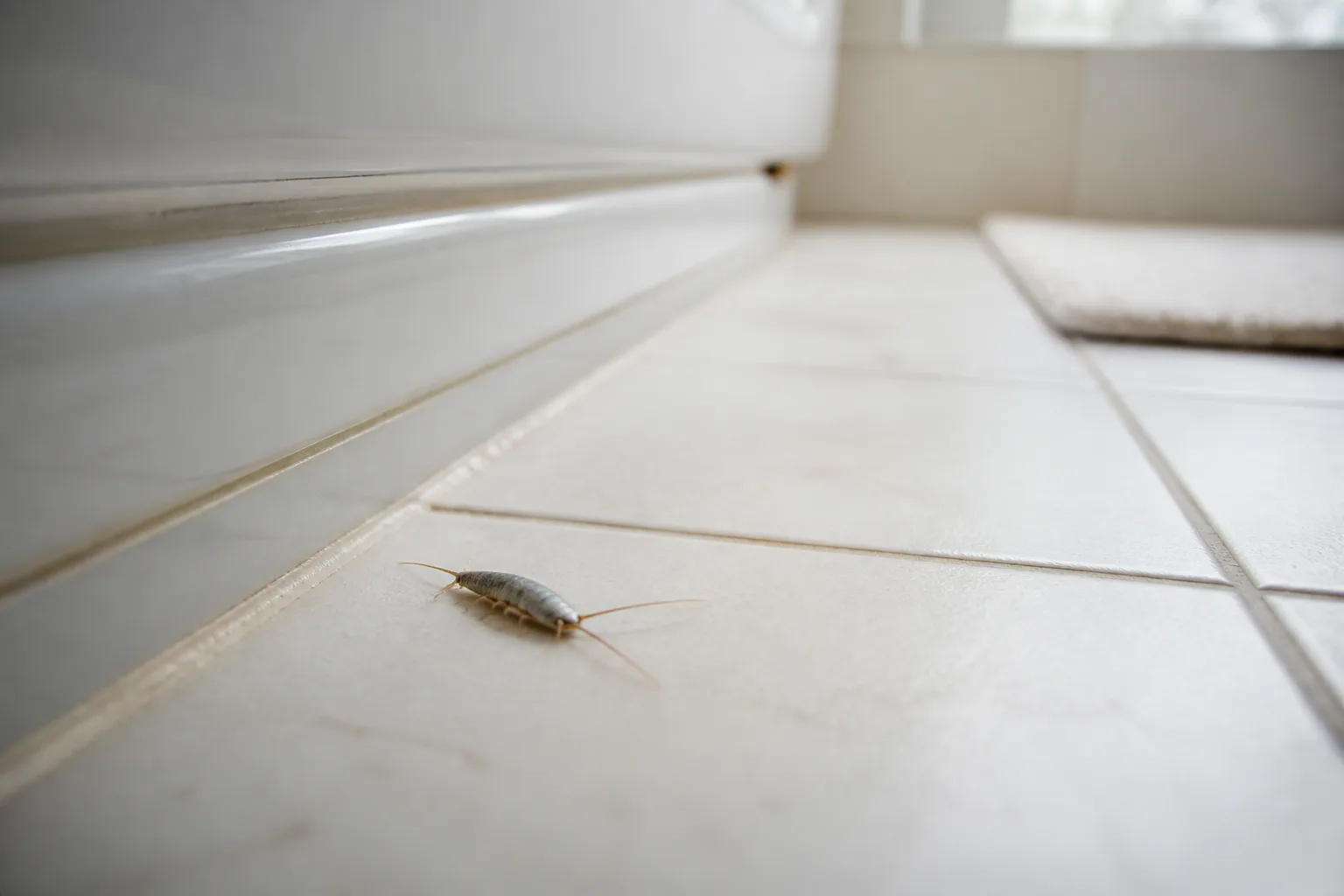
Mothballs are not a good way to keep silverfish out of a room, closet, bathroom, or basement. They are pesticide products with specific label directions, and their fumes are meant to build up in the labeled storage setting; scattering them around a home is not a safe substitute for silverfish control. The U.S. Environmental Protection Agency (EPA) says pesticide labels define where and how a product may be used, and the National Pesticide Information Center (NPIC) warns that mothball vapor can escape into living spaces when the product is used in a container that is not tightly closed.
For silverfish, start by confirming where they are active, then reduce moisture, protect food and paper, and close the gaps they use for shelter or entry. Sticky traps help show whether activity is concentrated in one damp closet or spread across several rooms. If you already put mothballs out, keep children and pets away and follow the product label for handling and disposal; get urgent poison-control or veterinary advice if anyone may have swallowed one.
Short answer: do not use mothballs as a silverfish repellent
Do not scatter mothballs under a sink, behind a bookcase, in a bathroom, or around a basement to repel silverfish. A mothball is not an air freshener or a general-purpose insect barrier. It is a pesticide product whose allowed pests, placement, amount, container, and handling instructions come from that exact product’s label. The EPA’s pesticide-labeling questions and answers explain how pesticide labeling governs product use, while its guidance on avoiding illegal household pesticide products explains why a product’s registration and directions matter.
There is an important nuance: an older NC State Extension factsheet mentions mothballs in the context of sealed storage boxes. That line is not permission to use any mothball product for silverfish, and it does not authorize open placement in a lived-in space. Product labels can differ and can change. This article does not recommend mothballs for silverfish; if you are considering any pesticide, check the current label for the specific pest, site, container, and directions rather than relying on a broad claim or an old tip. NC State’s own silverfish page also emphasizes that users are responsible for checking current chemical-use regulations and labels.
Mothballs are pesticides with specific labeled uses
Mothballs are solid pesticide products that release vapor as they slowly disappear. Depending on the product, the active ingredient may be naphthalene or paradichlorobenzene. In a labeled, tightly closed storage container, vapor can accumulate around the stored textiles to control the fabric pests named on that product’s label. That concentrated, enclosed use is different from placing mothballs in an open room and expecting their smell to create a safe perimeter. NPIC’s regulation and proper-use guidance explains that labels specify how and where these products can legally be used and warns against uses outside those directions.
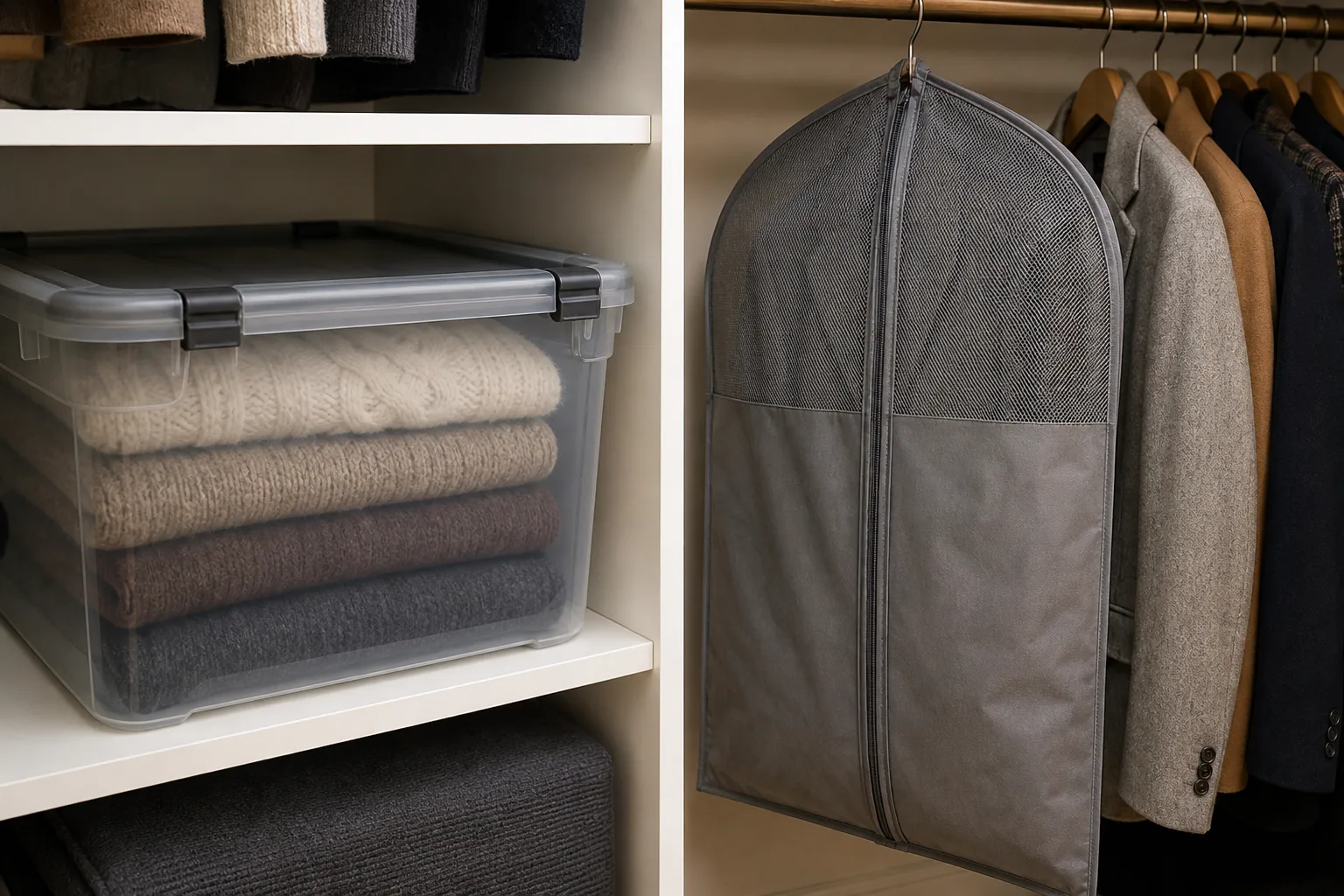
A closed storage container is a different setting from an open room. The pictured containers do not establish a pesticide use; check the current label for the exact product.
Why the current label controls the use
“Mothballs” is a common product name, not a complete set of directions. The label on the package in your home is the controlling source for the product’s active ingredient, labeled target pests, permitted use site, dosage, container, precautions, and disposal. A webpage or forum that says mothballs “keep bugs away” cannot expand those directions. If you cannot confirm the label, do not guess at a use; contact the manufacturer or NPIC for pesticide-specific guidance.
Do not assume that a label for moths in stored clothing covers silverfish in a bathroom, pantry, wall void, or the open floor of a closet. Nor should an old storage tip be treated as proof that a product is approved for every silverfish setting. The safe decision is straightforward: do not use mothballs as a general silverfish repellent, and follow the current package label for any labeled use you choose to make.
Why sealed storage and an open room are different
People often associate mothballs with a powerful smell and infer that the scent must drive insects away. But odor is not a reliable measure of pest control. NPIC explains that when you smell mothballs, you are inhaling pesticide vapor; labels commonly direct users to a tightly closed container so the fumes do not accumulate in the air people and pets breathe. If the balls sit in an open closet or room, the vapor escapes into the living space instead of staying within the intended storage environment.
That also makes the proposed silverfish benefit uncertain. Silverfish hide in cracks, wall gaps, stored materials, and other protected spots. A scented room does not seal those routes, dry a leak, remove food, or tell you where insects are active. Even if a pest avoids one strongly scented spot, that does not establish that a mothball product is labeled for silverfish or that it will control insects hidden elsewhere.
The distinction matters when you are protecting clothes or books, too. If you are dealing with fabric pests, use a method specifically directed by the product label and keep the pesticide in the required closed storage setup. Silverfish prevention is a separate job: monitor where they move, correct dampness, reduce accessible food and shelter, and seal appropriate openings.
The health risks of leaving mothballs out
The active ingredient in a mothball is released as vapor. NPIC states that smelling mothballs means inhaling the insecticide and notes that exposure can cause health effects if the level is high enough. Loose balls can also be mistaken for candy or food by a young child, pet, or wildlife. Because these products are pesticide concentrates, casually leaving them where someone can touch or swallow them adds risk without solving the moisture or entry conditions that attract silverfish.
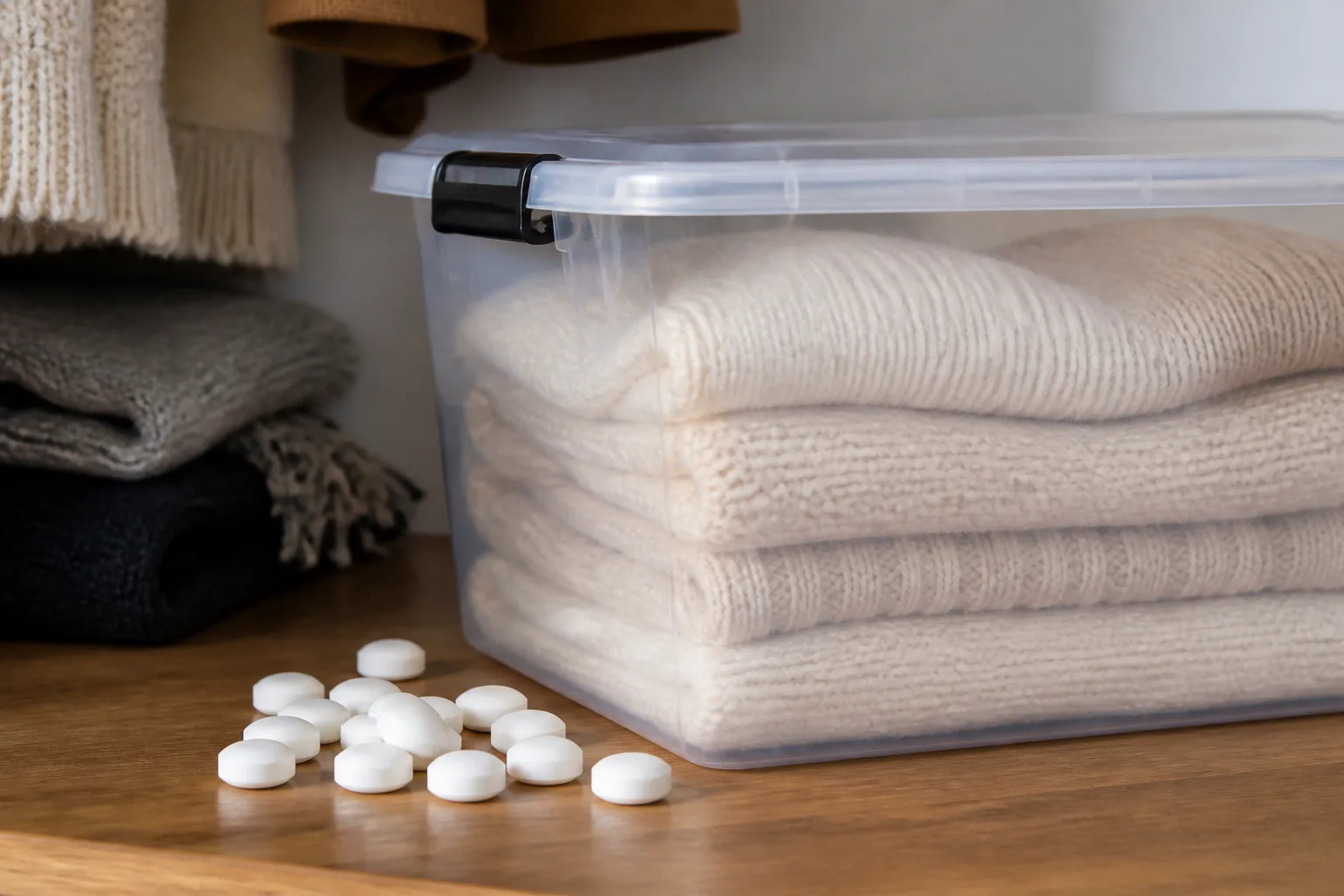
Mothballs scattered in an open room are not a silverfish-control method. Keep any pesticide use within the exact current label directions.
Do not put mothballs near food, dishes, pet bowls, toys, bedding, or anywhere children or animals can reach them. Do not use them outdoors to repel insects or wildlife. NPIC warns that outdoor use can harm people and animals and can contaminate soil, plants, and water. These are practical reasons to choose monitoring and moisture correction first, not a cue to try a stronger fragrance or more mothballs.
What to do if mothballs are already in a room
First, keep children and pets away from the area and avoid handling loose mothballs with bare hands. Find the product package if possible and read its current directions for removal, storage, and disposal; products can differ, so do not invent a cleanup method or put pesticide waste down a drain. If the label is missing or you are unsure how to handle what is there, call NPIC at 800-858-7378 for pesticide guidance.
If a person may have swallowed a mothball, call Poison Control at 800-222-1222 for immediate advice. If a pet may have eaten one, contact a veterinarian or emergency veterinary service. NPIC’s mothball health guidance gives these exposure steps. For a strong odor or a larger amount of product, follow label directions and ask NPIC or your local poison-control service what to do; do not rely on masking the smell with air freshener.
Once the product is handled according to its label, return to the pest problem itself. Note the room and exact spot where you found silverfish or damage, place monitoring traps where they can’t be reached by children or pets, and inspect for moisture and paper or food sources. This turns a vague “pest smell” problem into an addressable location and cause.
Confirm the pest before treating
Silverfish are small, wingless, flattened insects with a tapered body, long antennae, and three bristle-like filaments at the rear. Adults are usually silvery or gray. They move quickly and tend to hide in dark cracks during the day, so a glimpse near a baseboard or a trap catch is more useful than guessing from a musty smell. NC State Extension and UC IPM describe silverfish and their close relatives as nocturnal insects associated with protected places and materials such as paper, glue, dry foods, and book bindings.
The clues that deserve a closer look are repeated sightings in the same area, irregular scraping or holes in paper and cardboard, cast skins, scales, or dark specks near stored materials. A single insect near an exterior door does not by itself show that a large indoor population is established. That is an inference from the way extension guidance recommends using traps and feeding evidence to locate small, scattered populations; a few correctly placed monitors can help test it.
Silverfish versus firebrats
Firebrats look similar but are often mottled gray-brown rather than distinctly silvery. NC State Extension notes that firebrats favor hot, humid sites near furnaces, water heaters, or attics, while silverfish are more associated with cool, damp bathrooms, basements, and storage areas. The distinction can help explain why insects near a hot utility area may not respond to the same room changes as insects in a cool basement.
If the insect is too quick to identify, take a clear photo or preserve a trap catch for a local extension office or pest professional. Identification matters because it prevents a mistaken treatment and helps you inspect the right microclimate. Neither silverfish nor firebrats bite people, but they can damage paper, wallpaper, dry foods, and other starchy materials.
Use sticky traps to find the activity
Place a few plain sticky insect monitors along wall edges where you have seen activity: beside a bathroom vanity, behind a bookcase, near basement storage, or next to a suspected entry gap. Avoid putting every trap in the center of a room; these insects use edges and sheltered routes. Keep monitors inaccessible to children and pets, and write the placement date on a small log or note on your phone.
Check the traps weekly and record the room, location, and number caught. NC State Extension says sticky traps can reveal infestation hot spots and may provide some control when populations are small. A trap with catches near one leaking pipe points you toward a specific inspection; catches in several dry rooms or ongoing damage suggest a broader problem. Traps are a measuring tool and a limited control, not a substitute for correcting the conditions that let insects persist.
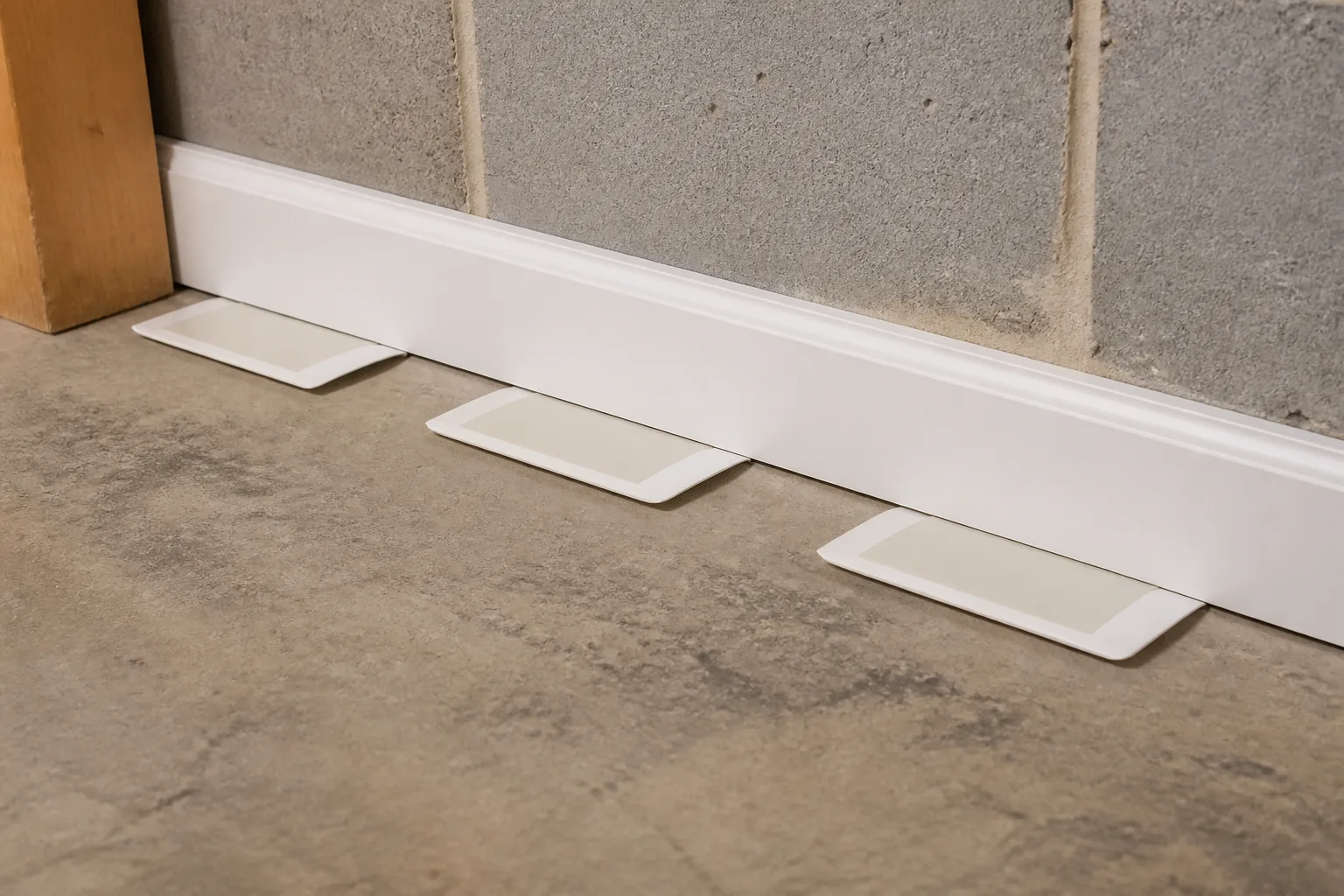
Do not conclude that the home is clear after one empty trap check. Silverfish can hide for long periods, and eggs hatch over several weeks under suitable conditions. Penn State Extension gives a temperature-dependent egg-hatching range of about 19 to 43 days. Keep monitoring while you make the environmental fixes, and compare catches over time instead of expecting an overnight result.
Lower moisture at its source
Look for a cause before buying a dehumidifier. Check under sinks, around tubs and showers, behind a washing machine, near a water heater, and along basement walls for slow leaks, condensation, wet flooring, or damp stored boxes. Repair plumbing leaks and improve ventilation where shower or laundry moisture lingers. If a basement stays damp after those steps, a properly sized dehumidifier can help, but empty and maintain it as directed so it does not become a neglected water source. NC State Extension and UC IPM both identify excess humidity and moisture reduction as central parts of silverfish management.
Use a small hygrometer to learn whether the room is consistently humid rather than relying on how it feels. You do not need to force the entire house to a particular number to manage one problem corner. Focus on keeping the affected room dry and stable, correcting water intrusion, and preventing condensation. NC State Extension and UC IPM both identify excess humidity and moisture reduction as central parts of silverfish management.
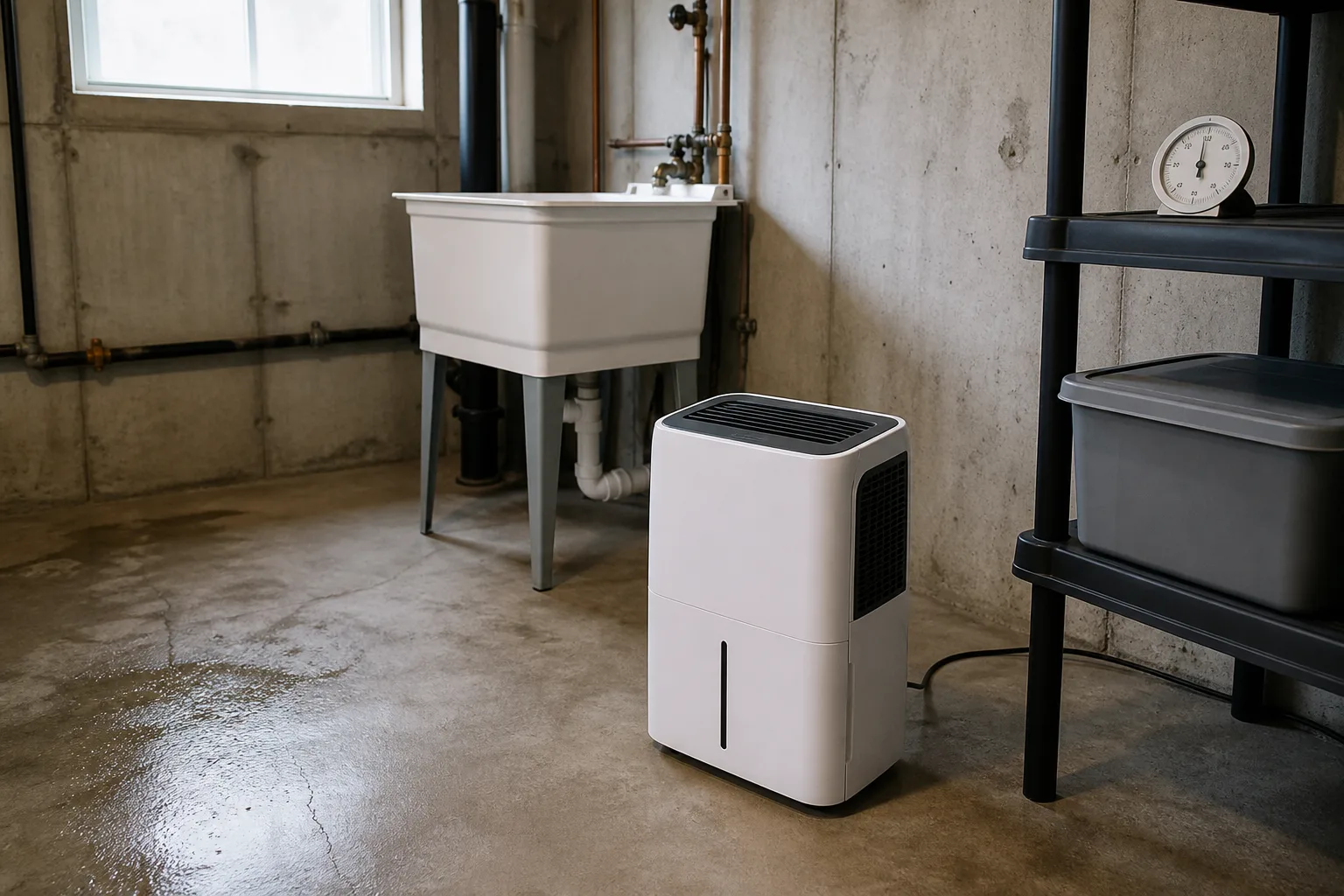
If the source is structural, such as water entering through a foundation or roof, a portable appliance will only manage the symptom. Ask a qualified contractor or building manager to address the leak or drainage issue. In a rental, document the location, dates, photos, and trap activity and report the moisture problem to the responsible property manager.
Remove food and shelter without discarding keepsakes
Silverfish can feed on starches, paper sizing, bookbinding glue, dry foods, dust, and debris. Start with the most exposed items rather than emptying every closet. Vacuum along baseboards, shelf corners, and the backs of cabinets; remove crumbs and lint; and check flour, cereal, pasta, and pet food for secure lids. If you find damage, inspect nearby items and clean the shelf before returning them. UC IPM and Penn State Extension discuss these food sources and practical sanitation steps.
Move long-term paper, fabric, and keepsakes from damp cardboard into clean, tightly closed storage bins. Keep containers off basement floors and away from persistently damp exterior walls. You do not have to throw away every book or sentimental paper item: first dry the room, inspect for active damage, and protect the items you want to keep. A sealed bin is useful because it reduces access and makes future inspection easier; it is not a reason to place loose mothballs inside it.

For valuable archives, collections, or irreplaceable books, ask a conservator or librarian about appropriate storage conditions before applying any pesticide or home remedy. That is especially important if the material itself is delicate or already has damage. Keep food and pet treats in their own sealed containers, and clean dust and dead insects from quiet corners so that the room offers fewer accessible food sources.
Seal gaps and reduce nearby outdoor harborage
After you identify likely routes, close small gaps around pipe penetrations, baseboards, door trim, window frames, and utility openings with a material suited to that location. Replace torn screens and worn door sweeps when they create a real entry route. Sealing every visible crack blindly is not the goal: first rule out a plumbing leak or other moisture source, and do not block required ventilation, drainage, or access panels. Penn State Extension identifies cracks around trim and pipe openings as harborages that can be closed.
If silverfish activity starts near an exterior wall or basement entry, check the conditions just outside that spot. UC IPM and Maine’s Got Pests guidance describe silverfish outdoors under materials such as bark, rocks, and leaf litter. Clear wet debris directly against the foundation, keep gutters and downspouts flowing, and direct runoff away from the house where the site allows. You do not need to strip a healthy garden bare; focus on damp harborage touching the structure and water that collects against it.
Do not scatter mothballs around foundations, sheds, gardens, or crawl spaces. NPIC warns against outdoor mothball use because it can expose children, pets, and wildlife and contaminate the environment. If a product is being considered for any outdoor pest, use only a pesticide specifically labeled for that pest and exact site, and follow its full directions.
Why sprays and foggers often disappoint
A surface spray may kill an insect it directly reaches, but silverfish spend much of their time in cracks, wall gaps, and stored materials. Fog or aerosol can miss those protected locations; NC State Extension specifically notes that fogging in areas such as attics may fail to reach insects beneath insulation and boxes. Spraying repeatedly without finding the damp area, food source, or route can leave the source untouched while adding pesticide to parts of the home that were not active.
That does not mean every pesticide is ineffective or that professional treatment is never appropriate. It means the product must be labeled for silverfish and the site where it will be used, and treatment should be targeted to evidence. Do not substitute mothballs, outdoor repellents, agricultural pesticides, or an unlabeled powder for a product approved for the intended indoor use. EPA and extension guidance both emphasize following the product label.
When targeted pest control or a professional makes sense
If traps keep catching silverfish after you have repaired leaks, reduced dampness, protected stored materials, and sealed accessible gaps, ask a licensed pest professional to inspect the affected areas. Also get help when damage is spreading, activity occurs in several rooms, insects appear in locations that seem dry, or the likely harborage is inside a wall or inaccessible ceiling. A professional can help distinguish silverfish from firebrats and other insects, look for hidden moisture, and propose a targeted plan.
Ask what evidence supports the proposed treatment, which exact product and use site its label covers, whether food or belongings need protection, and how long people and pets should stay away if the label requires it. A useful plan should include monitoring and a follow-up check, not just a promise to spray. If a pesticide is necessary, EPA’s label guidance applies to the professional product and application as well as to products sold for home use.
Track progress with a simple monitoring plan
For the first week, map sightings, damage, damp areas, and trap locations. Repair any active leak promptly, improve ventilation or dehumidify the problem room, and move vulnerable paper or food into sealed containers. Do these tasks together when possible: if you only trap insects without drying the room, the conditions remain favorable; if you only dry the room, hidden insects may still be moving through protected routes.
After that, check the same traps once a week for several weeks and note whether catches decline, stay concentrated in one spot, or appear in new rooms. Egg hatch can take several weeks, so a short quiet stretch is not proof that the issue has ended. Use the trend to decide what to inspect next. A persistent catch beside one pipe calls for another look at the leak or gap; widespread catches despite moisture repairs are a reason to seek professional inspection.
This monitoring schedule is a practical way to judge change, not a guaranteed eradication timeline. Homes differ in construction, moisture, temperature, stored items, and the size of the population. The useful signal is whether the conditions and catches are improving together, not whether every insect disappears on a fixed day.
Common silverfish-control mistakes to avoid
The first mistake is treating smell as proof of control. A strong mothball odor means pesticide vapor is present; it does not tell you that silverfish are gone or that a product is being used according to its label. A second mistake is relying on one tactic. Traps can show where insects move, but they do not fix a leak; sealed food helps, but it will not close a wall gap; a dehumidifier may help, but it cannot repair water entering through a foundation.
Another common mistake is using a fogger or broad spray before confirming the insect and the hot spot. A large treatment can be poorly matched to a small, localized problem, while missing the hidden place that supports it. Avoid spreading loose pesticide dust across open floors or shelves, and do not assume a product marked “natural” or “plant-based” is harmless. Read and follow the label for any pesticide, including its stated pest, setting, protective measures, and disposal directions.
Finally, do not throw away books, clothes, or keepsakes just because you found one silverfish. Inspect first, reduce dampness, protect materials that matter, and use trap evidence to decide whether activity is localized or persistent. If you cannot identify the insect, have continuing damage, or cannot safely reach the suspected hiding place, a local extension office or licensed pest professional can help you choose the next step.
Conclusion
Do not use mothballs as a general silverfish repellent. They are pesticides governed by exact product-label directions, and open placement can release vapor into the air people and pets breathe without addressing the moisture, food, or hiding places that sustain silverfish. If you already used them, keep children and animals away, follow the package for handling and disposal, and contact Poison Control or a veterinarian if ingestion may have occurred.
For silverfish, place sticky monitors near the evidence, correct dampness, protect paper and food, and seal suitable gaps. Review the catches weekly and escalate if damage or activity persists. This approach gives you a safer first response and a way to tell whether the actual problem is improving.