When to Put Weed Killer on Your Lawn in Spring
Learn when to put weed killer on your lawn in spring, including soil temperatures, rain-free windows, turf type, and pre- versus post-emergent timing.
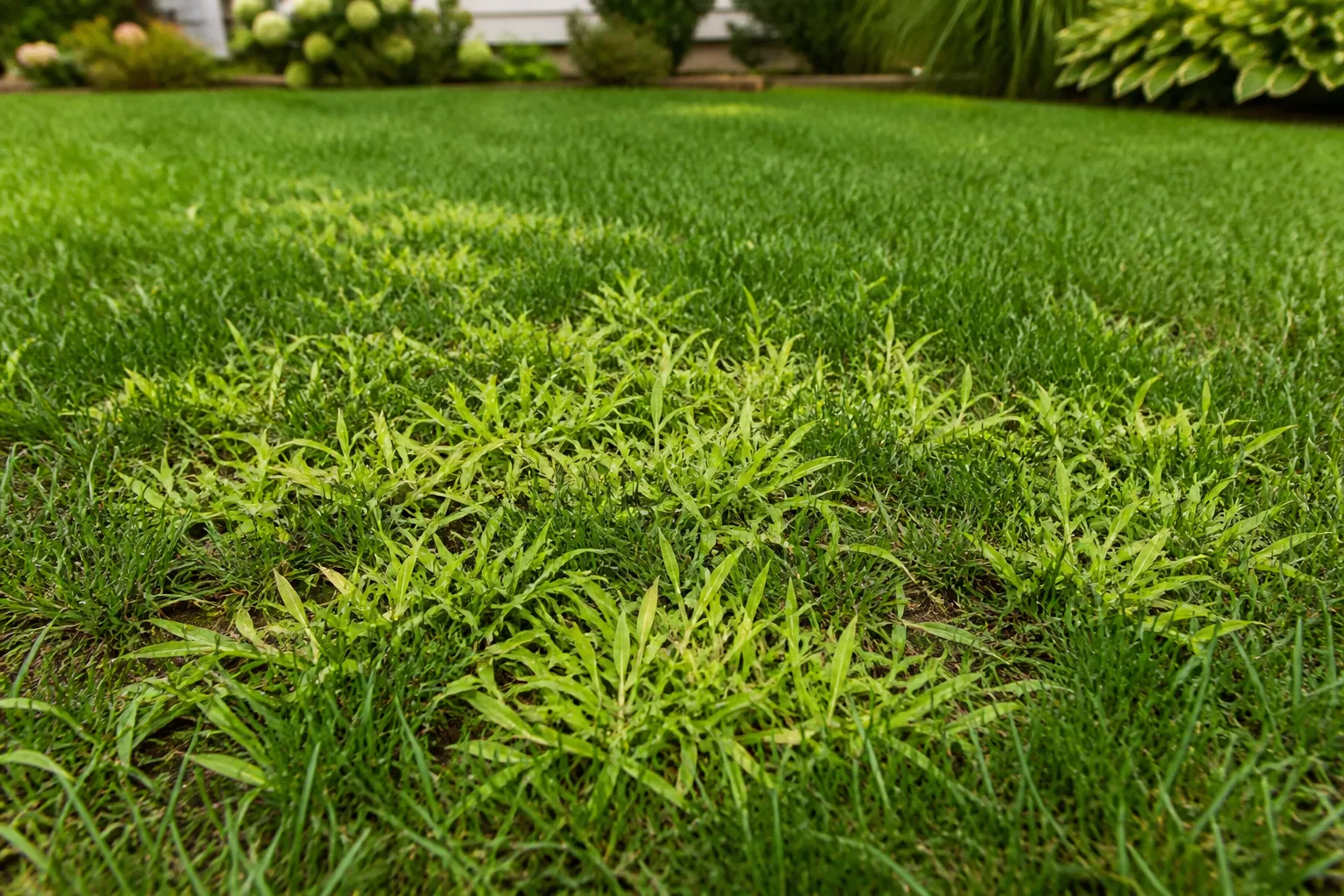
The best time to put weed killer on your lawn in spring depends on what you are trying to control. Apply a pre-emergent before a weed seed germinates; apply a post-emergent after a weed appears, when it is actively growing and the product can stay on its leaves long enough to work. Those are different jobs, with different timing signals.
For most homeowners, the practical rule is this: use soil temperature and local germination timing for crabgrass prevention, and use dry foliage, mild weather, and active growth for visible broadleaf weeds. A calendar date such as “the first week of April” can be a useful reminder, but it cannot replace the product label or conditions in your yard.
The short answer: match the product to the weed stage
If you see dandelions, clover, plantain, or another established weed, you are looking at a post-emergent problem. If you are trying to stop crabgrass or another annual weed before it appears, you need a pre-emergent product. Putting the wrong type of herbicide on at the wrong stage is one of the fastest ways to spend money without improving the lawn.
The University of Georgia’s home-lawn guidance emphasizes that herbicides differ by target weed and turfgrass tolerance. In other words, “weed killer” is not one product category with one universal spring date; the active ingredient, formulation, target, and grass species all matter.
Pre-emergent and post-emergent at a glance
| Product type | Use it when | What it can do | What it cannot do |
|---|---|---|---|
| Pre-emergent | Before susceptible weed seeds germinate | Forms a soil treatment zone that interrupts early weed development | Usually will not remove a mature, visible weed |
| Post-emergent, selective | After a listed weed is growing | Targets certain weeds while leaving tolerant turf unharmed when used correctly | Can injure grass, flowers, or shrubs if misapplied |
| Post-emergent, non-selective | Only on vegetation you intend to kill | Browns or kills most green plants it contacts | Is not appropriate for broadcast spraying over an established lawn |
Use soil temperature to time crabgrass prevention
Crabgrass prevention is usually the main reason people ask about early spring weed killer. The useful signal is not simply the first warm afternoon; it is the temperature of the soil near the surface, where crabgrass seed responds to sustained warming. University extension guidance commonly places crabgrass germination around the upper 50s Fahrenheit, so a pre-emergent is generally applied before soil temperatures remain in that range.
That does not mean you need to measure the soil every hour. Watch several consecutive readings, use a local extension soil-temperature map when available, and compare the trend with the product label. A cold snap after a warm weekend can slow germination, while a sunny, exposed lawn can warm sooner than a shaded or wet one a few streets away.
Why the calendar is less reliable than the soil
Spring arrives unevenly. Southern lawns may be warm enough for summer annuals while northern lawns are still dormant, and a south-facing slope can lead the rest of the property. A date-based application can therefore be too early, wasting part of the product’s effective window, or too late, after seedlings have already emerged.
Pre-emergent is also not a rescue treatment for an established infestation. If crabgrass is already green and spreading, identify whether the label lists a post-emergent option for your turf, or shift to mowing, overseeding at the correct season, and spot treatment. NC State TurfFiles’ guidance on excessive rainfall and pre-emergents is a useful reminder that prevention and control are separate decisions. Do not assume applying more pre-emergent will kill the plants you can already see.
Treat visible weeds when the lawn and weeds are growing
Post-emergent herbicides work best when the target weed is actively growing rather than wilted by cold, drought, frost, or heat. In spring, that often means waiting until the lawn has started to green up and the weed has enough healthy leaf area to intercept the spray. A dandelion that is barely moving after a cold night is a poorer target than one growing steadily during a mild stretch.
For a liquid foliar product, the leaves should generally be dry unless the label says otherwise. Dew, irrigation, or rain can dilute the spray and reduce the amount that remains on the target leaf. A granular weed-and-feed product may have different moisture requirements, so do not transfer liquid-spray advice to every lawn product.
Adjust timing for cool-season and warm-season grass
Turf type changes both the spring schedule and the risk of injury. If you do not know your grass, identify it before treating a large area. Look at blade width, growth habit, and whether it greens up early or stays brown until reliably warm weather; when in doubt, ask a local extension office or test a small area first.
Cool-season lawns
Tall fescue, Kentucky bluegrass, and perennial ryegrass grow most actively during cool spring weather. A post-emergent treatment can fit once the weeds and grass are growing, but the lawn should not be stressed by frost, drought, or a sudden heat wave. Spring is also when many cool-season lawns are overseeded, and a pre-emergent can interfere with the germination of desirable grass seed.
If you plan to repair bare areas with seed, check the label’s reseeding interval before applying any pre-emergent. Sometimes a thinner lawn needs a deliberate seeding plan more than it needs a broad herbicide application. Filling the canopy with compatible grass can reduce the open soil where new weeds get started.
Warm-season lawns
Bermuda, zoysia, centipede, and St. Augustine lawns may still be dormant when spring weeds begin growing. Do not mistake brown turf for permission to spray any product: dormant grass can green up later, and a non-selective herbicide can damage it as soon as it becomes active. Warm-season lawns also have different weed cycles, including annual bluegrass, for which fall prevention is often more useful than a rushed spring treatment.
Wait for the label’s approved temperature and turf conditions, and avoid broad applications when the grass is transitioning from dormancy or recovering from winter injury. Spot treatment is usually easier to control than spraying the whole lawn for a few scattered weeds.
Check the product label before checking the sprayer
The label is the controlling source for the product in your hand. Read the directions for approved turf species, target weeds, application rate, temperature limits, rainfast period, mowing interval, personal protective equipment, reentry instructions, and restrictions around drains, ponds, vegetable gardens, and flowering plants. The EPA’s pesticide-label guidance can help explain how labels work, but the container label remains the immediate reference for use.
Selective versus non-selective herbicides
A selective herbicide is designed to affect certain weeds at a labeled rate while tolerated turf survives. That selectivity is conditional, not magical: an excessive rate, overlapping passes, heat stress, or an unlisted grass can still produce injury. A non-selective herbicide kills or injures most green plants it contacts and belongs on cracks, gravel, or carefully shielded areas—not as a casual broadcast spray over grass.
Read the active ingredient and target list instead of relying on a front-label phrase such as “kills weeds.” A broadleaf product may not control crabgrass. A sedge product may not be appropriate for clover. A formulation safe on one grass species may be unsafe on another.
Choose a safe spring weather window
The best weather window has dry target leaves, mild temperatures within the label range, low wind, and enough time before rain or irrigation. University of Minnesota Extension highlights rainfastness, droplet size, wind, and temperature as connected parts of a successful post-emergence application. Calm air is helpful, but do not spray during a temperature inversion if the label or local guidance warns that droplets may remain suspended and drift.
Rain, dew, wind, and temperature
Rainfast means the minimum time the spray must remain undisturbed before rainfall is unlikely to substantially reduce performance. It is not the same as the time required for the weed to show symptoms. Some products need only a short interval; others require much longer. University of Missouri Extension’s rainfastness explanation explains why rainfall, formulation, and time after application all affect performance. Use the exact interval on the label rather than a generic two-hour rule.
Avoid spraying when a storm is approaching, even if the forecast says the chance of rain is low. A single shower that crosses your yard during the rainfast period can reduce a foliar treatment, and heavy rain can move soil-applied material into runoff. Turn off automatic sprinklers for the label’s interval.
Wind creates a different problem: drift. Fine droplets can reach ornamental beds, vegetable seedlings, neighboring property, or water. Do not spray in gusty conditions, and keep the nozzle low enough to produce the label-recommended droplet size. Hot, dry weather can also stress both turf and weeds, making a marginal application less predictable.
Mowing, irrigation, and drought stress
Do not mow immediately before every herbicide application by default. A foliar spray needs enough leaf surface on the weed, while some labels ask you to avoid mowing for a set period before or after treatment. Follow the product directions. Bagging clippings may be appropriate if the label says treated turf should not be used for mulch, compost, or animal feed.
Skip treatment when the lawn is wilted, newly seeded, flooded, or otherwise under stress unless the label specifically permits it. Correcting compaction, irrigation problems, or bare soil may do more for long-term weed control than spraying a stressed lawn. The herbicide can address today’s weed while leaving the condition that keeps producing tomorrow’s weed.
Apply pre-emergent without creating a new problem
Many granular pre-emergent products need water after application so the active ingredient moves into the upper soil layer. That may be rainfall or measured irrigation, depending on the label. Penn State Extension explains why soil-applied herbicides need the right amount of water, not simply the biggest storm. A gentle watering that activates the product is not the same as a thunderstorm that produces runoff, carries granules downhill, or moves product toward a drain.
Before applying, sweep granules from pavement, keep them out of gutters and water, and check the label for application limits. Do not apply a pre-emergent to an area you plan to seed unless the label gives a compatible timing window. A barrier that suppresses crabgrass can also suppress the grass seed you want.
Spot-treat post-emergent weeds precisely
Spot treatment is often the best spring compromise when weeds are scattered. Identify the weed, confirm that the product lists it, mix only the amount you will use, and wet the target foliage without creating runoff. Shield nearby flowers and shrubs, avoid spraying into open blooms, and keep people and pets away according to the label.
For a difficult perennial weed, one application may not be enough because the plant can recover from roots, crowns, rhizomes, or stolons. That is not a reason to increase the rate. Wait for the label’s reapplication interval, reassess whether the weed was identified correctly, and consider digging or repeated mowing where practical.
Decide whether weed and feed fits your lawn
Weed-and-feed products combine fertilizer with an herbicide, which can be convenient but can also force two jobs onto one schedule. The lawn may not need nitrogen when the weather is cool, and the herbicide may need conditions that do not match the best time to fertilize. Granules can also land where you did not intend to treat.
Use a combined product only when the label fits your turf, target weeds, season, and soil needs. If the lawn is thin because of compaction, shade, poor irrigation, or mowing too short, fertilizer alone will not solve the underlying issue. A soil test and a simple maintenance correction may be a better first step than an automatic spring application.
What to do if the timing window has passed
If crabgrass has emerged, do not keep applying pre-emergent and hope it will reverse the infestation. Shift to the options on the product label: a labeled post-emergent treatment, careful hand removal of small patches, or mowing high enough to shade the soil and prevent seed production. Record the failure so next year’s prevention starts earlier.
If visible broadleaf weeds are already flowering, you can still have a useful treatment window when the plants are actively growing and weather conditions meet the label. Remove flower heads where appropriate to reduce seed production, but do not assume pulling the top has removed a perennial root. Plan a fall treatment or turf-thickening step if spring control is incomplete.
Common spring lawn herbicide mistakes
The most common mistake is treating a calendar date as a guarantee. Other avoidable errors include:
- applying pre-emergent after the target weed has already germinated;
- using a broadleaf product on crabgrass or a crabgrass product on clover;
- spraying a dormant or drought-stressed lawn;
- ignoring the label’s reseeding interval;
- spraying before rain, during gusts, or onto wet leaves;
- overlapping passes at the edge of a driveway or flower bed;
- reapplying too soon because the weed did not die overnight;
- assuming vinegar, baking soda, or dish soap is safe for turf simply because it is a household ingredient.
Homemade mixtures can burn foliage and damage soil or nearby plants without offering reliable, selective lawn control. If you use any pesticide, use a labeled product exactly as directed; if you want to avoid herbicide, choose hand removal, mowing, mulch outside the turf, or a turf-management correction instead.
A simple spring weed-control schedule
Start in late winter or early spring by identifying the grass and the weeds you had last year. Check whether you are trying to prevent summer annuals, treat existing broadleaf weeds, or repair bare areas with seed. That decision determines whether pre-emergent is helpful or counterproductive.
As soil temperatures approach the germination range for your target annual weed, check the label and apply pre-emergent before the window closes. Later, when weeds and turf are actively growing, select a labeled post-emergent product for scattered survivors and apply during a dry, calm, mild period.
After treatment, respect the reentry and mowing intervals, monitor the lawn instead of expecting instant symptoms, and record what worked. In late spring and summer, adjust irrigation and mowing so the turf canopy becomes the next line of defense.
Build a thicker lawn so fewer weeds return
Herbicide is a tool, not the whole weed-control program. A dense, well-adapted lawn shades the soil, competes for water and nutrients, and leaves fewer open spaces for weed seedlings. Mow at the height recommended for your grass, water deeply enough for the site, correct compacted soil, and address shade instead of repeatedly treating a place where turf cannot thrive.
Use fertilizer from a soil-informed plan rather than a reflexive spring application. Overseed only when the grass type and season support it, and make sure any pre-emergent you apply is compatible with that plan. If the same weed returns in the same thin strip, look for the reason: foot traffic, runoff, a leaking downspout, mower scalping, or too little light.
When to skip herbicide and call for help
Pause before treating when the weed is unidentified, the grass species is unknown, the lawn is newly seeded, the area drains toward water, or the product label does not clearly cover your situation. A local extension office, licensed applicator, or knowledgeable garden center can help identify a weed and turf combination that is easy to misread from a photo.
Professional help is especially worthwhile when a lawn has widespread injury, repeated treatment failures, steep runoff paths, or a mix of ornamental beds and turf with little room for drift. Bring the product label and a fresh weed sample or clear photographs. The goal is not simply to apply something stronger; it is to choose the narrowest effective intervention.
Conclusion: use conditions, not a calendar date
Put weed killer on your lawn in spring when the product, weed stage, turf type, and weather all agree. Use pre-emergent before susceptible seeds germinate, use post-emergent on actively growing visible weeds, and let the label set the rate, temperature, rainfast, mowing, and reentry rules.
If the lawn is stressed or you plan to seed, waiting may be the most effective decision. A correctly timed spot treatment plus denser, healthier turf usually beats a rushed blanket application that solves one patch and creates injury elsewhere.