When to Plant Peony Bulbs: Timing and 5 Tips
Learn when to plant peony bulbs, how deep to set the eyes, and five practical tips for sun, watering, support, spacing, and first-year blooms.
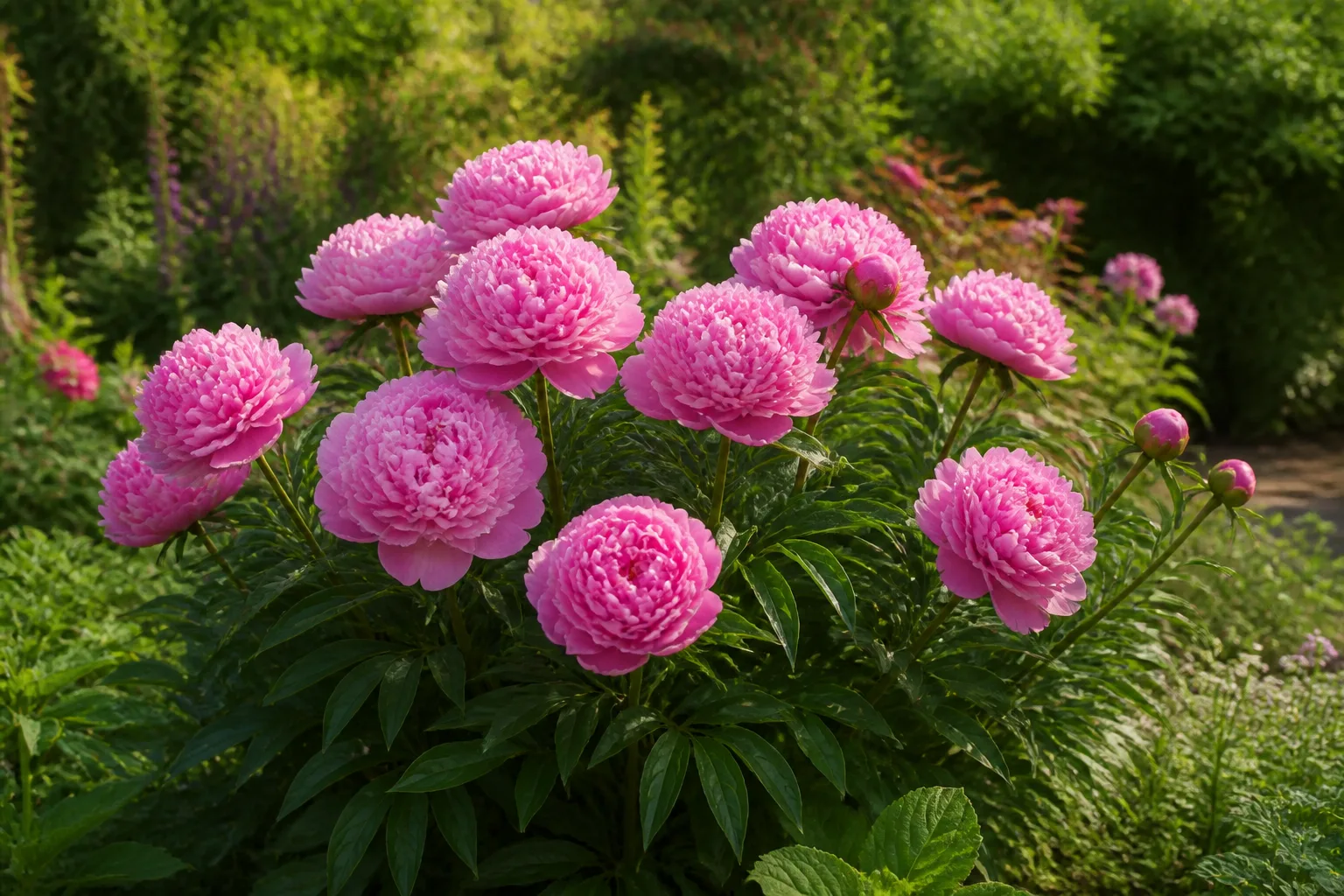
If you bought a package labeled “peony bulbs,” the best time to plant it is usually fall, while the soil is still workable and several weeks of root-growing weather remain before the ground freezes. For most bare-root herbaceous peonies, late August through October is a useful starting window; gardeners in warmer regions can often plant later, while very cold areas should plant earlier.
The biggest success factor is not a special fertilizer or an elaborate hole. It is putting a healthy crown in a permanent, sunny, well-drained site with the reddish growth eyes facing up and covered by only a shallow layer of soil. Plant too deep, crowd the roots, or keep the crown wet, and a peony can produce attractive leaves for years without giving you the flowers you expected.
The Short Answer: Plant Bare-Root Peonies in Fall
Bare-root peony divisions are best planted in fall because the plant is dormant above ground and can spend the cool season making roots. The American Peony Society describes late August through October as a dependable window in many growing regions and notes that root growth can continue as long as the soil is not frozen. A practical way to adjust that advice to your garden is to work backward from the date your ground usually freezes: plant early enough for the crown to settle and grow roots, but not so early that hot summer soil pushes tender growth.
That timing is different from the date you see on a generic bulb calendar. Peonies are not true bulbs like tulips or daffodils, and they do not need to be planted on the same schedule. They are long-lived perennials that prefer to establish slowly before winter, then emerge when the season warms.
For a newly planted division, think in stages. The first job is firm root contact and steady moisture. The second is surviving winter without the crown heaving out of the ground. The third is building enough root and leaf capacity to flower; that may take two or three seasons, especially if the division is small or was planted in spring.
First, Know What “Peony Bulb” Means
The part sold as a peony “bulb” is generally a bare-root crown division: a short, woody-looking crown with thick storage roots and several pointed buds called eyes. Each eye can develop into a flowering stem, but the number of eyes is not the only quality test. A firm division with several healthy eyes and intact roots is a better purchase than a large, soft piece with damaged tissue.
Look for roots that feel solid rather than hollow, slimy, or blackened. Three to five healthy eyes is a useful target for a division intended to make a substantial plant, although smaller divisions can grow if you are willing to wait. The eyes should be visible enough to orient, and the crown should not smell sour or show broad areas of rot.
This terminology matters because herbaceous peonies, tree peonies, and intersectional or Itoh peonies do not have identical growth habits. Herbaceous peonies die back to the ground in winter and are the type most often sold as dormant divisions. Tree peonies keep woody stems, while Itoh peonies combine woody-parentage flowers with herbaceous winter dieback. Confirm the type on the label before applying a fall cutback or assuming the planting instructions are interchangeable.
Choose the Season Based on the Plant You Buy
The best planting date depends partly on whether the plant arrives dormant and bare-root or already growing in a pot. That distinction is more useful than memorizing one month for every climate.
Fall Timing: Aim for Root Growth Before Freeze
Plant bare-root herbaceous peonies after the worst summer heat has eased and before the soil freezes solid. In many North American gardens, that means late August through October. In a mild-winter climate the window can extend into late autumn, while a short season may require planting in early September so roots have time to settle.
The RHS growing guide separates late-autumn bare-root planting from late-spring planting of potted plants, which is a helpful distinction for gardeners who see conflicting advice. The aim is not to make the plant grow leaves in fall. It is to let the roots establish while the top stays quiet.
Do not wait for a calendar date if the ground is already frozen, saturated, or covered by persistent snow. If the roots arrive late, keep them cool and slightly damp according to the nursery’s instructions, then plant as soon as the bed is workable. A division left warm and dry in its packaging is at greater risk than one planted a little outside a textbook date.
Spring Timing: A Backup for Container Plants
You can plant a peony in spring, but spring is not equally forgiving for every type of planting material. An established, container-grown plant can be set into the garden in late spring or early summer with careful watering. A bare-root division planted after growth has begun has to build roots while also supporting leaves, and it may spend its first season recovering rather than flowering.
If spring is your only option, choose the largest healthy potted plant you can reasonably handle, plant it at the same depth it occupied in the container, and protect it from drying out. Do not respond to a slow first season by adding repeated high-nitrogen fertilizer or digging the plant up again. Let it establish, and judge it after a full growing cycle.
Pick a Permanent Site Before You Dig
Peonies dislike being moved once established. Their crowns can live for decades, but digging through a mature clump damages storage roots and can set flowering back. Treat the first site decision as part of planting rather than as a detail you can easily fix later.
Sun, Space, and Airflow
Give herbaceous peonies at least six hours of direct sun, with more light usually producing stronger flowering. In hot regions, some afternoon shade can protect flowers from fading, but dense shade is a poor trade. Morning sun is especially useful because it dries dew and rain from the foliage sooner.
Allow roughly three feet between ordinary garden peonies, and more for a very large cultivar. The RHS recommends about a square metre of space for a mature plant, which is a good reminder not to tuck a young division into a narrow gap between shrubs. Leave room for air to move through the foliage and for you to reach the crown without stepping on emerging eyes.
Avoid planting directly beneath established trees or large shrubs. Their roots compete for water and nutrients just when the peony is trying to build a permanent storage system. A bed that receives full sun but stays dry because of tree-root competition is not actually a good peony site.
How to Plant a Bare-Root Peony Step by Step
Prepare the bed before the root arrives. A broad area of improved soil is safer than filling one deep hole with rich material that drains differently from the surrounding ground. In heavy clay, work compost or leaf mould across the bed and consider a raised mound if water lingers after rain; do not create a small amended “bathtub” around the roots.
Dig a hole about two feet wide and roughly 12 to 18 inches deep, then adjust it to the shape of the division. The goal is room for the fleshy roots to spread naturally, not a narrow pit that forces them into a bundle. Mix finished compost into the surrounding soil if the bed is poor, but avoid making the planting pocket excessively rich or salty.
Set the Eyes Shallow and Facing Up
Build a firm cone of soil in the middle of the hole. Place the crown on the cone with the eyes facing upward and the roots draped down the sides. This simple mound prevents the crown from settling lower than intended as loose soil and water compress around it.
For most herbaceous peonies, cover the eyes with about one to two inches of soil, using the shallow end of that range in mild climates. The Horticulture planting guide advises no more than about 1.5 to 2 inches for ordinary conditions and an even shallower position where winters are mild. If you cannot see the eyes clearly after backfilling, stop and check the crown rather than guessing.
Deep planting is one of the most common explanations for a peony that makes leaves but no flowers. A crown can be healthy and well-fed yet remain vegetative when its eyes are buried under too much soil or mulch. Shallow is safer than deep, provided the roots are covered and the crown is not left exposed to drying.
Water In and Protect the Crown
Backfill with loose soil, working it around the roots so there are no large air pockets. Firm the soil gently with your hands, but do not tamp hard enough to compact the bed or press the crown downward. Water slowly and thoroughly so the soil settles, then top up any exposed roots with a little more soil.
Keep the root zone slightly moist while the soil is still warm and the division is making roots. If autumn is dry, water deeply about once a week rather than sprinkling the surface every day. Once the ground freezes, stop routine watering; the dormant crown does not need a wet winter bed.
In a cold garden, apply a loose layer of shredded bark, chopped leaves, or similar mulch after the soil has frozen. Keep it away from the crown, and remove or pull it back in early spring before new shoots push through. Mulch is a frost-heave buffer for a new planting, not a blanket that should bury the eyes year-round.
Five Growing Tips That Make the Difference
Planting correctly gives the peony a fair start, but the next five decisions determine whether the plant stays upright, keeps its leaves, and has enough stored energy to flower in future seasons.
Tip 1: Support Stems Before Buds Open
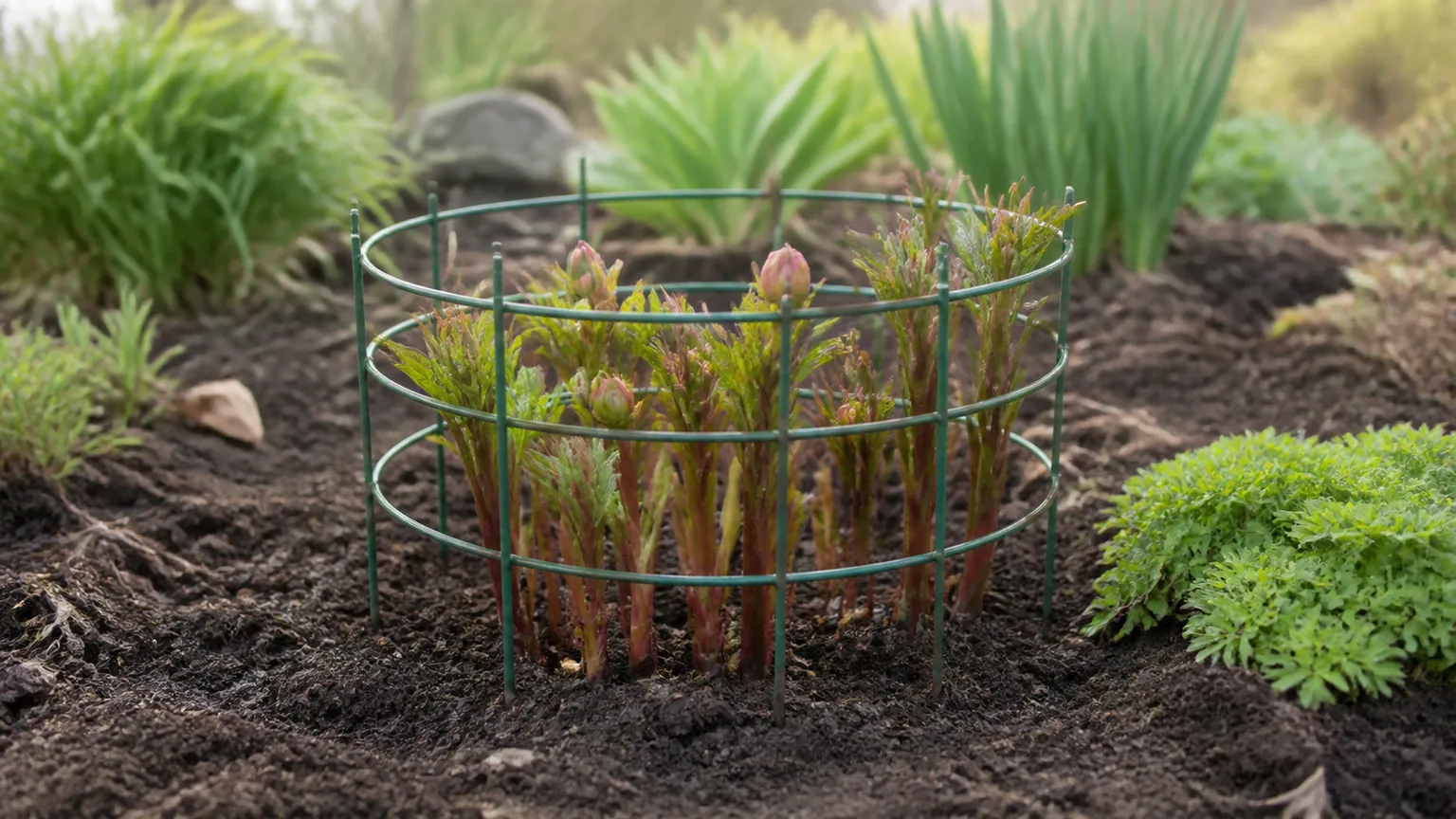
Large double flowers are heavy, and a spring rainstorm can flatten otherwise healthy stems. Install a peony ring or adjustable support in early spring, when shoots are first emerging and still flexible. Savvy Gardening’s guide to peony supports makes the practical point that late support can damage brittle shoots and may not catch stems before they lean.
Choose a ring that is wider than the crown and push its legs firmly into the soil. The foliage will hide it as the plant grows. A support is not a cure for too much shade or too much nitrogen, both of which can create weak, stretched stems, but it is cheap insurance for naturally top-heavy cultivars.
Tip 2: Deadhead Flowers but Keep Summer Leaves
Remove spent blooms after petals collapse, cutting just above a healthy leaf set and taking any developing seed pod with the flower. This keeps wet petals from collecting on the foliage and prevents a hybrid peony from spending energy on seed you do not plan to grow.
Do not cut the leafy stems to the ground immediately after flowering. Those leaves are the plant’s solar panels for the rest of summer, storing energy in the crown for next year’s buds. Wait for natural yellowing and fall dormancy before cutting herbaceous stems near the ground, especially if the plant has shown signs of wilt or grey mould.
Ants crawling over peony buds are usually not a disease or an emergency. University of Missouri IPM explains that peony flowers provide nectar and that ants move on after the bloom period; they do not need to be killed for the peony to flower. If you cut blooms for a vase, shake or rinse the stems outdoors before arranging them, a simple step supported by the University of Missouri’s peony ant guidance.

Tip 3: Water for Establishment, Not by Calendar
Newly planted divisions need consistent moisture while roots are forming, but they do not need a permanently wet bed. Check the soil a few inches down; if it is dry at root depth and rain has not supplied water, give the plant a slow soak that reaches the entire root zone. If the soil is still cool and damp, wait.
Established peonies are deep-rooted and often need little supplemental water after the first year, but spring drought can reduce bud development and cause buds to fail before opening. Water during prolonged dry spells, especially while new shoots and flower buds are expanding. Always correct drainage before increasing irrigation; waterlogged soil can damage roots faster than a short dry interval.
Tip 4: Give Every Clump Room to Breathe
Spacing is a plant-health decision, not just a design preference. Crowded foliage stays damp longer after rain and makes it harder to spot wilt, grey mould, or leaf spotting early. Keep weeds and neighboring plants from forming a dense wall around the crown, but do not strip healthy peony leaves just to open the bed visually.
Use compost to improve soil structure and organic matter, not as an automatic promise of more flowers. A soil test can tell you whether a nutrient is actually missing. Avoid repeated high-nitrogen feeding: lush leaves and soft stems are not a substitute for strong roots, adequate sun, or correct planting depth.
Tip 5: Judge Success on a Multi-Year Timeline
Peonies are an investment in a permanent clump, not a quick annual display. A small division may produce no flowers in its first season, and even a good fall-planted division may need two or three years to settle into a full show. Weather, cultivar, root size, and planting conditions all affect the timeline.
The Gardening In Steps planting guide usefully separates establishment from maturity: fall planting helps roots develop before winter, while spring planting often delays the first substantial bloom. Keep the plant watered, leave its foliage intact after flowering, and inspect the depth before assuming the cultivar has failed.
Fix the Common Reasons Peonies Do Not Bloom
When a peony produces leaves but no flowers, check the basics in a fixed order instead of reaching for more fertilizer. First, scrape back a little soil and mulch to find the eyes. If they sit more than about two inches below the surface, depth is a stronger suspect than nutrition; replanting is best done during dormancy, and recovery can take a season or two.
Next, measure the light honestly. A bed that was sunny when planted may be shaded now by a tree, fence, or expanding shrub. If the plant receives less than six hours of direct light, flowering may remain sparse even when the leaves look healthy.
Then look at age and root competition. A first-year division, a recently moved clump, or a plant competing with tree roots may need time rather than a product. If leaves are huge and dark but stems are floppy, suspect excess nitrogen or insufficient sun before adding anything else.
Finally, inspect water and disease patterns. A crown that stays wet, smells sour, or turns soft is a drainage problem; a bud that browns and collapses with grey mould may point to peony wilt. Remove diseased debris, keep fall foliage out of the compost if disease is suspected, and improve airflow and drainage before the next season. Do not spray ants simply because they are present, and do not cover the crown with a thick winter mulch while trying to protect it.
Different symptoms call for different patience. A peony with healthy foliage and no flowers may be too young or too deep. A peony with blackened roots, a collapsing crown, or repeated wilt needs intervention. Diagnosis keeps you from treating a normal establishment year as a crisis—or overlooking a site problem that will repeat every spring.
Conclusion
For bare-root peony “bulbs,” plant in fall while the soil remains workable and before the ground freezes. Choose a permanent site with full sun, good drainage, and about three feet of breathing room; set the eyes shallow and facing up, water the roots in, and keep mulch off the crown.
After planting, support stems before they become tall, deadhead flowers without removing summer foliage, water by root-zone conditions, and judge the plant over several seasons. The reliable peony routine is simple: get the depth and drainage right at the beginning, then let time, light, leaves, and healthy roots do the heavy lifting.